Posted on

What Size Rebel Flag Should I Buy for My House?

What Size Rebel Flag Should I Buy for My House?

Wondering about the best way to what size rebel flag should i buy for my house?? This guide covers everything you need to know—from design history to choosing the right materials, sizes, and suppliers.

Understanding the Symbolism of the Rebel Flag

The Rebel Flag, often called the Confederate Battle Flag, has deep roots in Southern heritage and American history. It has evolved across different contexts—from the Bonnie Blue to the Southern Cross design used by the Army of Northern Virginia.

Materials, Sizes, and Buying Considerations

Cotton vs. Polyester: Which Should You Choose?

Cotton flags offer a classic, ceremonial look while polyester and nylon options are better for outdoor durability. Weather resistance and UV protection are key buying considerations.

Standard Sizes for Outdoor Display

Common sizes include 3×5 ft for yards and poles, and 5×8 ft or larger for barns or major displays.

Where to Buy High-Quality Rebel Flags

USA-Made Options and Trusted Vendors

Always buy from vendors that offer USA-made flags with double-stitched seams and brass grommets.

Legal Considerations by State

While legal in most states, there may be restrictions in public settings or institutions. Check local laws before displaying.

Explore More Rebel Flag Resources

Found your size? Most designs come in several sizes. Browse them in the Ultimate Flags rebel flag collection.

Posted on

Where to Buy USA-Made Confederate Flags

Where to Buy USA-Made Confederate Flags

Wondering about the best way to where to buy usa-made confederate flags? This guide covers everything you need to know—from design history to choosing the right materials, sizes, and suppliers.

Understanding the Symbolism of the Rebel Flag

The Rebel Flag, often called the Confederate Battle Flag, has deep roots in Southern heritage and American history. It has evolved across different contexts—from the Bonnie Blue to the Southern Cross design used by the Army of Northern Virginia.

Materials, Sizes, and Buying Considerations

Cotton vs. Polyester: Which Should You Choose?

Cotton flags offer a classic, ceremonial look while polyester and nylon options are better for outdoor durability. Weather resistance and UV protection are key buying considerations.

Standard Sizes for Outdoor Display

Common sizes include 3×5 ft for yards and poles, and 5×8 ft or larger for barns or major displays.

Where to Buy High-Quality Rebel Flags

USA-Made Options and Trusted Vendors

Always buy from vendors that offer USA-made flags with double-stitched seams and brass grommets.

Legal Considerations by State

While legal in most states, there may be restrictions in public settings or institutions. Check local laws before displaying.

Explore More Rebel Flag Resources

Shopping for a Confederate flag? Start with the full Confederate flag collection at Ultimate Flags.

Posted on

Are Rebel Flags Legal to Buy in Every State?

Yes. Rebel flags are legal to buy, own and have shipped to you in all 50 states. No federal law and no state law makes it a crime to purchase, sell or possess a Confederate battle flag or any other Confederate flag. The First Amendment protects flags as a form of expression, and the U.S. Supreme Court has held that the government cannot punish a flag because of the message it carries. What does vary is where you can display one, because private property owners, schools, employers and event venues can set their own rules. This guide explains the difference. When you’re ready, shop our rebel flags.

Ultimate Flags flag sale: buy any 2 flags, get the 3rd free

This article is general information, not legal advice. For a specific situation, check with a local attorney.

Is it legal to buy a Confederate flag?

Buying a flag is protected activity everywhere in the United States. The key legal points:

  • The First Amendment keeps federal, state and local governments from banning a flag because of its viewpoint.
  • Texas v. Johnson (1989) confirmed that flags are symbolic speech. If the government cannot ban burning a U.S. flag in protest, it cannot ban selling or owning a historical flag.
  • No state statute prohibits the sale or ownership of the design. States that removed Confederate symbols, such as South Carolina taking the battle flag off its statehouse grounds in July 2015 and Mississippi retiring its 1894 state flag in 2020, changed what the government itself flies, not what citizens may buy.
  • Shipping is legal. Flags ship by normal mail and parcel carriers to every state, including Alaska and Hawaii.

Buying vs. displaying: where the rules differ

Situation Can you buy or own the flag? Can you display it? Who sets the rule
Your own home and land Yes Yes, subject to neutral local sign or pole rules You, plus zoning
Homeowners association Yes Depends on your HOA covenants The HOA
Rented home or apartment Yes Depends on your lease The landlord
Your vehicle Yes Yes, on public roads You
Workplace Yes Often limited by company policy The employer
Public school Yes Schools may ban it where they can show likely disruption The school district
Military installations Yes Not on public display under the 2020 Defense Department flag policy, except museums and educational exhibits Department of Defense
Private venues, racetracks and events Yes Depends on the venue The organizer

For the full display picture, including HOA rules and the Freedom to Display the American Flag Act of 2005, read is it legal to display a Confederate flag on private property?

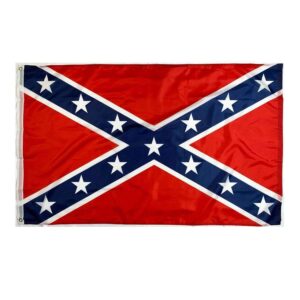
Standard 3x5 ft Confederate battle flag, legal to buy in all 50 states

Rules that apply in specific places

Public schools

Federal courts have allowed public schools to ban Confederate flag clothing and items when officials can reasonably forecast disruption. In Defoe v. Spiva (6th Cir. 2010) and Barr v. Lafon (6th Cir. 2008), the Sixth Circuit upheld school bans in Tennessee. These rulings cover school grounds only; they do not affect buying or owning a flag.

Military bases

In July 2020 Defense Secretary Mark Esper signed a memo listing the flags that may be publicly displayed on Defense Department installations. The Confederate flag is not on the list, but the memo allows unauthorized flags in museums, historical exhibits, works of art and educational programs.

Private events and retailers

NASCAR banned the Confederate flag at its events and properties in June 2020, and several large retailers and online marketplaces stopped selling Confederate flag merchandise in 2015. Those are business decisions, not laws. Specialty flag stores like Ultimate Flags continue to sell the full range of Confederate flags.

State-by-state quick answer

The answer is the same in every state: buying, owning and receiving a rebel flag by mail is legal. A few states are worth noting for what they changed on government property:

State What changed Effect on buying a flag
South Carolina Battle flag removed from the statehouse grounds, July 2015 None
Mississippi 1894 state flag with the battle flag canton retired, 2020 None – the old Mississippi flag is still legal to buy
Georgia 1956 state flag with the battle flag replaced, 2001 None – the old Georgia flag is still legal to buy
All other states No law on buying or owning Confederate flags None

Which rebel flag should you buy?

Frequently Asked Questions

Is the Confederate flag illegal in any state?

No. No U.S. state has a law that makes it illegal to buy, own or display a Confederate flag on your own property.

Can I order a rebel flag online and have it shipped to my state?

Yes. Rebel flags can be shipped to all 50 states. U.S. shipping from Ultimate Flags is $6 per item.

Can my HOA stop me from flying a rebel flag?

An HOA can enforce its covenants on display, but it cannot stop you from buying or owning the flag. The federal law protecting flag display in HOAs covers only the U.S. flag.

Can a school ban the Confederate flag?

Yes, on school grounds. Federal courts have upheld public school bans where officials could forecast disruption.

Is it legal to fly a Confederate flag on a military base?

Public display on Defense Department installations is not allowed under the 2020 flag policy, except in museums, historical exhibits and educational programs.

Why don’t big stores sell the rebel flag anymore?

Several major retailers and marketplaces chose to stop selling it in 2015. That was a business decision, not a change in the law.

More guides

Ready to pick one out? See every design we carry on our Confederate flags page.

Posted on

Where Can I Buy an Authentic Rebel Flag Online?

An authentic rebel flag is one that gets the design right and is built to last: a red field, a blue saltire (diagonal cross) edged in white, and thirteen white stars, made from fabric and stitching that will not fade or fray in a season. Many flags sold online miss on one or both. Since several big retailers stopped selling Confederate flags in 2015, much of what turns up on marketplaces comes from unknown overseas sellers with off colors, wrong star counts and thin fabric. This guide shows you how to tell an accurate flag from a cheap copy, and where to buy one with confidence. To see what we carry, browse our Confederate and rebel flags.

Ultimate Flags flag sale: buy any 2 flags, get the 3rd free

What does an authentic rebel flag look like?

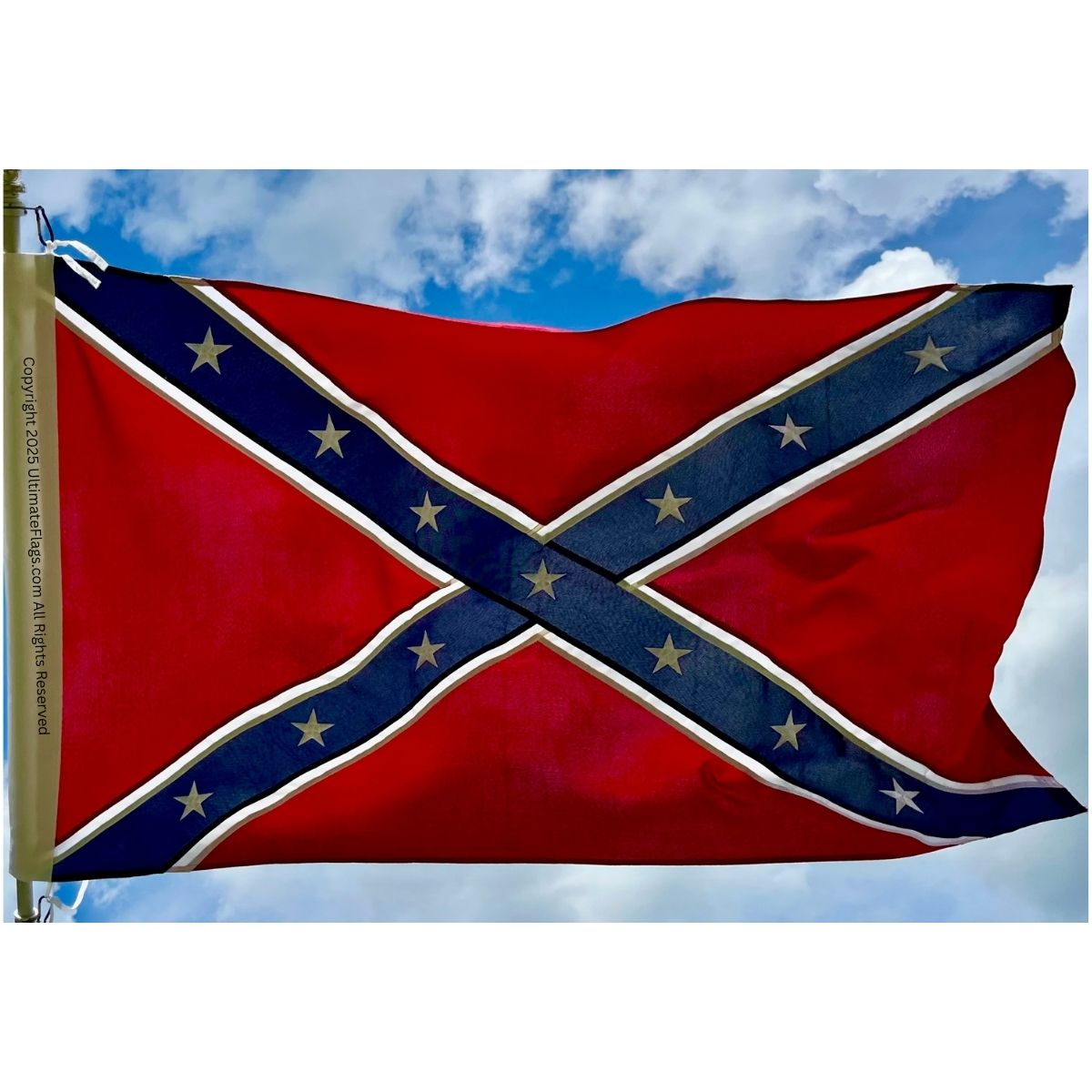
The flag most people call the rebel flag is the Confederate battle flag, also known as the Southern Cross. It was designed by William Porcher Miles, a South Carolina congressman who chaired the Confederate Committee on the Flag and Seal, and adopted as a battle flag in late 1861. Generals P.G.T. Beauregard and Joseph E. Johnston wanted it because the first national flag, the Stars and Bars, was too easy to confuse with the U.S. flag at the First Battle of Manassas. An accurate reproduction has:

  • A red field – a true scarlet red, not orange or maroon.
  • A blue saltire – the diagonal cross runs corner to corner.
  • White edging (fimbriation) – a narrow white border on both sides of the blue cross.
  • Thirteen white stars – one in the center and three on each arm. They stand for the eleven seceded states plus Kentucky and Missouri.
  • The right shape – the Army of Northern Virginia carried a nearly square flag with a white border; the Army of Tennessee and the Confederate Navy used rectangular versions. Our article on why battle flags have different shapes covers this in detail.

Authentic rebel flag in thick heavy cotton with embroidered stars, 3x5 ft

Authentic rebel flag checklist

Check Accurate flag Cheap copy
Star count 13 stars, evenly spaced Wrong count or crooked stars
Colors True red, deep blue, clean white Orange-red, purple-blue, gray white
White edging Present on both sides of the cross Missing or uneven
Construction Sewn panels or embroidered stars, or quality dye print Thin print that shows faintly on the back
Header and grommets Canvas header with brass grommets, or a sewn pole sleeve Thin hem with loose rings
Fly end Reinforced with extra rows of stitching Single row that frays quickly
Seller Specialty flag store with real product photos, sizes and a return policy Anonymous listing, stock photos, no returns

Printed, embroidered or sewn: which is the real thing?

Original Civil War battle flags were sewn by hand from wool bunting or cotton, with stars cut out and appliqued. Today you can choose how close to that you want to go:

Type How it is made Best for Example
Heavy cotton, embroidered stars Thick cotton with stitched stars Most historic look, collectors, indoor and covered displays Thick heavy cotton rebel flag
Sewn nylon embroidered Sewn stripes, embroidered stars Everyday outdoor flying Collectors Edition
Double nylon, sewn-on stars Two-ply nylon with appliqued stars Heavy outdoor use 4×6 ft double nylon
Printed nylon Dye-printed nylon Outdoor flying on a budget Printed nylon battle flag
Standard polyester Printed lightweight polyester Short-term or occasional use Standard rebel flag

For the closest thing to a period flag, reenactors and collectors choose sewn cotton. For a flag that flies every day, sewn nylon gives the most authentic look that will still hold up in the weather.

What to look for in an online flag seller

  • Real product photos showing the stitching, stars and header, not just a computer drawing.
  • Clear sizes and materials for each flag.
  • A published return policy. Ours accepts returns within 30 days of delivery with no restocking fee.
  • Known shipping costs. U.S. shipping is $6 per item at checkout.
  • A track record. Ultimate Flags has sold heritage flags since 1997, sources its flags from USA suppliers, and sold millions of Confederate Flags since 2015 after other retailers pulled them.
  • The full family of Confederate flags, not just one design: the three national flags, the Bonnie Blue, and state and regimental colors.

Sewn double nylon embroidered Southern Cross battle flag with pole sleeve and ties

Other authentic Confederate flags worth knowing

The battle flag is only one of several Confederate flags. The Confederacy’s three national flags were the Stars and Bars (adopted March 1861), the Stainless Banner (May 1863) and the Blood-Stained Banner (March 1865). The Bonnie Blue flag, a single white star on blue, flew at secession in 1861. Read the history of the Confederate flag for the full story.

Frequently Asked Questions

Where can I buy a real rebel flag online?

Buy from a specialty flag store that shows real product photos, lists sizes and materials, and has a return policy. Ultimate Flags carries the Confederate battle flag in cotton, nylon and polyester in sizes from 12×18 inches to 30×50 ft.

How many stars are on an authentic rebel flag?

Thirteen. The stars represent the eleven Confederate states plus Kentucky and Missouri.

Who designed the rebel flag?

William Porcher Miles of South Carolina designed the Confederate battle flag, which was adopted for the Army of Northern Virginia in late 1861.

Is the rebel flag the official Confederate flag?

No. It was a battle flag. The Confederacy’s official national flags were the Stars and Bars, the Stainless Banner and the Blood-Stained Banner.

Is a cotton or nylon rebel flag more authentic?

Cotton is closer to the original flags in look and feel. Sewn nylon is the better choice if the flag will fly outdoors every day.

Why did stores stop selling the rebel flag?

Several large retailers and online marketplaces stopped selling Confederate flag merchandise in 2015. Specialty flag stores like Ultimate Flags continue to carry them.

More guides

Looking for the real thing? Every flag in our Confederate and rebel flag collection ships direct from Ultimate Flags.

Posted on

Where to Buy the Bonnie Blue Flag: History, Sizes and Materials

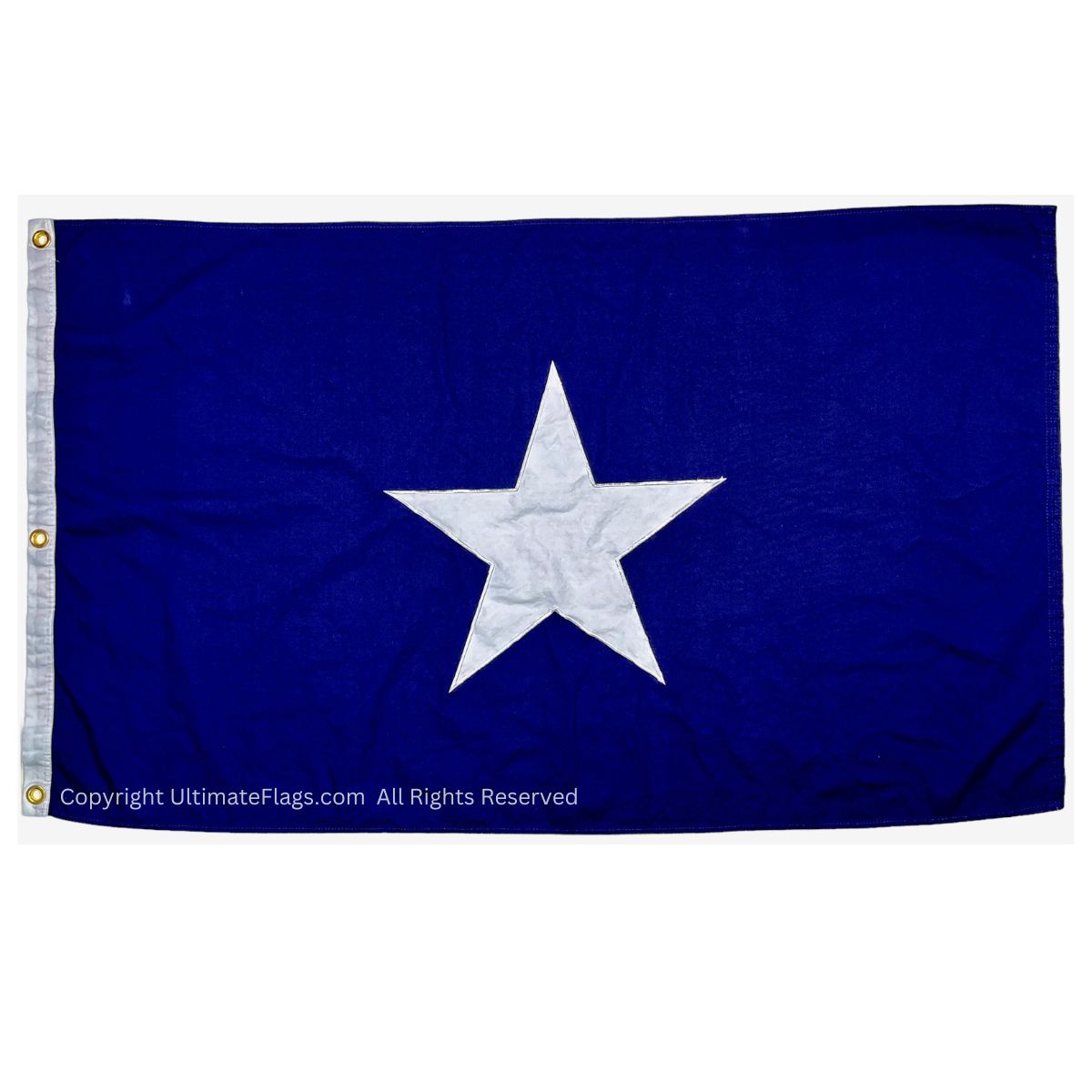
The Bonnie Blue flag is a single white five-pointed star on a solid blue field. It is one of the oldest Southern independence flags, first flown in 1810, and it became an unofficial banner of the South in early 1861. You can buy one today in sewn cotton for a historic display, in nylon embroidered or double nylon for flying outdoors, or in printed nylon and standard polyester for everyday use. This guide covers its history, how to choose the right version, and where to find it. You’ll find the Bonnie Blue alongside our other Confederate flags for sale, and every version is in our Bonnie Blue flag collection.

Ultimate Flags flag sale: buy any 2 flags, get the 3rd free

The history of the Bonnie Blue flag

1810: The Republic of West Florida

The first recorded use of the lone star on blue was in September 1810, when American settlers in Spanish West Florida rebelled, captured the Spanish fort at Baton Rouge and declared the independent Republic of West Florida. The new republic, which covered parts of present-day Louisiana, Mississippi and Alabama, flew a blue flag with a single white star. It lasted less than three months before President James Madison ordered the territory annexed and the U.S. flag replaced it in December 1810. In 2006 Louisiana designated the Bonnie Blue as the official flag of its West Florida historic region.

1836: The Lone Star Republic

Several West Florida veterans later moved to Texas, and the lone star went with them. From 1836 to 1839 the Republic of Texas flew the Burnet flag, a single gold star on a blue field inspired by the West Florida banner. That is why Texas is still called the Lone Star State.

1861: Secession and the song

When Mississippi seceded on January 9, 1861, a blue flag with a single white star was raised over the capitol in Jackson. Harry Macarthy, an Irish-born entertainer who saw the celebrations, wrote the song “The Bonnie Blue Flag,” which became one of the most popular songs in the Confederacy, second only to “Dixie.” The song gave the flag the name it carries today. The Bonnie Blue was used as an unofficial flag across the South in the early months of 1861, and some seceding states worked the white star on blue into their new state flags.

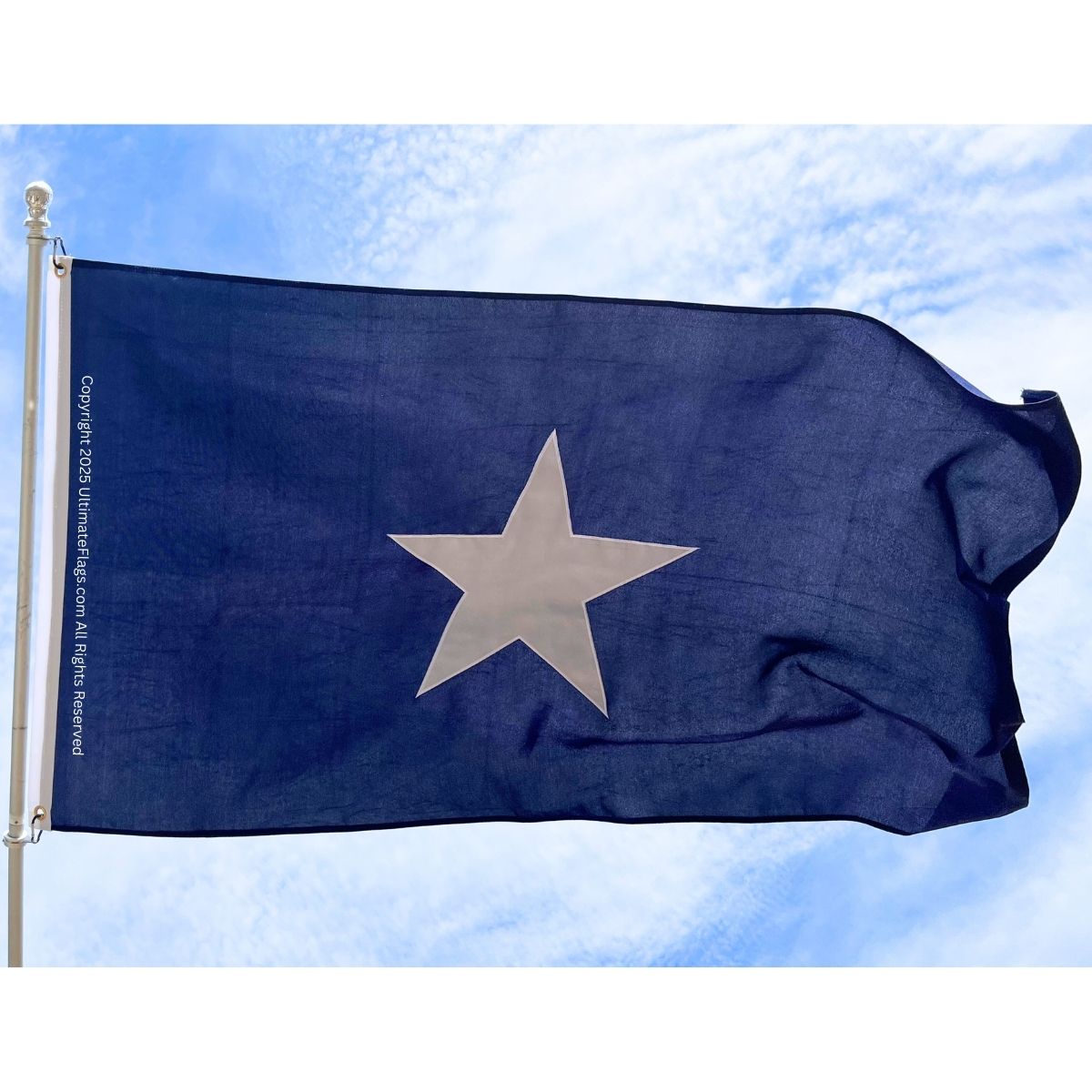
Bonnie Blue flag in sewn double nylon embroidered flying outdoors in North Florida

Bonnie Blue flags we carry, compared

Version Sizes Best for
Double nylon embroidered, sewn 3×5, 4×6, 5×8, 10×15 ft Heavy-duty, all-weather outdoor flying
Double nylon embroidered with sleeve and ties 3×5 ft Parades, color guards and indoor poles
Nylon embroidered 2×3, 3×5, 4×6, 5×8 ft Everyday outdoor display
Nylon fully sewn (USA made) 3×5 ft An American-made outdoor flag
Cotton sewn 12×18 in, 16×24 in, 2×3, 3×5, 4×6, 5×8 ft Historic and indoor displays, reenactors
Cotton with sleeve and ties 3×5 ft Hand-carried staffs and reenactments
Nylon printed 3×5 ft Outdoor flying on a budget
Standard 12×18 in, 2×3, 3×5 ft Occasional use and small displays

How to choose the right Bonnie Blue flag

  1. Decide where it will fly. Outdoors every day calls for nylon embroidered or double nylon. A wall, a mantle or a covered porch suits cotton.
  2. Pick grommets or a sleeve. Grommets clip to a pole halyard or wall hooks. A pole sleeve with ties slides over a hand-held or indoor staff.
  3. Match the size to the pole. A 3×5 fits most house brackets and 15–20 ft poles; a 5×8 suits 25–30 ft poles. See our large flag sizing guide.
  4. Pair it with related flags. Collectors often display the Bonnie Blue with the Stars and Bars, the Confederate battle flag and the Burnet Texas flag to tell the story of the lone star.

Sewn cotton Bonnie Blue flag for historic display

Bonnie Blue vs. other lone star flags

Flag Design Years
Republic of West Florida White star on blue 1810
Burnet flag (Republic of Texas) Gold star on blue 1836–1839
Bonnie Blue flag White star on blue 1861
Texas Lone Star flag White star on a blue bar with white and red stripes 1839–today

Frequently Asked Questions

What is the Bonnie Blue flag?

The Bonnie Blue flag is a single white star on a blue field. It was first flown by the Republic of West Florida in 1810 and became an unofficial Southern banner at secession in 1861.

Why is it called the Bonnie Blue?

The name comes from Harry Macarthy’s 1861 song “The Bonnie Blue Flag,” which he wrote after seeing the flag raised in Jackson, Mississippi.

Was the Bonnie Blue an official Confederate flag?

No. It was an unofficial flag used in early 1861. The Confederacy’s first official national flag was the Stars and Bars.

What does the single star on the Bonnie Blue mean?

The lone star stands for independence and a single sovereign state, the same idea behind the Lone Star of Texas.

What is the best Bonnie Blue flag for outdoor use?

The sewn double nylon embroidered Bonnie Blue is the most durable for outdoor flying, in sizes from 3×5 up to 10×15 ft.

Do you sell a USA-made Bonnie Blue flag?

Yes. Our nylon fully sewn 3×5 ft Bonnie Blue flag is made in the USA.

More guides

Want more than the Bonnie Blue? See the other Southern designs in our rebel and Confederate flags collection.

Posted on

How to Buy a Large 5×8 Confederate Flag for a Barn or Pole

A 5×8 ft Confederate flag is the size most people reach for when a 3×5 looks lost on the side of a barn or at the top of a tall pole. At five feet by eight feet it is roughly 2.7 times the area of a standard 3×5, so it reads clearly from a road, a pasture or a highway. Getting a big flag right comes down to four choices: matching the size to your pole or wall, picking a fabric that can handle the wind load, choosing grommets or a pole sleeve, and caring for it so it lasts. This guide walks through each one. If you already know what you want, browse our Confederate flags for sale in every size.

Ultimate Flags flag sale: buy any 2 flags, get the 3rd free

What size Confederate flag do you need for your pole or barn?

The flag industry rule of thumb is that a flag’s fly (its long side) should be about one quarter to one third of the pole’s height above ground. A flag that is too big for its pole drags, wraps and wears out fast; one that is too small looks like a handkerchief. Use this chart as a starting point:

Pole height or display Best flag size Why
House bracket or 6 ft porch pole 3×5 ft Clears the ground and siding
15–20 ft in-ground pole 3×5 or 4×6 ft Standard residential proportion
20–25 ft pole 4×6 or 5×8 ft 5×8 fills a taller pole without overloading it
25–30 ft pole 5×8 ft The sweet spot for a 5×8
30–40 ft pole 6×10 ft Needed to stay visible at height
Barn wall, shop or garage front 5×8 or 6×10 ft Scale it to the wall: roughly a third of the wall width looks right
Freeway or landmark display 8×12 ft and up, or the 12×12 ft square Built for long-distance visibility

Always check your pole manufacturer’s maximum flag size. A 5×8 catches far more wind than a 3×5, and a light residential pole may not be rated for it.

Which material is best for a large Confederate flag?

Wind load grows with flag size, so a big flag needs stronger fabric and stitching than a small one. Here is how the main options compare:

Material Best for Look Outdoor durability
Sewn nylon embroidered (single or 2-ply 600D) Tall poles, everyday flying Sewn stripes, embroidered stars, rich color Highest – the go-to for 5×8 and larger
Printed nylon Budget outdoor flying, events Bright, flat print, flies in light wind Good, lighter weight
Thick premium cotton, embroidered stars Barn walls, indoor and covered displays Traditional matte, historic feel Fair – best out of constant rain and sun
Standard printed polyester Short-term or occasional use Bright, lightweight Basic – the economy option

For a 5×8 that will fly day in and day out, sewn nylon embroidered is the safe pick. For a barn wall under an overhang, heavy cotton gives the most traditional look.

Nylon embroidered Collectors Edition Confederate battle flag available in 5x8 ft

Large Confederate flags we carry, compared

Flag Large sizes available Material Good fit
Collectors Edition rebel flag 5×8, 6×10, 8×12, 10×15, 12×18, 20×30, 30×50 ft Nylon embroidered or 2-ply 600D nylon embroidered Tall poles and big displays
Printed nylon Confederate battle flag 5×8, 6×10 ft Printed nylon Outdoor flying on a budget
Thick heavy cotton rebel flag 5×8, 6×10, 8×12 ft Premium cotton, embroidered stars Barn walls and covered porches
Standard rebel flag 5×8, 6×10 ft Standard printed polyester Occasional or short-term use
12×12 ft square freeway flag 12×12 ft Heavy-duty double nylon embroidered Landmark and highway displays

The square 12×12 follows the proportions of the original Army of Northern Virginia battle flag, which was close to square. Most modern flags, including the 5×8, use the rectangular proportions of the western armies and the Confederate Navy jack. Our guide on why Confederate battle flags have different shapes explains the history.

How do you hang a 5×8 flag on a barn?

  1. Measure the wall. Mark the center and leave at least a foot of clear wall on every side so the flag does not look crammed.
  2. Use the grommets. Mount stainless or galvanized screw hooks or cup hooks at each grommet along the top. Add one hook per bottom corner if wind will catch it.
  3. Display the canton correctly. The battle flag has no canton, so it reads the same either way, but national flags like the Stars and Bars should hang with the canton at the top left as you face it.
  4. Leave an air gap. Small spacers keep the fabric off the siding so it dries quickly and does not mildew.
  5. Protect it from the worst weather. An overhang or eave adds years of life, especially for cotton.

How do you fly a 5×8 flag on a pole?

Use a pole and halyard rated for a 5×8 and two snap hooks through the brass grommets. Check the header (the strip of canvas along the pole side) and the fly end every few weeks. Most wear on large flags starts at the fly end; trimming and re-hemming a frayed edge early keeps it from running.

Huge 12x12 ft heavy duty double nylon Confederate battle flag for freeway display

How to make a large flag last longer

  • Bring it in during severe storms, hurricanes and high winds.
  • Let a wet flag dry fully before folding or storing it.
  • Hand-wash in cool water with mild detergent; never bleach.
  • Rotate two flags so each gets a rest from the sun.
  • Repair loose stitching right away before it spreads.

A short history of the flag you are flying

The design most people call the rebel flag is the Confederate battle flag, or Southern Cross: a red field with a blue saltire (diagonal cross) edged in white and set with thirteen white stars. It was designed by William Porcher Miles and adopted as a battle flag in late 1861, after confusion at the First Battle of Manassas showed that the Stars and Bars looked too much like the U.S. flag through the smoke. Generals P.G.T. Beauregard and Joseph E. Johnston pushed for the change, and the square version was first issued to the Army of Northern Virginia, which General Robert E. Lee later commanded. The thirteen stars stand for the eleven seceded states plus Kentucky and Missouri. For the full story, read the history of the Confederate flag.

Frequently Asked Questions

How big is a 5×8 flag compared to a 3×5?

A 5×8 ft flag covers 40 square feet, while a 3×5 covers 15 square feet, so the 5×8 is about 2.7 times larger and much easier to see from a distance.

What size pole do I need for a 5×8 flag?

A 25 to 30 ft pole is the best match for a 5×8 flag. On a 20 ft pole it can work if the pole is rated for it, but a 4×6 is usually the better fit.

Is nylon or cotton better for a big outdoor flag?

Sewn nylon embroidered is better for flying outdoors because it dries fast and resists wind. Heavy cotton has a more traditional look and is best for barn walls or covered displays.

Do you sell Confederate flags larger than 5×8?

Yes. We carry 6×10, 8×12, 10×15 and larger sizes up to 30×50 ft in the Collectors Edition, plus a 12×12 ft square freeway flag.

Can I hang a 5×8 flag on my barn with grommets?

Yes. Screw hooks at each grommet along the top edge, plus hooks at the bottom corners in windy areas, hold a 5×8 securely on a barn wall.

How much does shipping cost on a large flag?

U.S. shipping at checkout is $6 per item, and returns are accepted within 30 days of delivery with no restocking fee.

Ready to go big?

Compare every size and material in our rebel flag collection, or read more:

Posted on

Top 5 Most Popular Rebel Flags for Sale

Top 5 Most Popular Rebel Flags for Sale

Wondering which rebel flags are the most popular to buy? This guide covers everything you need to know—from design history to choosing the right materials, sizes, and suppliers.

Understanding the Symbolism of the Rebel Flag

The Rebel Flag, often called the Confederate Battle Flag, has deep roots in Southern heritage and American history. It has evolved across different contexts—from the Bonnie Blue to the Southern Cross design used by the Army of Northern Virginia.

Materials, Sizes, and Buying Considerations

Cotton vs. Polyester: Which Should You Choose?

Cotton flags offer a classic, ceremonial look while polyester and nylon options are better for outdoor durability. Weather resistance and UV protection are key buying considerations.

Standard Sizes for Outdoor Display

Common sizes include 3×5 ft for yards and poles, and 5×8 ft or larger for barns or major displays.

Where to Buy High-Quality Rebel Flags

USA-Made Options and Trusted Vendors

Always buy from vendors that offer USA-made flags with double-stitched seams and brass grommets.

Legal Considerations by State

While legal in most states, there may be restrictions in public settings or institutions. Check local laws before displaying.

Explore More Rebel Flag Resources

See the whole lineup. These five are only the start. Browse all of our rebel flags.

Posted on

Are There Restrictions on Buying Confederate Flags Internationally?

Are There Restrictions on Buying Confederate Flags Internationally?

Wondering about the best way to are there restrictions on buying confederate flags internationally?? This guide covers everything you need to know—from design history to choosing the right materials, sizes, and suppliers.

Understanding the Symbolism of the Rebel Flag

The Rebel Flag, often called the Confederate Battle Flag, has deep roots in Southern heritage and American history. It has evolved across different contexts—from the Bonnie Blue to the Southern Cross design used by the Army of Northern Virginia.

Materials, Sizes, and Buying Considerations

Cotton vs. Polyester: Which Should You Choose?

Cotton flags offer a classic, ceremonial look while polyester and nylon options are better for outdoor durability. Weather resistance and UV protection are key buying considerations.

Standard Sizes for Outdoor Display

Common sizes include 3×5 ft for yards and poles, and 5×8 ft or larger for barns or major displays.

Where to Buy High-Quality Rebel Flags

USA-Made Options and Trusted Vendors

Always buy from vendors that offer USA-made flags with double-stitched seams and brass grommets.

Legal Considerations by State

While legal in most states, there may be restrictions in public settings or institutions. Check local laws before displaying.

Explore More Rebel Flag Resources

Ordering from outside the US? Browse the collection and contact us with any shipping questions.

Posted on

Buying a Confederate Flag: Cotton vs. Polyester Comparison

Buying a Confederate Flag: Cotton vs. Polyester Comparison

Wondering about the best way to buying a confederate flag: cotton vs. polyester comparison? This guide covers everything you need to know—from design history to choosing the right materials, sizes, and suppliers.

Understanding the Symbolism of the Rebel Flag

The Rebel Flag, often called the Confederate Battle Flag, has deep roots in Southern heritage and American history. It has evolved across different contexts—from the Bonnie Blue to the Southern Cross design used by the Army of Northern Virginia.

Materials, Sizes, and Buying Considerations

Cotton vs. Polyester: Which Should You Choose?

Cotton flags offer a classic, ceremonial look while polyester and nylon options are better for outdoor durability. Weather resistance and UV protection are key buying considerations.

Standard Sizes for Outdoor Display

Common sizes include 3×5 ft for yards and poles, and 5×8 ft or larger for barns or major displays.

Where to Buy High-Quality Rebel Flags

USA-Made Options and Trusted Vendors

Always buy from vendors that offer USA-made flags with double-stitched seams and brass grommets.

Legal Considerations by State

While legal in most states, there may be restrictions in public settings or institutions. Check local laws before displaying.

Explore More Rebel Flag Resources

Made your choice of fabric? Cotton, printed nylon and embroidered versions are all in our rebel flags collection.

Posted on

How to Spot Cheap Knockoff Rebel Flags Online

How to Spot Cheap Knockoff Rebel Flags Online

Wondering about the best way to how to spot cheap knockoff rebel flags online? This guide covers everything you need to know—from design history to choosing the right materials, sizes, and suppliers.

Understanding the Symbolism of the Rebel Flag

The Rebel Flag, often called the Confederate Battle Flag, has deep roots in Southern heritage and American history. It has evolved across different contexts—from the Bonnie Blue to the Southern Cross design used by the Army of Northern Virginia.

Materials, Sizes, and Buying Considerations

Cotton vs. Polyester: Which Should You Choose?

Cotton flags offer a classic, ceremonial look while polyester and nylon options are better for outdoor durability. Weather resistance and UV protection are key buying considerations.

Standard Sizes for Outdoor Display

Common sizes include 3×5 ft for yards and poles, and 5×8 ft or larger for barns or major displays.

Where to Buy High-Quality Rebel Flags

USA-Made Options and Trusted Vendors

Always buy from vendors that offer USA-made flags with double-stitched seams and brass grommets.

Legal Considerations by State

While legal in most states, there may be restrictions in public settings or institutions. Check local laws before displaying.

Explore More Rebel Flag Resources

Skip the knockoffs. Check the details on every listing in our rebel flag collection before you buy.

Posted on

How to Display and Buy a Christian Flag Without Breaking Flag Code

Christian flag displayed near church altar

The Christian Flag carries a white field, a blue canton in the upper corner, and a red Latin cross set inside that blue field, a design first raised in 1897 through the vision of Charles C. Overton and later carried across denominations by Ralph E. Diffendorfer. White stands for purity and peace, blue for faithfulness and the waters of baptism, and red for the blood of Christ. Various retailers offer the flag in multiple sizes and materials for churches, schools, and homes that want to display it with the same reverence its designers intended.


TL;DR:

  • The Christian Flag’s design originated in 1897 during a Brooklyn Sunday school lesson and was promoted ecumenically, with formal adoption by the Federal Council of Churches in 1942.
  • Its imagery features a white background for purity, a blue canton symbolizing faithfulness and baptism, and a red cross representing Christ’s sacrifice, with standard color codes used by manufacturers.
  • Display practices follow U.S. Flag Code rules, placing the American flag in the highest position, mounted separately, and requiring respectful arrangements for simultaneous display.
  • While widely used by mainline Protestant denominations in North America and regions influenced by Protestant missions, Catholic churches typically display the Vatican or national flags instead.
  • The flag remains relevant today as a visual symbol of faith, with variations and adaptations across different traditions and regions, and is freely available for purchase without legal restrictions.

Ultimate Flags
Find A Flag For Your Display
Explore Ultimate Flags for national, military, historical, political, holiday, nautical, and novelty flags, plus poles and hardware.

Browse Ultimate Flags

Table of Contents

The Origins and Early History of the Christian Flag

Every enduring symbol begins with a single moment of conviction, and the Christian Flag’s moment arrived on a Sunday in 1897. Charles C. Overton, superintendent of a Sunday school in Coney Island, Brooklyn, found himself short a planned speaker for Rally Day. Standing before his class with an American flag nearby, he improvised a lesson built around the idea of a banner for the whole faith, not just one nation. That improvisation became a design, and the design became a movement.

The Origins and Early History of the Christian Flag — overview diagram

Overton’s concept might have stayed local if not for Ralph E. Diffendorfer, a Methodist minister and mission leader who took up the flag’s cause and promoted it through church networks and missionary channels over the following decades. What began as a Brooklyn classroom gesture spread through Sunday schools, youth groups, and mission boards, riding the same currents that carried American Protestant missionaries to Latin America, Africa, and Asia.

The flag’s path toward formal recognition followed a clear arc:

  • 1897: Charles C. Overton conceives the design during an improvised Rally Day lesson.
  • 1907: Ralph E. Diffendorfer begins actively promoting the flag through Methodist mission circles.
  • 1942: The Federal Council of Churches formally adopts the flag on January 23, giving it the closest thing to official ecumenical standing it has ever held.

That 1942 adoption never created a governing body to enforce the design or control its use. The flag’s champions intended it as a shared emblem for all of Christendom, not a trademarked product of one denomination or council, and that founding choice still shapes how freely churches manufacture and fly it today.

What Do the Colors and Design of the Christian Flag Mean?

Picture a rectangle of white cloth, unbroken except in its upper left corner, where a smaller blue square holds a red cross reaching to each edge. That is the entire design vocabulary of the Christian Flag, and its restraint is deliberate. Nothing distracts from the cross; nothing competes with the field.

The white field represents purity and peace, the moral clean slate that Christian teaching associates with a life turned toward God. The blue canton, positioned where a field of stars would sit on many national flags, symbolizes faithfulness and points directly to baptism, the ritual immersion that marks entry into Christian life. The red Latin cross carries the weightiest symbolism of all: it stands for the blood of Christ, shed at the crucifixion, and it sits inside the blue field the way a cross sits at the center of Christian theology, inseparable from the faith it represents.

A quick reference for the flag’s symbolism:

Element Position Meaning
White field Entire background Purity and peace
Blue canton Upper hoist corner Faithfulness, baptism
Red Latin cross Centered within the canton Christ’s blood and sacrifice

Because no single authority governs its production, dimensions and materials vary from one manufacturer to the next. Some flags use nylon for lightweight outdoor durability, while others use polyester or a heavier sewn construction meant for indoor sanctuary display. A vendor’s reference file hosted on Wikimedia Commons offers standard color codes and proportions that many flag makers use as a practical starting point, though nothing legally requires them to follow it. That flexibility is a feature, not a flaw. It let a Brooklyn Sunday school idea become a flag any congregation, in any country, could reproduce without asking permission.

Which Christian Denominations Use This Flag?

The Christian Flag’s ecumenical birth gave it a home across a wide swath of Protestant church life, even as it never became universal. Its adoption tracks closely with the mainline Protestant denominations that built the Federal Council of Churches in the first place, and those roots still show up in sanctuaries today.

Congregations across these traditions commonly display the flag:

  • Anglican and Episcopal parishes
  • Baptist congregations
  • Lutheran churches
  • Methodist churches, tracing directly back to Diffendorfer’s promotional work
  • Presbyterian and other Reformed congregations
  • Mennonite and Moravian communities

Roman Catholic institutions represent the clearest exception. Catholic parishes and schools more commonly display the Vatican flag or their national flag rather than the Christian Flag, a pattern rooted in Catholicism’s separate liturgical and institutional traditions rather than any formal rejection of the design.

Geography tells its own part of the story. The flag’s strongest and most consistent presence remains in North America, where it began, but missionary work carried it into Latin America, parts of Africa, and Asia throughout the twentieth century. Wherever Protestant mission boards planted churches, the flag often traveled with them, making it a genuinely international symbol even though its footprint is far from uniform across world Christianity.

How Should the Christian Flag Be Displayed With the American Flag?

Placement questions come up in nearly every sanctuary that owns both a Christian Flag and an American flag, and the answer has real legal grounding, not just tradition. Federal guidance is unambiguous on the hierarchy: the U.S. Flag Code establishes that the American flag holds the position of superior prominence whenever it appears alongside any other flag, civic or religious.

On a speaker’s platform, that principle translates into a specific arrangement: the American flag stays at the speaker’s right, while the Christian Flag and any other flags move to the speaker’s left, which puts the U.S. flag to the audience’s own left as they face the platform. Many congregations extend this same logic to processional order and altar placement, keeping the Christian Flag to what churches often call the “gospel side” while the American flag occupies the position nearest the clergy’s right hand.

A few practical habits keep this arrangement respectful:

  • Mount each flag on its own separate staff rather than crossing them on one pole.
  • Follow whatever written sanctuary policy your congregation already has before improvising a new arrangement.
  • Lower both flags to half-staff together when official mourning periods call for it, never just one.
  • Keep both flags illuminated if displayed after dark, matching the same courtesy the Flag Code expects for outdoor U.S. flag display.

Pro Tip: If your church regularly hosts weddings, funerals, or civic events where flag placement questions come up, write your positioning rule down once and post it where the altar guild or ushers can reference it. A single laminated card saves you from relitigating flag etiquette every time a new volunteer sets up the sanctuary.

For a deeper walkthrough of proper positioning, Ultimate Flags has a full guide on how to properly display and respect the American flag that applies directly to mixed-flag settings like this one.

Is There a Pledge or Anthem for the Christian Flag?

Yes, though neither carries the formal weight of the national equivalents most Americans grew up reciting. Several pledge versions have circulated since the flag’s early decades, including one associated with Lynn Harold Hough, and most follow the same familiar gesture: right hand placed over the heart while facing the flag, echoing the posture used for the Pledge of Allegiance.

An anthem exists too. Fanny Crosby, the prolific hymn writer, composed a hymn for the flag in 1903 that some congregations still sing during dedication services or youth programs.

A few things worth knowing before you assume every church does this the same way:

  • Pledge and anthem use appears most often in Sunday schools, youth groups, and Christian school assemblies rather than regular adult worship services.
  • Wording varies by congregation and denominational tradition, and no single version has been adopted as standard.
  • Reciting the pledge is entirely voluntary. Nothing in church governance or civil law requires it, and plenty of congregations skip it altogether.

Is the Christian Flag Copyrighted or Restricted?

No one owns the Christian Flag, and that absence of ownership is baked into its founding intent. Overton and Diffendorfer dedicated the design to all of Christendom rather than claiming it for one denomination or filing for legal protection, which means any manufacturer, church, or individual can produce and sell the flag without licensing fees or permission.

That freedom explains why quality and sizing vary so widely between vendors. A few practical factors to weigh before you buy or purchase a Christian flag:

  • Material: nylon holds up better outdoors against wind and UV exposure; polyester or a heavier sewn construction suits indoor sanctuary display where durability against weather is not a concern.
  • Finishing: canvas headers with brass grommets work for pole mounting, while pole sleeves suit smaller indoor stands.
  • Size: indoor pulpit flags typically run smaller than outdoor flags meant to fly alongside a full-size American flag on a matching pole.
  • Construction quality: stitched seams and a reinforced header hold up far longer than a flag with only printed edges and no reinforcement.

Because no governing body inspects or certifies these flags, the responsibility for quality control lands on the buyer. Check seam construction, ask about UV-resistant dye or stitching for outdoor use, and confirm the flag’s grommet spacing matches your existing pole hardware before you order.

Common Objections to Displaying the Christian Flag

Not every congregation welcomes the flag without debate, and the disagreements tend to fall into a few recurring categories. Some worshippers worry that a national-style banner in the sanctuary edges toward nationalism, blending civic symbolism with worship in a way that feels theologically uncomfortable. Others argue that any flag, however well-intentioned, pulls visual attention away from the altar or the cross itself, competing with the very symbol it claims to honor. A smaller but persistent objection is more foundational still: critics note there is no biblical command instructing believers to create or pledge allegiance to any flag, Christian or otherwise.

Supporters counter that the flag functions as a visual teaching tool, not a rival to Scripture, and that its symbolism reinforces rather than distracts from core Christian teaching about sacrifice and faith. Most of these disputes get resolved locally, through pastoral judgment rather than denominational edict, since no central authority mandates the flag’s use one way or the other.

Congregations wrestling with this decision have a few workable paths forward:

  • Draft a short written policy on display and placement so the decision does not get relitigated every season.
  • Take five minutes during a service or newsletter to explain the flag’s symbolism, which defuses most nationalism concerns once people understand the colors’ actual meaning.
  • Offer an alternative, such as a banner featuring only the cross, for congregations that want visual symbolism without the flag format itself.

Where Is the Christian Flag Recognized Outside the United States?

The flag’s reach extends well past American sanctuaries, though its recognition abroad tracks closely with where Protestant missionary work took root over the past century. Congregations in the Philippines, parts of sub-Saharan Africa, and various Latin American countries display versions of the flag, often introduced by missionaries trained in the same denominational networks that adopted it back in the United States.

That international spread rarely comes with formal governmental recognition the way a national flag would. No country has adopted the Christian Flag as an official civic symbol, and its presence abroad remains almost entirely a matter of individual church practice rather than state sanction. In some regions, local Christian communities have adapted the color palette or cross style slightly to reflect regional artistic traditions, while still preserving the white field, blue canton, and red cross that make the design recognizable.

South Korea’s large Protestant church population displays the flag with notable frequency, a reflection of the country’s twentieth century missionary history and its subsequent growth into one of the largest Protestant populations outside the West. Similar patterns show up in parts of Nigeria and Kenya, where Anglican and Baptist congregations trace their founding directly to missionary efforts that carried the flag alongside their doctrine and hymnals.

What unites all of this international use is the absence of central control. Because the flag was never trademarked, communities anywhere in the world can adopt it, modify small design details, and fly it according to their own local custom, exactly the outcome its original designers intended when they dedicated it to Christendom broadly rather than to any single nation.

Where Is the Christian Flag Recognized Outside the United States? — overview diagram

When and Where Do Churches Fly the Christian Flag?

Sanctuary display is the most familiar setting, but far from the only one. Inside churches, the flag typically stands near the altar or on the platform beside the pulpit, often mounted on its own staff opposite the American flag when both are present. Many congregations bring it out for baptisms, confirmations, and dedication services, moments where the blue canton’s link to baptismal faithfulness carries direct symbolic weight.

Christian schools raise the flag alongside the American flag during morning assemblies, and youth organizations use it during camp ceremonies and Sunday school programs, the same settings where the pledge and Fanny Crosby’s anthem still get occasional use. Vacation Bible school programs frequently incorporate the flag into opening exercises, introducing children to its symbolism as part of broader lessons on faith and history.

Beyond the church calendar, the flag shows up at Christian conferences, religious rallies, and community events organized by faith-based nonprofits. Funeral services for active church members sometimes include it near the casket or at the entrance to the sanctuary, a quieter use that echoes the flag’s original purpose as a marker of Christian identity rather than a purely decorative object.

Outdoor display has grown more common too, with some churches flying the Christian Flag on a dedicated pole beside their building alongside the American flag, following the same superior-prominence positioning the Flag Code establishes. Homes belonging to clergy or particularly devout families sometimes fly a smaller version as well, though this remains far less common than church-based display.

How Do Different Christian Traditions Adapt the Flag?

The core design rarely changes, but small variations have emerged as different traditions have made the flag their own. Some Orthodox-adjacent and Eastern-influenced congregations that have adopted the flag occasionally swap the Latin cross for a design closer to their own liturgical cross style, while keeping the same white field and blue canton arrangement intact.

Youth ministries and camps have produced simplified versions for banners, patches, and printed materials, often reducing the cross to a bolder, thicker line for visibility at a distance or on smaller fabric. Some Methodist and Baptist historical societies have also produced commemorative versions marking anniversaries of the 1942 Federal Council of Churches adoption, incorporating small text elements around the border while preserving the central symbolism.

A handful of nondenominational and independent churches have experimented further, occasionally adjusting the shade of blue or the proportions of the canton relative to the whole field, though these remain minority practices rather than any organized movement toward redesign. Because no central authority ever standardized exact dimensions, this kind of regional and denominational drift was arguably inevitable from the start.

What has stayed remarkably consistent across nearly a century of independent manufacturing and denominational adoption is the three core elements: white field, blue canton, red cross. That consistency, despite zero legal enforcement, says something about how well the original 1897 design captured what it needed to say.

Why the Christian Flag Still Matters in Worship Today

History explains where the flag came from, but its staying power comes from something simpler: a white field, a blue square, and a red cross still communicate faith at a glance, without a single word of explanation needed. That kind of visual shorthand is rare and worth protecting, whatever side of the display debate a congregation lands on.

The tension between civic symbolism and faith expression is real, but it is also manageable. It causes conversation, which is usually the point.

— John Hough

How to Buy a Christian Flag From Ultimate Flags

Some retailers stock flags in nylon for outdoor durability and in polyester or sewn construction for indoor sanctuary use, with grommet or pole-sleeve finishing options depending on how a church or home already mounts flags.

Ultimate Flags

Sizing matters more than most first-time buyers expect. A flag meant to stand beside a full-size American flag on a matching outdoor pole needs different proportions than a pulpit flag meant for indoor display near an altar. If you are setting up an outdoor pole for the first time, Ultimate Flags’s guide on flagpole types and footing rules walks through the mounting decisions that come before the flag ever gets ordered. When you are ready to browse the flag itself, the full flag collections page is the direct place to compare sizes and materials and place an order.

Sources

The historical and design facts throughout this article draw from a small set of sources worth reading directly if you want to dig deeper:

FAQ

What Is the Official Christian Flag?

There is no single legally official version, since no government or denomination holds a trademark on the design. The widely recognized standard is the white field, blue canton, and red Latin cross that Charles C. Overton conceived in 1897 and the Federal Council of Churches formally adopted in 1942.

Is the Christian Flag Used by Catholics?

Rarely, at least not in the way Protestant congregations use it. Catholic parishes and schools more commonly display the Vatican flag or their national flag, reflecting Catholicism’s distinct institutional and liturgical traditions rather than any objection to the design itself.

Can I Fly the Christian Flag Above the American Flag?

No. U.S. Flag Code guidance places the American flag in the position of superior prominence whenever displayed with any other flag, including the Christian Flag, so it should never be flown lower or positioned as secondary to another flag on the same pole or platform.

Which Denominations Use the Christian Flag?

Mainline Protestant traditions use it most consistently, including Methodist, Baptist, Lutheran, Presbyterian, and Anglican congregations. Its use spread internationally through missionary work, though it never became universal across all of Christianity, particularly within Catholic institutions.

Where Can I Purchase a Christian Flag?

Ultimate Flags carries the Christian Flag in multiple materials and sizes suited to indoor and outdoor display, available directly through its flag collections page. Current pricing and size options are listed on the site itself.