Posted on

How Rebel Flag Designs Evolved: A Historical Timeline

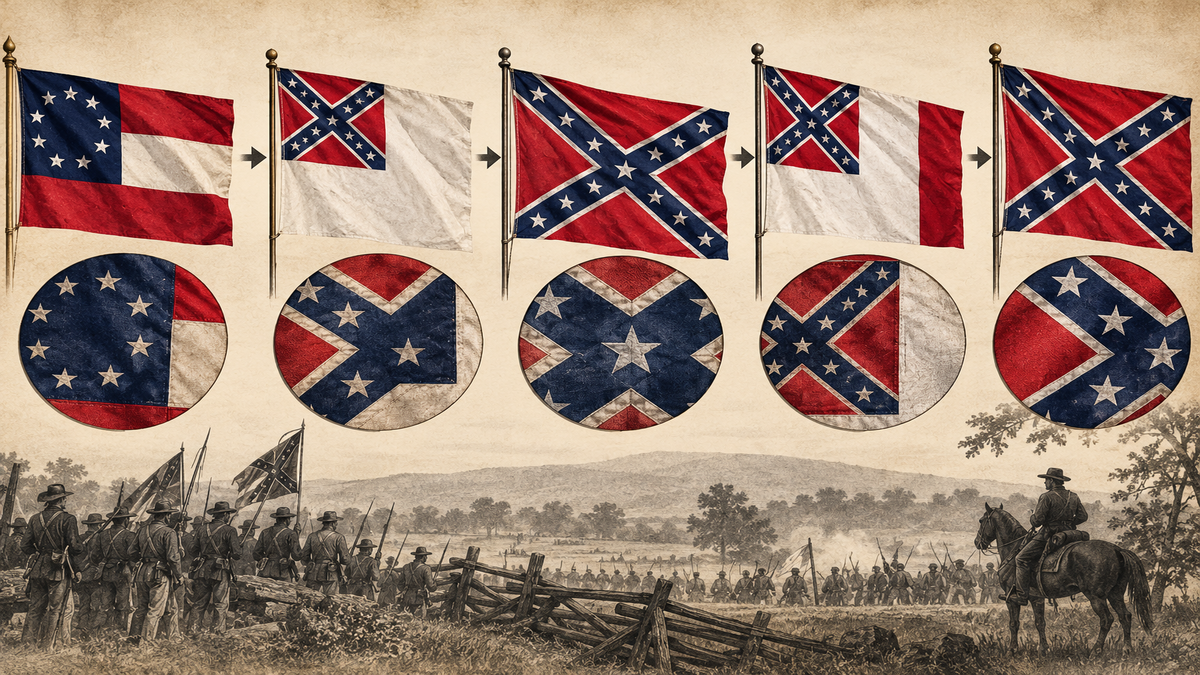
Historical infographic showing the evolution of Confederate rebel flag designs, with five flag illustrations, close-up details, and a Civil War battlefield scene.

The flag most people recognize today as the Confederate or rebel flag was not one of the Confederacy’s national flags. It developed as a military battle flag during the Civil War, while several national, regional, naval, and regimental designs appeared between 1861 and 1865.

Understanding how rebel flag designs evolved helps explain why shape, star count, color, construction, and intended use can point to a flag’s specific period and purpose. Some designs were created for national use. Others responded to battlefield conditions or reflected the materials and makers available to a particular unit.

There is no single historical design that represents every Confederate flag. Each surviving example or documented pattern connects to a specific command, location, era, or purpose, giving collectors and history-minded buyers a clearer picture before choosing historic Confederate flag reproductions.

From the Stars and Bars to the Battle Flag

The Confederate States of America adopted its First National Flag in 1861. Commonly called the Stars and Bars, it used red, white, and blue horizontal fields with a blue canton containing white stars.

The design had an immediate practical problem. Its colors and general appearance could resemble the United States flag from a distance, especially through smoke and movement on a battlefield. Soldiers needed a military standard they could recognize quickly.
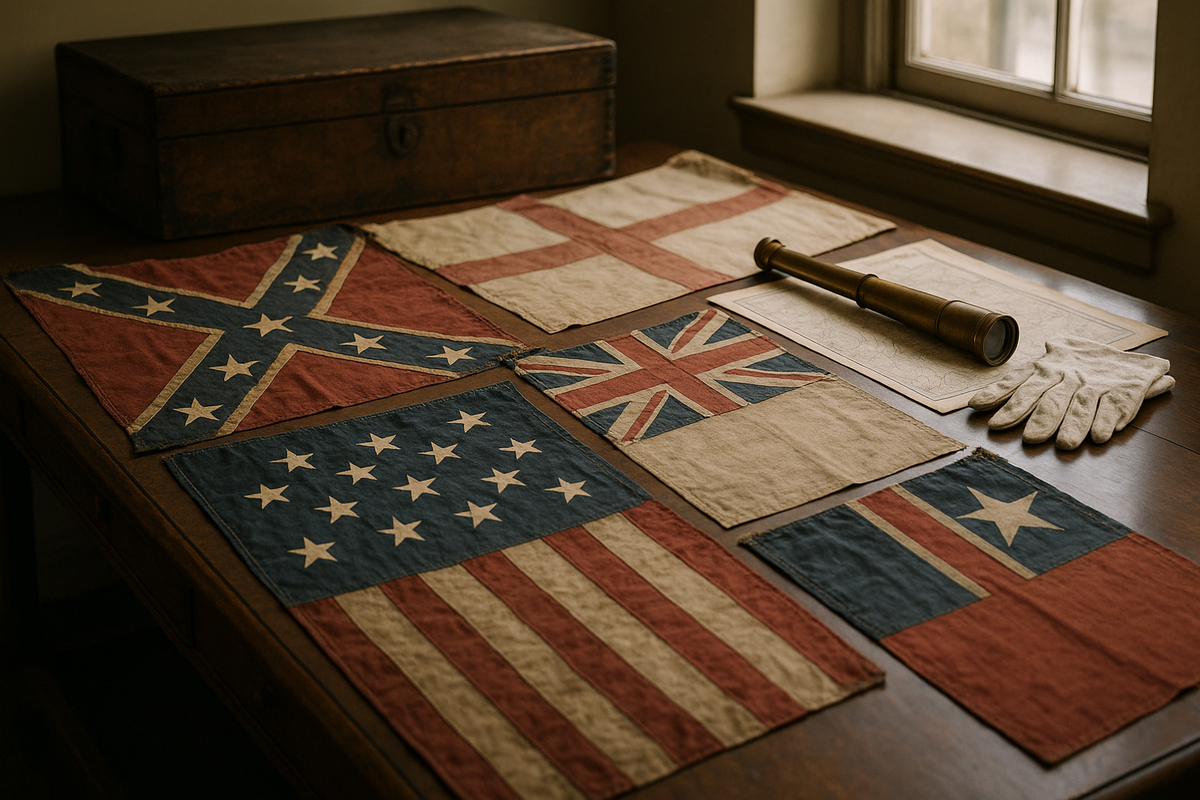
Museum-style display of hand-stitched regional battle flags and naval ensigns with faded fabrics, brass spyglass, white gloves, harbor charts, and a weathered wooden flag chest.

That problem encouraged the development of separate battle flags. The best-known pattern placed a blue saltire, or diagonal cross, with white stars against a red field. The Army of Northern Virginia became closely associated with a square version of this design.

The battle flag didn’t replace every Confederate flag. It served a different purpose from the national colors and appeared in several forms depending on command, region, and maker. For soldiers in the field, it also served as an identity image that helped distinguish one force or unit from another at a glance.

A simplified timeline shows how the major forms developed:

  • 1861: The First National Flag, or Stars and Bars, was adopted for the Confederate government.
  • Early Civil War: Recognition problems contributed to the development and wider use of separate battle flags.
  • 1863: The Second National Flag placed the battle emblem in the canton of a largely white field.
  • 1865: The Third National Flag added a red vertical bar to the Second National design after concerns that its largely white field could resemble a flag of surrender when hanging limp.
  • Throughout the war: Regimental, state, naval, militia, and locally produced flags continued to introduce additional variations.

The familiar red battle design later became the best-known Confederate symbol, but its original historical role was military rather than national.

How Industrial Design Shaped Battlefield Flags

Flag design during the Civil War had to work under difficult conditions. A standard carried on parade could be studied at close range. A battlefield flag had to remain recognizable through smoke, distance, movement, and confusion.

That placed practical demands on the design. Strong contrast helped. So did bold shapes that soldiers could recognize quickly. The saltire pattern gave Confederate battle flags a visual form that stood apart from the horizontal stripes of the First National Flag.

Some of those choices resemble industrial design, with the flag’s appearance shaped by how soldiers needed to use it in the field. The same principle appears in product design today, where form, visibility, materials, and intended use influence the finished object. Battlefield standards had to balance visibility with portability. They needed to be large enough to identify but manageable enough for a color bearer to carry with a regiment.

Materials also affected the finished flag. The historical record includes examples made with different fabrics, dyes, painted details, and appliquéd stars. Silk could be used for presentation colors, while other available fabrics were better suited to regular service.

Production wasn’t perfectly standardized. Government depots, contractors, local sewing groups, and individual makers all contributed to flag production. Shortages of cloth, dyes, transportation, and skilled labor also affected what could be made.

As a result, surviving flags may differ in:

  • dimensions and proportions
  • shades of red and blue
  • number, size, and arrangement of stars
  • border colors
  • fabric and stitching
  • lettering, seals, or other unit markings

Those differences are part of the history preserved in each flag. They can connect a surviving example with a particular unit, maker, issue period, or military command.

Confederate National Flags and Their Roles

Three official national flags were used by the Confederacy during the Civil War, while battle and military flags existed alongside them.

Flag form Period Main features Historical role
First National Flag, or Stars and Bars Introduced in 1861 Red, white, and blue horizontal fields with a blue canton and white stars Official national flag of the Confederate government
Battle flag patterns Developed during the war Red field, blue saltire, and white stars; square and rectangular versions existed Military identification and battlefield use
Second National Flag Introduced in 1863 Battle emblem in the canton of a largely white field Second official national flag
Third National Flag Adopted in 1865 Modified Second National design with a red vertical section Final official national flag of the Confederacy

The number of stars could also carry meaning. Confederate flags reflected the states claimed or represented at different points, while regimental and locally made flags sometimes followed their own patterns.

Identifying a historic Confederate flag from a single image can be difficult. A description that accurately fits one surviving example may not describe every flag of the same general type.

Photographs, military records, surviving documents, period illustrations, and preserved examples can all provide information for identification. Researchers often need several pieces of evidence before assigning a flag to a specific unit or period.

Regional, Regimental, and Naval Variations

National flags tell only part of the story. Confederate armies, individual regiments, militia companies, states, and naval forces also used their own colors.

Regional battle flags could vary sharply from the Army of Northern Virginia pattern. Some commands used rectangular forms, while others adopted distinct symbols, colors, or arrangements. Local production increased that variation because makers worked from available materials and references rather than one perfectly uniform standard.

Regimental flags could be even more individual. Lettering, unit names, battle honors, state symbols, and decorative details sometimes appeared on colors made for a particular organization.

Naval use introduced another distinct flag form. The Confederate Navy Jack used a rectangular saltire design and is often confused with the square Army of Northern Virginia battle flag, even though the two served different purposes.

For collectors, reenactors, historians, heritage groups, and anyone choosing a period-style reproduction, shape is one of the first details worth checking. A square battle flag and a rectangular naval-style version may share the same basic visual language, but they aren’t automatically the same historical flag.

Construction deserves similar attention. Hand-cut stars, painted markings, uneven stitching, fabric choices, and other details can reflect the methods available to the original maker. A surviving concept image, illustration, or reproduction may not match another documented specimen exactly.

Compare the whole flag before identifying it. Proportion, construction, markings, and documented use reveal far more than one familiar symbol alone.

How Confederate Flag Tradition Evolved after the Civil War

The battle flag’s meaning didn’t stop changing when the Civil War ended. Its later history became separate from its original military function.

During the war, Confederate flags identified governments, armies, regiments, and other military organizations. Afterward, the battle flag appeared in commemorative, regional, political, commercial, and cultural settings. As tradition evolved, the same symbols moved into new settings, including collections, public displays, private property, and the home.

People have attached sharply different meanings to it over time. Some display it in connection with Southern heritage, family history, military collecting, or Civil War interest. Others associate it with slavery, segregationist resistance, racism, and extremist movements because of the Confederacy’s history and the flag’s later political use.

Those meanings make respectful discussion of Confederate symbols useful. Separating a flag’s original wartime role from its later political and cultural use shows how its symbolism changed over time.

For collectors, reenactors, veterans, military families, and heritage supporters, the best place to start is with the flag itself. Look at when the design appeared, who used it, whether it served a national or military role, and whether a reproduction follows a documented period example.

The same approach helps when browsing historical flag products. Names such as “Confederate flag,” “battle flag,” “naval jack,” and “Stars and Bars” are often used loosely in everyday conversation. Looking at the actual design and its documented role helps distinguish one from another.

Reading Rebel Flag History Through Product Details

There was never one flag that covered every Confederate government, army, regiment, or naval unit. The designs changed as political needs, battlefield conditions, available materials, and local production changed.

The First National Flag represented the Confederate government but proved difficult to distinguish from U.S. colors in combat. Battle flags answered that problem with stronger visual contrast. Later national flags incorporated the battle emblem, while regional and locally made standards continued to vary.

For anyone studying, collecting, reenacting, or displaying these flags, small details can show where a design fits within Civil War history. Proportion, star arrangement, construction, border color, fabric, and unit markings can connect a flag to a particular place, period, or military organization.

Ultimate Flags carries Confederate national flags, battle flags, and other historic Civil War designs for collectors, reenactors, veterans, military families, heritage supporters, and others who want to preserve or display a connection to history. They also offers custom flag options for customers looking for a specific design that may be difficult to find in standard collections. Choosing the right product starts with knowing the history behind it.

Compare the design, period, and intended use so the flag displayed reflects the story, heritage, or military tradition it is meant to represent.


Posted on

Common Rebel Flag Color Meanings 

Father and son studying the history and color meanings of the Confederate rebel flag in an illustrated history book at a wooden table.

Red, white, and blue appear across several Confederate-era flag designs, but their arrangements and purposes changed throughout the Civil War. These colors helped identify military formations, distinguish national banners, and create recognizable symbols.

Understanding common rebel flag color meanings starts with the Confederate battle flag and the national banners used between 1861 and 1865. Each design has its own history, from the Stars and Bars to the Stainless Banner and the Blood-Stained Banner.

Today, these flags interest historians, veterans, collectors, reenactors, and individuals researching American history and Southern heritage. Those interested in historical rebel flag designs can find reproductions representing different periods and traditions. Confederate symbols also carry associations with slavery, segregation, and racial oppression that remain part of their history.

Knowing where these designs came from helps collectors identify historical reproductions, understand their symbolism, and present them accurately.

Understanding the Colors of Confederate Flags

Red, white, and blue were familiar colors in nineteenth-century national and military banners. Confederate flags followed many established flag-making traditions, combining recognizable colors with arrangements suited to political and military purposes. The colors didn’t follow a single official Confederate code. Some interpretations came from traditional symbolism, while others developed through military use and later cultural associations.

Red became the most recognizable background color of the Confederate battle flag. The familiar Army of Northern Virginia pattern featured a red field crossed by a blue diagonal saltire, outlined in white and containing white stars. In traditional flag symbolism, red was often associated with courage, sacrifice, and military determination. Its bright appearance also served a practical purpose.

Civil War soldiers needed to recognize their units through battlefield smoke, movement, and confusion. The red field helped make certain Confederate military banners easier to identify from a distance. That doesn’t mean red carried the same official message on every Confederate design. Its meaning depended on the particular flag and the circumstances in which it appeared.

Blue had a similarly recognizable place in Confederate military imagery. The diagonal blue cross became one of the defining features of the Army of Northern Virginia battle pattern. Traditional interpretations associated blue with loyalty, vigilance, and endurance. On the battlefield, its arrangement helped distinguish Confederate military colors from other banners.

The blue saltire, white borders, and contrasting red field created a pattern that looked noticeably different from the American flag. This distinction mattered because early Confederate national flags could be confused with Union banners during combat.

Civil War history curator examines preserved Confederate-era flags in glass cases, including Stars and Bars, Army of Northern Virginia battle flag, naval ensign, and state banner, with gloves, catalog cards, and period maps nearby.

White appeared in stars, stripes, borders, and large background fields. Nineteenth-century symbolism often connected the color with purity, honor, and peaceful intentions, although these meanings weren’t applied consistently. White also made flag details easier to see.

On the familiar battle design, white borders separated the blue saltire from the red field. White stars remained visible against the darker blue background. The second Confederate national flag used white differently, placing a battle-flag canton against a large white field. That arrangement later caused identification problems when the banner hung without wind.

Black wasn’t a defining color of the Confederate national flags or the familiar Army of Northern Virginia battle design. Modern black rebel flags and black-and-white variations generally represent later adaptations rather than documented nineteenth-century military standards.

Some use contrasting colors for decorative purposes. Others carry cultural or political associations connected to the organization or individual displaying them. Collectors should identify these modern variations separately from historical Confederate military banners. Their appearance alone doesn’t establish a particular historical meaning.

Battle Flags and the Development of Confederate Symbols

The Confederate States used several national flags between 1861 and 1865. Military formations also carried separate battle standards, regimental colors, naval flags, and specialized banners. These distinctions explain why the familiar Confederate battle flag wasn’t the national flag of the Confederacy.

The first Confederate national flag, known as the Stars and Bars, featured three horizontal stripes arranged red, white, and red. A blue canton contained white stars representing states claimed by the Confederacy. The design resembled the United States flag closely enough to create confusion during military engagements.

During the First Battle of Bull Run, also called First Manassas, in July 1861, similarities between Confederate and Union banners contributed to battlefield identification problems. Confederate commanders subsequently adopted distinctive battle patterns for particular military formations.

The Army of Northern Virginia became associated with the recognizable red field and blue diagonal cross. Other Confederate commands used different standards, meaning the familiar design wasn’t the sole official battle flag of the Confederate army.

The stars offer another way to distinguish historical patterns. On Confederate national and battle flags, stars generally represented states claimed by the Confederacy rather than individual military units. The familiar thirteen-star battle design represented the eleven states that formally seceded, along with Confederate claims to Kentucky and Missouri.

Different military suppliers and local flag makers produced variations in star arrangement, fabric, dimensions, and border construction. These differences matter when researching the historical meaning behind rebel flag designs, particularly when comparing military standards with national banners.

The following table shows how several Confederate-era flags differed in appearance and purpose.

Flag Design Main Colors and Features Historical Purpose
Stars and Bars Red, white, and red horizontal stripes with white stars on a blue canton First Confederate national flag, adopted in 1861
Army of Northern Virginia Battle Flag Red field with a blue diagonal saltire, white borders, and white stars Military identification during battle
Stainless Banner Large white field with a battle-flag canton Second Confederate national flag, adopted in 1863
Blood-Stained Banner White field, battle-flag canton, and red stripe at the fly Third Confederate national flag, adopted in 1865
Confederate Naval Jack Later versions featured a rectangular red field with a blue diagonal cross and white stars Naval identification, with designs changing during the war
State and Regimental Banners Different colors, symbols, and locally produced arrangements Identification of states and military formations

The table also shows why accurate naming matters. A national banner, regimental standard, and naval jack may contain similar Confederate symbols without representing the same historical role. Collectors researching Civil War flags can use these distinctions to identify reproductions and understand how designs changed during the conflict.

The Stainless Banner and Its Historical Significance

The Stainless Banner became the Confederacy’s second national flag in 1863. It featured a square battle-flag canton against a large white field, replacing the earlier Stars and Bars.

Some Confederate supporters associated the white field with purity and political ideals. These interpretations must be viewed in the context of a government established to preserve slavery.

The design created a practical problem. Without enough wind, the battle-flag canton could be difficult to see, leaving the white field resembling a flag of truce or surrender.

In March 1865, Confederate lawmakers adopted the Blood-Stained Banner, retaining the white field and battle-flag canton while adding a vertical red stripe at the fly end. This made the flag easier to distinguish from a surrender banner.

Adopted shortly before the Confederacy’s defeat, the Blood-Stained Banner remained in official use briefly. Its red fly stripe distinguishes it from the 1863 Stainless Banner, an important detail for collectors seeking accurate reproductions.

Collectors can compare several features when examining Confederate-era designs:

  • Historical period and documented use
  • Canton shape and proportions
  • Number and arrangement of stars
  • Red, white, and blue color placement
  • Square or rectangular proportions
  • Fabric, printing, stitching, and construction

Modern reproductions may differ from original military banners in materials and manufacturing. Authentic nineteenth-century artifacts require careful examination to establish age, condition, and value.

Accurate reproductions help reenactors, historians, and collectors represent specific Civil War periods. Ultimate Flags offers Confederate battle flags, historical Civil War banners, and other American flag designs for customers interested in military history and Southern heritage. Product specifications help buyers select designs that match their historical interests.

Confederate Flags in Modern Culture and Public Displays

Confederate flags have carried different associations since the Civil War. Their original political and military purposes remain part of the historical record, alongside the ways these symbols were used after 1865.

Some individuals associate Confederate banners with family ancestry, regional heritage, military history, or historical collecting. Others connect them with slavery, secession, segregation, and racial discrimination.

These associations come from documented events, including the Confederacy’s defense of slavery and the later use of Confederate imagery by segregationist and white-supremacist organizations. During the decades following the Civil War, Confederate flags appeared in veterans’ commemorations, memorial activities, and regional historical displays.

In the twentieth century, the familiar battle flag was also used by organizations opposing racial integration and civil rights. That history continues to influence public interpretation. News coverage and public discussions frequently address Confederate imagery when it appears at schools, government buildings, political events, or community gatherings.

Understanding these reactions requires attention to the flag’s original purpose, its later use, and the circumstances surrounding its display. A thoughtful approach to discussing Confederate symbols can help people explain their historical interpretations while acknowledging why others may view the same imagery differently.

Display settings can also affect how a flag is understood. A Confederate military banner presented in a museum alongside period documents, Union flags, photographs, and historical explanations provides a different setting from an unaccompanied display at a public gathering.

Private collections, reenactment exhibits, and family history presentations can also use historical records to explain a flag’s origin and purpose. Accurate labels, dates, and descriptions help visitors distinguish Confederate national banners from battle flags and state standards.

Legal considerations may affect where these symbols can be displayed. In the United States, private display of Confederate imagery generally receives First Amendment protection against government restrictions based solely on viewpoint. That protection doesn’t give individuals unrestricted permission to display flags on someone else’s property or disregard applicable rules.

Private employers, businesses, event organizers, and property owners may establish display policies, subject to relevant laws. Public institutions and government displays involve additional legal and policy considerations.

Collectors planning exhibitions or organized events should review venue requirements before installing historical flags. Clear identification and appropriate historical information help preserve the record while giving observers a better understanding of the design being presented.

Choosing Historical Flags for an Accurate Collection

Historical flag collecting begins with identifying the period, military formation, or tradition a design represents. Collectors studying the early Confederacy may choose the Stars and Bars, while those interested in the Army of Northern Virginia may prefer a battle-pattern reproduction with accurate stars and proportions.

Collections covering later Civil War periods might include the Stainless Banner and Blood-Stained Banner to show changes in Confederate national designs. State banners, cavalry guidons, and naval standards provide additional historical context.

These distinctions help collectors identify designs accurately and avoid mistaking modern reproductions for original artifacts. Materials and construction also matter.

Modern flags are made from polyester, nylon, cotton, and other fabrics, using printed designs, embroidery, and various finishing methods. Outdoor flags need weather-resistant construction, while indoor displays may prioritize appearance and period styling.

Buyers should compare dimensions, fabric weight, stitching, reinforced edges, and grommets. Larger flags suit exhibitions and outdoor displays, while smaller reproductions work well in private collections, offices, and educational settings.

Historical collections can combine Confederate and Union banners, state flags, military records, and period maps to show how flags were used during the Civil War.

Ultimate Flags offers American, military, and historical flag reproductions for collectors, reenactors, and heritage enthusiasts. Custom flag services are also available for distinctive designs, personal symbols, and organizational flags.

Customers seeking specific historical patterns can review available products and inquire about custom options. Accurate designs and suitable materials help create collections that reflect their historical interests.

Find Historical Flag Reproductions at Ultimate Flags

Ultimate Flags offers Confederate battle flags, Stars and Bars designs, and other historical American flags in a variety of sizes, materials, and construction styles. Collectors can compare recognizable Civil War-era designs, review product specifications, and select reproductions suited to historical exhibits, reenactments, personal collections, and heritage displays.

The selection also includes patriotic and military flags for customers interested in American history, service traditions, and personal expression. For customers seeking a particular design, Ultimate Flags provides custom flag services and options for personalized artwork.

Visit Ultimate Flags to browse available historical and patriotic flags, compare materials and sizes, or inquire about a custom design that reflects a particular historical interest or personal tradition.

Posted on

Top 3 Places to Buy Rebel Flags in Bulk for Events

Top 3 Places to Buy Rebel Flags in Bulk for Events

Wondering about the best way to top 3 places to buy rebel flags in bulk for events? This guide covers everything you need to know—from design history to choosing the right materials, sizes, and suppliers.

Understanding the Symbolism of the Rebel Flag

The Rebel Flag, often called the Confederate Battle Flag, has deep roots in Southern heritage and American history. It has evolved across different contexts—from the Bonnie Blue to the Southern Cross design used by the Army of Northern Virginia.

Materials, Sizes, and Buying Considerations

Cotton vs. Polyester: Which Should You Choose?

Cotton flags offer a classic, ceremonial look while polyester and nylon options are better for outdoor durability. Weather resistance and UV protection are key buying considerations.

Standard Sizes for Outdoor Display

Common sizes include 3×5 ft for yards and poles, and 5×8 ft or larger for barns or major displays.

Where to Buy High-Quality Rebel Flags

USA-Made Options and Trusted Vendors

Always buy from vendors that offer USA-made flags with double-stitched seams and brass grommets.

Legal Considerations by State

While legal in most states, there may be restrictions in public settings or institutions. Check local laws before displaying.

Explore More Rebel Flag Resources

Ready to buy? Browse our full collection of authentic Confederate and Rebel flags here: Rebel Flags for Sale.

Posted on

Buyer’s Guide: Vintage-Look Rebel Flags for Decor

Buyer’s Guide: Vintage-Look Rebel Flags for Decor

Wondering about the best way to buyer’s guide: vintage-look rebel flags for decor? This guide covers everything you need to know—from design history to choosing the right materials, sizes, and suppliers.

Understanding the Symbolism of the Rebel Flag

The Rebel Flag, often called the Confederate Battle Flag, has deep roots in Southern heritage and American history. It has evolved across different contexts—from the Bonnie Blue to the Southern Cross design used by the Army of Northern Virginia.

Materials, Sizes, and Buying Considerations

Cotton vs. Polyester: Which Should You Choose?

Cotton flags offer a classic, ceremonial look while polyester and nylon options are better for outdoor durability. Weather resistance and UV protection are key buying considerations.

Standard Sizes for Outdoor Display

Common sizes include 3×5 ft for yards and poles, and 5×8 ft or larger for barns or major displays.

Where to Buy High-Quality Rebel Flags

USA-Made Options and Trusted Vendors

Always buy from vendors that offer USA-made flags with double-stitched seams and brass grommets.

Legal Considerations by State

While legal in most states, there may be restrictions in public settings or institutions. Check local laws before displaying.

Explore More Rebel Flag Resources

Ready to buy? Browse our full collection of authentic Confederate and Rebel flags here: Rebel Flags for Sale.

Posted on

Buying Rebel Flags with Pole Kits: What You Need to Know

Buying Rebel Flags with Pole Kits: What You Need to Know

Wondering about the best way to buying rebel flags with pole kits: what you need to know? This guide covers everything you need to know—from design history to choosing the right materials, sizes, and suppliers.

Understanding the Symbolism of the Rebel Flag

The Rebel Flag, often called the Confederate Battle Flag, has deep roots in Southern heritage and American history. It has evolved across different contexts—from the Bonnie Blue to the Southern Cross design used by the Army of Northern Virginia.

Materials, Sizes, and Buying Considerations

Cotton vs. Polyester: Which Should You Choose?

Cotton flags offer a classic, ceremonial look while polyester and nylon options are better for outdoor durability. Weather resistance and UV protection are key buying considerations.

Standard Sizes for Outdoor Display

Common sizes include 3×5 ft for yards and poles, and 5×8 ft or larger for barns or major displays.

Where to Buy High-Quality Rebel Flags

USA-Made Options and Trusted Vendors

Always buy from vendors that offer USA-made flags with double-stitched seams and brass grommets.

Legal Considerations by State

While legal in most states, there may be restrictions in public settings or institutions. Check local laws before displaying.

Explore More Rebel Flag Resources

Ready to buy? Browse our full collection of authentic Confederate and Rebel flags here: Rebel Flags for Sale.

Posted on

Best Rebel Flags for Motorcycle Rallies & Car Shows

Best Rebel Flags for Motorcycle Rallies & Car Shows

Wondering about the best way to best rebel flags for motorcycle rallies & car shows? This guide covers everything you need to know—from design history to choosing the right materials, sizes, and suppliers.

Understanding the Symbolism of the Rebel Flag

The Rebel Flag, often called the Confederate Battle Flag, has deep roots in Southern heritage and American history. It has evolved across different contexts—from the Bonnie Blue to the Southern Cross design used by the Army of Northern Virginia.

Materials, Sizes, and Buying Considerations

Cotton vs. Polyester: Which Should You Choose?

Cotton flags offer a classic, ceremonial look while polyester and nylon options are better for outdoor durability. Weather resistance and UV protection are key buying considerations.

Standard Sizes for Outdoor Display

Common sizes include 3×5 ft for yards and poles, and 5×8 ft or larger for barns or major displays.

Where to Buy High-Quality Rebel Flags

USA-Made Options and Trusted Vendors

Always buy from vendors that offer USA-made flags with double-stitched seams and brass grommets.

Legal Considerations by State

While legal in most states, there may be restrictions in public settings or institutions. Check local laws before displaying.

Explore More Rebel Flag Resources

Ready to buy? Browse our full collection of authentic Confederate and Rebel flags here: Rebel Flags for Sale.

Posted on

What’s the Most Popular Confederate Flag Design to Buy?

What’s the Most Popular Confederate Flag Design to Buy?

Wondering about the best way to what’s the most popular confederate flag design to buy?? This guide covers everything you need to know—from design history to choosing the right materials, sizes, and suppliers.

Understanding the Symbolism of the Rebel Flag

The Rebel Flag, often called the Confederate Battle Flag, has deep roots in Southern heritage and American history. It has evolved across different contexts—from the Bonnie Blue to the Southern Cross design used by the Army of Northern Virginia.

Materials, Sizes, and Buying Considerations

Cotton vs. Polyester: Which Should You Choose?

Cotton flags offer a classic, ceremonial look while polyester and nylon options are better for outdoor durability. Weather resistance and UV protection are key buying considerations.

Standard Sizes for Outdoor Display

Common sizes include 3×5 ft for yards and poles, and 5×8 ft or larger for barns or major displays.

Where to Buy High-Quality Rebel Flags

USA-Made Options and Trusted Vendors

Always buy from vendors that offer USA-made flags with double-stitched seams and brass grommets.

Legal Considerations by State

While legal in most states, there may be restrictions in public settings or institutions. Check local laws before displaying.

Explore More Rebel Flag Resources

Ready to buy? Browse our full collection of authentic Confederate and Rebel flags here: Rebel Flags for Sale.

Posted on

Do Any States Ban the Sale of Confederate Flags?

Do Any States Ban the Sale of Confederate Flags?

Wondering about the best way to do any states ban the sale of confederate flags?? This guide covers everything you need to know—from design history to choosing the right materials, sizes, and suppliers.

Understanding the Symbolism of the Rebel Flag

The Rebel Flag, often called the Confederate Battle Flag, has deep roots in Southern heritage and American history. It has evolved across different contexts—from the Bonnie Blue to the Southern Cross design used by the Army of Northern Virginia.

Materials, Sizes, and Buying Considerations

Cotton vs. Polyester: Which Should You Choose?

Cotton flags offer a classic, ceremonial look while polyester and nylon options are better for outdoor durability. Weather resistance and UV protection are key buying considerations.

Standard Sizes for Outdoor Display

Common sizes include 3×5 ft for yards and poles, and 5×8 ft or larger for barns or major displays.

Where to Buy High-Quality Rebel Flags

USA-Made Options and Trusted Vendors

Always buy from vendors that offer USA-made flags with double-stitched seams and brass grommets.

Legal Considerations by State

While legal in most states, there may be restrictions in public settings or institutions. Check local laws before displaying.

Explore More Rebel Flag Resources

Ready to buy? Browse our full collection of authentic Confederate and Rebel flags here: Rebel Flags for Sale.

Posted on

Can You Still Buy Confederate Flags on Amazon or Walmart?

Can You Still Buy Confederate Flags on Amazon or Walmart?

Wondering about the best way to can you still buy confederate flags on amazon or walmart?? This guide covers everything you need to know—from design history to choosing the right materials, sizes, and suppliers.

Understanding the Symbolism of the Rebel Flag

The Rebel Flag, often called the Confederate Battle Flag, has deep roots in Southern heritage and American history. It has evolved across different contexts—from the Bonnie Blue to the Southern Cross design used by the Army of Northern Virginia.

Materials, Sizes, and Buying Considerations

Cotton vs. Polyester: Which Should You Choose?

Cotton flags offer a classic, ceremonial look while polyester and nylon options are better for outdoor durability. Weather resistance and UV protection are key buying considerations.

Standard Sizes for Outdoor Display

Common sizes include 3×5 ft for yards and poles, and 5×8 ft or larger for barns or major displays.

Where to Buy High-Quality Rebel Flags

USA-Made Options and Trusted Vendors

Always buy from vendors that offer USA-made flags with double-stitched seams and brass grommets.

Legal Considerations by State

While legal in most states, there may be restrictions in public settings or institutions. Check local laws before displaying.

Explore More Rebel Flag Resources

Ready to buy? Browse our full collection of authentic Confederate and Rebel flags here: Rebel Flags for Sale.

Posted on

Where to Buy the Hard-to-Find Third Confederate National Flag

Where to Buy the Hard-to-Find Third Confederate National Flag

Wondering about the best way to where to buy the hard-to-find third confederate national flag? This guide covers everything you need to know—from design history to choosing the right materials, sizes, and suppliers.

Understanding the Symbolism of the Rebel Flag

The Rebel Flag, often called the Confederate Battle Flag, has deep roots in Southern heritage and American history. It has evolved across different contexts—from the Bonnie Blue to the Southern Cross design used by the Army of Northern Virginia.

Materials, Sizes, and Buying Considerations

Cotton vs. Polyester: Which Should You Choose?

Cotton flags offer a classic, ceremonial look while polyester and nylon options are better for outdoor durability. Weather resistance and UV protection are key buying considerations.

Standard Sizes for Outdoor Display

Common sizes include 3×5 ft for yards and poles, and 5×8 ft or larger for barns or major displays.

Where to Buy High-Quality Rebel Flags

USA-Made Options and Trusted Vendors

Always buy from vendors that offer USA-made flags with double-stitched seams and brass grommets.

Legal Considerations by State

While legal in most states, there may be restrictions in public settings or institutions. Check local laws before displaying.

Explore More Rebel Flag Resources

Ready to buy? Browse our full collection of authentic Confederate and Rebel flags here: Rebel Flags for Sale.

Posted on

Best Material for Outdoor Confederate Flags (Buyer’s Guide)

Best Material for Outdoor Confederate Flags (Buyer’s Guide)

Wondering about the best way to best material for outdoor confederate flags (buyer’s guide)? This guide covers everything you need to know—from design history to choosing the right materials, sizes, and suppliers.

Understanding the Symbolism of the Rebel Flag

The Rebel Flag, often called the Confederate Battle Flag, has deep roots in Southern heritage and American history. It has evolved across different contexts—from the Bonnie Blue to the Southern Cross design used by the Army of Northern Virginia.

Materials, Sizes, and Buying Considerations

Cotton vs. Polyester: Which Should You Choose?

Cotton flags offer a classic, ceremonial look while polyester and nylon options are better for outdoor durability. Weather resistance and UV protection are key buying considerations.

Standard Sizes for Outdoor Display

Common sizes include 3×5 ft for yards and poles, and 5×8 ft or larger for barns or major displays.

Where to Buy High-Quality Rebel Flags

USA-Made Options and Trusted Vendors

Always buy from vendors that offer USA-made flags with double-stitched seams and brass grommets.

Legal Considerations by State

While legal in most states, there may be restrictions in public settings or institutions. Check local laws before displaying.

Explore More Rebel Flag Resources

Ready to buy? Browse our full collection of authentic Confederate and Rebel flags here: Rebel Flags for Sale.

Posted on

How Much Does a Confederate Battle Flag Cost?

How Much Does a Confederate Battle Flag Cost?

Wondering about the best way to how much does a confederate battle flag cost?? This guide covers everything you need to know—from design history to choosing the right materials, sizes, and suppliers.

Understanding the Symbolism of the Rebel Flag

The Rebel Flag, often called the Confederate Battle Flag, has deep roots in Southern heritage and American history. It has evolved across different contexts—from the Bonnie Blue to the Southern Cross design used by the Army of Northern Virginia.

Materials, Sizes, and Buying Considerations

Cotton vs. Polyester: Which Should You Choose?

Cotton flags offer a classic, ceremonial look while polyester and nylon options are better for outdoor durability. Weather resistance and UV protection are key buying considerations.

Standard Sizes for Outdoor Display

Common sizes include 3×5 ft for yards and poles, and 5×8 ft or larger for barns or major displays.

Where to Buy High-Quality Rebel Flags

USA-Made Options and Trusted Vendors

Always buy from vendors that offer USA-made flags with double-stitched seams and brass grommets.

Legal Considerations by State

While legal in most states, there may be restrictions in public settings or institutions. Check local laws before displaying.

Explore More Rebel Flag Resources

Ready to buy? Browse our full collection of authentic Confederate and Rebel flags here: Rebel Flags for Sale.