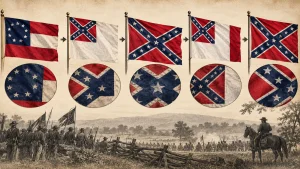
The flag most people recognize today as the Confederate or rebel flag was not one of the Confederacy’s national flags. It developed as a military battle flag during the Civil War, while several national, regional, naval, and regimental designs appeared between 1861 and 1865.
Understanding how rebel flag designs evolved helps explain why shape, star count, color, construction, and intended use can point to a flag’s specific period and purpose. Some designs were created for national use. Others responded to battlefield conditions or reflected the materials and makers available to a particular unit.
There is no single historical design that represents every Confederate flag. Each surviving example or documented pattern connects to a specific command, location, era, or purpose, giving collectors and history-minded buyers a clearer picture before choosing historic Confederate flag reproductions.
From the Stars and Bars to the Battle Flag
The Confederate States of America adopted its First National Flag in 1861. Commonly called the Stars and Bars, it used red, white, and blue horizontal fields with a blue canton containing white stars.
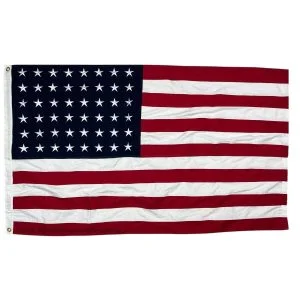
The design had an immediate practical problem. Its colors and general appearance could resemble the United States flag from a distance, especially through smoke and movement on a battlefield. Soldiers needed a military standard they could recognize quickly.
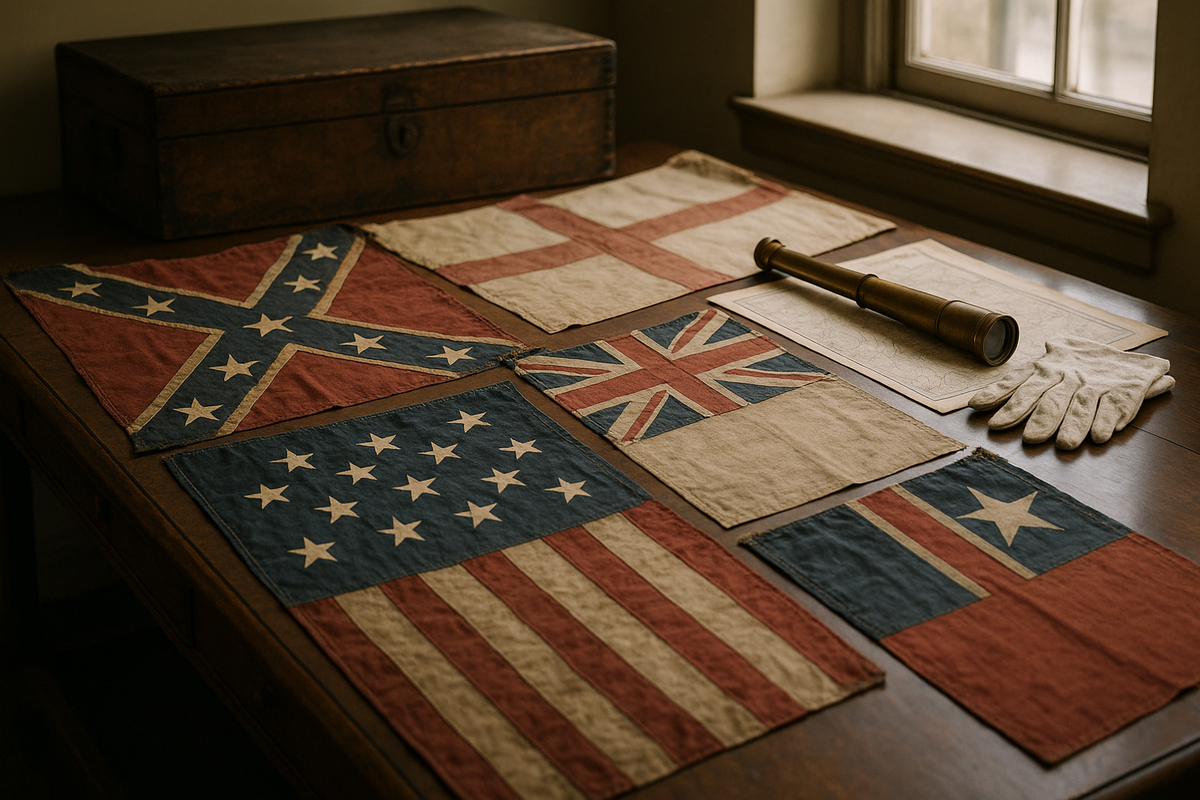
That problem encouraged the development of separate battle flags. The best-known pattern placed a blue saltire, or diagonal cross, with white stars against a red field. The Army of Northern Virginia became closely associated with a square version of this design.
The battle flag didn’t replace every Confederate flag. It served a different purpose from the national colors and appeared in several forms depending on command, region, and maker. For soldiers in the field, it also served as an identity image that helped distinguish one force or unit from another at a glance.
A simplified timeline shows how the major forms developed:
- 1861: The First National Flag, or Stars and Bars, was adopted for the Confederate government.
- Early Civil War: Recognition problems contributed to the development and wider use of separate battle flags.
- 1863: The Second National Flag placed the battle emblem in the canton of a largely white field.
- 1865: The Third National Flag added a red vertical bar to the Second National design after concerns that its largely white field could resemble a flag of surrender when hanging limp.
- Throughout the war: Regimental, state, naval, militia, and locally produced flags continued to introduce additional variations.
The familiar red battle design later became the best-known Confederate symbol, but its original historical role was military rather than national.
How Industrial Design Shaped Battlefield Flags
Flag design during the Civil War had to work under difficult conditions. A standard carried on parade could be studied at close range. A battlefield flag had to remain recognizable through smoke, distance, movement, and confusion.
That placed practical demands on the design. Strong contrast helped. So did bold shapes that soldiers could recognize quickly. The saltire pattern gave Confederate battle flags a visual form that stood apart from the horizontal stripes of the First National Flag.
Some of those choices resemble industrial design, with the flag’s appearance shaped by how soldiers needed to use it in the field. The same principle appears in product design today, where form, visibility, materials, and intended use influence the finished object. Battlefield standards had to balance visibility with portability. They needed to be large enough to identify but manageable enough for a color bearer to carry with a regiment.
Materials also affected the finished flag. The historical record includes examples made with different fabrics, dyes, painted details, and appliquéd stars. Silk could be used for presentation colors, while other available fabrics were better suited to regular service.
Production wasn’t perfectly standardized. Government depots, contractors, local sewing groups, and individual makers all contributed to flag production. Shortages of cloth, dyes, transportation, and skilled labor also affected what could be made.
As a result, surviving flags may differ in:
- dimensions and proportions
- shades of red and blue
- number, size, and arrangement of stars
- border colors
- fabric and stitching
- lettering, seals, or other unit markings
Those differences are part of the history preserved in each flag. They can connect a surviving example with a particular unit, maker, issue period, or military command.
Confederate National Flags and Their Roles
Three official national flags were used by the Confederacy during the Civil War, while battle and military flags existed alongside them.
| Flag form | Period | Main features | Historical role |
|---|---|---|---|
| First National Flag, or Stars and Bars | Introduced in 1861 | Red, white, and blue horizontal fields with a blue canton and white stars | Official national flag of the Confederate government |
| Battle flag patterns | Developed during the war | Red field, blue saltire, and white stars; square and rectangular versions existed | Military identification and battlefield use |
| Second National Flag | Introduced in 1863 | Battle emblem in the canton of a largely white field | Second official national flag |
| Third National Flag | Adopted in 1865 | Modified Second National design with a red vertical section | Final official national flag of the Confederacy |
The number of stars could also carry meaning. Confederate flags reflected the states claimed or represented at different points, while regimental and locally made flags sometimes followed their own patterns.
Identifying a historic Confederate flag from a single image can be difficult. A description that accurately fits one surviving example may not describe every flag of the same general type.
Photographs, military records, surviving documents, period illustrations, and preserved examples can all provide information for identification. Researchers often need several pieces of evidence before assigning a flag to a specific unit or period.
Regional, Regimental, and Naval Variations
National flags tell only part of the story. Confederate armies, individual regiments, militia companies, states, and naval forces also used their own colors.
Regional battle flags could vary sharply from the Army of Northern Virginia pattern. Some commands used rectangular forms, while others adopted distinct symbols, colors, or arrangements. Local production increased that variation because makers worked from available materials and references rather than one perfectly uniform standard.
Regimental flags could be even more individual. Lettering, unit names, battle honors, state symbols, and decorative details sometimes appeared on colors made for a particular organization.
Naval use introduced another distinct flag form. The Confederate Navy Jack used a rectangular saltire design and is often confused with the square Army of Northern Virginia battle flag, even though the two served different purposes.
For collectors, reenactors, historians, heritage groups, and anyone choosing a period-style reproduction, shape is one of the first details worth checking. A square battle flag and a rectangular naval-style version may share the same basic visual language, but they aren’t automatically the same historical flag.
Construction deserves similar attention. Hand-cut stars, painted markings, uneven stitching, fabric choices, and other details can reflect the methods available to the original maker. A surviving concept image, illustration, or reproduction may not match another documented specimen exactly.
Compare the whole flag before identifying it. Proportion, construction, markings, and documented use reveal far more than one familiar symbol alone.
How Confederate Flag Tradition Evolved after the Civil War
The battle flag’s meaning didn’t stop changing when the Civil War ended. Its later history became separate from its original military function.
During the war, Confederate flags identified governments, armies, regiments, and other military organizations. Afterward, the battle flag appeared in commemorative, regional, political, commercial, and cultural settings. As tradition evolved, the same symbols moved into new settings, including collections, public displays, private property, and the home.
People have attached sharply different meanings to it over time. Some display it in connection with Southern heritage, family history, military collecting, or Civil War interest. Others associate it with slavery, segregationist resistance, racism, and extremist movements because of the Confederacy’s history and the flag’s later political use.
Those meanings make respectful discussion of Confederate symbols useful. Separating a flag’s original wartime role from its later political and cultural use shows how its symbolism changed over time.
For collectors, reenactors, veterans, military families, and heritage supporters, the best place to start is with the flag itself. Look at when the design appeared, who used it, whether it served a national or military role, and whether a reproduction follows a documented period example.
The same approach helps when browsing historical flag products. Names such as “Confederate flag,” “battle flag,” “naval jack,” and “Stars and Bars” are often used loosely in everyday conversation. Looking at the actual design and its documented role helps distinguish one from another.
Reading Rebel Flag History Through Product Details
There was never one flag that covered every Confederate government, army, regiment, or naval unit. The designs changed as political needs, battlefield conditions, available materials, and local production changed.
The First National Flag represented the Confederate government but proved difficult to distinguish from U.S. colors in combat. Battle flags answered that problem with stronger visual contrast. Later national flags incorporated the battle emblem, while regional and locally made standards continued to vary.
For anyone studying, collecting, reenacting, or displaying these flags, small details can show where a design fits within Civil War history. Proportion, star arrangement, construction, border color, fabric, and unit markings can connect a flag to a particular place, period, or military organization.
Ultimate Flags carries Confederate national flags, battle flags, and other historic Civil War designs for collectors, reenactors, veterans, military families, heritage supporters, and others who want to preserve or display a connection to history. They also offers custom flag options for customers looking for a specific design that may be difficult to find in standard collections. Choosing the right product starts with knowing the history behind it.
Compare the design, period, and intended use so the flag displayed reflects the story, heritage, or military tradition it is meant to represent.