Founded on July 4, 1997, we’re America’s oldest online flag store—flying the banner longer than Google has existed.
Family-owned and based in O’Brien, Florida, we deliver high-quality flags to patriots, reenactors, military families, Southern heritage advocates, and defenders of freedom across the nation.
With a catalog of over 10,000 flags—from American Stars & Stripes to Gadsden, Confederate, military, historic war, custom designs, and more—every flag tells a story, and quality is non-negotiable.
Our roots run deep: descendants of Paul Revere continue a legacy of historical accuracy, First Amendment respect, and the unwavering belief that those who do not know history are doomed to repeat it.
We proudly support veterans, first responders, and nonprofit groups—ensuring America's defenders and their stories are never forgotten.
With decades of fast, caring service—even on backorders—and a team with over 65 years of combined experience, Ultimate Flags stands at the intersection of Patriots, Pride, Freedom, and Heritage—where every flag is a statement, a story, and a salute.
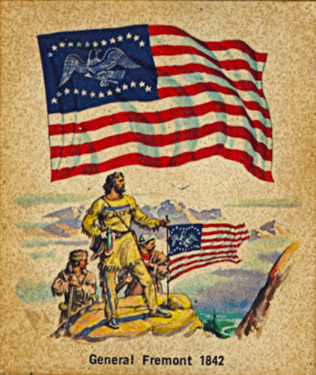
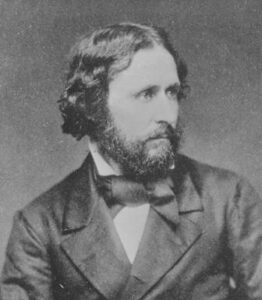
One of the most unusual American flags was that of explorer and first Republican Party candidate for President, John C. Fremont.
Fremont led several expeditions into the American West, some into areas claimed by Mexico. His wife Jessie created a unique banner for his exploration. The Stars and Stripes design is clearly represented, with 26 stars waving, but there is an eagle holding arrows and a peace pipe. (A peace pipe was a good symbol of “no harm intended” to Native Americans that would be encountered.).
One of the places he took his flag was Snow Peak mountain in the Rockies. He wrote that he “unfurled the national flag to wave in the breeze where never a flag had waved before.” The original flag still exists todayFremont is remembered for his planting of the American flag on the Rocky Mountains during his first expedition, symbolically claiming the West for the United States. For his botanical records and information collected on his explorations, several plants bear his name in his honor. Pathfinder Regional Park in Colorado displays a large sculpture of Fremont
Fremont’s wild side of his character came out during his third expedition. He was involved in actions that supported the rebellion against Mexico that lead to the California Republic and later statehood. He organized the first California volunteer militia, was one of its first Senators, and was a Major General in the Civil War. His reports about and actions in the American West were of major historical importance. We cannot overstate his influence on opening the West to settlement and American expansion to the Pacific.
In his memoirs, Fremont coined the phrase “Golden Gate” for the strait between Marin County and San Francisco County.
Thanks for reading! We hope you enjoyed our post. Please share with all your fellow patriots. Brought to you by: Ultimate Flags
When the chips are down, a man will fight with whatever he has to hand. More than once, what he had was a potato.
Everyone knows about the surprise attack on Pearl Harbor. Not every ship was armed, and not every man on an armed ship had weapon ready.
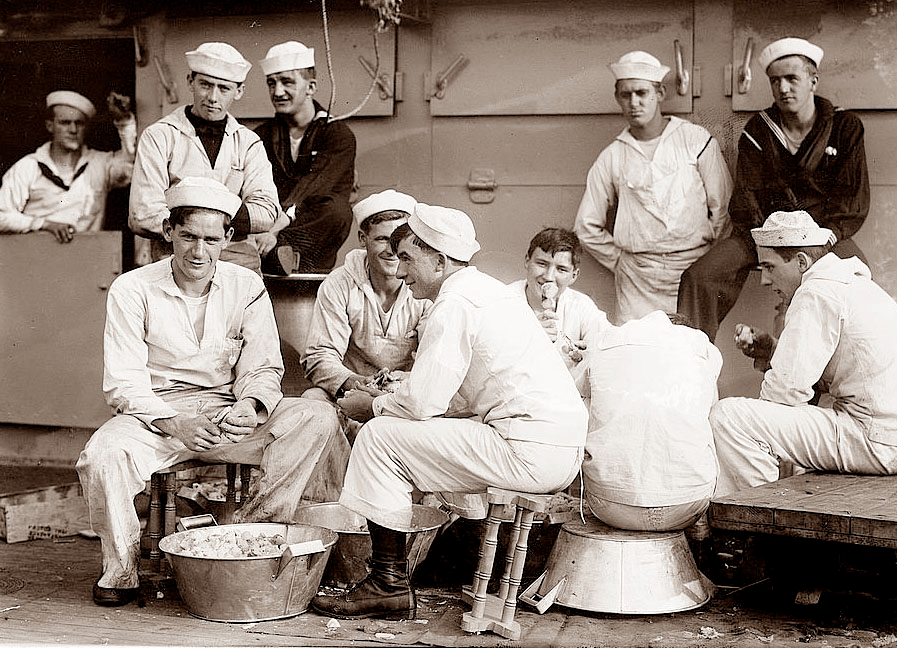
Hansen was an engineer on the transport ship USS Argonne. He was sleeping on deck next to a store of potatoes, when the attack came,. Not to be left out of the fight, he started throwing potatoes at the Japanese planes as they swooped in low.
“I was trying to whack somebody,” he said.
Jim Underwood was on the hospital ship USS Solace, moored near the battleship USS Arizona, a prime target. Jim was drinking a cup of coffee:“We could see the Japanese planes all the time. One of the battleships fired its 16-inch rifle at a plane. It was a little ridiculous, and didn’t come within a mile of it. We also had one guy who was supposed to be in the brig, but they had him up on deck peeling potatoes, and he was throwing potatoes at the planes – they were that close.”It wasn’t just the sailors throwing potatoes that day. Marine Pfc. James Evans was in his barracks waiting for transport to his guard post. Then he heard a “thump, thump, thump,” and the sergeant yelled, “Get your rifles! We’re being attacked!”
Several dozen rifles were suddenly firing out the windows, but not everyone had a gun, and those who didn’t were throwing potatoes at the planes. “We were fighting back with everything we had,” Evans said.The potatoes at Pearl Harbor didn’t shoot down any planes or save any ships, but it sure made some feel better. However, Pearl Harbor was not the last time that the Japanese faced the fury of an American flying potato. TheNavy destroyer USS O’Bannon was cruising one night in 1943, when it spotted a submarine. The Captain gave the order to ram the sub, but as they drew near, one of the officers suggested that it might be a mine-laying sub. If it was, the explosion could sink the O’Bannon.
The destroyer swiftly avoided a collision, but the maneuver left the two vessels next to each other. The Japanese sailors reacted by swinging their cannon to attack, but the destroyer was too close to lower its own guns.
American sailors on deck promptly started throwing potatoes from nearby crates, surprising the Japanese. In the dark the submarine sailors thought the potatoes were grenades, and ran to pick them up, tossing them back at the destroyer. This left the sub’s cannon unmanned, and gave the O’Bannon time to maneuver and aim its own cannons to blast the sub’s conning tower.
Those spuds had saved a ship.
Thanks for reading! We hope you enjoyed our post. Please share with all your fellow patriots. Brought to you by: Ultimate Flags
A question to those who have called for the ban on this historic flag:
Is your revulsion to this flag well founded?
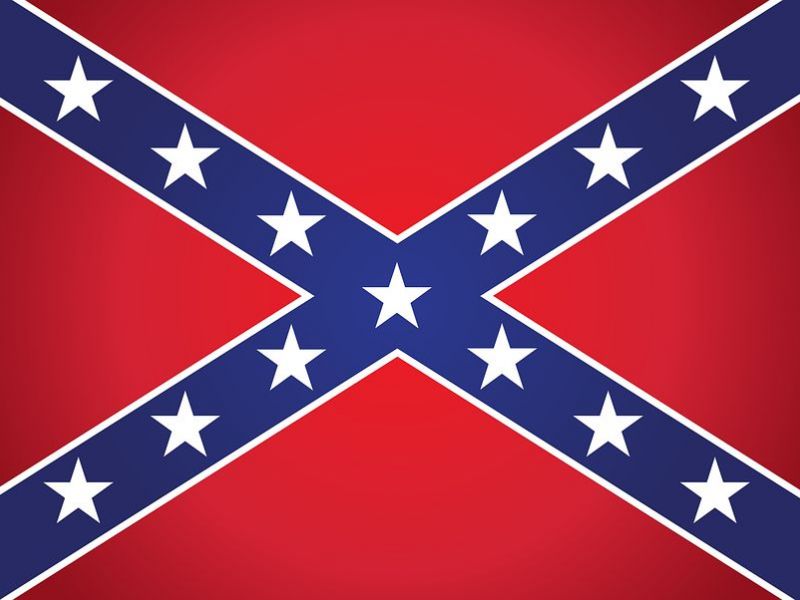
Here are three questions and answers that may challenge what you think you know. If you believe you have a well formed, rational reason for despising the Confederate flag with its red white and blue design, then I challenge you to keep reading. Question 1: Ask yourself, “Do I know the real history of the Confederate flag?” Many people wrongly think that the Confederate flag purely represents racism and is only flown by folks who believe in white supremacy. That idea couldn’t be further from the truth, and those who continue to spread that myth are either content in their ignorance or so anti-American that they don’t even bother to learn their own country’s history. Why People Believe the Myths In fairness, it’s not hard to understand why so many people hold wrong beliefs about the Confederate flag. It was, after all, flown by those in the Confederacy, and the Confederacy did, of course, support slavery. But connecting those few dots and assuming the flag is a racist symbol to everyone who flies it is shortsighted. The Truth about the Confederate Flag The truth is, what we now call the “Confederate Flag” wasn’t actually the national flag of the Confederacy but instead was its battle flag — and only one of many. Back in the 1860’s before the days of mass media and the internet, sharing information and getting any group unified was no easy feat. Consequently, it took a while for all the different factions of the Confederacy to settle on a single flag to represent their whole “nation.” It wasn’t unusual for different bands of the army to fly their own version of a Confederate flag, which represented the unique culture of their own micro-group. The Southern Cross became one of the most memorable of all the various Confederate flags and is the source of today’s controversy. However, it wasn’t designed as a symbol of hate but was meant to represent the culture of many of the Southern citizens. For instance, the flag features the cross of St. Andrew (the apostle who was martyred by crucifixion on an X-shaped cross), which is why the flag is commonly referred to as the “Southern Cross.” Many Southerners were of Scottish and Scotch-Irish descent and strongly related to St. Andrew, as he was the patron saint of Scotland. Also on the flag are stars to represent each state in the Confederacy as well as Kentucky and Missouri.
Cross of St. Andrew Flag Scotland
Thus, those who designed the flag did so with the intent to represent their shared history, culture, and unity. It was never meant as a symbol of hate. Similarly, most people who fly it today do so to honor their ancestral past and Southern pride — not out of nostalgia for the “slave days.” Question 2: Do you recognize that flying this flag (and others) represents our shared American rights? There is arguably nothing more American than having freedom of speech and allowing people the right to express their own opinions. Trying to ban the Confederate flag or forcing viewpoints about it onto others is about as un-American as it gets. The fact of the matter is, people have different feelings and opinions about the flag — and that’s okay! Even if we disagree with someone’s stance, we should all just be proud that, as Americans, everyone has the right to their own beliefs. Trying to put undue social pressure on people to conform to certain opinions or attempting to ban a flag goes against everything this country stands for. As Former US Democratic congressman and actor from the Dukes of Hazard, Ben Jones — who, by the way, is not too happy about Dukes being taken off the air due to that idiot shooting out a church and using the Confederate flag as his symbol-of-choice — said: “This is like the book burning in Nazi Germany or something. This sweeping cultural cleansing that they’re doing. It’s got to stop.” Seeing the Flag from Other People’s Perspective In addition to respecting people’s rights to their own opinions, if you really want to go out on a limb, you might try putting forth an effort to understand why some people have positive feelings about the Confederate flag. As mentioned above, for many the flag represents honor and respect for their ancestral past, but the sentiment often goes much deeper. One of the best explanations for why Confederate symbols still have meaning is attached to a Confederate monument at the South Carolina Statehouse. (As well as other Confederate monuments now under attack in other states.) It reads: “This monument perpetuates the memory, of those who true to the instincts of their birth, faithful to the teachings of their fathers, constant in their love for the state, died in the performance of their duty: who have glorified a fallen cause by the simple manhood of their lives, the patient endurance of suffering, and the heroism of death, and who, in the dark hours of imprisonment, in the hopelessness of the hospital, in the short sharp agony of the field, found support and consolation in the belief that at home they would not be forgotten.” Flying the Southern Cross doesn’t signify a wish to bring back slavery or support for some of the atrocious actions of the Confederacy. As the quote above explains, it’s about remembering those who fought and died for what they thought was right — and surely that’s something we can all respect. Question 3: Are you secretly uncertain in your beliefs? It takes courage to grant another freedom to express beliefs and options that counter your own. The less certain you are in your own beliefs, the more sensitive you are to expressions by others that challenge them. If you’ve read through this whole post, you shouldn’t be completely ignorant, since you should now have a little better understanding of the history of the flag and why people choose to fly it. If you’re still unwilling to explore our country’s multifaceted Civil War history, and if you still can’t honor people’s rights to their own beliefs and opinions (even if that means flying a flag to which you’re opposed) then you factually misunderstand freedom OR you are not well founded in your own beliefs. If your first urge is to shout down all opposition, then you should look at this personally. Those who ignore their history and blatantly try to deny citizens their basic rights, need to reevaluate how far they’ve veered from the tenets that our founding fathers set up as the foundation of our great country.
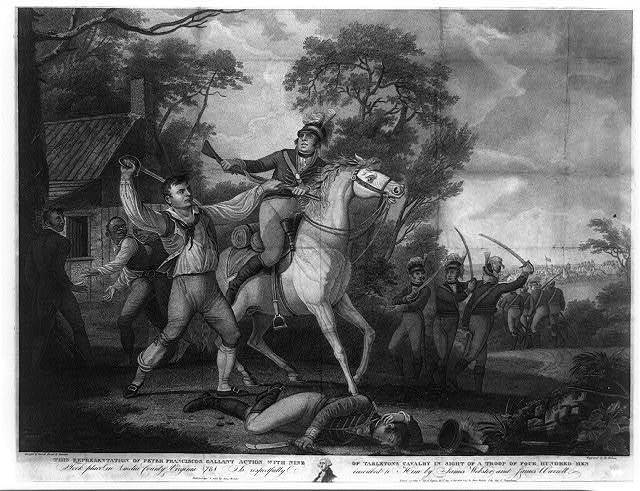
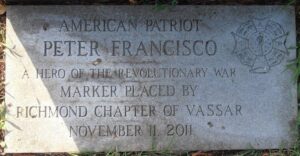
If Hollywood ever wants to create another box office hit war movie complete with mystery, romance, and swashbuckling action, it would have to be centered around Revolutionary War hero Peter Francisco. A five-year-old boy who was abandoned at a harbor in Virginia grew up to be one of our courageous soldiers in the War for Independence.
Peter Francisco, born Pedro Francisco, was known as the “Virginia Giant”, the “Giant of the Revolution” and sometimes as the “Virginia Hercules”, was a Portuguese-born American patriot and soldier of the American Revolution. Peter is said to have stood six and a half feet tall, and weighed in at 260 pounds.
At age 16 Peter enlisted as a private. It did not take long before his fighting skills and bravery became well known. He was always in the middle of every battle he fought, and was wounded repeatedly, but kept on fighting in more battles.
When General “Mad Anthony” Wayne stormed Stony Point, Peter was the second man over the British walls. But by that time he was already famous for his exploits. After several years in the northern battles, he joined a militia company in the South. At the Battle of Guilford Courthouse in March he killed eleven British soldiers before getting bayoneted in the leg.
While recovering, he encountered nine British soldiers. Unarmed, Peter seized a sword from one of the men. He then killed that man and wounded and drove off the other eight. Their commander sent a hundred men to chase him, but they failed to even find him.
He later wrote of escape, “This was the last favor I ever did for the British.”
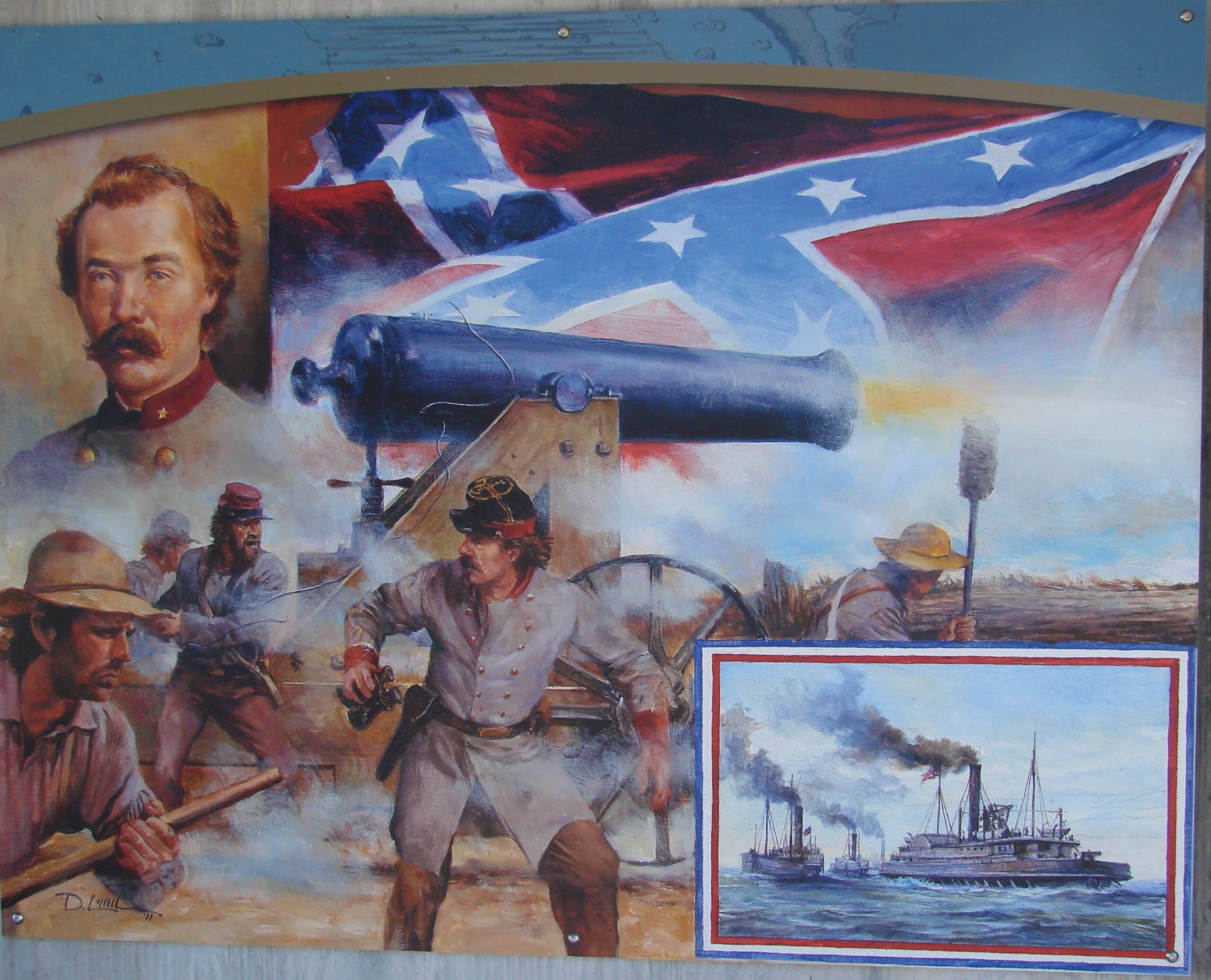
It was 1863. Union gunboats were a threat to the Texas interior because of rivers that emptied into the Gulf of Mexico. A fort built was at one of these vulnerable points: Sabine Pass, where two rivers meet the Gulf.
A Texas artillery unit was sent to man the fort. It was not long before four Union gunboats appeared, escorting troop transports up the river – a total of 5,000 Federals. The Texans numbered 42. The situation appeared hopeless, so top command ordered the Guards to destroy the fort and retreat.
The Texans talked it over and decided to fight. After all, it was just a few thousand Yankees.
The gunboats started firing, the fort taking hits. The Texans blasted two of the gunboats, two other vessels got grounded, and the whole thing was a mess for the invaders. Most of the Union force withdrew, two boats surrendered, all with no casualties to the Rebels. But the surrender was a problem: the Texans didn’t need hundreds of prisoners marching up to the fort, only to discover a few dozen men. So the Texan commander waded out into the river to accept the Union surrender and arrange for their custody without risk to the fort.
An overwhelming force had been defeated, perhaps the most lopsided victory of the war. And an invasion stopped in its tracks.
In an earlier post we got a 10 year old girl’s view of the war as Sherman started his destructive march through Georgia.(Click here to read.) Here are more details.
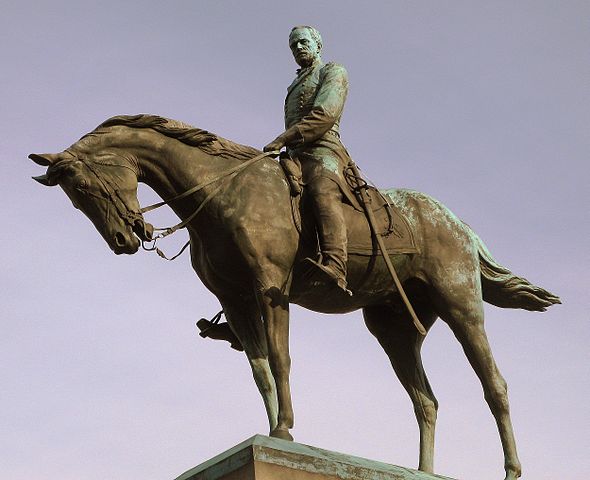
Needless to say that there will never be a statue like the one above honoring Union General Sherman in Georgia. And here’s the reason why.
Sherman’s Special Field Orders No. 120 authorized a new kind of warfare. Part of it reads:
“…should the inhabitants burn bridges, obstruct roads or otherwise manifest local hostility, then army commanders should order and enforce a devastation more or less relentless, according to the measure of such hostility.”In case you doubt how severe he meant this to be, this will clarify Sherman’s intentions, from one of his telegrams to Ulysses S. Grant:
“Until we can repopulate Georgia it is useless to occupy it, but utter destruction of its roads, houses, and people will cripple their military resources. … I can make the march and make Georgia howl.”One of Sherman’s officers, John Acheson, wrote these words:
“…scores of poor families have I seen, who had had no hand in bringing the present trouble upon the country, left without a mouthful to eat, and not knowing where to turn to get it, or what in the world to do to relive their distress.”While Texas General Hood was negotiating with Sherman on the treatment of civilians in Atlanta, Hood wrote to Sherman:
“And now, sir, permit me to say that the unprecedented measure you propose transcends, in studied and ingenious cruelty, all acts ever before brought to my attention in the dark history of war.”
His scathing messages to Sherman reveal a lot. In one of them he wrote:
“…there are a hundred thousand witnesses that you fired into the habitations of women and children for weeks, firing far above and miles beyond my line of defense.”Sherman achieved the status of war hero after the war, but not in the lands where he “slashed and burned.”
Thanks for reading. Please share our posts with your friends and family so they too can learn more about Southern Heritage and History.
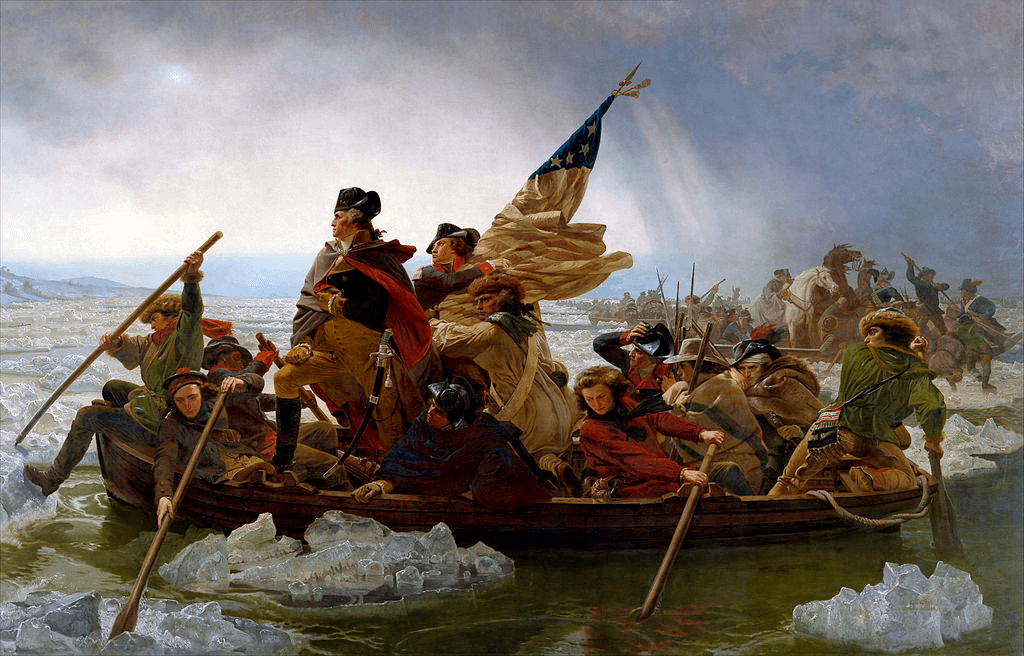
The battle was on Christmas Day of 1776. The place was Trenton, on the Delaware River of New Jersey. It was the scene of “Washington crossing the Delaware.”America had declared its independence not quite six months before, but the year’s battles had been one disaster after another. Philadelphia was in panic. The Continental Congress had to flee the city, but before it left this instruction was given to General Washington:“…until Congress shall otherwise order, General Washington shall be possessed of full power to order and direct all things.”The Americans had been driven out of New York, and the harsh winter took its toll on Washington’s troops. Many of them were about to have their enlistment expire, and the General needed to act fast. He decided to attack at Trenton. The password for this operation was “Victory or Death.”It was a cold, dark night. Heavy snow and sleet came down as Washington and his men crossed a river running with flowing ice. His soldiers were poorly clothed, some without gear for their feet. Landing on the other side, they marched on to Trenton, some leaving traces of blood on the snow. Two froze to death.But the rebels surprised the Hessians, who attempted to form up in the town. American artillery and attack from front and read swiftly brought the battle to an end. Four Americans were wounded in the attack. The Hessians lost 20 killed and about 100 wounded. One thousand Hessians were captured.Lieutenant James Monroe was wounded in the battle. The army’s surgeon saved his life, repairing a damaged artery in his shoulder. James Monroe went on to be America’s fifth president. Founding Father and future president James Madison, and future Supreme Court Justice James Marshall were also present at the battle.This is not the end of the story, though. Washington’s decision to attack at Trenton not only gave the army and our new nation a need boost of morale, but provided a valuable resource after the war.The Hessian prisoners at Newtown signed a parole of honor, and Washington allowing them to keep their personal baggage without examination. They were all treated well, and were scattered throughout the western counties of Pennsylvania and parts of Virginia. Many decided to stay in America when the war was over, settling in the German communities of the Keystone State. Among them were critically needed metal workers, Germans of high skill. Their contributions were vital to the new nation’s industry, one that eventually became second to none.
Thanks for reading! We hope you enjoyed our post. Please share with all your fellow patriots. Brought to you by: Ultimate Flags
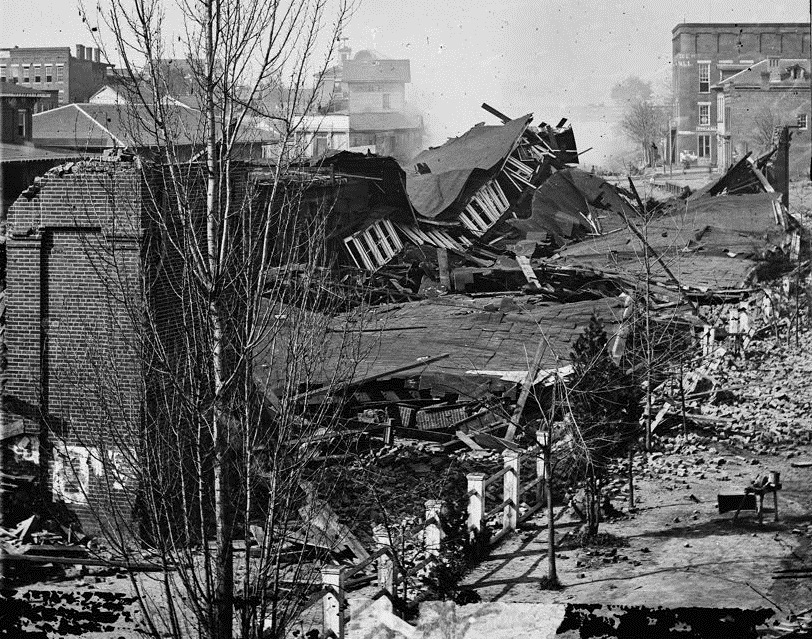
After capturing Atlanta in September 1864 during the Civil War, Maj. Gen. William T. Sherman, ordered the destruction of all railroads, factories, and commercial buildings of possible use to the Confederacy. Though houses and churches were not targeted, some were looted and burned nonetheless. Here’s one of the many stories.
Ten-year-old Carrie Berry and her family lived in Atlanta, Georgia when Sherman arrived and started burning his way to the Georgia coast.
Here are some of Carrie’s diary entries:Sunday (13 Nov 1864):
“The federal soldiers have been coming to day and burning houses and I have ben looking at them come in nearly all day.”
Monday:
“They came burning Atlanta to day. We all dread it because they say that they will burn the last house before they stop.”
Tuesday:
“This has been a dreadful day. Things have ben burning all around us. We dread to night because we do not know what moment they will set our house on fire.”
Wednesday:
“Oh what a night we had. They came burning the store house and about night it looked like the whole town was on fire. We all set up all night. If we had not set up our house would have ben burnt up for the fire was very near and the soldiers were going around setting houses on fire where they were not watched. They behaved very badly.” The Union troops left the next day, and while her house was “torn up so bad,” it was still standing. On the 22nd of November she wrote:
“It is just a week today since the federals were burning. Papa and Mama say that they feel very poor. We have not got anything but our little house. It is still very cold.”
Four days later:
“I ironed this morning and in the afternoon I picked up nails and when I came home Papa and Grandpa were here. The Yankees payed Grandpa a visit and took every thing he had…”On January 2nd she was back in school. She reports
“…studying arithmetic, spelling, reading and geography. We are all trying to see which will learn the most.”
This was a glimpse of the Civil War, as seen from the eyes of an innocent and brave 10 year old girl living in the South.
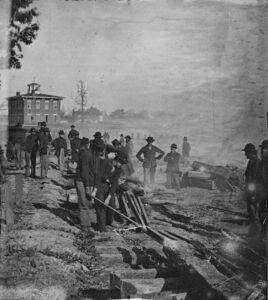
Sherman’s army destroying rail infrastructure in Atlanta, 1864
Thanks for reading. Please share our posts with your friends and family so they too can learn more about Southern Heritage and History.
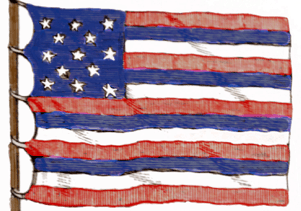
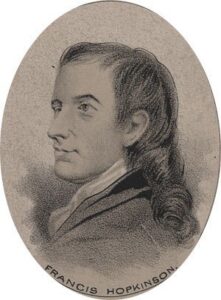
Betsy Ross made flags for 50 years, and we are all familiar with the famous circular 13-star design. Fewer know about Francis Hopkinson, signer of the Declaration of Independence and designer of our Stars and Stripes. Letters between Hopkinson and the Continental Congress tell the story, and these letters can be found in the National Archives. In 1780 Hopkinson was the Treasurer of the Continental Loan Office. He also consulted with a committee to design the Great Seal of the United States. We have a letter he wrote to the committee, with a proposed design for the seal. In that letter, he also wrote about having designed the American flag in 1777. Since he was a public servant, his design was free, what he called “Labours of Fancy.” He did suggest, however, that receiving a “Quarter cask of the public wine” would be a nice show of appreciation. (This was thought a reasonable request, but by the time it made its way through the red tape of the government, it was never approved and Hopkinson never got his cask of wine.)The Continental Congress had in fact adopted our flag in July of 1777, a design described and provided by the Marine Committee. Hopkinson had served as the chairman of a board under that committee.While no flags have survived from that period, and we don’t have the original drawing, we do have a sketch likely done by Hopkinson that shows the linear pattern of the stars. It is that pattern that we proudly fly today as the Hopkinson Flag.
Francis Hopkinson
Thanks for reading! We hope you enjoyed our post. Please share with all your fellow patriots. Brought to you by: Ultimate Flags
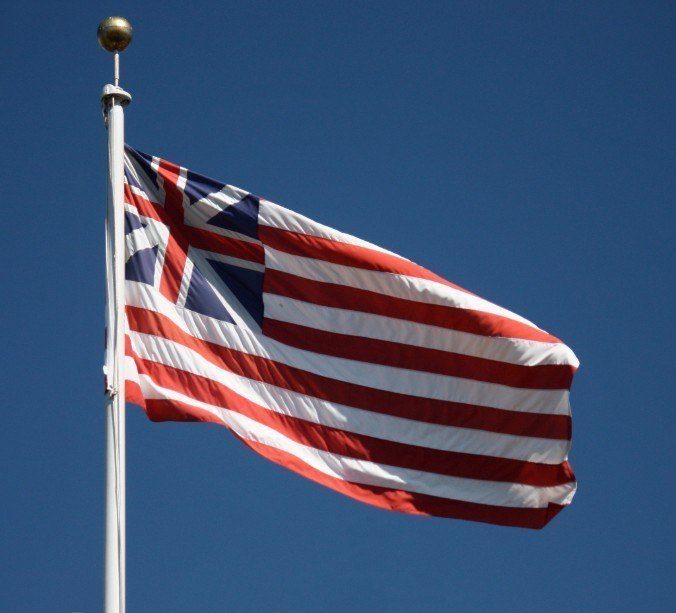
Americans love their Stars and Stripes, and fly it proudly. But many do not know that it was not the one flying when the 13 Colonies declared Independence on July 4th, 1776.
The first flag that the early United States used as its “national flag” is known by several names, like Continental Colors and Grand Old Union. It’s usually called the Grand Union, and it was being used by Americans in 1775 when the conflict with Britain began. As you can see it has the 13 stripes we know so well, but instead of stars on a white field, the British Union flag is displayed.When American colonists first began their struggle for greater liberty, full independence was not yet in the cards. Loyalty to the king was still proclaimed, even while fighting against the oppressive laws passed by British Parliament. Because of this we also see the Union, or the “King’s Colors,” in the upper left corner. In those days what we now call the Union Jack really represented the King and his authority, and was not really a “national flag” as we think of one today. In fact, the Union flag had been a symbol of defiance to British governmental policies in North America at a time when King George III was not viewed as an antagonist to American freedom.
A diary entry of a British officer in Massachusetts, written May 1st, 1775, may help clarify:“The Rebels have erected the Standard at Cambridge; they call themselves the King’s Troops and us the Parliaments.” The “Standard” he mentions was the Union flag. The stripes have their own origin. Colonial merchant ships had been using a red and white striped flag long before the War of Independence, and a striped flag was used by members of the Sons of Liberty Society who resisted unfair taxation and played a major role in battling the Stamp Act of 1765. Originally consisting of nine stripes for the nine American colonies, this flag grew to 13 during the Revolutionary War. The Grand Union was the first naval ensign used aboard American ships of war. The stripes were a natural part of the design because of their familiarity to American sailors.
Thanks for reading! We hope you enjoyed our post. Please share with all your fellow patriots. Brought to you by: Ultimate Flags
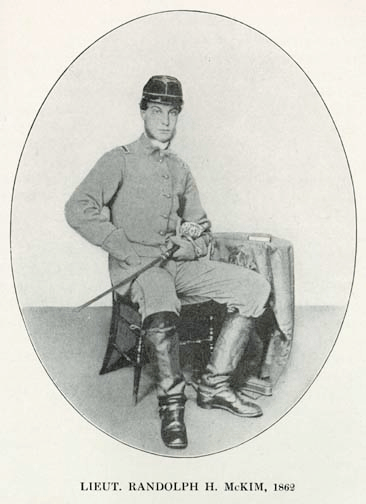
Randolph Harrison McKim enlisted as a Confederate private at the beginning of the Civil War. He rose through the ranks to become a lieutenant. After the war, he became pastor of the Episcopal Church of the Epiphany in Washington, D.C., where he served for 32 years.
McKim wrote a book about his experiences in the war, and included these words:
“We would not do aught (anything) to perpetuate the angry passions of the Civil War, or to foster any feeling of hostility to our fellow citizens of other parts of the Union. But we must forevermore do honor to our heroic dead.”
“We must forevermore cherish the sacred memories of those four terrible but glorious years of unequal strife. We must forevermore consecrate in our hearts our old battle flag of the Southern Cross… “
“The people that forgets its heroic dead is already dying at the heart and we believe we shall be truer and better citizens of the United States if we are true to our past.”
Well said, McKim for this message that everyone needs to hear, believe, and be true to.
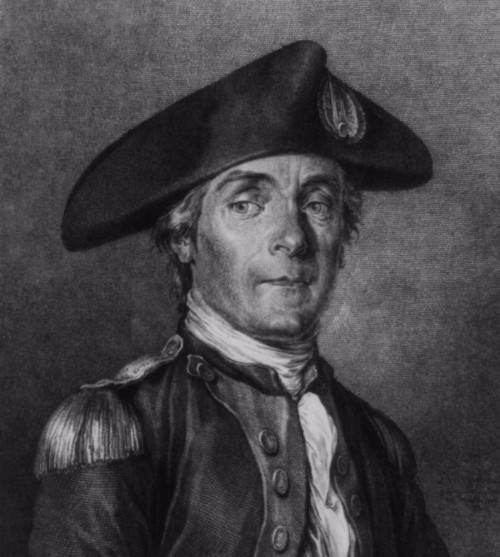
Famed US naval officer John Paul Jones was born in Scotland in 1742. At age 13 he began his career at sea, as a ship’s boy on the Friendship sailing between Britain and Virginia and the West Indies. By 21 he was the captain of his own ship.
Jones joined the Continental Navy during the American Revolution he was in Philadelphia shortly after the Revolution began. His friend, Joseph Hewes, a delegate to the Continental Congress, commissioned him as first lieutenant on the vessel Alfred. He later commanded the sloop Providence.
Jones proved himself a capable officer and commander. Congress sent him to France as captain of the Ranger with orders to attack enemy commerce in British waters. In 1778 he captured the sloop of war Drake in a fierce struggle, and his capture of prizes and prisoners was creating a furor in the British press.
The French now took note of Jones and sent him off in August 1779 in command of a fleet of five naval vessels and two privateers. Jones’s ship was the Bonhomme Richard, around nine hundred tons and slow, but the most heavily armed vessel he had commanded.
On September 23, Jones fought one of the great battles of the Revolution off the Yorkshire coast. The enemy was the Serapis, one of the British escorts of a large convoy. In the battle, mostly fought in moonlight, the Bonhomme Richard grappled with the Serapis. With the two vessels lashed together, the British captain asked Jones if he wished to surrender. Jones shouted his famous reply, “I have not yet begun to fight.”
Surely Jones had not, and by dawn he had accepted the enemy’s surrender. This victory was the highlight of John Paul Jones’s career and life.
Jones was always a rough and ready type, not willing to give up, and was in his element when the chips were down. When a roaring charge was needed, Jones was the fellow to get. When life is hanging in the balance, fear and indecision are your enemies, and Jones was nothing if not decisive and unafraid. He once wrote these words in a letter:“I wish to have no Connection with any Ship that does not Sail fast for I intend to go into harm’s way.”
After the war, he served in the Russian navy in the Black Sea in a war with the Turks. He died in Paris,in 1792, still an American citizen, and one of the great heroes of the U.S. Navy.
Today we still honor John Paul Jones by flying his unique American flag, called the Serapis after the ship he captured.
Thanks for reading! We hope you enjoyed our post. Please share with all your fellow patriots. Brought to you by: Ultimate Flags