Posted on

“A Volley of Buck and Ball Came Hurling”

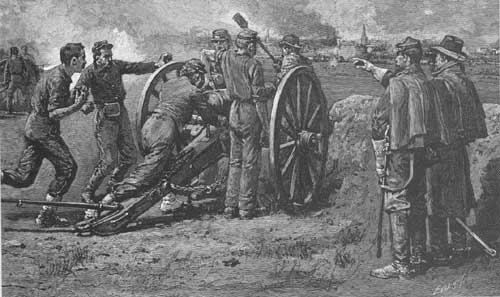
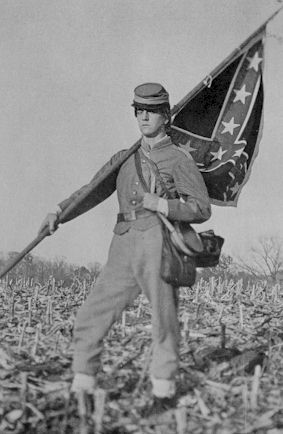
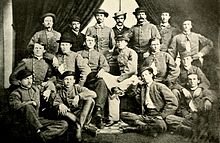
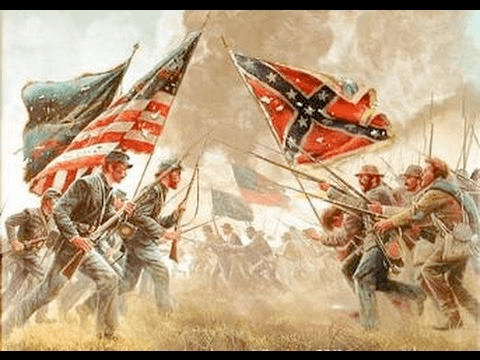
Private Sam Watkins of Company H, 1st Tennessee Regiment chronicled his experiences in his writings “Co. Aytch.” It is considered to be one of the greatest memoirs ever written by a soldier of the field. He captures the experience of the common private soldier, from the hardships of camp life and battlefields, the camaraderie of a unit, and the Confederate pride felt by all.  Here is the story about his first battle.It seems they were marching along in the summer of 1861,

“when bang, debang, debang, bang, and a volley of buck and ball came hurling right through the two advance companies of the regiment—companies H and K.”  They had  marched right into an ambush.Sam wrote,

“…no one seemed equal to the emergency. We did not know whether to run or stand, when Captain Field gave the command to fire and charge the bushes. We charged the bushes and saw the Yankees running through them…”After the fighting, Sam said the

“corporals, sergeants, lieutenants, captains, all had torn all the fine lace off their clothing.”

He asked several of them why, and they always answered,

“Humph, you think that I was going to be a target for the Yankees to shoot at?”

“You see, this was our first battle, and the officers had not found out that minnie as well as cannon balls were blind; that they had no eyes and could not see. They thought that the balls would hunt for them and not hurt the privates. I always shot at privates. It was they that did the shooting and killing…when we got down to close quarters I always tried to kill those that were trying to kill me.”

Sam Watkins Book

Thanks for reading. Please share our posts with your friends and family so they too can learn more about Southern Heritage and History.

Brought to you by: Ultimate Flags

Posted on

Brother Against Brother: A Tale of Two Scots

The Confederate Army had a number of soldiers who were Scottish or had Scottish ancestry.  Some of the Scottish units formed included the “Scotch Guards” from Alabama, the “Scotch Tigers” of North Carolina and the “Montgomery Highlanders” of Virginia. We will cover more about the Scots and their contribution to the Confederate cause in a separate article. 

The Civil War caused not only political divisions, but divisions within individual families. A story of note is about two Scottish born brothers, James and Alexander Campbell, who had come in the 1850’s to build new lives in America. When the Civil War broke out, they found themselves fighting against each other in their new homeland. They are the perfect example of a Brother against Brother conflict that happened more often than we like to think about during the Civil War.

James Campbell had settled in South Carolina, and became a member of the Charleston Battalion. Brother Charles, now from New York, became a member of the Union 79th New York Highlanders. They would ultimately face each other from opposite sides at the Battle of Secessionville in 1862.

The brothers corresponded with each other as the war carried on. They found themselves serving near Secessionville in 1862. When Federal Brother Alex learned of Confederate James’ location, he wrote to his wife on June 10:

“We are not far from each other now . . . this was a war that there never was the like of before Brother against Brother.“

Neither knew it at the time, but they fought each other at the Battle of Secessionville. At Fort Lamar, Federal brother Alexander, a Color Sergeant in the 79th, planted the U. S. flag before the parapet and kept it there until ordered to withdraw. When Confederate resistance started to buckle, Confederate brother James, a Lieutenant, mounted the parapet unarmed, rolled a log down into the mass of advancing federal troops, seized a Federal musket, and continued fighting.

The Charleston Mercury later reported:

“The foe, it is true, displayed admirable courage, the famous Highland regiment, the 79th New York, occupied the prominent place in the picture, but their desperate onslaughts were of no avail against the stubborn resolve and lofty valor of our brave boys.”

The Charleston Courier editorialized on the two brothers, saying:

“another illustration of the deplorable consequences of this fratricidal war.”

It stated Alexander Campbell, “fought gallantly in the late action” and “displayed … a heroism worthy of his regiment and a better cause” while James Campbell “was conspicuous and has been honorable mentioned on our side.”

Afterwards Confederate James wrote his Federal Brother:

“I was astonished to hear from the prisoners that you was color Bearer of the Regmt that assaulted the Battery at this point the other day.” James continued, “I was in the Brest work during the whole engagement doing my Best to Beat you.”

He continued:

“…but I hope you and I will never again meet face to face bitter enemies on the Battlefield. But if such should be the case You have but to discharge your duty for your cause for I can assure you I will strive to discharge my duty to my country and my cause.”

Shortly after the battle, Confederate James, tried to visit his federal brother by going to the Union lines, but  Federal troops would not allow James to cross the lines nor allow Alex to be brought out for a meeting of the two brothers.

Alexander wrote his wife in New York:

I hope to God that he and I will get safe through it all and he will have his story to tell about his side and I will have my story to tell about my side.”

After the war, they went their own separate ways, but kept in touch with each other. James went to Charleston, and Alexander went to Connecticut. They forever remained on good terms with each other.. Both had been soldiers, heroes for their own cause, who had fought against each other. But nothing, not even that great war of division, could break their bond of brotherhood.


Posted on

Dogfighter of the Pacific: “Buck” Dungan

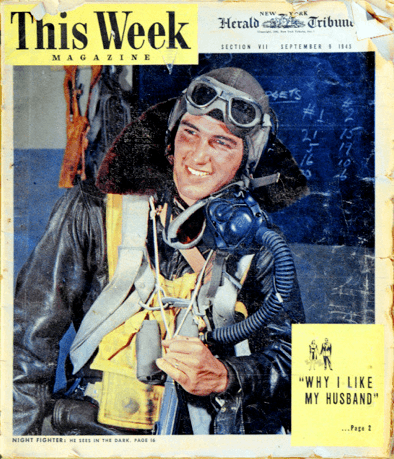
The man on the 1945 magazine cover above is Fred “Buck” Dungan.  In June of 1944 “Buck” Dungan and his wingman “Scoop” came out of the clouds over Guam, the only American aircraft on the scene. He saw 40 enemy aircraft,  20 bombers and 20 torpedo planes – preparing to land at Japanese-held Orote Field.  More enemy fighters swarmed above them, protecting the aircraft below. With a split-second decision, Buck radioed for the rest of his squadron to return, but then dove his Navy Hellcat in for an attack.   Buck shot down one plane, disabled another comin straight at him. More Hellcats arrived, but Dungan was in a wild fight for his life.  He shot down another adversary, who he says saluted him before going down.One of the enemy pilots later said that the American that dove down on them was “either the most stupid pilot in the world or the bravest.”  

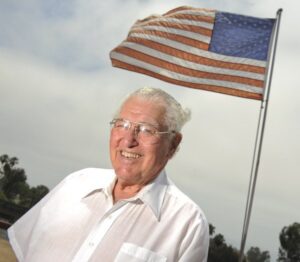
Most bet it was pure bravery. Buck earned the Distinguished Flying Cross that day. Only two weeks later, on July 4th, Buck was deep in it again over another island. There he shot down four enemy aircraft and assisted in sinking a destroyer. During the battle, he took a bad bullet wound but made it back to his carrier. For his actions, he was awarded the Navy Cross and Purple Heart. You can see his Navy Cross, Air Medal, Purple Heart and Distinguished Flying Cross below. And yes, in the middle, that’s the bullet he took in that last wild dogfight of his life. Pictured Right, Buck in later years.
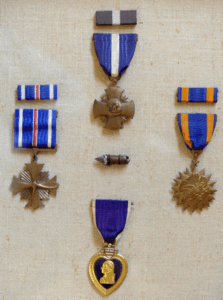
Buck’s Medals and Bullet


Thanks for reading! We hope you enjoyed our post. Please share with all your fellow patriots. Brought to you by: Ultimate Flags

US Navy Flag sewn and embroidered double sided

United States Navy Flag- Heavy Duty

courage and guts flagGod Guns Guts & Glory Flag

POW MIA Flag sewn and embroidered

POW MIA Flag- Heavy Duty 

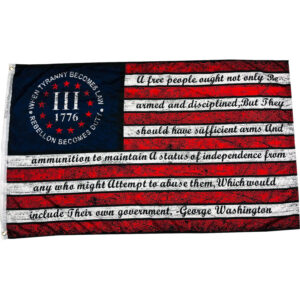
GW quote flag 1776 TJ When Tyranny Becomes Law

When Tyranny Becomes Law Flag


Posted on

His grandfather was a slave. Now he’s a champion for Confederate monuments.

Winbush said his grandfather believed he was defending his home state of Tennessee from “Yankee” invaders, not fighting to preserve slavery. His final wish, Winbush said, was that he be buried in his Confederate uniform.

This pride has been embraced by Winbush, who joined the Sons of Confederate Veterans nearly three decades ago. In one of the videos he has appeared in for the group, he speaks of black soldiers serving alongside white soldiers as equals in the Confederate Army. At one point, he holds up an application his grandfather filed with the federal government in 1920 for a federal pension. The document shows the application was accepted.

His grandfather was a slave. Now he’s a champion for Confederate monuments.

Thanks for reading. Please share our posts with your friends and family so they too can learn more about Southern Heritage and History.

Brought to you by: Ultimate Flags


Posted on

One Real Tough Cookie

The Southern Confederate soldier was a tough character, and one of the finest warriors to ever take the field of battle in any army, in any war. The cause for which he fought and died has been harshly judged. But from the Confederate point of view, the harsh conditions and suffering were as noble as that of the Revolutionary War forefathers 100 years before them.

The Southern Soldier typically came from families who were not Plantation masters, but pioneers of the Southland who fully believed that their cause was to fight against a Northern Revolution hellbent on tearing apart the very fabric of their history and freedom.

That soldier knew that success depended on courage, endurance and devotion. He also knew that defeat came not just in wounded men on the battlefield, but also in the form of sickness, starvation, and death.

We can get a glimpse of the conditions of a soldier’s life from the the personal written accounts of Private Carlton McCarthy, Army of Northern Virginia:Carlton tells us:

“…tents were rarely seen,” explaining that the men would put an oilcloth on the ground, covering themselves with blankets and another oilcloth on top. This protected them “through rain, snow or hail…”The soldiers generally did without money: “The men did not expect, did not care for, or get often any pay, and they were not willing to deprive the old folks at home of their little supply.”    The men learned to travel light:

“No soldiers ever marched with less to encumber them, and none marched faster or held out longer. The courage and devotion of the men rose equal to every hardship and privation, and the very intensity of their sufferings became a source of merriment.”

“Instead of growling and deserting, they laughed at their own bare feet, ragged clothes and pinched faces, and weak, hungry, cold, wet, worried with vermin and itch, dirty, with no hope of reward or rest, but each fighting on his own personal account, needing not the voice of any to urge them on, marched cheerfully to meet the well fed and warmly clad hosts of the enemy.”

The Southern Soldier was one real tough cookie.  He fought and died for what he believed in. If he didn’t, would our country be the same?

Thanks for reading. Please share our posts with your friends and family so they too can learn more about Southern Heritage and History.

Brought to you by: Ultimate Flags

Posted on

The Most Dangerous Man in Arkansas

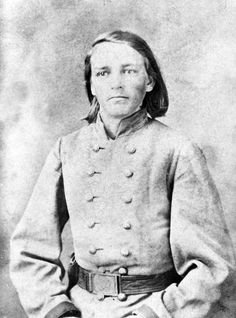
Why would an innocent and  good looking, blond haired, blue eyed, 21 year old Confederate man, weighing barely 100 pounds, be called “the most dangerous man in Arkansas?”  

The exploits of Howell A. “Doc” Rayburn are a legacy of fact and legend. Doc was a Civil War guerrilla chieftain who operated in the area between West Point (White County) and Des Arc (Prairie County). He enlisted in the Confederate Army in October 1861, joining Company C, Twelfth Texas Cavalry.

Rayburn’s delicate physique belied his real strength and cunning.

From the small northern Arkansas town of Des Arc, Doc recruited dozens of local youth into a guerrilla band that became known as the Phantom Unit. They gained a reputation for their daring exploits and ability to appear out of nowhere to pounce on unsuspecting Yankees. For two years Rayburn and his band proved to be quite a nuisance to Union military authorities with his attacks.  

In one such such attack near West Point, Rayburn’s boys put on Union uniforms and took their enemy by surprise. During General Sterling Price’s 1864 Missouri Raid, Rayburn’s command served as Colonel Thomas H. McCray’s bodyguard.

His guerrilla attacks on Union outposts and expeditions tied up countless Federal assets that could have been used elsewhere. The Yankees tried several times to capture Rayburn, but were unsuccessful.

The most famous story of Rayburn’s exploits centers around activities at DeVall’s Bluff (Prairie County) in December 1864. He told his men that if he could make it through a Union picket line that evening, he would be their Santa Claus.

With his diminutive stature, long blond hair and blue eyes, he knew he could pass himself off as a female. Borrowing a lady’s clothing, Rayburn made it through the picket line to a Christmas dance hosted by Federals. 

After an evening of dancing with Yankee officers, he carefully made his way to the corral. He jumped on the best horse in the corral, and caused a stampede. That year, he and every man in his command received a horse for Christmas!

Thanks for reading. Please share our posts with your friends and family so they too can learn more about Southern Heritage and History.

Brought to you by: Ultimate Flags

Posted on

“The Kentucky Giant”

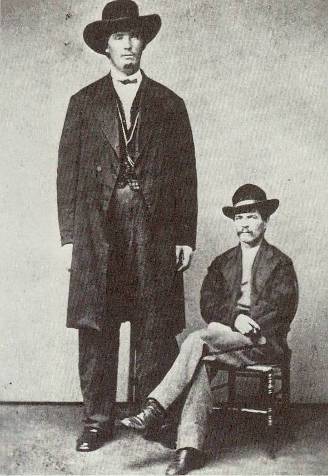
Martin Van Buren Bates was a normal baby born to normal parents in Letcher County, Kentucky, in 1837. But he was not destined to be “normal” for long. At the age seven he started a tremendous growth spurt. By the time he was thirteen, he had grown to a height of over 6 feet, and weighed in 300 pounds.

His parents were so astonished by his amazing growth that they would not let him do any chores, fearing that his body would be too fragile to handle the activity. And he kept on growing. It is said that he reached the height 7 feet 11 inches  and weighed over 470 pounds.

He wrote later in an autobiography,

“My growth was gradual and it is probable, that owing to that fact each portion of my body developed equal and symmetrically… When I was fifteen I stood six feet in height and was to all appearances a man. At that time the war between the States was commenced.”

When the Civil War began in 1861, Bates left his school teaching position and joined the Confederate Army as a private in the 5th Kentucky Infantry. His imposing size and ferocity in battle earned him a promotion to rank of Captain very quickly. His incredibly large size made him a legend among Union soldiers. They told tales of a “Confederate giant who’s as big as five men and fights like 50.”

He was severely wounded in a battle around the Cumberland Gap area and also captured, but he later managed to escape.

After the War, he did not return to Kentucky because of violent feuding going on between the Union supporters and Confederate supporters. He said,

“I’ve seen enough bloodshed; I didn’t want any more.”

Instead, he traveled to Ohio, and joined the circus, exhibiting his enormous stature to curious onlookers in the “cabinet of curiosities.”  People said his boots were so so large “it took a bushel of corn to fill one boot.”

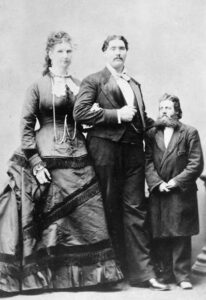
While on tour in Canada, he met Anna Swan, who stood 7 feet and 5 and a half inches tall.

The curious couple later married in London and became the “The Tallest Man and Wife That Ever Existed.” Thousands of people were drawn to them, not only by their uncommon size, but also by their exceedingly good and charming nature. Queen Victoria herself gave them two extra-large diamond-studded gold watches as wedding presents.

Martin and Anna Bates

Martin and Anna eventually returned to Ohio, settling into a life of farming in Seville, and were lovingly known at “the Giants of Seville.’

Bates is one of the most famous Kentuckians to have ever lived. His struggles and triumphs, during the Civil War and civilian life demonstrate to us the pursuit of a passionate life well-lived – even as a “Giant.”

Thanks for reading. Please share our posts with your friends and family so they too can learn more about Southern Heritage and History.

Brought to you by: Ultimate Flags

Posted on

They Called Him “The Gray Ghost”

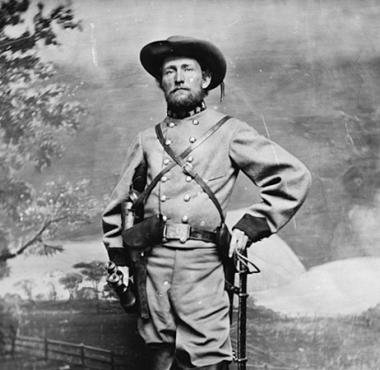
No other Confederate officer had the mystique of John Singleton Mosby, a talented and heroic cavalry officer. He was an unlikely hero. As a sickly child Mosby was often bullied, but he learned to fight back at an early age.

When the Civil War began, Mosby opposed secession, but decided to leave his law practice to join the Confederate army as a private, serving in the “Virginia Volunteers.” This was a company of mounted infantry, that fought at the first Battle of Bull  Run (First Manassas).

Mosby’s exceptional skill at intelligence gathering caught the eye of J.E.B. Stuart. He was promoted to First Lieutenant and assigned to Stuart’s cavalry scouts, and later on gained command of the 43rd Virginia Cavalry, as a Major.

He and his “Mosby’s Rangers” started a campaign of lightning raids on Federal supply lines and harassing their couriers. His ability to appear and disappear at will, blending in with local farmers and townsmen, earned him the name “The Gray Ghost.” With with each success, his fame grew.

Mosby’s Rangers

March of 1863,  at Fairfax County Courthouse, he managed to capture Union Brigadier General Edwin H. Stoughton. When Mosby found Stoughton asleep in bed, he woke him up with a slap on the rear, and asked,

“Do you know Mosby, General?”

The General replied,

“Yes! Have you got the rascal?”

“No,” said Mosby. “He’s got you!”

Mosby with his 29 Rebels captured the Union general, two captains, 30 enlisted men, and 58 horses without firing a shot.

The area of northern central Virginia where Mosby conducted his raids was known during the war and ever since as “Mosby’s Confederacy.”

Thanks for reading. Please share our posts with your friends and family so they too can learn more about Southern Heritage and History.

Brought to you by: Ultimate Flags

Posted on

Loyal Dog Saves A Wounded Rebel

Animals of all kinds were part of the Civil War and very valuable in their working roles and on the battlefield. Horses, mules, donkeys, and even camels accompanied the troops during campaigns.

In modern warfare, dogs are often seen on duty, helping their human comrades in and around the battlefield. It was not uncommon for soldiers the Civil War to have dogs with them, but as companions.  There was nothing like having man’s best friend with you for comfort during harsh and hard times of war.

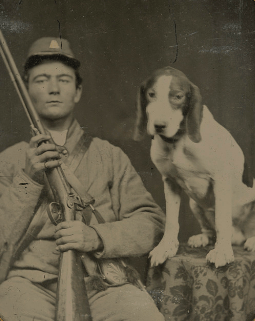
Here is a touching tale of one loyal dog who saved his master’s life, a wounded Rebel Soldier, from an excerpt of a book written six years after the war ended: “After the battle of Fredericksburg, it fell to my duty to search a given district for any dead or wounded soldiers there might be left, and to bring relief. Near an old brick dwelling I discovered a soldier in gray who seemed to be dead. Lying by his side was a noble dog, with his head flat upon his master’s neck.

As I approached, the dog raised his eyes to me good-naturedly, and began wagging his tail; but he did not change his position. The fact that the animal did not growl, that he did not move, but, more than all, the intelligent, joyful expression of his face, convinced me that the man was only wounded, which proved to be the case.

A bullet had pierced his throat, and faint from the loss of blood, he had fallen down where he lay. His dog had actually stopped the bleeding from the wound by laying his head across it! Whether this was casual or not, I cannot say. But the shaggy coat of the faithful creature was completely matted with his master’s blood.”

Heroes can come in many forms.

Now if that isn’t a man’s best friend, then I don’t know what else is.

Thanks for reading. Please share our posts with your friends and family so they too can learn more about Southern Heritage and History.

Brought to you by: Ultimate Flags

Posted on

“After you come, take.”

2500 years ago Spartan King Leonidas and his men stood against an invading Persian army under King Xerxes.  Xerxes sent a message to Leonidas, requesting that he surrender and “Deliver up your arms.”

The famous reply was “Molon Labe,” literally translated as “After you come, take.”  Sparta was in a region of Greece known as Laconia.  Men of Laconia were known for speaking with as few words as possible.   This expression was also famously used in the American Revolutionary War, at Fort Morris on the Georgia Coast.  In 1778 the commander of a British force demanded the fort’s surrender.  Though outnumbered, American Colonel McIntosh replied:

“As to surrendering the fort, receive this laconic reply: ‘COME AND TAKE IT!’” In 1835 Texas was in revolution against the Mexican government under Santa Anna.  The government demanded that the Texas town of Gonzales surrender their cannon, and the Texan reply was “Come and take it.”  Troops came to enforce the surrender, and a fight ensued.  

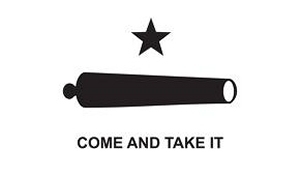
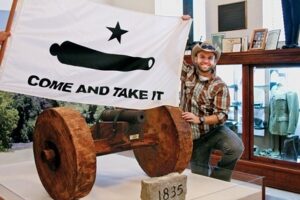
Flying over the cannon was a now-famous flag, with the cannon and a star drawn on it, and the words, “Come and take it.”  

Gonzales kept its cannon.

The cannon is on display at the Gonzales Memorial Museum, Gonzales, Texas.


Thanks for reading! We hope you enjoyed our post. Please share with all your fellow patriots. Brought to you by: Ultimate Flags

Posted on

“A chicken could not live on that field…”

 No battle of the war saw more troops on the field than the Battle of Fredericksburg.

Although greatly outnumbered, Lee’s army was ready for the fight.  Union artillery pounded Fredericksburg for over two hours, the first time a commander ordered a large-scale city bombardment during the war. Fires broke out, buildings fell to the ground, and Union troops entered the town. A soldier from Pennsylvania later wrote:

“The town was all ransacked. Books, chairs and every kind of furniture was lying on the streets.” But General Barksdale’s Mississippians emerged from the rubble and met the Yankees in house-to-house fighting. Meanwhile, in another area of the fighting, Marye’s Heights, the Rebels had made themselves nearly impregnable. Confederate Lt. Colonel Alexander detailed the preparations to General Longstreet this way:    “General, we cover that ground now so well that we will comb it as with a fine-tooth comb. A chicken could not live on that field when we open on it.” But the Federals assailed the Heights with courage and vigor, wave after wave of men.  It was while watching his men beat back one attack after another that Robert E. Lee made the famous statement:

“It is well that war is so terrible, or we should grow too fond of it.” Lee later congratulated his men on their victory,  and worked to raise donations from his men to help the citizens recover from the assault.

Battle of Fredericksburg – From Hanover Street to Marye’s Heights

Thanks for reading. Please share our posts with your friends and family so they too can learn more about Southern Heritage and History.

Brought to you by: Ultimate Flags

Posted on

“Stand forth in defence of…rights and liberties.” – The Tale of Moultrie

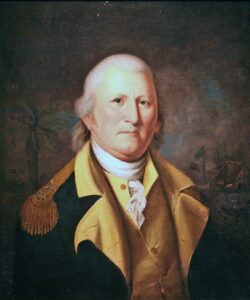
It was 1775 when American Colonel William Moultrie took possession of a fort made of palmetto logs in South Carolina, and he needed a flag. His troops’ clothing was blue. They had silver crescents on their caps, and the words “Liberty or Death.” So a blue flag was sewn, with a crescent in the upper corner. In Moultrie’s words:

“This was the first American flag displayed in the South.”

The next year, 1776, the Americans were defending Fort Sullivan in a battle with the British.  The blue flag was flying, but during the fight it fell down onto the beach, outside the fort.  Sergeant William Jasper leaped over the parapet, ran the length of the fort and recovered the flag.  He managed to get back into the fort and get the flag fastened and flying again.

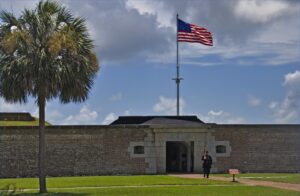
The Americans fought off the British, and saved the fort. Fort Sullivan was later renamed Moultrie, in honor of Colonel Moultrie’s stand against the British.

The flag became an icon of the Revolution in the South. It was called the Moultrie, or the Liberty Flag. The new state of South Carolina incorporated its design into its state flag.

Later in April 1780, the British returned to Charleston Harbor, past Fort Moultrie, and captured the city. General Moultrie was captured with other American officers. While prisoner, a Loyalist tried to convince him to enlist in the British Army. Moultrie responded:

“When I entered into this contest, I did it with the most mature deliberation, and with a determined resolution to risque my life and fortune in the cause. The hardships I have gone through I look back upon with the greatest pleasure and honor to myself: I shall continue to go on as I have begun, that my example may encourage the youths of America to stand forth in defence of their rights and liberties.”

General Moultrie remained true to the Patriot cause. He is a true ,Revolutionary War hero and leader in South Carolina history.

Well done, General Moultrie.

Gen. William Moultrie
Ft. Moultrie, So. Carolina


Thanks for reading! We hope you enjoyed our post. Please share with all your fellow patriots. Brought to you by: Ultimate Flags