Posted on

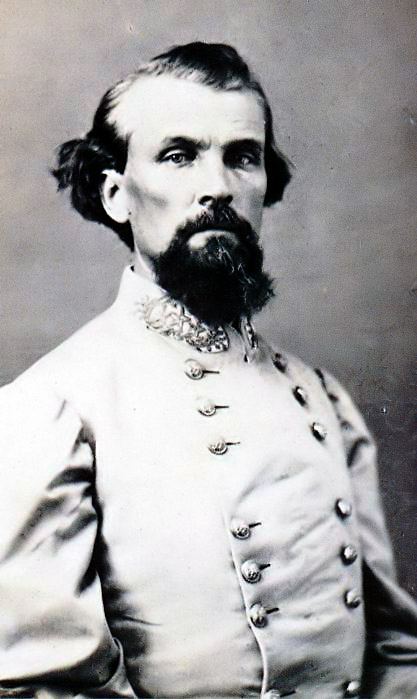
Nathan Forrest: No Wonder He Won So Many Battles

Nathan Bedford Forrest, simply put, is a controversial figure. The son of a blacksmith, he came from an untamed area of Tennessee. Forrest had practically no schooling, but went on to become one of the highest-ranking generals of the Civil War.  Like him or not, he was a smart man, a master tactician.  And he did not put up with fools,  and that included those few who were senior to him. There are many stories about Forrest. Here’s one about a Union officer who became very upset after he surrendered to Forrest.  

It was April of 1863 and a force of the Union cavalry under Colonel Abel Streight had orders to cut the Confederate railroad south of Chattanooga. Forrest chased the Union boys for 16 days, catching up with them in Rome, Georgia. Forrest only had 500 men with him, but he maneuvered them around to make it look like he had far more.

Streight finally surrendered his 1,700 soldiers to the Confederates. But when the colonel realized that he had conceded defeat to less than a third his number, he demanded that his surrender be reversed so he could battle it out. That demand went nowhere, naturally, and it was probably for the best for Streight. Forrest was known for defeating forces greater than his own in open battle.There is a story after the war about a Yankee officer was in business with Forrest. The officer came to his house one day, and as soon as Forrest’s horse saw the blue uniform, the horse attacked him, trying to bite and kick him. One of Forrest’s men saw what was happening, came over and saved the officer.

The Yankee officer told Forrest that it was no wonder he won so many battles, since his horses fought for him with as much fury as his men did.

Thanks for reading. Please share our posts with your friends and family so they too can learn more about Southern Heritage and History.

Brought to you by: Ultimate Flags
Posted on

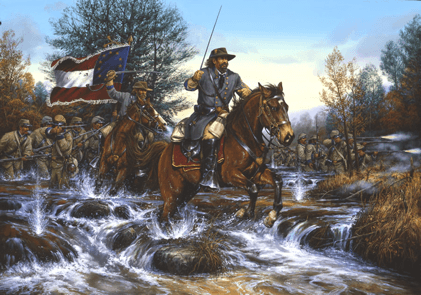
The Battle at Stone’s River

Here is another tale of Private Sam Watkins, Company H, 1st Tennessee:“It was Christmas. John Barleycorn was general-in-chief. Our generals, and colonels, and captains, had kissed John a little too often…. We marched plumb into the Yankee lines, with their flags flying.”“I called Lieutenant-Colonel Frierson’s attention to the Yankees, and he remarked, “Well, I don’t know whether they are Yankees or not…”There was a lot of confusion about the situation, especially when the Yankees pulled back over the hill:“Oakley, color-bearer of the Fourth Tennessee Regiment, ran right up in the midst of the Yankee line with his colors, begging his men to follow. I hallooed till I was hoarse, “They are Yankees, they are Yankees; shoot, they are Yankees.”The shooting began, but confusion continued. Then a shell fragment struck Sam in the arm, “…and then a minnie ball passed through the same paralyzing my arm, and wounded and disabled me.”Just then General Cheatham came up, not so fazed by John Barleycorn as the rest. He was calling to his men, “Come on, boys, and follow me.” Sam tells the rest:“The impression that General Frank Cheatham made upon my mind, leading the charge, I will never forget. I saw either victory or death written on his face…as he was passing me I said, ‘Well, General, if you are determined to die, I’ll die with you.’”

“We were at that time at least a hundred yards in advance of the brigade, Cheatham all the time calling upon the men to come on. He was leading the charge in person. Then it was that I saw the power of one man, born to command, over a multitude of men then almost routed and demoralized.”

“I saw and felt that he was not fighting for glory, but that he was fighting for his country because he loved that country, and he was willing to give his life for his country and the success of our cause.”The Rebels won the field that day, and General Cheatham and Sam lived to fight again.

Thanks for reading. Please share our posts with your friends and family so they too can learn more about Southern Heritage and History.

Brought to you by: Ultimate Flags
Posted on

Battling the Barbary Pirates

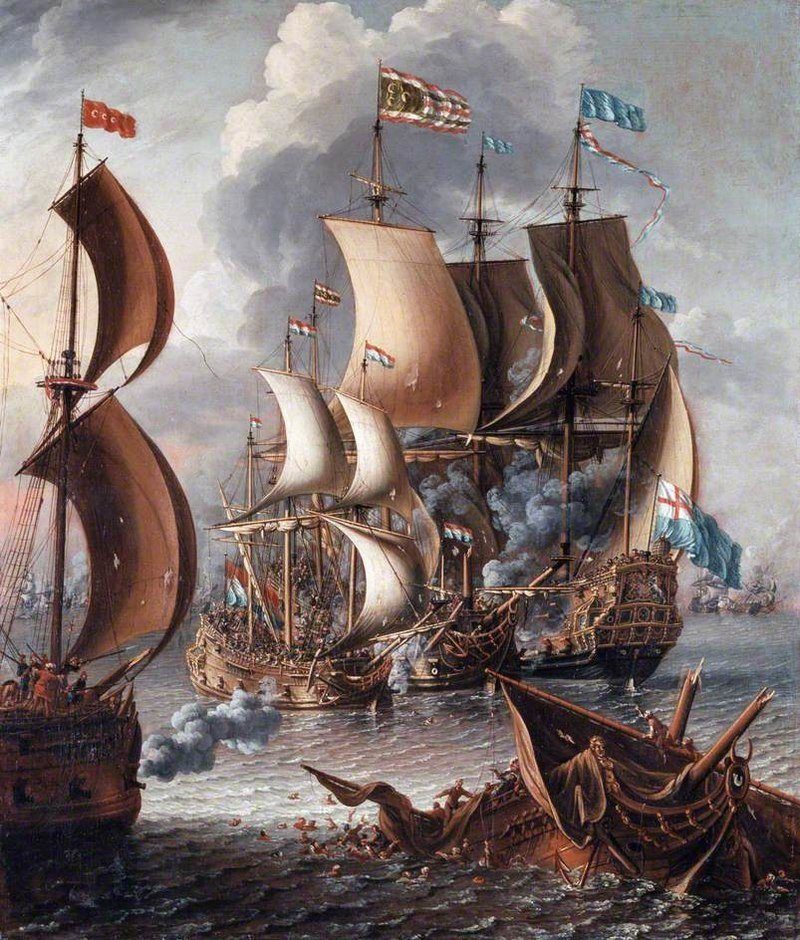
North African pirates were menacing folks at least as far back as the Crusades. We have tales of them sailing as far north as Iceland, not only capturing merchant ships but plundering ports and taking captives for the slave trade.It was the habit of European nations to pay tribute to the scoundrels, rather than fight them. Eventually, the pirates organized into North African Barbary States, controlling the eastern half of North Africa along the Mediterranean Sea.  Their leaders got rich by extortion. But things were about the change. Before independence, American Colonial vessels were British, and protected by British payments to the pirates. After declaring independence, they were no longer covered by that deal, and the new nation had to pay their own tribute, which they did during the 1700s, over Thomas Jefferson’s objections.Then Thomas Jefferson was elected president, and he declared there was to be no more tribute, and sent the American Navy and Marines to deal with matters.It took some work, including landing Marines to assault a fortress in Tripoli, but eventually a treaty was worked out to protect American shipping. (Tripoli was the first American victory on foreign soil, with the Stars and Stripes flying over the fortress. The “Marine’s Hymn” still celebrates this with the line, “…from the shores of Tripoli.”)America had to send the Navy in again after the War of 1812, but things were settled in very short order: an American flag meant the vessel was safe.


Thanks for reading! We hope you enjoyed our post. Please share with all your fellow patriots. Brought to you by: Ultimate Flags

Posted on

“…calm and collected…” Confederate Boy Soldier

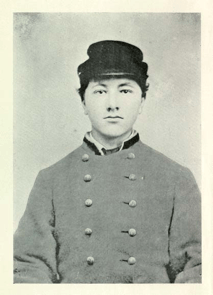
David Johnston was 15 when Lincoln was elected.  By April of the next year he was a Confederate Private in a Virginia regiment, having just turned 16 and old enough to go off to war. That is his image above.

Private Johnston fought in the earliest battles, and all the way to Appomattox.  After the war, he wrote a book about his story.  He wrote something about General Beauregard, as his unit marched into the Battle of First Manassas, the first major battle of the war:

“He appeared calm, and collected, saying as we passed, in a quiet, low tone: ‘Keep cool, men, and fire low; shoot them in the legs.’”

It seems Beauregard, like so many, wanted to preserve lives, hoping for a short conflict.  It was not to be.

The Civil War was long and hard fought by both sides.  Johnston had his share of serious wounds and tough times. He turned 20 the day after Appomattox, no longer a boy. Of the end, he wrote:

“Four years before this company left Pearisburg, Virginia, with 102 men, the majority of whom were as promising and gallant young men as Virginia produced. During the time of service twenty recruits were added, making 122 in all, and now here we were with eighteen left.”

It was a hard war with many men lost, and it needs to be remembered to this day.

Posted on

Cemetery adorned with Confederate flags

Arlene Barnum, a 63 year old African American Viet Nam war-era veteran has been travelling the southern US decorating graves of fallen soldiers with confederate flags. This article was the result of an interview of her in Ardmore, Oklahoma. So far, there’s been no word from groups that may oppose her activity. She is raising money to restore a Bryan County, OK, Confederate statue.

Cemetery adorned with Confederate flags

Thanks for reading. Please share our posts with your friends and family so they too can learn more about Southern Heritage and History.

Brought to you by: Ultimate Flags
Posted on

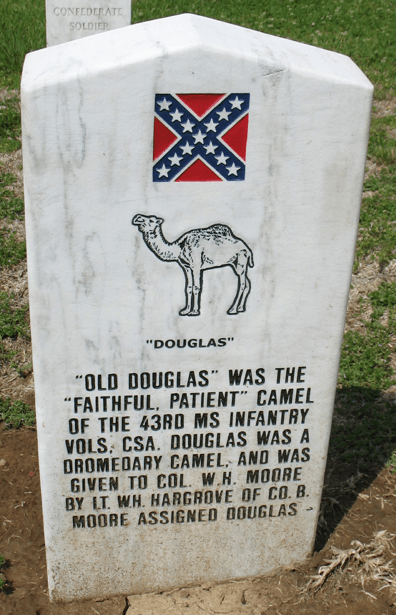
“Old Douglas” the Confederate Camel

Many have heard of the U.S. Army’s use of camels in the old west, well before the Civil War.  In the 1850’s, as the first American settlers started moving west, they realized their horses and mules weren’t cut out for the long, dry journeys between water sources. Many settlers wanted to find a different animal.

What you may not know is that it was Jefferson Davis who played a vital role in camels coming to America.  He was the first to encourage the U. S. to use camels while he was serving in the US Senate in 1855. He persuaded a skeptical Congress to to appropriate $30,000 to fund a purchase.  A ship brought them from (the modern countries of) Algeria, Tunisia, Egypt and what’s now Turkey.

By the time of the Civil War, there was a camel named “Old Douglas” who had somehow made his way east to Mississippi, joining up with the 43rd Mississippi Regiment.  The men didn’t know anything about camels, and tried to keep him on a tether like a horse.  But no rope could ever hold “Old Douglas,” and eventually the soldiers learned to just let him graze freely.  That was no problem because he was never far from the men. But the Infantry’s horses feared “Old Douglas.” It is recorded that one day he spooked one horse into starting quite a stampede.

Besides acting a mascot, “Old Douglas” served the Confederate regimental band, carrying their instruments and supplies.  But wherever the 43rd went and whatever battles it fought, there was “Old Douglas.”

Old Douglas’s first active service was with Gen. Price in the Iuka campaign. Later he was present at the 1862 Battle of Corinth and stayed with the regiment until the Siege of Vicksburg. Here a battalion of Union sharpshooters were ordered to shoot “Old Douglas”. So enraged at his murder, the men swore to avenge him. Col. Bevier enlisted six of his best snipers, and successfully shot the culprit, severely wounding him.

Good “Old Douglas” served  the Confederate cause well and has the honor of his own grave marker at Cedar Hill Cemetery, in Vicksburg, Mississippi.  

Historians and Civil War Re-enactors recognize the significance of the history of camels in America. The Texas Camel Corps is an active group with the mission of promoting the stories of camels, like “Old Douglas,” used during the Civil War.

Members of this group say that some things we believe about camels are not true:

“They aren’t mean, they don’t spit (it’s the camel’s cousin, the lamas, who spit), and they’re every bit as smart as a horse – if not smarter.”

Thanks for reading. Please share our posts with your friends and family so they too can learn more about Southern Heritage and History.

Brought to you by: Ultimate Flags
Posted on

Ready “at a minute’s warning” to Fight for Liberty

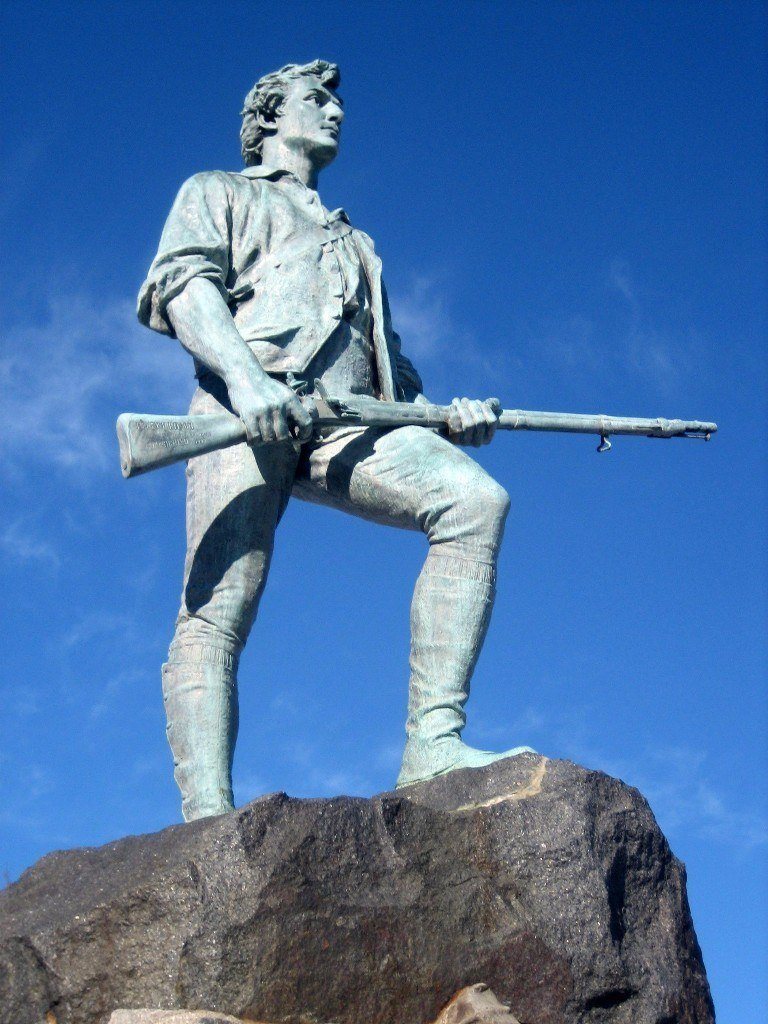
America’s early Minutemen were men who were ready for military duties “at a minute’s warning.”

When these men rallied, they became a militia, citizens with limited military training who could grab their arms immediately and fight in an emergency to defend their local area.

The first Minutemen were in Massachusetts, and they saw their first action at the battles of Lexington and Concord. They certainly surprised the British, whose leader reported,

“Whoever looks upon them as an irregular mob will be much mistaken.”

It was one of those Minutemen who “fired the shot heard round the world,” on April 19, 1775, commencing America’s open rebellion.  

Minutemen militia groups were formed in other colonies, including the Culpeper Minutemen of Virginia. The importance of the American militia was later enshrined in the 2nd Amendment of the Constitution. The Minutemen are also forever remembered in such poems as Henry Wadsworth Longfellow’s “Paul Revere’s Ride” and Ralph Waldo Emerson’s “Concord Hymn.”

Every year we celebrate the anniversary of that “shot heard round the world,” on April 19th, the day we know as Patriots Day.


Thanks for reading! We hope you enjoyed our post. Please share with all your fellow patriots. Brought to you by: Ultimate Flags

Posted on

“Met by a tempest of bullets…”

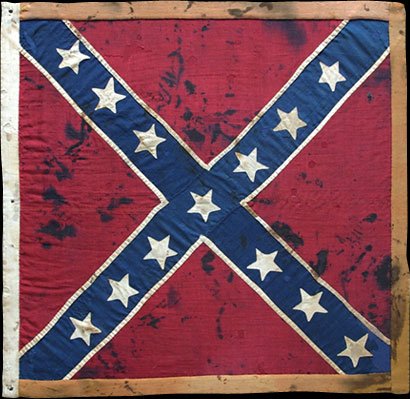
Southern Irishmen from all over fought for the Confederacy, but Louisiana sent the most into the fray.  New Orleans was home to more Irishmen than any other city in the South. They were in many Confederate Regiments, but the 6th Louisiana had the most. Above is a the flag of that regiment. Half the Irish in the 6th had been born in Ireland.  The bulk of these men worked the docks and riverboats, were carpenters and bricklayers, clerks and policemen. The Irish were noted for their bravery in battle.  General Gordon described one charge they made: “As we reached the first line of strong and high fencing, and my men began to climb over it, they were met by a tempest of bullets… It was one of those fights where success depends largely on the prowess of the individual soldier… nothing could deter them. Neither the obstructions nor the leaden blast in their front could check them.” Half of Gordon’s men fell, but they kept on, hurling themselves into the line of battle-hardened Federals and driving them back. Another Confederate General wrote that the Northerners “ran like sheep without a Shepherd.” Union General Wallace later wrote that after witnessing Gordon’s attack formations that “it was time to get away.” In fierce fighting, Southern Irish helped carry the day.

Thanks for reading. Please share our posts with your friends and family so they too can learn more about Southern Heritage and History.

Brought to you by: Ultimate Flags
Posted on

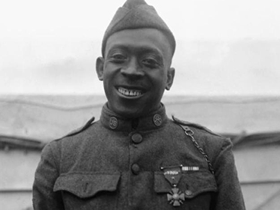
Sergeant Henry Johnson: One of the Bravest Americans of WWI

President Theodore Roosevelt called Sergeant Henry Johnson one of the “five bravest Americans” of World War I.Johnson and his buddy Needham Roberts were on sentry duty. Their regiment had been assigned to help reinforce the 4th French Army. It was 2 AM in their trench in the Argonne Forrest, when the two men suddenly came under fire from enemy snipers. Then they heard the sound of barbed wire being cut. Grenades were lobbed in both directions, and Roberts was severely wounded by an explosion. Out of grenades, Johnson fired his rifle, but took hits in his hands and face.  Enemy soldiers were now in the trench, at least a dozen.Then his rifle jammed, so Johnson used it as a club, hitting enemy troops until his stock shattered.  He was suddenly hit in the head, and collapsed. Shot multiple times and battered to the ground, Johnson could have quit fighting, but he saw the enemy trying to drag Roberts away as a prisoner.Leaping up, Johnson pulled his knife and charged back into the fray. This was no ordinary knife, but a bolo: thirty inches of sharp, curved blade. The American took down two more of the enemy before he was again shot in the arm.Johnson didn’t falter. Instead, he took out another enemy soldier.  That was enough for the infiltrators, and the ones still moving fled back to their own lines.Johnson had been shot, beaten, stabbed and taken shrapnel from grenades, receiving nearly two dozen serious wounds. For his bravery, he was awarded the highest French Military honor, the Croix Du Guerre. He also earned the nickname, “Black Death.” Johnson was a member of the Harlem Hellfighters, an African American unit from New York. And as it is with so many American soldiers, his son followed him a generation later into World War II, as a member of the Tuskegee Airmen.


Thanks for reading! We hope you enjoyed our post. Please share with all your fellow patriots. Brought to you by: Ultimate Flags

Posted on

A History of Respect

It was 1907, and the US Senate was debating what was to be the official name for the Civil War. Former Confederate and Union soldiers were present, and the record shows they were getting along just fine.  

Here is part of what Senator Hernando Money of Mississippi said, from the Senate Record: There was ex-Senator Blair, of New Hampshire, as gallant a soldier as ever went to the field, now on crutches as the result of wounds inflicted by Confederate soldiers. He was shot three or four times. He called to me. I did not recognize him on account of my bad sight. We shook hands. I said:

“What are you doing on these sticks, Blair?”

He said: “You fellows hit me pretty hard three or four times, and it is beginning to tell on me since I have been getting old.”

He said: “Did we get you?”

I said: “Once; not much.”

He said: “Are you not glad you got it?”

I said: “I do not know. I have not regretted it.”

He said: “I am glad I was hit.” We shook hands.

He said: “Any man who was worth being hit ought to have been there either on one side or the other. If you had been in New Hampshire you would probably have been in my regiment.”

I agreed that it was a great deal a matter of environment. Today, let’s not forget these men.

Thanks for reading. Please share our posts with your friends and family so they too can learn more about Southern Heritage and History.

Brought to you by: Ultimate Flags
Posted on

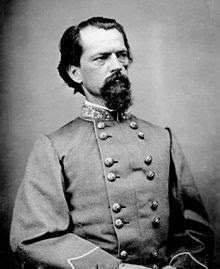
A “Fearless Gentleman and Soldier,” Took Five Minnie Balls at Antietam

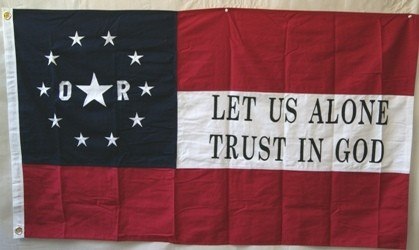
One of Robert E. Lee’s most aggressive and successful generals, and probably the most courageous and determined was General John Gordon. He fought bravely and ferociously for the Confederacy the entire war, several times while wounded.At the Battle of Antietam Gordon’s took a minnie ball through his calf.  A second ball hit him soon after in the same leg, but he was still “…able to walk along the line and give encouragement to my resolute riflemen.”The battle continued, and later in the day Gordon took yet another ball in his left arm.  His men pleaded with him to go to the rear, but he refused and Gordon stayed to fight..Gordon and his men had earlier promised Lee that “…we would stay there till the battle ended or night came.”A fourth minnie ball ripped through Gordon’s shoulder. He later recalled, “I could still stand and walk, although the shocks and loss of blood had left but little of my normal strength.”It took a fifth hit that same day to bring Gordon down. The ball struck him in the face. When he woke up, Gordon asked the surgeon what he thought of his condition. Gordon relates,“He made a manly effort to say that he was hopeful. I knew better, and said: ‘You are not honest with me. You think I am going to die; but I am going to get well.’”And get well he did. Gordon was again wounded in later battles, but never failed to keep going. In fact, Gordon was the man Lee assigned to conduct the “furling of the flags” after Appomattox, even though Gordon’s leg still ached from a round received just 18 days earlier.When Gordon died in 1904, President Theodore Roosevelt described him this way,

“A more gallant, generous, and fearless gentleman and soldier has not been seen by our country.”

Thanks for reading. Please share our posts with your friends and family so they too can learn more about Southern Heritage and History.

Brought to you by: Ultimate Flags
Posted on

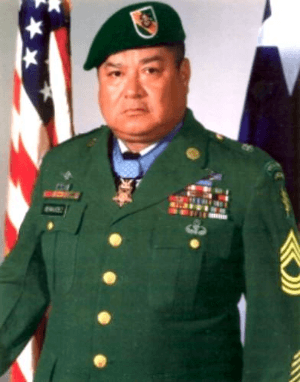
Special Forces Texan Does the Impossible

Master Sergeant Roy Benavidez was born in Cuero, Texas. He grew up and joined the National Guard, then the US Army. And earned the Medal of Honor by doing the impossible, as you will see. After assignment to 82nd Airborne, Benavidez qualified for Special Forces, also known as Green Berets. He went to Vietnam in 1965, stepped on a mine, and woke up in a hospital, paralyzed from the waist down. He was to be discharged, but on his own he worked himself back to standing and walking, and nine months later was sent back to the States for full recovery and qualifications. In 1968, he returned to Vietnam, and again did the impossible, which earned him the Medal of Honor. Waiting for an assignment, he heard a voice over an operations radio, “Get us out of here!  Get us out of here!”  Benavidez ran to a chopper that was coming in.  When it landed, he unstrapped the door gunner who was slumped over his weapon, and replaced him. It was one of three helicopters that had already tried and failed to extract the team that was under fire. When Benavidez arrived, he realized all the team members were either wounded or dead. He jumped out and ran to the team’s position, getting wounded in his leg, face and head. Still, he took charge of the situation, repositioning the wounded men, directing fire, and helping to load the dead and wounded. Once all the men were loaded, he ran back to recover classified documents. He was then severely wounded in the abdomen and got grenade fragments in his back. At the same time, the helicopter pilot was killed and the chopper crashed. Somehow Benavidez got to the wreckage, helped the wounded out and gathered them into a defensive perimeter. He called in airstrikes and directed fire from helicopter gunships. Trained also as a medic, he administered first aid to the men, and was wounded again doing so. Finally, another chopper landed. Benavidez helped load the wounded, getting clubbed in the jaw by enemy who had come up on him. Fighting his way through, he managed to make a final trip to gather up all classified material, and help the remaining dead and wounded on board. Only then did he board. Later pulled off the helicopter, he was put aside as dead, and was being inserted into a body bag. Blood had dried his eyes shut, and his jaw was injured so he could not speak. One of his buddies made a doctor listen for a heartbeat. Benavidez said, “When I felt that hand on my chest, I made the luckiest shot I ever made in my life.  I spit in the doctor’s face. So the doctor said, ‘I think he’ll make it.’” In the words of Benavidez, “For those who have fought for it, life has a special flavor the protected will never know.”  He went on to say, “I’m proud to be an American; and even prouder that I’ve earned the privilege to wear the Green Beret.  I live by the motto of ‘Duty, Honor, Country.’”

We are so proud of our true American heroes from Texas.


Thanks for reading! We hope you enjoyed our post. Please share with all your fellow patriots. Brought to you by: Ultimate Flags