Posted on

The Most Stubborn of All Confederates

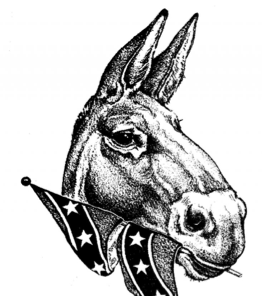
Confederate Private Watkins tells a story about capturing a mule.“He was not a fast mule, and I soon found out that he thought he knew as much as I did. He was wise in his own conceit…. If I wanted him to go on one side of the road he was sure to be possessed of an equal desire to go on the other side.”But riding an ornery mule was still better than walking, so “me and mule worried along until we came to a creek. Mule did not desire to cross.”Nothing Private Watkins did persuaded the mule.  However, an artillery unit came along and offered to help. They got a rope and tied one end to the mule and the other to carriage pulled by a team of horses.“The mule was loath to take to the water. He was no Baptist, and did not believe in immersion, and had his views about crossing streams, but the rope began to tighten, the mule to squeal out his protestations against such villainous proceedings. The rope, however, was stronger than the mule’s ‘no,’ and he was finally prevailed upon by the strength of the rope to cross the creek.”On the other side the mule “… seemed to be in deep meditation. I got on him again, when all of a sudden he lifted his head, pricked up his ears, began to champ his bit, gave a little squeal, got a little faster, and finally into a gallop and then a run. He seemed all at once to have remembered or to have forgotten something, and was now making up for lost time. With all my pulling and seesawing and strength I could not stop him until he brought up with me at Corinth, Mississippi.”

Watkins tells another story about a mule, only he wasn’t the one riding it this time: “One fellow, a courier, who had had his horse killed, got on a mule he had captured, and in the last charge, before the final and fatal halt was made, just charged right ahead by his lone self, and the soldiers said, “Just look at that brave man, charging right in the jaws of death.”He began to seesaw the mule and grit his teeth, and finally yelled out, ‘It arn’t me, boys, it’s this blarsted old mule. Whoa! Whoa!’”

You may think mules are naturally very smart and focus on their own self-preservation, or they are just plain, stupid beasts. But you can’t dispute the fact they are, for sure, very stubborn. And when you think about it, that’s really not such a bad thing.

Thanks for reading. Please share our posts with your friends and family so they too can learn more about Southern Heritage and History.

Brought to you by: Ultimate Flags
Posted on

The First Shots for Freedom

The first shots of the American Revolution were fired in Lexington and Concord on April 19,  1775. Today we call this day Patriots Day. But did the American soldiers have a flag with them that day? Great question!

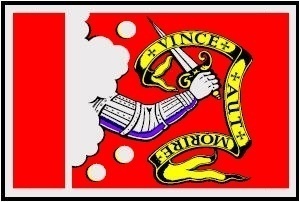
British soldiers had marched from Boston to arrest Colonial leaders Sam Adams and John Hancock. But men like Paul Revere and Samuel Dawes were alerted and rode out to give warning.  About 70 Minutemen gathered to confront 240 British Redcoats. The face-off began on the 19th, both sides wary, with no one sure what would happen.  Suddenly a shot was fired, It was “The shot heard ‘round the world.”  You may remember the line from Ralph Waldo Emerson’s famous poem: By the rude bridge that arched the floodTheir flag to April’s breeze unfurledHere once the embattled farmers stoodAnd fired the shot heard round the world. But no one gave a description of that  “flag to April’s breeze unfurled.” But we do honor the Bedford flag as the one carried by Nathaniel Page at “the rude bridge.”  Page was a Bedford Minuteman, one of those brave militia that marched out to face the British Redcoats.

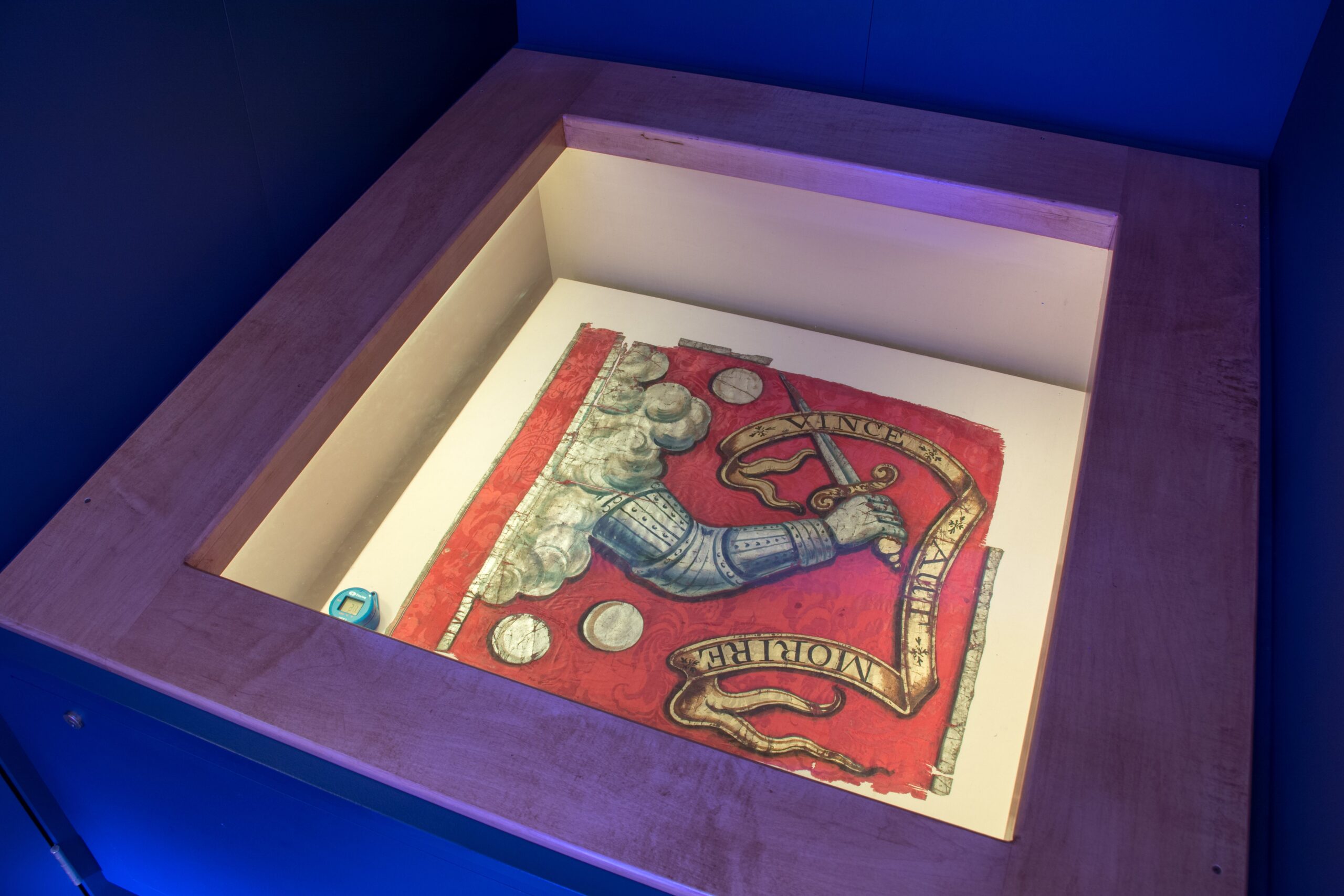
The Bedford flag is the oldest-known complete flag existing in the United States. We don’t know who made it, but it predates the American Revolution itself, going back to the early 1700’s. On the flag are Latin words which mean, Conquer or Die, and its unusual proportions are still preserved in dyed reproductions.

The original restored Bedford Flag on display in Bedford Free Public Library in Massachusetts

Thanks for reading! We hope you enjoyed our post. Please share with all your fellow patriots. Brought to you by: Ultimate Flags

Posted on

Their Sacred Right

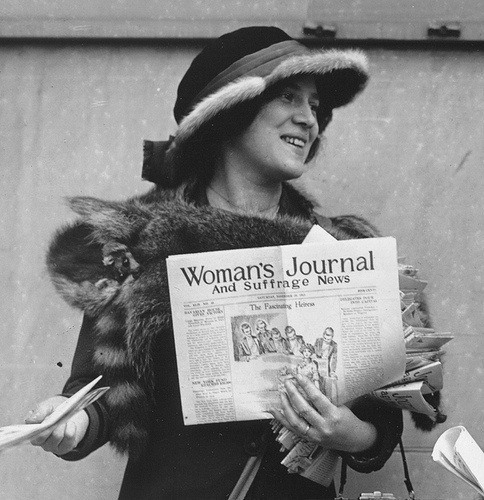
The 19th Amendment, guaranteeing women the right to vote, was formally adopted into the U.S. Constitution on August 26, 1920. Women suffragists struggled for more than 70 years to obtain their goal. The Amendment read,

“The right of citizens of the United States to vote shall not be denied or abridged by the United States or by any State on account of sex” and  “Congress shall have power to enforce this article by appropriate legislation.”

The suffrage movement was founded in the mid 19th century through the efforts of Elizabeth Cady Stanton and Lucretia Mott. They had been politically active through their work in the abolitionist and temperance movements. In July 1848, they and 200 woman suffragists met in Seneca Falls, New York, to discuss women’s rights. They passed a resolution declaring,

“It is the duty of the women of this country to secure to themselves their sacred right to the elective franchise.”

This was just the beginning of the woman suffrage movement in America.

During Reconstruction, the 15th Amendment to the U.S. Constitution was adopted, granting African American men the right to vote, but Congress declined to grant voting rights to include women.  

By 1869, Susan B. Anthony and Elizabeth Cady Stanton had founded the National Woman Suffrage Association to push for an amendment to the U.S. Constitution. Lucy Stone founded the American Woman Suffrage Association, to work through state legislatures. In 1890, the two groups were combined. That year, Wyoming became the first state to grant women the right to vote.

By early 20th century, women’s roles in society were changing drastically. They worked more, were better educated, and had fewer children. Three more states, Colorado, Utah, and Idaho, granted female enfranchisement.

In 1916, the National Woman’s Party decided to take more aggressive action. Instead of using questionnaires and lobbying,  members picketed the White House, marched, and staged acts of civil disobedience.

When America entered World War I in 1917, women helped the war effort in ways that helped break down opposition to their cause. Fifteen states had now endorsed their right to vote along with both political parties.

In January 1918, the woman suffrage amendment passed the House of Representatives, followed by the Senate, and then went to the states for ratification. When Tennessee became the 36th state to ratify, the 19th Amendment to the Constitution granting women the right to vote became the law of the land.

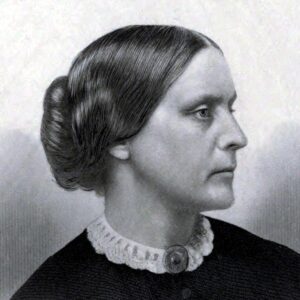
Susan B. Anthony
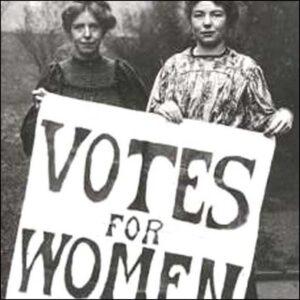
Anthony and Elizabeth Cady Stanton


Thanks for reading! We hope you enjoyed our post. Please share with all your fellow patriots. Brought to you by: Ultimate Flags

Posted on

“The People Shouted…”

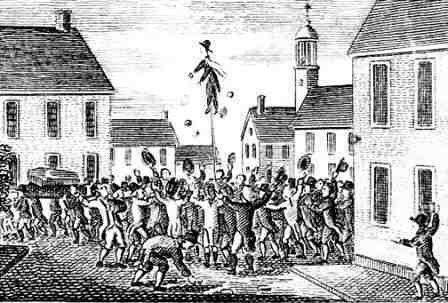
Our forefathers had strong opinions about unjust taxation. In 1765, when Americans were still British subjects, Parliament passed the Stamp Act. It was an attempt to raise revenue by directly taxing paper. Every piece of printed paper was to be taxed, from newspapers, cards, and pamphlets, to almanacs, legal papers and playing cards.  Even dice were taxed.

It did not go over well with the Americans. Tax on colonial trade had been more about regulating commerce, not raising money. But the Stamp Act was a direct attempt to raise money in the colonies, without the approval of the colonial legislatures.  This was not going to happen.

There was a lot of fuming and fussing going on about it, and Sam Adams in Boston certainly did his share. The Stamp Act Master, Andrew Oliver, was born into a life of privilege, and thought little of the “people.” But things changed one day when his effigy was hung, beheaded and burned in Boston. Oliver retreated to the safety of the island of Fort William.

Things began to escalate, so the British Governor ordered the militia to beat the drums and sound the alarm. Problem was, the drummers were out there protesting with the mob. So the Governor also decided to skip town.

As it turned out, the Stamp Master had to promise not to enforce the tax, and resign his post. As Sam Adams later said, “The people shouted; and their shout was heard to the distant end of this Continent.”

Adams and his close associates continued their efforts, expanding their organization into the Sons of Liberty. Parliament was forced to repeal the Act within a year. If it had not, the American Revolution of 1776 probably would have started ten years earlier in 1766.


Thanks for reading! We hope you enjoyed our post. Please share with all your fellow patriots. Brought to you by: Ultimate Flags

Posted on

“You will be a picked chicken…”

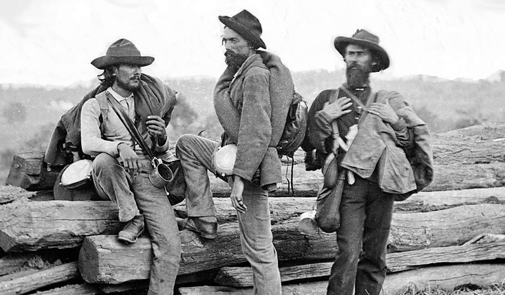
The Confederacy had many outstanding officers, who are are due all honor and respect. But by far, the makeup of the rank and file of the army was mostly privates. Those men marched and fought. Some lived, some died, and today their descendants wish to gratefully remember them.

As Sam Watkins of the 1st Tennessee Regiment wrote:“The generals risked their reputation, the private soldier his life. No one ever saw a private in battle. His history would never be written. It was the generals that everybody saw charge such and such, with drawn sabre, his eyes flashing fire, his nostrils dilated, and his clarion voice ringing above the din of battle…”Yes, we honor the exceptional officers that led men in battle, exposing themselves to as much danger as did the private.  But we also remember the Confederate foot soldier.  As Watkins also wrote:“The private’s tread is light—his soul is happy… Well, you have come here to fight us; why don’t you come on? We are ready; always ready…. Come, give us a tilt, and let us try our metal. You say you going to flank us out of the Southern Confederacy. That’s your plan, is it? Well, look out… You will be a picked chicken before you do that.”No doubt, that pluck lives on to this day.

Thanks for reading. Please share our posts with your friends and family so they too can learn more about Southern Heritage and History.

Brought to you by: Ultimate Flags
Posted on

The Flag They Followed – With Grit and Determination

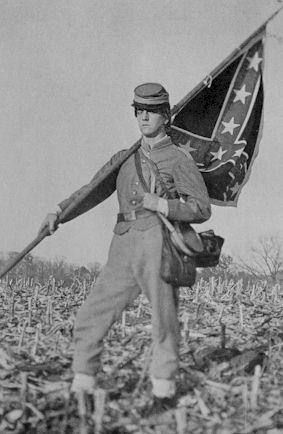
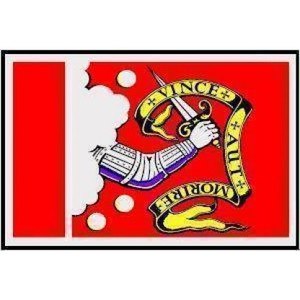
The recent news carried an article about how someone was very offended by a flag.  To hear the fellow’s words, you would think his life had just about been destroyed because he saw it. The flag in question had been followed by men whose constant companions were hunger and disease, who for years were vastly outnumbered, suffering pain and deprivations. Although often ill-equipped, these men were nonetheless armed with  a weapon of a different kind – grit and determination. Confederate General John B. Gordon tells a story about a night march. Late to arrive was an Arkansas regiment, a regiment Robert E. Lee once called “the great old Third Arkansas.”  Gordon described how an Arkansas soldier leaned his rifle up against a tent pole, and muttered the following:“This is pretty hard. I fight all day and march all night. But I suppose I can do it for my country. I can go hungry. I can march when I’m sick, because I love my country. I can always fight because there’s always another yankee somewhere who needs to be whipped. I do all this and I’m glad to do it because I love my country.”Gordon understood this. He was shot four times at Antietam, but continued to command his men. It took a fifth bullet that day to bring him down. Wounded at Shepherdstown, blood streaming from his head, he again carried on with his command. He was shot again near Appomattox, but kept right on fighting. Is it any wonder so many today still honor these men and the flag they followed?

Thanks for reading. Please share our posts with your friends and family so they too can learn more about Southern Heritage and History.

Brought to you by: Ultimate Flags
Posted on

Throw Rocks!

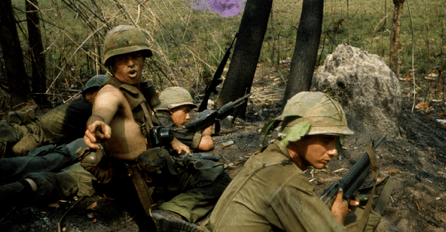
Staff Sergeant Jimmie Howard knew the fight was coming. His 18-man Marine reconnaissance unit was on top of Hill 488 in Vietnam as over 200 enemy soldiers began probing their position.

Howard had enlisted in 1950, had a Silver Star and two Purple Hearts for his actions in the Korean War, so he knew what to do when an enemy attacked. It was 10 o’clock that night when the enemy struck. The Marines pulled back to a 20-yard circle, and began fighting. In the dark, grenades and mortar shells exploded, and tracer rounds filled the air.

The enemy taunted them with, “Marines, you die in an hour.”  Howard’s men just yelled back. The Marines found this funny and began laughing. Howard described it:

“They were shooting at us and when we started laughing… they stopped.  There was complete silence.  I think it had a chilling effect on them.  They must have known we were terribly outnumbered, but here we were laughing at them.”

But soon the fight continued. The Marines were low on ammo, so Howard directed his men to, “Throw rocks.” As his men threw the rocks into the brush and grass, the enemy mistook them for grenades and moved into the open. That way the Marines could make every round count.

It was not until noon the next day that a Marine company closed on the hill.  By the time Staff Sergeant Howard and his men were relieved, they had just eight rounds of ammunition left.

Howard’s men were awarded four Navy Crosses and 13 Silver Stars. Every man earned a Purple Heart. Howard had been shot in the back, could not move his legs, but had continued to fight. He was awarded the Congressional Medal of Honor.

If that’s not courageous and heroic, then what is?


Thanks for reading! We hope you enjoyed our post. Please share with all your fellow patriots. Brought to you by: Ultimate Flags

Posted on

“If You Ain’t Cav, You Ain’t…”

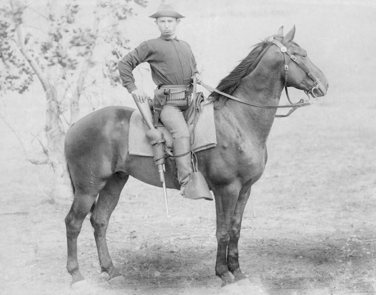
American cavalry has a long and proud tradition.  These troops trained to fight on horseback were used effectively in the Revolutionary War, War of 1812, and the War with Mexico. The Civil War saw a significant change, with Cavalry heavily used as Mounted Infantry.  They were soldiers who used their horses for maneuvers and moving fast, then dismounted to the fight.  There was very little “cavalry vs. cavalry” in the Civil War, and even fewer mounted charges against infantry.

Surprisingly some Union cavalry units were mounted on mules.  Why mules? They were  especially feisty animals that could endure conditions that a normal horse could not.

The Confederacy began the war with an advantage over Union horsemen.  The entire South was horse country, with few roads and rough terrain. Many Southerners owned a horse of some sort, and were at home in the saddle.

The North caught on after a while, and made effective use of their own cavalry. George Custer’s men certainly had their share of success in battle.  The flamboyant young Custer, with his long blond hair, wide-brimmed hat, and velvet jacket, made a name for himself long before his famous last stand against Crazy Horse in 1876.

In a charge at the Battle of Yellow Tavern near Richmond, his 5th Michigan cost the South one of its greatest generals, J.E.B Stuart.  One of Custer’s men shot and killed Stuart.

On the Confederate side, Nathan Forrest‘s cavalry was known for its fast travel.  Union General Sherman reported that Forrest’s men and horses “could travel one hundred miles in less time than it takes ours to travel ten.”   They could fight well when mounted, but usually fought on foot.  

Military strategists still study and write about Forrest’s operations and leadership. A paper from the Naval War College includes the statement that he was “…an unlettered military genius in the operational art of war at the tactical level. Without a formal military education, he became one of the leading cavalry figures and greatest operational leaders of the war.”  

This same paper went on to say,

“Generals Robert E. Lee and William T. Sherman and other leaders on both sides ultimately declared him the most remarkable soldier of the Civil War.”  He was known for using a Battle Flag with only 12 stars, instead of the usual 13, so his opponents knew who they were facing.

Today’s U.S. Army Cavalry carries on the tradition that started in 1775, operating with much of the same tactics as the Mounted Infantry of the Civil War. Of course, the Cav gets there much faster today using motor vehicles, armored tanks, and helicopters  

Appropriately, the motto of the 1st Cavalry Division is “The First Team.”   One of the unofficial mottos is, “If you ain’t Cav, you ain’t…”  

The history of American cavalry gives them every reason to stand tall and proud.

Thanks for reading. Please share our posts with your friends and family so they too can learn more about Southern Heritage and History.

Brought to you by: Ultimate Flags
Posted on

Good Golly, Miss Molly!

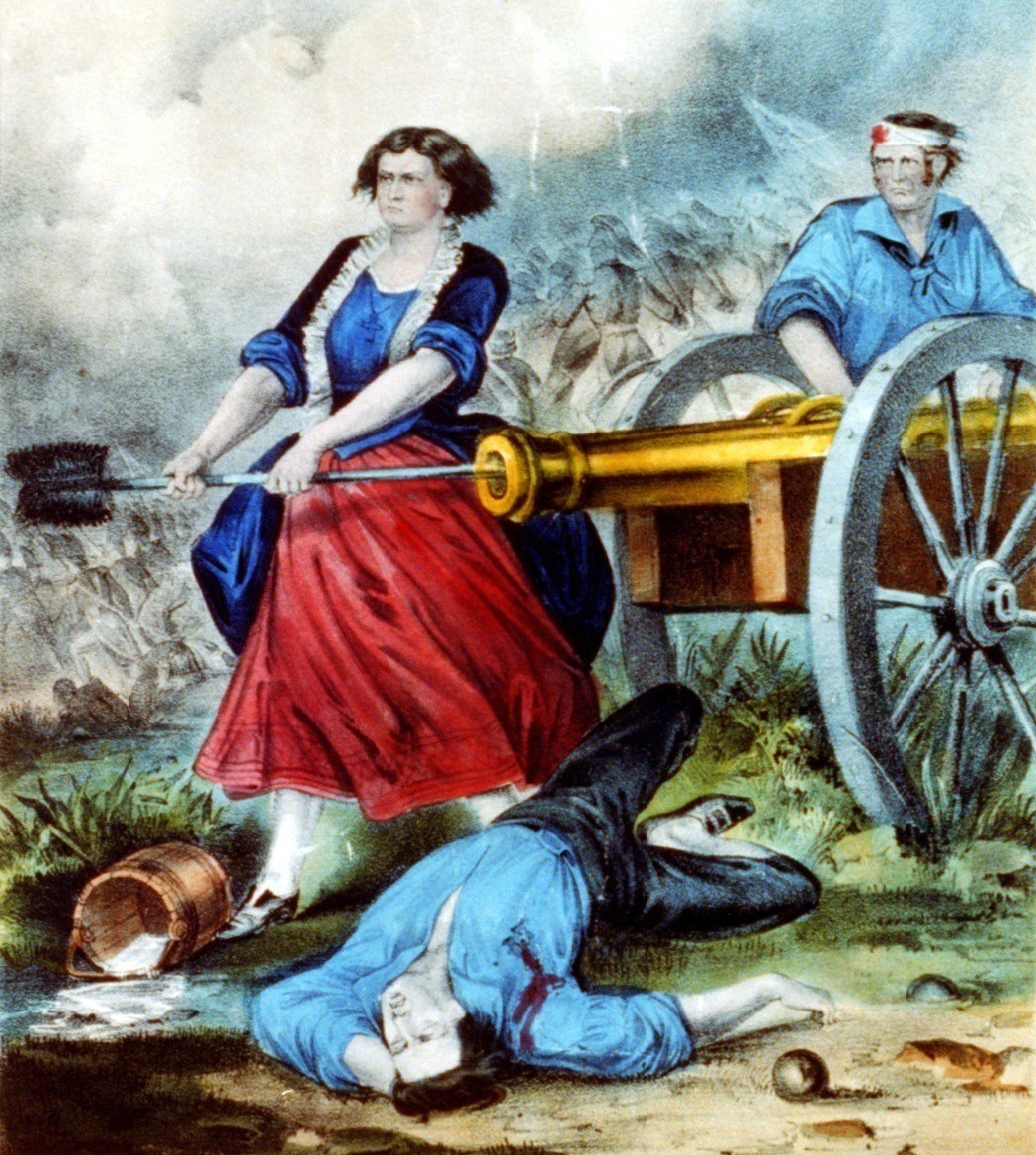
Molly Pitcher is described as a patriot who carried pitchers of water to soldiers and helped with cannon duty during the Battle of Monmouth in the American Revolution.

“Molly Pitcher” may be a combination folk hero inspired by the actions of many women who served in this role on the battlefield, and became know by this nickname.  During the American Revolutionary War it was common  for wives to be near their husbands in battle and help as needed.

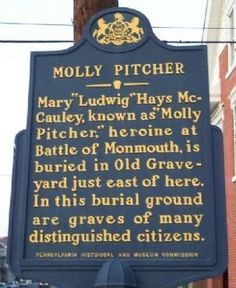
Although historians conclude that Molly Pitcher cannot be definitely identified, most sources say she was Mary Ludwig Hays, born in Trenton New Jersey in 1754.  At the Battle of Monmouth, she earned this nickname as she carried pitchers of water to soldiers.

As the story goes, it was a brutally hot day in June, 1778. She made countless trips to a nearby spring to fill pitchers of cold water for soldiers to drink and to pour over their cannons to cool them down. When her husband William (John) Hays, the artilleryman, was wounded, she dropped her her water jugs and took up loading the artillery in his place. She kept the cannon loaded throughout the rest of the battle until the colonists had won the victory.

According to the National Archives, there was a witness to Molly Pitcher’s actions. Joseph Plumb Martin, a soldier in the Continental Army, was there. His memoirs, discovered in the 1950’s, documented her heroic acts: Plumb relates :

“A woman whose husband belonged to the artillery and who was then attached to a piece in the engagement, attended with her husband at the piece the whole time. While in the act of reaching a cartridge and having one of her feet as far before the other as she could stemp, a cannon shot from the enemy passed directly between her legs without doing any other damage than carrying away all the lower part of her petticoat. Looking at it with apparent unconcern, she observed that it was lucky it did not pass a little higher, for in that case it might have carried away something else, and continued her occupation.”

With her actions on that day, Molly Pitcher became one of the most popular and enduring symbols of the women who contributed to the American Revolution.

George Washington is said to have seen her heroics and issued her a commendation. Mary was allegedly called “Sergeant Molly” for the rest of her life. But where history ends and folklore begins is up for debate. There is no record of such  commendation from Washington. Martin’s account is the only real evidence available about her at Monmouth.

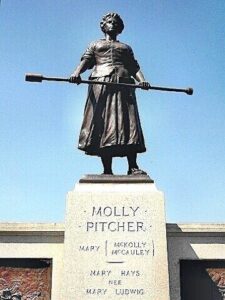
Mary Hays (“Molly Pitcher”)  was honored by the Pennsylvania Legislature in 1822 for her wartime services. She was awarded $40 and an annual commission for rest of her life. A monument in Carlisle commemorates her heroic acts in battle.


Whether Molly Pitcher is  one woman or a mixture of many, her legend tells the story of women’s heroism during the American Revolution.


Thanks for reading! We hope you enjoyed our post. Please share with all your fellow patriots. Brought to you by: Ultimate Flags

Posted on

The Grandest Charge

“I am sure that it was the grandest charge that was ever seen by mortal man.”

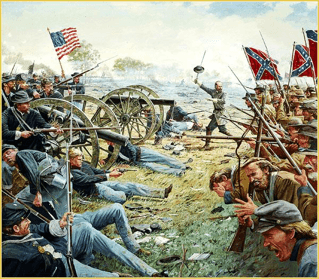
Those are the words of Union Colonel Worthen, whose men at Gettysburg tried to stand against the Mississippi brigade commanded by General Barksdale.  Gettysburg was the bloodiest battle of the Civil War, and there are many tales of the brave men that fought there.

This is a tale of the “grandest charge.”Longstreet needed to create an opening in the Union lines, but attacks by four of his brigades had failed in the face of a Union artillery battery.

Brigadier General Barksdale approached Longstreet with a request:

“I wish you would let me go in, General; I would take that battery in five minutes!”   

The order was given, and true to his word, Barksdale’s men swiftly overwhelmed the artillery. But the Mississippi Brigade was not done.  They raced onward to where the 68th Pennsylvania awaited them. The 68th collapsed in 30 minutes.

Onward went the charge of the Mississippi Brigade, shattering the 57th Pennsylvania next.  But this was the “grandest charge,” and not quite over. Racing into the 141st Pennsylvania, the clash was ferocious, with 70 percent of the Federals lost before they retreated.

The Mississippi boys had driven a hole a mile deep into the Union lines. One of the Confederate soldiers reported that a Federal soldier from Pennsylvania insisted on shaking hands

“with one of the men who made the most splendid charge of the war.”

Thanks for reading. Please share our posts with your friends and family so they too can learn more about Southern Heritage and History.

Brought to you by: Ultimate Flags
Posted on

Pirate Patriots

America has had its share of pirates. One could even say that the Boston Tea Party was a sort of piracy. It’s  likely that a some of those tea leaves found their way into a patriot’s teapot instead of landing at the bottom of Boston Harbor.

It was normal for a nation at war to authorize civilians to seize enemy shipping. Men who did this were called privateers. The Continental Congress issued this proclamation: 

“You may, by force of arms, attack, subdue, and take all ships and other vessels belonging to subjects of the King of Great-Britain…”

Nations called any enemy “privateers” pirates. During the American Revolution, even Navy Captain John Paul Jones was called a pirate. He was so successful off the British coast that the British Navy declared he was to be hanged if captured. Fortunately he never was, and won a famous battle against the 50-gun HMS Serapis off the east coast of Britain.

American Naval officer Joshua Barney was a privateer.  During the Revolutionary War, Barney once remarked that he was happiest when faced with “the point of the bayonet or the cannon’s mouth.” As a privateer during the War of 1812, Barney took 20 vessels from 1812-1813. He put his uniform back on and started building and commanding vessels, and even fought on land to defend the nation’s capital.

Jean Lafitte was a pirate and smuggler near New Orleans. He raided Spanish and French shipping. He even set up his own Kingdom of Barataria, made up of isolated islands in Louisiana. A local hero, he supplied “a steady and relatively inexpensive supply of dry goods, wine, all sorts of manufactured items…”

In 1812, the British tried to convert Jean Lafitte to their side, but he was a patriot at heart and would have nothing to do with it. When General Andrew Jackson came to defend New Orleans, Lafitte offered his services. The popular pirate supplied cannons, ammunition and skilled men. Pirates knew how to handle a cannon, and Lafitte had some of the best in the business. His men manned key artillery and were crucial to winning the battle.

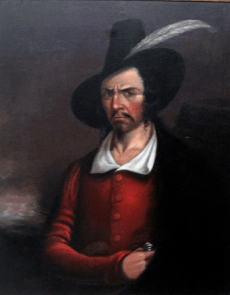
Pirate hero Jean Lafitte

The pirates were commended by Jackson as “having shown uncommon gallantry and skill in the field.”


Thanks for reading! We hope you enjoyed our post. Please share with all your fellow patriots. Brought to you by: Ultimate Flags
Posted on

The Brave Dash for Water

It was the autumn of 1863, and Confederates were in the middle of a bold assault on a Union fort near Knoxville, Tennessee. The Rebels reached a defensive ditch surrounding the fort, but were pinned down.  

One of the men volunteered to make a dash back across the wide open field to get water. Somehow, he managed to make it back without being shot, but now he had to make it to the ditch, carrying the load.

Confederate General Gordon later recalled the following:

“Laden with the filled and heavy canteens, he approached within range of the rifles in the fort and looked anxiously across the intervening space. He was fully alive to the fact that the chances were all against him; but determined to relieve his suffering comrades or die in the effort, he started on his perilous run for the ditch at the fort.”

Gordon, from Georgia, was no stranger to daring himself. He was already battle-scarred before he was shot four times at Antietam, and continued to lead his men. It took a fifth bullet to bring him down that day. Later wounded at Shepherdstown, West Virginia, blood streaming from his head, he again carried on with his command.

Here is the rest of the story he told of that day:

“The brave Union soldiers stood upon the parapet with their rifles in hand. As they saw this daring American youth coming, with his life easily at their disposal, they stood silently contemplating him for a moment. Then realizing the situation, they fired at him a tremendous volley–not of deadly bullets from their guns, but of enthusiastic shouts from their throats. If the annals of war record any incident between hostile armies which embodies a more beautiful and touching tribute by the brave to the brave, I have never seen it.”

Thanks for reading. Please share our posts with your friends and family so they too can learn more about Southern Heritage and History.

Brought to you by: Ultimate Flags