Posted on

“…giving them the best I had…”

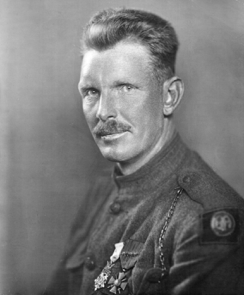
Sergeant Alvin York is one of America’s most famous soldiers.  Son of a blacksmith, York was raised on a small farm in Tennessee.  In his own words:
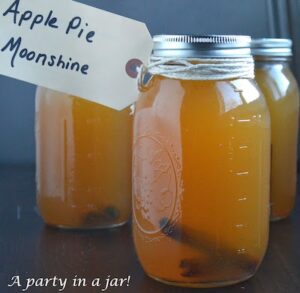
“I used to drink a lot of moonshine. I used to gamble my wages away week after week. I used to stay out late at night. I had a powerful lot of fist fights….”  

But one day,

“I promised my mother that night I would never drink again; I would never smoke or chew again; I would never gamble again; I would never cuss or fight again. And I have never drunk any whiskey, I have never touched cards, I have never smoked or chewed, and I have never fought or rough-housed since that night.”
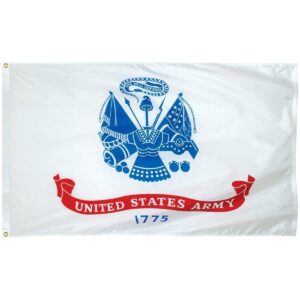
Then came World War I.  York went to France, landing with the U.S. Army 82nd Division in May 1918.  

Five months later he and 17 other men had just captured some enemy soldiers when they came under heavy fire.

According to York,

“There were about 30 of them. They were commanding us from a hillside less than 30 yards away. They couldn’t miss. And they didn’t!”  

Nine Americans went down:

He continued:

“Those machine guns were spitting fire and cutting down the undergrowth all around me something awful…. I didn’t have time to dodge behind a tree or dive into the brush…. As soon as the machine guns opened fire on me, I began to exchange shots with them…”

“All the time I kept yelling at them to come down. I didn’t want to kill any more than I had to. But it was they or I. And I was giving them the best I had.”
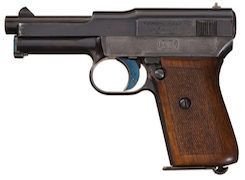
Suddenly six of the enemy jumped out of their trench and charged York.  He pulled out an old automatic pistol and started firing:

“I touched off the sixth man first, then the fifth, then the fourth, then the third, and so on. I wanted them to keep coming. I didn’t want the rear ones to see me touching off the front ones. I was afraid they would drop down and pump a volley into me.”

No western movie has better displayed “cool under fire.”  One of the captured soldiers, a major, had seen enough.  He spoke English, telling York, “If you don’t shoot any more I’ll make them surrender.”  And he did.

That was how eight Americans found themselves with 80 prisoners. They started making their way back through enemy lines, encountering more enemy soldiers on the way.  York had the major order them to surrender, and all but one did:

“I made the major order him to surrender twice. But he wouldn’t. And I had to touch him off. I hated to do it. But I couldn’t afford to take any chances and so I had to let him have it.”

By the time York and his seven men reached American lines they had 132 prisoners. The Army inspected the battlefield later, and the official report said York’s account was accurate, but also said,

“York’s statement tends to underestimate the desperate odds which he overcame.”

York was promoted to sergeant and awarded the Medal of Honor. The government made a lot of fuss about it, but York wrote in his diary that he

“…wanted to get back to my people where I belonged, and the little old mother and the little mountain girl who were waiting.”  And so he did.

Thank you for your service Sergeant.  May we all be as brave and courageous as you and your men when the time comes.

Brought to you by: Ultimate Flags Thanks for reading! Please share with your fellow patriots on social media.

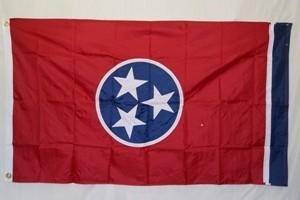
United States Army Flag Buy Now! State of Tennessee Flag Buy Now!
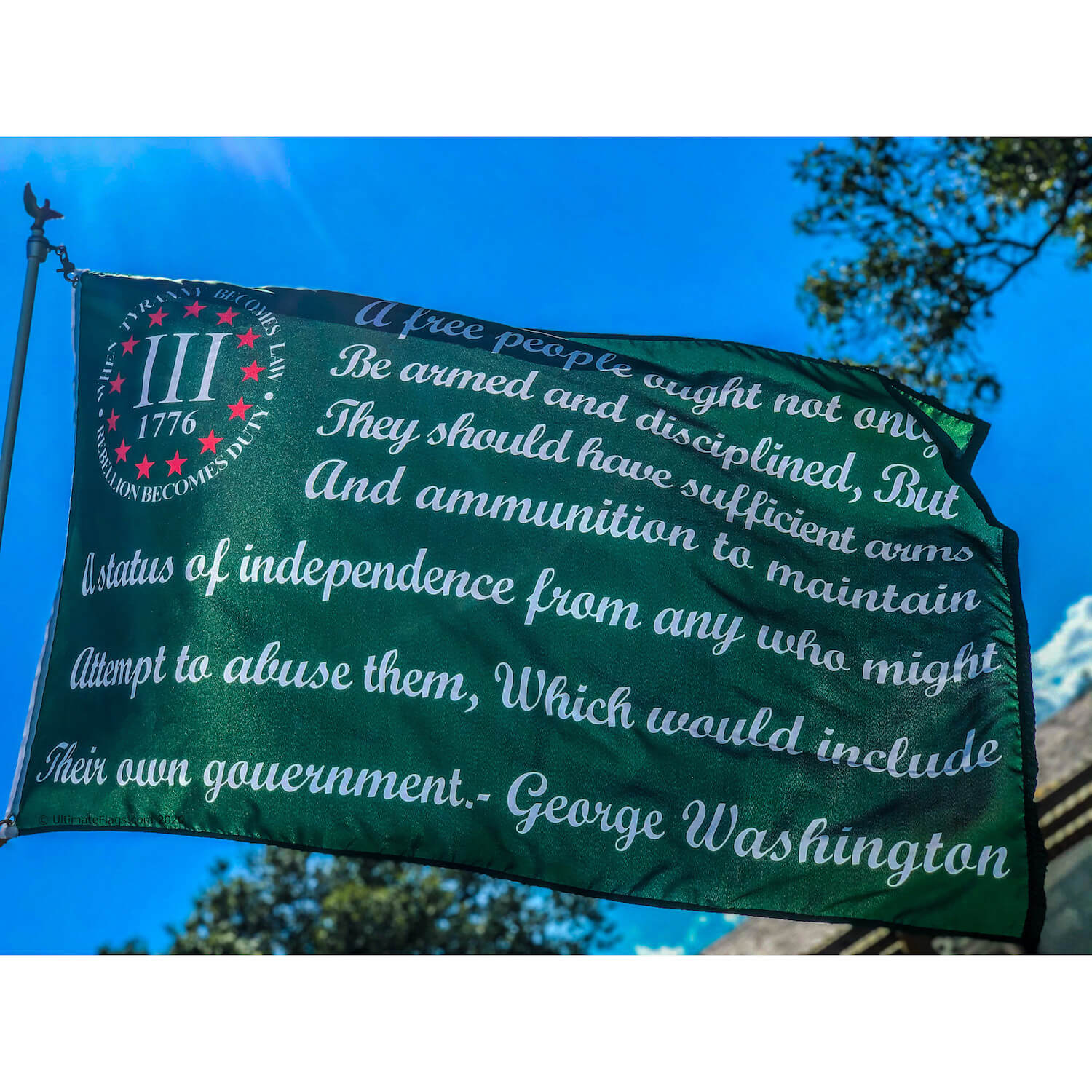
Patriotic American Flags- Buy Now! 2nd Amendment George Washington Flag- Buy Now!

Posted on

The “Giant in Gray”

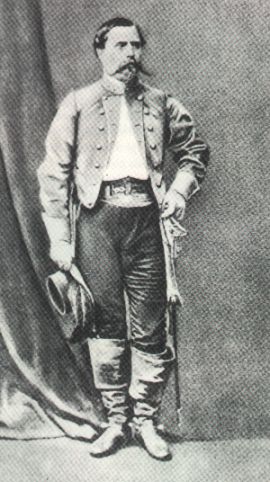
Johann Heros von Borcke was a lieutenant in the 2nd Brandenburg Regiment of Dragoons of the Prussian Army when news arrived of the beginning of the American Civil War.

He managed to get released from his unit, and crossed the Atlantic to the island of Bermuda. From there he managed to get onto a Rebel Blockade Runner and sailed into Charleston Harbor in 1862.

Von Borcke brought with him a massive Solingen straight sword, which would become famous during his military  career. Standing 6′ 4″tall  and weighing in at more than 240 pounds, he was a conspicuous sight to see on the battlefield, wielding his extremely large sword.   He  became known as the “giant in gray.”

Von Borcke became a Confederate Captain and a close confidant and aide to Maj. Gen. J.E.B. Stuart who praised him for his bravery and skill.  Stuart wrote,

“Capt. Heros von Borcke, a Prussian cavalry officer, who lately ran the blockade, assigned me by the honorable Secretary of War, joined in the charge of the First Squadron in gallant style, and subsequently, by his energy, skill, and activity, won the praise and admiration of all”.

He rode with Stuart as his Chief of Staff and adjutant general during the Northern Virginia Campaign and the Maryland Campaign, further adding to his reputation for bravery in the face of the enemy.

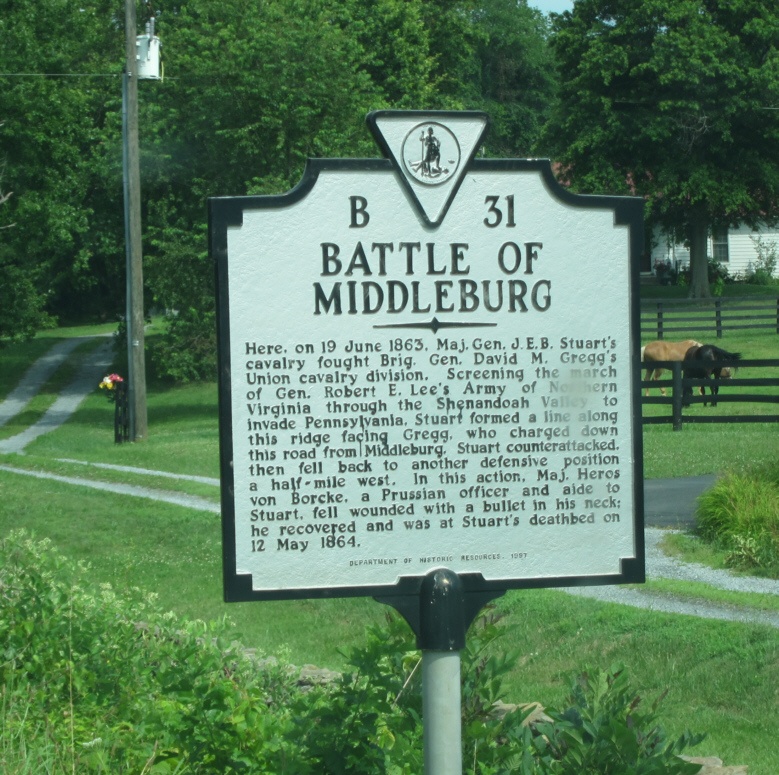
During the Battle of Middleburg,  early in the 1863 Gettysburg Campaign, von Borcke took a bullet to his neck and could not fight for the rest of the of the year.  But he did recover enough to return to staff duties in the following spring. He was present at the Battle of Yellow Tavern where Maj. Gen. J.E.B. Stuart was lost.

Where von Borcke was wounded

Von Borcke was voted the official thanks of the Confederate Congress. President Jefferson Davis even sent him on a diplomatic mission to England.

After the war he returned to Germany, but never forgot his Southern friends, even returning to visit them.  He named one of his daughters Virginia.  Johann inherited the family castle, where it was his “delight to fly the Confederate flag from its battlements”.

His headstone over his grave in Giesenbrügge was destroyed by the Soviet army during World War II. The Sons of Confederate Veterans purchased a new headstone for his grave. It was reinstalled in  2008.

Thanks for reading. Please share our posts with your friends and family so they too can learn more about Southern Heritage and History.

Brought to you by: Ultimate Flags

Posted on

Washington Battles An Invisible Enemy

Until modern times, the great killer of soldiers in all armies was an invisible one. It was not bullets, cannons or bayonets, but the disease called smallpox. In 1775, smallpox had so devastated the American army in Canada that John Adams bemoaned that “…smallpox is ten times more terrible than the British, Canadians and Indians together.”

Washington knew all about this disease because he had survived it as a child. It could kill off the soldiers and destroy a viable army. Plus, just the threat of infection would scare off many of the troops that Washington desperately needed. The success or failure in the war to gain independence from Britain could be determined by this unseen killer. Washington described as a threat greater  “than…the Sword of the Enemy.”

Smallpox continued to plague the Continental Army and civilian populations. Epidemics broke out in Boston and Philadelphia in the summer of 1776.  American forces sent to take Quebec had to retreat because of the high number of soldiers infected with smallpox.

Washington took the bold and controversial move in the winter of 1777 in Morristown New Jersey to have soldiers inoculated against smallpox. Later while in encampment at Valley Forge, he went further and demanded that his entire army be inoculated.

Inoculation would have to be done in great secrecy because inoculated soldiers were unable to fight for a period of time. But Washington eventually put in place a system where new recruits would get the inoculation as soon as they enlisted. They would then have the mildest form of the disease while they were being outfitted with uniforms and weapons. By the time the men left to join, these new soldiers would be completely healed.  

By some reports, death from smallpox in the ranks dropped from 17% to a low of 1% of all reported deaths, a tremendous reduction.

Historian Elizabeth Fenn stated, “Washington’s unheralded and little-recognized resolution to inoculate the Continental forces must surely rank with the most important decisions of the war…”

George Washington’s military genius is undisputed. But American independence may not have happened without his strategy to reduce the loss of men to smallpox with the first mass military inoculation.


Thanks for reading! We hope you enjoyed our post. Please share with all your fellow patriots. Brought to you by: Ultimate Flags

Posted on

George Washington’s Fury

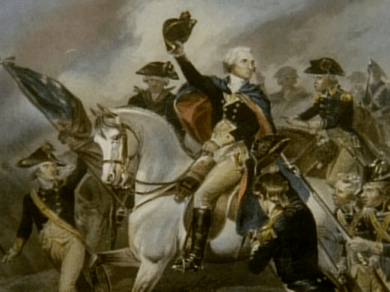
George Washington was known for keeping his cool, so it was rare that anyone saw him lose his temper. But at the Revolutionary War Battle of Monmouth in New Jersey, Washington exploded in rage when his second in command disobeyed orders and retreated from an engagement.  

Washington had sent General Charles Lee ahead to engage British General Cornwallis while Washington brought his full army up from winter quarters at Valley Forge. But Lee withdrew from the fight after several hours.

When Washington met up with Lee, he cursed him furiously for withdrawing from the British. General Scott was there and said that the “leaves shook on the tree.”

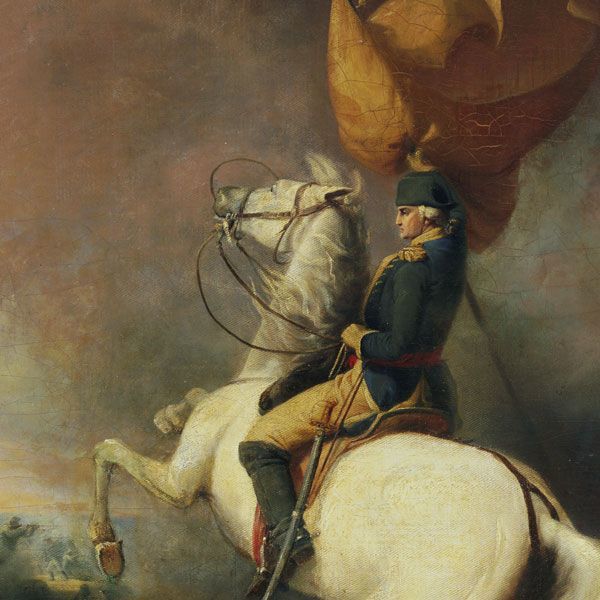
Washington rode forward on his horse, encouraging his men to battle, and continued to do so throughout the day.  The day was so hot and Washington maneuvered around so swiftly – inspiring his men and directing the fight – that his horse died from exhaustion.

That night Washington resolved to continue the fight the next day, but when dawn came, the British were nowhere to be seen. They had retreated overnight.

Another of Washington’s generals, Marquis de Lafayette, was present at the battle, and later reported, “I thought then as now I had never beheld so superb a man.”


Thanks for reading! We hope you enjoyed our post. Please share with all your fellow patriots. Brought to you by: Ultimate Flags

Posted on

“There stands Jackson, like a stone wall”

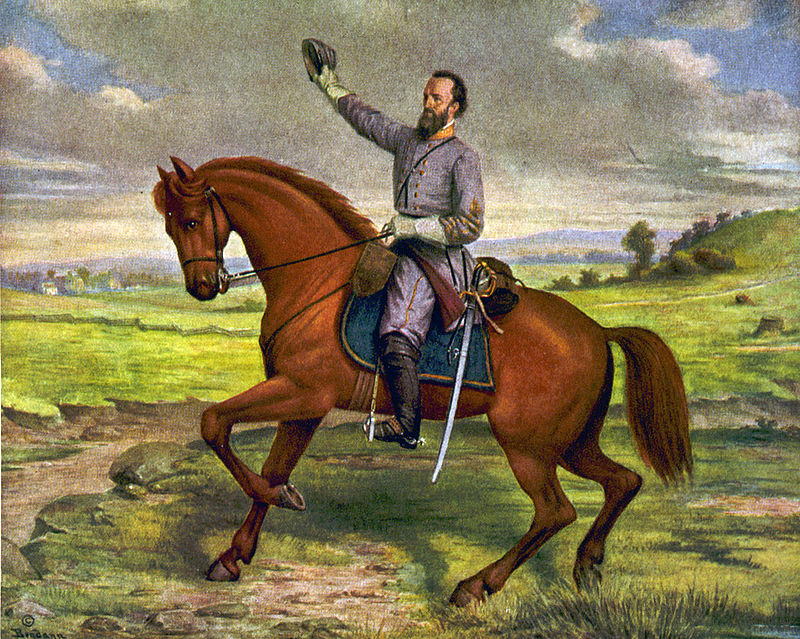
Confederate General Thomas “Stonewall” Jackson is one of the most famous military men in history. He came from tough stock. His great-grandfather was born in England, but fought against the British in the American Revolution. Jackson graduated from West Point in 1846, was a hero in the Mexican American War, and taught at the Virginia Military Institute. Jackson wanted his home state of Virginia to stay in the Union, but when he was called to Confederate service, he was decisive. One of his most outstanding qualities was to be decisive and resolute. He made decisions with no second guessing. No one was better at it.

Jackson also excelled at deception and had the astounding ability to understand terrain and maneuver his army to be at the right place at the right time.

How Jackson got his nickname “Stonewall” is one of the most repeated battlefield stories. The first major battles of the Civil War was First Manassas (Bull Run to the Feds). When he learned the Federal were advancing to try to break the Confederate line he called out,  “We will give them the bayonet!” Confederate General Bee saw how the brigade took the shock of battle with great steadiness, and exclaimed, “There is Jackson, standing like a stone wall.”                                                                                          Jackson’s battle style and tactics have influenced war in the 20th century, with its ultra-fast movements and quick strikes. The German blitzkrieg is partially based on Jackson and his style of fighting.

Jackson’s Valley Campaign of 1862 has never been surpassed in the view of many military men, and has been taught in military courses around the world since. One British officer, who taught strategy at a great European college, used this campaign as a model of strategy and tactics, dwelling upon it for several months in his lectures. When Jackson died in 1863, there was the greatest outpouring of grief for a fallen hero in American history. His casket was draped with the Confederate Second National Flag (in fact the first one produced). His death touched every heart and hearth in the South and took away one of their great heroes. Robert E. Lee said, “I have lost my right arm.”


Thanks for reading. Please share our posts with your friends and family so they too can learn more about Southern Heritage and History.

Brought to you by: Ultimate Flags

Posted on

“Raise Me One Notch Higher”

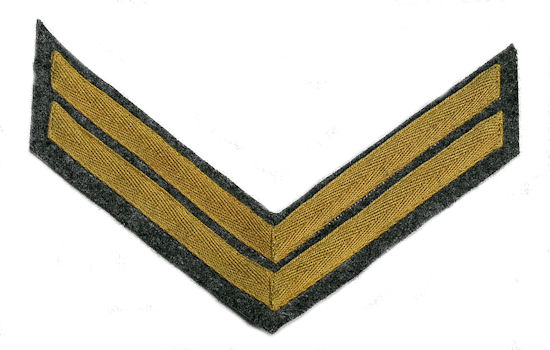
Here’s the story of how Confederate Private Sam Watkins got promoted to corporal. You may remember from earlier stories that Sam was a Rebel, in uniform from one end of the Civil War to the other. It seems that one day he was involved in several charges at the Battle of Atlanta. On the final charge, Sam was shot in his ankle and heel. He took cover in a ditch, but managed to pick up a flag from the battlefield. Sam got patched up and then promoted. Here is how he tells it. You’ll see that he as quite a sense of humor:

“Why, hello, corporal, where did you get those two yellow stripes from on your arm?” said Sloan.

“Why, sir, I have been promoted for gallantry on the battlefield, by picking up an orphan flag, that had been run over by a thousand fellows, and when I picked it up I did so because I thought it was pretty, and I wanted to have me a shirt made out of it.”

“I could have picked up forty, had I known that,” said Sloan.

Sam goes on to explain:

“Reader mine, the above dialogue is true in every particular. As long as I was in action, fighting for my country, there was no chance for promotion, but as soon as I fell out of ranks and picked up a forsaken and deserted flag, I was promoted for it. I felt ‘sorter’ cheap when complimented for gallantry, and the high honor of fourth corporal was conferred upon me… had I only known that picking up flags entitled me to promotion and that every flag picked up would raise me one notch higher, I would have quit fighting and gone to picking up flags, and by that means I would have soon been President of the Confederate States of America.”

Sam Watkins

Thanks for reading. Please share our posts with your friends and family so they too can learn more about Southern Heritage and History.

Brought to you by: Ultimate Flags

Posted on

The Hessians Are Coming!

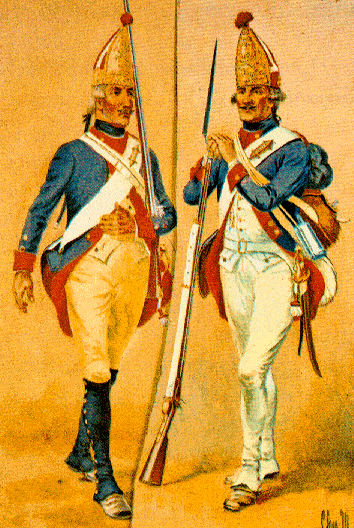
The British had tens of thousands of troops in America throughout the war, but still found it  necessary to increase their numbers by hiring foreign troops. German rulers hired out some of their regular army units to Great Britain to fight against the Patriots in the American Revolution.  By 1776 thousands of soldiers called “Hessians” were pouring into America via New York.

The term “Hessians” refers to the approximately 30,000 German troops hired, principally drawn from the German state of Hesse-Cassel, as well as other German states.

One of the battles where American troops met Hessian fighting forces happened in Rhode Island.  

Rhode Island, a small state, located about 6 miles south of Boston, was the first of the 13 Colonies to declare its independence from Britain, May 4th, 1776.  It borders the Atlantic Ocean, but is not  actually an island. It got its name because there were early settlements on Aquidneck Island, which was then called “Rhode Island.”

A fierce battle was fought on Aquidneck. The British had strengthened the town of Newport, but the Americans wanted it. A French fleet set up a blockade forcing the British to scuttle their own small fleet. Then Colonial soldiers landed on the island, and the British withdrew.

But soon, a much larger British fleet appeared to take on the French ships. As the two fleets set for battle, a hurricane came up and damaged and scattered both fleets. The French withdrew for repairs.

Without the French, American land forces could not breach the British fortifications. As they withdrew, the British attacked. The Rhode Island regiments fought fiercely and well, and broke the British line, driving them back.

One of the Rhode Island regiments met up with Hessian troops, who attacked them in three waves. This particular regiment was predominantly made up of men of African descent, and  many Native Americans. The Rhode Island regiment beat back the Hessians so fast and furiously that after the battle the Hessian commander asked for a transfer: It seems he was afraid that his men would kill him if he went into battle with them again, because he had subjected them to so much slaughter.

Although the campaign failed in its overall goal, the new American nation took pride in its fighting troops. The Hessians were known as tough, professional soldiers, but the Americans were pretty tough themselves, chasing them out. The Continental Army was clearly an effective hard fighting force.

American General Greene was at the battle, and wrote:

“To behold our fellows, chasing the Hessians off the field of battle, afforded a pleasure which you can better conceive than I describe.”

He went on to say, “I had the pleasure to see them run in worse disorder than they did at the Battle of Monmouth.”

So for now you can say, See! The Hessians are going!


Thanks for reading! We hope you enjoyed our post. Please share with all your fellow patriots. Brought to you by: Ultimate Flags

Posted on

At Olustee  “We Whipped the Yankees Badly”

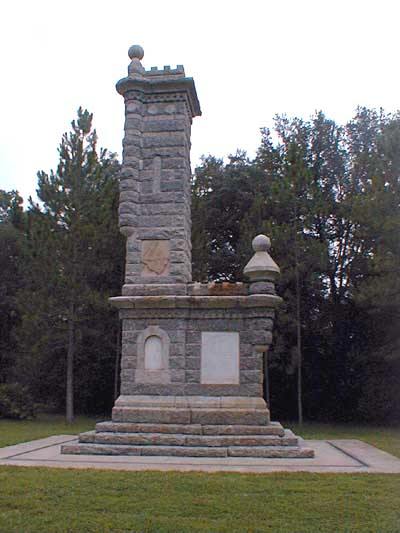
The Battle of Olustee, also called Ocean Pond) was the largest Civil War battle in Florida. The battle lasted for six hours in the woods close to Olustee station on February 20, 1864. It has been described as one of the bloodiest battles in the Civil War. Nearly 3,000 men out of the 11,000 who fought were lost.

The Union army’s goal was to  launch an expedition from the coast to cut off supply lines to the Confederates. A second goal for them was to find African Americans to join their side. Three regiments of African American troops did fight well in this battle on the Federal side, but many of these men were lost.

Union Brigadier General Truman Seymour with 5,000 men began moving towards Lake City, west of Jacksonville, to destroy a railroad bridge and secure northern Florida. Confederate General Joseph Finegan with his 5,200 men met him near Olustee railroad station. A fierce battle raged on.

The Confederates, close to breaking the Yankee lines, were running low on ammunition. But more cartridges arrived and the attack continued. By late afternoon, Seymour realized the fight was lost and retreated back toward Jacksonville.

One of the men who fought at Olustee, Henry Shackelford of the 19th Georgia Infantry wrote home,

“The Yanks couldn’t stand before ‘Georgia Boys’ and finally gave way and ran, our boys pursuing. We got all their artillery, 8 pieces, took about 400 prisoners…”  

He continues,  “…we built big fires and then how we did enjoy captured coffee, sugar, hams, bread and everything else. We…then returned to our old camps ‘kivered’ with honor and glory.”

“To sum the whole thing up, we whipped the Yankees badly and they acknowledge it themselves. Our brigade did honor to themselves and their country. Proud old Georgia will never have cause to be ashamed of Colquitt’s Brigade.”

Brigadier General ALfred Colquitt, praised as the “Hero of Olustee” for his leadership during the battle reported:

”The gallantry and steady courage of officers and men during this engagement are beyond all praise. For more than four hours they struggled with unflinching firmness against superior numbers until they drove them in confusion and panic to seek safety in flight.”

The massive Confederate victory at Olustee ended the first major Union attempt to penetrate the interior of Florida. The Confederates kept control of Florida’s interior for the rest of the war.

Thanks for reading. Please share our posts with your friends and family so they too can learn more about Southern Heritage and History.

Brought to you by: Ultimate Flags

Posted on

French Pirate, American Hero

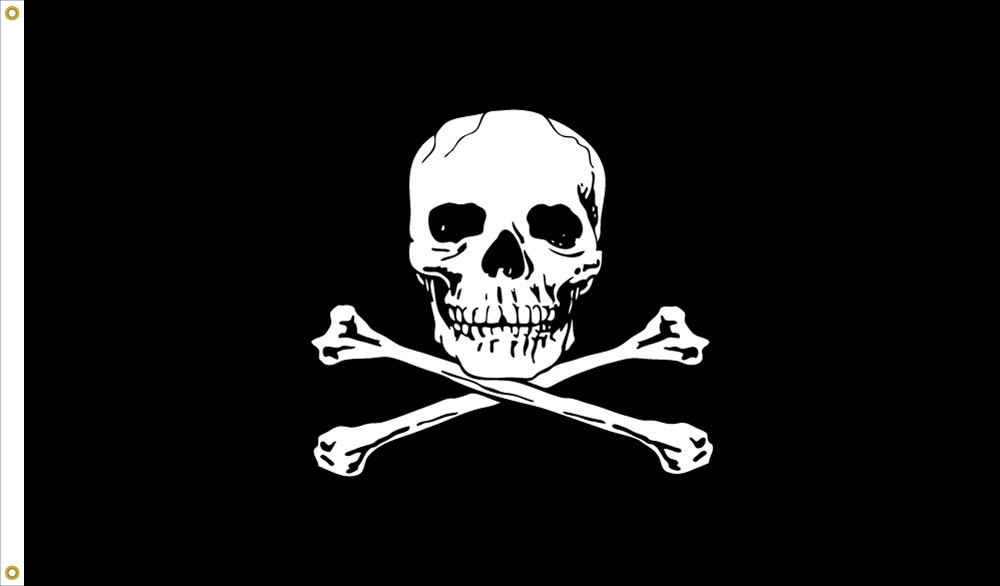
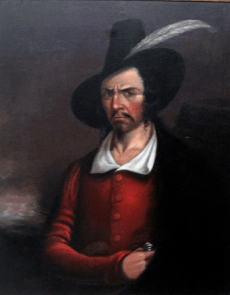
Last of the great Pirates of the Gulf, the legend of Jean Laffite is well known in Louisiana. We know little about his first 20 years, but by 21 we know that he had survived two duels. Ever been to  the Court of Two Sisters Restaurant in New Orleans? That’s where Laffite fought 3 more duels.

Laffite was a charming man who spoke French, English and Spanish. Today you usually see his name spelled “Lafitte,” but Jean spelled his own name “Laffite.” He made a fortune smuggling goods into Louisiana.  When the governor offered a reward of $300 for his capture, Laffite put up posters offering $1,000 for the governor’s capture.  This pirate had quite a sense of humor.

When the War of 1812 between America and Great Britain began, the British wanted Laffite on their side.  But that was not going to happen.  It seems at the time Jean Laffite’s brother was in prison and Jean had a warrant out for his arrest.  Laffite worked a deal to help America take back New Orleans from the British. His brother was allowed to “escape,” joining him to help the Americans.

Laffite furnished General Andrew Jackson’s army of 2,000 with 366 cannons, powder, and shot.  Jackson needed those cannons to go against 10,000 veteran British troops.  The cannon helped kill two British Major Generals and most of the British field officers, as well as devastating the now leaderless troops.  

America won the battle, which helped make the following peace treaty more favorable to the new nation. Plus it went a long way to help retain the great cultural heritage of New Orleans and Louisiana.  (Yes, gumbo, jambalaya, and shrimp creole!) Merci, Monsieur Laffite!


Thanks for reading! We hope you enjoyed our post. Please share with all your fellow patriots. Brought to you by: Ultimate Flags

Posted on

“First in the Hearts of His Countrymen:”Light Horse Harry’s Eulogy to Washington

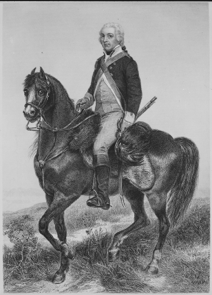
“First in war, first in peace, and first in the hearts of his countrymen.” These famous eloquent words about George Washington come from a eulogy written by Henry “Light Horse Harry” Lee.

Light Horse Harry was a highly-decorated officer in the Continental Army, member of the Continental Congress, governor of Virginia, father of the famous Civil War general Robert E. Lee, and close friend of George Washington.

The U.S. Congress was unanimous in assigning Lee to write Washington’s eulogy, believing he was best suited to eloquently express  “those sentiments of respect” for the beloved Revolutionary War General and First President of the United States.

Funeral service for George Washington

The term “Light Horse” refers to light cavalry, horses and men who are not heavily armored and are meant to be able to ride and maneuver swiftly. Lee had a renowned reputation for his excellent horsemanship and so earned the name “Light Horse Harry.”

Before the American War of Independence Light Horse Harry already had a reputation as a skilled commander of cavalry. In the Revolution, Lee led his men in many battles in the southern theatre of the conflict.  Lee distinguished himself as one of the Revolution’s most skilled and able guerrilla fighters. In 1773, he was promoted to major and took command of a mixed cavalry and infantry corps called Lee’s Legion.

He was known for his lightning raids, and was one of only eight men awarded a gold medal of valor by the Continental Congress during the Revolution.  When British General Cornwallis surrendered at Yorktown, bringing the war to an end, Lee was there.

After the war, Lee was elected Governor of Virginia, serving three one-year terms, and  commanded the militia sent to put down the rebels during the Whiskey Rebellion.

House actually built by Light Horse Harry

Posted on

Alabama Says “Cease Holding On to Me!”

The Confederacy was growing. South Carolina started it all in December 1860, followed by Mississippi, and Florida. Alabama would be the fourth to secede from the Union. Within a month Georgia, Louisiana, and Texas would follow. A great Civil War between the Union and the Confederates was beginning.

In January of 1861 delegates met in Montgomery, Alabama. They debated for several days, but ultimately wrote a document declaring, “…the State of Alabama now withdraws from the Union…”  Russell Smith was one of the delegates, and wrote: “When the doors were thrown open, the lobby and galleries were filled to suffocation in a moment… Simultaneously with the entrance of the multitude, a magnificent Flag was unfurled in the centre of the Hall….  Gentlemen mounted upon tables and desks, held up the floating end…”

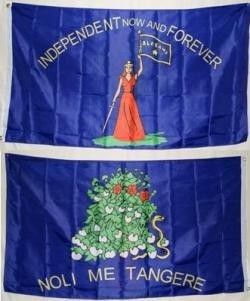
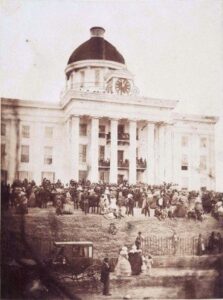
The ladies of Montgomery had sewn the flag, and it was one of a kind. The Alabama Secession Flag has a field of blue.  The front shows Liberty holding both a sword and a flag, one in each hand.  The reverse side has a rattlesnake underneath a cotton bush.  The rattlesnake is a traditional symbol of American independence and willingness to fight for liberty, dating from well before the Revolutionary War.  The Latin words “NOLI ME TANGERE” are written on the reverse.  A warning against meddling or interference, it is a translation of a Greek phrase meaning, “Cease holding on to me.”The flag was flown over the Capitol in Montgomery for a month after secession. It survives today, preserved by the State of Alabama.

Thanks for reading. Please share our posts with your friends and family so they too can learn more about Southern Heritage and History.

Brought to you by: Ultimate Flags

Posted on

Hand-to-Hand Fighting in New York

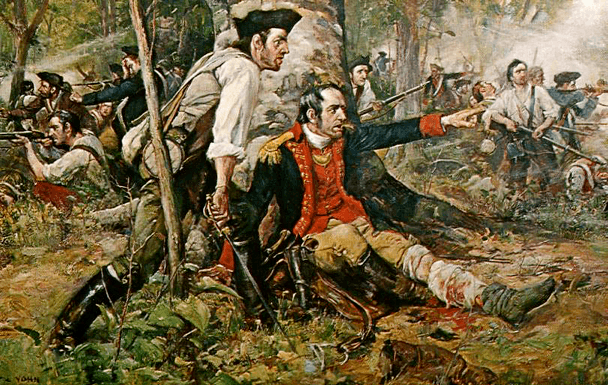
There were plenty of fierce battles in the American Revolution, but few were as violent as six hours of hand-to-hand fighting that took place 100 miles from the Canadian border. Patriot General Herkimer and 800 militiamen were marching through a forest and bog so dense that you could not see a man 30 feet away. The British used that setting for a perfectly laid ambush that would become known as the Battle of Oriskany.

A blaze of musket fire erupted suddenly as the Americans entered a narrow ravine. The militia, mostly farmers with the support of 60 Oneida Indians, were taken completely by surprise. General Herkimer’s leg was shattered, and several of his senior officers died instantly, along with a dozen men leading the column. It should have been a complete route, with inexperienced, panic-stricken men fleeing for their lives.

But that was not to be. These men, without orders, immediately counter-attacked, rushing up the hills, surprising and bayoneting their attackers. Their courageous response saved the day. General Herkimer, crippled and in pain, had his men carry him up the hill so he could direct the fight, proclaiming, “I will face the enemy.”

In the dense woods, it was a man-to-man battle, but Herkimer directed his men to fight in pairs, one firing while the other reloaded. This was effective, and casualties lessened on the American side.

A contingent of British rushed to reinforce the ambushers, turning their coats inside out to resemble the clothing of the militia. But one of the Americans spotted the ruse, and charged them, killing three immediately. More militia followed, sending the reinforcements into retreat.

The Oneida Indians were busy, too, fiercely battling along with the milita. Their chief’s 15-year-old daughter was present, and she grabbed a musket and fought alongside her tribesmen, war cry in full display.

The fight went on for a full six hours, but eventually British casualties mounted to the point that it made no sense to continue, so they withdrew.

The Americans had suffered greatly in the battle, but it should have been a complete massacre. The courage and tenacity of the militiamen and their Oneida allies had turned the tide.


Thanks for reading! We hope you enjoyed our post. Please share with all your fellow patriots. Brought to you by: Ultimate Flags