Posted on

Traveller, A “Confederate Grey”

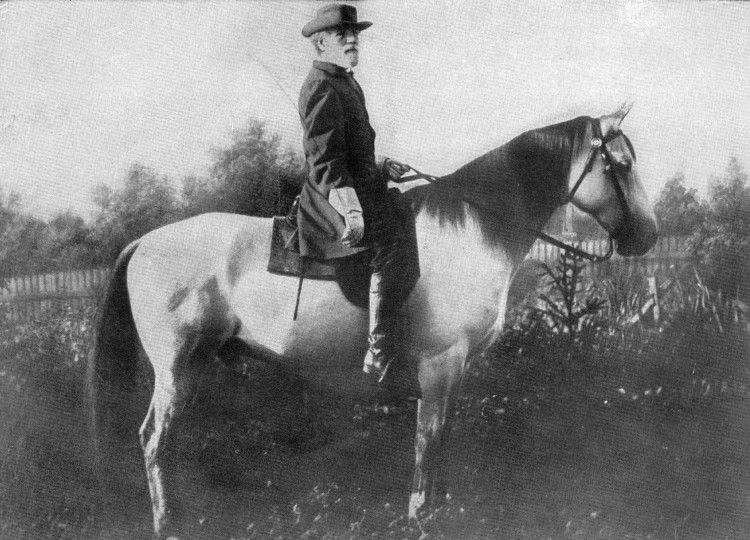
A high spirited and handsome young colt with the name “Jeff Davis” seemed destined for greatness.  And he certainly was. Described as a flashy dappled grey horse with a black mane and tail, he was striking and regal.

When Confederate General Robert E. Lee spotted the colt in the Virginia mountains, he knew he had to have him.  Lee later renamed him “Traveller” because of the horse’s ability and eagerness to walk quickly. They would would ride over 40 miles a day during campaigns. Lee rode a number of horses during the war, but Traveller was by far his favorite.
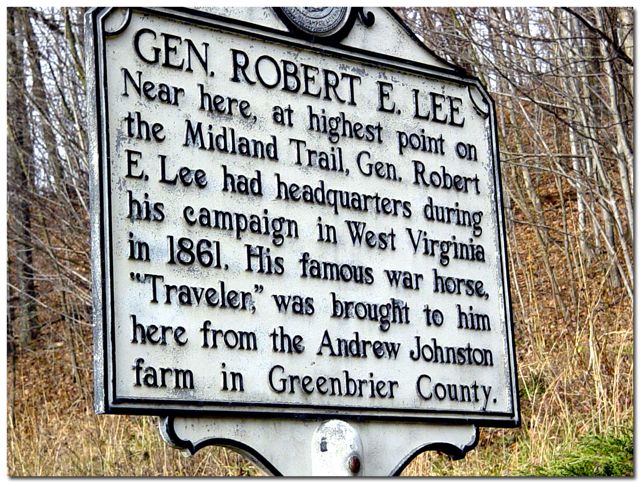
Traveller was difficult, high strung, a bit unruly, “pranced or jigged wherever he went.” One day Traveller reared when surprised by artillery fire. Just at that very moment, “a cannon ball passed directly under the steed’s belly,” saving his own and General Lee’s life.

Recounts of battle action include this story:

“Some of the most dramatic incidents involving Lee and Traveller occurred during the Overland campaign in 1864, when soldiers literally grabbed the horse’s reins to prevent their commander from personally leading attacks on six occasions…”

“The most notable incident occurred in the Wilderness…, when soldiers of the Texas Brigade surrounded Traveller and shouted, ‘Lee to the rear!’ That day Traveller carried Lee until well after midnight, and when they finally returned to camp, Lee dismounted, and overcome with exhaustion, he threw his arms around Traveller’s neck to hold himself up.”

It seems the love and respect between man and beast was mutual. Here’s what Traveller thought about Lee in this recount. One day Lee escorted his daughter’s friend back to the boat dock.

“He dismounted, tied Traveller to a post, and was standing on the boat making his adieux, when someone called out that Traveller was loose. Sure enough, the gallant grey was making his way up the road, increasing his speed as a number of boys and men tried to stop him.”

“General Lee immediately stepped ashore, called to the crowd to stand still, and advancing a few steps gave a peculiar low whistle. At the first sound, Traveller stopped and pricked up his ears. The General whistled a second time, and the horse with a glad whinny turned and trotted quietly back to his master, who patted and coaxed him before tying him up again.”

“To a bystander expressing surprise at the creature’s docility the General observed that he did not see how any man could ride a horse for any length of time without a perfect understanding being established between them.”

Traveller served the General well in battle after battle, throughout the entire war, coming through relatively unscathed. Traveller became increasingly famous after the war. Even his hair was a sought after memento of the war. Lee wrote to his daughter,  

“The boys are plucking out his tail, and he is presenting the appearance of a plucked chicken.” While travelling, he would write home and ask,  “How is Traveller? Tell him I miss him dreadfully,” Lee would ride his famous grey gelding for the rest of his life.

One of the most famous images of General Robert E. Lee was taken astride Traveller, “a Confederate grey.”

Traveller outlived Lee by a year. The stable where he lived his last days stood with its doors left open to “allow Traveller’s spirit to wander freely as he did when he was alive.” They are painted in  “Traveller Green.” His remains are buried a few feet away from where his master’s body rests.

“The great Traveller was considered gorgeous and difficult.  But, he was greatly loved, and still is.”

The Confederate Monument in Stone Mountain, Georgia showing Lee astride Traveller in center

Thanks for reading. Please share our posts with your friends and family so they too can learn more about Southern Heritage and History.

Brought to you by: Ultimate Flags
Posted on

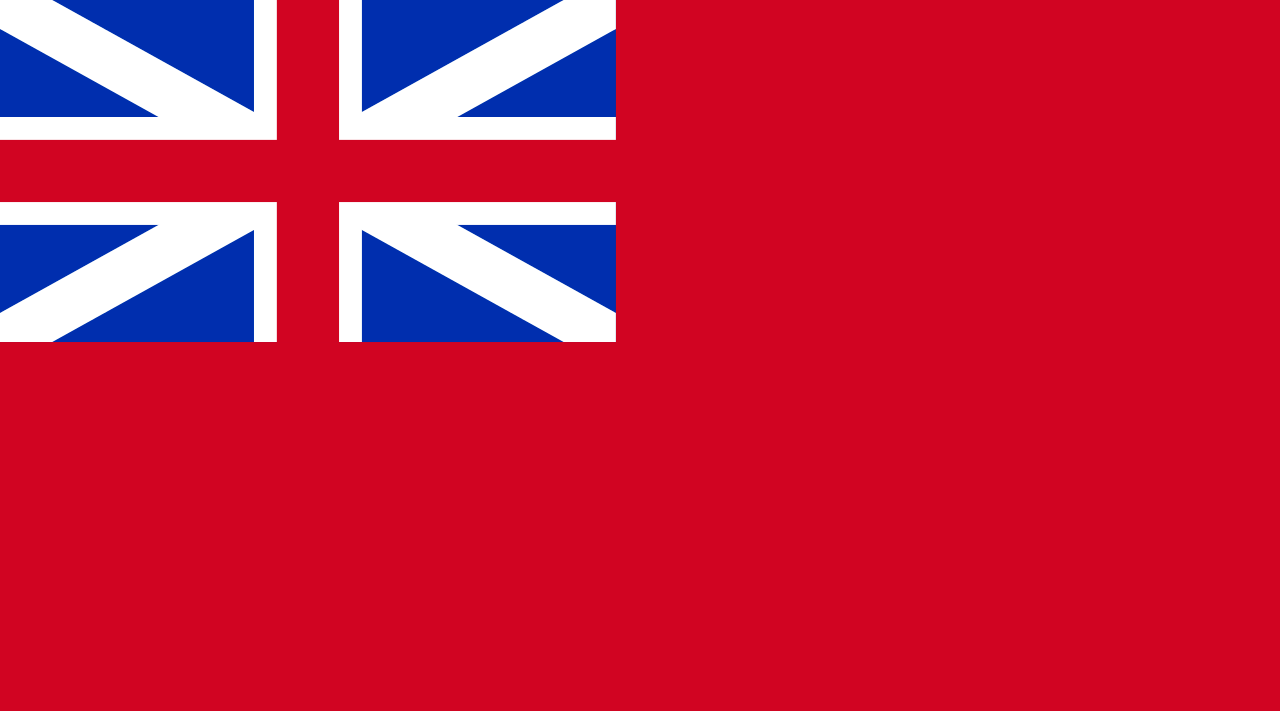
British Red Ensign and American Independence

The British Red Ensign Flag was well-known in the American Colonies during the 1700s.  The English Royal Navy adopted in in 1625, and it was used by English merchant ships from about 1650.

During the 1700s the British Red Ensign Flag was the official British flag, and since the American colonies were British, it was also their flag.  

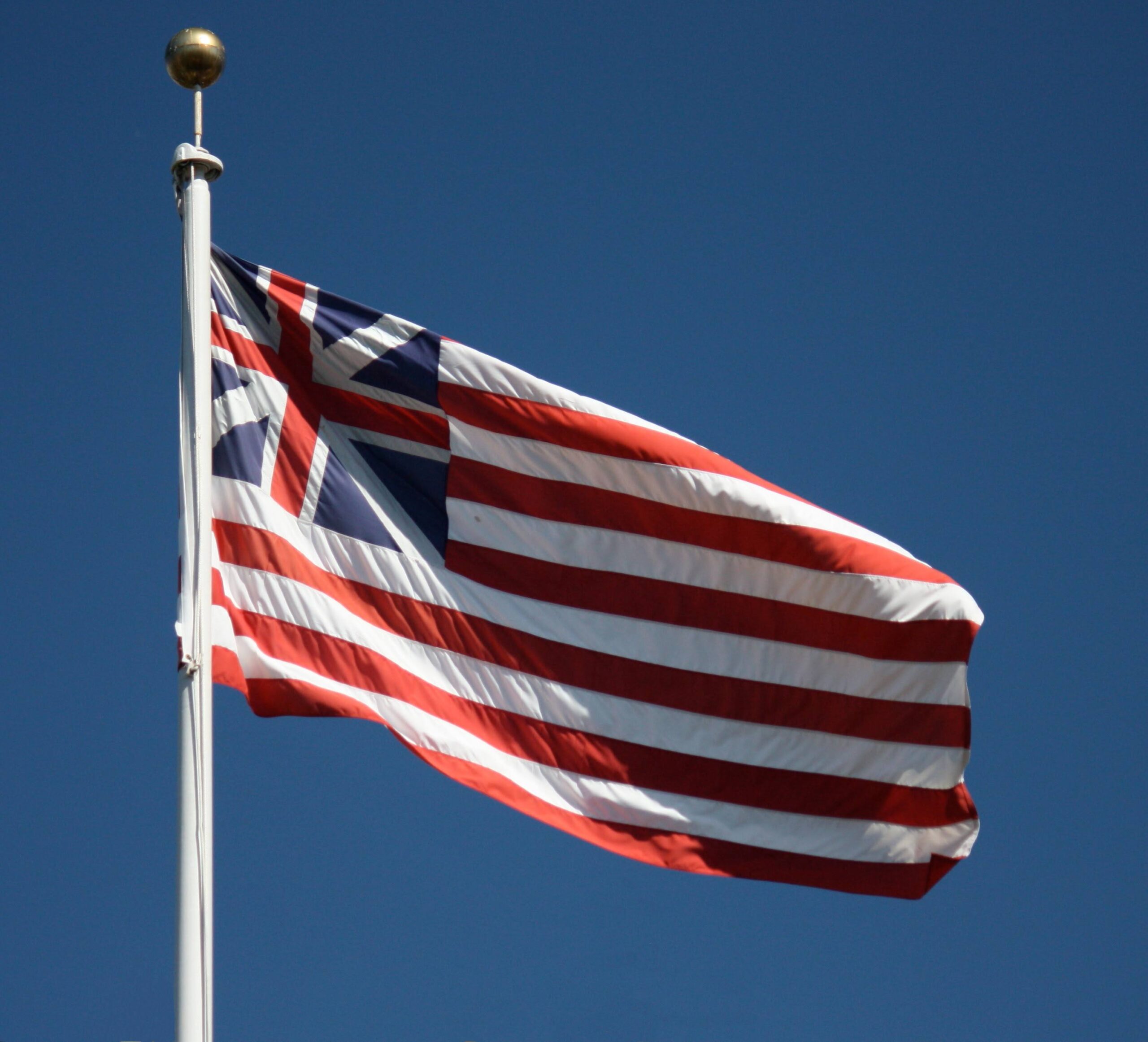
In 1776 George Washington and the Continental Army surrounded Boston. General Washington had the British Red Ensign Flag raised at Cambridge, but strips of white cloth were added to create red and white to make white stripes.  This was before America declared itself independent in the following July.  The point was that the colonists were still loyal to the king, while in open protest against the British Parliament’s abusive practices in the America.

The British Red Ensign Flag that was modified by the American Colonies became known as the Continental Colors, and later as the Grand Union Flag.  It was in use for some time (the Stars and Stripes flag was not officially adopted until 1777).

Throughout the American Revolution, British soldiers fought under the British Red Ensign Flag.  This is the flag British General Cornwallis was using when he surrendered in 1781.

Note: The red ensign is in informally called the “red duster”. There does not seem to be any agreement on how the expression arose. One theory is that Red Ensigns were hoisted and left until they were so dirty and tattered that they looked more like dusters than flags. Another is that on British ships old flags were often used as rags before being thrown away.


Thanks for reading! We hope you enjoyed our post. Please share with all your fellow patriots. Brought to you by: Ultimate Flags

Posted on

Harassing Sherman Texas Ranger Style

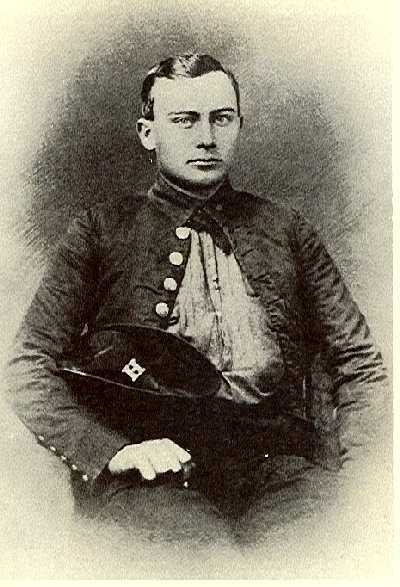
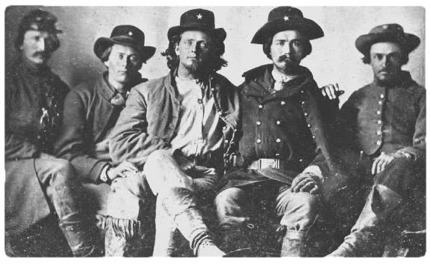
The legendary Terry’s Texas Rangers is named for the man who formed the unit, Benjamin Franklin Terry. The group’s official name was the 8th Texas Cavalry.  Every man who joined had to bring a shotgun or rifle, Colt revolver, and a Bowie knife (this was Texas, after all). They pinned a five-pointed star, the one worn by the original Texas Rangers, to their hats as you can see in the above photo.

These formidable, high spirited Texans displayed their valor in Civil War battles at Shiloh and Murfreesboro, Chickamauga and Chattanooga, just to name a few. They excelled at conducting lightning raids in Kentucky, and cleverly harassed Sherman as he burned his way to the sea.  

For a time, they served under Lt. General Nathan B. Forrest.  Forrest intimidated the commander of the 9th Michigan to surrender, telling him that he had “…five hundred Texas Rangers he couldn’t control in a fight.”  The Federals considered this, and “to a man, they voted to surrender.”

Captain Shannon led the Rangers’ scouts, nicknamed “Shannon’s Scouts.”  The Scouts followed and ran raids on Sherman’s troops across Georgia and the Carolinas.  One of their aims was to disrupt Sherman’s “bummers,” the general’s men that “requisitioned” food from Southern homes. Though often outnumbered, the Scouts were very successful, capturing many of the bummers.

One of the Scouts wrote about how his unit of 18 men encountered a force of hundreds of Federals:

“We were quite as much surprised as they were, but rather than let them discover our weakness in number, we began yelling and shooting as we came, making enough noise and bedlam for several times our number … they evidently thought the entire Confederate army was after them, for they started to run.”

The tradition of these men lives on in today’s rough and ready Texas Rangers, members of one of the world’s most respected law enforcement agencies.

Texas Ranger Badge

Thanks for reading. Please share our posts with your friends and family so they too can learn more about Southern Heritage and History.

Brought to you by: Ultimate Flags
Posted on

“Follow the Lone Star Flag”

It is always inspiring to hear stories of about the courage of soldiers during battle. George Bravard was a flag bearer serving the 1st Texas infantry regiment during the Civil War.

Confederate Colonel Philip A. Work, the commander of this famous “Ragged Old First,” pointed to a rise in the distance and said,

“Follow the Lone Star Flag to the top of the mountain.”  

At that moment a Union cannon shell landed in their midst. Branard vowed he would wave his flag over the gun that fired that shot. He set out toward the mountain with his fellow Texans as shells fell all around him. Nearly a third of the men were killed or wounded during the advance, but Bravard kept on going.

He passed well beyond the rest of the men. The regiment left behind shouted and urged him to turn back.  His death was near certain, but Branard was on a mission. He had made a vow. All of a sudden they heard this command coming from the Federal lines,

“Don’t shoot that man! He is too brave to kill!”

For a brief time, all gunfire stopped. But then a shell suddenly exploded at Branard’s feet. A fragment struck him in the forehead, gashing his face, blinding his left eye and destroying hearing in his left ear. The blast ripped the Lone Star colors from his hand. He managed to recover it and clutched it closely again. As he struggled to move forward, he passed out. Fellow soldiers thought he was dead and carried him off the field.

But that was not the end of Bravard, as he did survive. Amazingly, after only one day of recovery, the brave color bearer was back on duty. He was wounded again in following battles, but he never quit.

He proudly carried that Lone Star flag and wore his uniform until the very end of the war.  

George Branard, Flag bearer of 1st Texas

Thanks for reading. Please share our posts with your friends and family so they too can learn more about Southern Heritage and History.

Brought to you by: Ultimate Flags
Posted on

The Green Mountain Boys

Americans from all 13 Colonies – now all states in the U.S. –  played vital roles in the War of Independence.  But the first rebel victory of the Revolutionary War, the Battle of Fort Ticonderoga, was won by a militia of less than 100 men, known as the Green Mountain Boys of Vermont.  

Ethan Allen bought land in the New Hampshire Grants in 1770. But the British crown gave all of that same land to New York, ignoring  the New Hampshire land grants. Allen and his cousin Remember Baker started the “Green Mountain Boys,” a militia force, to protect their land, keeping New York settlers, the “Yorkers,” out of Vermont. They drew their name from the Green Mountains of Vermont.  Vermont would later become the 14th state in 1791.

When the American Revolution started in 1775, Ethan Allen with 83 colonist militia men, and help from Colonel Benedict Arnold, crossed a lake at dawn to surprise attack and capture the British garrison at Fort Ticonderoga. It was America’s first victory of the Revolutionary War, and big morale booster for the American cause.  

Their success kept American soil safe from British invasion through Canada. They went on to fight in other battles, including the Battle of Bennington, a very important victory for the early American rebels.

It may be that if the “Boys” had not successfully taken the fort, the Americans would not have won their independence.  When the war ended, the Green Mountain Boys went home to protect and work their lands.

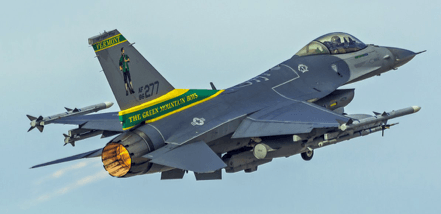
The Green Mountain Boys flag was green, of course, with thirteen stars representing each of the colonies they fought for.  A group still exists today, in the form of Vermont’s National Guard.  The 134th Fighter Squadron flies the F-16 Fighting Falcon.


Thanks for reading! We hope you enjoyed our post. Please share with all your fellow patriots. Brought to you by: Ultimate Flags

Posted on

“A Floating Barn Roof” vs. “A Yankee Cheese Box On A Raft”

The Federals from the start of the Civil War wanted to defeat the Confederacy by blocking access to southern ports for supplies and exporting cotton for revenue.

In response, the Confederacy began building a fleet of ships “clothed in iron panels” to make them resistant to enemy cannon fire. These “ ironclads”, also armed with an underwater ram, could slam into and sink the enemy’s wooden vessels. Three elements made up the ironclad: a metal-skinned hull, steam propulsion and guns that fired explosive shells.

Starting from scratch, the South was able to put into action more than 20 such warships. The North followed with a considerable fleet.

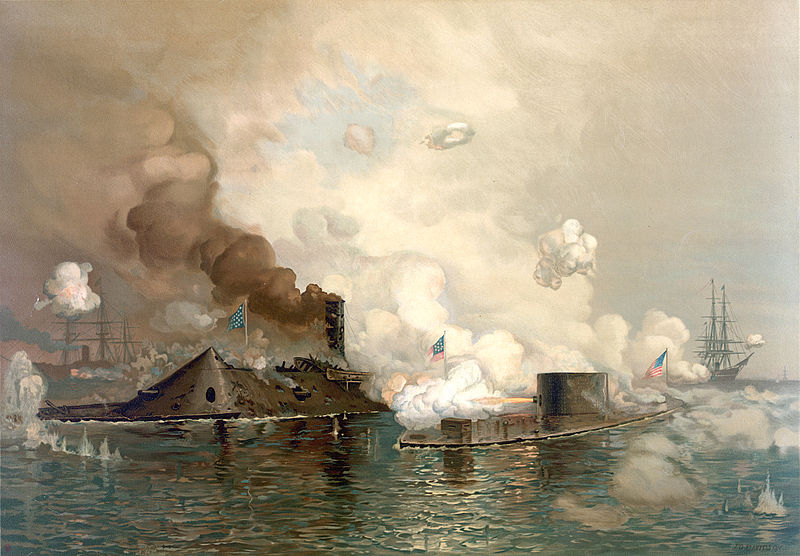
The Confederates had salvaged the Northern built Steam frigate Merrimack and rechristened her the Virginia. The upper hull was cut away and armored with iron and resembled what one source said, “a floating barn roof.”

The Union ironclad Monitor under the command of Lieutenant Worden, was described as a “Yankee Cheese Box on a raft. ” It had water-level decks and an armoured revolving gun turret.

Commodore Buchanan, with support of other Rebel vessels, had just successfully destroyed a Union fleet of wooden warships off Newport News. They managed to wreck the sloop Cumberland, the 50 gun frigate Cumberland, and run aground the frigate Minnesota. Confederate spirits were high.

Now the stage was set for the first real face off of two ironclads in the dramatic, history making Battle of the Monitor and Merrimack, also called Battle of Hampton, Virginia, on a March morning in 1862.

It was 8 AM. Crowds of Union and Confederate supporters gathered to watch from the decks of nearby vessels and the shores on either side.

The Virginia opened fire on the vessel Minnesota, and then the Monitor appeared. They passed back and forth on opposite courses, firing at each other without causing any damage. The Monitor could fire only once in seven or eight minutes, but was faster and more maneuverable. The Monitor’s pilothouse was finally hit, blinding Worden, forcing it into shallow water. The Virginia, figuring the enemy was disabled, turned again to attack the Minnesota. But with low ammunition, a leak in the bow, and lack of steam, the Virginia headed for its navy yard.

By 12:30 PM, the battle was over. The two ironclads had fought to a draw. But the event went a long way to boost morale. Maybe more importantly, from then on, naval battles would never be the same. This historical first duel between the ironclad warships marked the death of wooden ships as fighting vessels, and ushered in a new era of warfare.

Thanks for reading. Please share our posts with your friends and family so they too can learn more about Southern Heritage and History.

Brought to you by: Ultimate Flags
Posted on

The Bear Flag Revolt

Things were tense on the West Coast in 1846. California was Mexican territory, but American settlers were a growing population. Mexico had reason to worry. They had already lost Texas to rebellion. When word reached California that a Mexican-American war was approaching, the California Americans were concerned the Mexican army might strike them first.

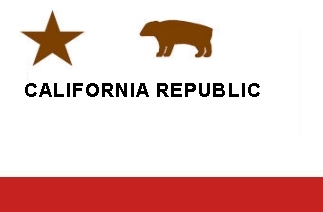
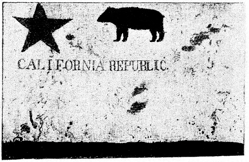
American army officer John Fremont was in California with a few soldiers, there to explore and make surveys. With his encouragement, the settlers formed militias and prepared to revolt. About 30 Americans took control of the Mexican outpost of Sonoma, and declared California an independent republic.  They made a flag from a cotton sheet and paint, displaying a grizzly bear, a lone red star, the words “California Republic,” and a stripe at the bottom. From that point on, the rebellion was known as the Bear Flag Revolt.

The rebels won a few skirmishes.  Then Fremont took command of the Bear Flaggers, occupying San Francisco. Within a week, American forces controlled California.

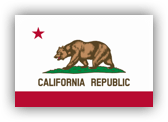
In 1850, California joined the Union as the 31st state, but the Bear Flag of the California Republic lived on. Its original form is still flown, and in 1911 it was modified and adopted as California’s state flag.


Thanks for reading! We hope you enjoyed our post. Please share with all your fellow patriots. Brought to you by: Ultimate Flags

Posted on

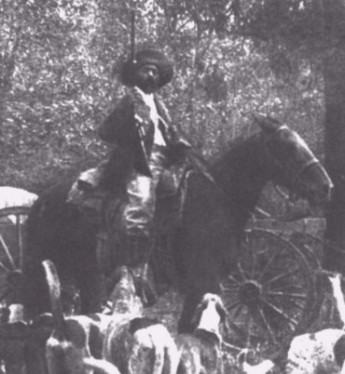
Holt Collier: Outstanding Rebel, Cowboy, & Bear Hunter

Holt Collier was an amazing young man. He was only 14 and working on Howell Hinds’ plantation in Mississippi when the Civil War broke out. Holt was already an expert horseman and experienced sharpshooter who could hold his own. In fact, he shot his first bear at age ten.

As Hinds was about to set off to fight with the Confederacy, Holt pleaded to go with him, but Hinds refused. Holt was just too young. But instead he gave the boy his freedom, since he had been born a slave.

Holt was determined to join the fight, and would not be denied. So in the adventurous style of Tom Sawyer and Huck Finn, he stowed away on a riverboat and made his way to join the Texas Cavalry. It was certainly uncommon for a young black man to want to serve for the Confederacy, but he did and, and he put his exceptional skills to good work. Advancing from camp servant to fighting soldier, he was soon involved in the action. He even served as a military spy.

After successful service in the war, Holt started working as a cowboy for his former commander General Sullivan Ross on his Texas ranch.  Ross went on to become Governor of Texas, and Holt returned home to Mississippi. He made a good living hunting and providing wild game to railroad crews and loggers. His skills as a bear hunter made him quite famous. Holt is credited with killing over 3,000 bears.

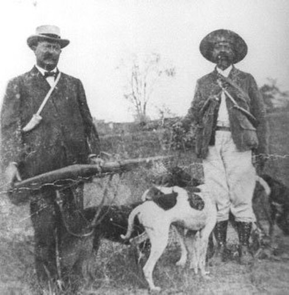
In 1902, President Theodore Roosevelt came to Mississippi to hunt bear.  Holt was naturally the go to guy to help the President, or anyone, wanting to hunt.

As the story goes, Holt captured a bear, but Roosevelt spared its life and did not shoot it. The famous image of the “Teddy Bear,” spread over the nation. A clever New York store owner then created a stuffed toy he called “Teddy’s Bear” and you know the rest of the story.

Teddy Roosevelt with Holt Collier

Live Oak Cemetery, on the old plantation where he grew-up in Mississippi is Holt’s final resting place. A Confederate headstone honoring his service to the Confederacy was placed on his burial site. The Holt Collier National Wildlife Refuge is named after him, and he has been inducted into the Western Heritage Museum Hall of Fame.

Thanks for reading. Please share our posts with your friends and family so they too can learn more about Southern Heritage and History.

Brought to you by: Ultimate Flags
Posted on

Soldier Games and Hot Plates

Confederate Sam Watkins of Company H, 1st Tennessee Regiment, had a lot of stories to tell about the happenings on and off the battlefield during the Civil War. You probably have read one of them in one a recent email or blog “Halt! Who Goes There?” and blog about how he spent hours in a Federal camp, pretending to be a Yankee, gathering valuable intelligence for General Polk.

Sam had an amazing career as a soldier. When he enlisted 1861 there were 120 men in his company. Two weeks after Appomattox, he was one of only seven remaining. He had been shot three times, captured three times, and escaped three times.

After the war, he put all of his experience into a book. In one excerpt he wrote: wrote:

“I always shot at privates. It was they that did the shooting and killing, and if I could kill or wound a private, why, my chances were so much the better. I always looked upon officers as harmless…”

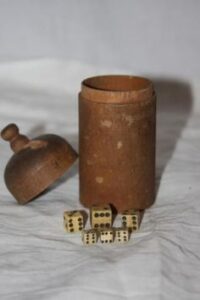
A soldier’s life was often dull with not much to do to kill the boredom. Soldiers would invent ways to entertain themselves, but most did manage to spend a lot of time playing poker and chuck-a-luck (gambling with three dice). Their commanding officers were not too happy about the gambling, and discouraged it, but it was pretty hard for them to stop.

One of their most unusual competitive games involved a plate and some lice. It seems that the boys of Company H would hold races with lice. Watkins explains how one guy in particular named Dornin would always win the money:

“We could not understand it … The lice were placed in plates … and the first that crawled off was the winner. At last we found Dornin’s trick; he always heated his plate.”

Boys will be boys, no matter where they are!

Thanks for reading. Please share our posts with your friends and family so they too can learn more about Southern Heritage and History.

Brought to you by: Ultimate Flags
Posted on

It Pays to Know When to Duck

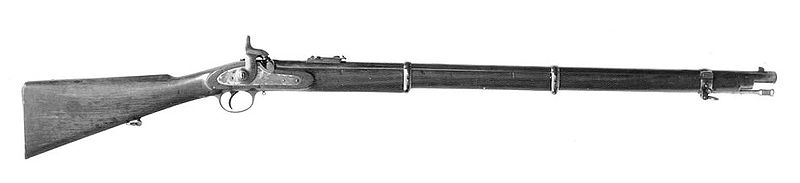
Both Union and Confederates had excellent sharpshooters during the Civil War. The North had an advantage because the very fine Sharps rifle was produced in Connecticut.  But the favored weapon of the Rebel sharpshooters was the British-made Whitworth, known as the most accurate rifle in the world. (See picture below.)

Union General Sedgwick would to find out just how true this was at the 1864 Battle of Spotsylvania Court House in Virginia.

Bullets for the Whitworth were hexagonal in shape, not round. So they made a distinctive, whistle as they sliced through the air. A soldier who heard that sound was smart to take cover.

General Sedgwick was with his aide, General McMahon, when he decided to change placement of some of his troops near an artillery unit. Just as they arrived at the position, the Rebels started firing from a range of 500 to 1000 yards. Some of those Rebs were sharpshooters, so when the Federal artillerymen heard that unmistakable whistle, they dropped to the ground.

Sedgwick teased his men for dodging at this distance. General McMahon, described what happened next:

“A few seconds after, a man who had been separated from his regiment passed directly in front of the general, and at the same moment a sharpshooter’s bullet passed with a long shrill whistle very close, and the soldier, who was then just in front of the general, dodged to the ground.”

“The general touched him gently with his foot, and said, ‘Why, my man, I am ashamed of you, dodging that way…They couldn’t hit an elephant at this distance.’ The man rose and saluted and said good-naturedly, ‘General, I dodged a shell once, and if I hadn’t, it would have taken my head off. I believe in dodging.’’

The general laughed and replied, ‘All right, my man; go to your place.’”

As the man walked away, another “shrill whistle, closing with a dull, heavy stroke, interrupted our talk,” Sedgwick fell, mortally wounded.

Death of Union General Sedgwick

Yes, General, it’s a virtue to be brave on the battlefield, but maybe more importantly, it’s OK to know when to duck!

Thanks for reading. Please share our posts with your friends and family so they too can learn more about Southern Heritage and History.

Brought to you by: Ultimate Flags
Posted on

The “Cow Cavalry” of Florida

Most of the Civil War battles happened in states other than Florida. Of the 16,000 Floridians who fought, all but about 2,000 joined the Confederate ranks. Those who didn’t want to fight for either side, hid out in the woods and swamps to avoid being drafted. Nearly 5,000 Floridian soldiers were killed during the war.

But the state’s role was no less important because of the smaller number of battles. In fact, Florida’s role was of great importance because it provided a vital food and supply source to many Confederate soldiers. And the men of “Cow Cavalry” were there to make it happen.  

People on farms and plantations raised crops and cattle to send to the soldiers. They also provided pork, fish, fruit, and salt for meat preservation. Citizens collected clothing and iron for making swords, guns, and other weapons.

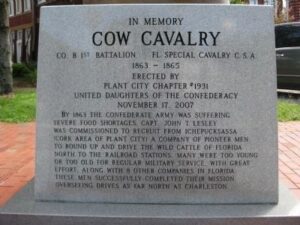
Small militia groups of ranchers and cowhands banded together to make up the famous ““Cow Cavalry.” Their mission was to protect the cattle ranches, salt works, and small towns of south Florida, and deliver cattle to feed the troops.

Union cavalry soldiers were raiding ranches to steal cattle while their navy was trying to destroy salt work plants. The “Cow Cavalry” helped keep Florida”s inland roads and rivers protected so supplies would get to the Confederate army to the north. Numerous small battles occurred as the groups met, and most battles were never documented.

But there is no doubt that the heroes of the “Cow Cavalry” were quick to answer the call of the CSA to provide and protect. They rounded up cattle from all around Florida and took them to Georgia and South Carolina to feed the fighting Confederate troops. By doing so, these men forever forged their unique place in history.  

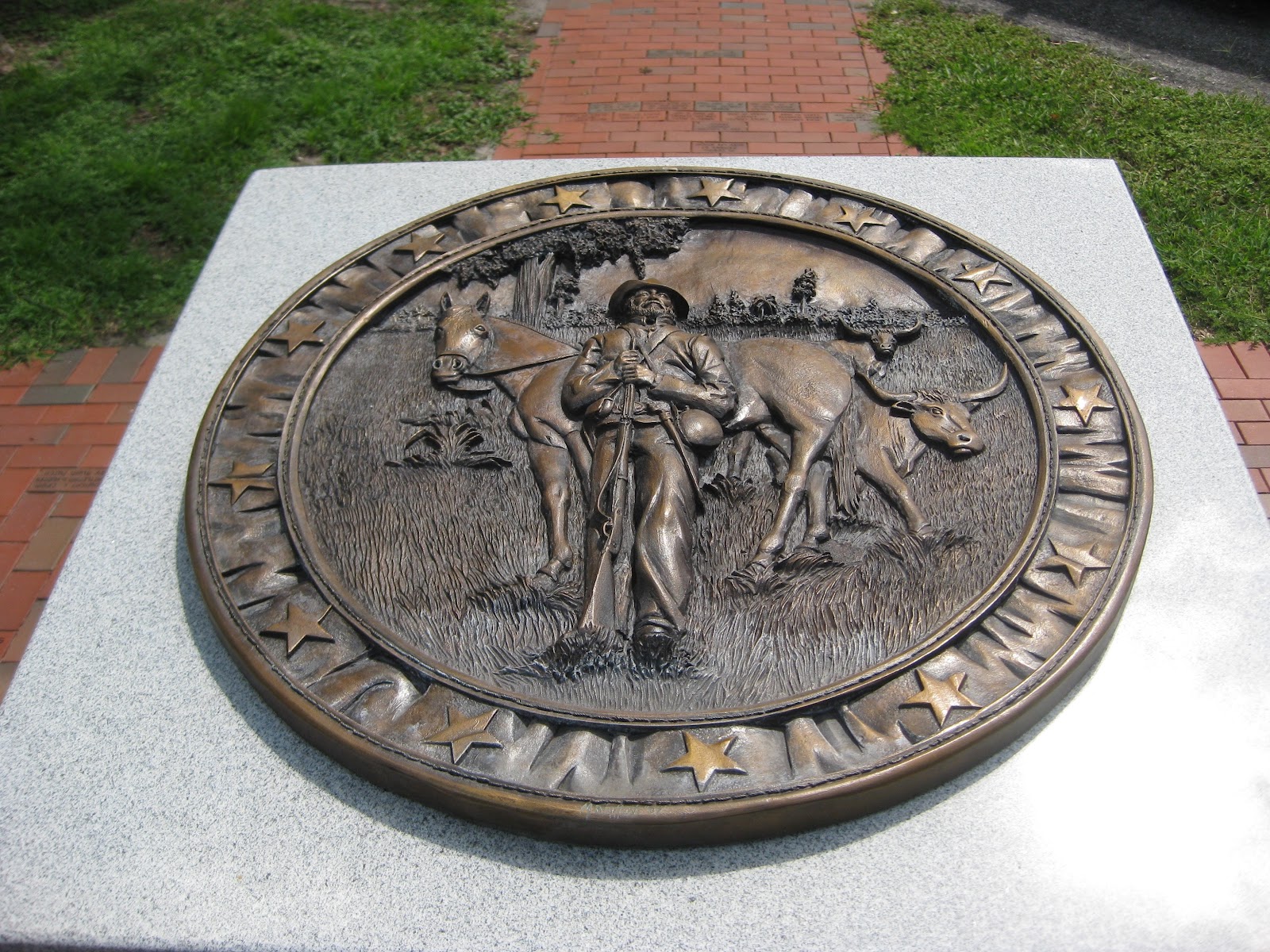
The “Cow Cavalry” Monument in Plant City, Florida

Thanks for reading. Please share our posts with your friends and family so they too can learn more about Southern Heritage and History.

Brought to you by: Ultimate Flags

Posted on

Sing: “Hurrah for the Bonnie Blue Flag!”

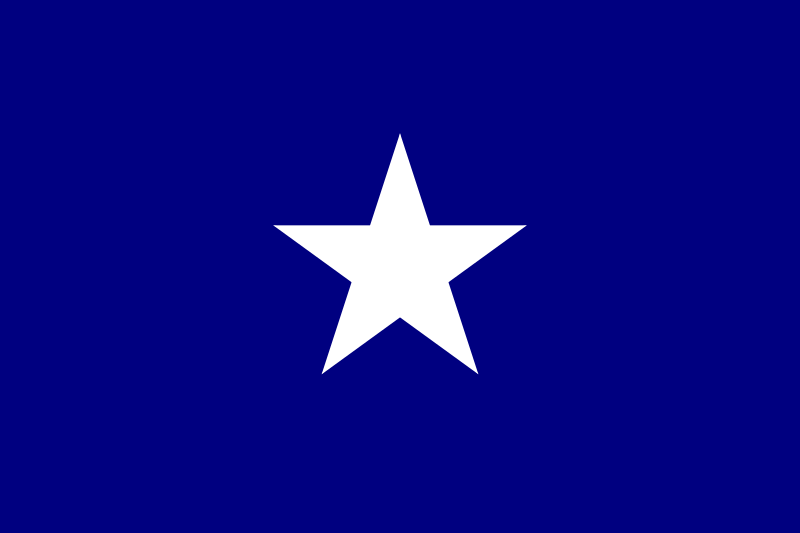
After secession the new Confederate States of America had to build an identity all its own. A symbol of secession, the Bonnie Blue Flag, pictured above, was the first but unofficial flag of the CSA. It was also time to reject the national anthem, “The Star Spangled Banner” and other songs like “Hail Columbia,” and “Yankee Doodle.” “Dixie Land” was adopted unofficially as the national anthem. Although it was extremely popular, many thought the lyrics weren’t quite up to what a proper national anthem should be.

Harry Macarthy, an English immigrant, was a popular vaudeville entertainer who toured throughout the South. Inspired by the scene at the Mississippi secession convention in January 1861, he wrote the song “The Bonnie Blue Flag.” He took the melody from an old Irish tune,  “The Irish Jaunting Car.” The lyrics count out the eleven seceding states one by one, and include these lines:

“We are a band of brothers

And native to the soil,

Fighting for the property

We gained by honest toil;

And when our rights were threatened,

The cry rose near and far–

“Hurrah for the Bonnie Blue Flag

That bears a single star!”


Then here’s to our Confederacy,

Strong are we and brave;

Like patriots of old we’ll fight

Our heritage to save.

And rather than submit to shame,

To die we would prefer;

So cheer for the Bonnie Blue Flag

That bears a single star.”

The song was an instant hit with Confederate soldiers and civilians alike. Next to “Dixie Land,” there was no other song as well loved by the soldiers as “The Bonnie Blue Flag.”

Macarthy was suddenly in demand as he had never been before. He traveled throughout the South during the war years, performing for packed houses of enthusiastic listeners. Many of his audiences included appreciative soldiers headed for the front. Macarthy wrote other patriotic songs including “Missouri and The Volunteer” and “It Is My Country’s Call.” But “The Bonnie Blue Flag” was his greatest success by far.

The tune was so popular that the publishing house, A.E. Blackmar of New Orleans, issued six editions of the song between 1861 and 1864, along with three additional arrangements, to keep up with the demand. This made the commander of the city at the time, Union General Benjamin Butler, known as “Beast Butler,” so unhappy that he reportedly had Mr. Blackmar arrested and fined for daring to publish it.

Macarthy later changed the third and fourth lines of the first stanza to:

“Fighting for our liberty                                                                                                                                                                  With treasure, blood, and toil,”

These words seemed to elevate the South’s cause from a mere defense of “property” to a noble defense of freedom itself.

Check out this excerpt of “The Bonnie Blue Flag” on this short YouTube clip at:

https://www.youtube.com/watch?v=GOFtpzdJc3E

Thanks for reading. Please share our posts with your friends and family so they too can learn more about Southern Heritage and History.

Brought to you by: Ultimate Flags