Posted on

Gold Fringe on American Flags: 2½ Inch Trim Is Ceremonial, Not Legal

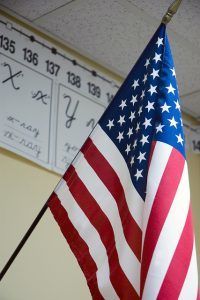
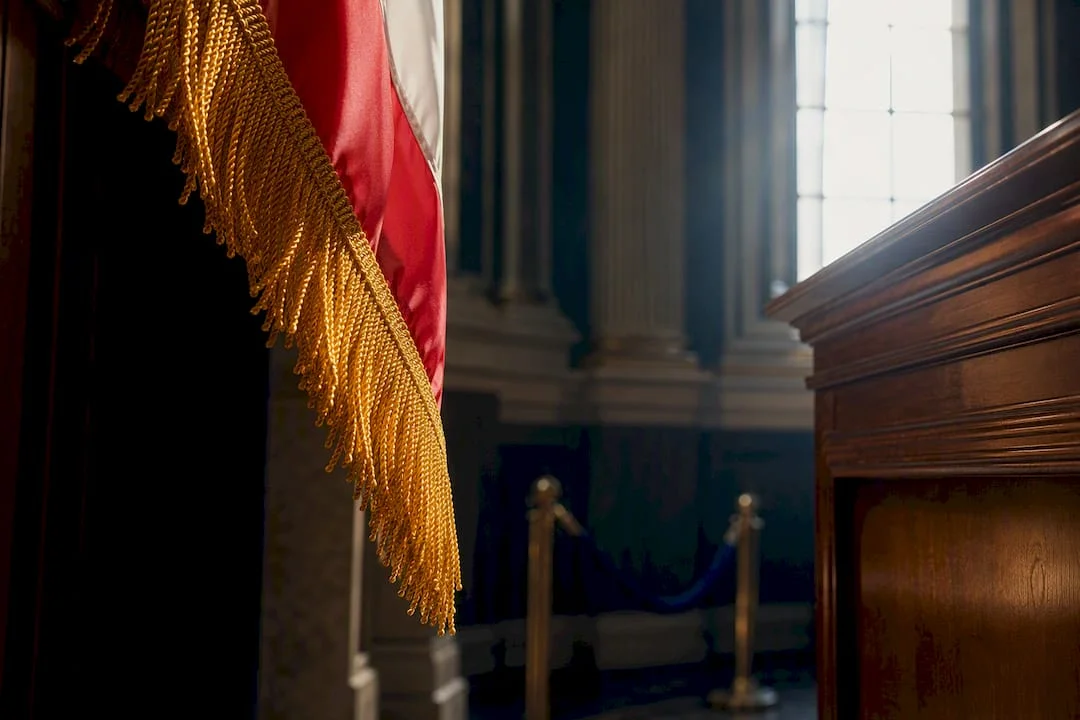
Gold fringe on a ceremonial American flag

The gold fringe on an American flag is a decorative “honorable enrichment,” not a legal marker of any kind. It does not alter the flag’s meaning, shrink or expand a court’s authority, or signal martial law. The U.S. Army Institute of Heraldry has said as much for decades, and federal courts have rejected the opposite claim every time it has surfaced. What follows traces where the practice began, what the regulations actually say, and why the conspiracy theory persists despite losing in court again and again.


TL;DR:

  • Gold fringe on American flags is purely ornamental, mainly used for indoor displays, with no legal or jurisdictional significance.
  • The practice of adding fringe dates back to at least 1835 and was formalized for military colors in 1895, always for ceremonial purposes.
  • Courts have repeatedly dismissed claims that fringe signals martial or maritime law, emphasizing that jurisdiction derives solely from law, not flag decorations.
  • Fringe is appropriate in settings like courtrooms, congressional offices, and ceremonies but is unsuitable for outdoor or battlefield displays.
  • The myth that fringe signals legal or constitutional anomalies persists despite extensive court rulings, fueled by conspiracy theories exploiting the law’s silence on the matter.

Table of Contents

Gold Fringe Flag Meaning: What the Symbolism Actually Signals

Strip away the internet rumors, and the gold fringe flag meaning boils down to a single word: enrichment. The Army’s own heraldic authority calls it an “honorable enrichment,” a phrase that places fringe in the same category as tassels, cords, and finials. It dresses up a flag for indoor and ceremonial settings. It carries no statutory weight of its own.

That distinction between ceremony and law matters, because it’s precisely where the myth takes root. A flag displayed in a courtroom or a congressional office looks more formal with fringe, and that formality gets mistaken for legal significance. Civic organizations like the American Legion treat fringe the same way most military branches do: as a matter of tradition and presentation, fully optional and left to the discretion of whoever is displaying the flag.

A few things stay true no matter where you encounter a fringed flag:

  • Fringe is ornamental, added for indoor and ceremonial display.
  • Neither the Army nor civic groups treat it as mandatory.
  • It signals formality and respect, not a change in the flag’s constitutional status.
  • Courts have never recognized fringe as altering jurisdiction in any documented ruling.

The History Behind Fringe Flag Symbolism and Military Regulation

Fringe flag symbolism has a documented paper trail, and it starts well before anyone imagined it as a legal loophole. Records show fringe appearing on American flags as early as 1835, decades before any formal regulation addressed it. The Army made it official policy for regimental colors in 1895, cementing a practice that had already spread through ceremonial and military circles on its own.

The History Behind Fringe Flag Symbolism and Military Regulation — overview diagram

Pro Tip: If you’re trying to date an antique flag, fringe alone won’t tell you much. Pair it with fabric, star count, and construction details for a real estimate.

The legal side of the story is quieter than the myth suggests. Consider what the record actually shows:

  1. 4 U.S.C. § 1 defines the flag’s thirteen stripes and the union of stars. It says nothing about fringe.
  2. Executive Order 10834, which fills in the Flag Code’s finer points, is equally silent on the subject.
  3. A 1925 opinion from the Attorney General addressed fringe directly and found no legal consequence tied to its presence.
  4. Army Regulation 840-10 fills the practical gap, specifying a 2½-inch golden yellow fringe for certain indoor and ceremonial flags, with a narrower fringe reserved for automobile flags.

The statute and the Flag Code never mention fringe at all — every rule governing it comes from military regulation and tradition, not federal law. That gap between silence and speculation is exactly where the myth found room to grow.

Where You’ll Actually See a Gold-Fringed Flag

Fringe shows up almost exclusively indoors, and that’s not an accident. Courtrooms, congressional offices, the Oval Office, military assembly halls, and formal ceremonies are the settings where a fringed flag belongs. You won’t find fringe on a flag flying over a courthouse lawn, because outdoor conditions would shred it within weeks.

The practical reasoning is straightforward:

  • Indoor flags carry fringe because it adds visual weight and formality to a stationary display.
  • Outdoor flags skip fringe because wind, rain, and sun damage delicate trim almost immediately.
  • Materials matter: indoor ceremonial flags typically use nylon or rayon with rayon or metallic fringe, while outdoor flags favor tougher, weather-resistant fabric.
  • Civilians, veterans’ groups, and civic organizations remain free to display fringed flags for ceremonial purposes without any special permission.

Pro Tip: If you’re setting up a display for a ceremony, banquet, or color guard event, a fringed flag on an indoor pole set signals the occasion is formal. Save the plain outdoor flag for the flagpole outside.

Common Myths About Fringe and What the Courts Actually Ruled

The admiralty and martial-law theory tied to gold fringe traces back to sovereign-citizen legal arguments that started circulating decades ago and never went away. The claim holds that a gold-fringed flag in a courtroom signals the room is operating under maritime or military law rather than the Constitution, and that this somehow strips the court of its authority over the person standing in it. Multiple federal courts have heard this argument and dismissed it outright.

“The court finds this argument to be without merit.” That’s the essence of how federal judges have responded to fringe-based jurisdiction claims, and McCann v. Greenway went further, calling the theory both frivolous and preposterous.

McCann isn’t alone. Courts have rejected the same argument in cases like Felix v. Arizona and Riezinger v. Barr, treating it as settled law rather than an open question. The reasoning is consistent across every ruling:

  • Jurisdiction comes from statutes and the Constitution, including provisions like 28 U.S.C. § 1333 governing admiralty cases specifically, not from room decor.
  • A decorative trim cannot create, expand, or revoke a court’s authority under any recognized legal doctrine.
  • Fact-checking organizations including PolitiFact and Lead Stories have both independently rated the claim false.
  • Because the statute and Flag Code stay silent on fringe, the theory exploits that gap, but silence in the law isn’t evidence of a secret meaning.

Courts emphasize that legal authority derives from law, never from what’s hanging on the wall behind the bench.

How to Interpret a Gold-Fringed Flag in Real Life

If you spot fringe on a flag, treat it as decoration and nothing more. Here’s how to handle it in the situations where it actually comes up:

  1. In a courtroom or government office: Recognize the fringe as ceremonial. It has no bearing on the proceedings or the court’s authority over you.
  2. If someone raises the admiralty or martial-law argument against you: Don’t rely on symbolic claims. Lean on actual statute and, when the stakes are real, a licensed attorney.
  3. If you’re buying a flag for ceremonial display: Choose an indoor flag built for the purpose, typically with a 2½-inch fringe in rayon or metallic gold, and store it away from sunlight and humidity to keep the trim intact.

Fringe tells you a flag was built for formal indoor use. It tells you nothing about the law.

Ultimate Flags on Fringe, Ceremony, and Getting the Details Right

Flags are often outfitted for color guards, veterans’ halls, and civic events in ceremonial settings where fringe is used, and that experience shapes how people talk about it. Fringe is a mark of occasion, not a legal statement, and we’d rather you walk away informed than convinced of something a courtroom has already dismissed as frivolous. If you’re staging a formal display or outfitting a hall, our guide on indoor ceremonial flag presentation is a solid next stop, and our piece on caring for a flag once you own one rounds out the practical side. For readers drawn to the stories behind American symbols, our storytelling collection digs into the history that makes these traditions worth preserving.

Why the Fringe Myth Won’t Die, Even With Courts Settled on It

The strangest part of this whole topic isn’t the fringe itself. It’s how many times a claim needs to lose in federal court before people stop repeating it. McCann v. Greenway settled this in 1997. Felix v. Arizona and Riezinger v. Barr settled it again. PolitiFact and Lead Stories settled it a third time for anyone who trusts fact-checkers over case law. And still, the theory resurfaces every few years wearing a slightly different costume.

Timeline of rulings rejecting fringe legal claims

Here’s what I think is really going on: the myth survives because the statute’s silence feels suspicious to people primed to distrust institutions, and a gap in the law is fertile ground for anyone willing to fill it with a story. But silence isn’t a secret code. Congress didn’t mention fringe in 4 U.S.C. § 1 for the same reason it didn’t legislate flagpole finials or the thread count of the stripes. Some details just aren’t Congress’s job. The Army picked up that slack in 1895 for entirely aesthetic reasons, and nothing about that history supports a jurisdictional reading.

What’s actually underrated here is how boring the true answer is compared to the myth, and that’s exactly why the myth wins attention it doesn’t deserve. A decorative trim will never be as interesting as a secret government plot. But if you’re looking for the version that holds up in front of a judge, boring and accurate beats dramatic and false every time.

— Jonica

Sources

FAQ

When did gold fringe first appear on American flags?

Fringe shows up on flag records as early as 1835, though the Army didn’t formally adopt it for regimental colors until 1895.

What does gold trim on an American flag mean?

Gold trim, or fringe, is a decorative “honorable enrichment” used mostly on indoor and ceremonial flags. It carries no legal or jurisdictional meaning.

What is the rarest U.S. flag?

Rarity depends on factors like star count, production era, and surviving condition rather than fringe. Fringe itself has no bearing on a flag’s rarity or value.

What does an American flag with a yellow ribbon mean?

A yellow ribbon displayed alongside a flag traditionally signals support for deployed troops or hope for a service member’s safe return. It’s a separate tradition from gold fringe and carries its own distinct symbolism.

Can civilians legally display a gold-fringed flag?

Yes. Fringe is optional and available to anyone displaying a flag for ceremonial purposes, with no restriction under 4 U.S.C. § 1 or the Flag Code.

Posted on

General Lee Flag Meaning: Lee’s HQ Banner vs Army Battle Flag

Historic flag textiles in museum conservation

The General Lee flag is a rectangular blue saltire studded with white stars on a red field, born in 1861 as a battle banner for the Army of Northern Virginia and later carried into American living rooms on the roof of an orange Dodge Charger. Its meaning was never fixed. It shifted from a soldier’s rallying mark to a Lost Cause memorial symbol, then to a segregationist countermovement flag in the 1950s and 1960s, and finally into a pop-culture artifact that Warner Bros. itself distanced from once the weight of that history caught up with a television prop.


TL;DR:

  • The Confederate battle flag was originally designed in 1861 for practical battlefield recognition, representing the seceded states and military identity rather than ideology.
  • Robert E. Lee used a different personal headquarters flag during the war, which is often confused with the combat banner, complicating historical identification.
  • The flag’s meaning shifted from a military symbol to a memorial of Southern heritage, then to a political tool opposing civil rights starting around 1948.
  • Major institutional actions against it began after the 2015 Charleston shooting, leading to bans on merchandise and public display, though private use remains common in the South.
  • Its contemporary interpretation varies widely, from regional pride and ancestry to white supremacy, heavily depending on context and surrounding signals.

Table of Contents

General Lee Flag Meaning: Origin and Design of the Confederate Battle Flag

Understanding what the flag on the General Lee car actually represents starts with a design decision made in the chaos after the First Battle of Manassas in July 1861. Confederate officers realized their national flag, the Stars and Bars, looked too much like the Union’s Stars and Stripes from a distance on a smoke-filled battlefield. Soldiers needed something they could recognize in an instant, and that recognition problem is what produced the flag now stitched onto Hazzard County’s most famous car roof.

General Lee Flag Meaning: Origin and Design of the Confederate Battle Flag — overview diagram

South Carolina politician William Porcher Miles had proposed a saltire design for the Confederate national flag itself, but the committee rejected it. Miles didn’t abandon the idea. He pushed it forward as a battle flag instead, and General P.G.T. Beauregard adopted it for troops under his command that fall. The design that emerged, according to Encyclopedia Virginia’s entry on the Confederate battle flag, was deliberately distinct from the national banner Confederate diplomats and officials used.

The visual elements carried specific, practical meaning in 1861 and 1862:

  • The blue saltire (diagonal cross): Borrowed from Scottish heraldry via Miles’s own design sensibilities, it created a shape soldiers could distinguish at a distance, unlike the horizontal stripes of the national flag.
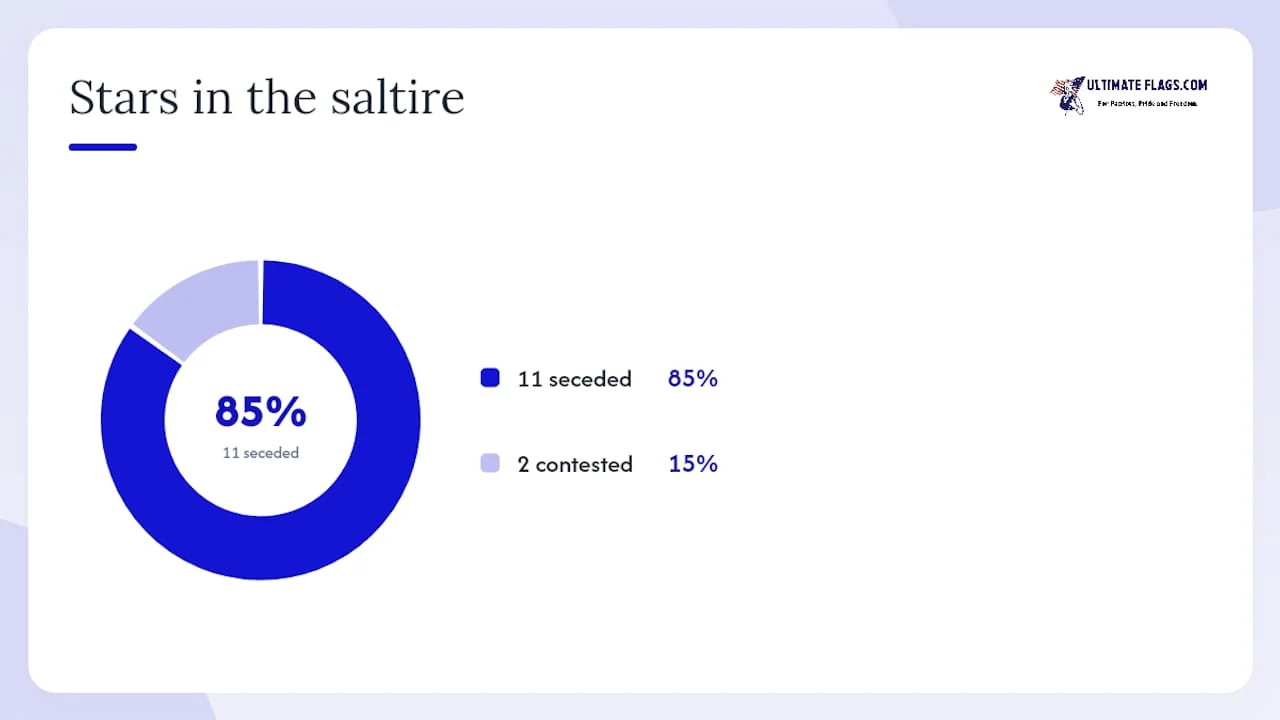
  • Thirteen white stars: Represented the eleven seceded states plus Kentucky and Missouri, whose loyalties were contested and often claimed by both sides.
  • The red field: Signaled martial identity, echoing older military banner traditions rather than any specific ideological statement at the time of adoption.
  • The rectangular shape: Distinguished the Army of Northern Virginia’s battle flag from the square variants used by some Western Confederate armies, a detail collectors and historians still use to date and authenticate period flags.

Robert E. Lee didn’t design this flag, and he wasn’t the officer who first fielded it. But once he took command of the Army of Northern Virginia in June 1862, the battle flag became inseparable from his army’s identity. Units carried it into Antietam, Gettysburg, and dozens of smaller engagements, and that battlefield association is precisely why later generations attached Lee’s name to a flag he neither invented nor formally commissioned.

Robert E. Lee’s Headquarters Flags Versus the Rectangular Battle Flag

Here’s where a huge amount of public confusion sets in, and where museum curators spend considerable time correcting visitors. Lee himself used at least one distinct headquarters banner during the war, separate from the rectangular saltire flag that flew over his troops in combat.

Between 1862 and 1863, Lee’s personal command flag followed a different pattern sometimes called the “Bread of Life” design by collectors, referencing its layout and the religious symbolism period soldiers occasionally read into Confederate banners more broadly. This headquarters flag served an administrative function, marking Lee’s command post and signaling his presence to staff and couriers, rather than serving as a rallying point for infantry under fire.

  • Battle flag: Rectangular, carried by individual regiments, meant to be seen and followed across a battlefield.
  • Headquarters banner: A separate personal or command marker, tied to Lee individually rather than to any regiment or the army as a whole.
  • Public memory: Collapsed these distinct objects into a single generic image, which is largely why “the Confederate flag” functions today as shorthand for several different historical banners.

Encyclopedia Virginia’s cataloging draws a clear line between these flags based on primary-source descriptions and surviving artifacts, and that distinction matters enormously for anyone trying to accurately date or identify a historic piece.

Pro Tip: If you’re examining a flag advertised as a “Robert E. Lee flag,” ask specifically whether it reproduces the Army of Northern Virginia battle flag pattern or a headquarters banner design. The two are visually different, and sellers sometimes use Lee’s name loosely to describe the more common rectangular battle flag.

Symbolism During the Civil War

Soldiers who carried the battle flag into combat weren’t thinking about future political controversies. They were thinking about staying alive and staying with their unit, and the flag served that immediate, tactical purpose first. Color-bearers held one of the most dangerous and most honored positions in a regiment, since losing the flag in battle carried genuine shame while capturing an enemy’s flag carried genuine glory.

Regimental pride ran through how soldiers wrote about their flags in letters home. Religious language often crept into these descriptions too, since many Confederate soldiers understood their cause in explicitly providential terms, framing battlefield banners as symbols blessed by a righteous fight. That framing would later become central to how veterans’ organizations remembered the war, but during the fighting itself, the flag’s meaning stayed rooted in unit cohesion and battlefield survival.

That kind of language, common in veteran memoirs written decades after the fact, reveals how quickly wartime experience got layered with retrospective meaning. Contemporary accounts from 1862 and 1863 focused more narrowly on tactical function, but even then, soldiers described the flag in terms that went beyond simple military hardware. It represented home units, hometown honor, and often literal blood shed defending a specific piece of cloth on a specific hillside. Readers curious about the men who carried these banners into fire can find deeper coverage in Ultimate Flags’ history of the color guard, which traces individual units and the extraordinary risk color-bearers accepted.

Postwar Revival and the Lost Cause

The battle flag mostly disappeared from public life for roughly two decades after Appomattox. Its dramatic return came through organized memory work, not spontaneous popular sentiment, and understanding that organized effort is essential to understanding what the flag came to mean by 1900.

Veterans’ organizations and the United Daughters of the Confederacy, founded in 1894, led a coordinated campaign to reshape how Americans remembered the war. Their version, historians call the Lost Cause, recast the Confederacy’s defeat as a noble, doomed defense of states’ rights and Southern honor rather than a war fought to preserve slavery. The American Civil War Museum’s analysis of Confederate flag mythology documents how thoroughly this narrative de-emphasized slavery’s central role in secession, despite the plain language of state secession declarations from 1860 and 1861.

The Lost Cause campaign worked through several coordinated channels:

  1. Monument building. Confederate memorial statues surged in two distinct waves, one around 1900 to 1920 and another during the civil rights era of the 1950s and 1960s, timing that historians treat as significant rather than coincidental.
  2. Institutional naming. Schools, streets, and military bases across the South took Confederate leaders’ names during this same memorial period, cementing Lost Cause figures into everyday civic geography.
  3. Ceremonial revival. Memorial Day observances, veteran reunions, and battlefield dedications gave the flag formal, respectable venues to reappear in public life.
  4. Textbook influence. UDC-backed history curricula shaped how generations of Southern schoolchildren learned about secession’s causes, often stripping slavery from the explanation entirely.

This revival gave the battle flag a second life as a solemn memorial emblem, carried at veteran funerals and displayed at monument dedications. That memorial framing is genuinely part of the flag’s history, and readers exploring flag heritage more broadly can find further archival essays through Ultimate Flags’ history of the battle flag’s field debut. But the same decades that memorialized the flag also began attaching it to something considerably more pointed than grief.

20th-Century Revival: Civil-Rights-Era Adoption and Politicization

The flag’s transformation into an explicit political weapon has a traceable, well-documented timeline, and it’s the single most important inflection point for understanding why the flag remains so contested today. This wasn’t organic drift. It was a deliberate political choice made by specific actors at a specific moment.

In 1948, the States’ Rights Democratic Party, popularly known as the Dixiecrats, broke from the national Democratic Party specifically to oppose federal civil rights proposals. They adopted the Confederate battle flag as a visible protest symbol, and that convention marked one of the first times the flag appeared explicitly as a segregationist political emblem rather than a memorial or heritage object.

The pattern accelerated through the following decade. Segregationist governors and legislators displayed the flag prominently as federal courts and the federal government pushed school desegregation forward, most visibly during standoffs like the 1963 confrontation at the University of Alabama. State legislatures in Georgia and South Carolina incorporated Confederate battle flag imagery into official state flags or raised it over state capitols during this same period, timed directly to resistance against integration and the broader civil rights movement.

Period Political context Flag’s role
1948 Dixiecrat revolt against national Democratic civil rights platform Adopted as a protest symbol at party conventions
1950s Georgia redesigns state flag Incorporates the battle flag into official state imagery
1950s and 1960s School desegregation standoffs Displayed by segregationist officials and crowds resisting court orders
1950s and 1960s South Carolina raises the flag over its capitol Timed to the Civil War centennial and to civil rights tension
1960s onward Klan and white-supremacist rallies Flag used explicitly to signal racial intimidation

The Wikipedia entry on the modern display of the Confederate battle flag documents this trajectory in detail, and the pattern is consistent: each major escalation in the flag’s use as a political symbol tracks almost exactly with a corresponding escalation in resistance to civil rights advances. That correlation is why historians treat the mid-20th century, not the Civil War itself, as the period that hardened the flag’s association with white supremacy in the American public imagination.

The General Lee Car and Pop-Culture Amplification

By the time The Dukes of Hazzard premiered on CBS in January 1979, the battle flag already carried decades of contested political weight, yet the show’s producers put it on the roof of a 1969 Dodge Charger without, by most accounts, weighing that history very carefully.

The car itself traces back to a 1975 film called Moonrunners, an earlier project from the same creative team that eventually became The Dukes of Hazzard. Producers renamed the vehicle from “Traveller,” a nod to Lee’s actual wartime horse, to the more recognizable “General Lee,” betting that the name carried instant Southern cultural resonance for a mass television audience. The roof decal followed that same logic: a fast, loud visual shorthand for rebellious, good-natured Southern identity, aimed squarely at prime-time entertainment rather than political statement.

  • The car appeared in nearly every episode across the series, making the flag image widely recognizable.
  • Toy manufacturers licensed die-cast and remote-control replicas, extending the image beyond television into homes, with many fans also purchasing related Gulf of America Hats, Shirts and Globes to show their regional pride.
  • Syndicated reruns kept the image circulating continuously for decades after the original broadcast run ended.
  • A dedicated collector market for General Lee memorabilia sustained demand for the image long after the show left first-run television.

Cast members have consistently defended the car’s imagery as regional pride rather than racial messaging. As Inside Edition’s coverage of cast and producer reactions documented, several actors framed the flag as an innocent piece of 1980s family entertainment rather than a deliberate political statement.

The show’s defenders have long maintained the roof decal was meant to signal fast-driving, rule-breaking Southern charm, a shorthand for character rather than ideology, and that framing still shapes how many longtime fans understand the car today.

That defense reflects a genuinely held viewpoint among many viewers, particularly those who watched the show as straightforward action comedy decades before the flag’s political history became a mainstream conversation. It doesn’t erase the flag’s other histories. It simply adds one more layer to an already layered symbol, one where a 1980s television prop and a 1948 political protest emblem occupy the same physical design.

Modern Controversy and Institutional Responses

The 2015 murder of nine Black churchgoers at Emanuel African Methodist Episcopal Church in Charleston, South Carolina, functioned as the clearest modern turning point for how American institutions handle this flag. The shooter’s documented affinity for the Confederate battle flag triggered rapid, concrete corporate and governmental reassessments that had been building for years but hadn’t previously reached critical mass.

Warner Bros. halted licensing and sales of General Lee toy replicas following the shooting, citing concerns about the flag’s associations. That decision, detailed in the College of Charleston’s digital exhibit on institutional responses, marked one of the most visible corporate reversals tied to Confederate imagery in recent memory.

  • South Carolina’s legislature voted to remove the battle flag from its capitol grounds after the Charleston shooting, ending a longstanding display.
  • Several major retailers pulled Confederate flag merchandise from shelves nationally, a shift that reshaped where and how these flags could be legally purchased.
  • Private owners of General Lee replica cars publicly repainted or removed roof decals, choosing to modify personal property rather than continue displaying the image unchanged.
  • Museums intensified debate over whether Confederate flags belong in unlabeled display versus fully contextualized historical exhibits.

A shift in public sentiment followed a clear, documented trajectory. National polling after 2015 showed declining support for official government display of the flag, though regional attitudes remained notably divided, with many Southern respondents continuing to describe the flag as heritage rather than hate even as institutional displays declined nationally.

That regional divide hasn’t closed. National institutions moved decisively toward removal and reassessment, while private display, particularly on vehicles, clothing, and personal property in parts of the South, persists largely unchanged. The flag’s modern story isn’t one of universal resolution. It’s one of sharply split trajectories running in parallel.

How People Interpret the Flag Today

No single interpretation of this flag is objectively correct for every context, and pretending otherwise does a disservice to the genuine complexity historians and museum curators wrestle with daily. What the flag communicates depends heavily on who’s displaying it, where, and alongside what other signals.

  1. Heritage and ancestral memory. Some display the flag specifically to honor documented Confederate ancestors, often alongside genealogical research and Civil War reenactment activity rather than any contemporary political statement.
  2. Regional identity. Others use it as loose shorthand for Southern culture broadly, separated in their own minds from both the Civil War and the civil rights era entirely.
  3. Rebellion and countercultural defiance. A segment of display, particularly among younger owners, treats the flag as a general “anti-establishment” symbol disconnected from specific Southern or Confederate history.
  4. White-supremacist signaling. In contexts involving hate groups, intimidation, or explicit racial messaging, the flag functions exactly as it did during the civil rights era, as a deliberate symbol of racial hierarchy and threat.

Context does most of the interpretive work. A flag displayed at a marked Civil War battlefield alongside interpretive signage reads entirely differently than the same flag flown alone at a political rally, or stitched onto a car roof at a classic auto show. The American Civil War Museum’s guidance on Confederate flag interpretation stresses that provenance and surrounding context, not the fabric itself, usually carry the real interpretive weight.

Pro Tip: When you encounter this flag in a museum setting, look for interpretive labeling that explains provenance and historical use. A flag displayed without any context invites viewers to project whatever meaning they already hold, while a properly labeled exhibit does the harder work of explaining what that specific object actually represented to the people who made and carried it.

Ultimate Flags Resources for Responsible Collecting and Display

Ultimate Flags has operated as one of America’s longest-running online flag retailers, and that longevity comes with a responsibility to handle contested historical symbols with accuracy rather than shortcuts. The Confederate and Southern heritage flag category sits alongside Revolutionary War, Civil War, and military flag collections, each treated as a distinct historical artifact rather than an undifferentiated novelty item.

Collectors weighing a purchase should think through material and provenance before display. Ultimate Flags’ guide on cotton versus polyester construction helps buyers match fabric choice to intended use, whether that’s a reenactment prop meant for outdoor weathering or an indoor collector’s piece meant to last decades. Budget-conscious buyers can review current battle flag pricing before committing, and anyone concerned about regional sales restrictions should check state-level rules on Confederate flag sales before ordering.

Display carries community weight that a simple purchase transaction doesn’t capture. A flag flown thoughtlessly in a mixed neighborhood communicates something very different than the same flag preserved in a labeled home archive alongside genealogical documentation. Sourcing matters too. Buyers seeking authentic American manufacturing can review where to find USA-made reproductions rather than importing unlabeled overseas stock of uncertain origin.

Why This History Still Matters

I’ve spent a good portion of my career at Ultimate Flags handling symbols that carry more weight than most people expect from a piece of fabric on a pole. The Confederate battle flag, and by extension the General Lee car’s roof decal, sits near the top of that list. It’s tempting to want a clean, single-sentence verdict on what this flag means, and I understand the appeal of that simplicity. But the honest answer is that the flag means several genuinely different things depending on who’s holding it and why, and any account that flattens that complexity into a single story is doing history a disservice.

What frustrates me most about how this topic usually gets covered is the rush to either total condemnation or total defense, when the actual historical record supports neither extreme cleanly. The flag’s Lost Cause revival was real heritage work for grieving families, and it was also, demonstrably, a project that erased slavery from the story of secession. The 1948 Dixiecrat adoption was real political calculation, not accidental symbolism. Both things are true, and pretending otherwise flattens a genuinely complicated American story into something more comfortable but less accurate.

Ultimate Flags covers this history because avoiding it doesn’t make the flag less present in American life. It just leaves that presence unexplained. If you’re weighing a purchase, a display decision, or simply trying to understand a symbol you’ve encountered, Ultimate Flags’ longer essays on flag history offer the fuller archival context this subject deserves.

— Jonica

Sources

FAQ

Did Robert E. Lee Actually Have His Own Confederate Flag?

Yes. Lee used a personal headquarters banner between 1862 and 1863, sometimes called the “Bread of Life” pattern, which was visually distinct from the rectangular Army of Northern Virginia battle flag his troops carried into combat.

What Is the Flag on Top of the General Lee Car?

It’s a reproduction of the Confederate battle flag, the blue saltire with white stars on a red field originally used by the Army of Northern Virginia, chosen by Dukes of Hazzard producers for its recognizable Southern imagery.

Why Do Some People Say the Confederate Flag Isn’t Racist?

Many who display it point to family heritage, regional identity, or the flag’s original 1861 battlefield function as evidence of non-racist intent, while historians note the same flag was deliberately adopted as a segregationist political symbol starting in 1948, which is why its meaning remains genuinely contested rather than settled.

What Did Robert E. Lee Say About the Confederate Flag After the War?

Lee generally discouraged displaying Confederate flags and symbols publicly after the war, favoring reconciliation over continued military symbolism, though he left no single definitive statement addressing the battle flag specifically that historians treat as conclusive.

Why Did Warner Bros. Stop Selling General Lee Toys?

Warner Bros. halted licensing and sales of General Lee replica toys shortly after the 2015 Charleston church shooting, citing the flag’s documented associations with slavery and hate-group use as the reason for the reversal.

Posted on

Double Sided Flags: The Complete Buyer’s Guide

Close-up of double-sided flag edge with layers

A true double-sided flag consists of two separately printed panels sewn back-to-back, typically with a blockout liner between them, so the design reads correctly and with full color fidelity from both sides. If your flag carries a logo, text, or asymmetrical imagery, a true two-panel construction is the right choice. For large outdoor fly flags viewed from a distance, or for temporary and budget-conscious displays, a single-sided flag with bleed-through print is often sufficient.

When a true double-sided flag is the right choice:

  • Your design includes text, a directional crest, or a logo that would appear mirrored on the reverse of a single-sided flag
  • The flag will hang vertically or be displayed where both faces are equally visible at close range
  • You need premium color fidelity for a storefront, ceremonial display, or long-term installation

The main tradeoffs to weigh:

  • True double-sided construction costs more, weighs more, and places greater stress on pole hardware and mounting points
  • Single-sided bleed-through flags are lighter, less expensive, and perfectly serviceable for many outdoor applications

For custom sizing, U.S. production, and pre-production proofs, Ultimateflags is a trusted starting point.


Key Takeaways

True double-sided flags require two separately printed panels with a blockout liner, and that construction decision should be made before artwork is finalized, not after.

Point Details
When to choose true double-sided Any design with text, a logo, or asymmetrical imagery needs two-panel construction with a blockout liner.
Material selection 200-denier or heavier polyester with UV-resistant inks is the correct specification for prolonged outdoor exposure.
Finishing and hardware Match grommets, headers, and pole hardware to the heavier weight of double-sided construction, especially at 3’ x 5’ and above.
Ordering checklist Submit vector files in CMYK, include bleed, and always approve a proof showing both panel faces before production begins.
Ultimateflags A long-standing U.S. flag retailer offering custom double-sided flags with pre-production proofs, custom sizing, and U.S. production.

Table of Contents

What are double sided flags and how are they built?

Most commercial flags are produced as single-sided prints because it is cheaper and simpler. Commercial printers commonly default to single-sided sublimation, where ink migrates through the fabric so a faint mirror image appears on the reverse. That approach works for symmetrical designs, but it fails the moment your artwork includes readable text or a one-directional crest.

A true double-sided flag solves this with a three-layer construction: an outer printed panel, a blockout liner in the center, and a second printed panel on the inside face. The blockout layer, typically a woven opaque fabric, prevents each panel’s colors from showing through to the other side. Both panels are then sewn together along all four edges, with reinforced hems at the fly end and a finished heading or canvas header at the hoist.

An alternative approach omits the blockout liner entirely and sews two panels directly back-to-back. This reduces weight slightly but allows some color bleed between layers in bright sunlight. For most outdoor applications where color accuracy matters, the three-layer blockout construction is the more reliable choice.

A specialty category worth knowing: patented reversible flag designs join two panels into a pouch that can be turned inside-out to display alternative artwork on demand. These are engineered for rally or handheld flags and are not the same as a standard sewn outdoor double-sided flag.

Pro Tip: Ask your supplier whether the blockout liner is sewn as a separate layer or bonded. A sewn-in liner holds up far better through repeated washing and extended outdoor exposure than a bonded or glued version.


Which materials and printing methods work best for your flag?

The fabric you choose shapes how long your flag lasts and how vivid it looks after months of outdoor exposure.

Nylon is the traditional choice for outdoor flags. It is lighter than polyester, dries quickly, and produces exceptionally vivid color saturation because dye-sublimation ink bonds deeply into nylon fibers. Its main vulnerability is abrasion: nylon frays faster than polyester in high-wind environments.

Vibrant nylon flag fluttering outdoors

Polyester offers greater abrasion resistance and holds its shape better in sustained winds. A 200-denier polyester is standard for house and garden flags; heavier 300-denier or 600-denier weaves are used for large outdoor flags expected to fly continuously. Denier is simply the weight of the fiber per unit length — a higher number means a denser, more durable weave.

For printing, the options break down as follows:

  • Single-sided dye sublimation pushes ink through the fabric, creating a mirror bleed on the reverse. Acceptable for symmetrical designs; not suitable for text or logos.
  • Double-sided printed panels with blockout liner prints each panel separately, then assembles the three-layer construction. This is the standard for true two-sided promotional flags and ceremonial pieces.
  • UV-resistant and water-resistant inks are applied during the sublimation or direct-print process and are the correct specification for any flag intended for prolonged outdoor exposure.

For coastal or high-UV environments, specify 200-denier or heavier polyester with UV-certified inks. Indoor displays tolerate lighter nylon with standard sublimation. Vexillology resources confirm that cost and manufacturing complexity are the primary reasons most flags default to single-sided production, which reinforces why specifying the right material from the start matters for any custom order.


How do size and finishing choices affect your display?

Size and finish are not independent decisions. The heavier construction of a double-sided flag changes what hardware and mounting you need.

Heavy-duty flagpole hardware supporting flag

Flag size Common use Recommended finish Hardware note
— Garden stake, decorative Pole pocket or sleeve Lightweight garden pole
2’ x 3’ House flag, porch display Canvas header with grommets Standard pole
3’ x 5’ Outdoor residential, event Reinforced canvas header, brass grommets Heavy-duty 1" pole recommended
4’ x 6’ Storefront, ceremonial Double-stitched header, large brass grommets Commercial flagpole, weighted base
Custom banner Trade show, vertical display Pole pocket top and bottom Tension or banner stand

Double-sided construction adds meaningful weight compared to a single-panel flag of the same size. A 3’ x 5’ three-layer flag can weigh significantly more than its single-sided equivalent, which places real stress on snap hooks, halyards, and pole hardware. Reinforced headings, bar-tacked grommets, and a pole rated for the added load are not optional at sizes of 4’ x 6’ and above.

For very large custom double-sided banners, wind load is the critical variable. Flags above 4’ x 6’ in a sustained-wind environment benefit from a perforated or mesh blockout liner, which reduces wind resistance without sacrificing the opacity needed to prevent bleed-through.


What lifespan and colorfastness should you expect?

Outdoor lifespan for a well-constructed double-sided flag depends primarily on UV exposure, wind frequency, and proximity to salt air. A quality 200-denier polyester flag with UV-certified inks, flown in a moderate-wind inland environment, typically lasts considerably longer than a lightweight nylon flag in a coastal or high-wind setting. No manufacturer can guarantee a specific number of months because environmental variables differ so widely.

The factors that shorten life most quickly are continuous flying in high winds, salt spray, and direct UV without UV-resistant ink. The following steps extend useful life significantly:

  1. Specify UV-resistant and water-resistant inks at the time of order, not as an afterthought.
  2. Choose reinforced double-stitched hems on all four edges, with bar-tacked corners.
  3. Match pole hardware to the flag’s weight; an undersized snap hook is the most common failure point.
  4. Bring the flag indoors during severe weather, ice storms, and sustained winds above 30 mph.
  5. Inspect seams and hems monthly; catching a loose stitch early prevents a full tear.
  6. Wash the flag every few months to remove abrasive particulate that accelerates fiber wear.

Warranty coverage from reputable suppliers typically covers manufacturing defects, seam failure at delivery, and color accuracy against the approved proof. It does not cover normal weathering, fading from UV exposure over time, or damage from improper mounting. The Oregon state flag is a well-known U.S. example of a two-sided official flag, with different imagery on each face, and it illustrates why production quality matters: a flag meant to carry distinct, readable designs on both sides demands precise construction from the start.


Which use cases call for true double-sided construction?

The decision between true double-sided and single-sided bleed-through comes down to three factors: visibility distance, design complexity, and display orientation.

True two-panel construction with blockout liner is the right choice when:

The flag carries text, a directional logo, or a crest that would appear reversed on the back of a single-sided print. Vertical hanging is another clear trigger: a flag displayed lengthwise on a building face or trade show banner stand is read from both sides at close range, and a mirror image on one face undermines the entire display. Premium storefront signage and ceremonial flags also belong in this category, where color fidelity and professional appearance justify the added cost.

Single-sided bleed-through is acceptable when:

The design is symmetrical, the flag flies horizontally at a height where the reverse is rarely scrutinized, or the application is temporary. Large outdoor fly flags for festivals, budget promotional events, or short-term campaigns often work well with single-sided sublimation. The color on the reverse will be a faded mirror image, but at 20 feet in the air, most viewers will not notice.

Double-sided garden flags occupy a middle ground. A decorative seasonal garden flag with a symmetrical floral or holiday design reads acceptably as a single-sided print. A garden flag with a family name or house number, however, genuinely needs two-panel construction so the text reads correctly from the street.


How to care for and maintain your double-sided flag

Proper care is straightforward, but a few specific practices make a meaningful difference in how long a double-sided flag holds its color and structural integrity.

Washing and drying:

  • Hand wash in cold water with a mild, non-bleach detergent for best results; machine wash on a gentle cycle if hand washing is impractical.
  • Never use bleach, fabric softener, or hot water, as these degrade both the blockout liner and the sublimated ink.
  • Air dry flat or hang loosely; never put a flag in a dryer, as heat distorts the blockout layer and weakens seam adhesion.

Storage:

  • Store clean and completely dry; moisture trapped in the blockout layer promotes mildew and weakens the liner over time.
  • Roll rather than fold for long-term storage to avoid permanent crease lines across the printed panels.
  • Keep stored flags away from direct sunlight and heat sources.

Pro Tip: Before storing a flag for the season, inspect every corner and hem under good light. A fraying corner caught early can be re-stitched in minutes; the same corner ignored for another season often means replacing the entire flag.

Replacement indicators: persistent color fading that no longer represents the original design, fraying along more than one hem edge, or visible separation between the two panels at any seam. When a flag reaches this point, retiring it with dignity and replacing it honors both the display and the message it carries.


How does ordering a custom double-sided flag work?

The ordering flow for a custom two-sided flag follows a clear sequence: upload artwork, receive a digital proof, approve production, then ship. Lead times for custom double-sided flags vary by supplier and order volume, but a standard custom order typically requires several business days for production after proof approval, plus shipping time.

Artwork requirements to prepare before you order:

  • Vector files (AI, EPS, PDF) are preferred; high-resolution raster files (300 DPI at print size) are acceptable for photographic designs.
  • Submit files in CMYK color mode, not RGB, to ensure accurate color matching in production.
  • Include a bleed of at least 0.25" beyond the finished edge on all sides.
  • Keep critical text and logos within a safe zone at least 0.5" from any finished edge.
  • Confirm that any text is converted to outlines so font substitution cannot occur during production.

Pricing for custom double-sided flags is driven by size, material choice, number of layers (two panels plus blockout versus two panels only), finishing options such as grommets or pole pockets, order quantity, and any rush production fees. Larger sizes and lower quantities carry the highest per-unit cost. Shipping weight also increases with double-sided construction, so factor freight into your total budget, particularly for large or heavy orders.

Always request a digital proof before approving production. A proof confirms color placement, text orientation, and sizing before any fabric is cut. Price calculators or quote request forms let you model cost scenarios before committing to an order.


What to know about warranties, returns, and delivery inspection

Warranty coverage for double-sided flags from reputable U.S. suppliers generally addresses manufacturing defects: incorrect sizing, seam failure present at delivery, and color output that deviates materially from the approved proof. Normal weathering, gradual UV fading, and damage from improper mounting or extreme weather are standard exclusions.

On delivery, inspect your order for:

  • Correct finished dimensions against your order confirmation
  • Artwork accuracy and color match against your approved proof
  • Visible defects in stitching, hems, or the blockout layer
  • Correct finishing hardware (grommets, pole pocket, canvas header) as specified
  • Any damage from shipping, including creasing that affects the blockout liner

Report any defects or discrepancies to the supplier within the window specified in their return policy, typically within a few days of delivery. Photograph defects immediately; clear documentation speeds resolution.

For heavy or oversized flags, rolled packaging in a tube protects the blockout liner better than folded packaging. If you are ordering multiple large flags, confirm with the supplier whether the shipment qualifies for freight rather than standard parcel service, and consider adding shipping insurance for high-value custom orders.


How Ultimateflags approaches quality for custom orders

Ultimateflags is one of America’s longest-standing online flag retailers, with a catalog spanning national, state, military, historical, and custom flags. That depth of experience across flag categories translates directly into production knowledge: understanding how a Civil War regimental flag differs in construction from a modern promotional banner, for instance, informs material selection and finishing decisions for every custom order.

Quality assurance in custom flag production covers material sourcing to specification, stitch and hem inspection before shipment, color proof review against submitted artwork, and sample checks for large runs. Pre-production proofs are provided before any fabric is cut, giving buyers the opportunity to confirm color, placement, and text orientation.

Pro Tip: Request that your proof be reviewed against both the obverse and reverse panel layouts simultaneously. A proof that shows only one face can miss orientation errors on the second panel, which only become visible after production.


An honest perspective on buying double-sided flags

The detail most buyers overlook until it’s too late

The single most common mistake in ordering custom two-sided promotional flags is approving a proof without verifying the reverse panel orientation independently. A proof image that looks correct for the front face can still carry a mirrored or misaligned design on the back panel, and that error only becomes visible when the finished flag arrives. The fix costs nothing at the proof stage; it costs the full order price after production.

On the question of balancing budget and durability: the temptation to save money by ordering a single-sided bleed-through flag for a display that genuinely needs two-panel construction is one of the more reliable ways to waste the entire budget. A flag with a reversed logo on the back face does not serve its purpose at half price. Spend the difference on proper construction, specify UV-resistant inks, and match the pole hardware to the flag’s weight. Those three decisions account for the majority of the gap between a flag that lasts a season and one that lasts several years.


Ultimateflags makes custom double-sided flags straightforward

Ordering a custom double-sided flag through Ultimateflags means working with a U.S.-based retailer that has spent decades understanding what makes a flag worthy of display. The process is direct: upload your artwork, receive a pre-production proof for both panel faces, confirm the design, and move to production with full transparency on lead time.

Ultimateflags

Ultimateflags supports custom sizing, a range of finishing options including grommets and pole pockets, and U.S. production with material specifications suited to outdoor durability. Whether you need a single ceremonial flag or a run of two-sided promotional flags for an event, the quote and ordering process is designed to give you confidence before a single yard of fabric is cut. Visit Ultimateflags to explore the full range of flag options and request a custom quote.


Sources

Article generated by BabyLoveGrowth

Posted on

Top 10 Things to Do with Flags…

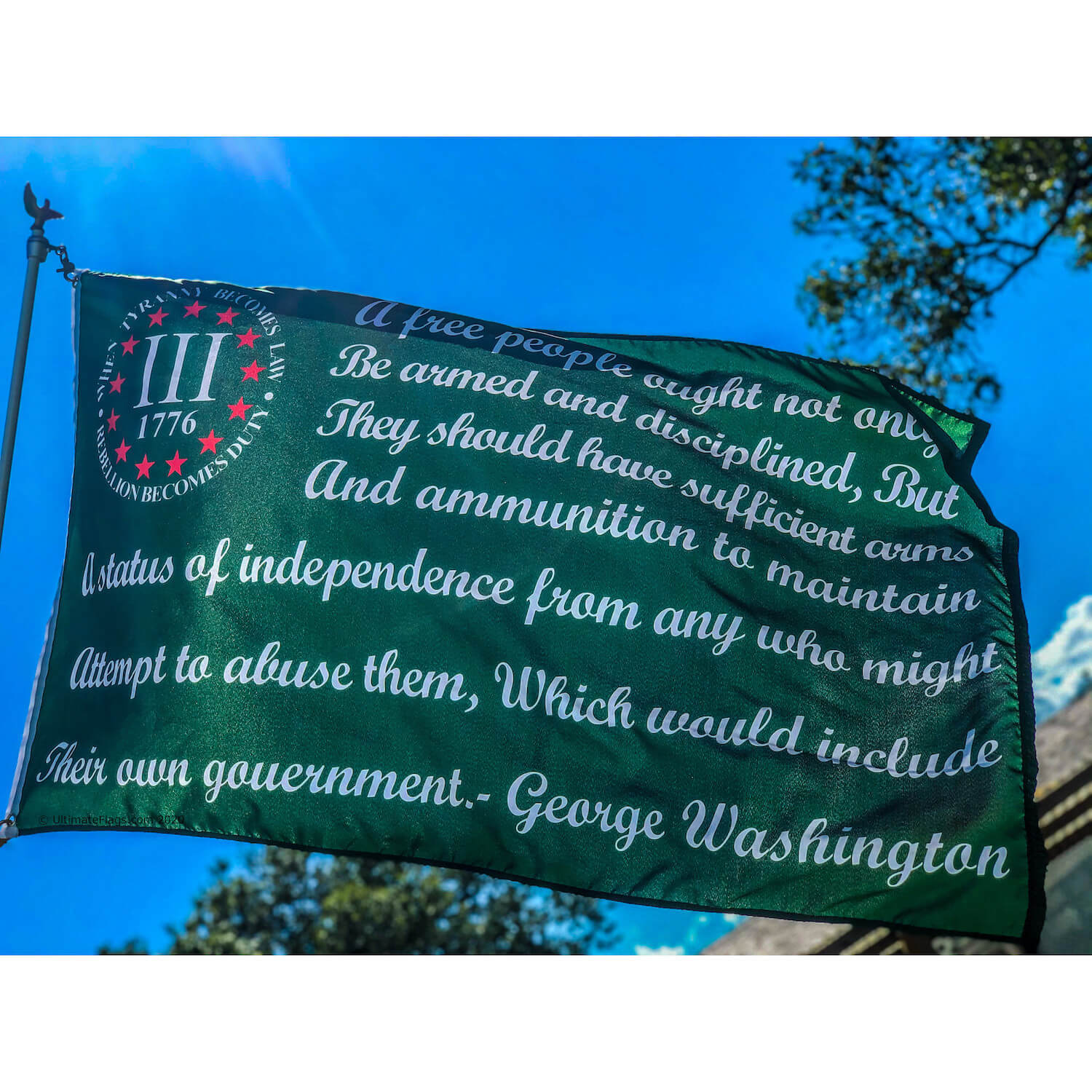
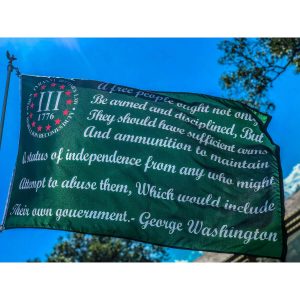
george washington flag with bear arms quote green

Flags, those vibrant pieces of fabric fluttering atop poles or gracing walls, carry a depth of meaning and utility far beyond their simple appearance. From the earliest days of human civilization, flags have been symbols of identity, power, and communication. Over time, their use has evolved, becoming deeply embedded in various aspects of our society. Whether fluttering in the wind or displayed statically, flags have an undeniable ability to communicate messages, evoke emotions, and unite people under common ideals.

buy home of the free flag

Flags are far more than just symbols of national identity; they are woven into the cultural, educational, political, and social fabric of societies worldwide. Each stripe, star, or color on a flag tells a story, a snippet of history, or a piece of a larger narrative. They are used in educational settings as tools to teach geography, history, and cultural studies, helping students visualize and understand the diverse world they live in. In the realm of sports, flags transform into emblems of team spirit and national pride, uniting fans and athletes under a common banner.

In the political sphere, flags often become potent symbols of ideologies, movements, and patriotism. They are hoisted at rallies, flown during significant national events, and used in protests to symbolize solidarity and shared beliefs. Flags also find their place in the business world, where corporate flags flutter outside headquarters, serving as a visual representation of a brand’s presence and identity.

Furthermore, in maritime contexts, flags are not just identifiers but essential tools for communication, ensuring the safety and coordination of sea-faring vessels.

george washington flag with bear arms quote green

1.) Display National Pride:

One of the most common uses of flags is to display national pride. Whether it’s on national holidays like the Fourth of July in the United States or every day, flying your country’s flag is a powerful way to show love and respect for your nation.

2.) Educational Tools:

Flags serve as excellent educational tools, especially for children. They can be used to teach about history, geography, and cultural significance of different countries or historical events.

3.) Decorative Purposes:

Flags are often used for decorative purposes in homes, offices, or public spaces. They can add a touch of color and personality to any room or outdoor area.

4.) Commemorative Displays:

Flags are used to commemorate significant historical events, military accomplishments, or to honor the memory of influential figures and veterans.

5.) Sports Events:

In sports, flags are used to represent teams, countries, or to show support during international events like the Olympics or the FIFA World Cup.

6.) Political Statements:

Demonstrating political views or support for a cause can be effectively done through flags. They are often used in rallies, protests, and political campaigns.

7.) Cultural Festivals:

Flags play a key role in cultural festivals and parades, representing the diverse backgrounds and heritages of communities.

8.) Corporate Branding:

Companies use flags for branding purposes, flying them at corporate headquarters, trade shows, and sponsored events to increase brand visibility.

9.) Maritime Uses:

In maritime contexts, flags are used for communication between ships and to denote the nationality of vessels.

10.) Custom Creations for Personal Events:

Custom flags are popular for personal events like weddings, family reunions, or anniversaries, providing a unique touch that celebrates individual stories or family heritage.

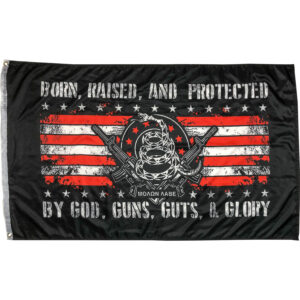
born raised and protected by god guns guts & glory flag double sided 3x5Bonus – Flags are tools of Expression and Unity!


Using flags in these various ways not only enriches our understanding of their significance but also allows us to connect with our heritage, community, and the wider world in meaningful ways. The versatility of flags extends into personal lives as well. Custom flags have gained popularity for their ability to personalize celebrations, from weddings and family reunions to significant anniversaries.

These flags often become cherished keepsakes, representing personal stories and milestones. The upcoming list explores the top ten uses of flags, showcasing their multifaceted roles and the myriad ways they touch our lives. From national symbols to personal emblems, flags continue to be powerful tools of expression and unity.


You may also enjoy reading:

How to Care for a Flag

How Long Do Flags Last?

Posted on

30 Facts You Probably Didn’t Know About Flags

To those who fly them, flags have deep meaning and represent a vast array of things. Each flag has a story behind it, and I’m going to fill you in on some fun facts about a few of them.

Did you know…

1. According to the Flag Code, the American flag should never be used for advertisement purposes in any manner whatsoever. 

Obviously this rule is often overlooked in as much as it violates the Constitution guarantee of free speech (expression)…

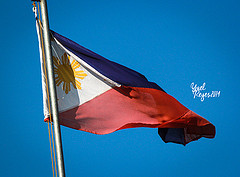
2. The Filipino flag is flown with the red stripe up in times of war and with the blue stripe down in times of peace.

Filipino Flag

3. The U.S. Pledge of Allegiance was published in magazines to sell American flags to public schools.

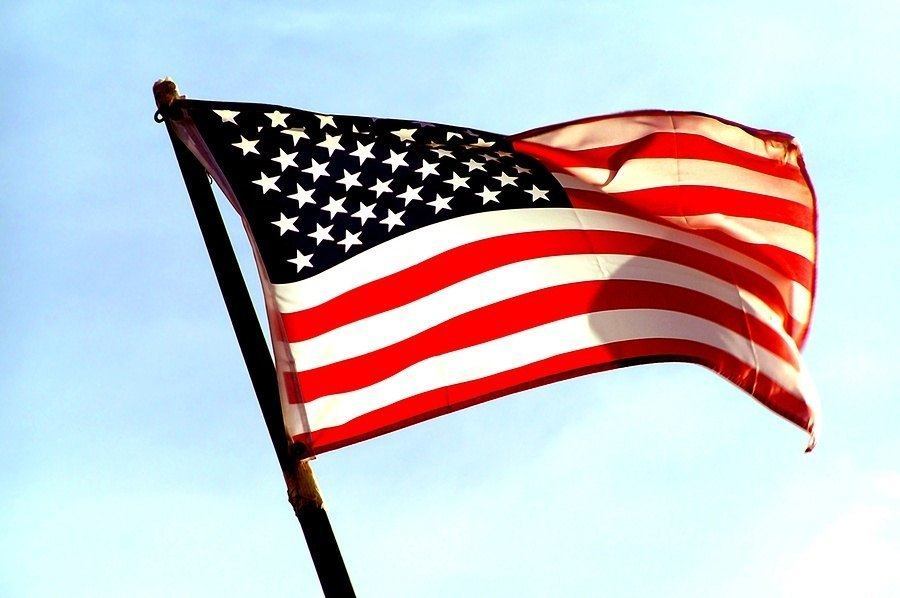
American Flag

In 1892, James B. Upham had the idea of using the 400th anniversary of Christopher Columbus reaching the Americas to bolster the sales of American flags to all schoolhouses. The magazine called for a national Columbian Public School Celebration to coincide with the World’s Columbian Exposition. A flag salute was to be part of the official program for the Columbus Day celebration being held in schools all over the nation. Thus, every school needed an American flag.

4. Each of the Apollo missions to the moon planted an American flag in the soil.

Buzz Aldrich planted the first flag on the moon, but it was knocked over by exhaust from the Lunar Module during takeoff. However, most experts think it is highly unlikely any of the Apollo flags could have endured the 45 years of exposure to vacuum, temperature swings that vary from around 242 F during the day to -280 F during the night, micrometeorites, radiation and ultraviolet light. Some believe the flags have all but disintegrated under such an assault from the environment.

Buzz Aldrin USA FlagBuzz Aldrin salutes the U.S. Flag.

5. American flags on airplanes and uniforms are often “backwards.” 

On many planes, and on American soldiers’ uniform, the flag decal is positioned with the union (the blue area on the flag) closest to the front of the plane. On the plane’s left side, the decal is positioned as normal with the union at the left. On the plane’s right side there is a “right flag” or “reversed field flag” or “reverse flag,” with the union on the right. This is done so that the flag looks as if it is blowing in the wind that’s created by the forward movement of the plane. You can sometimes see this on cars, trucks, and military uniforms as well.

soldier flag

6. The first Olympic flag went missing for 77 years

After the 1920 Olympic Games, the Olympic flag went missing for 77 years. Finally, an Olympian revealed he’d had it in his suitcase the whole time. Hal Haig “Harry” Prieste (1893-2001) admitted that he took the flag as a dare at the 1920 Games in Antwerp, Belgium and took it home, only to keep it hidden it in a suitcase for decades.

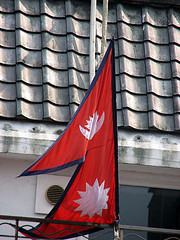
7. The flag of Nepal is the only non-rectangular flag representing a country.

Nepal-Flag

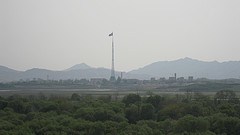
8. During truce talks between North and South Korea, both parties would try to bring a bigger national flag than the other to each meeting.

Tallest-Flag-Pole

The battle of the biggest flags continued between North and South Korea until finally a special meeting was called to address the size of the flags, as they could no longer fit in the room.

During the flag rivalry, taller and taller poles were built until the North finally “won” with what is now known as the world’s tallest flagpole. It is 525-feet tall and the fabric for the flag alone is reported to weigh 600 pounds. 

9. Lichtenstein and Haiti once had identical national flags.

Interestingly, no one realized that Lichtenstein and Haiti had identical flags until the two countries competed against each other in the 1936 Summer Olympics under the same flag.

In 1937, Liechtenstein altered its flag to include a prince’s crown to distinguish it from Haiti’s flag.

10. In 1906, Irish Olympic silver medalist Peter O’Connor climbed a 20-foot flag pole and waved the Irish flag when made to compete for Britain.

Meanwhile, Irish and Irish-American athletes fought off guards at the bottom of the pole. 

11. Atomic blasts caused by the U.S. are represented on Bikini Atoll’s Flag

There is a little island called Bikini Atoll out in the Pacific Ocean which is about 2,650 miles southeast from the Hawaiian Islands. The appearance of its flag is similar to the USA flag but it has an especially unique story behind it.

The 23 white stripes on the flag represent the islands that make up Bikini Atoll. The three black stars in the upper right represent the islands that were vaporized by the March 1, 1954, 15 megaton hydrogen bomb that was fired by the USA. The two black stars in the lower right hand corner represent where the Bikinians currently live — Kili Island (425 miles to the south of Bikini Atoll) and Ejit Island of Majuro Atoll.

bikini-atoll-2

The Marshallese words running across the bottom of the flag, “MEN OTEMJEJ REJ ILO BEIN ANIJ” translate to “Everything is in the hands of God.” This statement represent the words spoken in 1946 by the Bikinian leader, Juda, to U.S. Commodore Ben Wyatt when the Americans went to Bikini to ask the islanders — on a Sunday after church — to give up their islands for the ‘good of all mankind.’ The U.S. intended on testing nuclear weapons on the islands.

The close resemblance of the Bikinian’s flag to the U.S. flag is to remind the people and the government of America that a great debt is still owed by U.S. to the people of Bikini.


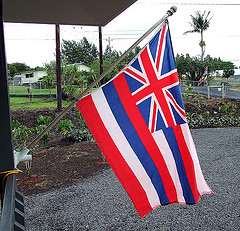
12. Hawaii’s state flag features the Union Jack (flag of the UK) and is the only U.S. State flag to do so. 

Hawaii-Flag

13. The Union Flag originated from the union of the crowns, not the union of the countries, so if Scotland leaves the United Kingdom, the Union Flag does not have to change.

Union-Flags

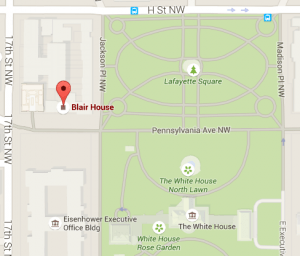
14. When a foreign dignitary stays at the Blair House (which is essentially the White House’s guest house), their national flag is flown over the premises and the area is considered foreign soil. 

Google Map

15. The U.S. is the only country that does not dip its flag to the host country at the Olympics’ opening ceremonies.

When the U.S. flag-holder was asked to dip his flag for King Edward VII at the 1908 London games, he supposedly responded, “This flag dips to no earthly king.” 

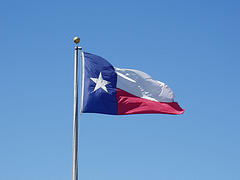
16. Texas is the only state where citizens also pledge allegiance to the state flag. 

Texas-Flag

17. The Boy Scouts burn the most U.S. flags than anyone in the World

It turns out, the Boy Scouts are actually showing respect for the flag when they set it to flames. According to the Flag Code, burning is considered the most respected way to dispose of a worn out flag. 

Boyscout-Burning-Flag

Scouting.org

18. The Virginia state flag is the only U.S. state flag to feature nudity. 

19. In Denmark, it is illegal to burn foreign flags but not illegal to burn the Danish flag. 

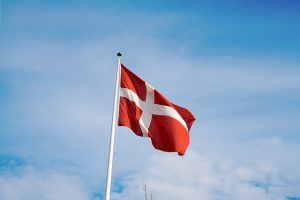
20. Denmark’s flag is the oldest flag currently in use

Denmark designed its flag in 1219 and it’s remained unchanged ever since. 

Denmark-Flag

21. The flags of Australia and New Zealand are so similar that the Prime Minister of Australia was greeted with the flag of New Zealand on a 1984 state visit to Canada. 

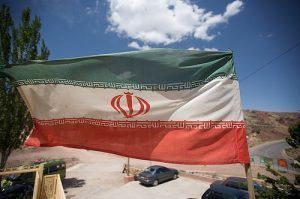
22. The words “Allahu Akbar” (translation: God is the greatest) are repeated 22 times on Iran’s flag. 

Iran-Flag

23. At one point, the Nazi flag actually helped to save lives.

John Rabe, a member of the Nazi Party, prevented the slaughter of hundreds of thousands of Chinese civilians at the hands of the Japanese by setting up a refugee zone under a Nazi flag.

24. The first African-American to receive the Medal of Honor earned it by protecting the flag.

In the Civil War, Sgt. William Harvey Carney refused to let the American flag touch the ground, despite being shot in the face, shoulders, arms, and legs. He later recovered from the wounds he received and earned the Medal of Honor for his vigilance.

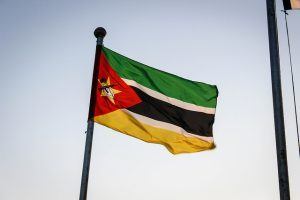
25. The flag of Mozambique has an AK-47 on it and is the only flag in the world to display a modern weapon. 

Mozambique-Flag

26. A Mexican city holds the title of having the largest flag flown from a flag pole. 

On December 2nd, 2011, the city of Piedras Negras in Piedras Negras, Coahuila, Mexico flew a national flag measuring 34.3m x 60m (112ft 6.39in x 196ft 10.2in) — the largest flag ever to fly on a flag pole. 

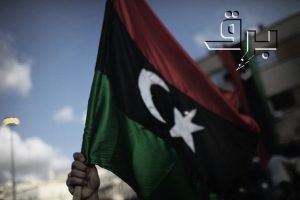
27. Libya’s new flag is actually retro.

Libya’s gone through many flag changes over the years, and, at one point, even had what many would consider the most boring flag in the world — a solid rectangle of green. Its newest flag is actually a throwback to the flag which originally represented the Kingdom of Libya. The Kingdom of Libya existed from 1951 to 1969 until a group of military officers led by Col. Muammar Qaddafi overthrew the government.

Libya-Flag


28. The Friesland flag in the Netherlands shows seven lily leaves.

The leaves on the Friesland flag represent the seven old Frisian sea lands as they existed from around the 8th until the 14th century:

29. The American flag’s red, white, and blue colors did not have significance when it was adopted in 1777.

Although the colors on the flag didn’t have specific meaning, those on the Great Seal did. When reporting to Congress on the Seal, Charles Thompson, Secretary of the Continental Congress, stated:

“The colors of the pales (the vertical stripes) are those used in the flag of the United States of America; White signifies purity and innocence, red, hardiness and valor, and blue, the color of the chief (the broad band above the stripes) signifies vigilance, perseverance and justice.”

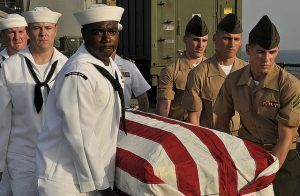
30. It’s tradition to bury a war veteran with a flag.

War veterans are commonly buried with small flags, and if specially requested, they may be buried with his or her body wrapped in the flag.

Flag-Burrial


Flag Facts FAQ

Why is the American flag “backwards” on military uniforms and planes? The union (blue star field) sits toward the front so the flag appears to stream backward in the wind as the wearer or aircraft moves forward.

What is the proper way to retire a worn-out American flag? Burning is the dignified, Flag Code-approved method of disposal — which is why the Boy Scouts hold respectful flag retirement ceremonies.

What is the oldest national flag still in use? Denmark’s Dannebrog, in use since 1219 — browse it in our country flags collection.

What size flag should I buy for my house? The 3×5 ft flag is the standard house-pole size; 12×18 inch flags fit car, truck and boat holders — see every option in our flags-by-size guide.

Where can I buy quality American, historic and rebel flags? Right here — Ultimate Flags carries thousands of flags in printed, sewn and embroidered quality, with Buy 2 Flags, Get the 3rd FREE on every order.

Thanks for reading! We hope you enjoyed our post. Please share with all your fellow patriots. Brought to you by: Ultimate Flags

Posted on

7 Amazing Facts About the Irish Flag

The Irish flag, also known to many as the Irish tricolor or Bratach na hÉireann in local dialect, is easy to mistake with several other flags for sale, like Italy’s or Ivory Coast’s. But after reading all the interesting trivia about it, people will remember it and have a renewed respect for the country, its history and the people who live in it.

1. The Symbol of the Aspiration for Lasting Peace.The Irish flag is composed of three colors – green, white and orange. The green stands for the Gaelic locals, the majority of which believe in Roman Catholicism. The orange symbolizes the Protestants who emigrated to the northern part of the country in the 17th century. The two groups had a quite a long history of religious divide; so the white in the middle represents the truce they have agreed upon during the revolution and the peace they aim to have in the future.

2. The Golden Harp – Irish Tricolor’s PredecessorThe Irish flag has undergone many transformations over the centuries. Before the tricolor was adopted as the national symbol, a silver-stringed gold harp on a vivid green bed was the one used to represent the country. Up to this day, some organizations – even government offices – still make use of the gold harp in their emblems or coats of arms. However, this is ‘actively discouraged’ as it fosters the division past leaders fought to eradicate.

3. The Revolution which Ushered the ChangeIt was a young revolutionary leader named Thomas Meagher who had the distinct honor of waving the flag for the very first time in March 7, 1848 in the Wolfe Tone Confederate Club in Waterford City. It flew there proudly for several days before it was taken down by British Soldiers.

Aside from the social schism brought about by religion, the Great Famine was a catalyst for the rebellion of that year and, consequently, the national emblem’s make over.

4. The New World Order of 1848This year saw many successful revolutions all over Europe. France, Germany and several other countries overthrew the monarchy and began the democratic movement. Thomas Meager tried the same in Ireland but failed. He was arrested for treason and sentenced to death, but exiled to Australia. Some time later, he fled and sought refuge in America where he became one of the toughest soldiers of the Union Army in the American Civil War. Before he went on trial, he vowed in front of a crowd that the Irish tricolor would be seen and used by their descendants in the future.

5. Adopting the Irish TricolorMeagher was proven right as more and more groups used the tricolor for their causes, particularly during the Rising when it flew over the GPO of Dublin and the Irish War of Independence. By 1937, the tricolor was adopted in the constitution.

The flag, an important physical representation of a country, should be treated with care and respect at all times. While the same is true with the Irish tricolor, there is one special rule about it. No other flag should fly over the tricolor because it is the truest symbol of the proud Irish people.


Thanks for reading! We hope you enjoyed our post. Please share with all your fellow patriots. Brought to you by: Ultimate Flags

Posted on

15 States with Strange Flag Rules

The 50-Star Flag, also known as the ‘Stars and Stripes’, became the United States official flag on Monday, July 4, 1960, following Executive Order No. 10834 of the Late President Dwight Eisenhower. Prior to the Executive Order published on Tuesday, August 25, 1959, the United States recognized both of the 48-Star Flag and the 49-Star Flags.

If you want to buy any of the flags for sale, take note of some U.S. States that do have strange flag rules which are backed by the laws of the state. They include:

1. Wyoming: The constitution of the state forbids the military from carrying any other flag except for the U.S. flag.

2. West Virginia: The state prohibits the display of black or red flags. While the color black is associated with the Confederates, red is associated with the Socialists. Both flags are considered treasonous under the constitution of the state. The state also prohibits any other flag that is considered to be antagonistic to the United States or the State of West Virginia’s constitution, ideals, law, and institutions. The flag of the State of West Virginia is also not allowed to fly above the Stars and Stripes. If it is to be flown at the same level with the U.S. flag, then it will have to be placed on the right of the Stars and Stripes.

3. Washington: Any flag that is considered to be antagonistic to the U.S. or State’s law or constitution is strictly prohibited.

4. Rhode Island: Except if the U.S. flag is present, no other flag can be displayed in a parade. Public buildings and schools are prohibited from displaying foreign flags. You will also never find flags for sale in Rhode Island that has inscriptions on it as an opposition to an organized government or that is considered to be derogatory to morals.

5. Pennsylvania: No flag is allowed to fly on a public building apart from the flag of the United States.

6. Oklahoma: Red flags are prohibited in Oklahoma. The only place where you can fly other flags is in a stadium, an arena, or the roads. The only flags that can fly on a public property are the U.S. Flags, the Girls’ Scout flag, the Boys’ Scout flag, the State flag, the flag of any nation that once had dominion over the state, the American Red Cross flag, the official municipal flag, or any flag approved by the governing body.

7. North Dakota: Only three flags are allowed by the constitution of the state to be displayed publicly. They are the U.S. flag, the flag of the state of North Dakota, and the flag of any nation that is friendly with the state of North Dakota.

8. New York: The only building where the U.S. flag flies below the UN flag is on the United Nations Headquarters. Any flag that casts contempt on the Stars and Stripe is prohibited. No foreign flag is allowed to fly on a public building.

9. New Jersey: No foreign flag can be displayed in New Jersey except if is flown with the U.S. flag. The flag must have at most equal dimensions with the U.S. flag.

10. New Hampshire: You can get flags for sale that are subordinate to the Stars and Stripes. Every other flag that is foreign or that of the UN is prohibited from being flown on public buildings.

11. Mississippi: Any flag that is not approved by the statute of the state is prohibited.

12. Massachusetts: Flags for sale of any foreign nation cannot be displayed on a public building or school in Massachusetts.

13. Louisiana: If the United States enters a war, the laws of Louisiana prohibits the display of the flag of the nation with which the U.S. is warring with.

14. Idaho: Military groups are only permitted to carry the U.S. flag and that of Idaho. Red flags and any other flag that is deemed to be against an organized government are prohibited from being displayed in public places.

15. District of Columbia: While on the grounds of the U.S. Capitol, any flag that seeks to get the notice of the public is prohibited.

Depending on the U.S. State where you are in, the flags for sale reflect the laws of the state at that point in time. While all the 50 states are bound by the U.S. Flag Code, these U.S. States have strange flag rules.


Thanks for reading! We hope you enjoyed our post. Please share with all your fellow patriots. Brought to you by: Ultimate Flags

Posted on

9 Intresting Facts About The German Flag

Taking a gander at the German flag, you may wonder about the story behind the dark, red and gold. Beyond question, it is stacked with culture and custom. The flag itself passes on a rich German history, and the shades portray a specific pride for the German people. The following is a summary of 9 Interesting Facts about The German Flag

1. Traditions of National Colors

Before Germany had the national flag, there were battling traditions of national tones, to consolidate dark red-gold and dark white-red. The dark red-gold finished the observable nature of the 1848 Revolutions. The dark white-red was adopted by the North German Confederation after the Austro-Prussian War.

2. Current Flag

Introducing the modern day flag of Germany, set after the relationship of the republican greater part, manages a framework which confined after World War I. This present day flag addressed the German solidarity and opportunity. At that point, the dark red-gold set as the present day flag, which then was adopted as the national flag of Germany. Find more truths about the French Revolution here:

3. Causes

The color, dark red-gold, was connected by Germany to symbolize the improvement against the Conservative European Order, and that was developed after the thrashing of Napoleon. Also, Frankfurt Parliament announced the tricolors as the official shades of the German Confederation.

4. Common Flag

The German Flag for common events, or affiliations, contains only the dark red-gold tricolors. It is ordinarily used by non-chose specialists to connect their correspondence with the governing body. Moreover, the common flag has its vertical interpretation.

5. Outline

On the essential outline, there was still talk about the usage of yellow or gold. In any case, the organization set the flag with gold, which is close in character to yellow. The degrees of tricolor are dark, red Pantone 485, and Gold Pantone 7405. Finally the gold was set as the alternative with a confused mix of colors. Find more convictions about the GAA here:

6. Flag Days

There was one statement of government on 22 March 2005. Every open structure needs to fly the flag on certain dates. Dates which are set as the flag days: 27 January, 1 May, 9 May, 23 May, 17 June, 3 October, etc.

7. Transformation and the Frankfurt Parliament

In the midst of the Revolutions of 1848, many individuals had went up to the roads and brought flying tricolor flags. After the bombshells, then national social affairs expected to make a decision. The Frankfurt Parliament was the event to declare the national flag of Germany which has tricolors dark red-gold.

8. Separated Germany

It happened in the midst of 1949 to 1989 when set apart by the Berlin Wall. In the midst of this time, the use of both flags on the dark red-gold in assortments yet in a different layout plan.

9. Introduce Uses

After the fall of the Berlin Wall, the formally German Flag was set as the dark red-gold. The flag is used for all lawmaking body events of common events. Moreover, it’s set as the national flag for Germany. One of the open uses is for maintaining the National German Football Club during the World Cup.

Last note

Those are the Facts about The German Flag. At this point you perceive what the vocations of the flag and the recorded background of it is,  and look around, the best flags available to be purchased.


Thanks for reading! We hope you enjoyed our post. Please share with all your fellow patriots. Brought to you by: Ultimate Flags

Posted on

6 Things You Didn’t Know About Canada

Canada is a vast nation consisting of 6 different time-zones and the longest coastline in the world. There are also quite a few other facts about Canada which you would not have a clue about.

We will be, today, bringing to fore, more such unknown facts about Canada.

1. Cheese Loving Nation:Canadians love cheese. They are the largest consumer of Kraft Macaroni and cheese dinners. The appetite for cheese only keeps growing in Canada.

2. Alien landing base:Canada is one of the very few nations in the world which has already made preparations for aliens arriving on earth. Back in 1967, they constructed a landing pad for UFOs in St, Paul, Alberta.

3. Sparsely Populated:By landmass, Canada is the second largest country in the world. However, if you look into Canada’s share in world’s population it stands only at 0.5% of the total world population.

4. Home to Santa:Santa Claus is an official Canadian citizen, thanks to the declaration of the Canadian government. When you send a letter to Santa to the north pole, it gets answered indeed. Many people have tried sending the letter to Santa in different languages and almost all of them get a response.

5. Snake Capital:The Manitoba province in Canada is also known as the snake capital of the world. During the month of May, snakes end their hibernation and this results in more than 70,000 snakes surfacing.

The most popular species of snake in Canada is the Red-sided garter snake.

6. Women security:Among all the G20 countries, Canada is considered to be the best country for women. Now that is an accolade which more countries would like to have.

7. Country of Lakes:Sure, Canada is a pretty large country, but even knowing that wouldn’t prepare you for the next fact which we are disclosing.

Canada consists of a whopping 2 million lakes.

Owing to this unique topological feature, it can even be called the country of lakes.

8. Longest peaceful border:The longest non-militarized border in the world is between USA and Canada. This in itself, creates some unique facts as in cities like Stanstead, there is a public library which falls in both countries owing to the location of the building stretching across the border.

9. A wildlife conservationist:Canada comprises of many wildlife parks and sanctuaries. However, the interesting thing about Canadian wildlife parks is their size.

For example, Wood Buffalo National Park in Alberta, Canada is bigger than Switzerland.

10. Bathtub race:Canada is the only country in the world which holds a bathtub race.

Every year, Nanaimo in British Columbia which is a part of Canada holds the bathtub race.

11. A new flag in 1965:The maple leaf flag of Canada which we see among flags for sale of other countries was officially recognized only in 1965. From the 1890s to 1965, the unofficial flag was being used which was known as the Canadian Red Ensign.

Today, in most of the places, you would only find the maple leaf flag and you would not find the older Red Ensign flags for sale easily.

12. Rich in Caesium:Caesium is an element which is used to create atomic clocks. The atomic clocks which are made using Caesium can only deviate by 2 seconds in a time period of 65 million years, making them the most precise atomic clocks.

The interesting thing is world’s 2/3rd Caesium is located in Bernic Lake in the Manitoba province.

Caesium applications are increasing pretty rapidly and it is also used as a lubricant in the drilling process.

Those were some of the interesting things about Canada. We bet, you didn’t know at least a few of those facts about Canada.


Thanks for reading! We hope you enjoyed our post. Please share with all your fellow patriots. Brought to you by: Ultimate Flags

Posted on

Canada’s Flag: 5 Facts About the Maple Leaf Flag You Didn’t Know

Canada’s flag at a glance: The National Flag of Canada, known as the Maple Leaf flag, is a red, stylized 11-point maple leaf on a white square, set between two red vertical bands. It is twice as long as it is high, and it became Canada’s official flag on February 15, 1965.

Even though it is one of the most recognized flags in the world, Canada’s flag is surprisingly young, and its story involves years of debate, thousands of design ideas and a history professor at a military college. Here are 5 notable facts about Canada’s flag that you probably didn’t know.

1. Canada didn’t have an official national flag until 1965

For nearly a century after Confederation in 1867, Canada had no official national flag of its own. The Royal Union Flag (the Union Jack) served as the official flag, while the Canadian Red Ensign, a red flag with the Union Jack in the corner and the Canadian shield of arms, was widely used to represent the country. Attempts to choose a distinctive national flag in 1925 and 1946 both ended without a result.

That changed under Prime Minister Lester B. Pearson, who promised Canadians a new flag. In 1964 a 15-member parliamentary committee was formed to choose one, and the fight that followed became known as the Great Flag Debate. The House of Commons approved the new flag on December 15, 1964, by a vote of 163 to 78, and the Senate followed on December 17. Queen Elizabeth II signed the royal proclamation on January 28, 1965, and at noon on February 15, 1965, the Maple Leaf flag was raised on Parliament Hill in Ottawa for the first time. Since 1996, February 15 has been celebrated each year as National Flag of Canada Day.

2. The maple leaf has 11 points

The leaf at the centre of Canada’s flag is a stylized maple leaf with 11 points. It isn’t drawn from any single species of maple. It is a generic leaf meant to stand for all the maple trees native to Canada, and the maple leaf had been a popular Canadian symbol for well over a century before it appeared on the flag.

3. Red and white became Canada’s official colours in 1921

Red and white were made Canada’s official colours in 1921, when King George V proclaimed the country’s coat of arms. They are often said to echo the red cross of St. George for England and the white of France’s royal emblem, the country’s two founding European nations. Red is also the colour of maple leaves in autumn, which makes the pairing feel especially Canadian.

4. The flag’s design follows exact proportions

Canada’s flag is twice as long as it is high, a 1:2 ratio. It is divided into three vertical sections in a 1:2:1 pattern: a red band on each side, each one quarter of the flag’s length, and a white square in the centre that is exactly as wide as the flag is high. That central white square, with the red maple leaf inside it, is sometimes called the “Canadian pale.” The design was inspired in part by the flag of the Royal Military College of Canada, which also uses red outer bands around a white centre.

5. A history professor designed it

The design came from Dr. George F. G. Stanley, a historian and the first Dean of Arts at the Royal Military College of Canada in Kingston, Ontario. In a memo dated March 23, 1964, Stanley sent his idea to John Matheson, a Member of Parliament and Pearson’s point man on the flag. He suggested a simple, single red maple leaf on a red and white field, in the spirit of the college’s own flag.

The flag committee sorted through thousands of designs submitted by Canadians and narrowed them to three finalists, including Pearson’s own favourite, the “Pearson Pennant,” which showed three red maple leaves on white between blue borders. On October 22, 1964, the committee chose Stanley’s single-leaf design. Graphic artist Jacques Saint-Cyr refined the final leaf, and the design that came out of that process is the flag Canadians fly today.

Frequently Asked Questions About Canada’s Flag

What does Canada’s flag look like?
Canada’s flag has a red 11-point maple leaf in the centre of a white square, with a red vertical band on each side. The flag is twice as long as it is high.

When did Canada get its current flag?
The Maple Leaf flag became Canada’s official national flag on February 15, 1965, after Parliament approved it in December 1964 and Queen Elizabeth II proclaimed it in January 1965.

Who designed Canada’s flag?
Historian George F. G. Stanley of the Royal Military College of Canada proposed the design, John Matheson championed it in Parliament, and graphic artist Jacques Saint-Cyr refined the final maple leaf.

What flag did Canada use before the Maple Leaf?
Before 1965, the Royal Union Flag (Union Jack) was Canada’s official flag, and the Canadian Red Ensign was widely flown as a symbol of Canada.

What do the colours of Canada’s flag mean?
Red and white were proclaimed Canada’s official colours by King George V in 1921. They are often linked to England and France, and red also recalls the colour of maple leaves in autumn.

Fly Canada’s Flag With Pride

Whether you’re celebrating Canada Day, National Flag of Canada Day or your own Canadian roots, we carry quality Canadian flags made to fly indoors or out. Shop our Canada Flag, Nylon Embroidered 3 x 5 ft. or browse the full Canada flag collection.

Thanks for reading! We hope you enjoyed our post. Please share it with your friends and fellow flag lovers. Brought to you by: Ultimate Flags

Posted on

6 Striking Facts About Pirate Flags You Didn’t Know

Pirates used flags as a psychological weapon. They were meant to strike fear into the hearts of sailors so that they surrender without much resistance. When we think of a pirate flag we imagine a black flag with a white skull and bones. This flag is known as the Jolly Rogers. The skulls were meant to warn them of certain death if they didn’t surrender in time. It was indeed the most common flag used by pirates. But if you think that it was the only flag used by pirates you’d be wrong. Let’s look at 6 striking facts about the pirate flag that you probably didn’t know.

#1Famous Pirates Didn’t Use the Skull & Bones Flag

Flags were like brand logos for the pirates. Famous pirates didn’t use the common Jolly Roger flag with skull and bones (with the exception of Bartholomew Roberts who used it before it became mainstream). The pirates used flags with images of the captain toasting, pierced heart, and even hourglass. One of the most famous pirates, Blackbeard, used a flag which depicted a skeleton piercing a heart with a spear while raising a toast to the devil. Pretty scary flag if you ask me.

#2No Flag from the Golden Age of Piracy Survived

The golden age of piracy spans from the 1650s to the 1730s. During this period piracy in the western world came to the spotlight. The English and the French had set up colonies across many continents which meant they had ships full of cargo sailing across the high seas. Pirates attacked these merchant ships for the bounty and were pretty successful at it. Legends and myth grew around the most famous pirates of this era. Unfortunately, none of these famous pirates were ever caught sailing with their flags. In fact, we don’t even have a drawing of the pirate flag of this era by an actual eyewitness.

#3Pirates used National Flag

Flags were primarily used to put psychological pressure on the victims. Do you know what is scarier than being attacked by a pirate? Being attacked by a nation’s naval vessel. Many pirates used British and French flags to intimidate merchant ships into surrendering without a fight. Using a national flag also helped them get out of some pretty sticky situations. A famous pirate Bartholomew Roberts once fooled the French by Flying a Duch Flag and pretending to be a slave ship. The French sent smaller ships with lots of money to trade slaves with this Duch ship which Robert’s happily looted.

#4Origin of Pirate Flag

Pirate flag is said to have originated from the plain black flag that ships would fly to warn another to surrender at once. If the other ship didn’t surrender in time a red flag would take the place of the black. This meant that no mercy would be shown to the crew. These flags were first used by French and English ships. Since most of the pirates of the golden age were mostly Ex-Naval men, they might have adopted the black flag and added their symbols to it.

#5Pirate Flag was Not always Raised

If you were the captain of a merchant ship you probably wouldn’t go near anything that had a black flag raised. That’s why pirates didn’t use their flags out in the open seas. The pirate flag was raised only when they were close enough to their victim that the ships couldn’t run for escape. They had to surprise the merchant ships by sneaking up close. Once they were close they would raise the flag to intimidate the crew to an early surrender.

#6 Pirates Sewed the Flag on Their OwnA pirate couldn’t just walk into a market and buy a pirate flag. There were no pirate flags for sale even in the few nations where piracy was legal. So, the captain would have to ask one of his crew member who was good with a needle to sew a scary pirate flag for him. Who knew that apart from being a bunch the greedy and unsanitary people the pirates also had sick sewing skills?


Thanks for reading! We hope you enjoyed our post. Please share with all your fellow patriots. Brought to you by: Ultimate Flags

Posted on

Top 8 Flags That Share a Similar Design

If you watch the Olympics, the World Cup, or other international sporting events, the issue of flags having similar designs and causing some sort of confusion isn’t new. The big overlap in the design and colors makes their distinction very hard at first glance. Whether you want to make flags for sale, or you just want to own one from a given country, it’s important to understand the distinction each has. Below is a list of nine flags that are similar in their design:

1. Romania and Chad

These are the world’s most closely matched flags. They are almost identical in their size and design, it’s only a slight difference that is noted in the shades of blue-yellow and red vertical stripes when examined closely. Andorra has a similar flag but it has a coat of arms placed at its center.

2. Monaco and Indonesia

The two flags are designed with two horizontal stripes, only that the one for Indonesia is longer. Both have the red stripe running over the white one. The one close to these is that of Poland but its white stripe runs over the red stripe.

3. Mali and Senegal

Both flags are not only similar in the design of the green, yellow and red vertical stripes but also their dimensions. To differentiate them, you will realize a slight difference in the shade of their colors. In addition, the flag of Senegal has a green star in its central stripe. Guinea’s flag is similar to these two only that it has its stripes reversed to red, yellow then green.

4. Australia and New Zealand

They are both designed based on the British Blue Ensign. This is a blue field with a top inner corner or a Union Jack in the Carton. The version of Southern Cross constellation featured on them is so stylized. Despite the similarity, these flags have significant differences. The Australia’s constellation features five white seven-pointed stars while that of New Zealand, four red-and-white five-pointed stars. Also, Australia has an additional sixth larger commonwealth star. The shade of their colors (red and blue) also differ.

5. Iceland and Norway

These flags are completely identical in their design only that their colors are reversed. The one for Norway is designed with a white Scandinavian Cross and a red field while that of Iceland features a white Scandinavian Cross with a blue field. Of course, that’s to say nothing about most of Northern Europe.

6. Colombia, Venezuela and Ecuador

Their yellow-blue and red horizontal stripes are similar. Ecuador’s and Colombia’s national flags portray unequal stripes with the yellow stripe being relatively larger in size. Venezuela’s stripes are equal in size in addition to their national coat of arms placed in its upper hoist corner and an arc of stars placed at its center. Also the Ecuadorian national flag has its national coat of arms placed at the flag’s center.

7. Côte d’Ivoire and Ireland

Both flags share a similar design of vertical stripes of green-white and orange. The only difference is that the green stripe on the Irish national flag is on its hoist side.

8. The Netherlands and Luxembourg

Both flags are designed with horizontal stripes of red-white and blue. The only difference is that that of Luxembourg uses a different shade of blue and is slightly longer.

Most of these relationships in their design and color choice could be attributed to the history of the respective countries and their proximity to each other. That aside, their resemblance is really confusing in many instances and if you are making flags for sale, remember to incorporate the finer details discussed above.


Thanks for reading! We hope you enjoyed our post. Please share with all your fellow patriots. Brought to you by: Ultimate Flags