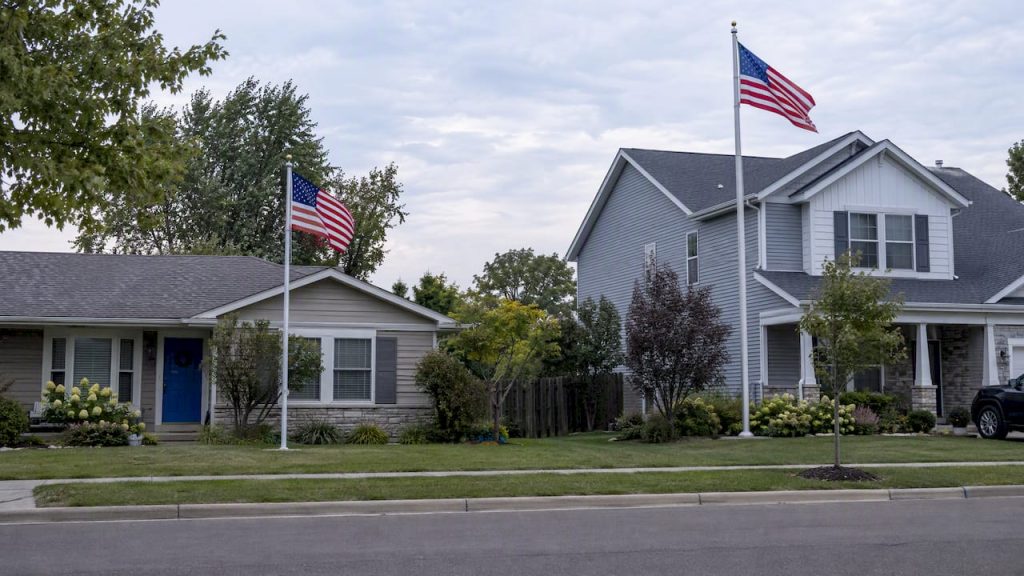
For most homes, a medium-height in-ground pole paired with a flag sized about 3’x5’ or 4’x6’ strikes the right balance between visibility and proportion. Porch and house brackets commonly range in length and suit a 2.5’x4’ or 3’x5’ flag. The quarter-pole rule guides the exact pairing, though your final choice still depends on the mounting style and the foundation beneath it.
TL;DR:
- A flag should measure about one quarter to one third of pole height; 3 by 5 and 4 by 6 flags suit many residential poles.
- House brackets measuring 5 to 8 feet suit 2 by 3, 2.5 by 4, or 3 by 5 flags; oversized flags wrap and wear faster.
- A 15 foot pole usually suits a one story home, while two story homes often need 20 feet to clear eaves and gutters.
- Poles over 20 feet warrant professional help, especially in high winds; loose soil and exposed sites may require deeper, wider footings.
- Choose nylon for light winds and visibility; polyester handles sustained wind better on taller, exposed poles in coastal or open plain settings.
Table of Contents
- Flag-to-pole ratio and size chart: how to pick a flag for any pole height
- Choosing a pole height by house type and sightlines
- Mounting types: house-mounted brackets vs in-ground flagpoles and size implications
- Installation and foundation basics by pole height
- Flag size, materials, and hardware: practical recommendations for durability and visibility
- Publisher expertise and resources for sizing and safety
- A homeowner’s quick checklist and next steps
- Find the right flag and pole for your home
- FAQ
- Sources
Flag-to-pole ratio and size chart: how to pick a flag for any pole height
Every proud display rests on a simple, time-tested proportion: the flag’s length should run roughly a quarter to a third of the pole’s height. This is the quarter-pole rule, and it keeps a flag from looking like an afterthought or, worse, like it’s swallowing the pole that bears it. A 20 foot pole calls for a flag between 4 and 6 feet in length, which is exactly why the 3’x5’ and 4’x6’ sizes dominate residential yards across the country.
Our Flagpole Height Chart and Safety Checks builds on this same ratio and walks through the safety checks worth running before you raise anything into the wind.
| Pole height | Mounting type | Suggested flag size |
|---|---|---|
| 5 to 8 ft | House/porch bracket | 2’x3’ or 2.5’x4’ |
| 10 ft | In-ground, small yard | 3’x5’ |
| 15 ft | In-ground, residential | 3’x5’ |
| 20 ft | In-ground, residential | 3’x5’ or 4’x6’ |
| 25 ft | In-ground, large lot | 4’x6’ |
A few situations call for breaking from the chart:
- Very tall poles (30 feet and beyond) often need a 5’x8’ or larger flag to avoid looking undersized.
- Tight sightlines, such as narrow lots or close neighbors, may call for sizing down even when the pole height suggests otherwise.
- Ceremonial or holiday displays sometimes justify a temporarily oversized flag, as long as it’s swapped back for daily wear.
Choosing a pole height by house type and sightlines
The right pole height isn’t just math, it’s about what looks right when you pull into your own driveway. A single-story home tends to carry a 15 foot pole beautifully, since anything taller can overwhelm a low roofline and make the house look like an afterthought beneath its own flag. Two-story homes generally call for 20 feet, which lets the flag clear the eaves and fly freely above the gutter line rather than brushing against the siding.

Large lots, long driveways, and corner properties often benefit from 25 feet or more, since distance from the street shrinks a pole visually and a shorter staff can disappear against the landscape. Picture a stately two-story colonial set back fifty feet from the curb: a 15 foot pole would look like a garden stake, while a 20 or 25 foot staff gives the flag room to catch the wind and command the yard the way it should.
A few visual anchors worth keeping in mind:
- The pole top should generally sit above the roofline, not level with it or below it.
- A flag should clear porch posts, trees, and power lines by several feet in every direction.
- Standing at the curb or street, the whole pole and flag should be visible without craning your neck or stepping back.
Mounting types: house-mounted brackets vs in-ground flagpoles and size implications
A house-mounted bracket changes the math considerably, since you’re now working with a shorter staff set at an angle rather than a tall vertical pole standing free in open ground. Our Flagpole Types and Footing Rules page breaks down the mounting options in more depth, but the core guidance for bracket installations comes down to a few steps.
- Choose a bracket length of 5 to 8 feet, which comfortably suits a 2’x3’, 2.5’x4’, or 3’x5’ flag without crowding the house.
- Mount the bracket at an angle that projects the flag away from the siding, roofline, and gutters so it clears obstructions as it moves in the wind.
- Size down from what an in-ground pole would suggest, since a flag that’s too large for a bracket mount tends to wrap around the staff and wear out faster.
Our aluminum anti-furl rotating poles in 5 and 6 foot lengths are built with this exact pairing in mind, giving the flag room to rotate freely and resist wrapping in gusty conditions. When a lot is large enough to support a freestanding pole, though, going in-ground usually delivers better visibility and a longer-lasting hoist system.
Installation and foundation basics by pole height
A taller pole demands a deeper, wider footing, and the relationship isn’t linear. A smaller pole might need a footing only a couple of feet deep, while a taller pole commonly calls for a hole a few feet deep with a proportionally wider concrete base to resist wind load. Soil composition, drainage, and wind exposure all push those numbers up or down, which is why structural bodies like ASCE publish guidance on wind and load considerations for freestanding poles, and why trade groups such as NAAMM maintain installation standards that installers and engineers reference for footing sizing.
A few footing basics worth knowing before you dig:
- Sandy or loose soil generally requires a wider footing than dense clay or rocky ground.
- Coastal and open-plain properties face higher wind exposure and need deeper, reinforced footings.
- Poles taller than 20 feet often warrant a professional installer or structural engineer, particularly in high-wind regions.
Pro Tip: Estimate concrete volume by treating the footing hole as a cylinder: multiply its radius squared by pi, then by the depth, to get cubic feet, and round up to account for an uneven hole bottom.
Flag size, materials, and hardware: practical recommendations for durability and visibility
Nylon and polyester dominate outdoor flag fabric for good reason, and each suits a different yard. Nylon is lighter and catches even a light breeze, which makes it vivid and lively on poles in calmer settings, while polyester is heavier and more durable in sustained wind, holding up well on taller in-ground poles exposed to open weather. Our flag buying guide walks through fabric and quality differences in more detail, including how to apply the quarter-pole rule when sizing your purchase.
Hardware consistency matters as much as fabric: a flag’s grommets and header need to match the clips and halyard on your pole, or the flag will twist, tear, or fly crooked. Our guide to installing flag headers and grommets recommends spacing grommets 4 to 5 inches apart along the header for a secure, even hoist.
A quick reference for pairing material to setting:
- Nylon suits light-wind suburban yards and bracket mounts where visibility matters more than heavy-duty wear.
- Polyester suits taller in-ground poles facing sustained coastal or open-plain wind.
- Embroidered stars and sewn stripes outlast printed designs on any pole height, since they hold their color and shape through years of weather.
Publisher expertise and resources for sizing and safety
We built our height chart and the quarter-pole safety checks specifically for homeowners weighing these decisions for the first time, pairing a simple ratio with practical safety guardrails rather than overwhelming technical specification sheets. That chart, paired with the mounting guidance in our flagpole types resource, covers the overwhelming majority of residential situations without requiring an engineering background.
A few resources worth bookmarking as you plan your installation:
- Our height chart maps pole height broadly to recommended flag size using the quarter-pole ratio covered above.
- Our flagpole types guide explains footing rules and mounting differences between bracket and in-ground installations.
- Our flag buying guide helps match fabric and construction quality to your pole’s exposure and height.
A homeowner’s quick checklist and next steps
Three steps settle this decision for nearly every homeowner. First, stand at your curb and measure your sightlines, noting where the roofline and any trees or wires sit. Second, use the chart above to match your pole height to a flag size using the quarter-pole ratio. Third, plan your mounting and foundation before ordering materials, and bring in a professional installer for any pole over 20 feet or a site facing serious wind exposure.
— John Hough
Find the right flag and pole for your home
Once you’ve settled on a height and flag size, the next step is simple: order a flag built to last through the exact conditions your yard will throw at it. Our collections span political flags, USA flags, historic war flags, and five more categories, giving you a real choice in design without sacrificing the fit and durability your pole deserves.

A few starting points worth browsing:
- Our flag collections page covers every size and design discussed above, from 2’x3’ porch flags to 4’x6’ lot flags.
- Homeowners weighing a porch bracket setup often start with our flagpole types guide before ordering hardware.
- If your project touches local fence or exterior rules too, resources like this Ottawa homeowner’s guide to fence height rules show how similar permission questions get resolved before a contractor breaks ground.
Browse our flag collections to find the size and design that matches the pole you’ve just planned.
FAQ
What size is a normal American flag for a house?
A 3’x5’ flag is the most common size for residential poles between 15 and 20 feet, since it follows the quarter-pole ratio comfortably. Larger lots or taller poles around 25 feet often move up to a 4’x6’ flag for better proportion.
What are the different types of flagpoles?
Residential flagpoles generally fall into two types: in-ground freestanding poles, which range from 15 to 25 feet or more, and house-mounted or porch brackets, which typically run 5 to 8 feet. Material choices include aluminum, which resists rust and suits most home settings, and fiberglass, which some homeowners prefer for its flexibility in high wind.
Can you fly a 4’x6’ flag on a 20-foot pole?
Yes, a 4’x6’ flag fits comfortably on a 20 foot pole and sits within the quarter-pole ratio, which calls for a flag length between roughly 5 and 6 feet on that height. A 3’x5’ flag also works well on the same pole, and the choice often comes down to lot size and personal preference.
How deep should a 20-foot flag pole be in the ground?
A 20 foot pole commonly needs a footing around 3 to 4 feet deep, with the exact depth shaped by soil type and wind exposure at the site. Sites with loose soil or heavy wind exposure often need a deeper, wider footing, which is why ASCE and NAAMM guidance recommends consulting a professional installer for poles at this height.