Choose the right flag size for your pole first, then confirm material, construction, and authenticity. Look for the FMAA seal and a sewn country-of-origin label on any flag claiming to be American-made, since those two markers separate a flag built to last from one that fades by midsummer. Experience in the flag industry shapes every recommendation in this flag buying guide.
TL;DR:
- Choosing a flag size around one quarter of your pole height ensures proper visibility and durability, especially for large or tall poles.
- Polyester flags with reinforced headers and brass grommets are better suited for high-wind or coastal areas than nylon or cotton options.
- Only flags certified by FMAA with a sewn country-of-origin label guarantee full domestic manufacturing and authentic “Made in USA” status.
- For outdoor flags, expect around 90 days of flight in moderate wind for nylon, with longer longevity for heavier polyester and indoor-use cotton flags.
- Fixing flag size and header quality before purchase yields the greatest increase in lifespan and overall durability.
Table of Contents
- How do I choose the right flag size for my pole?
- Which flag material should you buy: nylon, polyester, or cotton?
- What construction details separate a durable flag from a flimsy one?
- How do you verify a flag is genuinely “Made in USA”?
- How do you match a flag to where you’ll fly it?
- How should you care for a flag, and when should you replace it?
- Why trust this flag buying guide?
- What buyers get wrong, and what to fix first
- Ready to find the right flag for your pole?
- FAQ
- Sources
How do I choose the right flag size for my pole?
Size is where most buyers go wrong, and it costs them twice: once on a flag that looks undersized and flapping like an afterthought, and again when they replace it within a season because the fabric couldn’t handle the load it was never sized for. The standard rule is simple: your flag’s length should equal roughly one quarter of your pole’s height. A 20-foot pole calls for a flag with a 5-foot hoist; a 40-foot pole calls for one around 10 feet. This “quarter rule” works for the vast majority of residential and commercial installations, though ceremonial poles and very tall municipal flagpoles sometimes follow different conventions set by the agency or institution flying them.
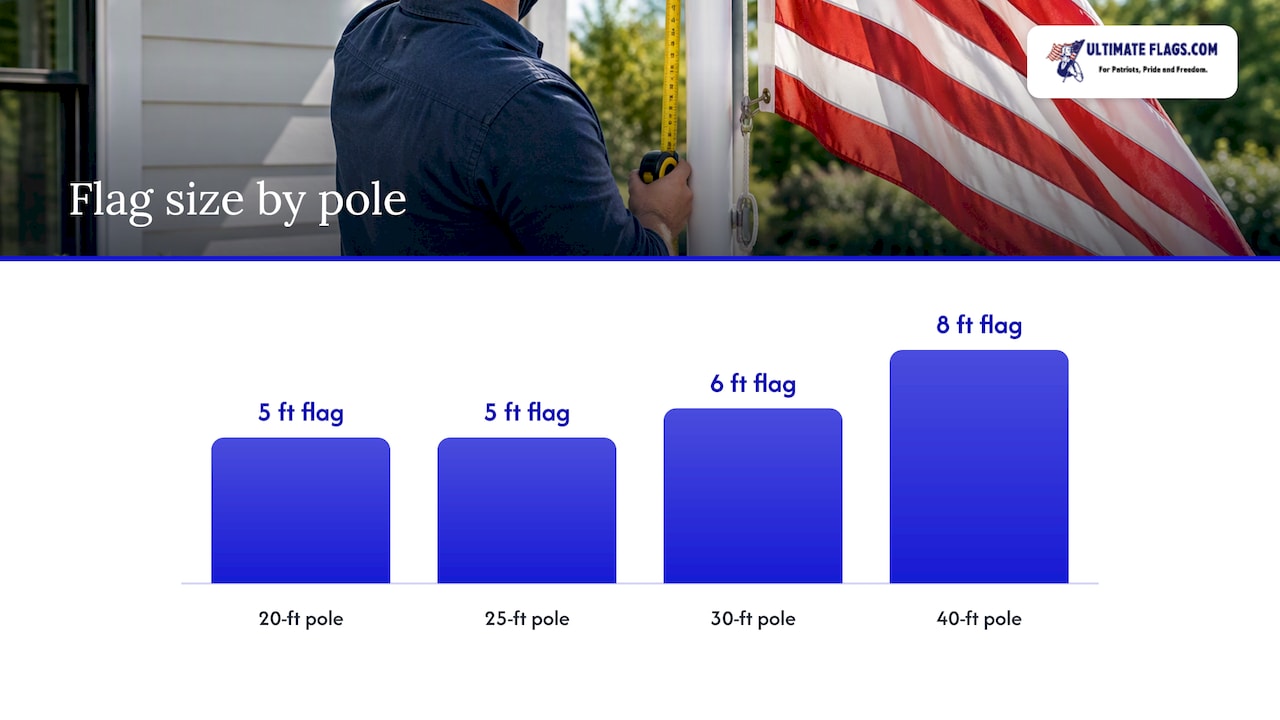
For official government use, U.S. Code Title 4 specifies the flag’s design proportions and lists authorized sizes used by executive agencies, which is why federal buildings often fly flags in exact statutory dimensions rather than the simplified ratio homeowners use.
A quick reference for common setups:
- 20-foot pole: 4×6 foot flag, the most common residential size.
- 25-foot pole: 5×8 foot flag for a fuller, more visible presence.
- 30-foot pole: 6×10 foot flag, typical for commercial properties.
- 40-foot pole: 8×12 foot flag, often seen outside businesses and public buildings.
Multi-flag setups, such as a state or military flag flown beneath the national colors, should use a proportionally smaller flag under the larger one. Indoor and parade staff flags run smaller still, typically 3×5 feet mounted on a decorative pole rather than sized to any building height.
Which flag material should you buy: nylon, polyester, or cotton?
Material determines whether your flag survives a windy spring or needs replacing by June. Each fabric earns its place depending on where and how the flag will fly.
- Nylon: lightweight with an attractive sheen, dries quickly after rain, and performs well in light to moderate wind. It’s our top pick for most residential display.
- Polyester: heavier and more wind-resistant, with better UV resistance in treated versions. Preferred for coastal properties, high-wind regions, and commercial poles that fly flags around the clock.
- Cotton: a traditional, matte finish suited to indoor and ceremonial flags. It holds color beautifully but isn’t built for sustained outdoor exposure, where moisture and sun break it down fast.
When comparing listings, look past marketing language to the specs themselves: denier (fiber thickness), weight in ounces per square yard, and whether UV-resistant coatings are mentioned. A heavier denier and a UV treatment usually justify a higher price if your flag will fly daily.
Pro Tip: If you’re unsure which material fits your climate, think about your harshest month, not your average one. A flag sized and rated for your worst wind day will outlast one chosen for a calm afternoon.
What construction details separate a durable flag from a flimsy one?
The header, stitching, and star treatment tell you more about a flag’s lifespan than the material alone. A flag can be made of premium polyester and still fail early if the header rips loose from the pole.
- Header and grommets: a double-layered canvas header with sewn-in webbing holds up far better than a thin single-ply strip, and brass or stainless grommets resist corrosion better than plated alternatives.
- Stars and stripes: embroidered or appliqued stars and sewn stripes outlast printed designs outdoors, since printed ink and dye tend to crack and fade within a season or two of sun exposure.
- What to check in photos: close-up images of the hem, the stitch lines along the stripes, and the label near the header. Vague stock photos with no close-up of these areas are a red flag worth taking seriously.
Reinforced headers and proper grommet spacing matter enough that we’ve written a full guide on flag header and grommet installation for readers setting up a new flag correctly from day one.
How do you verify a flag is genuinely “Made in USA”?
Two credentials do the heavy lifting here: FMAA certification and compliance with FTC labeling rules.
The FMAA Certification Program Requirements document requires domestic production from yarn weaving through final packaging, and certified flags must carry the official FMAA seal. That seal is the clearest shortcut available to a buyer who wants genuine confidence rather than a guess.

FMAA certification guarantees flags are made entirely in the USA, from yarn to packaging, and the certified product carries the official FMAA seal, according to the FMAA Certification Program Requirements. That standard matters because the phrase “Made in USA” alone isn’t always as airtight as it sounds.
FTC guidance on “Made in USA” claims requires that labeled products be “all or virtually all” made domestically, and the agency notes that phrases like “assembled in USA” carry a meaningfully different legal meaning, one that can still permit imported components.
Practical checks worth running before you buy:
- Look for a sewn (not printed) country-of-origin label stitched into the header.
- Ask the seller directly whether the flag is FMAA-certified, and request documentation if the answer is vague.
- Treat phrases like “proudly American” or “patriot-made” with skepticism unless they’re backed by a seal or a specific domestic-sourcing claim.
How do you match a flag to where you’ll fly it?
The right flag depends entirely on its environment, and the same flag that thrives on a sheltered porch may fail within weeks on an exposed coastline.
- Residential front porch: a 3×5 or 4×6 nylon flag suits most 20 to 25-foot poles, offering good visibility with easy care.
- Coastal or high-wind properties: heavy polyester with a reinforced header and upgraded hardware holds up against sustained gusts and salt air far better than standard nylon.
- Indoor and ceremonial displays: cotton or a high-grade polyester with sewn stars and a refined finish suits presentation settings where appearance matters more than wind resistance.
- Nautical use: marine-grade construction built to handle halyard friction and constant moisture, a different specification entirely from a flag meant for a stationary residential pole.
How should you care for a flag, and when should you replace it?
A flag’s lifespan depends almost entirely on exposure and upkeep, not just the fabric it’s made from.
- Clean periodically; we recommend a gentle 10 to 30 minute soak rather than harsh machine washing.
- Inspect the rope or halyard regularly for fraying, since a failing line can drop or shred a flag in a single storm.
- Rehem frayed edges or replace a worn header before the damage spreads; retire the flag respectfully once the fabric itself is torn or badly faded.
- Expect roughly 90 days of daily outdoor flight from standard nylon in moderate wind, longer for heavier polyester, and considerably longer for indoor cotton flags kept out of direct sun.
Why trust this flag buying guide?
We have significant experience operating an online flag store, building a catalog that spans national, state, military, and historical flags alongside the hardware that supports them. That breadth means our product pages are built around the same sizing, material, and authenticity standards covered here, from pole-matched dimensions to flagpole types and footing rules for new installations.
What buyers get wrong, and what to fix first
In years of fielding buyer questions, two mistakes stand out above the rest: choosing a flag too small for the pole, and treating the header as an afterthought instead of the first point of failure. If you fix only one thing before buying, fix the size and the header quality together. That combination returns more lifespan than any fabric upgrade alone.
— John Hough
Ready to find the right flag for your pole?
Once you know your size, material, and authenticity checklist, the next step is simple: browse our flag collections for American, state, military, and historical options built to the standards covered above.

Our catalog includes:
- American and state flags sized for residential and commercial poles.
- Military, police, and first-responder flags for service and tribute displays.
- Flagpoles and hardware, including headers and grommets sized to match your flag.
- Historical and political flags for collectors and history enthusiasts.
For readers furnishing a home alongside a new flag display, Americana-style interior doors make a fitting companion touch. If you’re still deciding between options, our guide on choosing a flag or banner walks through the same checklist in more detail.
FAQ
What size flag should I buy for a 25-foot flagpole?
A 25-foot pole typically calls for a 5×8 foot flag, following the standard quarter-pole sizing rule. Heavier winds or exposed locations may call for a slightly smaller flag in tougher polyester instead of a larger one in lighter fabric.
How can I tell if a flag is really made in the USA?
Check for the official FMAA seal and a sewn, not printed, country-of-origin label in the header, since the FMAA certification requires domestic production from yarn through packaging. The FTC’s “Made in USA” standard also requires that labeled products be “all or virtually all” made domestically, which rules out vague claims without documentation.
What’s the difference between “Made in USA” and “assembled in USA”?
“Made in USA” means the product meets the FTC’s “all or virtually all” domestic standard, while “assembled in USA” only confirms the final assembly step happened domestically and may still include imported components, according to FTC guidance. Buyers who want full domestic sourcing should look for FMAA certification specifically.
How long does an outdoor flag typically last?
Lifespan depends heavily on material and exposure, with standard nylon flags often needing replacement sooner under constant wind and sun than heavier treated polyester. Indoor cotton flags kept out of direct sunlight tend to last considerably longer since they avoid the UV and wind damage that wear down outdoor fabric.
Should I buy nylon or polyester for a coastal property?
Polyester is generally the better choice for coastal or high-wind properties because heavier, treated versions resist constant wind and salt exposure better than lighter nylon. Pairing it with a reinforced header and corrosion-resistant grommets extends its service life further.
Sources
- U.S.C. Title 4 – FLAG AND SEAL, SEAT OF GOVERNMENT, AND THE STATES
- FMAA Certification Program Requirements
- Complying with the ‘Made in USA’ Standard — FTC