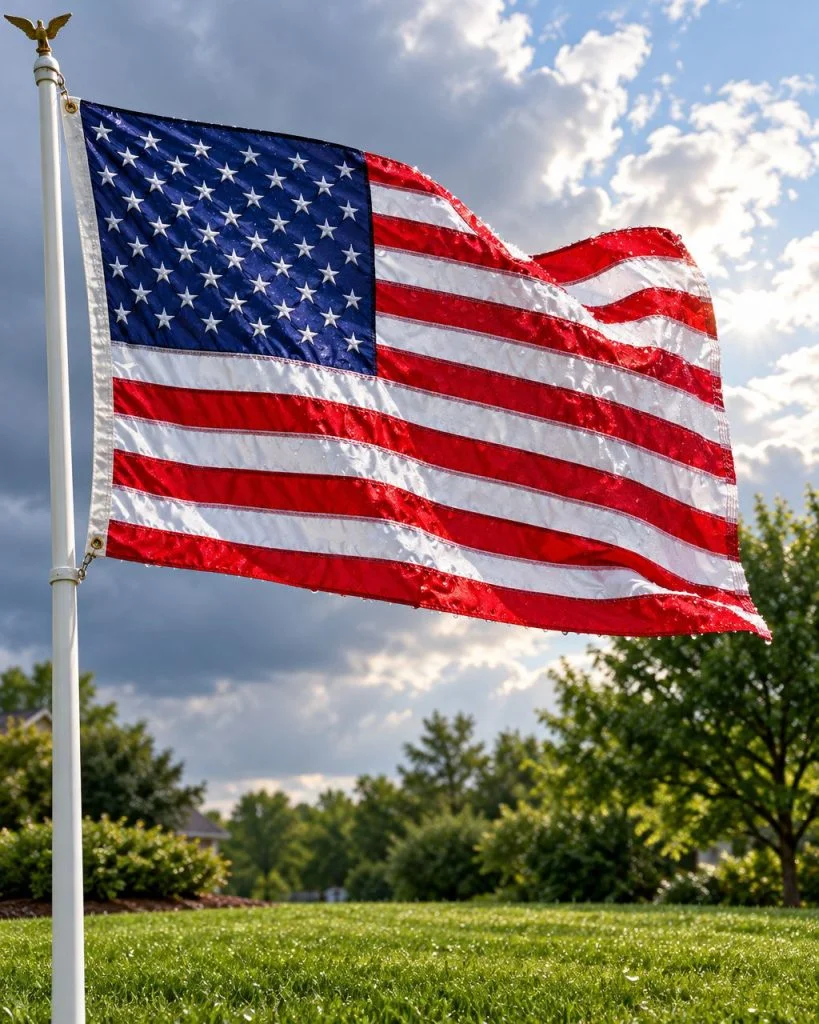
Bring a rain-soaked American flag down, let it dry completely, and wash off the grime the rain left behind — that three-part routine is the whole answer to caring for outdoor American flags after rain. The step you cannot skip is the drying: a flag folded or bunched up while damp grows mildew, and mildew eats fabric. The U.S. Flag Code, 4 U.S.C. § 6(c), allows a flag to stay out in bad weather only when it is an all-weather flag, and even a storm-rated flag deserves a fly-end check once the clouds clear.
- Take the flag down, shake off the water and let it dry fully before storing.
- Wash gently by hand in mild soap and lukewarm water; skip bleach.
- Drape the flag wide to dry — never leave it bunched against the pole.
- Check for a musty smell or specks after every multi-day wet stretch.
- In rainy regions, embroidered nylon dries fastest; 2-ply polyester handles wind and sun best.

How do you care for outdoor American flags after rain?
Work in this order — down, dry, clean, inspect, rehang. Most rain damage is really storage damage: the rain softened the cloth, and somebody folded it damp into a drawer or left it wadded on the pole. Five steps keep that from happening.
- Bring the flag down. Give it a gentle shake to throw off standing water and any twigs or leaves the storm delivered.
- Let it dry completely. Drape it over a clean railing or clothesline, or lay it flat, so air moves through the whole cloth. Spread out, not folded.
- Clean off what the rain left behind. Bird droppings, road dust and pollen stick to wet fabric and stain as they dry.
- Check for mildew. Sniff for a musty smell and look for gray or greenish specks, especially along the folds and the fly end.
- Inspect and rehang. Look over the stitching, grommets and fly end, then raise it again on a dry day.

Why drying matters more than the rain itself
Rainwater itself rarely hurts a flag. What hurts is the hours afterward: damp cloth folded against damp cloth holds moisture for days, and that is exactly the conditions mildew needs. Once mildew takes hold, the musty smell never fully washes out and the fabric underneath is already weakened.
Fabric decides how long this takes. Nylon absorbs very little water, so an embroidered nylon flag dries in a few hours on a breezy day. A 2-ply polyester flag is heavier and holds more water, so it needs more time spread out. Cotton blends hold water the longest of all, which is one reason cotton is a fair-weather and indoor display fabric rather than a permanent outdoor one.
The practical rule for 2026: never store a flag you cannot honestly call bone-dry. If you would not fold it and put it away, do not fold it and put it away.
How to clean an American flag after rain
Hand washing is the safe default for every outdoor flag, and it takes about fifteen minutes of actual work.
- Fill a basin or bathtub with lukewarm water and a small amount of mild soap — dish soap or a gentle laundry detergent both work.
- Submerge the flag and swish it gently for a few minutes, then let stubborn spots soak briefly.
- Rub soiled areas with your fingers or a soft cloth. Bird droppings and mud usually lift without scrubbing.
- Rinse in clean water until no suds remain.
- Air dry flat or draped, as above. Never twist or wring a flag — wringing stresses seams and distorts the fly end.
A washing machine is acceptable only when the flag's care instructions allow it, ideally in a mesh bag on the gentle cycle, and always air-dried afterward. Skip chlorine bleach entirely: it weakens fibers and can yellow the white stripes you are trying to brighten. Wash a permanently displayed flag a couple of times a year — grime holds moisture against the dye, and a clean flag keeps its color noticeably longer.
Mildew after rain: what to look for and what to do
The nose knows first. A flag that smells musty after a wet week is growing mildew whether or not you can see it. Visible mildew shows up as gray, green or black specks, most often along fold lines and the hem where moisture sat longest.
For early mildew, the same gentle wash above plus a day drying in open sunlight usually handles it — sunlight is a natural mildew killer. Work mild soap into the affected spots, rinse well, and dry spread out rather than folded. Cotton flags deserve extra gentleness here, because aggressive scrubbing can permanently damage the weave.
Mildew that survives a wash and a sunny dry-down has rooted into the fibers. At that point the flag is on borrowed time; plan a replacement and store the next one dry from the start.
The mistake that ruins more flags than the rain does
Leaving a soaked flag wadded on the pole. Wet nylon in the sun with no air moving through it can develop water stains and uneven fading within a day or two, and the creases where the wet fabric pressed against itself become the weak points that fray first. If a storm hits while you are away, the flag is not ruined — but the first thing you do when you get home is spread it out to dry, not leave it hanging in its own wad waiting for the next shower.

When rain should change what you buy
If a flag spends every wet season looking bedraggled, the fabric may simply be mismatched to your weather. Here is how the common constructions behave once the rain starts:
| Fabric | Best for | After-rain behavior | Watch out for |
|---|---|---|---|
| Embroidered nylon | Humid and rainy regions, light wind | Sheds water, dries in hours | Wears faster in hard wind |
| 2-ply polyester | Open, windy, full-sun sites | Heavier when wet, dries slower | Needs a real breeze to fly |
| Printed polyester or nylon | Seasonal and part-time display | Fine when taken in between uses | Thinnest cloth; fades first |
| Cotton blends | Indoor and fair-weather display | Holds water longest | Not for permanent outdoor use |
For a 2026 yard in the Gulf Coast states, the Pacific Northwest or anywhere afternoon storms are routine, the embroidered nylon above is the low-drama choice: it dries before mildew can get started. In a windy plains or coastal yard, accept the slower dry-down of 2-ply polyester in exchange for its longer life in the weather you actually have. For sizing — matching flag dimensions to a home pole — the checklist in How do you choose outdoor American flags for your home? covers pole heights and clearances in detail.
The decision to fly or lower during a storm is separate from fabric, and the rain-day rules in What do you do with an American flag on a rainy day? walk through the Flag Code side of that question.
How do you dry a wet American flag fast?
Air only. Drape the flag as wide as the cloth will go — over two points rather than one if you have them — in a spot with a breeze, and most nylon flags are dry within a few hours. Keep it out of a hot dryer: high heat can damage the cloth and the stitching, and a dryer drum tangles a flag into exactly the kind of wad you are trying to avoid.
Should I bring my flag inside every time it rains?
Not if it is a genuine all-weather flag — the Flag Code's bad-weather allowance exists for nylon and polyester outdoor flags, which are built to get wet. Do bring it in for severe storms, when the wind load or lightning risk is the bigger problem, and get in the habit of taking any flag down for the season's first hard freeze if you leave it up year-round. The habit that matters is the post-rain one: dry it before it is stored.
How do I keep my outdoor flag from getting musty?
Dry fully, then store in a breathable container. A cotton pillowcase or a ventilated storage bag beats an airtight plastic bin, which traps any residual moisture against the fabric. Wash the flag twice a year, and always after a visibly dirty or droppings-hit week, so the grime that feeds mildew never gets a running start.
When you are ready to Shop Ultimate Flags, the embroidered nylon and 2-ply polyester outdoor flags are the two constructions that handle repeat rain best, and both come in the standard home sizes.
FAQ
What should I do with my American flag after it rains?
Bring it down, shake off the water and let it dry completely before folding or storing. Wash off any bird droppings, dust or pollen the wet fabric picked up, then check the fly end and seams before rehanging.
Can an American flag stay up in the rain?
Under the U.S. Flag Code, 4 U.S.C. § 6(c), a flag should not be displayed in bad weather unless it is an all-weather flag. Outdoor nylon and polyester flags generally qualify, but no flag should ride out a severe storm.
How do I get water stains out of an American flag?
Hand wash the flag in lukewarm water with mild soap, working the stained areas gently with your fingers, then rinse and air dry flat. Water stains are usually mineral and grime deposits, which a gentle wash lifts.
How long does a wet flag take to dry?
An embroidered nylon flag dries in a few hours on a breezy day when draped wide. Heavier 2-ply polyester takes longer, and cotton takes longest of all — which is why cotton is a fair-weather fabric.
Can I put a wet American flag in the dryer?
No. Dryer heat can damage the cloth and stitching, and the tumbling tangles the flag. Air dry it draped wide over a railing or laid flat instead.
How do I get the musty smell out of a flag?
Wash it gently with mild soap, then dry it spread out in open sunlight, which kills mildew. A smell that survives a wash and a sunny dry-down means mildew has rooted in the fibers and the flag is ready for replacement.
What is the best flag fabric for a rainy climate?
Embroidered nylon is the best choice for rainy climates because it absorbs little water and dries fast, before mildew can start. 2-ply polyester lasts longer in wind and sun but dries more slowly after each storm.
One last thing
The most valuable thirty seconds after any storm is the fly-end check. The fly end takes every gust and every soaked-then-snapping cycle, and a fray you catch today is a five-minute trim; a fray you notice next month has already run a foot up the stripe. Ultimate Flags buyers who dry, wash and inspect on this schedule routinely get seasons of extra life from the same flag — and if your flag is already past that point, a fresh one costs less than the winter of mildew you are currently storing in the closet.
Related guides