Posted on

6 Striking Facts About Pirate Flags You Didn’t Know

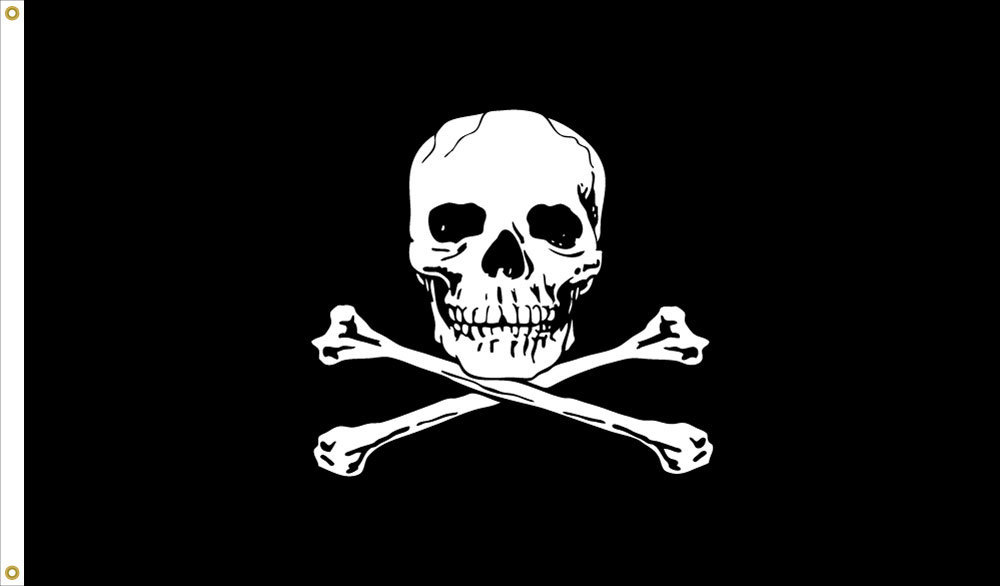
Pirates used flags as a psychological weapon. They were meant to strike fear into the hearts of sailors so that they surrender without much resistance. When we think of a pirate flag we imagine a black flag with a white skull and bones. This flag is known as the Jolly Rogers. The skulls were meant to warn them of certain death if they didn’t surrender in time. It was indeed the most common flag used by pirates. But if you think that it was the only flag used by pirates you’d be wrong. Let’s look at 6 striking facts about the pirate flag that you probably didn’t know.

#1Famous Pirates Didn’t Use the Skull & Bones Flag

Flags were like brand logos for the pirates. Famous pirates didn’t use the common Jolly Roger flag with skull and bones (with the exception of Bartholomew Roberts who used it before it became mainstream). The pirates used flags with images of the captain toasting, pierced heart, and even hourglass. One of the most famous pirates, Blackbeard, used a flag which depicted a skeleton piercing a heart with a spear while raising a toast to the devil. Pretty scary flag if you ask me.

#2No Flag from the Golden Age of Piracy Survived

The golden age of piracy spans from the 1650s to the 1730s. During this period piracy in the western world came to the spotlight. The English and the French had set up colonies across many continents which meant they had ships full of cargo sailing across the high seas. Pirates attacked these merchant ships for the bounty and were pretty successful at it. Legends and myth grew around the most famous pirates of this era. Unfortunately, none of these famous pirates were ever caught sailing with their flags. In fact, we don’t even have a drawing of the pirate flag of this era by an actual eyewitness.

#3Pirates used National Flag

Flags were primarily used to put psychological pressure on the victims. Do you know what is scarier than being attacked by a pirate? Being attacked by a nation’s naval vessel. Many pirates used British and French flags to intimidate merchant ships into surrendering without a fight. Using a national flag also helped them get out of some pretty sticky situations. A famous pirate Bartholomew Roberts once fooled the French by Flying a Duch Flag and pretending to be a slave ship. The French sent smaller ships with lots of money to trade slaves with this Duch ship which Robert’s happily looted.

#4Origin of Pirate Flag

Pirate flag is said to have originated from the plain black flag that ships would fly to warn another to surrender at once. If the other ship didn’t surrender in time a red flag would take the place of the black. This meant that no mercy would be shown to the crew. These flags were first used by French and English ships. Since most of the pirates of the golden age were mostly Ex-Naval men, they might have adopted the black flag and added their symbols to it.

#5Pirate Flag was Not always Raised

If you were the captain of a merchant ship you probably wouldn’t go near anything that had a black flag raised. That’s why pirates didn’t use their flags out in the open seas. The pirate flag was raised only when they were close enough to their victim that the ships couldn’t run for escape. They had to surprise the merchant ships by sneaking up close. Once they were close they would raise the flag to intimidate the crew to an early surrender.

#6 Pirates Sewed the Flag on Their OwnA pirate couldn’t just walk into a market and buy a pirate flag. There were no pirate flags for sale even in the few nations where piracy was legal. So, the captain would have to ask one of his crew member who was good with a needle to sew a scary pirate flag for him. Who knew that apart from being a bunch the greedy and unsanitary people the pirates also had sick sewing skills?


Thanks for reading! We hope you enjoyed our post. Please share with all your fellow patriots. Brought to you by: Ultimate Flags
Posted on

7 Facts About the Confederate Flag that Prove It’s Not About Racism

Sometimes, history doesn’t always remember things in a positive light. Events, famous quotes, and symbols of history can be remembered fondly or with contempt. Some things in American history deserve healthy skepticism, such as the Vietnam War, Dennis Rodman, capri pants, and, let’s be honest, most fashion choices of the 1980s.


However, some things in history get an undeserved bad rap. In these cases, scholars and the public might paint a picture of the event or symbol that is unfair. In these cases, purposefully or accidentally, history misunderstands the true meaning of what happened.


Perhaps the biggest example of American history misunderstood is the Confederate flag. Critics and fans alike have long used the flag to symbolize racism, hatred and oppression. However, the Confederate flag isn’t actually about any of these things. The next time you see Confederate flags for sale, remember these seven facts that prove the Confederate flag isn’t about racism:


1. Most southern whites didn’t have slaves.

Contrary to popular opinion, owning slaves was not the norm in the south. For the most part, slaves were owned by the rich, and there were plenty of people in the south who vehemently opposed the concept. Most southerners wouldn’t have signed on to go to war for something they didn’t support.


2. It flew over the South Carolina capitol.

South Carolina found it acceptable to display the Confederate flag on its grounds for fifty-four years. Supporters said that the flag stood for tradition, not for hate. To this day, the flag remains at the nearby Confederate Relic Room and Military Museum.


3. It’s still on the Mississippi state flag.

Even though South Carolina bowed to loud, public pressure and removed the flag from their state capitol, Mississippi still uses the Confederate battle flag as part of its state flag. In fact, in 2001, efforts to change the flag failed. The state’s pledge to the flag says that the flag is about the state’s history and achievements. School children in the state learn both the pledge to the Mississippi flag and the pledge to the United States flag.


4. Most Americans don’t associate the flag with racism.

In 2015, CNN investigated the matter of how people perceive the flag. The results surprised the critics. The survey found that more than half of Americans don’t think the flag is racist. Instead, they see the flag as a symbol of Southern American pride. The results of the 2015 study were virtually unchanged from a previous study conducted in 2000.


5. The flag went through several versions.

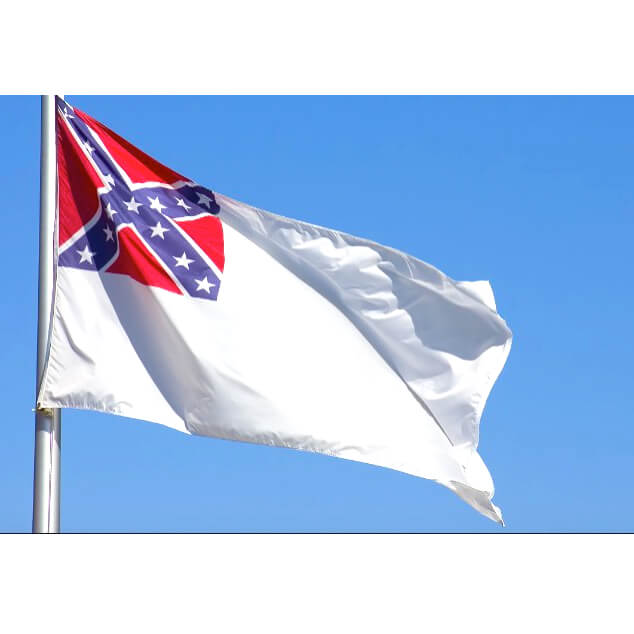
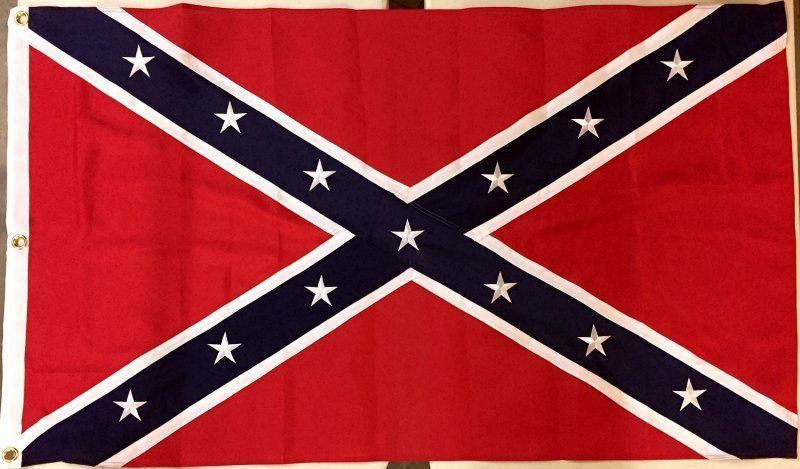
What you see today associated with the Confederate flag isn’t exactly anything that was ever an official Confederate flag. The Confederate battle flag was square, not the rectangular shape you’re used to seeing today. Other Confederate national flags looked completely different, but some people thought they looked too similar to the Stars and Stripes.


6. The flag stood for resistance to federal government.

In 1948, the Dixiecrat party adopted the Confederate flag as its party flag. The Dixiecrat party stood for segregationalism. The short-lived party chose the flag as its symbol because the party stood for the state’s rights principles that the Confederate states stood for in the first place.


7. The Civil War was complicated.

There was no single cause of the civil war. Lots of factors were in play, including state’s rights, taxes, tariffs and outright political power. The leaders of both the north and south struggled with all of these issues, and neither group was happy with the other when the Civil War ultimately seemed like the only way to resolve the many conflicts.


Thanks for reading! We hope you enjoyed our post. Please share with all your fellow patriots. Brought to you by: Ultimate Flags
Posted on

Top 8 Flags That Share a Similar Design

If you watch the Olympics, the World Cup, or other international sporting events, the issue of flags having similar designs and causing some sort of confusion isn’t new. The big overlap in the design and colors makes their distinction very hard at first glance. Whether you want to make flags for sale, or you just want to own one from a given country, it’s important to understand the distinction each has. Below is a list of nine flags that are similar in their design:

1. Romania and Chad

These are the world’s most closely matched flags. They are almost identical in their size and design, it’s only a slight difference that is noted in the shades of blue-yellow and red vertical stripes when examined closely. Andorra has a similar flag but it has a coat of arms placed at its center.

2. Monaco and Indonesia

The two flags are designed with two horizontal stripes, only that the one for Indonesia is longer. Both have the red stripe running over the white one. The one close to these is that of Poland but its white stripe runs over the red stripe.

3. Mali and Senegal

Both flags are not only similar in the design of the green, yellow and red vertical stripes but also their dimensions. To differentiate them, you will realize a slight difference in the shade of their colors. In addition, the flag of Senegal has a green star in its central stripe. Guinea’s flag is similar to these two only that it has its stripes reversed to red, yellow then green.

4. Australia and New Zealand

They are both designed based on the British Blue Ensign. This is a blue field with a top inner corner or a Union Jack in the Carton. The version of Southern Cross constellation featured on them is so stylized. Despite the similarity, these flags have significant differences. The Australia’s constellation features five white seven-pointed stars while that of New Zealand, four red-and-white five-pointed stars. Also, Australia has an additional sixth larger commonwealth star. The shade of their colors (red and blue) also differ.

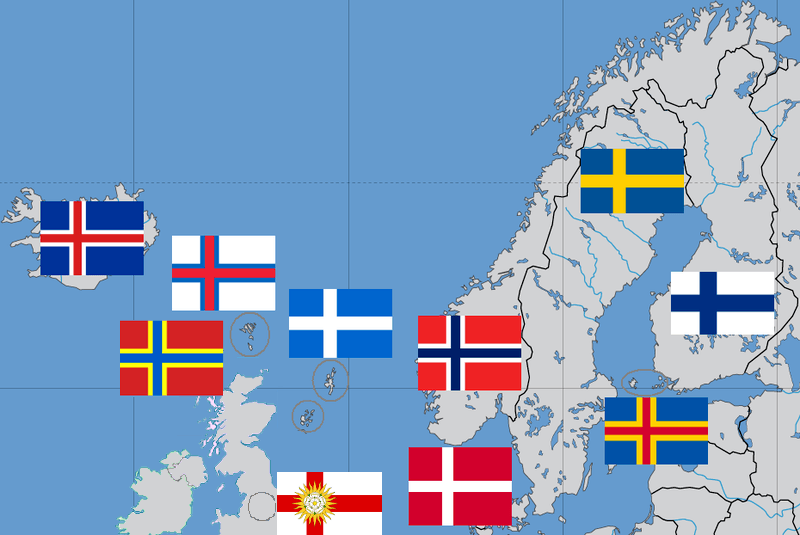
5. Iceland and Norway

These flags are completely identical in their design only that their colors are reversed. The one for Norway is designed with a white Scandinavian Cross and a red field while that of Iceland features a white Scandinavian Cross with a blue field. Of course, that’s to say nothing about most of Northern Europe.

6. Colombia, Venezuela and Ecuador

Their yellow-blue and red horizontal stripes are similar. Ecuador’s and Colombia’s national flags portray unequal stripes with the yellow stripe being relatively larger in size. Venezuela’s stripes are equal in size in addition to their national coat of arms placed in its upper hoist corner and an arc of stars placed at its center. Also the Ecuadorian national flag has its national coat of arms placed at the flag’s center.

7. Côte d’Ivoire and Ireland

Both flags share a similar design of vertical stripes of green-white and orange. The only difference is that the green stripe on the Irish national flag is on its hoist side.

8. The Netherlands and Luxembourg

Both flags are designed with horizontal stripes of red-white and blue. The only difference is that that of Luxembourg uses a different shade of blue and is slightly longer.

Most of these relationships in their design and color choice could be attributed to the history of the respective countries and their proximity to each other. That aside, their resemblance is really confusing in many instances and if you are making flags for sale, remember to incorporate the finer details discussed above.


Thanks for reading! We hope you enjoyed our post. Please share with all your fellow patriots. Brought to you by: Ultimate Flags
Posted on

8 Historical Facts About The US Flag You Didn’t Know

Historical Facts About The US Flag You Didn’t Know

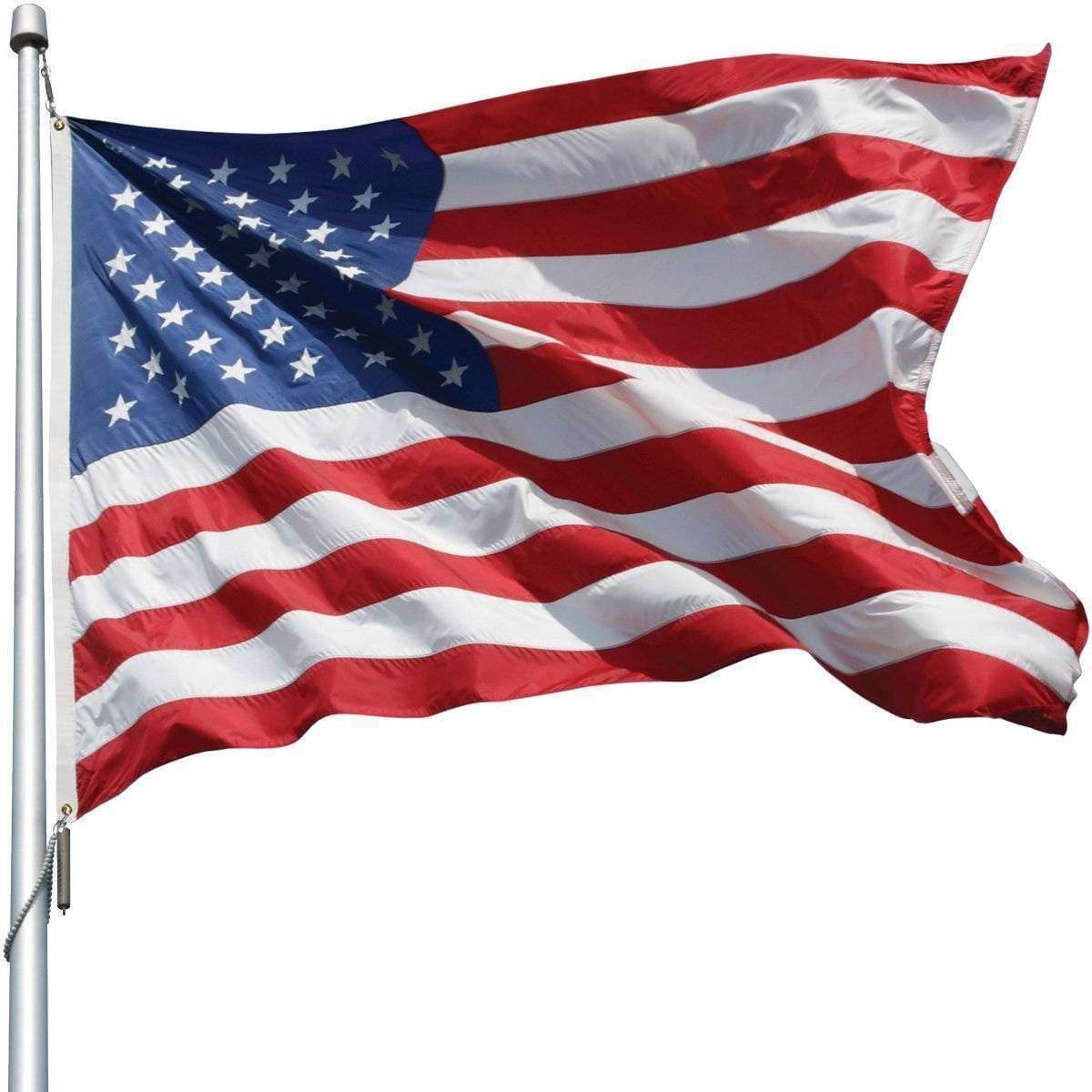
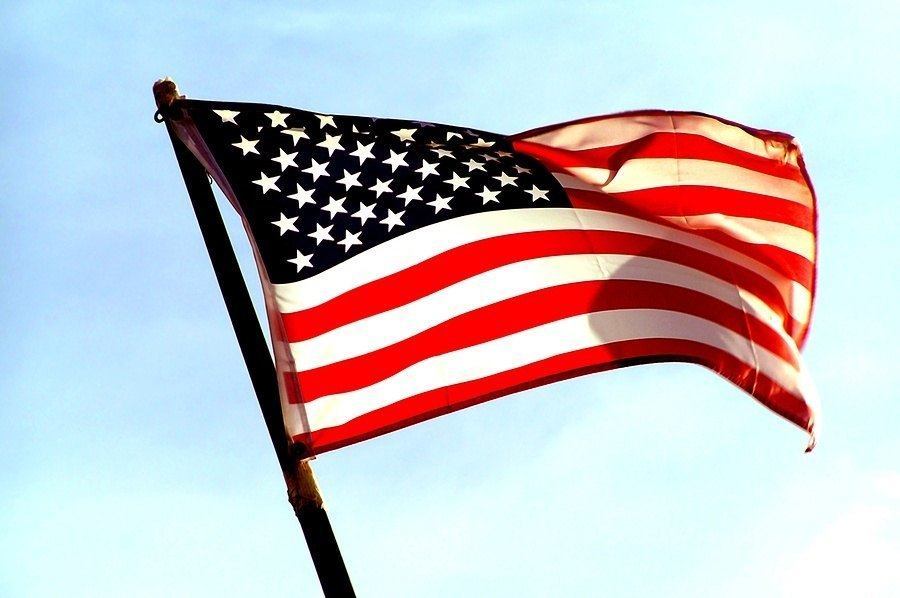
The American flag has been a strong patriotic symbol throughout history. Although you may know the pledge to our beloved flag by heart, there are some intriguing facts about the history and meaning of this powerful flag that may come as a total surprise. Every June 14th is the national Flag Day, where we get to honor the making of our American flag. Here are 8 fascinating Historical Facts about the US Flag you probably didn’t know.

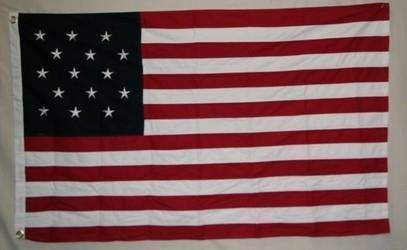
Star Spangled Banner1. The First Flag. Many historical researchers and scholars have credited Francis Hopkinson with the design of the USA Flag and being responsible for the Great Seal of the USA. The famous “Star Spangled Banner” which has 15 stars and stripes, was sewn by Mary Young Pickersgill. The flag was used in Battle of Baltimore during the war of 1812. This flag also inspired Francis Scott to write a poem that would later become the National Anthem.

2. A Star for Every Colony. There were 27 versions of the official American flag. The 1st one was made in 1777 that had 13 stripes with 13 stripes. This represented the 13 original colonies. When the union grew with the addition of Vermont and Kentucky, the flag added two more stars. It stayed this way until 1818. Lawmakers later decided to honor a new state with a star to the flag each time it joined the union.

3. The meaning of the Red, White & Blue Colors? The importance of the colors on the American flag was retrofitted from the explanation for the great seal provided by Charles Thomson. Thomson was the Secretary of Congress back in 1782. White would signify innocence and purity, Red signifies valor and hardiness, while Blue was going to be the color of the Chief which signifies perseverance, vigilance, and justice.

4. It Has Been A Work In Progress. Before settling on the current beautiful flag, there were quite a number of designs that were potentially capable of becoming the National Flag. As earlier said, there have been 27 official versions of the flag where most of the alterations were due to the adding of new states to the union. The current flag design is from July 4th, 1960 when all the 50 states were added to the union.

5. The First Flag Day. The national first flag day celebrations were not even celebrated at the White House or even on the local streets but it was in a local classroom. On June 14th, 1885, it is said a 19 year old school teacher held the first national Flag Day celebration when he gave out an assignment for essays about the flag and its importance so as to commemorate its adoption on June 14th, 1777.

parade6. The Right Way of Viewing the Flag. During a parade or review, when the flag is out for display. Everyone, with the exception of the police is supposed to face the American flag with the right arm over the heart, saying the flag laws. This is the same when one witnesses the national flag raised as a part of the ceremony.

7. The Designer of Our Current Flag. The American flag is unarguably one of the most beautiful flags ever designed in the world. The current flag was designed in 1958 with the 50 stars and 13 stripes by a high school student Robert Heft in Ohio. Mind you this was a sewing project where Robert was awarded a B- for his project. However, when President Dwight D. Eisenhower came across it, he selected it out of 1,500 proposed flags. Robert’s teacher would later change his grade to an A in the unexpected event that his design won the contest.

8. The First Flag To The Moon. On July 1969, the 1st American flag was planted on the moon by Neil Armstrong. This was one result of the Apollo 11 mission. This was a great achievement for the country as no man had ever done such a deed. After that, there were 5 more Apollo landings to the moon. This led to more flags being planted on the lunar surface.

If you would like to fly this beautiful American Flag, go here: https://ultimateflags.com

We have over 10,000 flag designs available.  No matter what your heart desires, we can help you fly proudly.


Thanks for reading! We hope you enjoyed our post. Please share with all your fellow patriots. Brought to you by: Ultimate Flags
Posted on

Cruelty: Sherman in Atlanta

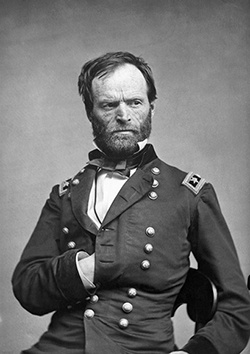
The words below are not gentle. I will keep this short, but be warned: if you think of General William T. Sherman as a heroic man, you may not like what you learn.

Atlanta is now a prosperous city that looks to the future. After all, its symbol is a phoenix rising from the ashes, with the Latin motto, Resurgens, meaning “Rising again.”

But the ghosts of 1864 still talk, so let me tell you why there will never be a statue of Sherman in Atlanta.

Many know of Sherman’s “March to the Sea.” Fewer know that his Special Field Orders No. 120 changed the way war was fought. Previously, civilians and their homes were officially off limits.  Cities and personal possessions were generally respected. Not after Sherman’s order. Here is part of it:

“To army corps commanders alone is intrusted the power to destroy mills, houses, cotton-gins, etc.; and for them this general principle is laid down: In districts and neighborhoods where the army is unmolested, no destruction of each property should be permitted; but should guerrillas or bushwhackers molest our march, or should the inhabitants burn bridges, obstruct roads or otherwise manifest local hostility, then army commanders should order and enforce a devastation more or less relentless, according to the measure of such hostility.”

“Otherwise manifest hostility?”  “Enforce a devastation more or less relentless, according to the measure of such hostility?” How does one interpret that? Perhaps this will clarify Sherman’s intentions, from one of his 1864 telegrams to Ulysees S. Grant:

“Until we can repopulate Georgia it is useless to occupy it, but utter destruction of its roads, houses, and people will cripple their military resources. … I can make the march and make Georgia howl.”

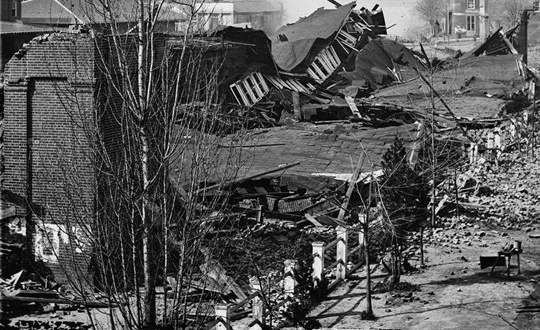
sherman-depot

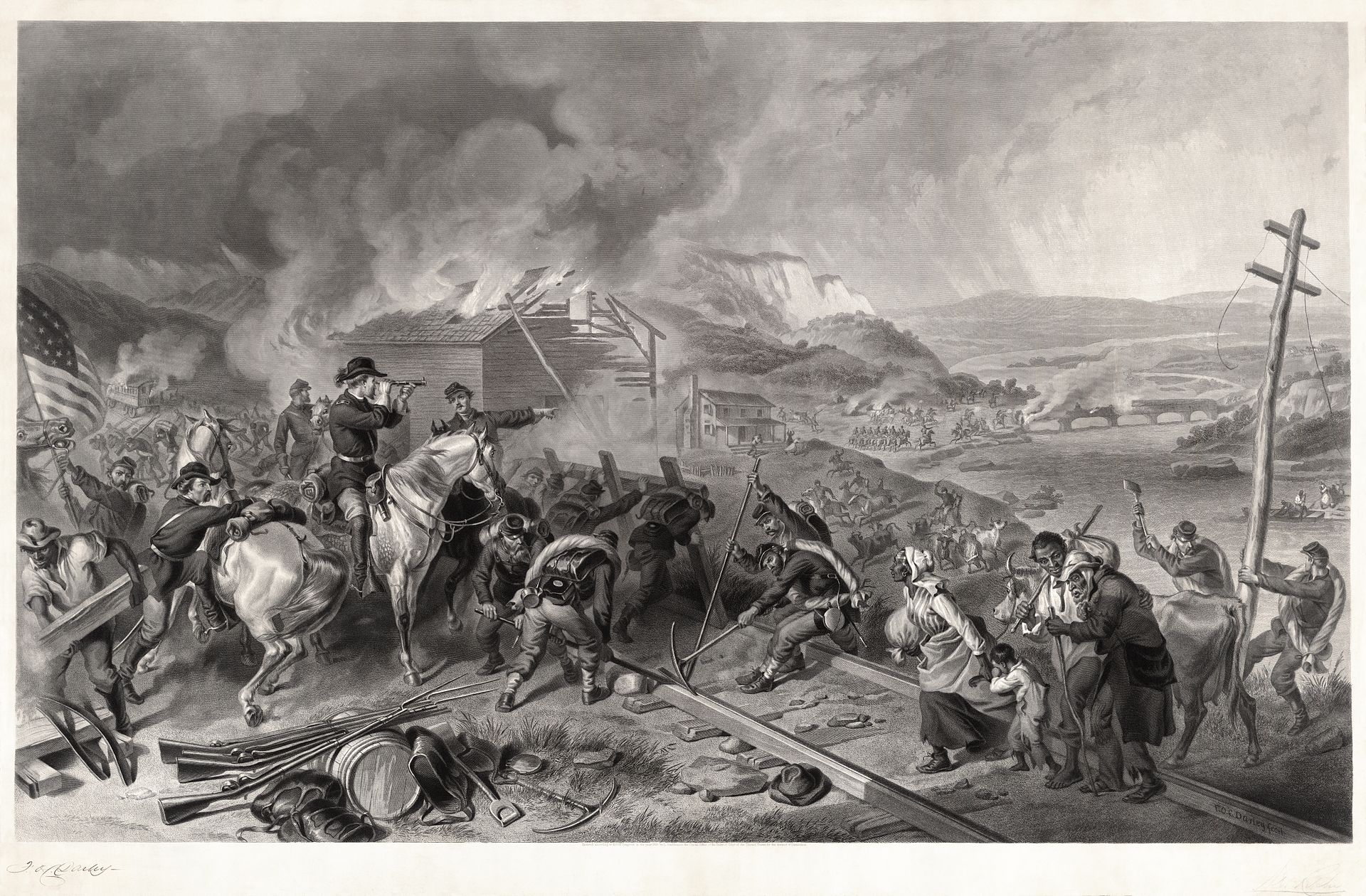
A Scene in Atlanta, after Sherman 1864

Grant was already engaged on a campaign of destroying Southern supplies, including food, water, clothing, and transportation. But some historians claim that Special Field Orders No. 120 began a new and “modern” era of warfare, one that has resulted in the loss of countless millions of civilian lives. I would not go so far as to say Sherman alone started it, but his tactics were studied and acted on by later military leaders, even today.

One of Sherman’s officers, John Acheson, helps us understand the effects of Sherman’s “march.” The following quotations are from Acheson’s letters to his parents:

“As for the wealthy planters… nobody sympathized with them in the desolation of their homes, but scores of poor families have I seen, who had had no hand in bringing the present trouble upon the country, left without a mouthful to eat, and not knowing where to turn to get it, or what in the world to do to relive their distress.”

“I have many times heard mothers say that they did not care for themselves if they could only get something for their children to eat; and hundreds of them have come to the General along the march and begged him to let them go with the Army, for if left behind they would surely starve.

“But it is not from legitimate foraging alone that the people suffer. Outrages of every description are committed by the stragglers from our columns. These men know that they can wander off from the column, enter houses and commit whatever depredations they choose without any fear of detection. Dwellings are pillaged – the inhabitants threatened with death, unless they bring forth their money and other hidden valuables; rings and earrings taken by force from persons of women; and outrages of every description perpetrated by men who have slipped away from their commands.”

No doubt things were made worse by some soldiers acting without orders. But once leaders start to act with cruelty, it is only a short trip to “outrages of every description.”

Sherman wrote a two-volume memoir after the war.  It contains a number of his orders from the war. It does not contain No. 12.  It most certainly does not contain his telegram to Grant.  However, I did find things like these:

“…to make a circle of desolation around Atlanta…”

“ Heavy fires in Atlanta all day, caused by our artillery.”

“I peremptorily required that all the citizens and families resident in Atlanta should go away.”

“ We want all the houses of Atlanta for military storage and occupation.”

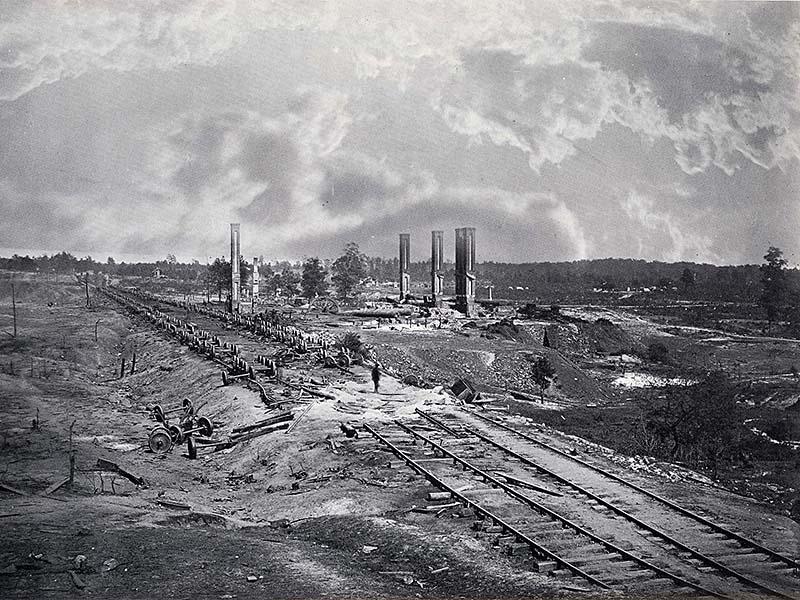
sherman-ruins-ii

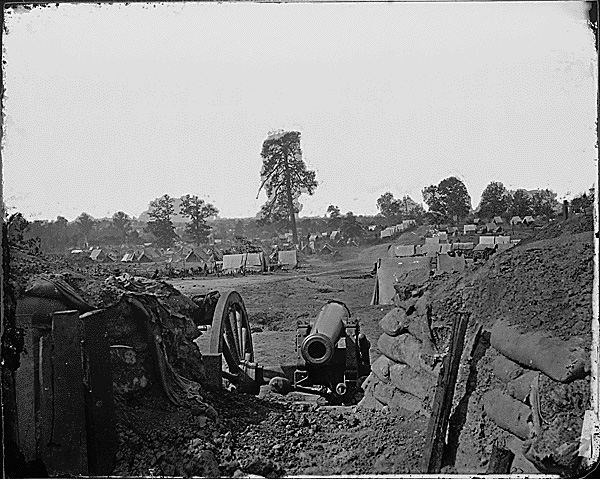
A Scene Outside Atlanta, 1864

Ten year-old Carrie Berry was in Atlanta while Sherman’s army shelled the city. In her diary she wrote of the weeks of shelling.  On August 23rd she wrote,  “There is a fire in town nearly every day. I get so tired of being housed up all the time. The shells get worse and worse every day. O that something would stop them.” Carrie was nearly killed by the artillery, but she survived, only to be witness to the burning.  On November 15th she wrote,  “This has been a dreadful day. Things have been burning all around us. We dread to night because we do not know what moment that they will set our house on fire.”

Texas General Hood stood against Sherman in Atlanta.  Hood had been commanding men since the beginning of the war, had lost one leg and the use of an arm from battle injuries.  He was no stranger to the brutality of war.  While negotiating the treatment of civilians in Atlanta, Hood wrote to Sherman:

“And now, sir, permit me to say that the unprecedented measure you propose transcends, in studied and ingenious cruelty, all acts ever before brought to my attention in the dark history of war.”

His scathing messages to Sherman reveal a lot. In one of them he wrote:

“…there are a hundred thousand witnesses that you fired into the habitations of women and children for weeks, firing far above and miles beyond my line of defense.”

Hood, a hardened veteran, recognized the cold glint of evil.

Sherman achieved the status of war hero after the war, but not in the lands where he slashed and burned.

Thanks for reading. Please share our posts with your friends and family so they too can learn more about Southern Heritage and History.

Brought to you by: Ultimate Flags

Posted on

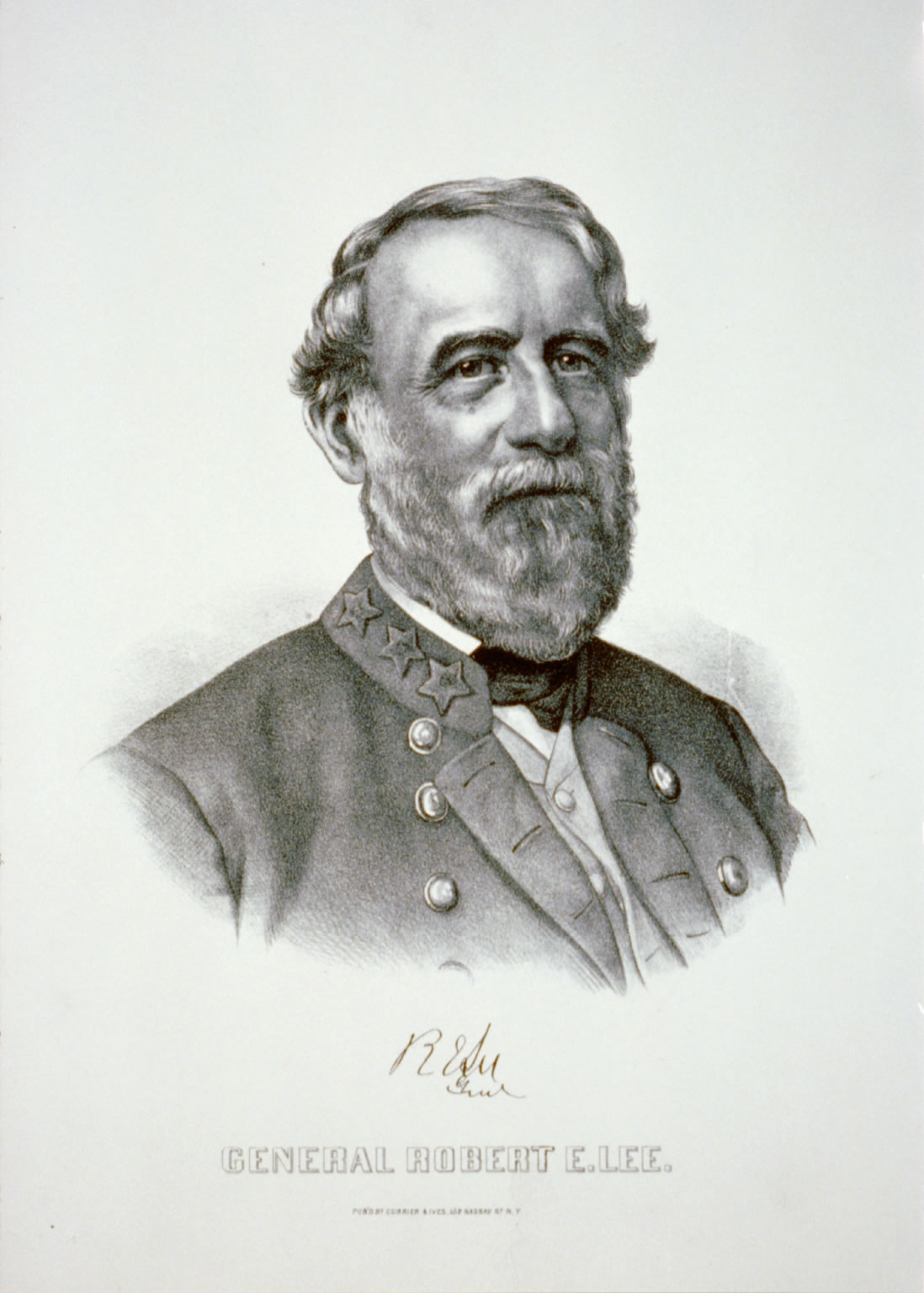
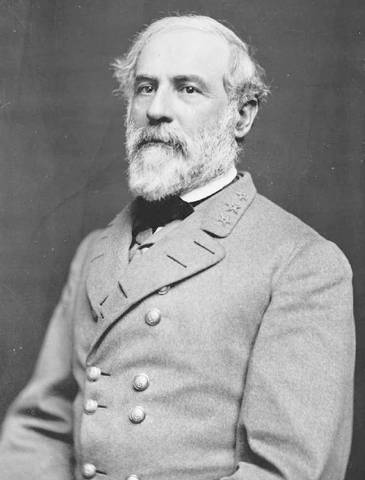
“Go back, General Lee! Go back…”

It was during Lee’s 34th year as a military officer.  The date was May 6, 1864, and the Battle of The Wilderness was raging.  The Wilderness is an area of dense forest in northeast Virginia.  It was there that Lee had an army of 40,000, facing a Union force of 70,000.

A Texas brigade was advancing forward in a counter-attack.  Lee was there as they passed, atop his iron gray horse Traveller.  Present with Lee was one of his aides, Colonel C.S. Venable, whose description we have today:

“The Texans cheered lustily… Much moved by the greeting of these men and their magnificent behavior, General Lee spurred his horse through an opening in the trenches and followed close on their line as it moved rapidly forward. The men did not perceive that he was going with them until they had advanced some distance in the charge. When they recognized him, there came from the entire line as it rushed on the cry, ‘Go back, General Lee! Go back…  We won’t go on less you go back.’ “

Lee did not turn back, but Colonel Venable intervened:

“Just then I turned his attention to General Longstreet, whom he had been seeking, and who sat on his horse on a knoll to the right of the Texans directing the attack of his divisions.  He yielded with evident reluctance to the entreaties of his men, and rode up to Longstreet’s position.  With the first opportunity I informed General Longstreet of what had just happened, and he with affectionate bluntness urged General Lee to go farther back.”

It was fortunate for Lee’s army that the general did turn and ride to Longstreet.  The Texans “went forward in their charge and did well their duty.  They were eight hundred strong, and lost half their number killed and wounded on that bloody day.”

Civil War generals were not known for leading from the rear, and suffered injury and death at a greater rate than the average soldier. In fact, later that same day General Longstreet was shot while riding in front of his advancing line. Only a year earlier General Stonewall Jackson had been killed, three miles from the same spot.

Not a week later Lee’s army was in another battle.  His men in severe trouble, Lee advanced to the front, where General Gordon’s troops were preparing to charge. Gordon’s men also rushed to protect their commander.  We have this report from General Long:

” ‘No! No! General Lee to the rear! General Lee to the rear!’ cried the men. ‘We will drive them back if General Lee will only go to General Robert E. Leethe rear.’ As Lee retired, Gordon put himself at the head of his division and cried out in his ringing voice, ‘Forward! Charge! And remember your promise to General Lee!’ The charge that followed was fierce….and an impending disaster converted into a brilliant victory.”

General Dwight Eisenhower, a man who ultimately wore five stars on his uniform, wrote:  “From deep conviction I simply say this: a nation of men of Lee’s caliber would be unconquerable in spirit and soul.”  After Eisenhower became President of the United States he kept a photo of Lee on the wall of his Oval Office in the White House.

General lee headquarters flags for sale

The General Robert E. Lee Headquarters Flag

in Premium Cotton – Get Yours Here!

Brought to you by Ultimate Flags where EVERY flag tells a story.  We hope you enjoyed our post.  Please share on social media with all your fellow patriots and friends.

Or View Entire Lee Collection Here!

Posted on

Irish Rebels of the Georgia 24th Regiment

A lot of Confederate companies called themselves Irish at the beginning of the war, but there were only two Confederate Irish regiments: the 10th Tennessee Volunteers, and the 24th Georgia Volunteers.  I have written about the 10th Tennessee in another article, known for using the “Sons of Erin” flag.    The 24th Georgia is the more distinguished and famous regiment, one of the finest in the Confederate Army.

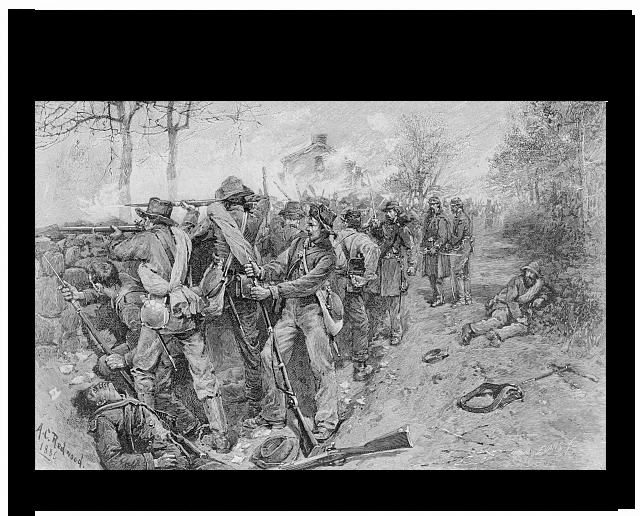
The 24th Georgia Infantry Regiment was mobilized in 1861, formed with North Georgia men, mostly of Irish descent.  It saw tough action all the way to Appomattox.  Some its battles have names you may know:  Gettysburg, Wilderness, Spotsylvania, Cold Harbor. There were others, of course, totaling over 50 engagements, but one that must be mentioned is Fredericksburg, where the most famous Irish Rebel regiment clashed with the most famous Irish Union Regiment, the 69th New York Infantry.

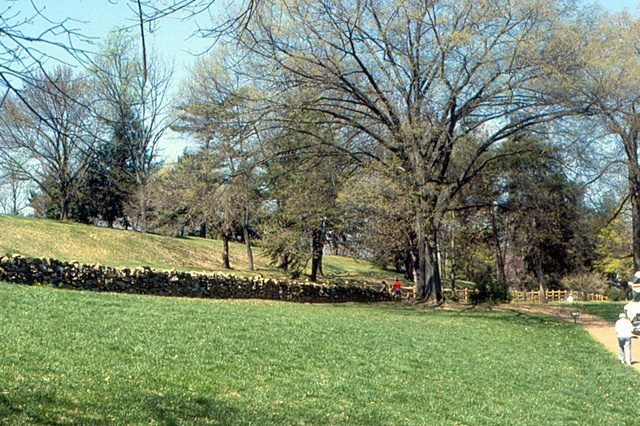
It was the 13th of December 1862, and the 24th Georgia was near the crest of Marye’s Heights, using a stone wall for cover.  The 69th, part of the famed Irish Brigade under General Meagher, was in the assault on Marye’s Heights.  It happened that the Irish Brigade attacked the area of Marye’s Heights defended by the 24th Georgia.  One Rebel who saw the Irish green regimental flags called out, “Oh God, what a pity! Here comes Meagher’s fellows.”  Battle flags with the Irish Harp were on both sides of the fight.

Marye’s Heights and the Stone Wall Today

The 69th New York was known for its courage and aggression, and was called the “Fighting 69th.”  (It is said that Robert E. Lee referred to it that way, and the name stuck.)  At Fredericksburg it was the 24th Georgia that won the day, but it is also true that the bravery of the 69th was so great that the Rebel Irish cheered the Union Irish that day.  One of them, Private James Williams, “leaped upon the top of the wall and gave three ringing cheers.”

Thanks for reading. Please share our posts with your friends and family so they too can learn more about Southern Heritage and History.

Brought to you by: Ultimate Flags

Posted on

A Confederate Blockade Runner

maffitt

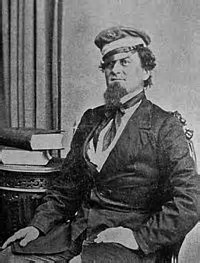
Commander Maffitt

One of the finest sailors America ever produced was Commander John Newland Maffitt, who began his career in the U.S. Navy.  It was not long before he stablished himself as a highly respected officer.  Not long after the Confederacy was formed, the U.S. government began secret arrests of those suspected of Southern sympathies.  A friend told Maffit that his name was on the list, so he arranged to leave.  Commissioned as a Confederate naval officer, one of his exploits paints the picture of this man.

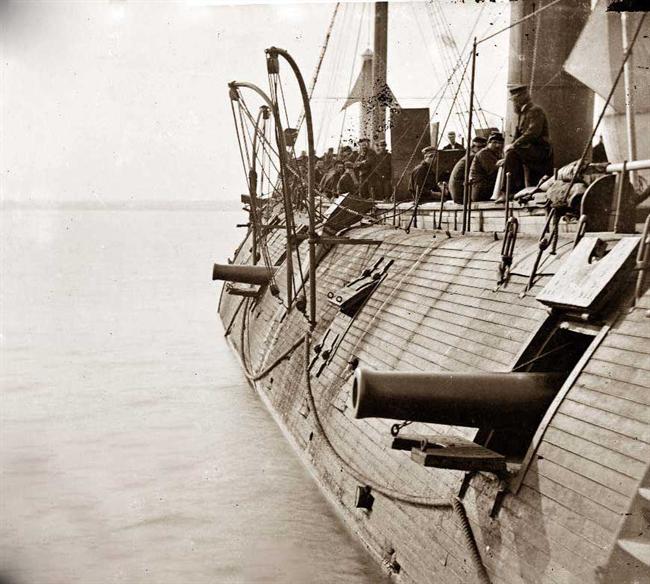
It was August of 1862, and the CSS Florida was in Caribbean waters, Maffitt in command.   That morning two of his men were ill, but by sundown more than half the crew was sick with Yellow Fever.  Cuba was nearby, and Maffitt managed to make anchor.  He wrote in his journal that only three men were able to report for duty: “By this time the quarter-deck had been converted into a hospital, where at all hours of the day and night my presence was required, for there was none to aid, none to relieve me from the exhausting demand upon my medical attention to the sick and dying. The sun rose and set upon the beautiful Florida.  At her peak the Confederate flag waved in solemn dignity.”

Two days later Maffitt was giving medicine to his sick men when he was suddenly “seized with a heavy chill, pain in my back and limbs, and dimness of vision.”  The captain collapsed with Yellow Fever.  A week later he reported that he awakened to see “three somber-looking individuals,” one of whom said, “I am convinced… that the captain cannot survive.”  Hearing this, Maffitt replied, “You’re a liar, sir; I have too much to do, and cannot afford to die.”

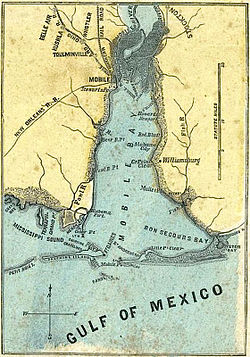
Maffit did survive, and on the 1st of September the Florida left Cuba, on course to Mobile Bay, Alabama.  Federal warships were certain to meet him.  The Union blockade of the Confederate coastline was known as the Anaconda Plan, after the giant snake, the idea being to strangle the South.

mobile-bay    Florida arrived at Mobile Bay three days later, and Federal vessels were there to challenge him. Maffitt raised an English flag to buy time.  The USS Oneida attempted to cut him off, but Maffitt veered toward him.  The Oneida backed away, giving the Confederates a momentary advantage.   Separated by 80 yards, the Oneida fired a warning shot.  Florida raced on, and a second shot was fired.  When the Florida did not slow, “their whole broadside was poured into us.”  Immediately, two other Union ships fired on the Rebel ship.

The Florida was so low on supplies that she could not respond with her own guns.  Maffit later wrote:  “In truth, so terrible became the bombardment, every hope of escape fled from my mind. One gunboat opened on my port bow, the other on our port quarter, and the cannonading became rapid and precise.

Maffit sent men up the masts to adjust the rigging for best speed, and Florida stormed ahead, shells “bursting over and around us, the shrapnel striking the hull and the spars at almost every discharge.”  Many of the men were still ill, including Maffitt, but they had the backbone Blockade Runners were known for, and “everyone acted well his part.”  Finally, Maffitt got his ship clear of the encircling Union ships and began to close on the coast and the protection of the guns of Confederate Fort Morgan.  “…battered and torn, war-worn and weary, with her own banner floating in the breeze, the Florida in safety is welcomed to her anchorage by hearty cheers from the defenders of Fort Morgan. 

Embarrassing as this was for the Union Navy, Maffit poured salt on the wound a few months later when he made his way to sea through the same blockade.  In two years of service, the Florida captured or destroyed millions of dollars in Union goods, including fifty vessels captured.

At the end of the war Commander Maffitt refused to surrender his ship, sailing to Britain instead.  In 1904 Admiral George Dewey – the only American Admiral to ever wear five stars – referred to Maffitt as “the elite of the Navy, the bravest of the brave.”  This was from a man who had fought against Maffitt as a Union naval officer in the Civil war, and who was in command of a U.S. fleet in 1898 that destroyed or captured the entire Spanish Pacific Fleet.  High praise, indeed.

Thanks for reading. Please share our posts with your friends and family so they too can learn more about Southern Heritage and History.

Brought to you by: Ultimate Flags

Posted on

“They came burning Atlanta today”

Carrie Berry was ten years old in 1864, when Union soldiers entered her hometown of Atlanta.  She kept a diary, and in Part I of this story we learned of her experiences during weeks of artillery shelling.  Union General Sherman now had an appalling plan for her city, which was about to unfold.

Sept. 2. Fri. We all woke up this morning without sleeping much last night. The Confederates had four engines and a long train of box cars filled with ammunition and set it on fire last night which caused a great explosion which kept us all awake. It reminded us of the shells – of all the days of excitement… Every one has been trying to get all they could before the Federals come in the morning. They have been running with saques (sacks) of meal, salt and tobacco. They did act ridiculous breaking open stores and robbing them. About twelve o’clock there were a few federals came in. They were all frightened. We were afraid they were going to treat us badly. It was not long till the Infantry came in. They were orderly and behaved very well. I think I shall like the Yankees very well.

Sept. 3. Sat. 1864. The soldiers have been coming in all day. I went up to Aunties this morning and she said that she had a yankee officer to spend the night with her. We have not seen much of them. Only two of them have been here to beg some thing to eat. We have had a rainy day and we all feel gloomy.

Sun. Sept 4. Another long and lonesome Sunday. How I wish we could have Church and Sunday School. We have been looking at the soldiers all day. They have come in by the thousand. They were playing bands and they seemed to be rejoiced. It has not seemed like Sunday.

Things remained calm for a few more days, then took a turn for the worst:

Thurs. Sept. 8. We all went to work in glad spirits this morning. Me and Tilo went to ironing. Mama was busy regulating things when Papa came and told us that Gen. Sherman had ordered us to move. It broke all into our rangements.

Fri. Sept. 9. We all commenced this morning to prepare for moving. We don’t know how long we will get to stay here. We are all in so much trouble.

Sat. Sept. 10. Every one I see seems sad. The citizens all think that it is the most cruel thing to drive us from our home… Mama seems so troubled and she can’t do any thing…

As discussed in Part I, the burning of Atlanta was part of Sherman’s strategy of wide destruction across Georgia.  But somehow Carrie’s family became one of the very few lucky ones that got to stay.  Her relatives were not so fortunate:

Mon. Sept. 19. I went over to Aunt Healy this morning. She is packing up to move and I feel sorry that she is going away. We will miss her so much.

Tues. Sept. 20. It has been raining nearly all day. I went up to Aunties this evening to see Willie. He is mighty cute and took three or four steps while I was there. Cousin Emma is packing up to leave

While Carrie and her family struggled to hold things together, the destruction of Atlanta began.

Fri. Sept. 30. I have been sewing some to day on my apron. There are so many soldiers pacing backward and forward.

Sun. Oct. 2. This has been a very pretty day. I went around to Mrs. Lesters. Ella and I took a walk to see how the soldiers had torn down the fine houses. It is a shame to see the fine houses torn down.

The things escalated, Sherman’s full plans being put into play:

Mon. Nov. 14. They came burning Atlanta to day. We all dread it because they say that they will burn the last house before they stop. We will dread it.

Tues. Nov. 15. This has been a dreadful day. Things have been burning all around us. We dread to night because we do not know what moment that they will set our house on fire. We have had a guard a little while after dinner and we feel a little more protected.

Wed. Nov. 16. Oh what a night we had. They came burning the store house and about night it looked like the whole town was on fire. We all set up all night. If we had not set up our house would have been burnt up for the fire was very near and the soldiers were going around setting houses on fire where they were not watched. They behaved very badly. They all left the town about one o’clock this evening and we were glad when they left for no body know what we have suffered since they came in.

Thurs. Nov. 17.  Everything was so quiet we were afraid that the yankees will come back and finish burning the houses but they did not. They have left. Some Confederates came in here to day and the town is full of country people seeing what they can find. We have been picking up some things.

Fri. Nov. 18. We children have been plundering about to day seeing what we could find. Mama has been trying to straiten up for the house was torn up so bad.

Sat. Nov. 19. Mama and me have been ironing all day. We have begun to feel at home but it does not look like Atlanta. The Citizens all met at the City Hall. There are eighty men in town.

The occupiers were gone, but winter was coming and there was not much time to prepare: “It is just a week to day since the federals were burning….  We have not got anything but our little house. It is still very cold.” 

Carrie wrote of spending days “picking up nails” and how she was tired and sore.  But repairs were made, and life continued.  Soon she was back in school, “…studying arithmetic, spelling, reading and geography. We are all trying to see which will learn the most.”

Thanks for reading. Please share our posts with your friends and family so they too can learn more about Southern Heritage and History.

Brought to you by: Ultimate Flags

Posted on

Shelling Atlanta: A Ten Year Old Girl’s View

The burning of Atlanta by Union General Sherman is a notorious incident of the Civil War.  We can read Sherman’s own words, in a telegram to Ulysses S. Grant:

“…utter destruction of its roads, houses, and people will cripple their military resources. …I can make the march and make Georgia howl.”

Sherman’s “March to the Sea” began in the summer of 1864.  Young Carrie Berry was living in Atlanta when it started, recording it in her diary:

“We can hear the canons and muskets very plane, but the shells we dread. One has busted under the dining room which frightened us very much. One passed through the smoke-house and a piece hit the top of the house and fell through… We stay very close in the cellar when they are shelling.”

Carrie gives us an amazing view of this battle.

“Aug. 1. Monday. It was raining this morning and we thought we would not have any shelling today… but before night we had to run to the cellar.”

Young Carrie’s birthday was two days later:

Aug. 3. Wednesday. this was my birthday. I was ten years old, But I did not have a cake times were too hard so I celebrated with ironing. I hope by my next birthday we will have peace in our land so that I can have a nice dinner.

Aug. 4. Thurs. The shells have been flying all day and we have stayed in the cellar. Mama put me on some stockings this morning and I will try to finish them before school commences.

Aug. 5. Friday. I knit all the morning. In the evening we had to run to Auntie’s and get in the cellar. We did not feel safe in our cellar, they fell so thick and fast.

Things went on like this.  On August 11th Carrie wrote, “How I wish the federals would quit shelling us so that we could get out and get some fresh air.”  A few days later she wrote, “I dislike to stay in the cellar so close but our soldiers have to stay in ditches.”  Then she had a close call when she ventured outside:

Aug. 15. Mon. We had no shells this morning when we got up and we thought that we would not have any today (but, my, when will they stop) but soon after breakfast Zuie and I were standing on the platform between the house and the dining room. It made a very large hole in the garden and threw the dirt all over the yard. I never was so frightened in my life. Zuie was as pale as a corpse and I expect I was too. It did not take us long to fly to the cellar…

The situation became even more dangerous.  On the 22nd, Carrie and her family moved into another home, closer to the center of town:

Aug. 23. Tues. We feel very comfortable since we have moved but Mama is fretted to death all the time for fear of fire. There is a fire in town nearly every day. I get so tired of being housed up all the time. The shells get worse and worse every day. O that something would stop them.

A few days later Carrie wrote that they had heard the Union soldiers had abandoned their positions.  Carrie wrote that she hoped they were returning to Tennessee.  Things remained calm, so:

Aug. 27. Sat. We moved home this morning and we have been busy trying to get things regulated. I feel so glad to get home and have no shells around us.

The next few days were pleasant as things seemed to be returning to normal, until the first of September:

Sept. 1. Thurs. We did not get home untill twelve o’clock. We had a very pleasant time and every thing seemed quiet. Directly after dinner Cousin Emma came down and told us that Atlanta would be evacuated this evening and we might look for the federals in the morning. It was not long till the whole town found it out and such excitement there was. We have been looking for them all the evening but they have not come yet.  Mr. came in to tell us that dear Cousin Henry was wounded and he thought he would not get well. We are so sorry to hear it. We loved him so much…

It was now only hours before Union soldiers would begin entering the city.  Carrie tells what happened, and you can read about it in Part II of this series.  Click here.

Thanks for reading. Please share our posts with your friends and family so they too can learn more about Southern Heritage and History.

Brought to you by: Ultimate Flags


Posted on

8 American Flag Rules Every American Should Know

The flag is the emblem of United States of America as a separate nation. Therefore, it should be respected by every person all the time. However, most people are not aware of most of the rules that should be observed, and thus disrespect the identity of the nation.

Here are eight rules about the American flag every American should know.

1. Conduct while hoisting, passing or lowering of the American flags

How do you conduct yourself while the flag is passing, hoisting, or being lowered?

  1. People present in uniform should render the military salute at the first note of the national and maintain that position to the last.
  2. Members of the armed forces present but not in uniform may also render the military salute in a manner described for people in uniform.
  3. Other people present should stand at attention with the right hand over their heart and remove their headdress and hold it at their right shoulder where applicable.
  4. When the flag is not being hoisted, those present should face towards the music and act in the manner they would if the flag were displayed.

2. Occasions for display

Are you aware of the days when the flag should be displayed? During these occasions that have been marked on the calendar, the national flag should be hoisted smartly and lowered ceremoniously. However, it should not be lifted on harsh weather days, except and only when an all-weather flag is displayed.

3. Manner of display

The flag should be displayed in a way that it depicts respect to the nation.

  1. The flag should not be presented on a float while in a parade unless from a rod.
  2. It should not be wrapped/draped over the hood, back, top, or side of a vehicle, train, or boat.
  3. If it is displayed on a car or train, the staff should be fixed firmly to the chassis or clamped appropriately to the right screen.

4. Respect for the national flag

Every person should respect the national flag at all times. No disrespect for the flag of United States of America should be shown.

  1. The flag should never be dipped to anything or to any person.
  2. It should never touch anything underneath it such as the ground, water, floor, or any other kind of merchandise.
  3. Nobody should use the flag as a wearing apparel, drapery, or dressing. It should always fall free at all times and never drawn back or folded up.
  4. It should never be used as a ceiling cover, or any kind of covering.
  5. The flag should never be used as a repository for holding, receiving, delivering, or carrying anything.
  6. The national flag should not be used for any advertising purposes.

5. Storage of the flag

Which is the best way to store the flag?

  1. The flag should be stored properly and respectfully, not in a manner that permits it to be soiled, damaged, or easily torn.
  2. When being stored, the flag should be folded neatly and ritually.
  3. When it’s torn, the flag should be cleaned and mended appropriately.
  4. When the flag is so worn out that it is no longer fit to serve as a symbol of our country, it should be destroyed by burning in a respectable and honorable manner.

6. Parading and saluting the flag

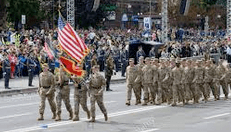
When it is being carried in a procession, the flag should always be to the right of the marchers. When it is being carried with other flags, the flag of the United States of America should be centered in front of the others or always carried to the right.

7. Special occasions

How should one treat the flag during special occasions? It should be hoisted half-staff when mourning principal or designated government leaders or upon a presidential order.

  1. When hoisted half-staff, the flag should first be raised to the peak and then lowered to half-staff position. When being lowered, it should first be flown to the peak before it is lowered for the day.
  2. When used to cover a casket, the flag should never be lowered to the grave. It should be placed with the union at the head and over the left shoulder.

8. Displaying the flag indoors

When the flag is displayed indoors, it should be accorded a place of honor and always placed to the right.

  1. It should be placed to the right of the speaker or sanctuary while all other flags are on the left.
  2. When placed with other flags, the flag of the United States of America should be at the center and at the highest point of the group.

The American flag should be respected all the time. Every person, whether a citizen or non-citizen, should observe the rules concerning it, as it is a symbol of the nation. Respect is key!


Thanks for reading! We hope you enjoyed our post. Please share with all your fellow patriots. Brought to you by: Ultimate Flags
Posted on

9 Rules About American Flags Most People Are Not Following

Whether you call it Ol’ Glory, the Stars and Bars, or a star-spangled banner, the American flag is one of our most important symbols. Yet, many Americans may not realize that the United States Code details the rules for displaying the flag. According to the Independence Hall Organization, here are nine common misconceptions that people may have about showing their colors.

1. American flag clothing

You may have picked up those red, white, and blue flip-flops for a low price, but did you know that wearing the flag is a no-no? Sure, you want to show your spirit and patriotism, but American flag tanks and shorts are probably not the best way. When an item of clothing bears an American flag then that item technically becomes a flag. Think about that when you spill mustard on your flag shorts.

This rule also applies to sports apparel and clothing. National teams may have an American flag adhered to their uniform.

2. Flying the flag in the dark

By dawn’s early light Frances Scott Key looked for the flag, but it’s not uncommon to see the flag flying in the dark in some neighborhoods. Flags should be removed before nightfall and carefully folded and stored. If you would like to keep your flag flying it should be illuminated. Homeowners may consider purchasing a small solar powered garden light to ensure that their flag is always bright.

3. Flying with style

While your pride in your country may not fade, sometimes the stars on your flag may lose their shine, or the flag itself may become ripped. Flags that are no longer in good shape should be removed and disposed of respectfully.

Did your flag touch the ground? You don’t necessarily have to dispose of the flag because cleaning it is an option.

Flags hung outside, like from balconies, should be done with the fifty stars on the left and the stripes running perpendicular to the ground. Flying a flag another way, such as upside down, is a sign of distress.

4. Who gets top billing?

It’s customary at municipal buildings to fly both the national and state flags; however, the American flag should always be flown higher. The only exception to this rule is when the other flags being displayed are from other countries. In that case, all the flags should be flown at the same height.

5. Pledging with your heart

Originally, the pledge was a child’s poem, but is now the standard manner in which we honor our flag. Children across the country say the Pledge of Allegiance each day. What you may not know is that those that say the pledge should remove their hats or other head gear, and cover their hearts.

6. Honoring heroes

Since the flag is one of our most inspiring symbols of patriotism, it has become customary to lower the flag in honor of fallen heroes. Yet, when is it appropriate to lower the flag to half-mast? And who decides when it is appropriate? According to Home of Heroes, the flag may be flown at half-mast on Memorial Day, Peace Officers Memorial Day, and to commemorate the death of a current or past president, vice president, or other government official.

7. Storing a folded flag

If you own a flag that you would like to preserve, then you should consider purchasing a triangle holding case. Families that have lost a loved one while serving our nation, or were honored for their past service receive a folded flag. Others may have a flag that had been flown over the Capital building and received it from their member of Congress.

How should these flags be displayed? Many craft stores sell wooden triangle flag holders that allow the flag to be displayed while keeping it safe.

8. Designs on a flag

It’s not unusual to see the American flag in colors other than the traditional red, white, and blue at rallies or protests. However, according to the U.S. Code, the flag should never have a word, design, or other marking on it. This also applies to flags on clothing or on items.

9. More than one purpose?

Using the flag as a curtain, to cover the ceiling, or as a way to carry items also violates the U.S. Code. People may be well-intentioned, but the flag can’t be used as a design element or for purposes other than a flag. You should always avoid using or displaying the flag in a manner that could cause it to be torn or damaged.


Thanks for reading! We hope you enjoyed our post. Please share with all your fellow patriots. Brought to you by: Ultimate Flags