Posted on

Charge Hell and Capture the Devil

Vicksburg was a city Union Generals Grant and Sherman had fixed their eyes on as a big prize.  It was crucial they take the town as it was the only major point to connect their Eastern campaign with the Confederates to the West, the Trans-Mississippi territory. They would attack from two directions and capture Vicksburg and all of its resources.


The plan was in place. Troops had already occupied the nearby town of Holly Springs, Mississippi, and were guarding a huge store battle supplies in a depot.


But this master plan was about to be put to the test.


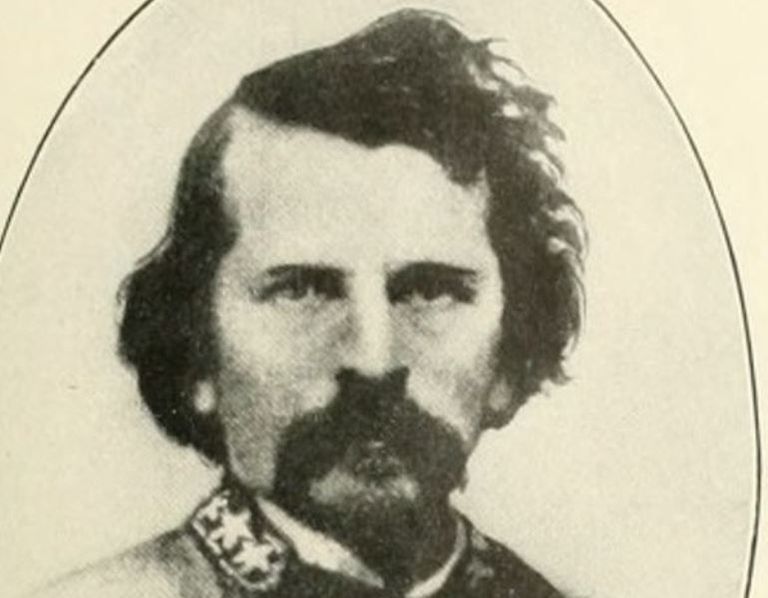
The date was December 20, 1862. As union forces slept in the occupied homes, the silence of the early morning was shattered by gunfire, Rebel yells, and the clamor of a charging Confederate Cavalry. Major General Van Dorn  had a master plan of his own – to destroy those huge supplies and thwart General Grant’s grand plans for the attack on Vicksburg.


The Rebels came into town from all directions, and quickly were able to capture the Union troops. But instead of making them prisoners of war, he paroled them immediately. His main focus was on destruction of the supplies not having to deal with a bunch of Yankees.


The Rebels took for themselves what they could carry, and then torched every boxcar of an enormous trainload full of Union goods. One estimate put the value of the supplies that went up in smoke that day right at 1.5 million dollars.


No, Grant and Sherman hadn’t figured on meeting up with the likes of Confederate Major General Van Dorn who dashed their dreams of a captured Vicksburg.


Things were looking grim for General Grant. Not only were the supplies gone, and a victory in Vicksburg, but also Confederate General Forrest had disrupted rail and telegraph lines. So, he withdrew to Tennessee. At the same time General Sherman was taking a beating at Chickasaw Bayou.


Major General Van Dorn had done his job well and won a grand victory. The raid on Holly Springs was just the kind of thing he was born to do. Yes, everyone knew how he loved the ladies and enjoyed a good drink, but Van Dorn was an aggressive fighter, and an inspiration to all the men who fought with him for the cause.  


One of his senior officers wrote what it was like serving under him; “I felt as if I could charge hell and capture the devil.”

Thanks for reading. Please share our posts with your friends and family so they too can learn more about Southern Heritage and History.

Brought to you by: Ultimate Flags
Posted on

A Confederate Soldier Leaves a Legacy for the World

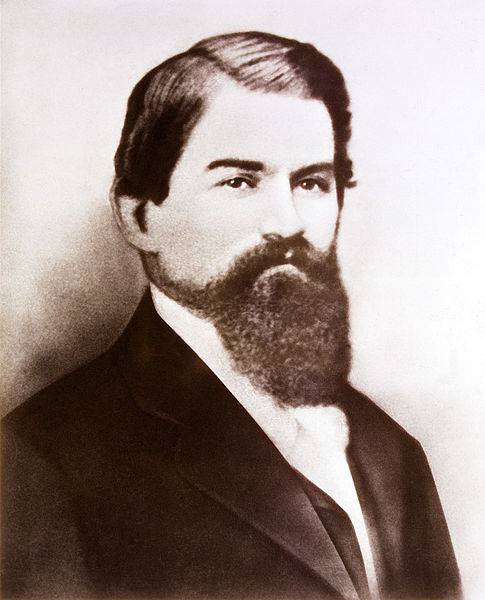
A number one worldwide product of today would not have been possible without the genius of a  Confederate Soldier. Without the Civil War, you could say the world may have missed out on something really BIG. It’s a fact that the beginnings of the world’s most famous soft drink can be traced back to a Confederate officer who fought in the Civil War.

John Stith Pemberton, a Georgia native, was a gifted chemist and pharmacist by trade before the Civil War began.  He joined the Confederate Army and served with distinction as a lieutenant colonel in the Third Georgia Cavalry Battalion.   

On April 16, 1865 during the Battle of Columbus, Pemberton was wounded in the chest by a saber. If the telegraph system been working, his battalion would have gotten the word that General Lee ended the war at Appomattox Courthouse in Virginia a week earlier on April 9th, and the battle would not have happened.

Pemberton survived his wounds, but was in severe pain. To relieve his dependence on painkillers, he started to work on developing a medicine using his knowledge as chemist and pharmacist. Eventually he came up with a formula of a drink, similar to a French wine, but infused with coca (cocaine), kola nut (caffeine).  

At first he named the new concoction “Pemberton’s French Wine Coca,” and began selling it in several drugstores in Atlanta, Georgia. Temperance legislation enacted in 1886 forced him to formulate a new, non-alcoholic version of his drink.

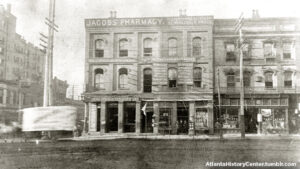
With the help of a druggist friend Willis Venable, he created a modified recipe to blend his base syrup with carbonated water. On May 8, 1886, the first new “Coca-Cola” drink  was sold at Jacob’s Pharmacy in Atlanta. One thing led to another, and before long the new drink gained in popularity and was distributed worldwide.

Jacobs Pharmacy, Atlanta, Georgia

You could say no Civil War, no Coke!  If the message of the end of the war had reached General Wilson of the Union Army to prevent the Battle of Columbus, John S. Pemberton would not have been injured. Without the injury he would not have been in pain. Without the pain, he would not have searched for a painkiller replacement. If he had not been searching for a new medicine, he would not have concocted a new drink, and we would never have gotten the world’s favorite soft drink – Coke!

On the day of Pemberton’s funeral in 1888, Atlanta druggists closed their stores and attended the services as a special tribute of respect. On that hot August day, not one drop of Coca-Cola was dispensed in the whole city.  The Atlanta newspapers called him “the oldest druggist of Atlanta and one of her best known citizens.”

Thanks for reading. Please share our posts with your friends and family so they too can learn more about Southern Heritage and History.

Brought to you by: Ultimate Flags
Posted on

The Angel of the Confederacy – Captain Sally Tompkins

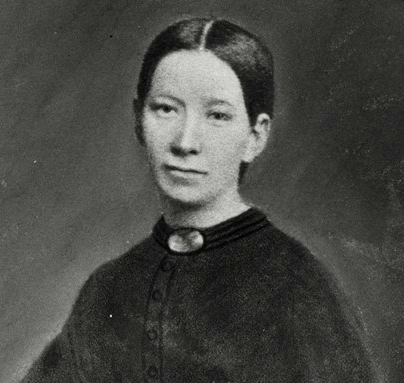
Great things come in small packages, they say.  This is certainly true of one hard working young woman named Sally Tompkins.  She stood only 5 feet tall, but her good work and devotion made her a giant among mankind.

Sally came from a proud family with strong military roots. General George Washington had commissioned her grandfather.  Her brother fought in the Mexican War. When she was only 13, she wrote to him: “I hope you will be able to distinguish yourself in the battle and be a second George Washington and come home to receive congratulations from all your friends.”

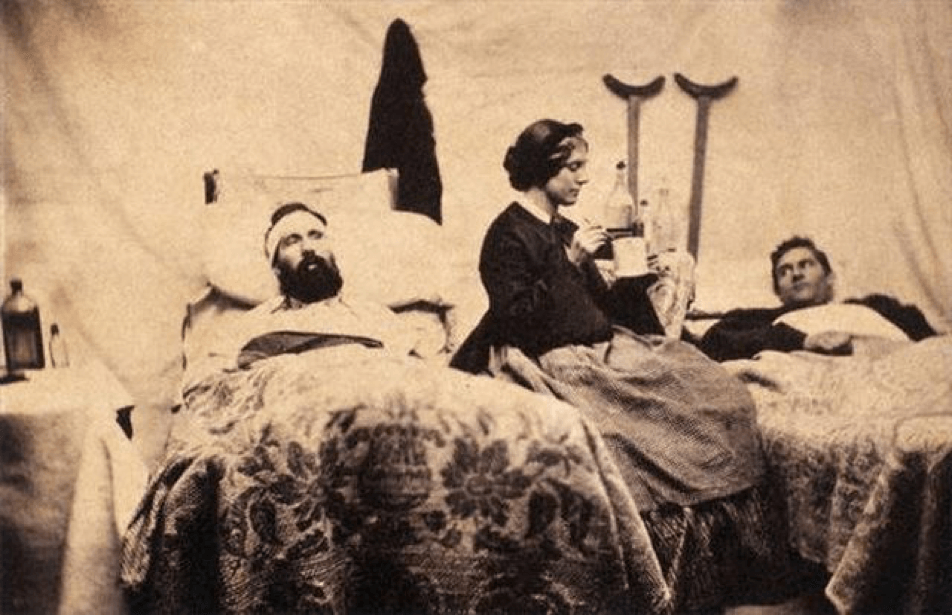
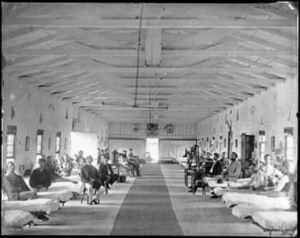
When the Civil War broke out, Sally opened her own private hospital to care for wounded soldiers in Richmond. She used her own money to buy most of the supplies. Her enforcement of strict rules for a high standard cleanliness and sanitation saved many lives in a time when the causes of infection were barely understood, if at all.  Sally soon became known as “the Angel of the Confederacy.

Some of the other private hospitals were charging a lot of money for soldiers’ care as the war progressed.  As a result, an order came down declaring that only government hospitals run by a commissioned officer could provide care for soldiers.

Sally decided it was time to pay a visit to President Jefferson Davis in person. He was so impressed by her determination and all that she had already accomplished, he commissioned her Captain of Cavalry, to make her hospital official.  With that title, Captain Sally Tompkins became the only female commissioned officer in the Confederate Army. Her patients lovingly and respectfully called her “Captain Sally.”

During the war she cared for 1,333 soldiers, but remarkably only 73 of them died. That was the lowest death rate of any hospital during the Civil War in the North or South.

Sally died in 1916 and was buried with full military honors.

Thanks for reading. Please share our posts with your friends and family so they too can learn more about Southern Heritage and History.

Brought to you by: Ultimate Flags
Posted on

Hood’s 5th Texas Brigade Flag

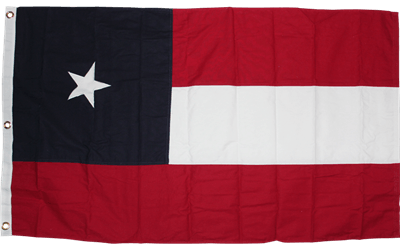
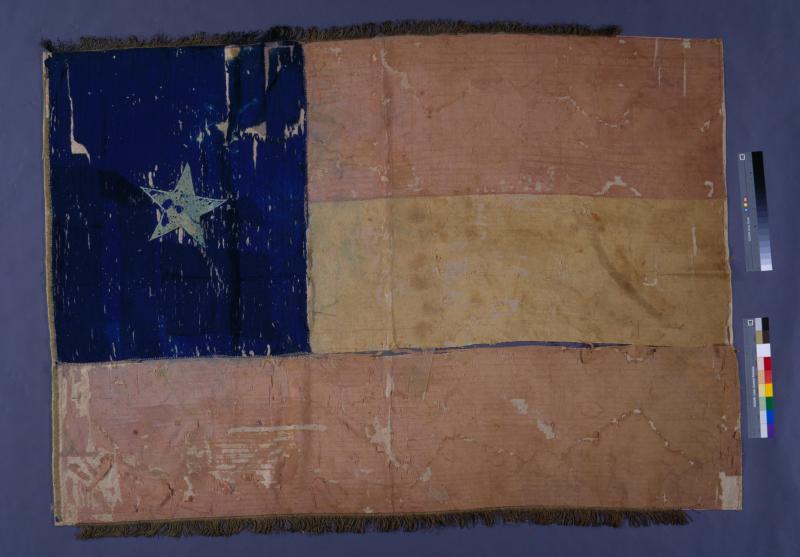
The 5th Texas Regiment had created a new and unique design for their Battle Flag.  It looked like the Confederate 1st National Flag, except for one major difference.  There was no circle of stars representing Confederate States, only one “lone star” in the upper corner to symbolize Texas.  They called it the “Lone Star and Bars.” They kept it flying proudly until the army stepped in and declared that all battle flags be standardized to the more well known Southern Cross.  The Lone Star and Bars was put into storage in a Richmond warehouse.  

The Texans had grown very fond of their unique flag, and eventually found the right opportunity to bring back their beloved banner.  General Hood ordered all battle flags be sent back to Richmond for updating with new Battle Honors inscriptions.  Some of the determined officers managed to steal back the Lone Star and Bars and switch it with the authorized flag of the 5th when it returned.

On the following day, General Hood made a grand review of the regiment before it left camp for the Battle of Second Manassas.  The color bearer kept the unauthorized flag hidden in its case. As the general inspected the line, he saw the case and ordered it opened. The beautiful Lone Star and Bars unfurled its colors as it fell from from the case.

An officer described what happened next:

“…when its beautiful folds were given to the breeze a cheer broke loose despite the fact that officers did all they could to restrain it.”  

Hood was not happy, asking, “Adjutant, why do you not have your battle flag, sir?”

Regimental Adjutant Wood, one of the conspirators, replied he had not seen it since it was sent to the depot (maybe so, but he was one of the officers who had brought back the Lone Star and Bars).  

Wood said that since he did not have the authorized flag, “I brought along the Lone Star flag of Texas.”  

Hood replied, “I believe you know more of this than you are willing to tell.”  

True, and that Lone Star and Bars Battle Flag would soon lead the regiment into some of its most famous battles of the Civil War. 

Shortly after the Battle of Antietam, the Lone Star Flag of Texas went to Austin, Texas for display in the State Capitol. It eventually ended up in possession of a veteran’s group, The Hood’s Texas Brigade Association. Since 1920 it has remained in custody of the Texas State Library and Archives Commission.

A Photo of the Original 5th Texas Lone Star and Bars Kept at the Texas State Library and Archives Commission

Thanks for reading. Please share our posts with your friends and family so they too can learn more about Southern Heritage and History.

Brought to you by: Ultimate Flags
Posted on

“Big Red” The Citadel Flag

In April 1861 South Carolina seceded from the Union and tensions were running high. The Federals, still in possession of Fort Sumter in the harbor at Charleston, were determined to not to give up the sea fort without a fight.

Stationed on nearby Morris Island was a small military post, Fort Morris, manned by cadets from The Citadel, the South Carolina Military Institute.  As the ship “Star of the West“, sent by President Buchanan to supply the garrison at Fort Sumter, cruised into the harbor, the group of student military officers blasted the very first shots of the Civil War.  The “Star of the West” took heed of the warning, turned around, and hightailed it out of the harbor.

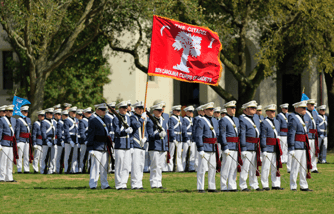
The Citadel cadets had a special red flag presented to them by the daughters of the man who owned the island. This flag was known as “Big Red.”  It had a white palmetto and crescent on a field of red.  

Later on in April of 1865, one of the Citadel cadets who had fired the first shot at Fort Sumter was serving as the commander of an artillery unit in Mobile Bay, and had possession of that original flag.  But the banner fell into the hands of the Union’s 20th Iowa.

Although “Big Red” disappeared after the capture, it grew as a symbol of pride for the Citadel’s Corps of Cadets who were using reproductions of the original prized banner.  Miraculously in  2007, the original “Big Red” reappeared in Iowa. The flag had been in storage and remained in surprisingly good condition. Experts were able to determine that it was in fact the original.

The flag went back to South Carolina to it’s rightful place – in the hands of the cadets at The Citadel where it remains on display for all to see.

More about the Citadel:

Of the six Senior Military Colleges that train the branches of the U. S. Armed Forces with the highest of standards, five are in the South.  One of them is the Citadel, established in 1842.

Graduates of the this college have served in every war since that time, beginning with the Mexican-American War of 1846. Many have had outstanding careers including generals, astronauts, and FBI agents.  Who brought to justice John Dillinger, the infamous gangster during the Depression? The FBI agent and Citadel grad Melvin Purvis.

Thanks for reading. Please share our posts with your friends and family so they too can learn more about Southern Heritage and History.

Brought to you by: Ultimate Flags


Posted on

The Southern Soldier

The Southern Soldier of the American Civil War was truly a force to be reckoned with, pulling off battle victories with dwindled numbers while surrounded by Federal troops.

Washington and Richmond, the two capitals, were only 100 miles apart, but it took four years for the North to win. Why? The North had more men and resources by far. Both sides endured great hardships on the battlefield in a brutal war, but the Southern Soldiers made up a tough crew who fought fiercely to defend their own families, neighbors, and  friends.

A Colonel in Hood’s Texas Brigade wrote:

“…between Washington City and Richmond, Va….our generals and our comrades held at bay for four years the most superb and adequately equipped army ever organized on this Earth, defeating them again and again with often less than half their numbers…”

Since the Civil War ended, brave Americans from all states have volunteered and fought for our nation.  Today, nearly half of our military come from the South. A former Armed Forces recruiter wrote to us recently to say:

“I was a recruiter for the military for many years and most of our men and women came from the southern states.  There was, and may still be, some states that the military does not recruit in, because the people in those states choose not to serve this great nation.”

Southerners have left a legacy of the most highly decorated soldiers of WWI and WWII:

George Keene of Texas was the only man in World War I to earn all three of the Army’s top medals:  Congressional Medal of Honor, Distinguished Service Cross, and two Silver Stars, plus seven Purple Hearts in 26 months of combat service.

Audie Murphy, WWII hero, from Pueblo, Texas,  won every military combat award for valor available from the U.S. Army, as well as French and Belgian awards for heroism.  Pueblo also boasted four other Medal of Honor recipients.

Two men from the small town of Newnan, Georgia, and three men from another small town, Leeds, Alabama, all received the Medal of Honor.

The most decorated soldier in Vietnam, Joe Hooper, was born in South Carolina.

At his retirement in 1992, Robert Lewis Howard was the most highly decorated active duty soldier. He was born in Opelika, Alabama.

And the list goes on.  Just as they fought hard for their states, our Southerners today fight just as hard for their nation.

Thanks for reading. Please share our posts with your friends and family so they too can learn more about Southern Heritage and History.

Brought to you by: Ultimate Flags
Posted on

The Angel of the Confederacy

Under 5 feet tall, Sally Tomkins was a lot tougher than she looked. She was born to a family with a proud military tradition:  Sally’s grandfather was given his commission by General George Washington himself.  When her brother went off to fight in the Mexican War, 13-year old Sally wrote: “I hope you will be able to distinguish yourself in the battle and be a second George Washington and come home to receive congratulations from all your friends.”

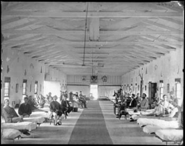
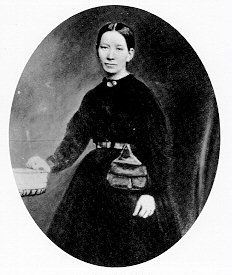
Captain Sally Louise Tomkins

Sally lived in Richmond, Virginia when the Civil War broke out. She opened her own private hospital for wounded soldiers, covering most of her supplies with her own money. Her hard work and devotion earned her the nickname, Angel of the Confederacy. The hospital became known for its cleanliness, Sally forcing in the highest levels of sanitation of any hospital of the period.  This saved many lives during an era when the cause of infection was poorly understood.

As the war went on, some private hospitals were charging a lot of money. Because of this, orders were issued that soldiers could only be cared for at government hospitals run by a commissioned officer.  Sally went to see President Jefferson Davis, who was so impressed that he commissioned Sally Tompkins a Captain of Cavalry, making her hospital official.  And that made her the only female commissioned officer in the Confederate Army.  Her patients usually called her Captain Sally.  Of 1,333 soldiers in her care, only 73 died, the lowest mortality rate of any hospital, North or South.  When Sally died in 1916, she was buried with full military honors.

Thanks for reading. Please share our posts with your friends and family so they too can learn more about Southern Heritage and History.

Brought to you by: Ultimate Flags
Posted on

7 Amazing Facts About the Irish Flag

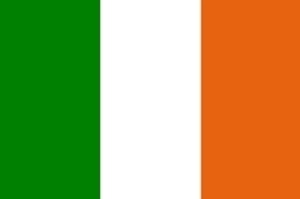
The Irish flag, also known to many as the Irish tricolor or Bratach na hÉireann in local dialect, is easy to mistake with several other flags for sale, like Italy’s or Ivory Coast’s. But after reading all the interesting trivia about it, people will remember it and have a renewed respect for the country, its history and the people who live in it.

1. The Symbol of the Aspiration for Lasting Peace.The Irish flag is composed of three colors – green, white and orange. The green stands for the Gaelic locals, the majority of which believe in Roman Catholicism. The orange symbolizes the Protestants who emigrated to the northern part of the country in the 17th century. The two groups had a quite a long history of religious divide; so the white in the middle represents the truce they have agreed upon during the revolution and the peace they aim to have in the future.

2. The Golden Harp – Irish Tricolor’s PredecessorThe Irish flag has undergone many transformations over the centuries. Before the tricolor was adopted as the national symbol, a silver-stringed gold harp on a vivid green bed was the one used to represent the country. Up to this day, some organizations – even government offices – still make use of the gold harp in their emblems or coats of arms. However, this is ‘actively discouraged’ as it fosters the division past leaders fought to eradicate.

3. The Revolution which Ushered the ChangeIt was a young revolutionary leader named Thomas Meagher who had the distinct honor of waving the flag for the very first time in March 7, 1848 in the Wolfe Tone Confederate Club in Waterford City. It flew there proudly for several days before it was taken down by British Soldiers.

Aside from the social schism brought about by religion, the Great Famine was a catalyst for the rebellion of that year and, consequently, the national emblem’s make over.

4. The New World Order of 1848This year saw many successful revolutions all over Europe. France, Germany and several other countries overthrew the monarchy and began the democratic movement. Thomas Meager tried the same in Ireland but failed. He was arrested for treason and sentenced to death, but exiled to Australia. Some time later, he fled and sought refuge in America where he became one of the toughest soldiers of the Union Army in the American Civil War. Before he went on trial, he vowed in front of a crowd that the Irish tricolor would be seen and used by their descendants in the future.

5. Adopting the Irish TricolorMeagher was proven right as more and more groups used the tricolor for their causes, particularly during the Rising when it flew over the GPO of Dublin and the Irish War of Independence. By 1937, the tricolor was adopted in the constitution.

The flag, an important physical representation of a country, should be treated with care and respect at all times. While the same is true with the Irish tricolor, there is one special rule about it. No other flag should fly over the tricolor because it is the truest symbol of the proud Irish people.


Thanks for reading! We hope you enjoyed our post. Please share with all your fellow patriots. Brought to you by: Ultimate Flags
Posted on

15 States with Strange Flag Rules

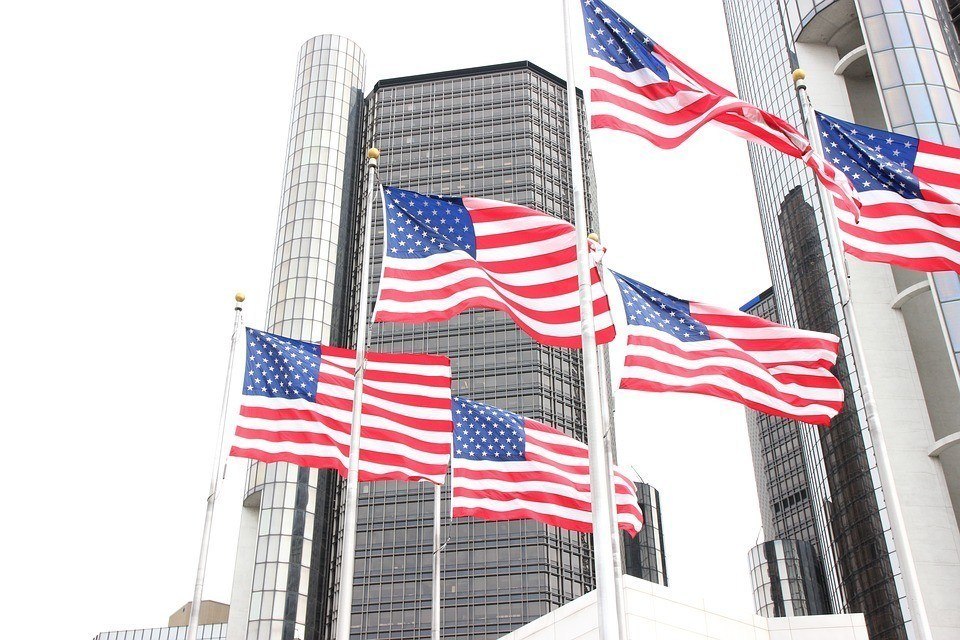
The 50-Star Flag, also known as the ‘Stars and Stripes’, became the United States official flag on Monday, July 4, 1960, following Executive Order No. 10834 of the Late President Dwight Eisenhower. Prior to the Executive Order published on Tuesday, August 25, 1959, the United States recognized both of the 48-Star Flag and the 49-Star Flags.

If you want to buy any of the flags for sale, take note of some U.S. States that do have strange flag rules which are backed by the laws of the state. They include:

1. Wyoming: The constitution of the state forbids the military from carrying any other flag except for the U.S. flag.

2. West Virginia: The state prohibits the display of black or red flags. While the color black is associated with the Confederates, red is associated with the Socialists. Both flags are considered treasonous under the constitution of the state. The state also prohibits any other flag that is considered to be antagonistic to the United States or the State of West Virginia’s constitution, ideals, law, and institutions. The flag of the State of West Virginia is also not allowed to fly above the Stars and Stripes. If it is to be flown at the same level with the U.S. flag, then it will have to be placed on the right of the Stars and Stripes.

3. Washington: Any flag that is considered to be antagonistic to the U.S. or State’s law or constitution is strictly prohibited.

4. Rhode Island: Except if the U.S. flag is present, no other flag can be displayed in a parade. Public buildings and schools are prohibited from displaying foreign flags. You will also never find flags for sale in Rhode Island that has inscriptions on it as an opposition to an organized government or that is considered to be derogatory to morals.

5. Pennsylvania: No flag is allowed to fly on a public building apart from the flag of the United States.

6. Oklahoma: Red flags are prohibited in Oklahoma. The only place where you can fly other flags is in a stadium, an arena, or the roads. The only flags that can fly on a public property are the U.S. Flags, the Girls’ Scout flag, the Boys’ Scout flag, the State flag, the flag of any nation that once had dominion over the state, the American Red Cross flag, the official municipal flag, or any flag approved by the governing body.

7. North Dakota: Only three flags are allowed by the constitution of the state to be displayed publicly. They are the U.S. flag, the flag of the state of North Dakota, and the flag of any nation that is friendly with the state of North Dakota.

8. New York: The only building where the U.S. flag flies below the UN flag is on the United Nations Headquarters. Any flag that casts contempt on the Stars and Stripe is prohibited. No foreign flag is allowed to fly on a public building.

9. New Jersey: No foreign flag can be displayed in New Jersey except if is flown with the U.S. flag. The flag must have at most equal dimensions with the U.S. flag.

10. New Hampshire: You can get flags for sale that are subordinate to the Stars and Stripes. Every other flag that is foreign or that of the UN is prohibited from being flown on public buildings.

11. Mississippi: Any flag that is not approved by the statute of the state is prohibited.

12. Massachusetts: Flags for sale of any foreign nation cannot be displayed on a public building or school in Massachusetts.

13. Louisiana: If the United States enters a war, the laws of Louisiana prohibits the display of the flag of the nation with which the U.S. is warring with.

14. Idaho: Military groups are only permitted to carry the U.S. flag and that of Idaho. Red flags and any other flag that is deemed to be against an organized government are prohibited from being displayed in public places.

15. District of Columbia: While on the grounds of the U.S. Capitol, any flag that seeks to get the notice of the public is prohibited.

Depending on the U.S. State where you are in, the flags for sale reflect the laws of the state at that point in time. While all the 50 states are bound by the U.S. Flag Code, these U.S. States have strange flag rules.


Thanks for reading! We hope you enjoyed our post. Please share with all your fellow patriots. Brought to you by: Ultimate Flags
Posted on

9 Intresting Facts About The German Flag

Taking a gander at the German flag, you may wonder about the story behind the dark, red and gold. Beyond question, it is stacked with culture and custom. The flag itself passes on a rich German history, and the shades portray a specific pride for the German people. The following is a summary of 9 Interesting Facts about The German Flag

1. Traditions of National Colors

Before Germany had the national flag, there were battling traditions of national tones, to consolidate dark red-gold and dark white-red. The dark red-gold finished the observable nature of the 1848 Revolutions. The dark white-red was adopted by the North German Confederation after the Austro-Prussian War.

2. Current Flag

Introducing the modern day flag of Germany, set after the relationship of the republican greater part, manages a framework which confined after World War I. This present day flag addressed the German solidarity and opportunity. At that point, the dark red-gold set as the present day flag, which then was adopted as the national flag of Germany. Find more truths about the French Revolution here:

3. Causes

The color, dark red-gold, was connected by Germany to symbolize the improvement against the Conservative European Order, and that was developed after the thrashing of Napoleon. Also, Frankfurt Parliament announced the tricolors as the official shades of the German Confederation.

4. Common Flag

The German Flag for common events, or affiliations, contains only the dark red-gold tricolors. It is ordinarily used by non-chose specialists to connect their correspondence with the governing body. Moreover, the common flag has its vertical interpretation.

5. Outline

On the essential outline, there was still talk about the usage of yellow or gold. In any case, the organization set the flag with gold, which is close in character to yellow. The degrees of tricolor are dark, red Pantone 485, and Gold Pantone 7405. Finally the gold was set as the alternative with a confused mix of colors. Find more convictions about the GAA here:

6. Flag Days

There was one statement of government on 22 March 2005. Every open structure needs to fly the flag on certain dates. Dates which are set as the flag days: 27 January, 1 May, 9 May, 23 May, 17 June, 3 October, etc.

7. Transformation and the Frankfurt Parliament

In the midst of the Revolutions of 1848, many individuals had went up to the roads and brought flying tricolor flags. After the bombshells, then national social affairs expected to make a decision. The Frankfurt Parliament was the event to declare the national flag of Germany which has tricolors dark red-gold.

8. Separated Germany

It happened in the midst of 1949 to 1989 when set apart by the Berlin Wall. In the midst of this time, the use of both flags on the dark red-gold in assortments yet in a different layout plan.

9. Introduce Uses

After the fall of the Berlin Wall, the formally German Flag was set as the dark red-gold. The flag is used for all lawmaking body events of common events. Moreover, it’s set as the national flag for Germany. One of the open uses is for maintaining the National German Football Club during the World Cup.

Last note

Those are the Facts about The German Flag. At this point you perceive what the vocations of the flag and the recorded background of it is,  and look around, the best flags available to be purchased.


Thanks for reading! We hope you enjoyed our post. Please share with all your fellow patriots. Brought to you by: Ultimate Flags
Posted on

6 Things You Didn’t Know About Canada

Canada is a vast nation consisting of 6 different time-zones and the longest coastline in the world. There are also quite a few other facts about Canada which you would not have a clue about.

We will be, today, bringing to fore, more such unknown facts about Canada.

1. Cheese Loving Nation:Canadians love cheese. They are the largest consumer of Kraft Macaroni and cheese dinners. The appetite for cheese only keeps growing in Canada.

2. Alien landing base:Canada is one of the very few nations in the world which has already made preparations for aliens arriving on earth. Back in 1967, they constructed a landing pad for UFOs in St, Paul, Alberta.

3. Sparsely Populated:By landmass, Canada is the second largest country in the world. However, if you look into Canada’s share in world’s population it stands only at 0.5% of the total world population.

4. Home to Santa:Santa Claus is an official Canadian citizen, thanks to the declaration of the Canadian government. When you send a letter to Santa to the north pole, it gets answered indeed. Many people have tried sending the letter to Santa in different languages and almost all of them get a response.

5. Snake Capital:The Manitoba province in Canada is also known as the snake capital of the world. During the month of May, snakes end their hibernation and this results in more than 70,000 snakes surfacing.

The most popular species of snake in Canada is the Red-sided garter snake.

6. Women security:Among all the G20 countries, Canada is considered to be the best country for women. Now that is an accolade which more countries would like to have.

7. Country of Lakes:Sure, Canada is a pretty large country, but even knowing that wouldn’t prepare you for the next fact which we are disclosing.

Canada consists of a whopping 2 million lakes.

Owing to this unique topological feature, it can even be called the country of lakes.

8. Longest peaceful border:The longest non-militarized border in the world is between USA and Canada. This in itself, creates some unique facts as in cities like Stanstead, there is a public library which falls in both countries owing to the location of the building stretching across the border.

9. A wildlife conservationist:Canada comprises of many wildlife parks and sanctuaries. However, the interesting thing about Canadian wildlife parks is their size.

For example, Wood Buffalo National Park in Alberta, Canada is bigger than Switzerland.

10. Bathtub race:Canada is the only country in the world which holds a bathtub race.

Every year, Nanaimo in British Columbia which is a part of Canada holds the bathtub race.

11. A new flag in 1965:The maple leaf flag of Canada which we see among flags for sale of other countries was officially recognized only in 1965. From the 1890s to 1965, the unofficial flag was being used which was known as the Canadian Red Ensign.

Today, in most of the places, you would only find the maple leaf flag and you would not find the older Red Ensign flags for sale easily.

12. Rich in Caesium:Caesium is an element which is used to create atomic clocks. The atomic clocks which are made using Caesium can only deviate by 2 seconds in a time period of 65 million years, making them the most precise atomic clocks.

The interesting thing is world’s 2/3rd Caesium is located in Bernic Lake in the Manitoba province.

Caesium applications are increasing pretty rapidly and it is also used as a lubricant in the drilling process.

Those were some of the interesting things about Canada. We bet, you didn’t know at least a few of those facts about Canada.


Thanks for reading! We hope you enjoyed our post. Please share with all your fellow patriots. Brought to you by: Ultimate Flags
Posted on

5 Notable Facts About the Canadan Flag You Didn’t Know

This year the Canadian flag becomes 52 years old. But there are a number of interesting things about this flag that you should know. Check the following 5 notable facts about the Canadian flag.

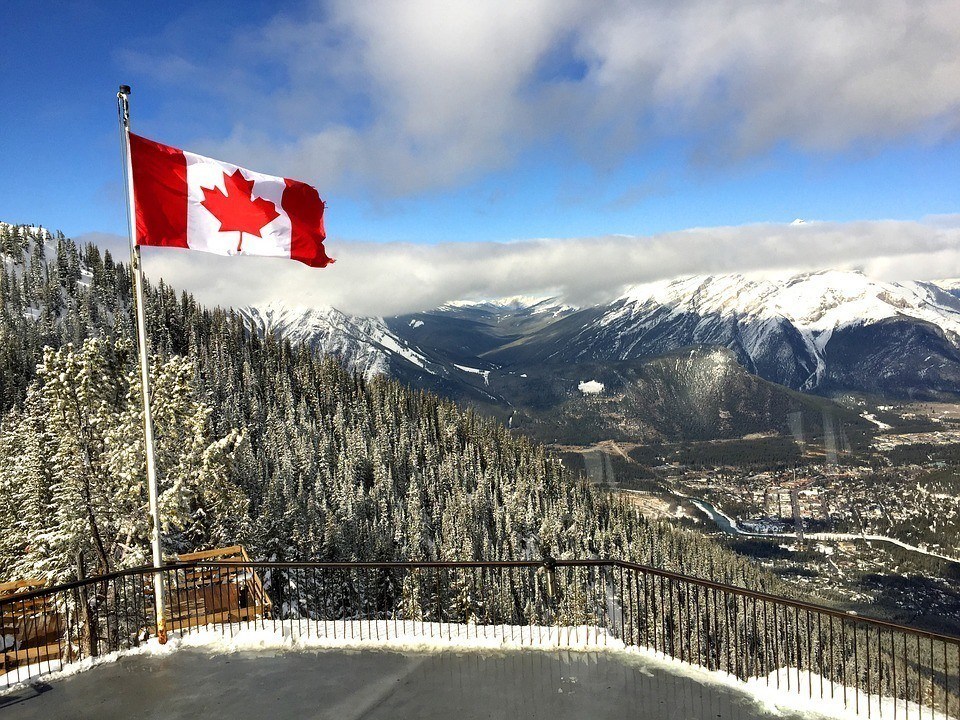
1. Maple leaf: the central symbolThe maple leaf became the main national symbol in 1965, after the suggestion of George Stanley. More specifically, the flag uses a 11-pointed maple leaf, which is highly stylized. The leaf that was finally chosen is a generic maple leaf, which represents the 10 species of the native maple tree in the country (at least one of these species grows in every province in Canada).

2. Canada didn’t have a national flag until 1965Until February 15, 1965, the country didn’t have an oficial national flag. In order to choose one, cause a number of conflicts between the public and the political ideas. So, they had to resolve this problem in the Canadian House of Commons. Until then, the country used the Red Ensign, which featured a union flag. Back then, many citizens didn’t want to get rid of this symbol. For example, a poll that was conducted in 1957 showed that 80% of the citizens wanted a distinct national flag, and 60% of those wanted a flag with the maple leaf. Eventually the problem was resolved in February 1965.

3. The National Colors for Canada: Red and WhiteIn 1921, red and white were named the national colors of the country by King George V. The red color is symbolic of England and the white color is symbolic of France. Moreover, the red represents the autumn color of the maple leaves. Since the 11th century, different nations were identified by the color of their cross, such as England that used a cross with white color and a background.

4. Dimensions of the Canadian FlagThe flag of Canada is twice as long as it is wide. Keep in mind that no other flag in the world has these dimensions. More specifically, the Canadian flag consists of 64 untis in length and 32 units in width or depth. In the center of the flag there is just a single maple leaf, which is red. In addition, the flag is symmetric (horizontally) and in such a way the obverse and reverse sides of the flag seem to be identical. Moreover, the width of the maple leaf is twice the height of the flag.

5. Dr. George Stanley was the designer of the Canadian FlagColonel Dr. G. Stanley was a professor of history in Kingston, Ontario, at Military College for royalties. He invented the new design, but he had to face a disputable audience, the Legion Convention of the country in Winnipeg. Eventually he managed to convince the Legionnaires on May 17th, that it was time to alter the red ensign and he proposed to replace it with a more distinctive maple leaf flag. Until the final design there were 5,000 flag designs; 5,000 flag designs were actually submitted and they were examined thoroughly. Finally they chose Dr. Stanley’s design.

Lester Pearson, the Prime Minister of the country, in 1964 formed a special committee and pressured the Parliament to make the final decision about the certain design of National Canadian flag.

You can find flags for sale


Thanks for reading! We hope you enjoyed our post. Please share with all your fellow patriots. Brought to you by: Ultimate Flags