Posted on

“Heroine of the Battle of Cowpens” – Catherine Moore Barry

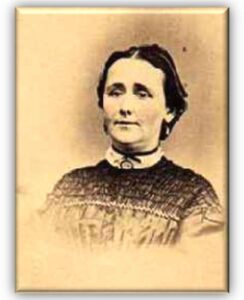
At the time American society did not easily permit women to take part in the Revolutionary War. But there were many women who definitely had a significant role in the formation of this country. One of them was Catherine (Kate) Moore Barry.

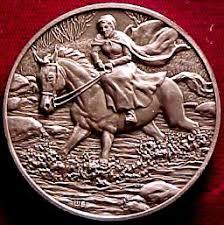
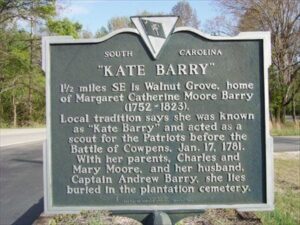
Kate was a true American heroine.When her husband, Andrew, became a captain and commanding officer in the war, she proudly helped him acting as a spy and messenger and even fought in some battles with him.  She is best known for her role in warning the American militia the British were about to invade, just before the decisive Continental Army victory at the Battle of Cowpens, January 17, 1781.

Acting as a scout for the American forces, Kate became known as the “Heroine of the Battle of Cowpens.”  She was an excellent horsewoman and knew every trail and shortcut around her South Carolina plantation.  Although there is no historical proof, it is said that she tied her baby to her bedpost and, using her knowledge and skills, gallantly rode her horse through Indian trails to warn her neighbors that the British were coming.

Kate had single-handedly rounded up an impressive amount of local Patriots to help General Morgan. With her help, Morgan laid a trap for General Corwallis and his men. After the trap proved a success, Cornwallis retreated right into the hands of George Washington in Yorktown, Virginia.

Thanks to the bravery of women like Catherine Barry, the victory at the the Battle of Cowpens became the turning point in the American War for Independence that ultimately led to the American colonies winning their independence. .

Yes, “girl power” from the 1780’s. Even then not all women were stay at home Moms.

Catherine (Kate) Moore Barry Historical Marker in South Carolina


Thanks for reading! We hope you enjoyed our post. Please share with all your fellow patriots. Brought to you by: Ultimate Flags

Posted on

“The Most Daring Courage”

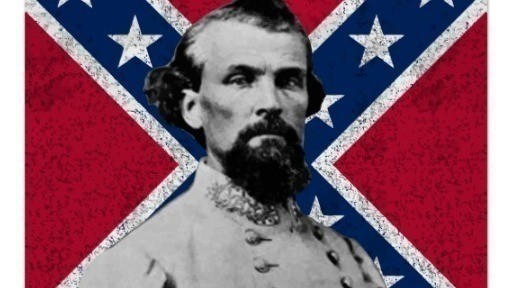
Nathan Bedford Forrest is one of ablest commanders on record, the only Civil War officer to go from Private at the beginning of the war to highest rank then used, Lieutenant General. Union General Sherman said Confederate Lt. General Forrest was “the most remarkable man our civil war produced on either side.” Sherman, regarded as a great strategist, wrote this about Forrest: “…he had a genius for strategy which was original, and to me incomprehensible. There was no theory or art of war by which I could calculate with any degree of certainty what Forrest was up to. He always seemed to know what I was going to do next.” Forrest was remarkably brave in battle. Private James Hamner described one of their early battles:   “The Col. (Forrest) was about 50 yards ahead of us fighting for his life. I believe there was at least fifty shots fired at him in five minutes. One shot took effect in his horse’s head, but did not kill him. He killed 9 of the enemy.” Of another early battle, General Clark wrote this of Forrest: “…he was conspicuous for the most daring courage; always in advance of his command. He was at one time engaged in a hand-to-hand conflict with 4 of the enemy, 3 of whom he killed, dismounting and making a prisoner of the fourth.” Forrest was noted for using a distinctive 12-star battle flag. He removed the middle star so his enemies knew exactly who they were fighting.

Thanks for reading. Please share our posts with your friends and family so they too can learn more about Southern Heritage and History.

Brought to you by: Ultimate Flags

Posted on

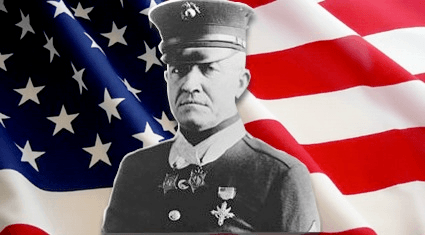
“The Fightinest Marine I Ever Knew”

The United States Highest award for “conspicuous gallantry and intrepidity at the risk of his life above and beyond the call of duty” is the Congressional Medal of Honor. In over 150 years only 19 men have won it twice.

One of the most legendary two time recipients is Marine Corps Sergeant Major Dan Daly. Here is the remarkable story of how he earned his Medals of Honor.It was in China, 1900. Daly was part of the U.S. Embassy Guard in Peking when the Boxer Rebellion broke out. American diplomatic buildings were about to come under siege. Marine Private Dan Daly volunteered to man a barricade about 100 yards forward of the main line of Marines, a position known as the Tartar Wall. If the Chinese rebels thought one man would be a pushover, they were soon to learn better.Armed with a bolt-action rifle and bayonet, Daly spent the night beating back the attackers.  When more Marines arrived the next morning, they found Daly puffing on a cigarette, surrounded by bodies of the enemy. Marine Corps legend puts the number at around 200.  

Daly’s Medal of Honor citation simply states,

“Daly distinguished himself by meritorious conduct.”

Fourteen years later Gunnery Sergeant Daly would earn his second Medal of Honor serving in Haiti fighting against the Cacos.

While attempting to ford a river at night, his 38-man Marine unit was ambushed from three directions by hundreds of insurgents.  The Marines fought their way across the river, but lost their heavy machine gun in the river. Given the odds, that machine gun meant the difference between life and death. Daly went back into the river, searching for the gun while the enemy surrounded their position.  He returned with gun and ammunition strapped to his back. The Marines split into three teams and attacked.  As one man noted afterward,

“Had one squad failed, not one man of the party would have lived to tell the tale.” A later report stated that Daly “was the most conspicuous figure.” He was awarded his second Medal of Honor. But Daly was not finished being a hero yet. He is probably best remembered within the Marine Corps for bravery in World War I.  In June 1918 at the battle of Belleau Wood, the Marines were pinned down under heavy artillery barrage. The 44 year old Daly, led a counter-attack with a battle cry that has become Marines lore,

“Come on, you sons of Bitches, do you want to live forever?!”

Later in the battle, Daly single-handedly eliminated a machine gun nest armed with his 45 pistol and grenades. In the course of the battle he was wounded three times.

Daly was recommended for a third Medal of Honor, and was ultimately awarded the Distinguished Service Cross, the Navy Cross and France’s Médaille Militaire.

Major General Lejeune, Commandant of the Marine Corps, called him “the outstanding Marine of all time.”

Major General Butler the only other Marine to have earned two Medals of Honor,  called him “The fightinest Marine I ever knew,” and wrote that “it was an object lesson to have served with him.”

Offered promotion several times, Daly once remarked, “I would rather be an outstanding sergeant than just another officer”

U. S.  Marine Sergeant Major Dan Daly stands tall in the history of America.


Thanks for reading! We hope you enjoyed our post. Please share with all your fellow patriots. Brought to you by: Ultimate Flags

Posted on

Perryville – “It was Death to Retreat”

The Battle of Perryville in Kentucky one of the most important battles of the American Civil War, but most people, including many Civil War buffs, know little about it..

Sam Watkins was there and he wrote about it in his famous memoirs. Sam served in the First Tennessee, Company H, and fought in every major battle that this Confederate unit was engaged in – Shiloh, Corinth, Stones River, Chickamauga, Chattanooga, the Atlanta Campaign, Franklin, and Nashville.

There were over 55,000 Union and nearly 17,0006,800 Confederate troops in the area. These numbers make Perryville the largest battle to have been fought in the Bluegrass State.

He writes about his experience,

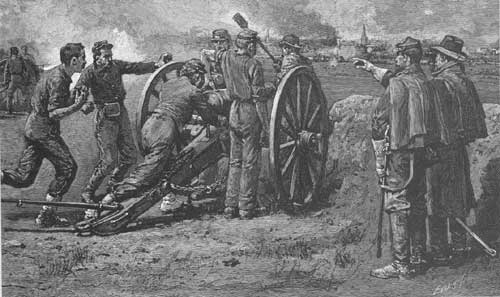
“I was in every battle, skirmish and march that was made by the First Tennessee Regiment during the war, and I do not remember of a harder contest and more evenly fought battle than that of Perryville.”The morning of the battle dawned, and the two sides “seemed to be eyeing each other.” Finally about noon, “they opened their war dogs upon us… and from one end of the line to the other seemed to be a solid sheet of blazing smoke and fire.”The Yankees and the Rebels were locked in “a mortal struggle” as the Rebels advanced.  Then Sam’s company encountered four cannons that fired into them:“We did not recoil, but our line was fairly hurled back by the leaden hail that was poured into our very faces… It was death to retreat now to either side.”These cannon were Napoleon guns, capable of firing 12-pound shots.The Rebels charged ahead and were soon in hand-to-hand fighting. Neither side wanted to yield.  Sam described it:“Such obstinate fighting I never had seen before or since….it seemed the earth itself was in a volcanic uproar.”

Confederate General Braxton Bragg also commented on the battle saying,

“for the time engaged it was the severest and most desperately contested engagement within my knowledge.”

Sam Watkins also wrote,

“I do not know which side whipped, but I know that I helped bring off those four Napoleon guns that night.”

Thanks for reading. Please share our posts with your friends and family so they too can learn more about Southern Heritage and History.

Brought to you by: Ultimate Flags

Posted on

Red Cloud – A True Hero

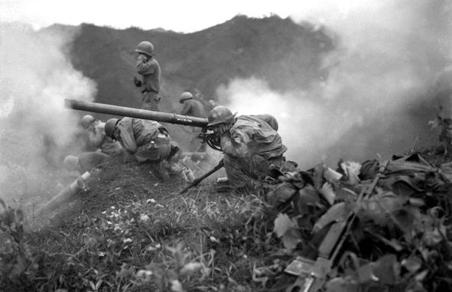
North Korean troops crossed the 38th Parallel in June 1950. President Harry S Truman ordered the 24th Infantry Division to head to Korea. Among the soldiers of the 24th was Mitchell Red Cloud, a Native American Ho-Chunk (Winnebago Tribe). A Marine veteran of WW II, he was one of Carlson’s Raiders at Guadalcanal, and took a bullet on Okinawa. Discharged after the war, he was back in uniform two years later to serve his country. His actions in Korea would earn him the Medal of Honor.One night Mitchell was at a forward observation post when he spotted the enemy charging from a brush-covered area, less than 100 feet away.  He opened fire with his Browning Automatic Rifle (BAR), and emptied magazine after magazine at point-blank range.

His citation read,

“His accurate and intense fire checked this assault and gained time for the company to consolidate its defense,”.Mitchell was hit twice. A medic applied dressings, and Mitchell resumed firing. He was hit again, but refused aid.“Corporal Red Cloud pulled himself to his feet, and wrapping his arm around a tree, continued his deadly fire again, until he was fatally wounded.”Because of Mitchell’s cover fire, the rest of his Company were able to withdraw to fortified positions. He gave his own life to save many.

And that is the definition of hero.


Thanks for reading! We hope you enjoyed our post. Please share with all your fellow patriots. Brought to you by: Ultimate Flags

Posted on

The Patriot Marksman

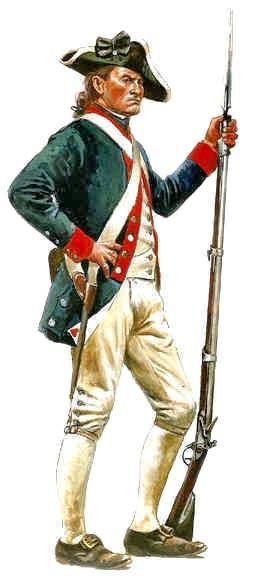
British Colonel George Hanger fought the American Continental Army in the Revolutionary War. He later said he had never seen better rifles than those made in America, nor men who could shoot better.

The British troops used the Brown Bess rifle, which could hit a man at 80 to 100 yards. It was unusual for a man to be even wounded by one if hit at 150 yards. But Hit a man at 200 yards?  

About that, Hanger wrote,

“you may just as well fire at the moon and have the same hopes of hitting your object.” As to British marksmanship, he thought little of it:

“excellent as they are to discipline the soldier and form him for parade and actual service in the line, the serjeant is just as capable of teaching him how to solve one of Sir Isaac Newton’s problems as to teach him to be a marksman.” But the Americans with their weapons and abilities, were a whole other story. Colonel Hanger wrote: “I have often asked what was the most they thought they could do with their rifle.  They have replied that they thought they were generally sure of splitting a man’s head at 200 yards, for so they termed their hitting the head.  I have also asked several whether they could hit a man at 400 yards.  They have replied certainly, or shoot very near him.” The Colonel experienced this Patriot marksmanship firsthand. He tells the a story of an American Patriot firing at him from 400 yards. The rifle ball missed him by a foot, but behind him a “horse staggered, fell down, and died.” Sorry about the poor horse, but good shot, indeed!


Thanks for reading! We hope you enjoyed our post. Please share with all your fellow patriots. Brought to you by: Ultimate Flags

Posted on

George Washington: Model of the Confederacy

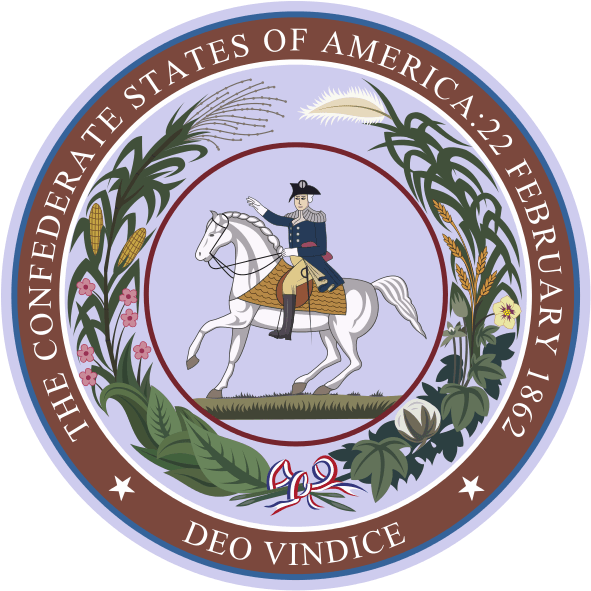
Soon after the formation of the Confederate States of America, the new government chose a national seal and motto: Deo Vindice: “God Will Vindicate”

The seal features George Washington on horseback, pictured in his uniform of the Revolution securing American independence. Washington is surrounded with a wreath, made of some of the main agricultural products of the Confederacy: wheat, corn, tobacco, cotton, rice and sugarcane. In the top margin of the seal are the words “The Confederate States of America: 22 February 1862”. This date on the seal commemorates the establishment of the new Confederate government in Richmond, Virginia with the inauguration of President Jefferson Davis – and it is also Washington’s birthday.But why George Washington?  

It’s easy to see. Washington was chosen as the model for the Confederacy because of his importance in founding a new nation. He was man of great personal character, a military leader who secured independence, and a new nation’s political leader.

Both North and South would claim Washington as their patron of democracy. No public figure stood higher in the public esteem. He was beloved by Northerners and Southerners alike. By 1861 he had come to symbolize everything virtuous and heroic about the American Revolution.

Historian Joseph J. Ellis wrote,

‘If there was a Mount Olympus in the new American republic, all the lesser gods were gathered farther down the slope from Washington.”

Since the Southerners claimed Washington as their guiding spirit, a member of the Georgia delegation to the 1861 Confederate constitutional convention in Montgomery, Alabama, proposed to name the new Southern nation ‘‘Republic of Washington.”

Jefferson Davis. In his inaugural address said,

“On this the birthday of the man most identified with the establishment of American independence, and beneath the monument erected to commemorate his heroic virtues and those of his compatriots, we have assembled to usher into existence the permanent government of the Confederate States.”

The Confederacy, he continued, would

“perpetuate the principles of our Revolutionary fathers. The day, the memory, and the purpose seem fitly associated….We are in arms to renew such sacrifices as our fathers made to the holy cause of constitutional liberty.”

Although neither Jefferson Davis nor Confederate General Robert E. Lee ever claimed the title for themselves, they were often called “Second Washingtons.”

Had he lived to see it, many say that George Washington would not have supported the Confederacy because of his stated commitment to one nation, indivisible.

But that didn’t prevent Jefferson Davis, Robert E. Lee, Thomas J. ‘Stonewall’ Jackson, and other leading Southerners from declaring that Washington  was a citizen of his state first, and of the United States second.

Maybe he would have been a Confederate, too, or maybe not. Who knows? It’s fun to think about it.  In any case, George Washington was definitely a hero and model of the Confederacy.

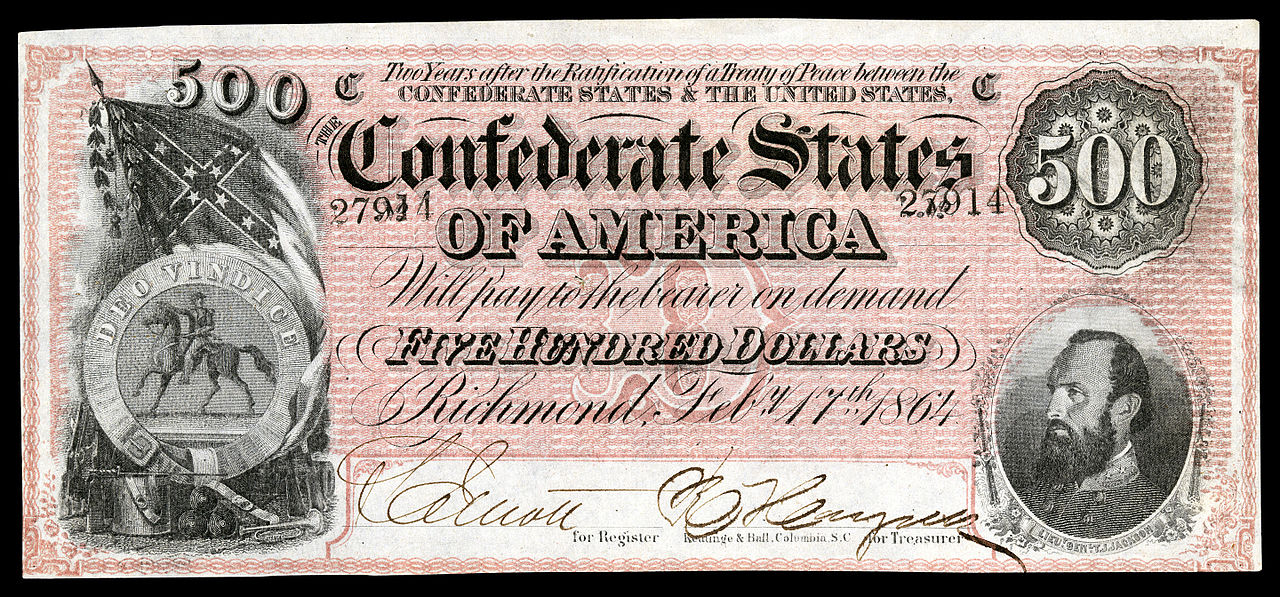
Confederate currency with Deo Vindice seal including George Washington

Thanks for reading. Please share our posts with your friends and family so they too can learn more about Southern Heritage and History.

Brought to you by: Ultimate Flags

Posted on

“Brothers, I am a Warrior.”

George Washington wrote these words during the American Revolutionary War. As a young man he had served with the British militia and saw that the British lacked understanding of Colonial warfare. Most of all they were unwilling to listen to good advice.  But this knowledge would serve him very well decades later.General Washington was a master of strategy. He knew his Colonial army was no match for a large and trained British army. So, he chose his battles carefully, and was willing to receive good advice.Washington required hard work and demanded discipline from his soldiers, and made sure he led by example. He stayed with his men at Valley Forge during the entire winter, the harshest one on record. 2,500 American soldiers died that year. During the seven years of war, he visited his home a total of only 10 days.

He later wrote about Valley Forge,

“To see the soldiers without clothes, without blankets, without shoes…without a hut to cover them…and submitting without a murmur… can scarcely be paralleled.”Washington was willing to lead his army from the front, and was famous for his courage in battle. The American soldiers knew Washington would not ask them to do something he himself would not do. They would go anywhere with him and do anything for him. So they bled for him and helped bring forth a brand new country..

It was no surprise that George Washington was unanimously elected as the first President of the new nation, the United States of America, and four years later was re elected.

One of Washington’s men who had accepted no pay wrote:

At the end of the war, Washington was a hero. Congress had given him powers that were equivalent to those of a dictator, and he could have taken full control of the new nation. Instead, Washington resigned, opening the way for us to enjoy the liberties we have today.

Washington’s character and leadership made him a true military and political hero and America’s role model.  


Thanks for reading! We hope you enjoyed our post. Please share with all your fellow patriots. Brought to you by: Ultimate Flags

Posted on

“I am a soldier and a good one.”

More Americans died in The Civil War than any other conflict. In fact, it took half of all Americans lost in all our wars.  Most of it was fought on Confederate territory.   It was a brutal conflict, yet many a man fought from beginning to end. Soldiers had little tolerance for the opinions of those not in the fray. One man wrote about them as

“men who have not spunk enough to leave their mammy…setting on their asses by warm fires and enjoying all the comforts of home, running down men who are enduring hardships all the time and risking their lives…” Soldiers fought with great courage. A chaplain wrote,

“Our battle-worn veterans go into danger when ordered, remain as a stern duty so long as directed, and leave as honor and duty allow.”

One captain explained,

“I am a soldier and a good one,” though he admitted he might complain and “growl” after a fight. But when “an order came to storm a battery, nary a squeal would I make.”   Men were pushed to the breaking point, but kept going. They knew they could trust the fellows next to them, men who had stood up to certain death before, and would do it again.

One Southern private explained, “We were defeated because bravery and human endurance were unequal to the undertaking.” Honoring those lost was particularly sacred in the South. Local women established memorial associations to create cemeteries. The departed that never returned were remembered in many ways, and still are to this day.

Thanks for reading. Please share our posts with your friends and family so they too can learn more about Southern Heritage and History.

Brought to you by: Ultimate Flags

Posted on

“A Volley of Buck and Ball Came Hurling”

Private Sam Watkins of Company H, 1st Tennessee Regiment chronicled his experiences in his writings “Co. Aytch.” It is considered to be one of the greatest memoirs ever written by a soldier of the field. He captures the experience of the common private soldier, from the hardships of camp life and battlefields, the camaraderie of a unit, and the Confederate pride felt by all.  Here is the story about his first battle.It seems they were marching along in the summer of 1861,

“when bang, debang, debang, bang, and a volley of buck and ball came hurling right through the two advance companies of the regiment—companies H and K.”  They had  marched right into an ambush.Sam wrote,

“…no one seemed equal to the emergency. We did not know whether to run or stand, when Captain Field gave the command to fire and charge the bushes. We charged the bushes and saw the Yankees running through them…”After the fighting, Sam said the

“corporals, sergeants, lieutenants, captains, all had torn all the fine lace off their clothing.”

He asked several of them why, and they always answered,

Humph, you think that I was going to be a target for the Yankees to shoot at?”

“You see, this was our first battle, and the officers had not found out that minnie as well as cannon balls were blind; that they had no eyes and could not see. They thought that the balls would hunt for them and not hurt the privates. I always shot at privates. It was they that did the shooting and killing…when we got down to close quarters I always tried to kill those that were trying to kill me.”

Sam Watkins Book

Thanks for reading. Please share our posts with your friends and family so they too can learn more about Southern Heritage and History.

Brought to you by: Ultimate Flags

Posted on

Brother Against Brother: A Tale of Two Scots

The Confederate Army had a number of soldiers who were Scottish or had Scottish ancestry.  Some of the Scottish units formed included the “Scotch Guards” from Alabama, the “Scotch Tigers” of North Carolina and the “Montgomery Highlanders” of Virginia. We will cover more about the Scots and their contribution to the Confederate cause in a separate article. 

The Civil War caused not only political divisions, but divisions within individual families. A story of note is about two Scottish born brothers, James and Alexander Campbell, who had come in the 1850’s to build new lives in America. When the Civil War broke out, they found themselves fighting against each other in their new homeland. They are the perfect example of a Brother against Brother conflict that happened more often than we like to think about during the Civil War.

James Campbell had settled in South Carolina, and became a member of the Charleston Battalion. Brother Charles, now from New York, became a member of the Union 79th New York Highlanders. They would ultimately face each other from opposite sides at the Battle of Secessionville in 1862.

The brothers corresponded with each other as the war carried on. They found themselves serving near Secessionville in 1862. When Federal Brother Alex learned of Confederate James’ location, he wrote to his wife on June 10:

“We are not far from each other now . . . this was a war that there never was the like of before Brother against Brother.

Neither knew it at the time, but they fought each other at the Battle of Secessionville. At Fort Lamar, Federal brother Alexander, a Color Sergeant in the 79th, planted the U. S. flag before the parapet and kept it there until ordered to withdraw. When Confederate resistance started to buckle, Confederate brother James, a Lieutenant, mounted the parapet unarmed, rolled a log down into the mass of advancing federal troops, seized a Federal musket, and continued fighting.

The Charleston Mercury later reported:

“The foe, it is true, displayed admirable courage, the famous Highland regiment, the 79th New York, occupied the prominent place in the picture, but their desperate onslaughts were of no avail against the stubborn resolve and lofty valor of our brave boys.”

The Charleston Courier editorialized on the two brothers, saying:

“another illustration of the deplorable consequences of this fratricidal war.”

It stated Alexander Campbell, “fought gallantly in the late action” and “displayed … a heroism worthy of his regiment and a better cause” while James Campbell “was conspicuous and has been honorable mentioned on our side.”

Afterwards Confederate James wrote his Federal Brother:

“I was astonished to hear from the prisoners that you was color Bearer of the Regmt that assaulted the Battery at this point the other day.” James continued, “I was in the Brest work during the whole engagement doing my Best to Beat you.”

He continued:

“…but I hope you and I will never again meet face to face bitter enemies on the Battlefield. But if such should be the case You have but to discharge your duty for your cause for I can assure you I will strive to discharge my duty to my country and my cause.”

Shortly after the battle, Confederate James, tried to visit his federal brother by going to the Union lines, but  Federal troops would not allow James to cross the lines nor allow Alex to be brought out for a meeting of the two brothers.

Alexander wrote his wife in New York:

I hope to God that he and I will get safe through it all and he will have his story to tell about his side and I will have my story to tell about my side.”

After the war, they went their own separate ways, but kept in touch with each other. James went to Charleston, and Alexander went to Connecticut. They forever remained on good terms with each other.. Both had been soldiers, heroes for their own cause, who had fought against each other. But nothing, not even that great war of division, could break their bond of brotherhood.


Posted on

Dogfighter of the Pacific: “Buck” Dungan

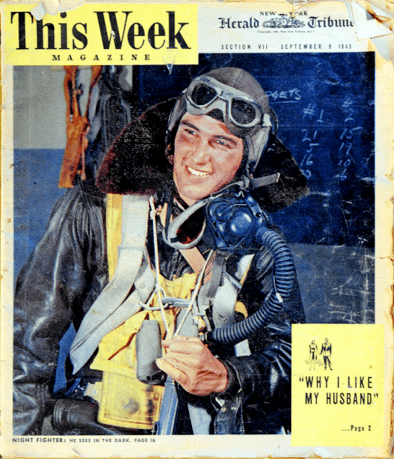
The man on the 1945 magazine cover above is Fred “Buck” Dungan.  In June of 1944 “Buck” Dungan and his wingman “Scoop” came out of the clouds over Guam, the only American aircraft on the scene. He saw 40 enemy aircraft,  20 bombers and 20 torpedo planes – preparing to land at Japanese-held Orote Field.  More enemy fighters swarmed above them, protecting the aircraft below. With a split-second decision, Buck radioed for the rest of his squadron to return, but then dove his Navy Hellcat in for an attack.   Buck shot down one plane, disabled another comin straight at him. More Hellcats arrived, but Dungan was in a wild fight for his life.  He shot down another adversary, who he says saluted him before going down.One of the enemy pilots later said that the American that dove down on them was “either the most stupid pilot in the world or the bravest.”  

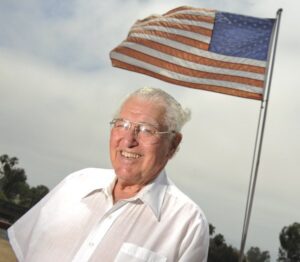
Most bet it was pure bravery. Buck earned the Distinguished Flying Cross that day. Only two weeks later, on July 4th, Buck was deep in it again over another island. There he shot down four enemy aircraft and assisted in sinking a destroyer. During the battle, he took a bad bullet wound but made it back to his carrier. For his actions, he was awarded the Navy Cross and Purple Heart. You can see his Navy Cross, Air Medal, Purple Heart and Distinguished Flying Cross below. And yes, in the middle, that’s the bullet he took in that last wild dogfight of his life. Pictured Right, Buck in later years.
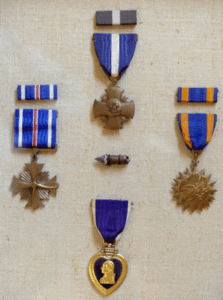
Buck’s Medals and Bullet


Thanks for reading! We hope you enjoyed our post. Please share with all your fellow patriots. Brought to you by: Ultimate Flags

US Navy Flag sewn and embroidered double sided

United States Navy Flag- Heavy Duty

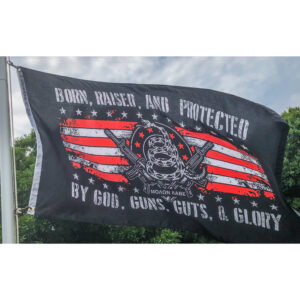
courage and guts flagGod Guns Guts & Glory Flag

POW MIA Flag sewn and embroidered

POW MIA Flag- Heavy Duty 

GW quote flag 1776 TJ When Tyranny Becomes Law

When Tyranny Becomes Law Flag