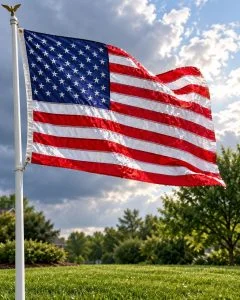
Best overall for fade resistance: a 2-ply spun polyester American flag, because its heavier weave is the fabric feature most consistently tied to slower color loss in all-day sun. Best for light-wind porches: an embroidered nylon flag, which flies in the faintest breeze and dries fast after rain. Best budget option: a printed polyester flag, the right pick when you would rather replace it sooner than spend more up front.
- 2-ply spun polyester is the best outdoor American flag for all-day sun.
- Embroidered nylon wins for light wind and fast drying after rain.
- Printed flags fade first because the ink sits on the surface.
- Red stripes show sun fade before the blue canton on most flags.
- Match the flag to your wind and sun before comparing prices.

Why fade resistance matters more than thread counts
A flag spends its life being slowly sandblasted by sunlight. Ultraviolet light breaks down dye molecules and fabric fibers at the same time, and the side of the flag facing the sun takes the worst of it. That is why the question buyers ask first — how long will the colors last — is really a question about fabric, not about stitching counts or branding.
The honest answer is that every outdoor flag fades eventually. The 2026 question worth asking is which fabric fades slowest in your particular yard: a flag on a shaded, breezy porch ages nothing like a flag on an open pole in a field with southern exposure. This guide ranks the common fabric-and-construction combinations by how well they hold their color, so you can match the flag to the sun it will actually live in.
What makes the best fade-resistant outdoor American flag
Before the ranking, here is what the comparison weighs. Any flag judged on these five points holds color longer than one chosen from a photo alone.
- Fabric weight and plies. A 2-ply flag uses two yarns twisted together, which makes a heavier, more opaque cloth. More fabric between the dye and the sun means slower fade.
- Dye penetration. Woven fabrics hold dyed yarn, so color sits throughout the thread. Printed designs put ink on the surface, where the sun reaches it directly.
- Wind fit. A flag that flaps violently in too much wind wears thin at the fly end first, and thin fabric fades fast. A flag matched to its breeze keeps its coating of fiber longer.
- Fly-end construction. The fly end takes the most abuse. Reinforced rows of stitching there keep the flag's shape, which matters because a sagging, threadbare fly end reads as faded even when the color is fine.
- Realistic replacement plan. Fade resistance buys time, not immortality. The best setup is the fabric that gives you the longest acceptable-looking life per dollar in your exposure.
Fade-resistant outdoor American flags at a glance
| Flag type | Best for | Standout feature | Key limitation |
|---|---|---|---|
| 2-ply spun polyester, embroidered | Open yards with all-day sun | Heaviest, most opaque weave | Heavier; needs a decent breeze to fly well |
| Embroidered nylon | Porches and light-wind spots | Flies in the faintest breeze, dries quickly | Lighter cloth; fades sooner in full sun than 2-ply |
| Printed polyester or nylon | Budget and seasonal displays | Lowest cost per flag | Ink sits on the surface, so it fades first |
| Poly-cotton outdoor blend | Traditional look, part-time display | Cotton's rich, vintage appearance | Absorbs water; not for constant all-weather use |
1. 2-ply spun polyester: best fade resistance for all-day sun
This is the flag you put on the pole that never gets a break. Spun polyester is woven from finer, twisted yarns in a denser weave than standard polyester, and 2-ply construction doubles that up into a heavy cloth that feels closer to cotton than to a sail. The extra thickness is exactly what slows the sun down: color in a woven, dyed fabric runs through the yarn, so there is simply more dyed fiber for ultraviolet light to work through before the flag looks washed out.
The embroidered versions carry that advantage onto the design itself. Embroidered stars and sewn stripes are made from dyed thread stitched through the cloth, not ink laid on top of it, which is why an embroidered 50-star canton keeps its definition long after a printed one has gone pinkish at the edges.
2-ply spun polyester pros:
- Heaviest common flag fabric, so it blocks the most sun per square inch
- Dyed yarn carries color through the thread, not just across the surface
- Embroidered stars and sewn stripes hold sharp detail for years
- Handles rough, windy sites better than lighter cloth
2-ply spun polyester cons:
- Needs a reasonable breeze to fly fully; it can look droopy on still mornings
- Heavier weight puts more load on hardware, so check your pole's rating
- Costs more up front than printed flags of the same size
Best for: open lawns, coastal and plains wind, and any 2026 display that faces unshaded sun for most of the day.

2. Embroidered nylon: best for light wind and quick drying
Nylon is the lightweight champion. It unfurls in a breeze barely strong enough to move a trash bag, which makes it the right flag for porches, courtyards and anywhere the wind arrives politely rather than in gusts. It also sheds water: nylon absorbs little moisture, so after a rain it dries in short order instead of staying heavy and damp against your pole.
On fade resistance, nylon sits a clear second to 2-ply polyester. The cloth is thinner, so the sun works through it faster, and on most flags the red stripes show fading before the blue canton does. The embroidery helps — embroidered stars and lettering keep their color and relief long after flat printed areas have dulled — but if your display gets twelve hours of direct sun, the polyester option above is the more fade-resistant choice.
Embroidered nylon pros:
- Flies in the lightest breeze of any common flag fabric
- Dries quickly after rain, which discourages mildew and water staining
- Embroidered details stay sharp and dimensional for years
- Available in a full size run, from 3×5 ft up through 6×10 ft and beyond
Embroidered nylon cons:
- Thinner cloth fades sooner than 2-ply polyester in identical full-sun sites
- Too light for very windy exposures, where it will wear at the fly end
Best for: shaded or half-shaded porches, light-wind neighborhoods, and buyers who want a sharp-looking flag on display every day without heavy wind load.

3. Printed polyester: best budget pick for seasonal and part-time display
A printed flag gets its design from ink laid on the surface of the cloth, and that is the whole story of its fade resistance. The sun works on that ink directly, with no thickness of dyed yarn in the way, so a printed flag shows fade before a dyed-and-sewn flag in the same spot — usually on the red stripes first.
That limitation is also why it earns a place in this ranking. For a lake house you visit on weekends, a holiday display, or a banner that comes down between occasions, a printed flag gives you a bright, complete design at the lowest cost, and the sun simply never accumulates enough hours to matter. Buy it for part-time duty, plan to replace it sooner under permanent display, and it is the most sensible flag on this list.
Printed polyester pros:
- Lowest cost per flag, which makes replacements painless
- Bright, complete design including fine details printing handles well
- Light in weight, easy to fly on short poles and porch mounts
Printed polyester cons:
- Surface ink fades first in steady sun; weakest fade resistance here
- Thinner cloth wears faster in wind than sewn or 2-ply flags
Best for: seasonal displays, vacation homes and any flag that spends more time stored than flying.
Why flags fade and what actually slows it
- Ultraviolet hours. The total sun the flag absorbs is the biggest factor. A south-facing pole with no shade accumulates UV hours several times faster than a porch flag.
- Fabric thickness. Thicker, tighter weaves shade their own dye. This is the core advantage of the 2-ply polyester ranked first above.
- Dye method. Woven, dyed yarn keeps color through the thread; printed ink sits on the surface where light hits it directly.
- Wind abrasion. A flag flapping in too much wind thins its own fabric, and thin spots fade first. Right-sizing the flag to the pole and site slows this down.
- Cleanliness. Dust, pollen and road film hold moisture and grime against the dye. A flag brought down and washed gently a couple of times a year keeps its color noticeably longer.
For the sizing half of that equation — matching flag dimensions to a home pole — the practical checklist in How do you choose outdoor American flags for your home? covers pole heights and clearances in detail.
When you are ready to Shop Ultimate Flags Store, the embroidered nylon and 2-ply polyester outdoor flags shown above are the two constructions this ranking would put on a permanently displayed pole in 2026.
How we ranked
The ranking weighs fade resistance first, everyday flyability second and cost last. 2-ply spun polyester leads because fabric thickness and dyed-through yarn are the two features most consistently tied to slow color loss in continuous sun. Embroidered nylon follows for its flyability and fast drying, accepting a shorter life in full sun. Printed polyester ranks third on fade resistance alone but wins the value slot for part-time displays. No ranking here depends on any single retailer's claims; it rests on how each construction is made.
Which fade-resistant outdoor American flag should you choose?
If your flag flies in open, unshaded sun all day, choose the 2-ply spun polyester embroidered flag — it is the most fade-resistant construction commonly sold. If your porch sees light wind and some shade, choose the embroidered nylon. If the flag comes down between weekends or seasons, the printed polyester is the honest budget pick. Match the fabric to the sun first, the wind second, and the purchase order writes itself.
FAQ
What is the best fade-resistant outdoor American flag?
A 2-ply spun polyester American flag with embroidered stars and sewn stripes is the best fade-resistant choice for all-day sun in 2026. Its heavy, tightly woven cloth shades its own dyed yarn, so color lasts longer than on lighter fabrics.
Is nylon or polyester better for a flag that fades?
Polyester resists fade better because it is woven thicker, while nylon is lighter and flies in less wind. For a full-sun, open-yard display choose 2-ply polyester; for a breezy shaded porch, embroidered nylon is the smarter match.
Do embroidered flags fade less than printed flags?
Yes. Embroidered designs are stitched from dyed thread through the cloth, while printed designs are ink on the surface where the sun hits them directly. On printed flags the red areas usually show fading first.
What color fades first on an American flag?
On most outdoor flags the red stripes fade before the blue canton, because red dyes break down faster under ultraviolet light. Checking the red stripes is the quickest way to judge how a flag is aging.
How long does an outdoor American flag stay colorful?
It depends on sun hours, wind and fabric more than on any fixed schedule. A 2-ply polyester flag in a harsh full-sun site and a printed flag on a shaded porch can age at similar rates, so match fabric to exposure instead of counting months.
What size American flag should I fly at home?
A common pairing is a 3×5 ft flag on a 20-foot pole, with larger flags for taller poles. Measure your pole and clearance first, then pick the size that flies without snagging, as covered in the pole-fitting guide linked above.
How do I make my American flag fade less?
Choose a heavier dyed fabric, wash the flag gently a couple of times a year to remove grime, and take it down in the worst afternoon sun if you can. Bringing a flag indoors during storms also protects both color and fabric.
One last thing
The most fade-resistant thing about a flag is not on the flag at all — it is the habit of taking it down. Washing a flag gently twice a year and storing it dry removes the grime that grinds dye away, and no fabric on this list survives a bad pole fit no matter how good its cloth is. Buy the 2-ply polyester for the sunny pole, inspect the fly end monthly, and the colors you buy in 2026 will still read true when the next buying season comes around.
Related guides
- How do you distinguish a 48 star flag replica from an antique?
- How do you inspect an embroidered American flag?