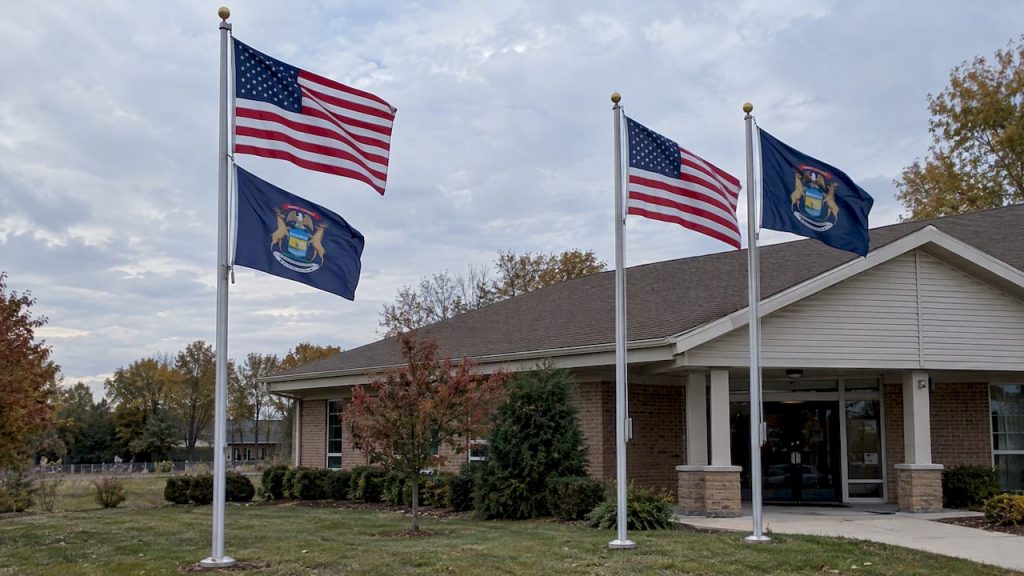
When displaying multiple flags, the U.S. flag must occupy the place of honor: highest or center, positioned at the observer’s left, and no other flag may rise above it on American soil. On a single halyard, the U.S. flag claims the peak while every companion flag flies beneath it, and flags representing other nations require their own separate staffs. The sections below walk through the statutory foundation and the hands-on steps that bring these principles to life.
TL;DR:
- A pole 20 feet tall can usually carry one companion alongside a U.S. flag measuring 3 by 5 feet; adding more risks tangling.
- Foreign national flags should use separate staffs of equal height and approximately equal size; United Nations headquarters traditionally displays member flags equally.
- When flags share a pole, place the POW/MIA flag directly beneath the U.S. flag, followed by state flags, then military branches in establishment order.
- When the flag flies halfway down, raise it to the peak first, pause, then lower it; on Memorial Day, raise it again at noon.
- Leave 12 to 24 inches between flags on one pole, and inspect clips monthly for rust or cracks that could let a flag fall.
Table of Contents
- 1. Core rules every flag display must follow
- 2. Flying more than one flag on the same pole
- 3. Displaying the U.S. flag alongside foreign national flags
- 4. Ordering state, military, and POW/MIA flags correctly
- 5. Indoor displays, speaker platforms, and vertical arrangements
- 6. Handling half-staff when several flags fly together
- 7. Hardware, spacing, and material choices for multi-flag poles
- 8. What we’ve learned helping customers get this right
- Find the right flags and hardware for your display
- FAQ
- Sources
1. Core rules every flag display must follow
The authority behind these customs lives in 4 U.S.C. §7, the section of the Flag Code that governs position and manner of display. It establishes that our national banner occupies the center and the highest point whenever flags are grouped, and that no flag may be placed above it or to its right on U.S. soil. The phrase “place of honor” refers to the position at the flag’s own right, which appears as the observer’s left when you’re facing the display, a detail that trips up even careful planners.
A few absolutes guide every proper arrangement we help customers build:
- The U.S. flag leads every procession and color guard, never trailing behind another flag.
- When staffs are crossed, the U.S. flag’s staff crosses in front of the other staff.
- No flag is raised above or hoisted faster than the U.S. flag during simultaneous hoisting.
- The U.S. flag is never used for advertising purposes or subordinated to decorative intent.
Our guide to properly displaying and respecting the American flag expands on these fundamentals for readers who want the full picture before building a multi-flag arrangement.
2. Flying more than one flag on the same pole
When flags share a single pole and halyard, the Flag Code calls for the U.S. flag at the peak, above every other banner on that line. Beneath it, you might fly a state flag, a military flag, or an organizational banner, each occupying a clearly subordinate position.
Before you add a second or third flag, weigh the pole’s height, the size of each flag, and the overall visual balance the display will strike. A 20-foot pole flying a 3×5 foot U.S. flag can usually accommodate one companion flag gracefully; crowding more onto that same halyard often creates tangling and visual clutter rather than tribute.
- Attach the U.S. flag to the top clip first, ensuring it sits at the peak of the halyard.
- Attach subordinate flags below it in descending order of precedence.
- Space clips to prevent flags from twisting around each other in wind.
- Check snap hooks and swivels periodically for wear that could let a flag slip out of order.
Pro Tip: Rotating swivel hardware reduces wind tangling significantly when two flags share one pole.
3. Displaying the U.S. flag alongside foreign national flags
When our flag flies with the flags of other nations, the governing principle shifts from “above” to “equal.” The Office of the Chief of Protocol at the U.S. Department of State explains that flags of two or more nations should be flown from separate staffs of the same height and approximately equal size, a peacetime convention meant to avoid placing one nation’s flag in a position of dominance over another.
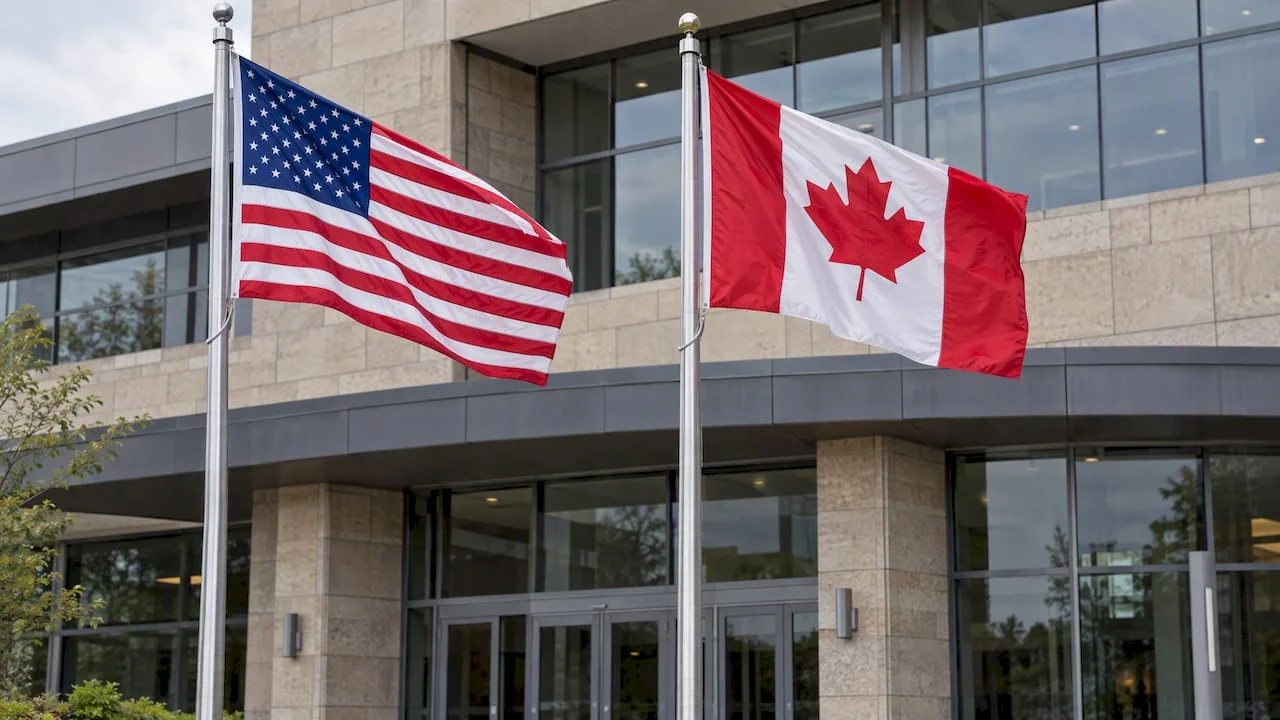
Within that arrangement, the U.S. flag still takes the position of honor, which in a line of staffs means the observer’s left, or the flag’s own right. An exception exists at United Nations headquarters and similar international settings, where member flags are traditionally displayed at equal height regardless of nationality.
A typical layout for the U.S. flag alongside three foreign national flags:
- U.S. flag on a separate staff, positioned at the observer’s left.
- Foreign flags on their own equal-height staffs, arranged alphabetically to the right.
- All staffs matched in height and flag dimensions to preserve visual parity.
- No staff crossing or overlapping between national flags.
4. Ordering state, military, and POW/MIA flags correctly
Group displays involving state, territorial, and service flags follow a widely recognized order of precedence. Military branch flags customarily appear in this sequence: Army, Marine Corps, Navy, Air Force, Space Force, and Coast Guard, reflecting each branch’s date of establishment.
The POW/MIA flag occupies a uniquely honored spot in this hierarchy. VFW flag etiquette guidance notes that when flags fly on the same pole beneath the U.S. flag, the POW/MIA flag is commonly placed immediately beneath it, a position of prominence that reflects its federal recognition even though no single statute mandates that exact placement. Our POW/MIA flag rules guide covers this history and the products built to honor it properly.
For broader group displays, a practical sequence looks like this:
- U.S. flag at the peak or center position.
- POW/MIA flag immediately beneath, when present.
- State or territorial flag next in line.
- Military branch flags in order of establishment.
- Organizational or civic flags last.
5. Indoor displays, speaker platforms, and vertical arrangements
Indoor settings carry their own conventions. When the U.S. flag stands on a staff beside a speaker, it belongs to the speaker’s own right, which places it on the audience’s left as they face the platform. When displayed flat against a wall behind a podium, it hangs above and behind the speaker.
Crossed staffs indoors follow the same logic as outdoor displays: the U.S. flag’s staff crosses in front of the other staff, with our flag positioned on its own right. Vertical displays, whether hanging from a building or a wall, require the union (the blue field of stars) to appear at the observer’s left, a detail our vertical flag rules guide illustrates for mixed national displays.
A few notes for tight indoor spaces:
- Keep the U.S. flag’s staff taller or positioned more centrally than any companion staff.
- Avoid stacking more than two or three flags in a small room, since crowding undercuts prominence rather than reinforcing it.
- The American Legion notes that tasteful presentation often makes a single, well-placed U.S. flag more effective than multiple flags crowded together indoors.
6. Handling half-staff when several flags fly together
Half-staff procedure begins with a full hoist to the peak, a brief pause, then a lower to the half-staff position. At day’s end, the flag returns to the peak before being lowered for retirement, never lowered directly from half-staff.
When subordinate flags share the same pole, they remain below the U.S. flag at all times, even as it moves to half-staff; the relative order never changes. On adjacent staffs, custom generally follows the same hoist-and-lower sequence for each flag independently.
- Memorial Day calls for a distinctive pattern: flags fly at half-staff until noon, then rise to the peak for the remainder of the day.
- Other half-staff observances typically run for the full day or a designated period set by proclamation.
- Subordinate flags on the same pole stay beneath the U.S. flag regardless of the day’s protocol.
7. Hardware, spacing, and material choices for multi-flag poles
Many residential and commercial poles use an internal halyard system, a design that complicates adding a second flag because the internal cable wasn’t built for multiple attachment points. When that’s the case, a separate staff or a specialized multi-flag attachment often solves the problem more cleanly than forcing a crowded single line. Our flagpole types guide walks through which pole styles accommodate companion flags most easily.
Spacing matters as much as hardware. A gap of roughly 12 to 24 inches between flags on the same pole helps prevent the fabric from beating against the clip below it, which shortens the life of both flags. Checking that spacing, along with snap and swivel condition, should become a routine part of maintenance rather than an afterthought.
- Inspect snap hooks and swivels monthly for rust or stress cracks that could drop a flag unexpectedly.
- Examine seams and stitched edges for fraying, especially near the fly end where wind stress concentrates.
- Rotate or replace flags showing sun fade before the fabric weakens enough to tear.
- Confirm spacing between flags remains consistent after high-wind days, since clips can slide.
Nylon flags tend to fly more freely in light wind and dry quickly after rain, while polyester holds up better in sustained heavy wind, a consideration worth weighing when pairing two flags of different expected wear patterns. Our flag qualities and uses guide breaks down which material suits which climate and display frequency.
Pro Tip: Matching both flags in the same material keeps wear rates consistent, so you’re not replacing one flag twice as often as its companion.
8. What we’ve learned helping customers get this right
Across years of fielding questions from homeowners, veterans’ organizations, and civic groups, we’ve found that most multi-flag mistakes come from guessing at hardware rather than guessing at the rules. Pairing flag sizes correctly, choosing the right pole height, and selecting hardware that won’t tangle matters just as much as knowing where the POW/MIA flag belongs.
We provide resources to help with sizing and hardware questions, and our top ten things to do with flags page offers a broader look at practical display ideas beyond the strict rulebook.
— John Hough
Find the right flags and hardware for your display
We offer a wide selection of flags and related hardware to support your display needs, including various flag collections and flagpoles for proper mounting.

Our flag qualities and uses guide and flagpole types guide walk you through material and hardware choices before you buy, so your display is built right the first time. Browse our collections now and get the pieces your arrangement deserves.
FAQ
What are the five rules of vexillology?
Vexillology, the study of flags, doesn’t have one universally cited “five rules” list, but core design principles emphasize simplicity, meaningful symbolism, limited colors, no lettering or seals, and distinctiveness from other flags. These design guidelines differ from display etiquette, which is governed separately by sources like the Flag Code.
What is the order of precedence for displaying the US flag?
The U.S. flag always occupies the highest position, the center, or the observer’s left when grouped with other flags, as set out in 4 U.S.C. §7. State, military branch, and organizational flags follow beneath or beside it according to customary precedence, with POW/MIA flags commonly placed directly beneath the U.S. flag per VFW guidance.
What are the 5 American flag rules?
Common guidance includes never letting the flag touch the ground, never flying it upside down except as a distress signal, never using it for advertising, always giving it the position of honor, and always retiring it with dignity when worn. These practices are detailed in the Flag Code and reinforced by groups like the American Legion.
Can I hang two flags on the same pole?
Yes, and the American Legion confirms there’s no statutory limit on how many flags share one pole, though pole height, flag size, and tasteful presentation should guide the decision. The U.S. flag must occupy the peak position on that pole, with every other flag flying beneath it.
Sources
- 4 U.S.C. §7 — Position and manner of display
- Flag Etiquette — Veterans of Foreign Wars (VFW)
- U.S. flag myths, FAQs & terminology — The American Legion
- Protocol frequently asked questions — Office of the Chief of Protocol, U.S. Department of State