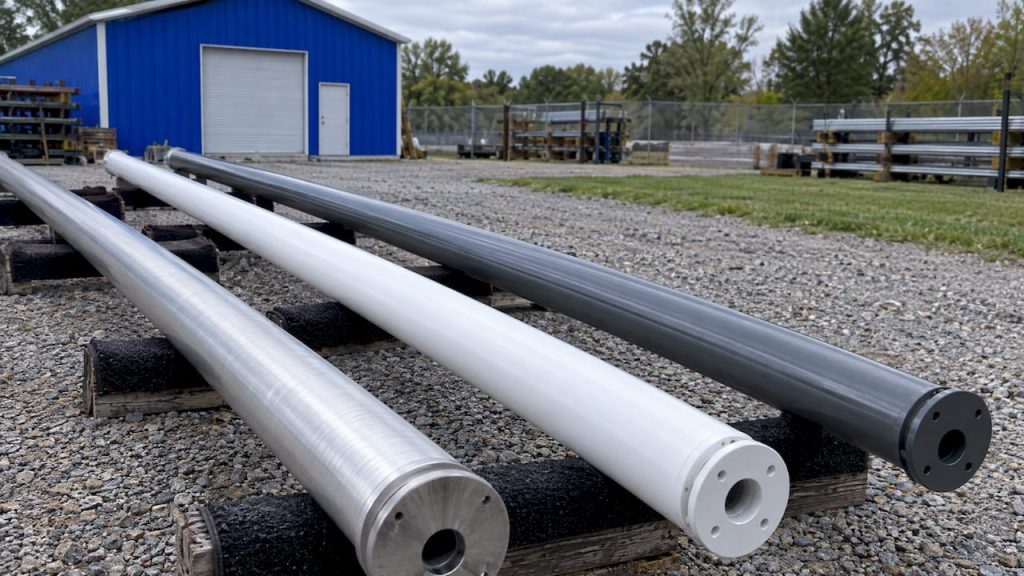
A flagpole is a promise. You raise it once and ask it to carry your colors through summer storms, winter ice and years of sun. The material it is made from decides how well it keeps that promise. For most homes, posts and halls, aluminum is the dependable all-rounder, fiberglass is the choice where flexibility and a quiet halyard matter, and steel belongs to tall, heavily loaded installations. Below is how to match each to your wind, your weather and the flag you fly.
TL;DR
- Aluminum is the everyday choice: light, rust-resistant and easy to live with, from a 6-foot house-mounted staff to a tall residential pole.
- Fiberglass flexes in gusts and shrugs off corrosion, which suits exposed or coastal sites.
- Steel is built for height and load, such as public buildings and large grounds, and needs its protective coating kept intact.
- Wind matters more than the material label: a pole’s design must account for the wind speeds at your site, and the footing counts as much as the shaft.
- Pick the pole height first, then the material. Our house flagpole size guide makes that step simple.
Table of Contents
- Start with the job, not the metal
- Aluminum: the dependable standard
- Fiberglass: flexible, quiet, and weather-hardy
- Steel: strength for height and load
- Aluminum vs fiberglass at a glance
- Steel vs aluminum: which one for your pole?
- What about wood?
- Wind, footing and the things the material label does not tell you
- Match the flag to the pole
- A quick way to decide
- Where to find the pole and hardware
- Our perspective
- FAQ
- Sources
Start with the job, not the metal
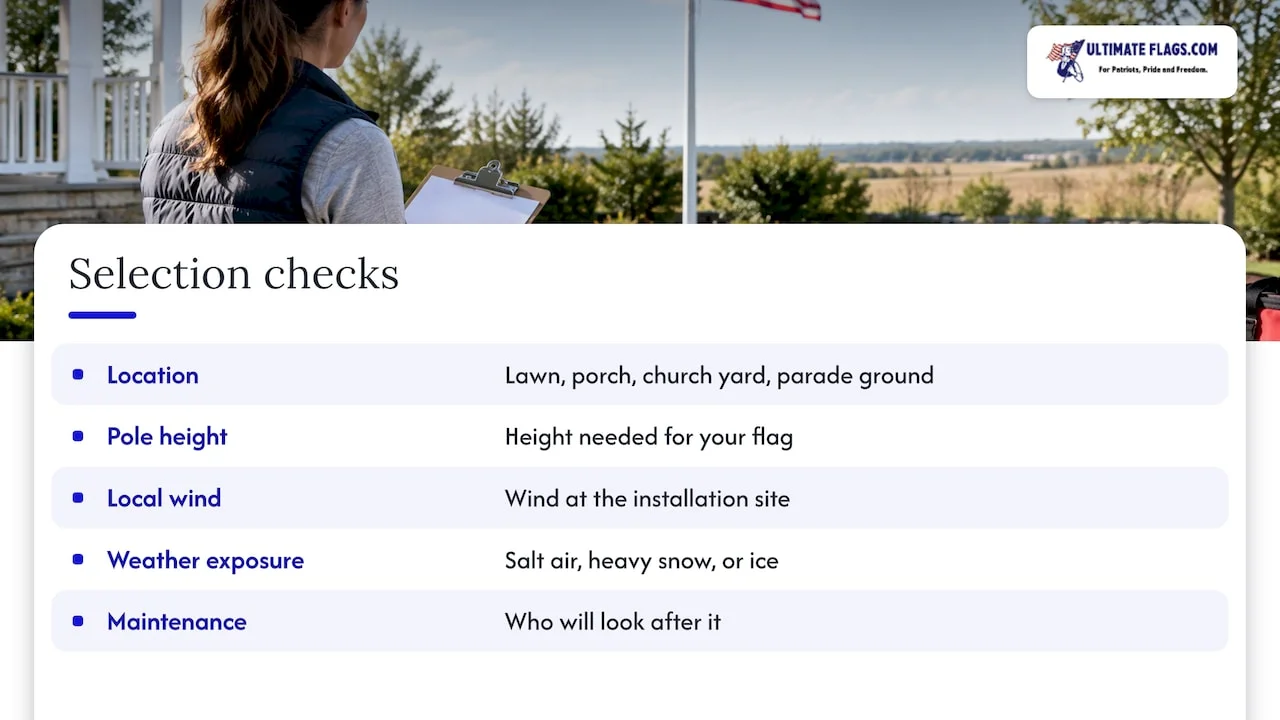
Before comparing materials, answer four plain questions. Where will the pole stand: a front lawn, a porch bracket, a church yard, a parade ground? How tall must it be for the flag you want to fly? How hard does the wind blow there, and does salt air, heavy snow or ice come with it? And who will look after it, a veteran who wants to raise it and forget it, or a post with a maintenance crew?
Those answers narrow the choice faster than any spec sheet. A 15-foot or 20-foot residential pole faces a different life than a 40-foot pole beside a highway. If you are still sizing, read our guide to flagpole types and footing rules for a home or business, then come back here to settle the material.
Aluminum: the dependable standard
Aluminum is the material most American households meet first, and for good reason. It is light, so a pole can be handled and installed without heavy equipment. It does not rust the way bare iron does, because aluminum forms a thin protective oxide on its surface. And with an anodized or powder-coated finish it holds its look for years with little more than an occasional wash.
Where aluminum fits best
- Residential poles for one- and two-story homes
- House-mounted and porch-bracket staffs
- Inland sites with ordinary wind exposure
- Anyone who wants a pole that asks for almost no upkeep
A home flag display is often a bracket and a short staff rather than a full in-ground pole. Our 6 ft aluminum anti-furl rotating pole is built for exactly that setup, with a rotating mount that is designed to keep the flag from wrapping around the staff. You can browse every staff length in our 6 foot poles and 5 foot poles listings.
Aluminum is also a conductor of electricity, a point worth remembering around storms. Keep any pole, whatever its material, well clear of power lines when you raise or lower it, and never handle a tall pole during a thunderstorm.
Fiberglass: flexible, quiet, and weather-hardy
Fiberglass poles are made of glass fibers set in resin. The material is naturally non-metallic, so it does not rust, and it has some give: in a gust the pole bends and recovers rather than fighting the wind. Many owners also like that fiberglass is quieter than metal when a halyard (the rope that raises the flag) is moving.
Where fiberglass fits best
- Exposed, windy or coastal properties
- Sites where corrosion is the main worry
- Owners who prefer a smooth, modern finish and a calmer pole in the breeze
Over many years of sun the outer surface of fiberglass can weather, so a periodic look at the finish is part of ownership. That is a matter of care, not a reason to avoid it.
Steel: strength for height and load
Steel is the heavyweight. Where a pole must be very tall or carry a very large flag, steel offers the strength that lighter materials give up. That is why you see steel poles at stadiums, ports and public buildings. Because bare steel will rust, it needs galvanizing or a durable coating, and keeping that coating whole is how a steel pole lasts for decades.
Where steel fits best
- Tall commercial or civic poles
- Large flags such as a big USA flag flown on open grounds
- Installations with engineered foundations and a maintenance plan
For an ordinary yard, steel is often more pole than you need, and its weight makes installation a bigger job.
Aluminum vs fiberglass at a glance
This is the question most buyers actually ask. The table below summarizes how the two compare in typical residential use. It reflects general characteristics, and individual poles vary by wall thickness, finish and maker.
| Factor | Aluminum | Fiberglass |
|---|---|---|
| Weight | Light | Light |
| Behavior in wind | Rigid, strong | Flexes and recovers |
| Rust | Does not rust; oxide layer protects | Does not rust |
| Noise with halyard | Can tap in wind | Typically quieter |
| Upkeep | Occasional wash | Occasional finish check |
| Typical home use | Very common | Common in exposed sites |
If your property sits inland and sees ordinary weather, aluminum is the straightforward pick. If your site is battered by wind or salt air, fiberglass deserves a close look.
Steel vs aluminum: which one for your pole?
The two differ mainly in scale. Aluminum is the standard for homes, schools and small businesses. Steel steps in as height and load climb. Aluminum arrives light and already resistant to corrosion; steel arrives strong and depends on its coating.
A simple rule helps. If your pole will be 25 feet or shorter and your flag a standard size, aluminum covers you. If you are planning a tall pole for a large flag on commercial or civic grounds, talk through the structural requirements with a qualified installer or engineer, because height and load are engineering questions as much as material ones.
What about wood?
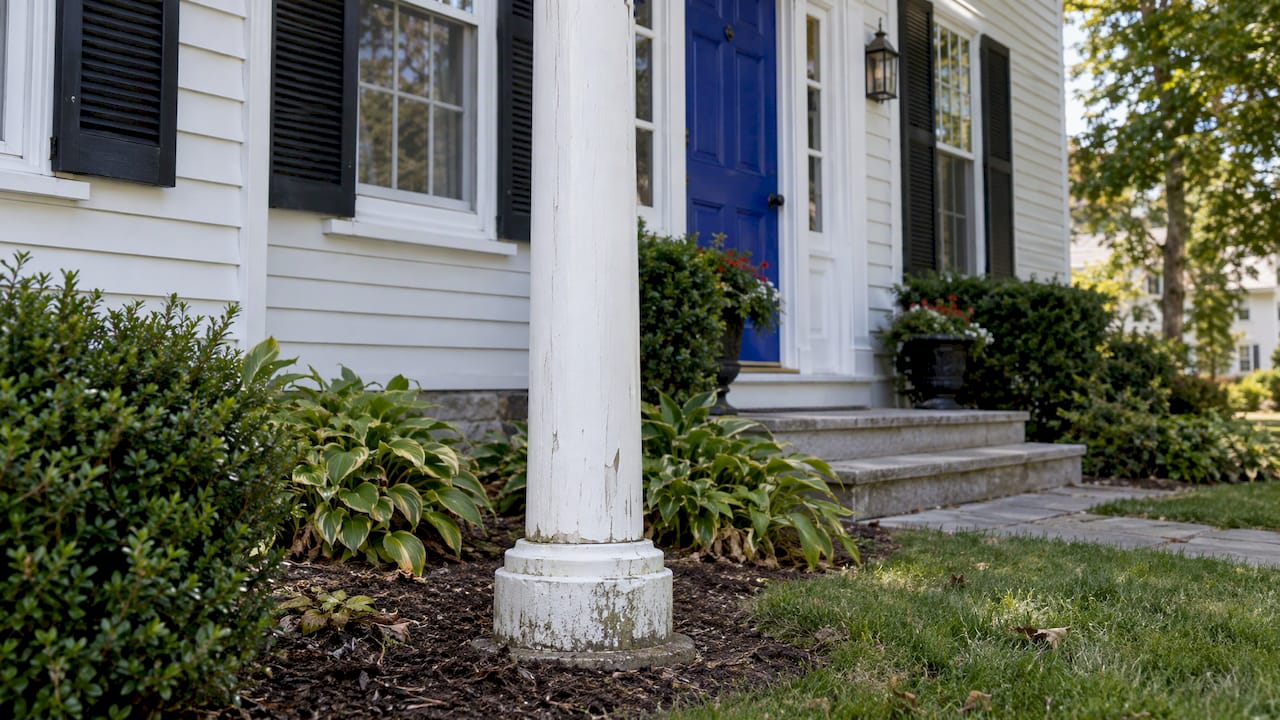
Wood has a traditional look that suits historic homes and some reenactment grounds. It does ask for regular painting and watching at the base where moisture collects. For most readers who want a flag flying with little fuss, a metal or fiberglass pole is the easier companion.
Wind, footing and the things the material label does not tell you
The strongest wind rating means little if the pole is set poorly. Industry guidance on metal flagpole design, the ANSI/NAAMM FP1001 standard, is explained in a Construction Specifier article on specifying flagpoles. It makes two points every buyer should absorb. First, the pole must be designed for the wind speeds at the installation site. Second, the foundation, usually a concrete base, is a structural matter that depends on the soil conditions where the pole stands.
In practice that means:
- Match the pole to your local wind. A pole suited to a sheltered suburban lot may not suit an open ridge or a shoreline.
- Let the soil guide the footing. Sandy, clay-heavy or frost-prone ground each ask for different foundations. Our footing rules overview walks through the basics.
- Mind flag size. A larger flag catches more wind. Keep the flag proportionate to the pole, and lower it in severe weather.
If your location has strict local building codes, such as a tall pole near a property line or a public right-of-way, confirm requirements with your local building department before you dig.
Match the flag to the pole
Material is only half of the picture. The flag itself should suit the pole and the wind. Our guide on choosing outdoor American flags for your home helps you pick a flag size and fabric to go with your pole height. If you plan to fly more than one banner, see displaying multiple flags on one pole or separate staffs before you buy, because a second flag adds load that the pole must carry.
For events, feather flags are a different system altogether, built around a flexible pole and a base. Our 16 ft feather flag sets with pole and base suit rallies, fundraisers and temporary displays.
A quick way to decide
- Set the height. One story, 15 feet; two stories, 20 feet, as a starting point.
- Read your wind. Open and gusty? Lean toward fiberglass or a rated aluminum pole. Sheltered? Aluminum is plenty.
- Check the air. Salt air or heavy moisture raises the importance of corrosion resistance.
- Plan the footing. Let your soil and local code shape the base.
- Choose the flag. Pick a flag size and fabric that suit the pole and the weather.
- Buy the hardware as a set. Halyards, brackets, finials and mounts should fit the pole you choose.
Where to find the pole and hardware
We carry flagpoles and hardware alongside the flags that fly from them, so you can outfit a display in one place. Start with our flagpoles and hardware collection, then add the colors: USA flags, state flags, military and service flags, and the historic banners our customers fly with pride. Ultimate Flags is America’s oldest online flag store, and the full range is on our flag collections page.

If you are flying a service flag, a POW/MIA banner or a ceremonial flag, give it a pole that honors it. Browse our military flags and pair them with hardware that fits.
Our perspective
A flag is not decoration. It is a statement that something is worth standing for, and it deserves a pole that stands as firmly as the conviction behind it.
In the years we have spent putting flags into the hands of patriots, veterans, collectors and history lovers, one lesson keeps returning: people begin by asking what the flag should look like and end by asking what will hold it up. The answer is rarely exotic. For most homes and posts, a sound aluminum pole, sized to the house and set in a proper footing, serves for years and honors the colors it carries.
That is why we pair flags with poles and hardware in the same store. A Revolutionary War banner, a state flag or a ceremonial flag should never hang from a mismatched bracket or a pole too short for it. Choose the height, respect your local wind, give the foundation its due, and the flag will do the rest: it will rally, remember and endure.
John Hough
FAQ
Is aluminum or fiberglass better for a flagpole?
Neither wins everywhere. Aluminum is the common residential choice because it is light, does not rust and needs little upkeep. Fiberglass flexes in gusts and does not corrode, so it appeals on windy or coastal sites. Choose by your wind, your air and your preference.
Which flagpole material handles the strongest wind?
Wind performance depends on the whole design: the pole’s rating for your site’s wind speeds, its height, the flag size and the foundation. Steel is chosen where very tall poles and heavy loads demand it, while a well-rated aluminum or fiberglass pole serves most homes. A Construction Specifier article on flagpole standards stresses designing for site wind speeds and setting the base to suit the soil.
Is steel or aluminum better for a flagpole?
Aluminum suits homes, schools and small businesses, thanks to its light weight and natural corrosion resistance. Steel is the choice for tall, heavily loaded poles and needs galvanizing or coating to guard against rust. For a standard residential pole, aluminum is the simpler path.
How tall should my flagpole be?
A common starting point is 15 feet for a one-story house and 20 feet for a two-story house. Our house flagpole size guide explains how to scale the pole to your home and flag.
Can I use a short staff instead of a full pole?
Yes. Many households mount a 5- or 6-foot staff on a porch or wall bracket. A rotating, anti-furl design keeps the flag displayed, and you can see the options in our hardware and flag poles section.