The all-black American flag most commonly signals protest, mourning for perceived national decline, or a militant “no quarter” aesthetic — though the meaning depends almost entirely on context. No single, fixed interpretation governs this symbol.
Two of the most common contemporary uses:
- Protest and mourning: Flown to express grief over perceived loss of national values or as a solemn act of political dissent.
- Militant or “no quarter” aesthetic: Displayed to communicate defiance, resolve, or an unwillingness to yield — often at rallies or on merchandise.
Pro Tip: Before drawing any conclusion about what a black flag signals, note the setting, the surrounding symbols, and who is flying it. Context is the only reliable decoder.
Key Takeaways
The all-black American flag carries multiple contested meanings, none of them definitively rooted in Civil War history, and context is the only reliable guide to interpretation.
| Point | Details |
|---|---|
| Primary contemporary meanings | Protest, mourning for national decline, militant defiance, and fashion/branding. |
| Civil War origin is a myth | Historians and verification journalists find no archival evidence for a Civil War “no quarter” black U.S. flag. |
| Artistic precedent exists | Jasper Johns produced monochrome American-flag art from 1955 onward, predating political use. |
| Legal to display | The U.S. Flag Code does not impose criminal penalties on private citizens for nontraditional flag displays. |
| Context determines meaning | Setting, surrounding symbols, and who is flying the flag are the essential cues for accurate interpretation. |
Table of Contents
- What does the black American flag mean, and where did it come from?
- The “no quarter” claim: what history actually shows
- How the black American flag is used today
- Common misconceptions and what you should actually know
- How to interpret an all-black American flag when you see one
- U.S. law and etiquette: is flying a black American flag legal?
- What historians and credible reporting actually confirm
- A note on symbols and the weight we give them
- Sources
- FAQ
What does the black American flag mean, and where did it come from?
The story of the all-black American flag begins not in any Civil War battlefield but on the open sea. Eighteenth-century pirates flew dark flags, most famously the Jolly Roger, as maritime signals. A black flag in that tradition meant no mercy would be given — what naval history calls “no quarter.” That pirate flag tradition is centuries older than any American political use of the design and is entirely separate from U.S. flag symbolism.
The artistic lineage of a monochrome American flag runs through mid-20th-century art. Jasper Johns produced monochrome American-flag works beginning in 1955, establishing a precedent for treating the Stars and Stripes in a single color as an artistic statement rather than a military signal. That art-world context matters because it shows the blacked-out flag had a creative, not combative, origin in American culture.
The commercialized political version is almost entirely a 21st-century phenomenon. In the early 2020s, social media circulation and retail vendors began mass-producing blacked-out U.S. flags and attaching “no quarter” language to them, amplifying a militant reading that had no archival grounding in American military history.
| Era | Development |
|---|---|
| 18th century | Pirate Jolly Roger: black flag as maritime “no quarter” signal |
| 1955 onward | Jasper Johns and monochrome American-flag art establish artistic precedent |
| Early 2020s | Vendors and social media popularize blacked-out U.S. flag as political product |
The “no quarter” claim: what history actually shows
“No quarter” is a military and naval phrase meaning a combatant will neither accept surrender nor spare prisoners. In practice, it was most associated with pirate warfare, not American land battles. The phrase carries genuine historical weight — but its connection to an all-black American flag does not.
Historians who have examined the claim find no credible evidence that Union or Confederate forces flew an all-black American flag as a “no quarter” battlefield standard. Verification reporting confirms that modern “no quarter” narratives merge two separate histories — the pirate black-flag tradition and mid-20th-century monochrome art — into a retrospective justification for militant readings of the design.
Key findings from historical review:
- No documented Civil War-era order, regimental record, or battlefield account references an all-black U.S. flag as a “no quarter” signal.
- Viral images claiming Civil War origin have been traced to misattributed or provenance-free sources by fact-checking outlets.
- The pirate “no quarter” tradition is the oldest documented use of a black flag in this sense, predating American nationhood.
How the black American flag is used today
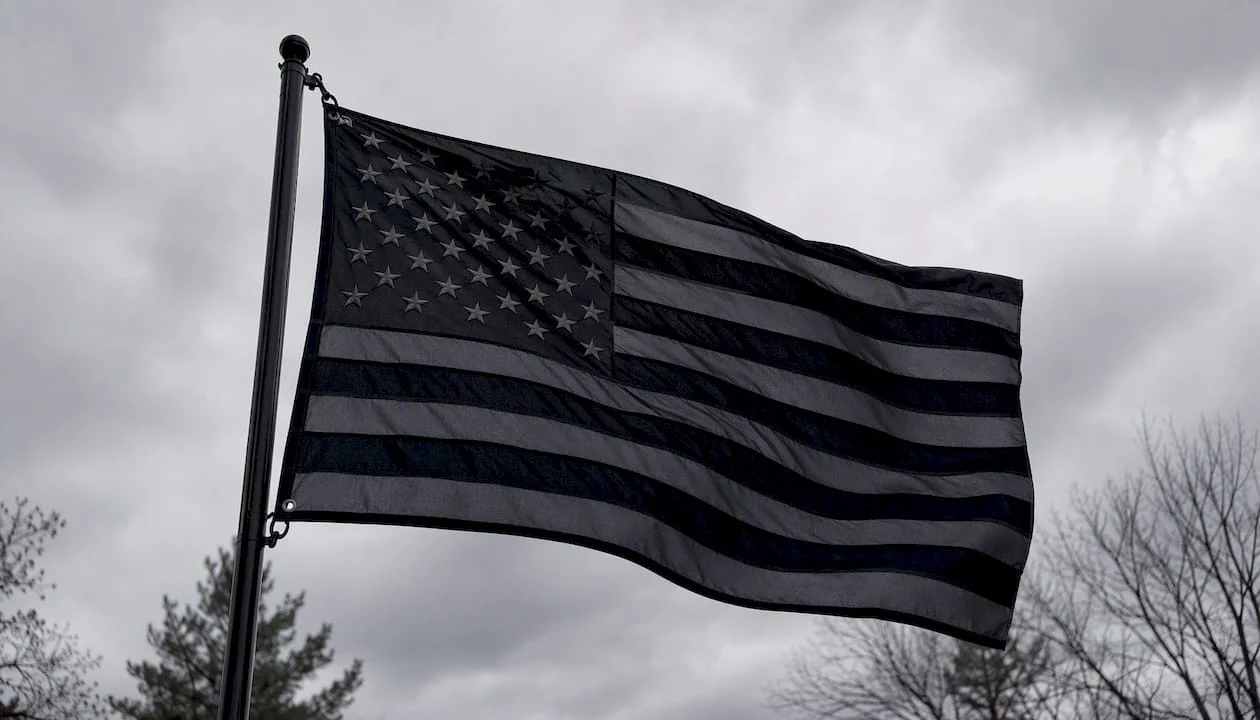
Contemporary use of the all-black U.S. flag spans a wide spectrum, and the same design can carry sharply different meanings depending on who displays it and where. LegalClarity’s analysis describes the flag as communicating finality rather than unity — a deliberate contrast to the tri-color American flag’s traditional message of shared national identity.
Major contemporary uses include:
- Political protest: Displayed at rallies and demonstrations to signal opposition to government policy or perceived constitutional violations.
- Mourning for national values: Flown by individuals who believe the country has strayed irreparably from its founding principles.
- Militant or paramilitary signaling: Used by groups wishing to project resolve, defiance, or a willingness to fight.
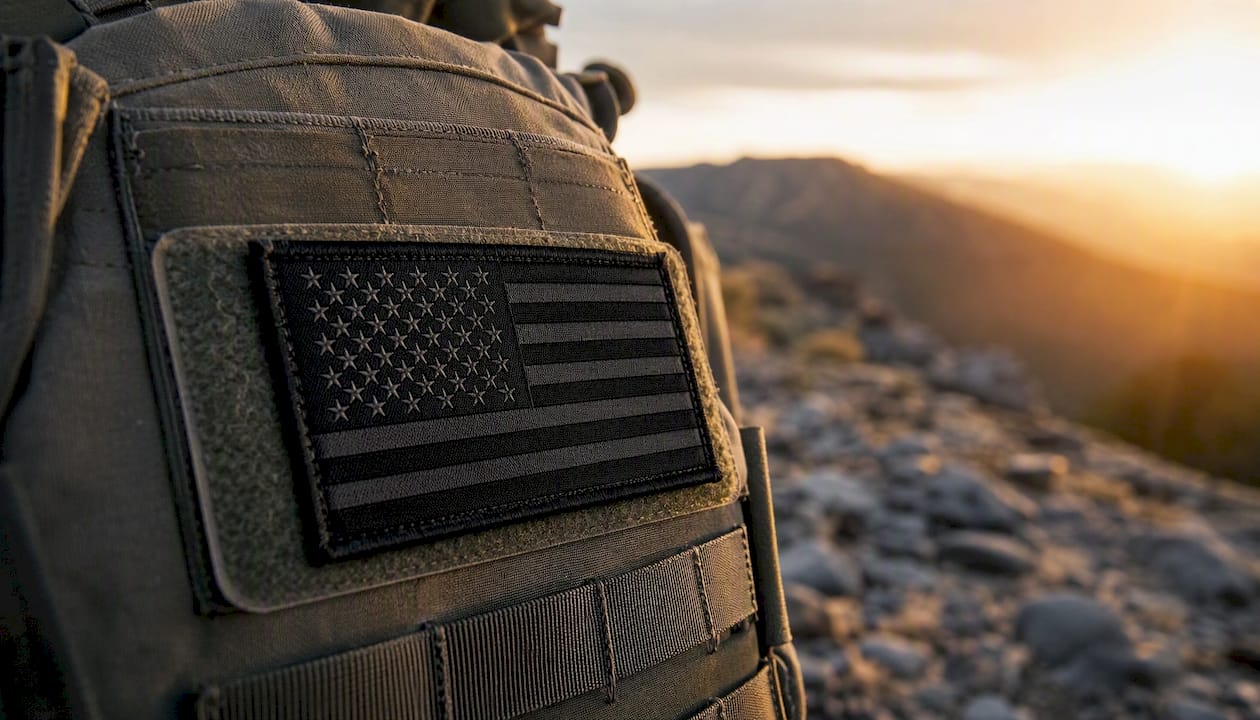
- Merchandising and fashion: Sold on apparel, patches, and accessories as an aesthetic choice with varying degrees of political intent.
- Artistic statement: Employed by artists and designers as a commentary on national identity, grief, or transformation.
Supporters often describe the flag as an act of defensive patriotism. Critics read the same display as an implicit threat. Neither reading is universally correct; the flag’s communicative effect depends on the full visual and social context surrounding it.
Pro Tip: A blacked-out flag on a social-media profile, a protest banner, and a tactical patch on a vest all carry different weight. Resist collapsing them into one meaning.
Common misconceptions and what you should actually know
Several persistent myths follow the all-black American flag, and sorting them from the evidence protects readers from drawing inaccurate conclusions.
The most common false claims:
- “It originated in the Civil War.” No archival evidence supports this. Historians and verification journalists have found no documented Civil War use of an all-black U.S. flag as a battlefield signal.
- “It has one fixed meaning.” The flag carries multiple, contested meanings that shift with context, region, and the intent of the person flying it.
- “Displaying it automatically signals extremism.” While some extremist groups have adopted the design, so have artists, mourners, and political protesters with no militant intent.
- “It is the same as the African American Flag.” This conflation erases an important distinction. David Hammons’ African American Flag, held by the Smithsonian National Museum of African American History and Culture, uses red, black, and green Pan-African colors woven into the Stars and Stripes to address Black identity. It is an entirely different artwork with a distinct artistic and political lineage.
Consumer-facing explainers, including WikiHow’s overview, usefully catalog popular interpretations but sometimes repeat contested origin stories without archival support. Treat them as a starting point, not a final authority.
Assuming a single, definitive meaning for the all-black American flag without examining context is the most common interpretive error readers make.
How to interpret an all-black American flag when you see one
Encountering this flag in person or online calls for a measured, evidence-based assessment rather than an instant verdict. Work through these steps in sequence:
- Assess the setting. A flag at a political rally carries different weight than one on a private residence or a social-media avatar. Location shapes meaning.
- Read the surrounding symbols. Accompanying text, patches, insignia, or other flags often clarify intent. A blacked-out flag next to a thin-blue-line flag signals something different from one paired with anarchist imagery.
- Consider who is flying it. A veteran’s household, a protest organization, and a fashion brand each bring distinct contexts to the same design.
- Note the flag’s orientation and condition. An inverted flag, a distressed flag, or a flag flown at half-staff each carry additional layers of meaning that modify the base symbolism.
- Withhold judgment until you have at least two contextual cues. One symbol alone is rarely sufficient to determine intent.
Pro Tip: Black-and-white thin-line variants (thin blue line, thin red line) are visually related but carry distinct meanings tied to specific professions or causes. Do not conflate them with the monochrome all-black flag.
U.S. law and etiquette: is flying a black American flag legal?
Flying an all-black American flag is legal for private citizens in the United States. The U.S. Flag Code governs display etiquette for the traditional Stars and Stripes but does not impose criminal penalties on private individuals for displaying nontraditional flag designs. Government employees and military personnel operate under different, stricter standards.
Legal limits that do apply are unrelated to flag design: a display that constitutes a true threat, incitement to imminent lawless action, or trespass on private property may carry legal consequences regardless of what flag is involved. The design itself is protected expression.
Practical etiquette considerations for public-facing organizations and homeowners:
- Recognize that the all-black flag is widely read as a political statement; flying it in a professional or civic context may draw scrutiny unrelated to your intent.
- If your goal is to honor service members or express patriotism, the traditional Stars and Stripes or a recognized service flag communicates that message without ambiguity.
- For state sales regulations on specific flag designs, state-level legal guidance on flag sales offers useful context on how different designs are treated across jurisdictions.
What historians and credible reporting actually confirm
The strongest published evidence points to three conclusions: the Civil War “no quarter” origin is unsupported, the artistic lineage is documented, and the commercial-political version is recent.
Historian-backed findings:
- Verification journalists at WUSA9 found no credible archival evidence linking an all-black American flag to Civil War battlefield use.
- Art historians trace monochrome American-flag treatments to Jasper Johns’ mid-20th-century work, not to military practice.
- Commercial vendors and social-media posts in the early 2020s attached “no quarter” language to the design and drove its mass distribution.
| Claim | Evidence status | Source type |
|---|---|---|
| Civil War “no quarter” origin | No archival support | Historian review, verification journalism |
| Artistic monochrome precedent (1955) | Documented | Art history record |
| Early-2020s commercial spread | Documented | Retail and social-media record |
A note on symbols and the weight we give them
Symbols rarely carry a single, permanent meaning. The all-black American flag is a clear example: its significance shifts depending on who holds it, where it appears, and what surrounds it. Historians have done the careful work of separating documented fact from retrospective myth, and their findings deserve more weight than viral social-media posts or vendor marketing copy.
The honest position is one of measured attention. Acknowledge the flag’s contested history, resist the pull toward instant categorization, and let the full context of an encounter guide your reading. That discipline serves both accuracy and civil discourse.

Flag symbolism carries real weight, and understanding it is part of honoring the history these symbols represent. Explore the silent sentinels of history at Ultimate Flags, where America’s oldest online flag store offers an extensive collection of historical, patriotic, and heritage flags for collectors, educators, and those who believe every flag tells a story worth preserving.
Sources
The following sources informed this article and offer reliable depth for readers who want to verify specific claims:
- Wusa9
- No Quarter Flag: Meaning, History, and Legality – LegalClarity
- African American Flag (David Hammons) | Smithsonian
- What Does the Black American Flag Mean? History & Context – WikiHow
FAQ
What does flying a black American flag mean?
The all-black American flag most commonly signals protest, mourning for perceived national decline, or a militant “no quarter” posture. Meaning varies by context, and no single interpretation applies universally.
Is the “no quarter” Civil War origin of the black flag real?
No. Historians and verification journalists find no credible archival evidence that an all-black American flag was used as a Civil War “no quarter” battlefield signal. The claim is a modern narrative amplified by social media and commercial vendors in the early 2020s.
Is it legal to fly an all-black American flag in the United States?
Yes. The U.S. Flag Code does not impose criminal penalties on private citizens for displaying nontraditional flag designs. Legal limits tied to threats, incitement, or trespass apply regardless of flag design, not because of it.
What is the difference between the black American flag and the African American Flag?
They are entirely different symbols. David Hammons’ African American Flag, held by the Smithsonian, uses red, black, and green Pan-African colors to address Black identity. The monochrome all-black U.S. flag is a separate design with distinct political and commercial origins.