Yes — flying a Betsy Ross flag is legal in every U.S. state in 2026. No federal law, state law or court ruling restricts the 13-star design, and the U.S. Flag Code governs how you treat a flag once it flies, not which historic pattern you choose. The only friction most owners ever meet is a private rule, such as a homeowner association's display policy, and even there a 2005 federal law limits how far an association can go in restricting American flag displays.
- No U.S. law bans the Betsy Ross flag; flying one is legal in all 50 states in 2026.
- The Flag Code is display etiquette, not criminal law, and carries no penalty for private citizens.
- The 1777 Flag Act ordered 13 stripes and 13 stars; the circle-star design’s earliest records appear in the 1790s.
- A 2005 federal law stops homeowner associations from prohibiting American flag displays outright.
- Sewn cotton or embroidered nylon reproductions fly the same historic pattern today.

Can you legally fly a Betsy Ross flag today?
No law in the United States restricts which historical American flag designs a private citizen may display. The Constitution's First Amendment protects flag display as expression, and no federal statute names the Betsy Ross design as prohibited. State legislatures have not restricted it either. If a neighbor objects, a school district hesitates or a store pulls merchandise, that is a private or institutional decision — never a legal ban.
The one set of rules that applies to how you display any American flag, including a 13-star historic one, is the U.S. Flag Code. It lives in Title 4 of the U.S. Code and covers respectful handling: sunrise-to-sunset display or a light at night, keeping the flag off the ground, and retiring a worn flag with dignity. It says nothing about star counts, star arrangements or which era's design you may fly.
What does the Flag Code actually govern?
The Flag Code surprises people in two directions, and both work in a Betsy Ross owner's favor:
- It is etiquette, not criminal law. The code carries no fine, no citation and no jail time for a private citizen. Courts treat it as guidance for civilian conduct; discipline exists only inside the military and on some federal property.
- It applies to display manners, not design choice. Fly the 13-star flag with the same respect you would give the 50-star flag and you have met every requirement the code sets.
One more federal law matters at the neighborhood level. The Freedom to Display the American Flag Act of 2005 (Public Law 109-48) bars condominium and homeowner associations from enforcing rules that prohibit residents from displaying the flag of the United States. The act protects reasonable flag display outright; whether your specific association documents treat a historic 13-star version the same as a 50-star flag is worth a quick read of your own covenants before you install a pole.
Why the Betsy Ross flag keeps making headlines
The design's legal footing has never wavered, but its public reception swings with the news cycle. In July 2019, Nike stopped a planned Betsy Ross-themed sneaker release after the design had been adopted by groups with extremist views, and the story spread instantly. Through 2020, disputes over displays in school districts, city buildings and statehouses made national headlines, with officials and commentators arguing both directions.
None of those episodes produced a law, an executive order or a court ruling against the design. Museums, historic sites and collectors continued to treat it as the founding-era American flag it is. The pattern is easy to summarize: the controversy is reputational, driven by how a group of people feels about a symbol on a given week, while the legal status has not moved since the flag was a current design.
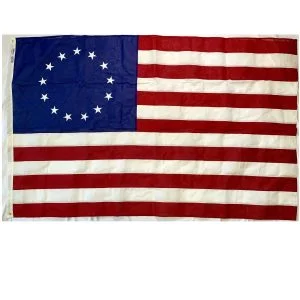
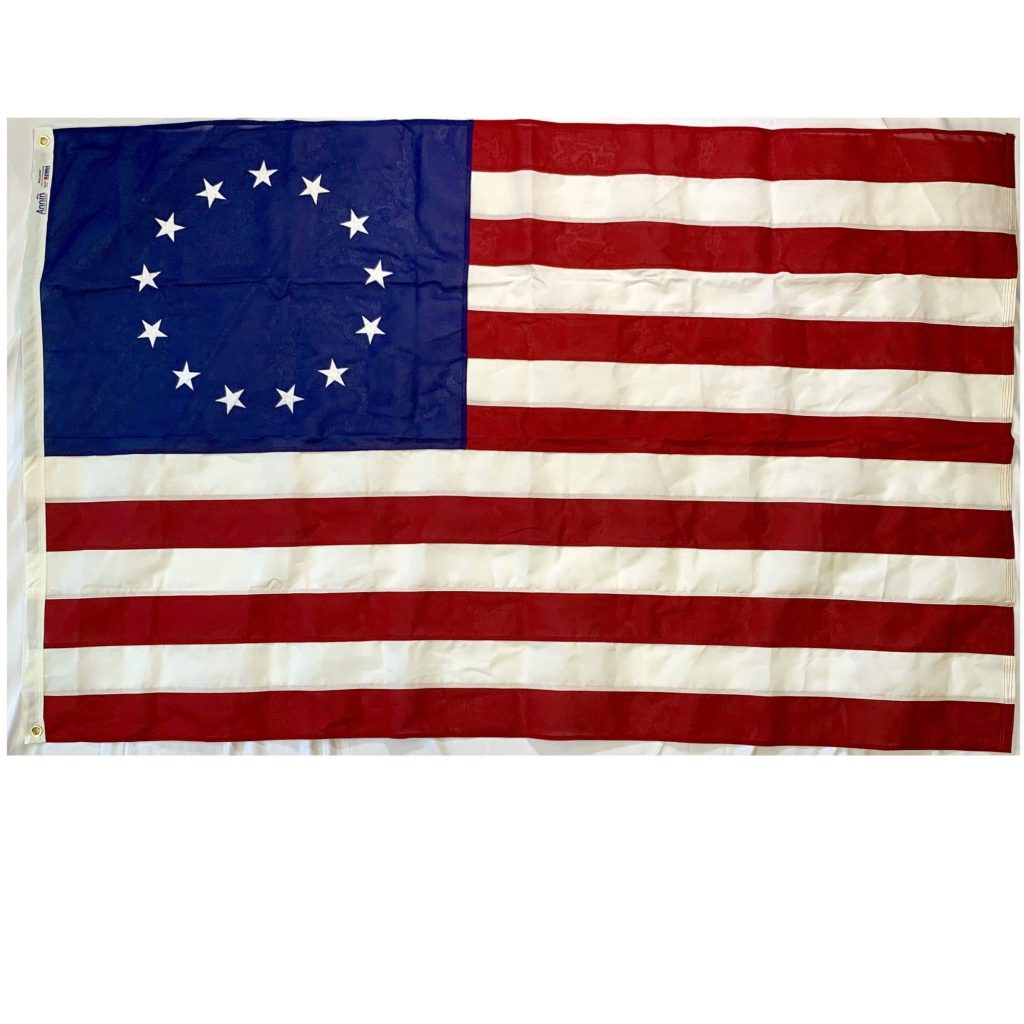
 Flag Sale – Shop Now!Sewn cotton Betsy Ross flag with 13 embroidered stars in a circle — the historic look collectors want for indoor and porch display.
Is the Betsy Ross story true?
The honest answer is that the story is a family tradition with no surviving contemporary paperwork. The tale first reached the public in 1870, nearly a century after the Revolution, when Betsy Ross's grandson William J. Canby addressed the Historical Society of Pennsylvania. He reported that Colonel George Ross, Robert Morris and General Washington had visited her upholstery shop and asked her to sew a flag from a sketch, dating the visit to Washington's June 1776 stay in Philadelphia.
Historians have never found a diary entry, receipt, commission or letter from 1776 that confirms the visit. What the record does show is that Ross was a real Philadelphia flagmaker: she sewed flags for roughly fifty years, including work for the Pennsylvania State Navy in 1777. There was no single official flagmaker for the Continental cause during the war, and a New Jersey delegate named Francis Hopkinson separately claimed a role in the flag's design in the 1780s. So the safe way to say it: the flag is real, the design is historic, and the story of who sewed the first one rests on a grandson's recollection rather than documents.
What do the 13 stars and 13 stripes stand for?
The design's anchor is the Flag Act passed by the Continental Congress on June 14, 1777: "the flag of the thirteen United States be thirteen stripes, alternate red and white; that the union be thirteen stars, white in a blue field, representing a new constellation." Thirteen stripes stood for the thirteen original states, and the stars carried the same count.
The law did not specify how the stars should be arranged, which is why early American flags show them in rows, scattered, or in a circle. The earliest surviving records of the circular arrangement — the layout the world now calls the Betsy Ross flag — appear in artwork from the 1790s. The circle has no documented official meaning, but it is commonly read as a symbol of the original states standing together, with no state positioned above another.
The 13-star pattern flew as a current flag of the United States from 1777 until 1795, when the admission of Vermont and Kentucky brought the count to 15 stars and 15 stripes. Everything after that — 48 stars for World War II, today's 50-star standard set in 1959 — grew from that first act of Congress.
 Buy This Flag- Click HerePrinted outdoor nylon Betsy Ross flag, 3×5 ft. — the all-weather pick for a 20-foot pole or a porch display.
Which Betsy Ross flag should you fly in 2026?
The design comes in three constructions, and the right one depends on where it flies. The catalog at Ultimate Flags carries all three, from 12×18-inch porch sizes up to 6×10-foot formats.
| Construction | Best for | Key limitation |
|---|---|---|
| Sewn cotton, embroidered stars | Indoor display, porch, collectors, re-enactments | Absorbs rain and mildews; bring it in before weather |
| Sewn nylon, embroidered stars | Year-round outdoor poles, made in USA | Costs more than printed versions |
| Printed nylon or polyester | Fair-weather display, events, budget builds | Fades sooner than embroidery in full sun |
A sewn cotton Betsy Ross is the version that looks most like what an 18th-century shop would have produced, and it rewards a covered porch or a den wall. Sewn nylon with embroidered stars is the practical outdoor choice for 2026: it dries fast, keeps its shape in wind, and the stitching holds where a print flattens. Printed flags fly lighter in a small breeze, which makes them a good match for shorter poles and seasonal display.
Ready to raise the 13 stars? Shop Ultimate Flags for the outdoor sewn-nylon Betsy Ross in sizes from 2×3 up to 6×10 feet.
Flag etiquette for the 13-star flag
Display a Betsy Ross flag exactly as you would today's flag — the same rules that govern respect apply across every era of the design:
- Daylight or a light. Traditional display runs from sunrise to sunset; a flag flown at night deserves a proper light on it.
- Never let it touch the ground. Same rule as the 50-star flag, no exceptions for historic cloth.
- Retire a worn flag with dignity. The customary retirement is dignified burning, most often in a ceremony run by a scout troop or a veterans organization.
- Keep the union up. The blue canton sits at the flag's own upper left as it flies.
FAQ
Is it illegal to fly a Betsy Ross flag?
No. Flying a Betsy Ross flag is legal in every U.S. state in 2026, and no federal or state law restricts the 13-star design. Only private rules, such as an HOA’s display policy, can affect where you hang one.
Did Betsy Ross really sew the first American flag?
The story rests on her grandson’s 1870 recollection to the Historical Society of Pennsylvania, with no surviving 1776 documents to confirm it. Ross was a genuine Philadelphia flagmaker for about fifty years, but historians treat the famous visit as family tradition.
What do the 13 stars on the Betsy Ross flag represent?
They stand for the thirteen original states, matching the 13 stripes ordered by the Continental Congress on June 14, 1777. The circular arrangement’s earliest records appear in the 1790s, and it is commonly read as the original states standing together.
Why did Nike cancel the Betsy Ross flag shoe?
In July 2019 Nike stopped a Betsy Ross-themed sneaker release after the design had been adopted by groups with extremist views. It was a company decision, not a legal one — the flag itself has never been restricted by law.
Can a homeowners association ban the Betsy Ross flag?
The Freedom to Display the American Flag Act of 2005 bars HOAs from prohibiting residents from displaying the U.S. flag. Read your own association documents before mounting a pole, since how they treat a historic 13-star version can vary.
What size Betsy Ross flag should I buy?
A 3×5 ft. flag suits a standard 6-foot porch pole or a 20-foot outdoor pole. Larger sewn-nylon versions run from 4×6 up to 6×10 feet for taller poles and bigger displays.
Is the Betsy Ross flag the official first American flag?
No official first flag exists in the record. Congress set 13 stripes and 13 stars on June 14, 1777, without naming a designer or an arrangement, and the circular layout we call the Betsy Ross flag shows up in artwork from the 1790s.
One last thing
June 14, 2026 marks the 249th anniversary of the Flag Act — the 1777 resolution that created the 13-star union and gave the country Flag Day. If you have been waiting for a meaningful first day to fly a Betsy Ross flag, that is the date on the calendar, and a sewn cotton version on a porch pole is the way it looked when the design was current.
Related guides