Posted on

One Soldier Meets 5 Tanks:  ”Nobody’s gonna get past MY roadblock!”

In October 1944, General Douglas Macarthur stepped onto the Philippine island of Leyte, and made his radio announcement to let the Japanese and the world know: “People of the Philippines, I have returned!”

It was December 1944. PFC Dirk Vlug and his regiment were was on Leyte Island to chase retreating Japanese across the jungle. He was standing guard duty at roadblock outside the city of Ormoc when suddenly two enemy tanks headed his way. The tanks were about to meet their worst nightmare as someone was about to earn the U. S. Medal of Honor.   Private Dirk calmly picked up his bazooka and advanced on the first tank,. 37mm rounds struck all around him, but they all missed. He loaded, fired and destroyed the tank.

Crew from the second tank dismounted to attack him. But He fought back with his .45 Colt 1911, chasing them back into the tank. Then he reloaded the bazooka and destroyed his second armored vehicle of the day.

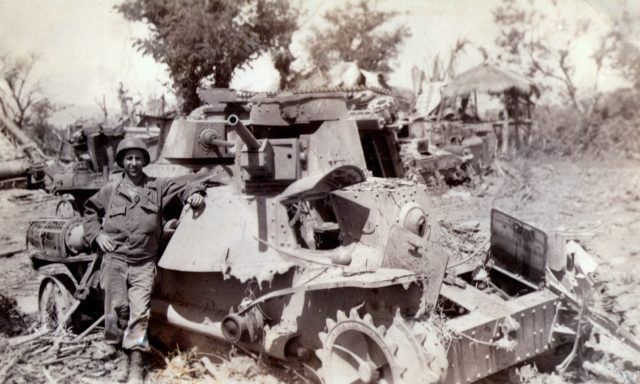
Three more hostile tanks approached. Vlug ran up beside the first and blew it up. More bullets flew at him, but he kept running toward the second one, also taking it out with a direct hit. The third veered, but Vlug was faster. Again, he came under heavy fire. Unruffled, he proceeded to take out the fourth tank.The remaining tank should have taken a hint by now. With his one remaining round Dirk blasted the fifth one. He only grazed it, but it was enough. He watched it tumble down a cliff. History doesn’t tell us what this private did next, but I you can just picture him walking back to his post, lighting up a cigarette, and saying to himself, ”Nobody’s gonna get past MY roadblock!” For his outstanding courage and performance,  Vlug was awarded a US Medal of Honor on June 26, 1946.In the picture above Private Vlug  poses with a tank he destroyed.

Thanks for reading! We hope you enjoyed our post. Please share with all your fellow patriots. Brought to you by: Ultimate Flags

United States Army Flag

Buy Now!

POW MIA Flag

Buy Now!

Eagle Patriotic Flag

Buy Now!

God, Guns, Guts & Glory Flag

Buy Now!

Posted on

Blow the Bridge or Die!

On Easter Sunday morning 1972, Marine Corps Captain John Ripley was in a South Vietnamese village. He was there to help train 600 South Vietnamese Marines. But no one was thinking about that now. An enemy armored division had appeared on the other side of the river. Two hundred tanks and 20,000 men were assembling to cross a bridge and annihilate Ripley and the Marines.

Ripley later said,

“We didn’t have the wherewithal to stop that many tanks. We had little hand-held weapons. And we certainly didn’t have anything on the scale that was needed to deal with the threat. Originally  20 tanks had been reported.”

An aerial observer, quite high up, flew over and said,

“You got bumper to bumper tanks from the Ben Hai River all the way to Dong Ha. They can’t even turn around they’ve got so many of them.”

There was only one solution: blow the bridge.

A later observation reads,

“I don’t think it ever entered his mind not to do what he had to do. Despite the fact that someone might say, ‘Do you realize what you’re doing?’ What did they want him to do? Turn the radios off and leave? That’s just not the Marine Corps way. Ever!”

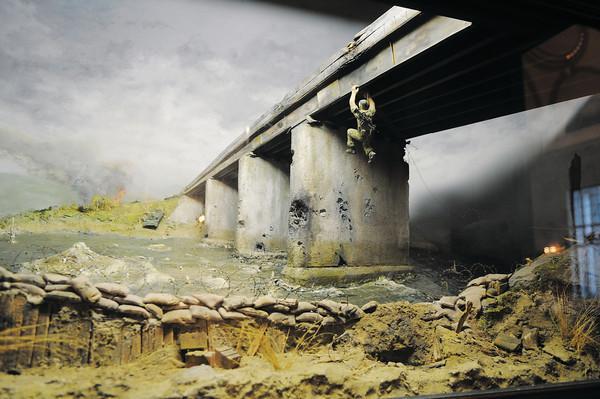
A South Vietnamese Marine Sergeant fired on and disabled an enemy tank at the head of the column, buying time. A Naval Academy graduate, Ripley already had two Bronze Stars, a Silver Star and a Purple Heart. He’d served with Marine Force Recon, British Royal Marines and Army Airborne Rangers (he’s the only Marine in the Army Ranger Hall of Fame).Ripley was soon swinging like a monkey from the underside of the bridge, hand over hand, setting explosives. This was not a movie, where you just put them any old place. To blow a steel and concrete bridge, you have to get the right placements and patterns.It took Ripley a dozen trips to position the charges, each time with huge loads of TNT and C4, each time with bullets pinging around him. Then two more trips to set the detonators.

Exhausted, muscles burning, he was waiting on the riverbank for the explosion when he saw an injured mother with her child trailing well behind. The explosion would have killed the little girl, so Ripley raced out, scooped her up and raced away from the bridge toward the mother. Boom! The explosion blew Ripley and the child into the air. He landed, with the child safe on top of him. When the smoke cleared, Ripley saw the whole bridge had collapsed.

Well done, Vietnam Vet Captain Ripley!

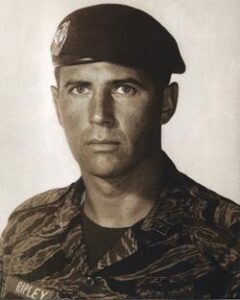
Captain John Ripley, Vietnam 1972


Thanks for reading! We hope you enjoyed our post. Please share with all your fellow patriots. Brought to you by: Ultimate Flags

Posted on

Courage

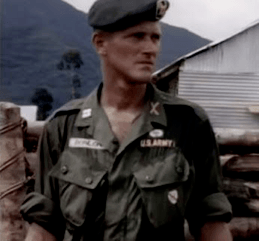
Men need cool and aggressive leadership when under fire. Captain Roger Donlon displayed just that on July 5, 1964. At 2:26 AM a barrage of mortar shells rained on his Special Forces Detachment camp.

He had just written to his wife, “All hell is going to break loose here before the night is over.”

He was not alone in his premonition. Most of the twelve men manning the small outpost just 15 miles from Laos in the Republic of Vietnam, had the same feeling.

Under attack by a Viet Cong battalion, the men were outnumbered three to one. Barking orders and directing defense, Donlon raced through exploding grenades and rifle fire to stop a breach at the main gate. Single-handedly taking out an enemy demolition team, he got his first injury of the night: a severe stomach wound. Disregarding his injury, Donlon stayed behind to cover the withdrawal of a mortar team. An explosion sent shrapnel into his shoulder, but once the men were safe he carried the mortar back to a new position. Captain Donlon moved around the camp, administering first aid, dragging ammunition to gun positions, directing mortar fire. With still another wound to his leg, Donlon went from position to position, hurling grenades and encouraging men to do the impossible. Another mortar shell exploded, wounding him in the face and body. Five hours of non-stop fighting continued. Finally, daylight arrived, and the enemy withdrew. Donlon later said that courage “was the core that allowed us to do things beyond what we thought we’d be capable of.” Captain Donlon was awarded the Medal of Honor for his actions that night.

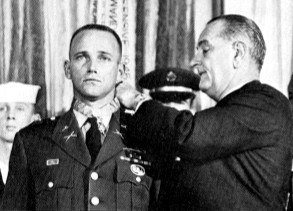
All nine surviving members of Team joined Donlon at the White House where President Lyndon Johnson hung the Medal of Honor around their team leader’s neck. The humble hero said, “The medal belongs to them, too.”

President Johnson awards Donlon the Medal of Honor in December 1964

Later he  wrote about that night of fighting, “It was a team effort, and I was simply the designated leader.”

Captain Donlon’s award was the first Medal of Honor awarded for action during the 14 year Vietnam War. 238 American soldiers would ultimately earn our nation’s highest honor for service in that war.

Thanks for reading! We hope you enjoyed our post. Please share with all your fellow patriots. Brought to you by: Ultimate Flags

United States Army Flag

Buy Now!

courage and guts flag

God Guns Guts & Glory

pow mia flag all gave some some gave allPOW MIA

– All Gave Some Some Gave All

Vintage USA / Dont Tread on Me  Flag – Buy Now!

Posted on

The Plot to Remove Washington: Part 2

Yesterday we began this story (see it here). You heard about Dr. Benjamin Rush, the Father of American Psychiatry, who was one of the most vocal critics of Washington’s handling of his troops.

This was the same Benjamin Rush who, all evidence to the contrary, championed bloodletting as a miracle cure.

I’m sure the leeches loved him. Rush insisted you could remove up to 80% of a person’s blood with harming him. No wonder fellow physicians called him the “Remorseless Master Bleeder.” No wonder today’s psychiatrist call him “father.” (These “modern” doctors champion shock treatment and implanting permanent wires in people’s brains to deliver shocks throughout the day.)

That was the kind of man who sought to remove George Washington as Commanding General.

Thomas Conway But he was not alone. One of those trying to undermine Washington was an ambitious foreign officer named Thomas Conway. In a letter to Congress, Conway boasted of his skills and asked for a promotion to major general – skipping right over many men more senior.

Meanwhile Conway was spreading lies and rumor about General Washington. He was heard to say, “as to his (Washington’s) talents for the command of an Army, they were miserable indeed.”

When Washington heard of of Conway’s letter to Congress, he sent a letter of his own. Part of it was, “General Conway’s merit, then, as an Officer, and his importance in this Army, exist more in his own imagination than in reality.”

He also wrote that “it is a maxim with him, to leave no service of his own untold.”

George Washington learned of a letter written by Conway to General Horatio Gates that called Washington a weak general.

Washington wrote Conway to let him know his letter had been exposed.

Conway wrote back and lied, saying he never called Washington “a weak General.”

He compounded his mistake by saying that while he considered Washington a “brave man,” He thought he was “influenced by men who were not equal to him in point of experience, knowledge or judgment.”

Typical of a backstabber, Conway thought his covert remarks would work with Washington.

They did not: Conway had not only disparaged the General, but now his staff as well. Washington had too much integrity to not see through Conway’s scheming.

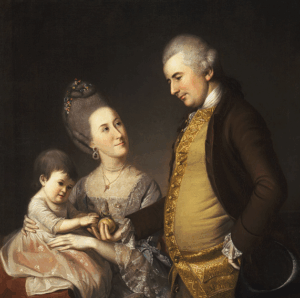
John Cadwalader and Family American Commander Revolutionary War 1772It took time, but ultimately Conway had to resign. He kept spreading his criticism, though.

Finally, an ally of General Washington put an end to it. General Cadwalader challenged Conway to a duel. The plotting Conway was badly wounded during the duel, and it was the end of his treachery.


Thanks for reading! We hope you enjoyed our post. Please share with all your fellow patriots. Brought to you by: Ultimate Flags

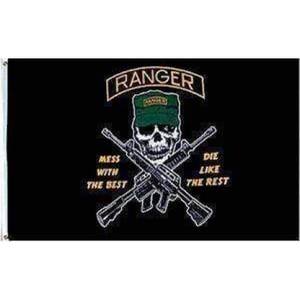
Army Ranger Flag

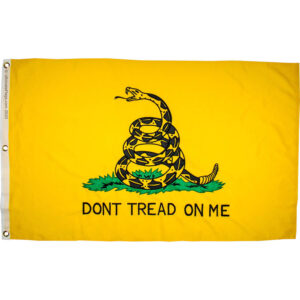
Gadsden Dont Tread on Me Flag

Culpeper Minute Men Flag

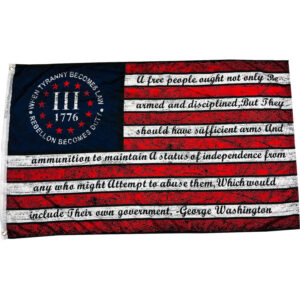
when tyranny becomes law flag double sided flags for sale 3x5 feet

III 1776 George Washington Quote Flag


Posted on

General Robert E. Lee’s Headquarters at Gettysburg

general lee headquarters

July 1-3, 1863

General Robert E. Lee 1863

The Battle of Gettysburg was 1 of the bloodiest battles in all of the Civil War.  Here are some interesting things to know about the Commander General Lee and the Headquarters…


  • #1: During the Battle of Gettysburg, both Union & Confederate Commanders made their headquarters at the homes of widows.

Gen. George Meade made his headquarters at the home of Lydia Leister, a widow with six children.   As the soldiers approached, Lydia left her home, returning after the battle to find her house severely damaged from iron and lead, and her yard dotted with dead horses. 
general lee headquarters

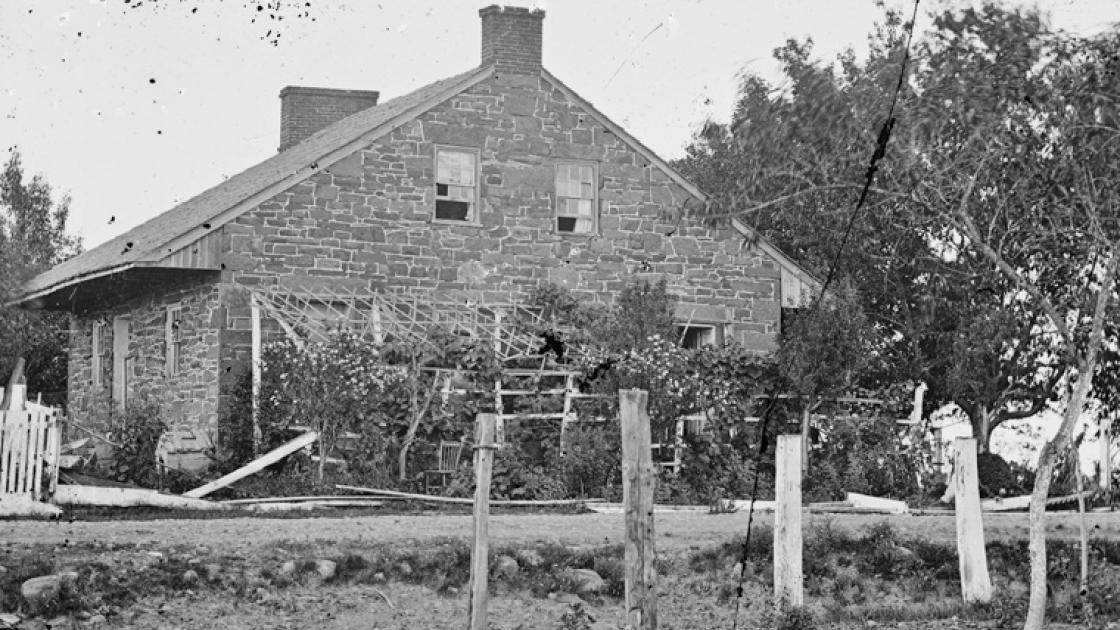
General Lee made his headquarters at a stone house on Seminary Ridge along the Chambersburg Pike occupied by a 70 year-old widow, Mary Thompson. Mrs. Thompson remained in her home throughout the battle, despite its proximity to intense fighting.

  • #2: On the 1st day of the battle some of the heaviest fighting took place around the Thompson house.

Federal soldiers who retreated from McPherson’s Ridge on July 1 fell back to a new position on Seminary Ridge.  The Union line crossed the Thompson property and extended to the north and south. Union artillery under Lieut. James Stewart was placed in front of the Thompson House, supported by three regiments of Pennsylvanians. 

A private from the 143rd Pennsylvania recalled that their regiment formed by the fence “at the old stone house.” Stewart’s artillery hit five regiments of Alfred Scales’ North Carolina Brigade, and with close range canister fire, repulsing the Tarheels for the first time in the brigade’s history, reducing one regiment from 180 men to only 30.  

  • #3: The Union retreat from the Thompson House on Seminary Ridge resulted in the largest capture of Federal soldiers at Gettysburg.
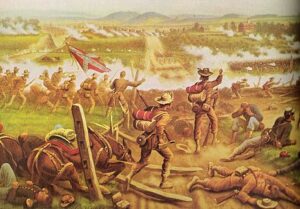
Although the Union center held against Scales’ brigade, the elements of Rodes’ and Pender’s divisions had crumbled the flanks of the Union First Corps.  Col. Abner Perrin’s brigade then crashed through the heavy Union artillery fire into the center of the line and forced the Union First Corps to retreat.  The position around the Thompson House was the last that Union troops held north of town on July 1.

In the midst of the retreat, many ran down the railroad cut that ran near the Thompson House, an act which proved disastrous when their escape route was cut off by the victorious divisions of Pender and Rodes.  Of the 28 infantry regiments of the First Corps 24 of them had 50 or more men captured, for a total of about 2,000 men.

  • #4: The Thompson House’s location near the center of Robert E. Lee’s battle line made it the ideal location for his headquarters.

When Gen. Lee arrived at Seminary Ridge on July 1st, his army had routed the Union forces, and he immediately established his headquarters at the Thompson House.  Four guards were placed around the house, and Lee’s staff members and officers made their camps nearby. Lee took his meals in the Thompson House and even slept there on July 1.

Due to the intensity of the battles on July 2 and 3, Lee spent little time at his official headquarters, yet the tents of his headquarters staff remained there and all incoming messages for Gen. Lee were sent to the Thompson House.

  • #5: The Thompson House served as a hospital for soldiers on both sides.

In the aftermath of the first day’s fighting at Gettysburg, dead and wounded men littered the fields around Seminary Ridge.  The proximity of Mary Thompson’s house to the heaviest fighting of the day meant that wounded men, from both sides, were taken to her house.   Mary remained at home throughout the battle and cared for the wounded men, using all her clothes and bedding as dressing for the wounded, and wrapping the dead in carpets.

  • #6: The area around Gen. Lee’s Headquarters was an important Confederate artillery position on July 2 and 3,  1863.
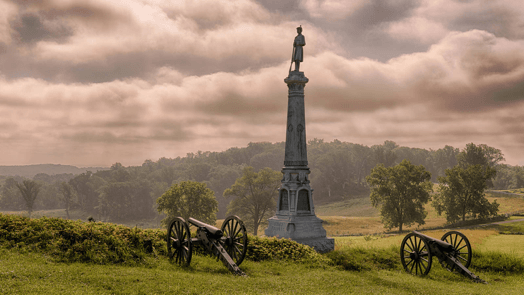
3 inch rifleOwing to its central location, Confederate artillerymen found the ridges near Lee’s headquarters to be an admirable artillery position. Early on July 2, two Confederate batteries under Capt. Willis J. Dance were placed near the Thompson House along Seminary Ridge, where they were joined by Capt. Benjamin H. Smith’s Battery of three-inch rifles.  Gen. Junius Daniel’s North Carolina brigade supported these guns, which opened fire on Union batteries at 4 o’clock and continued the bombardment until dark. 

On July 3, the area around the Thompson House was once again a center of activity as Watson and Smith’s batteries were taken from their positions and moved south down Hagerstown Road to support the grand Confederate charge that afternoon.

  • #7: Lee’s Headquarters has a long and controversial history, continuing long after the Battle of Gettysburg.

After the Battle of Gettysburg, thousands of visitors poured into the town, many eager to see the small house where Gen. Lee had made his headquarters.  Mary may have been uncomfortable with her newfound prominence; she left Gettysburg for a short period after the battle, but lived in the house until her death in 1873. 

In 1896, a fire consumed the inside of the home but left the outside intact.  In 1907, the longtime tenant of the home, Emma Feister, was arrested for “keeping a bawdy house.”  During this time, articles began appearing in newspapers that challenged the well accepted fact that Lee had made his headquarters at the Thompson House. The most serious allegation came in 1907.

Henry S. Moyer published an article stating that in the spring of 1874, a year after Mary Thompson’s death, he interviewed a woman residing in the Thompson House who stated that Gen. Lee had never been present there.

Moyer’s most substantial  evidence comes from a source he calls “a good friend,” who claimed that while speaking with Gettysburg historian, John Bachelder, Bachelder revealed that he had interviewed Lee, who stated that his headquarters were located in an apple orchard. The only evidence that this interview between Lee and Bachelder ever took place, however, comes from Henry Moyer’s 1907 article.  

  • #8: The widow Mary Thompson’s house was owned by the Radical Republican Pennsylvania Representative Thaddeus Stevens.

In 1833, Michael Clarkson, an enterprising Gettysburg businessman, purchased a tract of land along the Chambersburg Pike and built the stone house that 30 years later would become the headquarters of Gen. Robert E. Lee. Clarkson was a prominent figure in Gettysburg, and a close friend of Thaddeus Stevens, a significant player in early Gettysburg industry and politics.  Joshua Thompson, his wife Mary, and their eight children became tenants of the stone house.

Joshua was a habitual drunk who left Gettysburg and died sometime before 1850, leaving Mary to raise their children.  When Clarkson ran into financial trouble and his properties were put up for auction in 1846, Stevens acquired the house in which Mary Thompson lived .  It remained in his possession until his death in 1868.  Stevens had made a contract with Joshua Thompson before he died, and he purchased the house to ensure the welfare of Mary and her children.

  •  #9: Lee’s Headquarters marker on the Gettysburg Battlefield is almost certainly in the wrong place.

After Henry Moyer published his article in 1907, some historians chose to believe Moyer’s description of Lee’s headquarters, ignoring the numerous accounts, such as written accounts from Lee’s staff members and Gettysburg residents, that name the Thompson House as Lee’s official headquarters. 
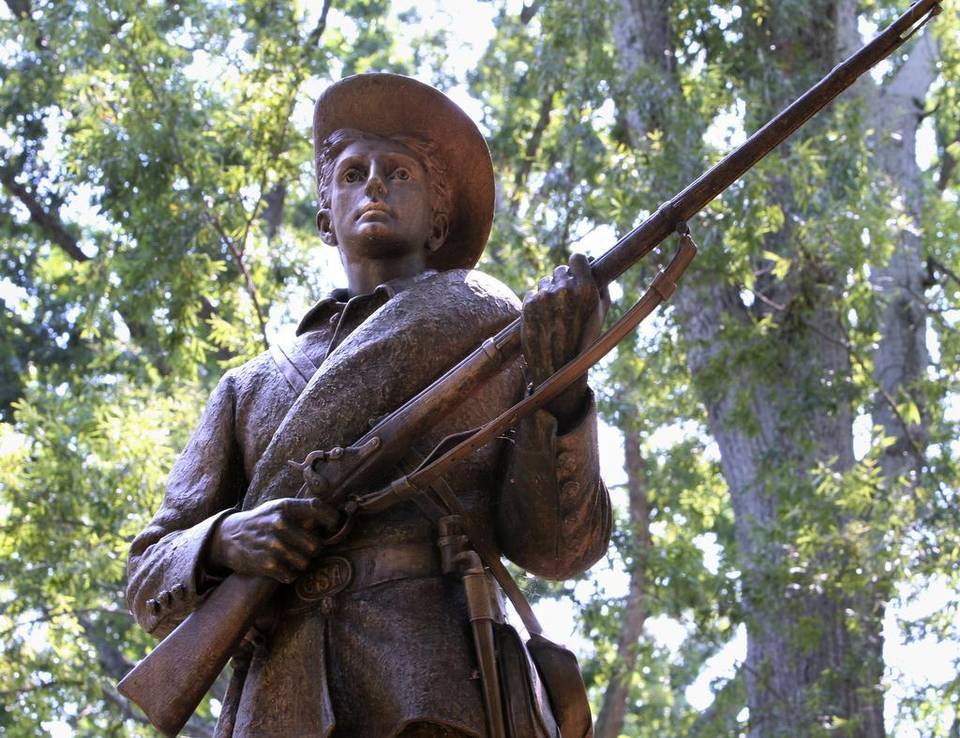
In 1919, the Gettysburg National Park Commission erected a marker that placed Lee’s headquarters across the street from the Thompson House.  Inscribed on the marker is a quote from the Moyer article: “‘My headquarters were in tents in an apple orchard back of the Seminary along the Chambersburg Pike.’-Robert E. Lee.”

This quote was fabricated by the War Department and was never actually spoken or written by Lee.  Despite this marker’s falsification, the National Park Service’s position is that Lee’s headquarters were established in a small tent on the south of the Chambersburg Pike, along with his staff and aides. 

  • #10: Lee’s Headquarters and the previously un-preserved acreage around it was saved in early 2015 by the Civil War Trust

Even though the house has been consistently referred to in first-hand accounts as Lee’s headquarters, and it was in the center of fierce fighting on July 1, the house was not purchased by the Gettysburg Battlefield Memorial Association, the War Department, or the National Park Service. It was converted into General Lee’s Headquarters Museum in 1921, and remained privately owned until 2015.
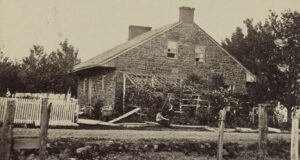
General Lee HQ the Mary Thompson house at Gettysburg

After completing the acquisition of the property in early 2015, the Civil War Trust undertook an effort to restore the landscape to reflect its appearance on July 1, 1863.

Where do you believe General Robert E. Lee’s Headquarters REALLY was? No matter whether it was IN this house or in an apple orchard… we know that many men fought & died on this land and should be honored and remembered for their ultimate sacrifice.

Brought to you by UltimateFlags.com We love sharing stories about the Civil War to honor and remember those brave individuals for fought honorably and stood against tyranny.

Source

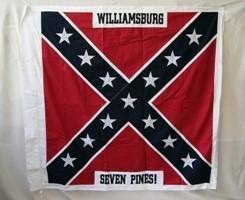
General Robert E. Lee Headquarters Flag
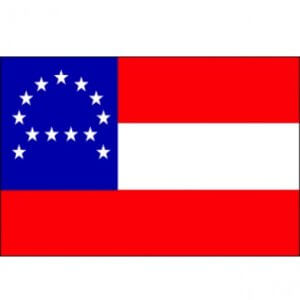
Buy the General Robert E. Lee Headquarters Flag Available Here!
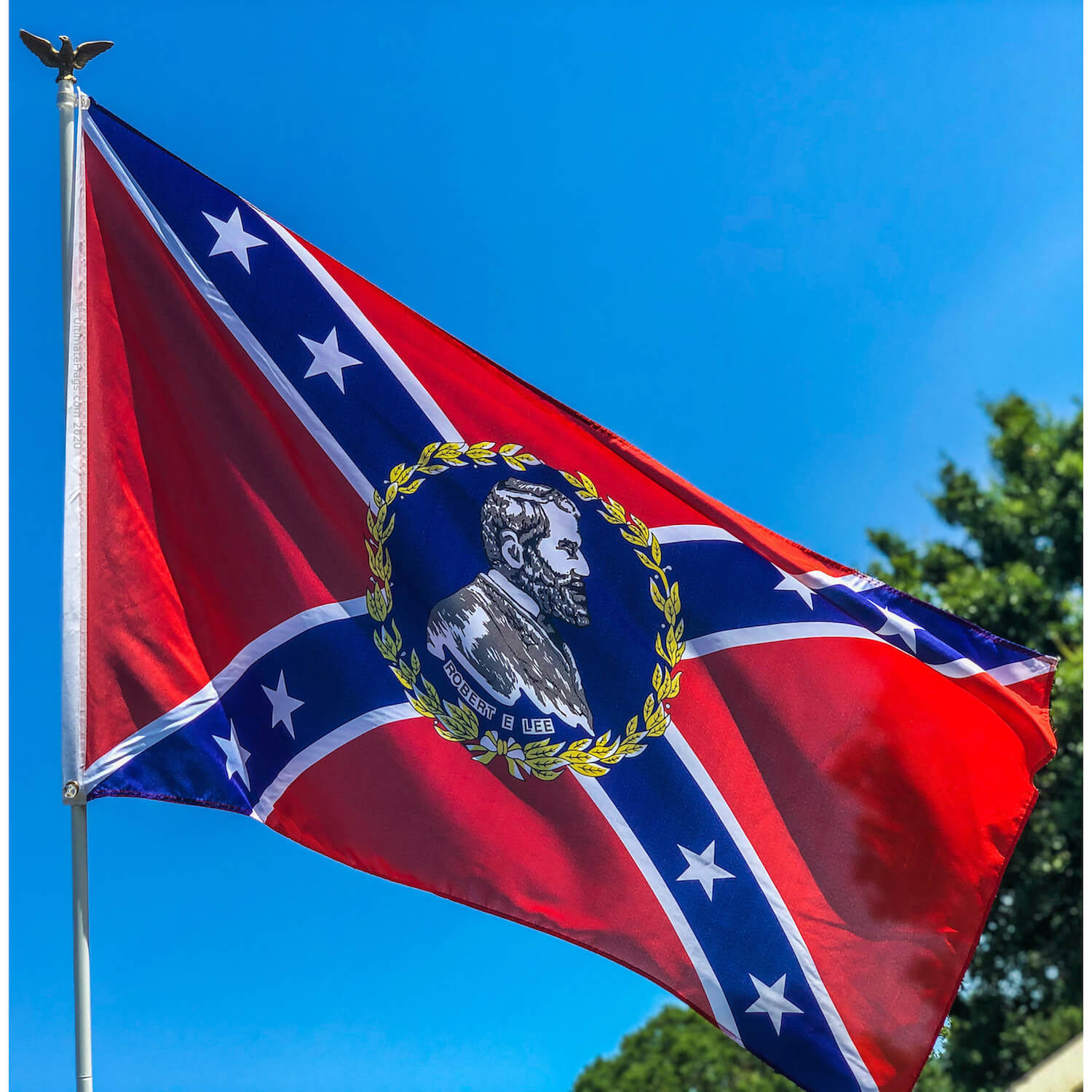
buy general lee flag

Rebel General Robert E. Lee Flag Available – Click Here!
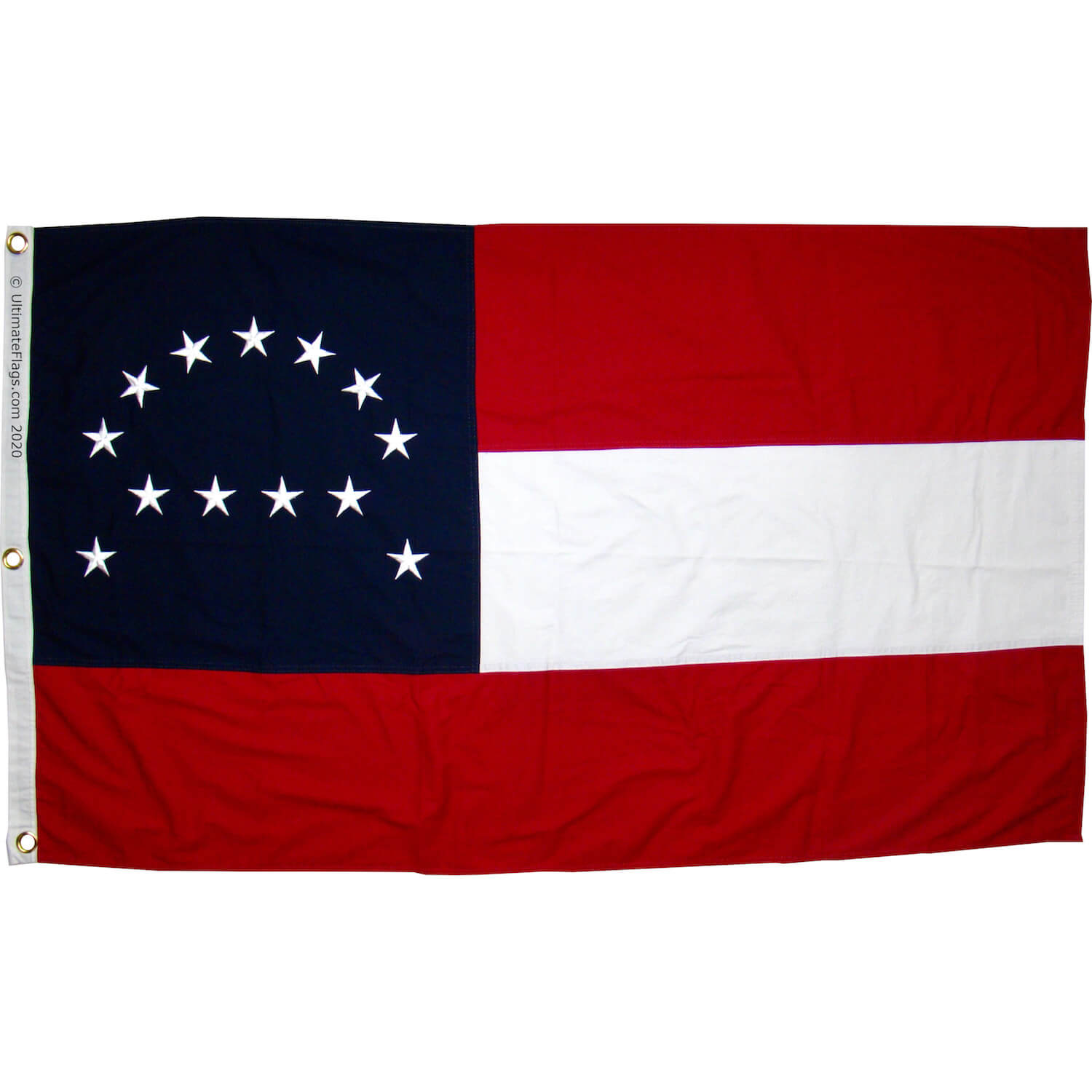
General lee headquarters flags for sale

Lee Headquarters Outdoor Nylon Embroidered Flag – Available Here!
Buy General Lee Cap Hat Civil War

Buy Robert E. Lee Pride of the South Cap / Hat

Available Here!

Posted on

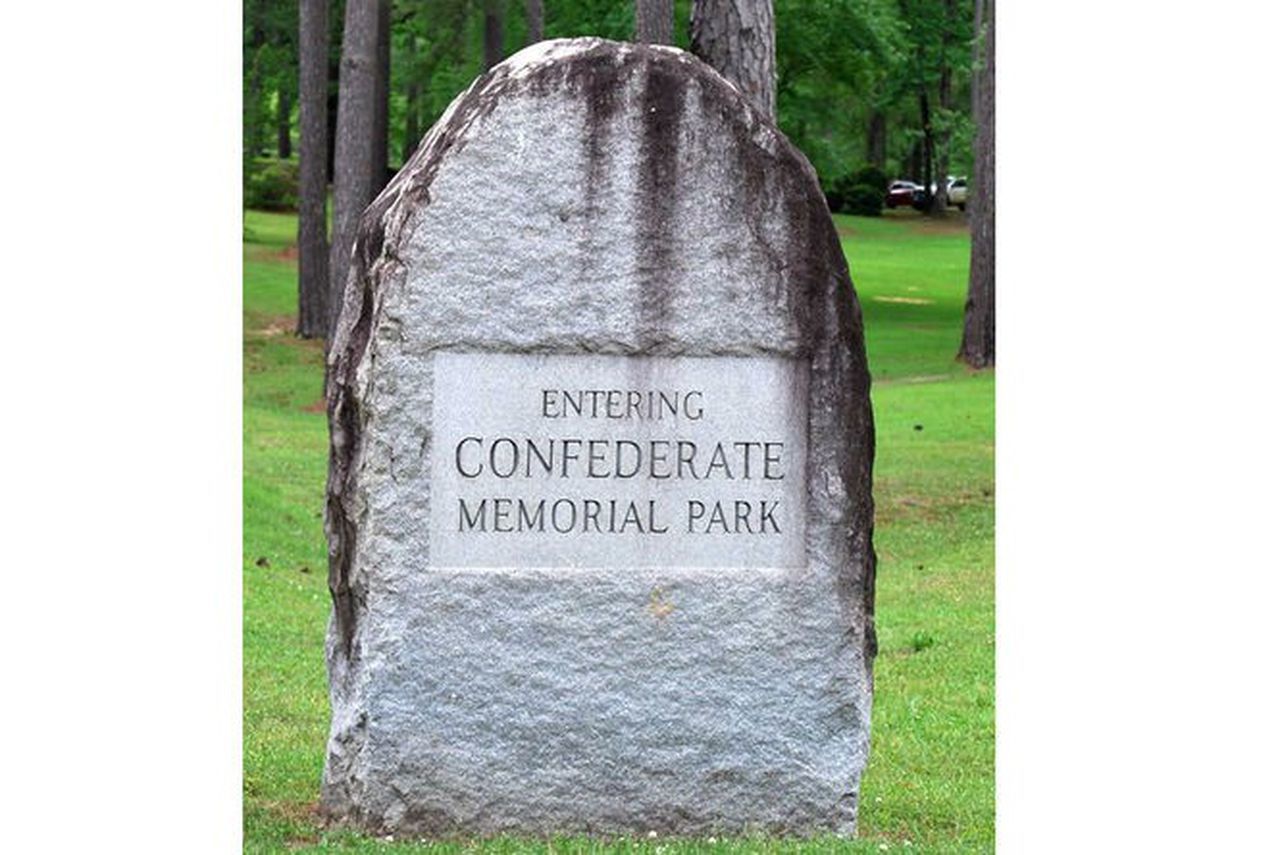
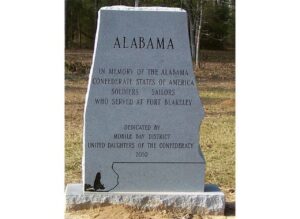
What Do The Confederate Monuments Stand For Really?

Have you ever wondered WHY there are so many Confederate War Memorials and WHY they are at Government Buildings mainly at Court Houses? What many people do not know is that the Union AFTER the Civil War ended spent 2 YEARS and $7 MILLION to BURY 360,000 Union Soldiers in the South and in the North.

2/3rds of the Graves and Grave Stones had NO names.

BOTH sides were overwhelmed by the HUGE number of DEATHS and Wounded in EACH Battle.

The Manpower to deal with the wounded and dead was NOT there. The North TRIED to bury as many as possible. But the sheer numbers were so high it could NOT be done. When it came to Confederates, shallow pits were dug and the bodies were thrown in and buried.

Tens of thousands were NEVER buried at all. Their bones littered the battle fields untouched. The North also did a practice of dumping Dead Confederates into wells on farms (up to 150 bodies at a time) to POISON the drinking water. They wanted to STOP the use of watering crops in the fields after being burned.

How much was spent to BURY the Confederate Dead Soldiers? NOTHING was spent! Worse, the Union bought Southern land for pennies on the dollar. This was used to CREATE graveyards for UNION Soldiers that could not be sent North for burial.

What happened to the Confederate dead?

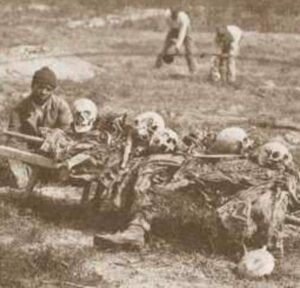
Some were left as BONES laying in the fields and NEVER buried at all.  Some were buried by private funds in the South. However, the economy was so bad and all wealth lost that VERY few were buried. Blacks were paid as much as $1 per bone to gather the bones of the Dead Confederate Soldiers.

This is WHY there are so many war memorials in the South and NOT in the North. It is because of the GRIEF of NOT knowing who the dead were. The grief of knowing your loved one was NEVER properly buried and LEFT to rot and become bones or thrown in large MASS Graves.

Even at Gettysburg, where 65,000 men were killed in just three days, the North buried all the Union dead. The Confederate dead were buried in mass graves which were later dug up and desecrated.


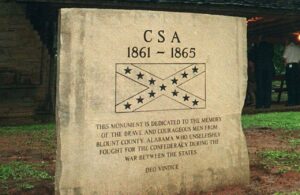
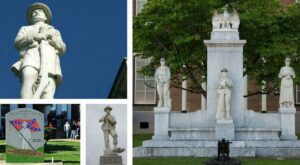
The war memorials are giant grave stones for the UNKNOWN dead Confederate Soldiers. And the Local and State Governments were very RECEPTIVE to putting them up for those soldiers that NEVER received a decent burial in the ENTIRE South.


150 years ago to 115 years ago the Wives, Mothers and Daughters did this because they were GRIEVING over never burying or even KNOWING where the Body was to bury.


They are NOT Monuments to Slavery or Monuments to White Supremacy!

They are monuments to the BRAVE Confederate soldiers who stood against tyranny and fought and died DEFENDING their Nation.  The South tried to peacefully secede from the North.  The Civil War was about standing against a government that wanted to take advantage of them. 
Would you have done any less?

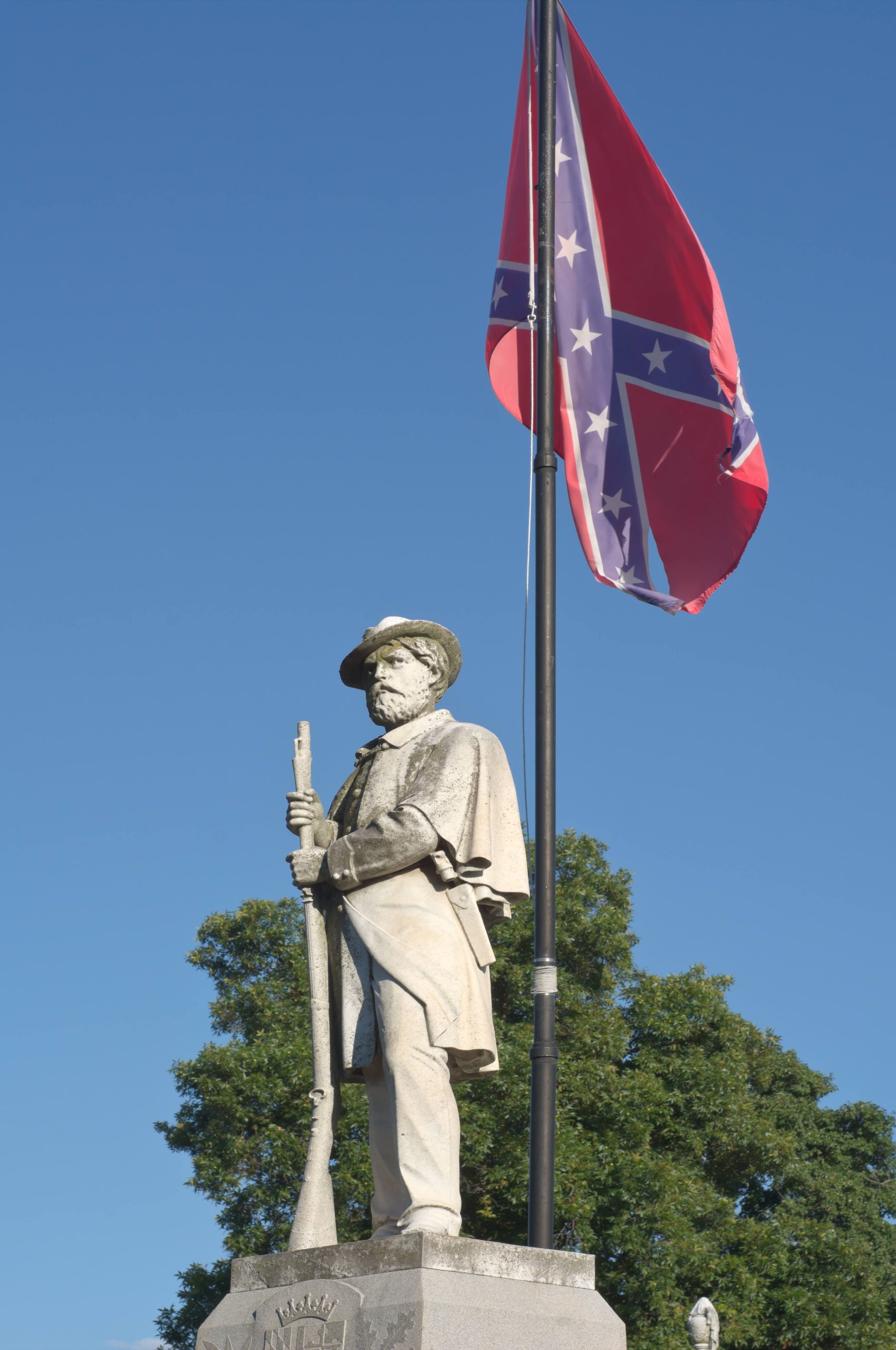
Sadly many of these monuments have been removed and/or destroyed recently. Soon all that will be left are pictures and Confederate flags to commemorate them.

Although they can remove these monuments from government buildings, they cannot remove what’s in our hearts and what we CHOOSE to fly on our property… yet. We sincerely hope it NEVER comes to that. May we all be as brave as these men.

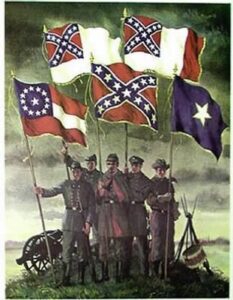
Thanks for reading! By UltimateFlags.com where EVERY flag tells a story.  What’s your favorite Confederate States of America flag? We love the Bonnie Blue! Tell us your favorite in the comments below.

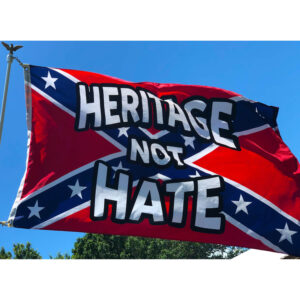
buy rebel heritage not hate flag

Buy Now Click Here

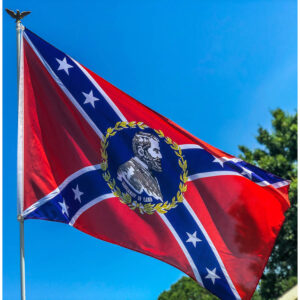
buy general lee flag

Buy Now Click Here

Bonnie blue Rebel flag

Buy Now Click Here

Posted on

8 Facts About the Confederate Flag You Didn’t Know About

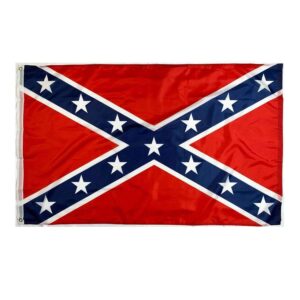
confederate flag for saleYou see the Confederate flag whipping back and forth in the wind, and your heart leaps, as you immediately feel a connection to it.

You’re not the only person who feels this way.

Research shows that 17% of Black people view the Confederate flag as a symbol of Southern pride, and 66% of white people embrace “Old Dixie” in this way.

The flag lives on. If you’re curious about the Rebellion, here are eight facts about the Confederate flag you may have never known.

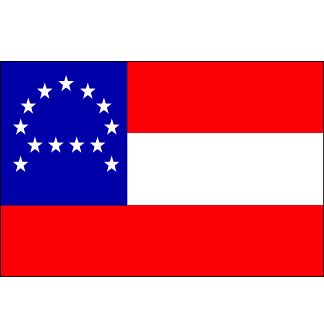
This flag became the Confederacy’s first official flag after the Confederacy was created in the early part of 1861.

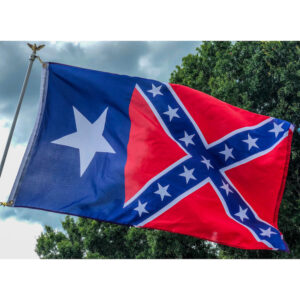
A special committee was charged with designing the flag. Although one approach was to develop a flag that mirrored the United States’ flag at that time, another approach was to produce a completely different flag. A variety of designs ended up being used to represent the Confederacy in the following years.

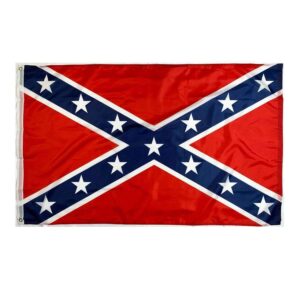
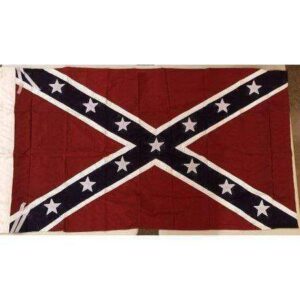
1. The Flag Started Out with an “X” Design

The flag’s first version featured a large blue “X” dotted with 13 white stars, all on a red background. The 13 states represented by the stars were South Carolina, Tennessee, Missouri, Kentucky, Arkansas, Virginia, Texas, Louisiana, Georgia, Alabama, Florida, Mississippi, and South Carolina.

This was a Christian flag and the X design was a throwback to the St. Patrick Flag.  However, this version was flown for just two years.  Why?

Because soldiers on the Civil War’s two sides frequently confused the “Stars and Bars” of the Confederate flag with the “Stars and Stripes” of the Union flag. And this, of course, led to confusion on the battlefield.

Another reason for the design change is that the Congress of the Confederacy was simply unhappy with it, as they craved a flag that they felt was “more Confederate.”

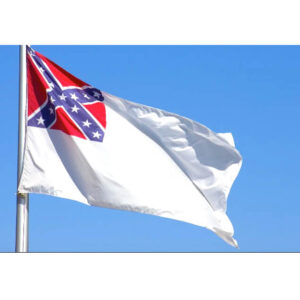
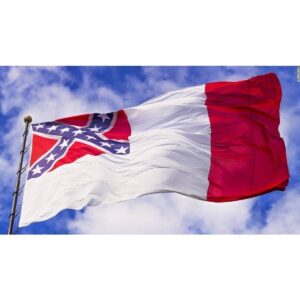
As a result, in May of 1863, a second Confederate flag was introduced that integrated the banner of the Northern Virginia Army, led by General Robert E. Lee, with a white plane. It got its name — “The Stainless Banner” — from the white midsection present on the banner.

Then, in 1865, a third flag was unveiled that added a red-colored bar at the edge of the flag. It’s this red bar that led the flag to be called “The Blood-Stained Banner.”

Not many third version flags were produced prior to Lee’s surrender to Union troops in April of that year.

The good news is that the various versions of the Confederate flag are available today for purchase. Shop now to find the perfect flag to showcase with pride or keep in your personal collection of historical items.

2. Some State Laws Protect the Flag

Specifically, five states feature laws designed to protect the banner of the Confederacy: South Carolina, Mississippi, Louisiana, Georgia, and Florida.

In other words, if you decide to deface this flag in any of these states, you’ll receive the same punishment you’d receive for defacing the state flag or the American flag.

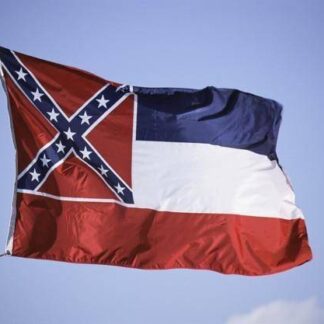
3. The Flag Is Still Part of the official State Flag of Mississippi… until a new one is proposed and approved that is.

South Carolina recently bowed to vocal public pressure to remove the Confederate banner from the state capitol. However, until just recently, Mississippi kept using the flag of the Confederacy on the state flag of Mississippi.

Back in 2001, the state did go through a period where efforts were made to change its flag. These efforts, though, failed, as flag proponents saw the flag as an important part of the state’s achievements and history.

To this day, students in school learn not only the United States banner fledge but also the Mississippi banner pledge. What will become of the official Mississippi State Flag now? Designs are currently being worked on for approval.

4. The Flag Represented Resistance to the Federal Government

Back in 1948, a party known as the Dixiecrats adopted the flag of the Confederacy as its party’s flag.

The party, which promoted segregation but was short-lived, chose this flag because the party’s members supported states’ rights. And this is exactly what the states of the Confederacy pushed for at the time of the Civil War.

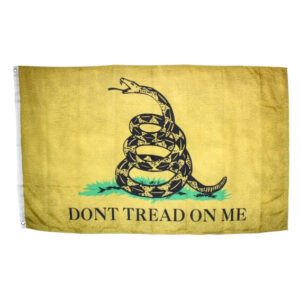
Unfortunately the mainstream media chooses to align the Confederate Flag with racism. However, racism was not the original true purpose and meaning of this flag.  Those who represent resistance to the Federal government still to this day fly the Confederate flag along with the Gadsden flag.

5. Confederate Flags and Slave Ships Didn’t Mix

Confederate flags from the South were never flown on slave ships.

Rather, New England, English, Dutch, and Portuguese ships were utilized in the trading of slaves.

6. The Majority of Americans Don’t See the Flag as a Racist Symbol

According to a CNN survey conducted back in 2015, over 50% of Americans did not view the flag as racist. Rather, most Americans viewed the banner as a powerful symbol of pride in the South.

These results no doubt surprised critics of the flag. However, the results were actually no different from those of a similar 2000 study examining people’s perceptions of the Confederate banner.

Nowadays, due to so much fake news being reported, it’s hard to tell what’s true and accurate in the mainstream media anymore. 1 thing is for sure though, many Americans have a strong sense of pride and love of the Confederate Flag. 

Within the last few months, millions of Americans across the nation have ordered Confederate Flags to show their support against Nascar banning it, Mississippi banning it, and the Federal government trying to ban it. 

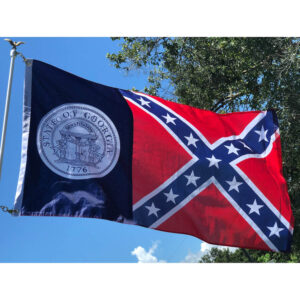
7. Georgia’s Previous State Flag Is Strongly Tied to the Confederacy

Many Georgians have no clue that their state’s flag was actually the Confederacy’s first flag.

If you take a close look at the old Georgia flag, you’ll see a Georgia “Coat of Arms” emblazoned between stars. This is a spitting image of the Confederacy’s first flag.

8. The Flag Continues to Strongly Represent the South

The Confederacy’s flag remains an iconic symbol of the South — one that continues to instill strong feelings in both its opponents and its proponents.

No matter who says what, the Confederate Flag is a part of our history and cannot be erased.  What we, as Americans, should be focused on, is how to come together as 1 and ensure this part of our pledge stays true: “indivisible, with liberty and justice for ALL.”

Thanks for reading! We hope you enjoyed our post. Please share our posts on social media with other proud Confederates.

Brought to you by: Ultimate Flags

Source

Posted on

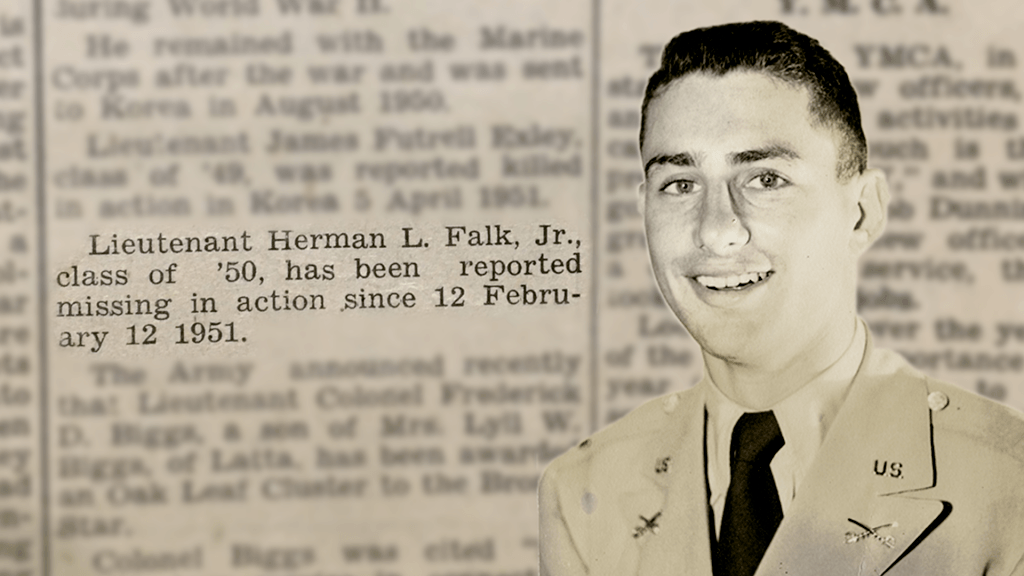
Herman Falk, Korea POW comes home to Arlington

Korean War POW to be buried in Robert E Lee’s Arlington Cemetery

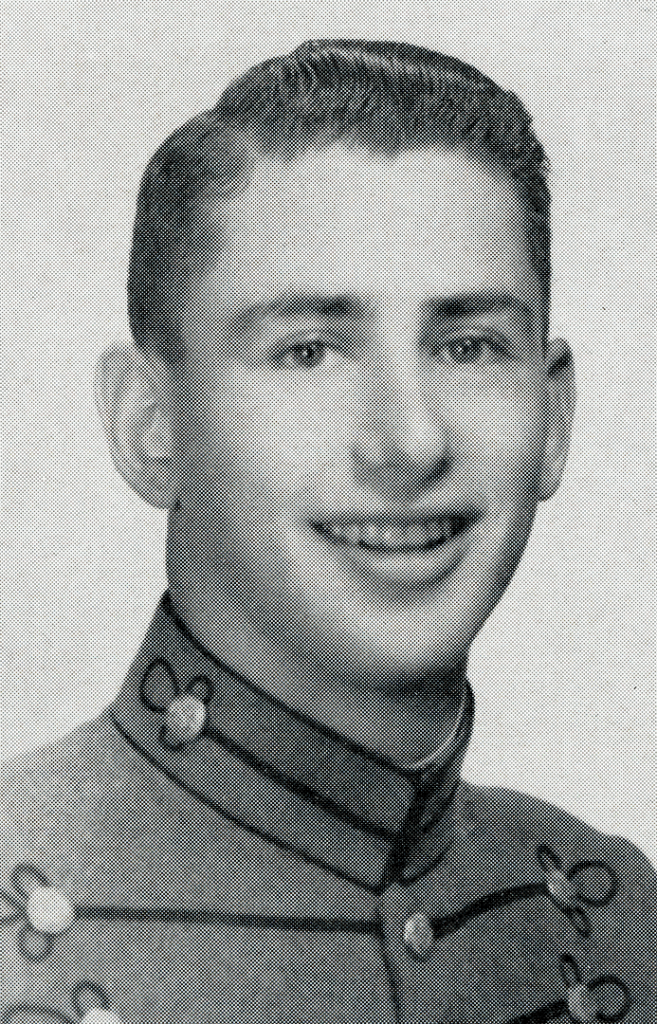
First Lt. Herman Falk, a 1950 graduate of The Citadel in Charleston, South Carolina, went missing with 156 other soldiers from Company B, 38th Infantry Regiment, 2nd Infantry Division, on Feb. 12, 1951, during operations against the Chinese People’s Volunteer Forces near Changboing-ni, Korea.

US troops held as prisoners of war had reported that Herman Falk had died in captivity. These reports surfaced after the war and stated that he died within a few months after his capture at San Bean Camp in North Korea.

On Sept 4 2018: The Defense POW/MIA Accounting Agency (DPAA) announced that the remains of a U.S. serviceman, killed during the Korean War, have been identified as those of Army 1st Lt. Herman L. Falk. Falk, 22, of New York, New York, was accounted for on August 14.

He will be buried in Arlington National Cemetery, the once homestead gardens of Robert E Lee, with full honors in April of 2019.

In July of 2018 North Korea returned 55 boxes of remains to the United States.

“The Citadel has a long tradition of answering when country calls. 1st Lt. Herman Falk is one of the heroes who answered that call,” said Col. John L. Dorrian, vice president for communication and marketing for the Citadel in South Carolina.

Herman FalkSenior Year book 1950 photo of Herman Falk
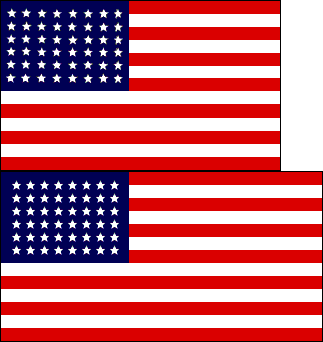
Support our sponsors, the US Flag at the time of the Korean War was a 48 star American flag.

48 Star US FlagSupport our sponsors, the US Flag at the time of the Korean War was a 48 star American flag.

https://apple.news/AcPX50ImQTkuMB-2SUFjmTA


Thanks for reading! We hope you enjoyed our post. Please share with all your fellow patriots. Brought to you by: Ultimate Flags

Posted on

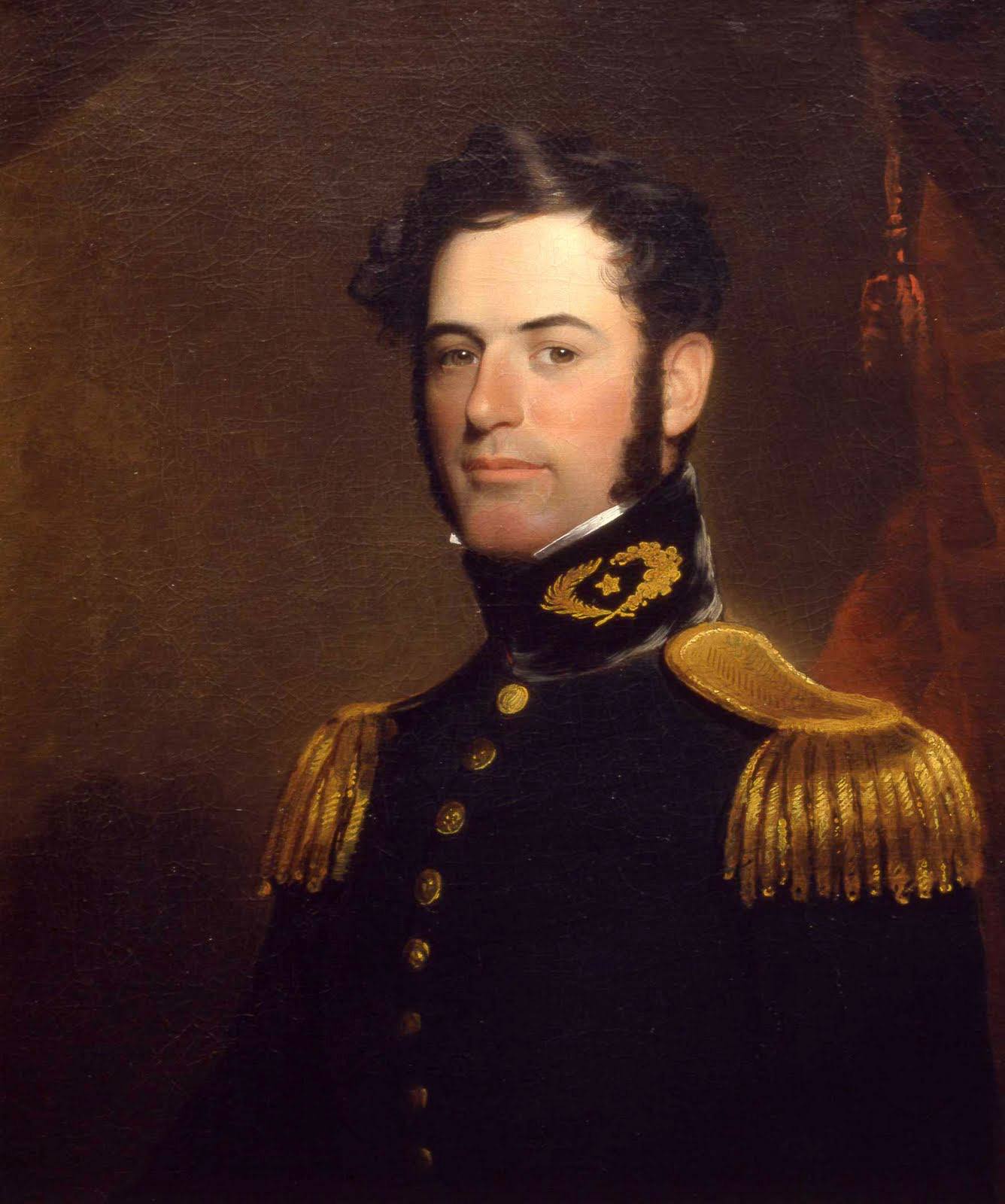
Happy Birthday Robert E Lee

Robert E Lee in 1938

January 19th is a State Holiday in Florida, Monday in Alabama and Mississippi, Friday Nov 29th in Georgia.

Robert E Lee was born on January 19th 1807 in Stanford Hall Virginia. He was a Colonel in the US Army and a General in the Confederate States of America. He was best known as a commander of the  Confederate States Army. He commanded the Army of Northern Virginia in the American Civil War from 1862 until his surrender in 1865. A son of Revolutionary War officer Henry “Light Horse Harry” Lee III, Lee was a top graduate of the United States Military Academy and an exceptional officer and military engineer in the United States Army for 32 years. During this time, he served throughout the United States, distinguished himself during the Mexican–American War, and served as Superintendent of the United States Military Academy.

His father was known as “Light Horse Harry Lee”, a Revolutionary War hero. In 1812, Harry Lee was badly injured in a political riot in Baltimore and traveled to the West Indies. He would never return, dying when his son Robert was eleven years old.

His mother was the daughter of a plantation owner and grew up at Shirley Plantation, one of the most elegant homes in Virginia

Robert E. Lee graduated second in his class at West Point, earning no demerits for discipline infractions during his four years there. At the time, the focus of the curriculum was engineering; the head of the Army Corps of Engineers supervised the school and the superintendent was an engineering officer. In June 1829, Lee was commissioned a brevet second lieutenant in the Corps of Engineers.

Abraham Lincoln, who later became president of the United States, offered Robert E. Lee command of the Union Army in 1861, but Lee refused. He would not raise arms against his native state. Lee resigned his commission and headed home to Virginia, where he served as adviser to Confederate leader Jefferson Davis, and then commanded the Army of Northern Virginia.

After the (corrected from death) wounded of Joseph Johnson in the Battle of Seven Pines, June 1st 1862 Lee became the commander of the army, which he renamed Army of Northern Virginia, his opportunity to lead an army in the field.

Lee’s fame soared when he beat back McLellan out of Virginia in a a series of battles. Subsequently he pushed back into Maryland and Pennsylvania to the battle of Gettysburg in the summer of 1863. The Confederates suffered great losses and beaten back. McLellan flinched and did not finish the job allowing the war to continue. On February 6, 1865, Lee was appointed General in Chief of the Armies of the Confederate States.

After four years of death and destruction, on April 9th 1865  Robert E. Lee met Ulysses S. Grant at Appomattox, Virginia, where the generals ended their battles. Lee told his comrades, “Go home and be good Americans”.

While Lee held slavery to be an evil institution, he also saw some benefit to blacks held in slavery. While Lee helped assist individual slaves to freedom in Liberia, and provided for their emancipation in his own will, he believed the enslaved should be eventually freed in a general way only at some unspecified future date as a part of God’s purpose. Slavery for Lee was a moral and religious issue, and not one that would yield to political solutions

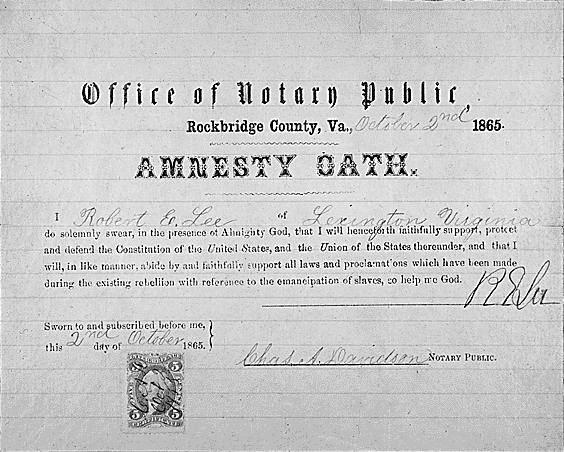
Andrew Johnson issued a Proclamation of Amnesty and Pardon to persons who had participated in the rebellion against the United States. Though there were difficulties on December 25, 1868, Lee was fully pardoned. 

Amnesty Oath of Robert E Lee

Lee was asked to serve as the president of Washington College (now Washington and Lee University) in Lexington, Virginia, and served from October 1865 until his death. His name was used in large-scale fund-raising which transformed the University’s curriculum. During his tenure he is depicted with dignity and respect he commanded among all.

Death:On September 28, 1870, Lee suffered a stroke. He died two weeks later, shortly after 9 a.m. on October 12, 1870, in Lexington, Virginia, from the effects of pneumonia.

A number of monuments, heritage sites, and institutions (including schools) are named after General Robert E. Lee. Among the a prominent statue in New Orleans, sadly torn down in 2017. Arlington House, Robert E Lee Memorial was Lee’s home the Curtis Lee Mansion, the grounds were selected for Arlington National Cemetery in part to ensure that Lee would never again be able to return to his home. In 1953, two stained-glass windows – one honoring Lee, the other Stonewall Jackson – were installed in the Washington National Cathedral

Political leaders in modern history have been quoted to honor him. Winston Churchill said that Robert E. Lee was one of the noblest Americans who ever lived. Lee’s motto is known to be “Duty, Honor, Country.”

General Lee was a great American, American soldier, confederate solider, statesman, leader and figure. He was dignified, respectful and honorable. Today we say HAPPY BIRTHDAY.

Thanks for reading. Please share our posts with your friends and family so they too can learn more about Southern Heritage and History.

Brought to you by: Ultimate Flags

Shop for flags of Robert E Lee on UltimateFlags.com

Confederate Third (3rd) Flag 3′ X 5′ StandardView


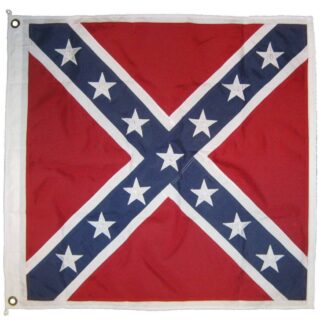
Rebel, Confederate Battle Infantry Cotton Flag52 x 52 Inch Rebel, Confederate Battle Infantry Cotton FlagView

Posted on

Fort Sumter to Appomattox Courthouse: The Story of A Confederate Sharpshooter

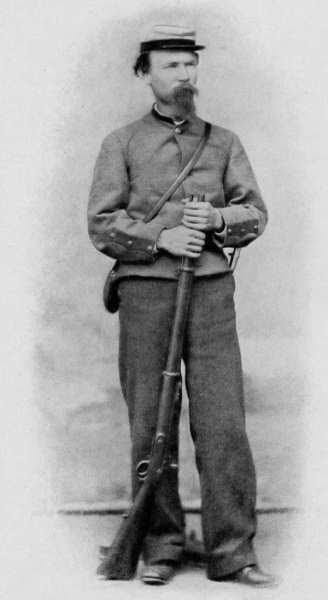
Berry Benson Confederate Sharpshooter

Berry Benson was a young Confederate sharpshooter who served in General Samuel McGowan’s First South Carolina Brigade. His memoirs were published by the University of Georgia Press as Berry Benson’s Civil War Book.

He was in uniform and there for the Civil War’s first gunshots in April of 1861.  He distinguished himself in battles with Robert E. Lee’s Army of Northern Virginia, but almost three years later on May 16, 1864, he was captured inside the Union lines and sent to the prisoner of war camp in Maryland.  But Barry didn’t like this, so soon after arriving he managed to slip into a river and swim away.  He was recaptured and transferred to a notorious prison camp much farther north in Elmira, N.Y. (named Hellmira by the prisoners).  Berry must have liked this even less, for he and eight other prisoners began digging an escape tunnel.

This resulted in the only successful breakout from Elmira.  His comrades headed for Canada and out of the war. But Berry headed south to rejoin his sharpshooter unit.  Amazingly, he made it:  in late 1864 he got to Virginia.  After visiting his home on leave, he got back in the fight, and was with Lee’s army to the end at Appomattox.

Berry recounts in his diary shortly before General Lee’s surrender April 9, 1865“On Sunday, April 2, 1865 … we learned that five miles to our left, at the very point held by McGowan’s Brigade all winter, the enemy had stormed and carried the defenses of Petersburg. Our corps commander, General A. P. Hill, had been killed. After stubborn resistance, Fort Gregg had fallen. Petersburg and Richmond were being evacuated; the whole army was in retreat. …Pretty soon, the enemy coming in hot pursuit, we began sharpshooting. Making a stand at any favorable point, we fought the advance skirmishers until they would begin to flank us, then hastily retreated to take up another stand. …April 9, 1865 we reached the neighborhood of Appomattox and came to a halt and were drawn up in line. … Then I saw a Federal officer come galloping in carrying aloft a white handkerchief. …

… For myself, I cried. I could not help it. And all about were men crying…

So Blackwood and I left the little tattered, weary, sad, and weeping army— our army—left them there on the hill with their arms stacked in the field, all in rows—never to see it any more. Telling Clarke and Bell goodbye, we crossed the road into the untenanted fields and thickets, and in a little while lost sight of all that told of the presence of what was left of the army that through four long years, time and again, had beaten back its enemy, keeping Richmond, its capital, sale and free. …”


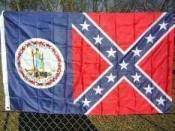
Virginia Battle Flag – Buy Now!

Confederate Robert E Lee Headquarters Flag 3 X 5 ft. Standard

Lee Headquarters Flag flying

at Appomattox- Get Yours Here!

17th invantry virginia flag cotton

17th Infantry Virginia

Buy Now!

buy confederate flag

Army of Northern Virginia

Confederate Battle Flag- Buy Now!

Brought to you by Ultimate Flags.  We hope you enjoyed our post.  Please share with all your fellow confederates so that we may honor and cherish this history and these stories.

Posted on

Sherman’s Brutal Order

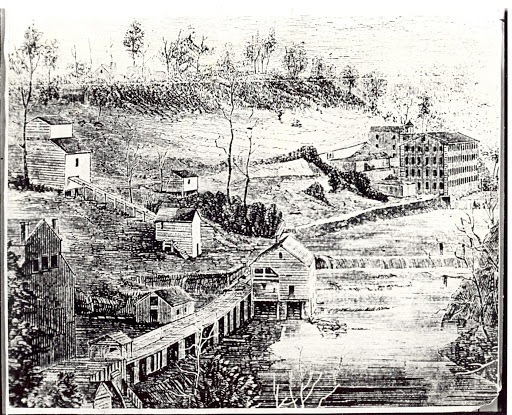
Union General Garrard’s cavalry had occupied Roswell, Georgia.

The tiny town had two cotton mills that manufactured sheets, canvas and rope. But they also made grey-colored cloth used for Confederate uniforms.

The men off to war, women and young girls were doing the mill work.
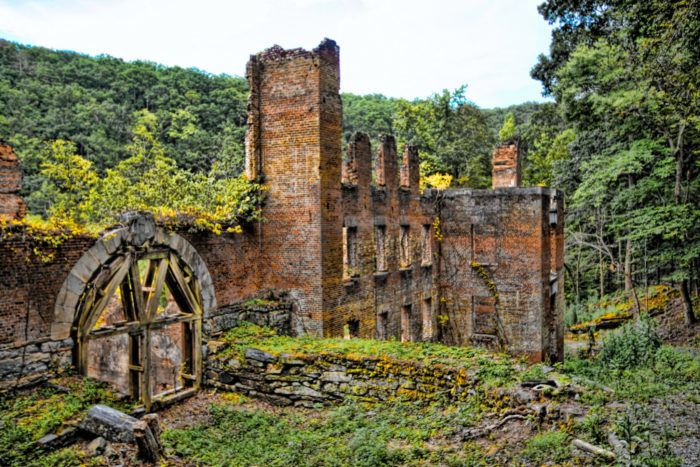
A Frenchman had temporary ownership of one of the mills. He hoped that flying a French flag over it might save the mill. It was not to be: Garrard ordered the mills burned.

civil war cotton mill

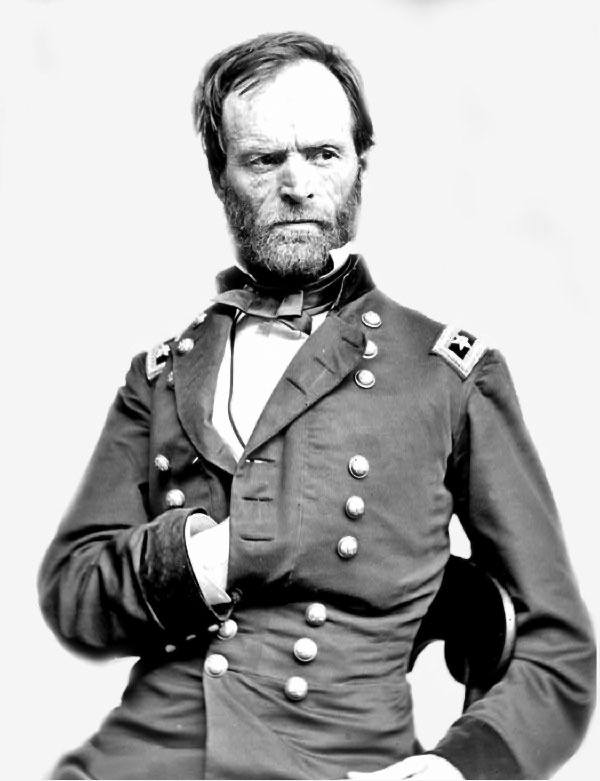
Garrard reported what he had found to General Sherman, who wanted revenge on the Frenchman for raising the flag. Sherman wrote to Garrard:

“Should you, under the impulse of anger, hang the wretch, I approve the act beforehand.”

Sherman also ordered Garrard to “arrest all people, male and female, connected with those factories, no matter what the clamor… I will send them to the North… The poor women will make a howl. Let them take along their children and clothing, providing they have the means of hauling, or you can spare them.”

Sherman said the women were “tainted with treason” and “are as much governed by the rules of war as if in the ranks.

Hundreds of women and children were loaded into boxcars and sent north, where the women struggled on their own to live. Not all of them survived the war.

Only a few were able to make their way back home after the war. Husbands returned to find their wives gone with no way to trace them.

Adeline was heavy with child when she was exiled. But there is a happy ending to her story. It took her five years but she and her child Mary made their way back after the war, mostly on foot.

The outrage was reported in several northern newspapers, but Sherman just went on and burned his way to the Atlantic Ocean.

In 1998, a group of the Sons of the Confederate Veterans did a project to identify the Roswell women and their descendants. Most were identified, and many of the descendants were located, mostly in the North.
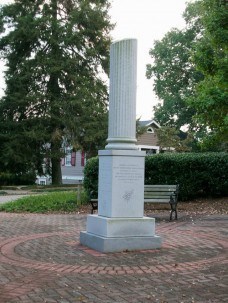
The City of Roswell erected a monument to the women, shown here.

Let’s hope no one thinks it should be torn down.

Brought to you by Ultimate Flags where EVERY flag tells a story.  We hope you enjoyed our post.  Please share with family and friends so we may NEVER repeat this history.

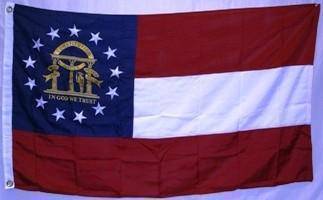
Old Georgia Flag

Old Georgia Flag – Buy Now!

Current Georgia Flag

Current Georgia Flag – Buy Now!

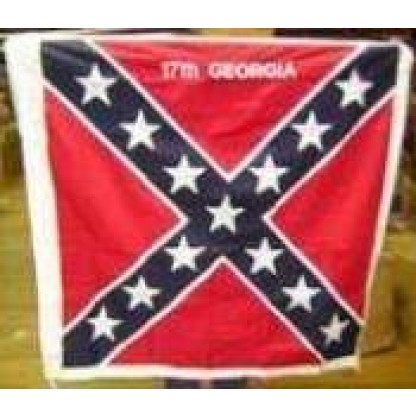
17th infantry georgia cotton flag

17th Infantry Georgia Cotton Flag

Buy Now!

Georgia 2nd Infantry Cotton Flag

Buy Now!

Posted on

“Hot Breathed, Shrieking Demons”

“When you charge, yell like furies!”

That’s the order Stonewall Jackson gave his men at the Battle of First Manassas (Bull Run to the Yankees out there).

Many a Federal learned to dread that sound.

Shouting during a charge was as old as war, but the Southern Boys in Gray created their own distinctive sounds. A Union captain at Chancellorsville explained “the heavens seemed filled with hot-breathed, shrieking demons.”

One Rebel tells us this:

“I always said that if I ever went into a charge, I wouldn’t holler. But the very first time I fired off my gun, I hollered as loud as I could and I hollered every breath until we stopped.”

Today we imagine that there was only one sound that was the Rebel Yell. Yes, Johnny Reb everywhere made it his business to adopt a terrifying holler, but it varied from one group to another.

The one we know best today was a “quick succession of high-itched yelps.” Another was an “ape-ilke grunt that rose gradually into a piercing howl.” Then again there was the “blood-curdling, full-throated caterwaul.”

Whatever was used, anyone who heard it knew Confederates were coming.

Rebels even had names for them. One officer told his men at Chickamauga to charge “with a regular Mississippi yell.” At the same battle, a Tennessee colonel ordered “three times three of Old Tennessee and charge.”

Whatever version, it was a mighty weapon. General Jubal Early was preparing a charge at Richmond when his officers told him the men were out of cartridges. Early roared, “Damn it, holler them across.” Bayonets fixed, his men charged, yelling like the devils they appeared to be.

One Billy Yank recalled it as “that terrible scream and barbarous howling.” Another said the sound “made the hair stand up on my head.”

The Union boys often shouted things like “Huzzah!” But they were no match for the Rebels.

The Rebel Yell made many a man’s blood run cold.

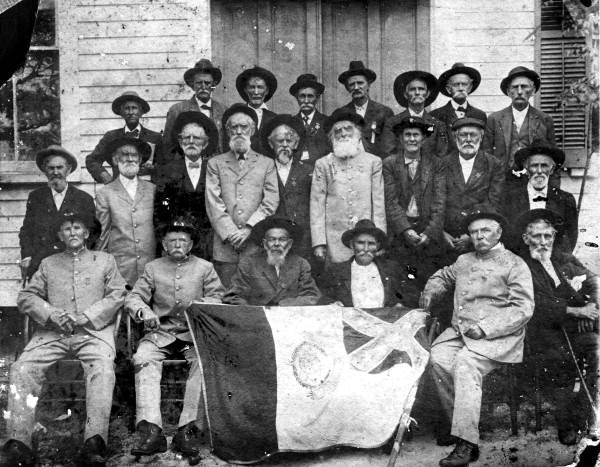
(The photo was taken at a 1904 Reunion in Crawfordville, Florida.)

Thanks for reading! By UltimateFlags where EVERY flag tells a story.  What’s your favorite Confederate States of America flag?  Tell us your favorite in the comments below. Be sure to share our posts with other proud Confederates!

buy rebel heritage not hate flag

Buy Now Click Here

Buy Now Click Here

Buy Now Click Here