Posted on

A Confederate Soldier’s Letter Home

There is a side of the Civil War that many don’t know about, or just ignore.  It was not so unusual for troops from opposite sides to mingle, talk and share or trade items, and generally act friendly when not engaged in fighting each other.

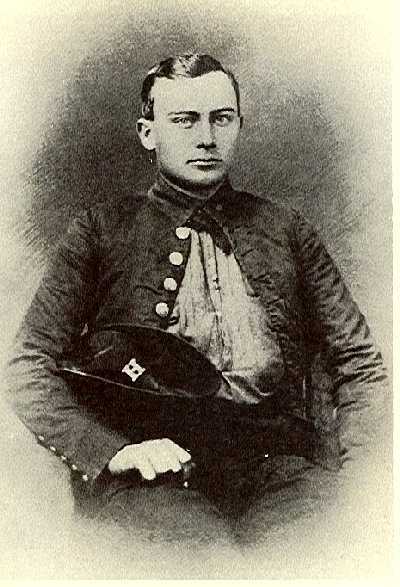
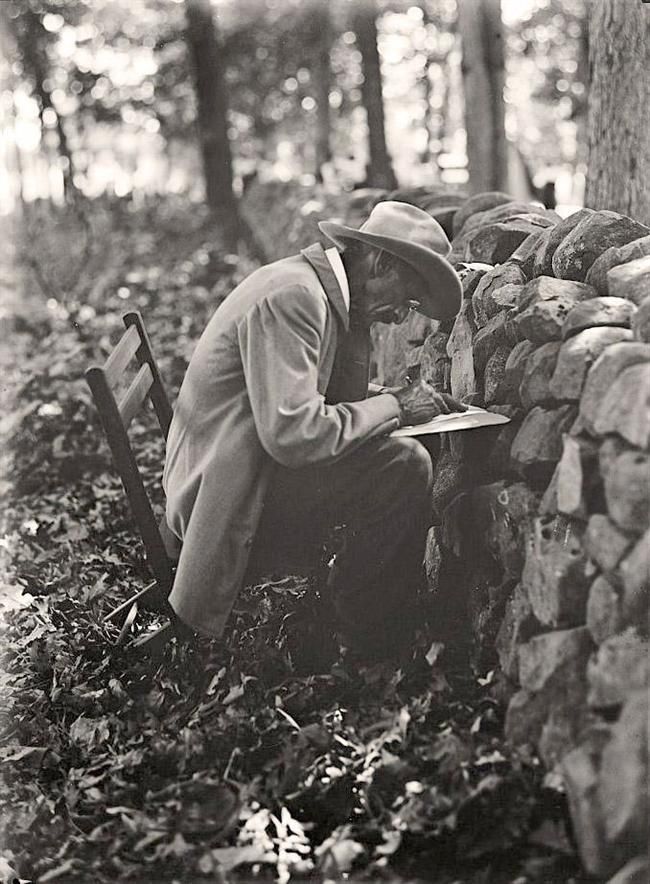
Here is a portion of a letter sent from a Confederate soldier in North Georgia to his sister. July 15th, 1864“Dear Sister,  

Pickets don’t fire at each other now. We go down to the edge of the river on our side and the Yankees come down on their side and talk to each other. The men on picket opposite are from Ohio, and seem very tired of the war. They say that their term of enlistment will be out in three months and most of them say that when it is out they are going home.

Gen. Johnson has issued an order that there shall be no more communication between with them, and I think it is well that he has done so because they were getting too intimate. Some men don’t know what should be concealed. The Yankees are very much in want of tobacco, and our Government gives it to us, and we used to trade tobacco with them for knives and canteens.

There is a rock near the middle of the river to which they would swim and trade. After a while they got so well acquainted that some of our men would swim clear across and land among the Yankees. The Yankees were not so bold for a long time, but a few days ago they got to coming across also. That has been broken up now and if any trading is carried on, it is done contrary to orders

I took some tobacco down with me the other day but I found out when I got there communication had been stopped. As I was sitting on the banks, one of the Yankees from the other side called to me to know if I had any tobacco. I told him I had. He said that he had a good knife to trade for it. I told him that trading was prohibited. He said ‘Your officers won’t see you, come over, I want a chew of tobacco very bad.’ I asked some of them who they were going to vote for President. One of them said ‘Old Abe’ but most of them said they were for McLellan.

…One of the Yankee Lieutenants promised to mail some letters for one of our officers and I wrote to Aunt Martha expecting to send it at the same time but Gen. Johnson stopped the proceeding so I did not send it. There is a force of Yankees on this side of the river and have been there for some time. Why Gen. Johnson don’t drive them back I don’t know he must have some object in view.Write to me soon.. Yours truly,(s)O.D. Chester”

The last paragraph of the letter talks about the coming election in November, a very important issue to the South.  They figured that that McLellan as the peace candidate so they supported him. So, if most of the Yankee soldiers said they would vote for McLellan, as indicated above, wouldn’t that make some of those Yankees who wanted peace, too, see maybe just a little bit pro-South?  

Thanks for reading. Please share our posts with your friends and family so they too can learn more about Southern Heritage and History.

Brought to you by: Ultimate Flags
 

Posted on

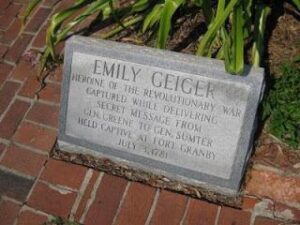
Teenage Heroine: Emily Geiger

Even in the 1700’s women could be patriots and heroines. There are numerous accounts of brave women who nobly and courageously performed their patriotic duty during the American Revolution.

Here is the story of one such woman of South Carolina, Emily Geiger.

General Nathaniel Greene had retreated before Lord Rawdon who had divided his forces.. When Greene passed the Broad River, he wanted to send an order to General Thomas Sumter to join him so they could go on the attack against Lord Rawdon. But it seemed General Greene couldn’t find a man with the boldness to take on this mission and the danger involved.  The areas he traveled through was full of bloodthirsty Tories, eager to take out the Whigs  Finally, a teenage girl named Emily Geiger went to self to General Greene to offer her services a his messenger.

Why would a young girl be willing to put her life in danger for the cause? Her father John was not well enough to serve on the battlefield and so she wanted to serve her country in any way she could.

The general, surprised but delighted, agreed to let take on the mission of going past enemy lines to deliver a message. He  wrote a letter and gave it to her, telling  her about the contents just in case of an accident or capture.

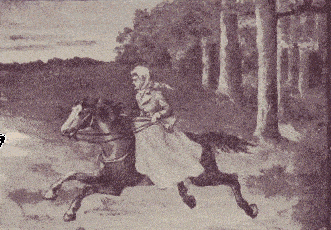
Emily rode sidesaddle on horseback, traveling under the guise of taking a trip to her uncle’s house many miles away.

On the second day of her ride, Lord Rawdon’s scouts stopped her near the Congaree River. Emily who could not tell a lie without blushing, and was coming from the direction of Green’s army, was immediately held under suspicion and confined to a small room the size of a shed.        

The officer sent for an old Tory matron to search her for papers. Emily knew immediately she should destroy the letter, but didn’t know what to do with the pieces.

But as soon as the door closed, she started to eat the pieces of the letter, and got them all down before the matron Mrs. Hogabook arrived. After carefully searching Emily, the matron found nothing. The officer apologized for the error and allowed her to leave, even giving her an escort to her uncle’s house.

The next day, Emily set off taking a route that would avoid interception and soon arrived safely at Sumter’s camp. Emily delivered Greene’s verbal message, and how she had been stopped by the enemy scouts  Sumpter immediately went to join Greene and the main army at Orangeburgh.

Job well done, young and brave Patriot Emily, for helping make America free!


Thanks for reading! We hope you enjoyed our post. Please share with all your fellow patriots. Brought to you by: Ultimate Flags

Posted on

How The South Remembers the War

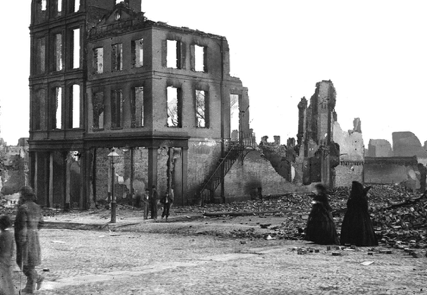
Some may wonder why the South remembers the Civil War as it does. After all, the losses were horrific to both North and South. Most of the war was fought on Southern soil. Small towns and countryside were trampled, occupied and battered for years. Major urban centers were ripped to pieces. The burning of Atlanta by Sherman is pretty well known, but what about Fredericksburg? When Union troops began to pour through the city, discipline broke down. Artillery shells had blown open many buildings, revealing their contents. For nearly 24 hours the city was sacked. When Rebel soldiers retook the city a few days later they were astonished at the destruction. During the siege of Vicksburg, 22,000 shells rained down. Cities like Charleston, Petersburg, Richmond saw vast destruction from siege. Shot and shell plunged down through roofs into parlors and bedrooms.   There were 50,000 civilian deaths during the Civil War. Food problems existed on both sides, but were far worse for Confederate soldiers and civilians. Union corn production was 400 million bushels, compared to the 250 million in Southern states. Union wheat production was 100 million bushels; Southern, 35 million bushels. And with soldiers marching back and forth across the South, you can imagine how much pillaging took place. One in five men of military age died in the war. Of course memorials sprang up across the South. Political, economic and social factors aside, losing 20% of the adult male population was a hard memory to erase.

Thanks for reading. Please share our posts with your friends and family so they too can learn more about Southern Heritage and History.

Brought to you by: Ultimate Flags
Posted on

Who is the Confederate  “Tejano Tiger?”

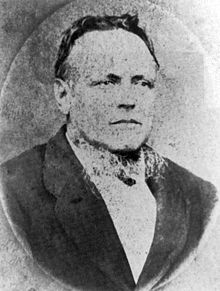
A biographer has called him the “Tejano Tiger.” His name is Col. Santos Benavides.  He was the highest-ranking Hispanic in the Confederacy. Over 10,000 Tejanos, the Mexican-American inhabitants of southern Texas, fought in the Civil War in South Texas in over 100 significant battles.  Here is his inspirational story.

Before serving with the Confederacy, Benavides had a reputation as an Indian fighter. He gained commission as captain in the 33rd Thirty-third Texas Cavalry (or Benavides’ Regiment) and went to serve the Rio Grande Military District. His his reputation as a fighter continued. He drove Juan Cortina back into Mexico in the battle of Carrizo in May 1861, and ended other local revolts against Confederate authority.

Benavides was offered a Union generalship, but turned it down to protect his homeland of Texas. He and his brothers, Santos, Refugio and Cristobal were a formidable fighting force, making up a significant part of the corps of Confederate officers in Texas.

In November 1863 Benavides was promoted to colonel and authorized to raise his own regiment of “Partisan Rangers,” including remnants of the Texas 33rd.

According to sources,

“His greatest military triumph was his defense of Laredo on March 19, 1864, with forty-two troops against 200 soldiers of the Union First Texas Cavalry, commanded by Col. Edmund J. Davis, who had, ironically, offered Benavides a Union generalship earlier.”

Wagon trains full of cargos of cotton, “white gold,”  came across the Río Grande and were loaded on Mexican flagships for safe passage past Union warships. The Union Army wanted to  stop these shipments that were funding the Confederate Army.

It was on March 18, 1864, when Union Major Alfred Holt led a force of 200 men from Brownsville. Their mission was to destroy 5,000 bales of cotton stacked at the San Agustín Plaza in Laredo.  

But Benavides was a Union mission spoiler.  After three Union attacks he and  just 42 men forced the Yankee invaders back down the Río Grande. These Confederates saved the town and the cotton trade into Mexico.

Colonel Benavides and his troops were said to be:

“the peer of any soldier or officer in the Confederate armies” and received a citation from the Confederate Texas Legislature for “vigilance, energy, and gallantry.”

Well done, “Tejano Tiger.”

Thanks for reading. Please share our posts with your friends and family so they too can learn more about Southern Heritage and History.

Brought to you by: Ultimate Flags
Posted on

“They Fight Like Devils”

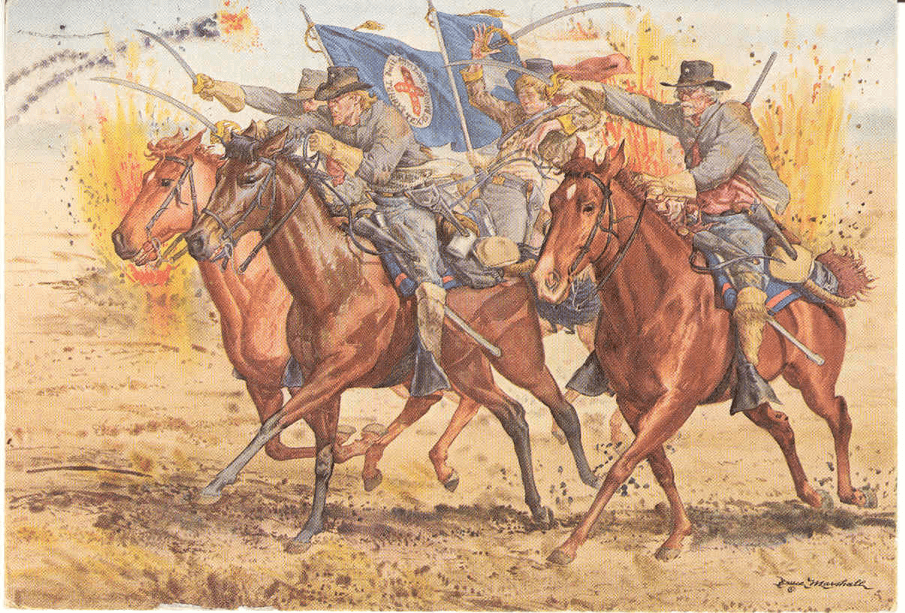
Union General William T. Sherman called them “the most dangerous set of men which the war turned loose upon the world.”  The cowboys of of the 8th Texas Cavalry were known as Terry’s Texas Rangers, reckless men who didn’t much like discipline. A Confederate colonel once recommended that the commander of a Union regiment surrender because he had five hundred Texas Rangers that he “couldn’t control in a fight.”  One night in Nashville, three or four Rangers slipped out of their barracks, got drunk and went to a play. When the actress playing Pocahontas was “roughed up” as part of a scene, one Ranger took offense and fired his six-shooter at the offending actor. A captured Union officer wrote in a letter: “The Rangers are as quick as lightning. They ride like Arabs, shoot like archers at the mark, and fight like devils. They are wholly without fear themselves, and no respecter of a wish to surrender.”Of the more than 1,000 Rangers who were mustered in, less than 300 returned home. In Austin, Texas there is a bronze statue depicting a Terry’s Texas Ranger wearing a poncho, a slouch hat and carrying a shotgun astride a spirited horse. One of the inscriptions is: “There is no danger of a surprise when the Rangers are between us and the enemy.”

Thanks for reading. Please share our posts with your friends and family so they too can learn more about Southern Heritage and History.

Brought to you by: Ultimate Flags
Posted on

Blizzard of 1780: “Buried like sheep in the snow…”

Most Americans think about the fight for independence and sacrifices made by our Founders on the 4th of July. It’s summertime and the weather is usually hot while we are vacationing and visiting Independence Hall or Boston. But the story of the American Revolution is best told in the freezing days of winter.

“The oldest people now living in the country do not remember so hard a winter.”  

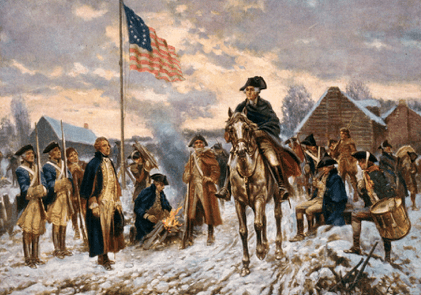
Those are the words of General George Washington, written as he and over 7000 patriots were holed up In January 1780.  Washington had decided to place his army at Morristown, New Jersey for the winter. When they arrived at the site in November 1779 there was already a foot of snow on the ground.  The temperature only made it above freezing a couple times. But that was before the blizzard struck in the new year.  As it did, James Thacher wrote in his journal:

“No man could endure its violence many minutes without danger of his life.” If a tent blew down, soldiers were “buried like sheep under the snow…almost smothered in the storm.”It was impossible to get supplies. George Washington wrote in a letter dated January 8.  “…the Troops, both Officers and Men, have been almost perishing for want.”

One might think this was Valley Forge, but it was a two-year old memory at this point. No, this was Morristown and it was much worse. Major General Johann de Kalb was there and wrote:

“Those who have only been in Valley Forge and Middlebrook during the last two winters, but have not tasted the cruelties of this one, know not what it is to suffer.”Private Martin was also there:

“We were absolutely, literally starved. I do solemnly declare that I did not put a single morsel of victuals into my mouth for four days and as many nights, except a little black birch bark which I gnawed off a stick of wood.”

That winter of 1780 was so severe that the waters around New York City completely froze and closed down navigation for several weeks (the only time in recorded American history that this has occurred).

Officers remembered ink freezing in their quill pens and one surgeon recorded:

“we experienced one of the most tremendous snowstorms ever remembered; no man could endure its violence many minutes without danger to his life. … When the storm subsided, the snow was from four to six feet deep, obscuring the very traces of the roads by covering fences that lined them.”

The cold and lack of food went on for months. Yet despite such severe hardships, men like these, the truest of Patriots, kept on for three more years. Private Martin said of those men:“They were truly patriotic, they loved their country, and they had already suffered everything short of death in its cause.”If they had not, the liberties they forged may never have spread across our land.


Thanks for reading! We hope you enjoyed our post. Please share with all your fellow patriots. Brought to you by: Ultimate Flags

Posted on

“The silence was deafening.”

The World War II Battle of Guadalcanal was the first major offensive and a decisive victory for the Allies in the Pacific. Japanese troops were stationed in this section of the Solomon Islands, when U.S. Marines launched a surprise attack in August 1942 and took control of an air base under construction.

Reinforcements came in, a series of clashes unfolded, and both sides suffered heavy losses. But the Japanese losses were greater, forcing them to withdraw  from Guadalcanal by February.

Marine Platoon Sergeant Mitchell Paige had a part to play in this fight.  He was a United States Marine who won the Medal of Honor for his actions at the Battle of Guadalcanal.

One thing to know about Guadalcanal. At the start, neither side had seen defeat, and neither side was going to back down. Sergeant Paige and his 33 men were dug in on a hill when over 2,000 enemy approached. The fight was on.Paige and his men poured out lead to beat them back, but nobody was begging off.  Soon it was hand-to-hand in the foxholes, while the Marine machine gunners kept firing on the main enemy force. The enemy had swept his left flank and driven Fox Company out of position. To his right another George Company could not fire as it was on higher ground and might hit them. In the dark, Paige realized he had been moving from one machine gun to another and except for the nearby enemy he was alone: “I didn’t have time to really think about it. I was too busy shooting as fast as I could, trying to get a bead on the oncoming troops.” At one point a group of enemy overran his position. Paige had to swing his gun around and take them out before they could go over the crest and down the to the battalion command post.It was time. He yelled to George Company, “Fix bayonets; follow me.” He tossed two belts of ammo over his shoulders, unclamped his machine gun, and led the charge at a dead run. The rest of the Marines were “whooping and hollering like a bunch of wild Indians.”And when they reached the bottom of the hill, where the jungle began, there was nothing left to shoot. The battle was over.

Platoon Sergeant Paige said that after ten hours, “The silence was deafening.”


Thanks for reading! We hope you enjoyed our post. Please share with all your fellow patriots. Brought to you by: Ultimate Flags

Posted on

The Southern Invasion

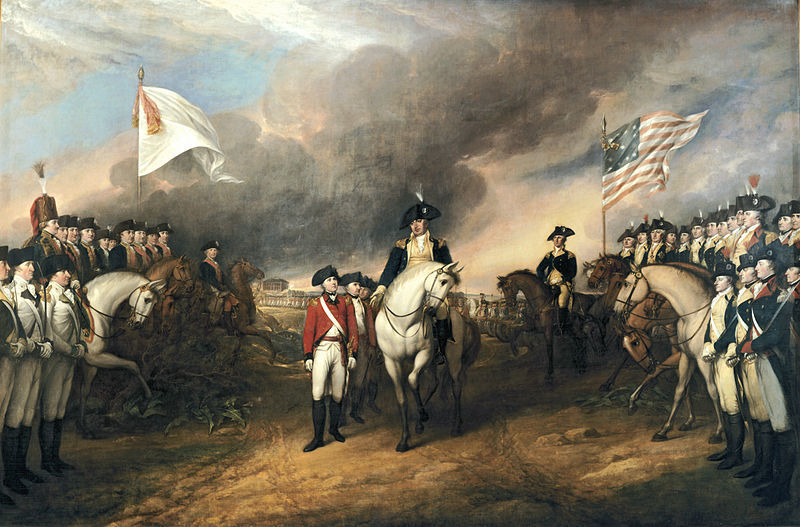
What comes to mind when you think of the American War of Independence? Paul Revere and Lexington? Bunker Hill? Washington crossing the Delaware? Northern states are rightly proud of these spots and more. But did you know the British campaign in the South was in fact the final turning point in the war?The British forces had failed to crush the rebellion up north, so they decided to retake Virginia, the Carolinas and Georgia.At first they scored big.  They knocked down three American armies, as they captured Savannah and Charleston. The Parliament were cheerful. Lord George Germain announced that the Southern victories meant a “speedy and happy termination of the American war.”The British had a lot of early success in the North, too. But hold on. They were about to find out how a determined militia could mess up their plan.Southern guerrillas came out from the South Carolina swamps and forests, ambushing the Redcoats left and right. In no time this so called “pacified” territory was declared by British high command to be “in an absolute state of rebellion.” And it got worse for the Brits. Southern militia and back-country riflemen wiped out an army of 1,000 at Kings Mountain, South Carolina.British General Cornwallis then figured he’d better march an army of over 4,000 to North Carolina and end this once and for all. But American General Greene was not about to let that happen. So he led him on a merry chase, stopping for battles at Cowpens and Guilford Courthouse, exhausting Cornwallis and inflicting savage losses on his troops.Cornwallis decided he’d have better luck in Virginia, but is was not meant to be. In Yorktown, Virginia, Cornwallis finally surrendered to George Washington on October 17, 1781. (Depicted in image above.) Americans have held onto their arms ever since.


Thanks for reading! We hope you enjoyed our post. Please share with all your fellow patriots. Brought to you by: Ultimate Flags


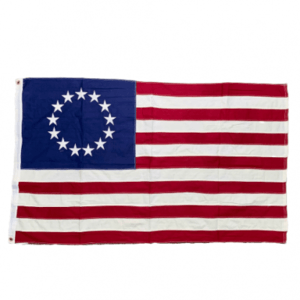
13 star patriotic American flag of 1776 in traditional thick heavy cotton beautiful embroidered stars

13 Star American Flag

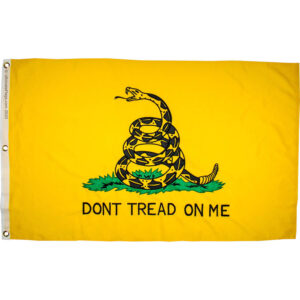
Dont Tread on Me Flag

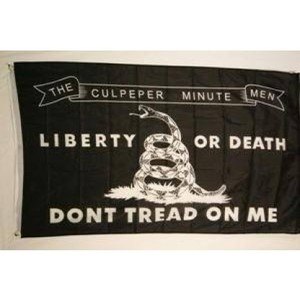
Culpeper Minute Men Flag

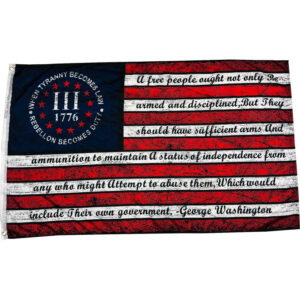
when tyranny becomes law flag double sided flags for sale 3x5 feetGeorge Washington

& Thomas Jefferson Quote Flag


Posted on

Mischief in the Corn Patch

The Civil War memoirs of Private Samuel Watkins of Company H, 1st Tennessee Infantry are considered the best ever written by a common soldier of the field. His writing style is engaging, and often quite humorous. He masterfully captured the pride, misery, and glory experienced by the common foot soldier. Here’s another story.

It’s no surprise that some Rebels were prone to mischief. Even innocent looking Sam got himself in a spot of trouble on day in a cornfield near Tupelo, Mississippi.  

Sam’s  regiment was under the command of General Bragg, who “issued an order authorizing citizens to defend themselves against the depredations of soldiers—to shoot them down if caught depredating.”  

But sometimes a fella can’t help but do a little depredating, a fancy way of saying plundering, if he’s not getting enough to eat.

Sam and his buddy Bryon were mighty hungry  when they spied a cornfield. Corn was so good for roasting, so naturally, in spite of the orders, you can guess what they did. Sam had an armful of corn when suddenly, “an old citizen raised up and said, ‘Stop there! Drop that corn.’”The old fellow had a “double- barreled shotgun cocked and leveled” at Sam, and proceeded to march him toward General Bragg’s headquarters.No amount of pleading helped change the old man’s mind. Sam said, “I could see the devil in the old fellow’s eye.”But Sam was determined not to see General Bragg, who was a mite too quick to have his own men shot. So, he said to the old man:“’Mister, Byron Richardson is in your field, and if you will go back we can catch him and you can take both of us to General Bragg.’ The old fellow’s spunk was up. He had captured me so easy, he no doubt thought he could whip a dozen.”They got back and there was Bryon, with his arms full of corn. The old citizen leveled his gun, but Sam grabbed it “and with the assistance of Byron, we had the old fellow and his gun both.”Sam’s future looked brighter now:

“We made the old fellow gather as much as he could carry, and made him carry it nearly to camp, when we dismissed him, a wiser if not a better and richer man.”

Thanks for reading. Please share our posts with your friends and family so they too can learn more about Southern Heritage and History.

Brought to you by: Ultimate Flags
 

Posted on

Oh No! It’s “Jumpin’ Joe”

War sometimes creates weird and wacky circumstances. The following account is about a soldier who became a hero of two nations.  It’s the kind of stuff that should be made into a blockbuster movie hit.

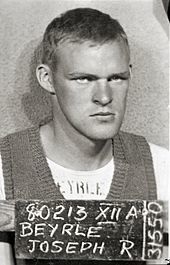
The photo above is a mugshot of paratrooper Sergeant “Jumpin’ Joe” Beryle, but it’s not what you think. It was taken at Sta lag 3, a German World War II prisoner-of-war camp south of Berlin. After taking one look at this face, and the photographer should have turned around and run away.  Here’s how the story goes.  

Instead of taking the scholarship to the University of Notre Dame in 1942 Joseph Beyrle decided to enlist in the Army as a paratrooper with the 506th Parachute Infantry Regiment of the 101st Airborne’s “Screaming Eagles” division.He quickly earned him the nickname, “Jumpin’ Joe” because he often took the place of fellow paratroopers and did their jumps for them.Before D-Day, Beryle volunteered to make two jumps on missions into Occupied France. On  June 6th, 1944, he was part of the 101st Airborne dropping from the skies behind enemy lines. He got separated from his unit, but still managed to blow up a power station before getting captured.Joe got sassy with an interrogator, as he writes in his autobiography:“Sometime during the questioning I called a German officer a “SOB” and woke up several days later in a hospital with a big headache and a bashed head…”.In November, he and three others escaped and hopped a train to Berlin. It took a week for the Gestapo to find them:“In the next 7 to 10 days we found out everything we had heard about the Gestapo was true…”When he recovered, Jumping Joe escaped again. He encountered a Soviet tank unit, and joined up with these guys to liberate his POW camp.Beryle recovered his mugshot from the Commandant’s office, but he doesn’t mention what happened to that photographer. Good time to quit? Not yet.  Beryle rode on a Russian tank as a machine gunner in some seriously hot battles until his tank was blown up by a dive bomber. He went to a field hospital, then on to Moscow where he contacted the US Embassy. But Joseph Beryle was listed as “Killed in Action” a year earlier. But things finally got sorted out, as Beryle’s autobiography states:“My funeral Mass was held at St. Joseph’s Church in Muskegon by Father Stratz on September 17, 1944. My wife and I were married in the same church on September 14, 1946, by Father Stratz.”


Thanks for reading! We hope you enjoyed our post. Please share with all your fellow patriots. Brought to you by: Ultimate Flags
Posted on

A Tough Texan Goes “To Hell and Back”

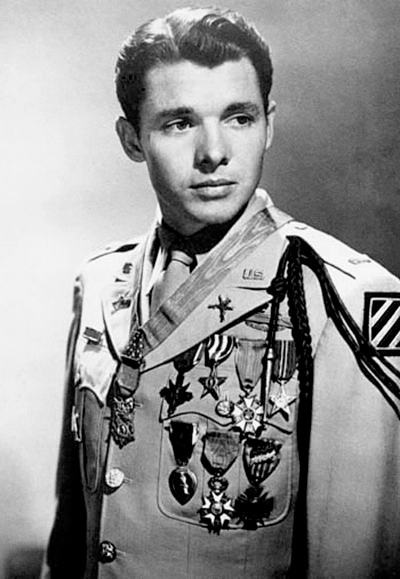
The Most Decorated American in WWII was a tough little baby-faced Texan soldier named Audie Murphy.Audie Murphy was five feet five inches, 110 pounds when he volunteered to join the US Army during World War II. He saw plenty of action in Italy, but let’s go over two stories from Europe. During the invasion of southern France, enemy soldiers pretended to surrender, then opened fire on his unit. Mad as a hornet, Sergeant Murphy took down the cowards, and proceeded to take out three machine gun nests and a couple of snipers.In January of 1945, Murphy was a Lieutenant in command of a unit of 18 men and two M-10 tank destroyers when 250 elite troops and six tanks came at them. The American shells bounced off the thick German armor, and were quickly disabled. Murphy ordered his men back, but stayed to direct an artillery strike.At one point the Germans were within 50 yards of him when headquarters asked about the enemy’s position. Murphy replied,

“If you just hold the phone a minute, I’ll let you talk to one of the bastards.” Murphy then leaped onto one of the M-10s to man the .50 caliber:

“I concentrated on the foot soldiers, believing that the tanks would not advance very far without them.” Suddenly, two 88mm shells slammed into the M-10, throwing Murphy against the turret. Surrounded by smoke and flame, he got back to the .50 caliber and continued to fire. Murphy later remarked:

“I remember getting the hell shook out of me, but that was nothing new. I also remember for the first time in three days my feet were warm.” Murphy held out until airstrikes pushed the enemy back. By the end of the war he had earned the Congressional Medal of Honor, Distinguished Service Cross, Legion of Merit, two Silver Stars, two Bronze Stars, three Purple Hearts, and a host of others. He played himself in a movie after the war, titled “To Hell and Back.”


Thanks for reading! We hope you enjoyed our post. Please share with all your fellow patriots. Brought to you by: Ultimate Flags
Posted on

King of the Wild Frontier – “Davy” Crockett

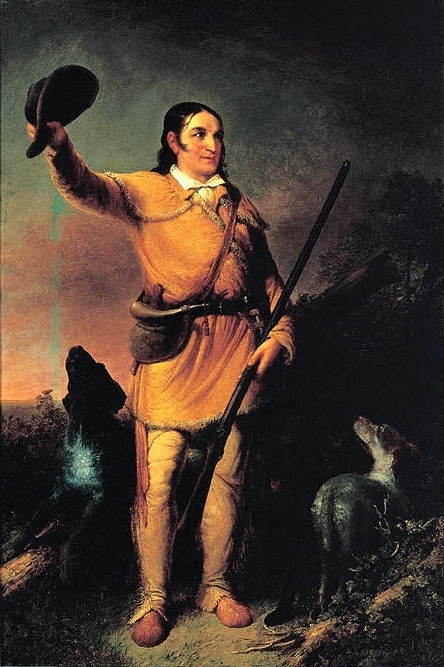
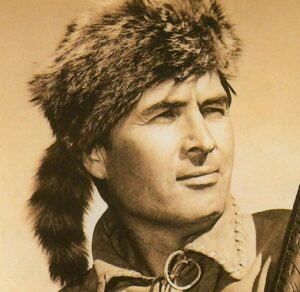
Born on a mountain top in Tennessee, Greenest state in the land of the free. Raised in the woods so’s he knew every tree, Killed him a bear when he was only three. Davy, Davy Crockett King of the Wild Frontier.If you are old enough then you remember and can sing along with this tune that goes with these words. You can see in your mind the tall, good looking Fess Parker, dressed in fringed skins, wearing a coon skin hat and carrying a large rifle, appearing as our favorite hero on early TV in the mid 1950’s. It was a childhood dream come true to own a coonskin cap and wear it sitting in front of the TV for every exciting episode.

Surely David “Davy” Crockett has been one of the most celebrated, romanticized legendary  figures in American history. He is famed as  a frontiersman, folk hero, congressman and Alamo defender.

Biographers often say there are actually two Crocketts: David, the frontiersman and congressman lost at the battle in Alamo, and Davy, the larger-than-life folk hero whose famous exploits are glorified in several books,  almanacs, and television series..

Crockett’s father taught him to shoot a rifle when he was just 8 years old.(So, there goes the shooting the bear myth at age 3, as in the song, maybe.) He eagerly tagged along with his his older brothers on hunting trips.

During the War of 1812, Crockett served in the militia followed later by service as a member of the Tennessee State House of Representatives.

While Crockett was in fact a very skilled woodsman, his fame as as a rebellious super heroic,  sharpshooting, yarn spinning and larger-than-life woodsman style was partially a product of his own doing. He was trying to package himself as super talented to help win votes during his political campaigns. It seemed to work. He was reelected to the US Congress for a third term.

But soon after his last term, he grew disillusioned with politics and decided to leave his home in West Tennessee to join the fight in the Texas War of Independence in 1835.

His youngest child Matilda later wrote that she distinctly remembered the last time that she saw her father:“He was dressed in his hunting suit, wearing a coonskin cap, and carried a fine rifle presented to him by friends…He seemed very confident the morning he went away that he would soon have us all to join him in Texas.”

But Santa Anna’s Mexican Army had other ideas for Crockett’s future. On that day in March 1836 in San Antonio, the Mexicans killed virtually all of the roughly 200 Texans defending the Alamo, including, Colonels William B. Travis and James Bowie, and reportedly the legendary frontiersman Davy Crockett.

The memoirs of a Mexican officer José Enrique de la Peña stated that Crockett and his comrades at arms were gruesomely executed, though they “died without complaining and without humiliating themselves before their torturers.”

Some scholars disagree about the truth of this account of his death, and so the exact circumstances of Crockett’s death at the Alamo remain up for debate.

But the fact remains that frontiersman Davy Crockett is a true American hero, and icon who served as an inspiration to us all, young and old.

Fess Parker as Davy Crockett in TV Series


Thanks for reading! We hope you enjoyed our post. Please share with all your fellow patriots. Brought to you by: Ultimate Flags