Yes — you can fly a 48 star flag today. No federal law restricts which historical American flag designs you display, and the 48-star design was the official U.S. flag from July 4, 1912, through July 3, 1959. What matters on a flagpole is how you treat the flag, not which era it came from. Collectors, veterans' groups and history-minded families fly the 48-star design all across the country.
- You can legally fly a 48 star flag today — no U.S. law limits which historical designs you display.
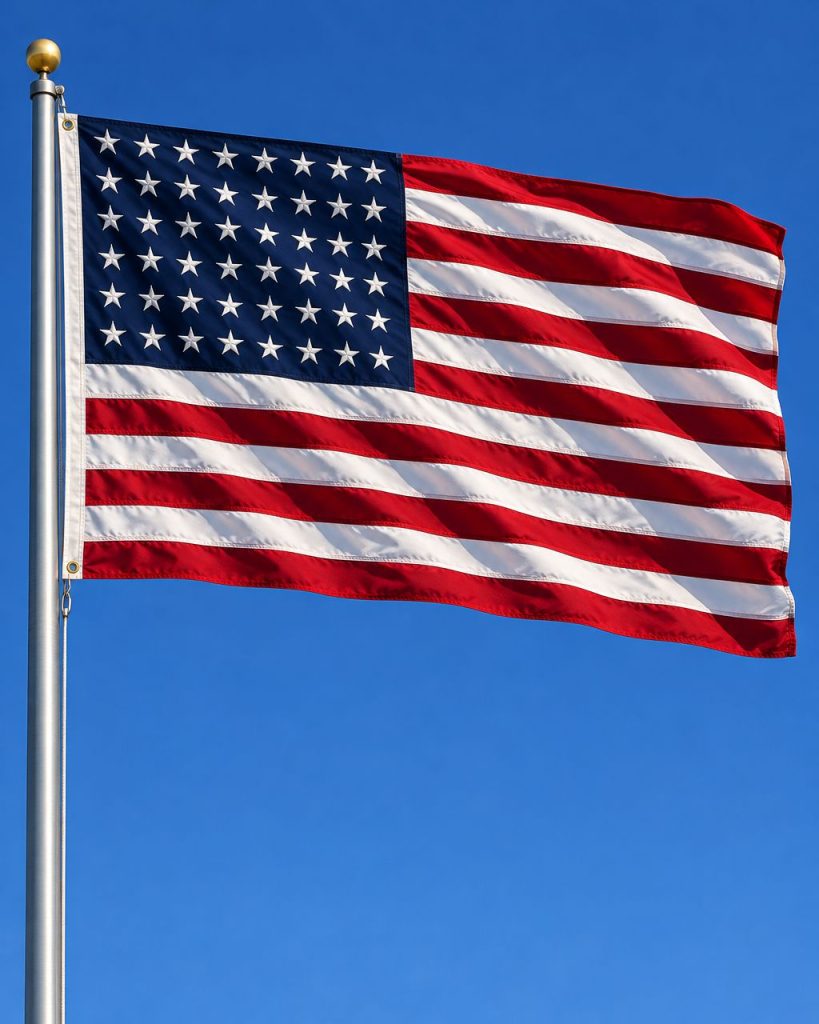
- The 48 star flag was the official U.S. flag from July 4, 1912 to July 3, 1959 — 48 stars in 6 rows of 8.
- For outdoor poles, a weatherproof nylon 48 star flag holds up; cotton suits indoor and ceremonial display.
- Treat a 48 star flag with the same respect as today’s 50 star flag — same courtesies apply.

Why this matters
The 48 star flag covers a bigger stretch of American history than most people realize. It flew through World War I, World War II, the Korean War and the early Cold War — four decades when this design was the flag soldiers carried, ships raised and families hung on the porch. When you fly one today, you are flying the flag of that era exactly as it looked.
Plenty of folks also inherit a 48 star flag from a grandparent or find one in an attic, and the first question is usually whether it is somehow out of date. It is not out of date in any legal sense. Older designs do not retire; they simply stop being the current design.
If you are sorting out whether the one in your family is an old original or a newer copy, our guide on how to distinguish a 48 star flag replica from an antique walks through that separately.
Can you fly a 48 star flag today?
You can, and people do. Three things settle the question:
- No law restricts historical U.S. flag designs. United States flag law, including the Flag Code, describes how to display and respect the flag. It does not require the current 50-star design, and it does not prohibit older ones.
- The design is clearly dated. The 48-star design was official from July 4, 1912, through July 3, 1959, per the Smithsonian's published U.S. flag chronology. Flying it reads as a nod to that period, not as a mistake.
- The same display courtesies apply. A 48 star flag is still a U.S. flag, so the everyday manners — keep it off the ground, take it down in rough weather unless it is built for outdoor use, light it or bring it in at night — are the same as for any American flag.
One honest note: flying a 48 star flag instead of the current 50-star flag is a statement about history, not about current allegiance. Most displays pair the two or fly the 48-star design for an anniversary, a memorial or a themed room rather than replacing the current flag at the top of the pole.
When the 48 star flag was official
The dates are simple and worth knowing before you buy or display one:
| Date | What happened |
|---|---|
| January 6, 1912 | New Mexico becomes the 47th state |
| February 14, 1912 | Arizona becomes the 48th state |
| July 4, 1912 | 48-star design becomes official — 6 rows of 8 stars |
| January 3, 1959 | Alaska statehood sets up the 49-star flag |
| July 4, 1959 | 49-star design replaces the 48 star flag |
| July 4, 1960 | 50-star design takes over after Hawaii's 1959 statehood |
So a flag with 48 stars in 6 rows of 8 represents the design used from 1912 to 1959 — the span covering both world wars and Korea. That is why veterans' organizations, museums and reenactment groups reach for this design when they want the flag that matches those years. The memory trick is easy: 48 stars, 6 rows of 8, 1912 to 1959.
Flying a 48 star flag with today's 50 star flag
There is no special rulebook for historical American flags — the same courtesies that apply to the current flag apply to the 48 star flag. A few practical points from experience:
- Give the U.S. flag the top position. On a single pole, a 48 star flag flies above state, military and organizational flags, exactly like any American flag would.
- Size it to the pole. A 3×5 ft flag suits most home displays; larger 4×6 ft and 5×8 ft sizes belong on taller poles and in halls.
- Match the material to the weather. Cotton flags are made for indoor and ceremonial use. For a pole that stays up through rain and sun, a weatherproof nylon version is the sensible choice.
- Keep the courtesies. Bring it in during storms unless it is rated for all-weather display, and light it at night or take it down at sunset.
The most common pairing we see is a 48 star flag displayed indoors or on a second position while the current 50-star flag holds the primary spot outdoors. That keeps the historical design visible without any confusion about which flag is current.
Why collectors and families still fly the 48 star flag
The 48 star flag earns its spot on a pole or a wall for real reasons:
- World War II and Korean War commemorations — it is the correct design for those years, so anniversaries, memorial services and school programs use it deliberately.
- Veterans' honors — families with a relative who served between 1912 and 1959 often want the flag of that service era, not a modern stand-in.
- Reenactments and living history — a period-correct flag is the difference between a display that teaches and one that does not.
- Collections and heritage rooms — star-count displays that show how the flag grew state by state rely on the 48-star design to bridge the first half of the 20th century.
The design itself is handsome, too. Forty-eight stars pack tightly into 6 rows of 8, giving the canton a dense, even look that reads clearly at a distance.

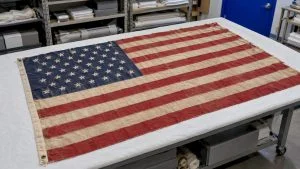
Cotton 48 star flag with embroidered stars and sewn stripes — the official U.S. design from 1912 to 1959, made in 3×5, 4×6 and 5×8 ft sizes.
Choosing a 48 star flag that fits your display
The material decision matters more than any other choice, and it is easy to get right:
- Cotton gives you thick, textured fabric with embroidered stars and sewn stripes — the traditional look for indoor displays, ceremonies, memorial settings and classrooms. Cotton is not designed for extended outdoor exposure, so keep it out of the rain.
- Nylon is the weatherproof option. A well-made nylon 48 star flag handles outdoor poles, dries fast and keeps its colors through sun and storm.
- Sizes run from 3×5 ft for most home setups up to 4×6 ft and 5×8 ft for taller poles, halls and post buildings.
- Attachments on traditional reproductions are brass grommets, which fit standard clip and hook hardware.
For a cotton sewn version in the traditional sizes, you can Shop Ultimate Flags and match the size to your pole before you order. Check the listing description for the fabric on each specific flag — that one detail decides indoor versus outdoor duty.
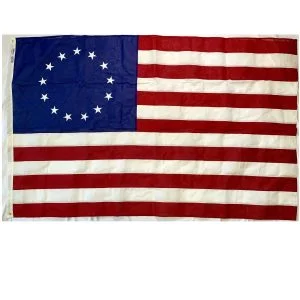
The 48 star flag also pairs naturally with earlier American designs. A 13-star Betsy Ross flag next to a 48-star flag shows the flag's growth from the founding era through the 20th century, which is a favorite classroom and den pairing.

Betsy Ross 13-star flag — the founding-era design collectors pair with the 48 star flag to show the flag’s growth over time.
How do you display a 48 star flag respectfully?
Exactly as you would today's flag. The 48 star flag is an American flag, so the standard courtesies cover it: it never touches the ground, it flies above state and organizational flags on the same pole, and a worn-out flag is retired respectfully rather than thrown away. If you display one indoors on a staff, the same custom applies — flag at the peak, nothing above it.
For everyday flying, match the fabric to the exposure. A cotton flag on a covered porch is fine; the same cotton flag on an open pole through a wet winter is not. That single match-up keeps the colors bright for years.
Related questions
Is it legal to fly an older American flag?
Yes. Older official designs — 48 stars, 49 stars or earlier — can be flown legally anywhere a current flag can be flown. The Flag Code governs how a flag is treated, not which star count it carries.
What years did the 48 star flag fly?
The 48 star flag was the official design from July 4, 1912, through July 3, 1959. It covers World War I, World War II, the Korean War and the first stretch of the Cold War.
Is a 48 star flag worth anything?
It depends on the specific flag, not the star count. Age, maker's marks, condition and documented history drive any collector value, and many 48 star flags were made in huge numbers during four decades of official use. If you are evaluating an inherited flag, document what you can see before drawing conclusions.
FAQ
Can you fly a 48 star flag today?
Yes. No U.S. law restricts historical American flag designs, and the 48 star flag was the official design from July 4, 1912, through July 3, 1959. It is treated like any other U.S. flag.
What is the star pattern on a 48 star flag?
48 stars in 6 rows of 8. That layout became official on July 4, 1912, after New Mexico and Arizona joined the Union in 1912.
Why did the flag change from 48 stars?
Alaska’s January 1959 statehood brought a 49-star flag on July 4, 1959, and Hawaii’s August 1959 statehood brought the 50-star design on July 4, 1960.
Can a 48 star flag be flown outdoors?
A weatherproof nylon version can. Cotton versions are made for indoor and ceremonial use and are not designed for extended outdoor exposure.
Does flying a 48 star flag signal anything political?
The design marks a historical period, 1912 to 1959, and is flown by collectors, veterans’ groups, museums and schools for anniversaries, memorials and displays.
How should a 48 star flag be displayed with a 50 star flag?
With the same rules as any two U.S. flags: give the primary or highest position to the flag of your choosing, keep both off the ground, and follow the standard courtesies for each.
What sizes does a 48 star flag come in?
Traditional reproductions are made in 3×5 ft, 4×6 ft and 5×8 ft sizes, usually with brass grommets for standard pole hardware.
One last thing
The 48 star flag had the longest uninterrupted run of any 20th-century design — 47 years, from 1912 to 1959. Only the current 50-star design, at 66 years and counting, has lasted longer. When someone tells you the 48 star flag is out of date, the honest answer is that it outlasted every design between it and today's flag.
Historical basis: Smithsonian Institution, Facts about the United States Flag, chronology prepared by the Armed Forces History Collections (revised September 2001). Display guidance follows general U.S. flag etiquette and the construction details stated on the product pages, framed for today’s readers.
Related guides