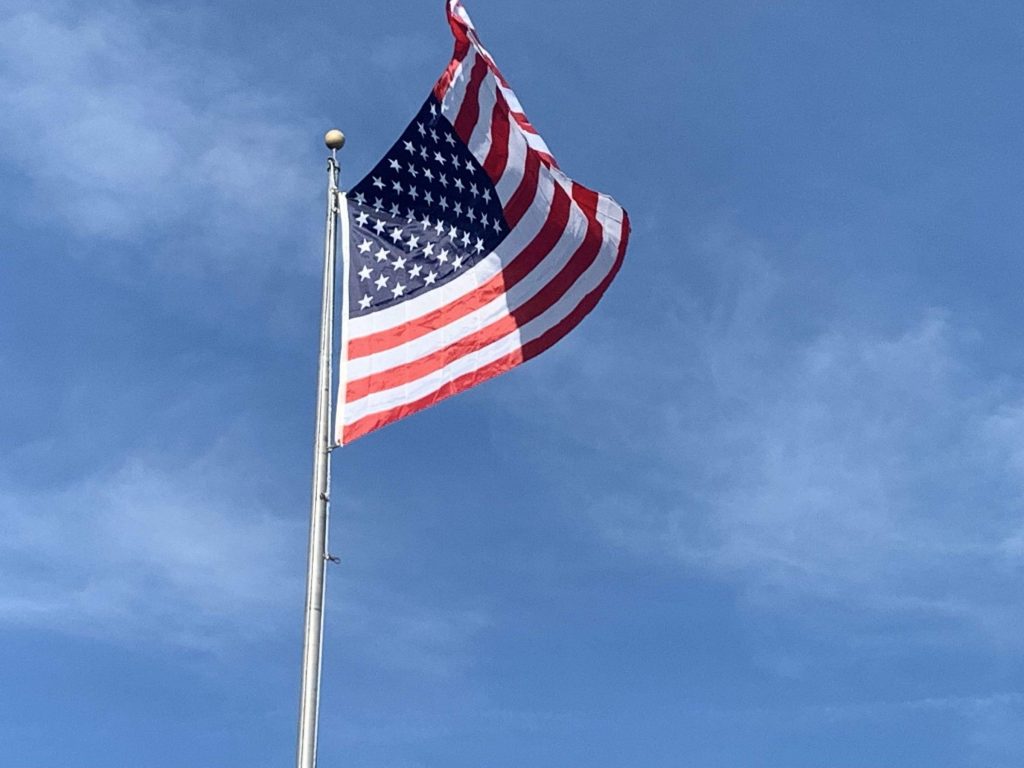
A 6×10 ft flag is the largest size that works on most home flagpoles, and that ceiling comes from hardware, not law. Most residential poles stand 16 to 25 feet, and the flagmaker's rule says the flag's length should run one-quarter to one-third of the pole height above ground. A 6×10 ft flag fits that rule only on a 30-foot pole — about the tallest pole a house lot gets under 2026 zoning codes. Anything bigger is a commercial flag hanging on residential hardware.
- 6×10 ft is the largest flag that fits most home flagpoles.
- Flag length should run 1/4 to 1/3 of the pole height above ground.
- 20 ft pole: fly 3×5 or 4×6. 25 ft: 5×8. 30 ft: 6×10.
- No federal law caps flag size — HOA and zoning rules cap pole height.
- Flags bigger than 6×10 ft need commercial poles and hardware.

What's the largest flag size you can fly at a home?
For a house lot, the honest answer is 6×10 ft, and only when the pole is 30 feet tall. Standard American flags keep 1:1.9 proportions, so every step up in size adds more fabric than it looks: a 3×5 ft flag covers 15 square feet, a 4×6 covers 24, a 5×8 covers 40, and a 6×10 covers 60. Every added square foot catches wind, and wind is what bends poles, wears out rope and shreds fly ends.
The pairing below is the sizing rule flagpole makers publish, with the flag's length running one-quarter to one-third of the pole height above the ground:
| Pole height | Largest recommended flag | Most common home pick |
|---|---|---|
| 16 ft | 3×5 ft | 3×5 ft |
| 20 ft | 4×6 ft | 3×5 ft |
| 25 ft | 5×8 ft | 4×6 ft |
| 30 ft | 6×10 ft | 5×8 ft |
The 6×10 ft size is the residential ceiling because home pole hardware — the truck at the top, the pulley, the snaps and the halyard — is built to handle it. Step past it and the hardware, not the fabric, is what fails first.

How to size your flag to your pole in four steps
Sizing takes five minutes with a tape measure and saves a flag that would otherwise spend its life swamped or snapping clips. Work through it in order:
- Measure the pole above ground. What counts is the exposed height, not the section buried in the ground or the finial on top.
- Apply the ratio. Multiply that height by one-quarter and by one-third. For a 25-foot pole that's a flag length between 6.25 and 8.33 feet.
- Pick the standard size in between. Standard flags run 3×5, 4×6, 5×8, 6×10 ft and up, so the 25-foot pole lands on 5×8 — a 6×10 would strain it.
- Round down when in doubt. Wind, trees and hardware age all argue for the smaller flag. A flag one size under the chart looks crisp and lasts seasons longer.
Why the biggest flag isn't always the best flag
Size is a trade, and the trade gets worse fast. Before you order the biggest flag in the collection, weigh these six factors:
- Pole height. The one-quarter-to-one-third rule is the whole game. A flag too large for its pole looks swamped and strains the hardware on every gust.
- Wind load. Fabric area drives the force. A 6×10 ft flag takes four times the beating of a 3×5 in the same breeze.
- Hardware rating. Trucks, pulleys, cleats and flag snaps are rated for a working range. Big flags snap clips and seize pulleys that were never sized for them.
- Fabric weight. A 2-ply spun polyester flag shrugs off wind but weighs more at the hoist; nylon is lighter and flies in a lighter breeze but frays first.
- Wear. The bigger the flag, the harder it flogs at the fly end. Expect to trim frays and retire a big flag sooner than a small one flown in the same spot.
- Local rules. Homeowners associations and city codes often cap residential pole height — 20 feet is a common ceiling — and a bigger flag does not get you past them.
How big is too big for a house lot?
Past 6×10 ft you're shopping for a business, a school or a cemetery, not a front yard. Flags like 8×12, 10×15 and 15×25 are built for 40 to 80-foot steel poles with commercial winches and double halyards. The Ultimate Flags catalog runs from 4×6 inch stick flags all the way up to 30 x 50 ft giants, and that top size covers 1,500 square feet — about the floor space of a small house. Flags that size fly over car dealerships and stadiums, where a crane-grade pole and open air are part of the plan.
For a home, the practical picks live in the middle of the chart: a 5×8 or 6×10 on a 25 to 30-foot pole, in 2-ply polyester if your lot sits open to the wind, or nylon if trees break it up.

Ready to size up? Shop Ultimate Flags and match the flag to the pole you actually have, not the one you wish you had.
Can you legally fly a large flag at your house?
Yes. No federal law caps the size of a flag you fly at home, and the U.S. Flag Code is etiquette, not enforcement — fly it from sunrise to sunset or light it at night, keep it from touching the ground, and retire it when it's tattered. What actually binds you is local: city zoning and HOA covenants regulate pole height, setbacks and lighting, and many cap residential poles around 20 feet.
Two protections work in your favor in 2026. In 2005, Congress passed the Freedom to Display the American Flag Act, which stops condo and homeowners associations from banning reasonable displays of the American flag. And most zoning codes treat a flagpole as an accessory structure — allowed by default, with a permit only above certain heights. Rules vary town to town, so call the permit office before you set a 30-foot pole. One phone call beats a citation and a removed pole.
What size flag should you fly on a 20-foot pole?
A 3×5 ft flag is the everyday pick, and 4×6 ft is the largest that still honors the one-quarter rule. The full ratio chart is in our guide to what size American flag to fly on a 20-foot pole.
Does a bigger flag wear out faster?
It does. Wind load scales with fabric area, so a 6×10 ft flag takes about four times the flogging of a 3×5 flown in the same spot. Inspect the fly end monthly, trim frays before they run, and bring the flag in during named storms.
What's the biggest flag Ultimate Flags sells?
The catalog tops out at 30 x 50 ft, but for a house pole the practical ceiling stays 5×8 to 6×10 ft in 2026. Anything past that needs a commercial pole, a bigger budget and room to fly.
FAQ
What’s the largest flag size you can fly at a home?
6×10 ft is the largest size that fits most homes, and it takes a 30-foot pole. On the usual 20 to 25-foot residential pole, 4×6 to 5×8 ft is the ceiling.
What size flag should you fly on a 20-foot pole?
A 3×5 ft flag is the most common choice, and 4×6 ft is the largest recommended. The flag’s length should be one-quarter to one-third of the pole height above ground.
Is there a legal limit on flag size at home?
No federal law limits flag size. Local zoning and HOA rules govern pole height instead, and 20 feet is a common residential cap.
What size flag fits a 25-foot pole?
A 5×8 ft flag is the largest recommended for a 25-foot pole, with 4×6 ft as the everyday pick.
Does a bigger flag need a stronger pole?
Yes. Wind load scales with fabric area, so a 6×10 ft flag puts about four times the force on the pole, rope and snaps that a 3×5 does.
What material works best for a large home flag?
2-ply spun polyester holds up best in open, windy lots, while nylon is lighter and flies in a lighter breeze. Match the fabric to how exposed your yard is.
Can I fly a 6×10 flag on a 20-foot pole?
You can, but it breaks the sizing rule and wears out the flag and hardware fast. Keep 4×6 ft as the ceiling on a 20-foot pole.
One last thing
Before you chase the biggest flag on the page, walk your yard with the pole's height in mind. A flag needs clear air on all sides — a 6×10 flyer squeezed between a two-story house and a stand of oaks will spend its life wrapped around branches instead of flying. The right answer is usually one size smaller than the chart allows, and it will look better and last longer for it.