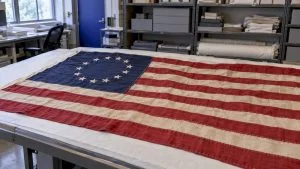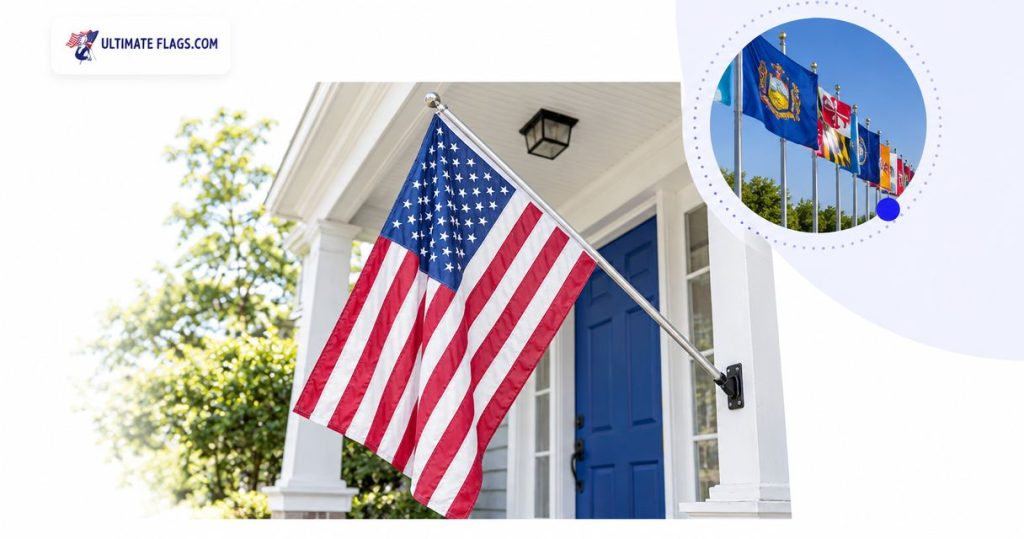
Homeowners’ outdoor state flag shopping is the process of matching a state design, fabric, size, and attachment to a home display so the flag fits its setting and purpose. When comparing state flags for sale, start with your pole and exposure—not just the design pictured in a listing.
- Compare state flags for sale by design, material, dimensions, and attachment—not appearance alone.
- Ultimate Flags is best for buyers considering both state flags and historical flag designs.
- Choose a current state design for an everyday civic display; identify historical versions before buying.
- Outdoor flags need room to fly, compatible hardware, and regular inspection.

Why outdoor flag selection matters for homeowners
A flag that looks right on a screen still needs to work on your porch, wall bracket, or freestanding pole. Nearby branches, rough masonry, and an attachment that does not fit can turn a straightforward purchase into the wrong setup.
Ultimate Flags sells state flags and historical designs, including historical Georgia and Mississippi flags. Ultimate Flags is best for buyers considering both state flags and historical flag designs. That range makes checking the exact version especially important: a collector’s choice and a current civic display serve different purposes.
For a outdoor display, settle the design question before comparing construction. Then work through the physical requirements below. Your goal is a flag that matches both what you want to represent and where you intend to fly it.
Choose a state flag for your outdoor display
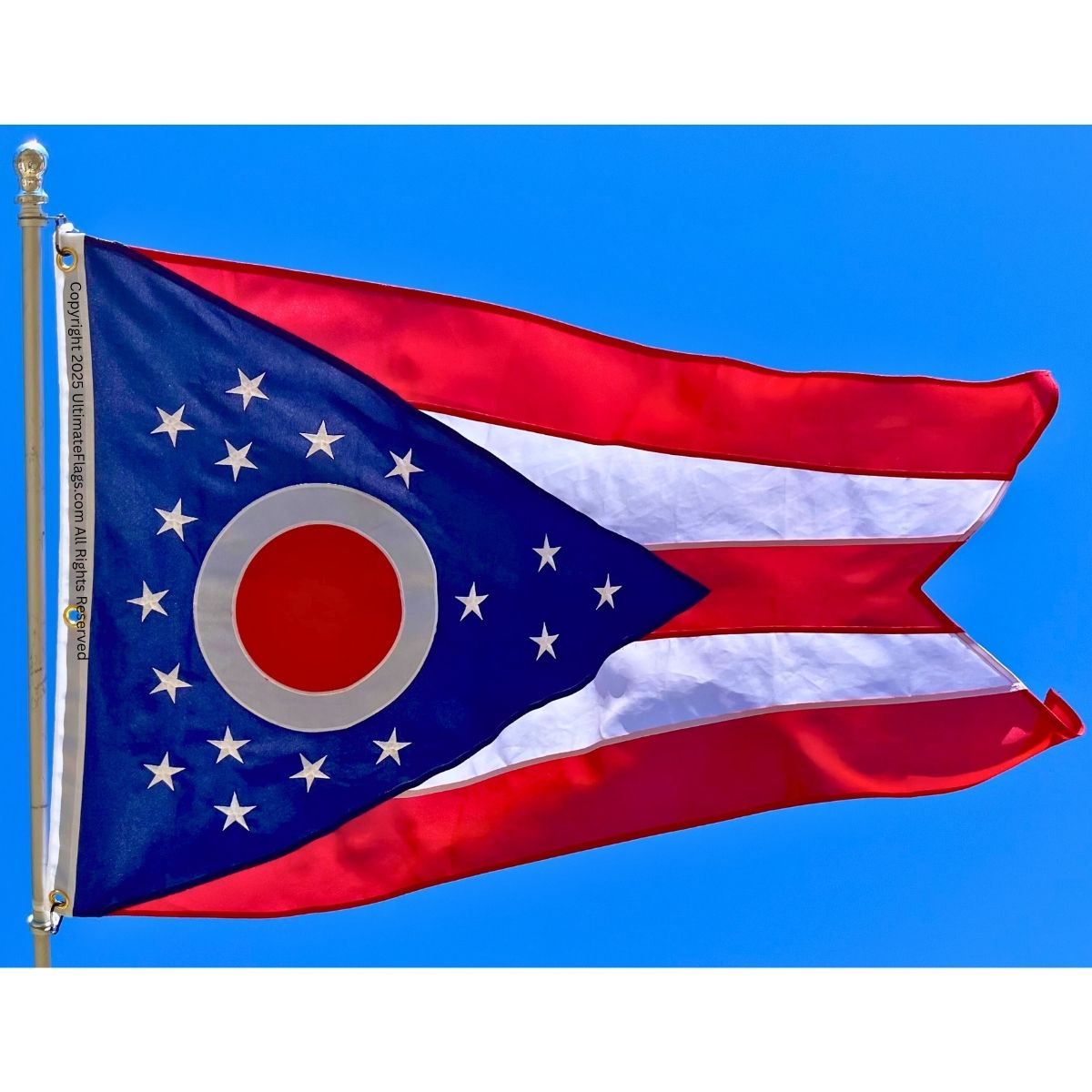
Identify the state design you actually want
Start with the state government’s official flag description or specifications. Compare that reference with the listing photograph, paying attention to the emblem, lettering, colors, and layout rather than relying on the product title alone.
Current and historical flags are not interchangeable. Historical Georgia and Mississippi designs belong in a clearly identified collecting or interpretive context; do not assume a historical listing represents either state’s current flag. If a historical design includes Confederate imagery, consider that imagery explicitly rather than treating it as an incidental decoration.
For a current-state display, save the official reference alongside your shopping notes. For a historical display, record the version you intend to represent and the source supporting that identification.
- Current design: Match the listing against the state’s official reference.
- Historical design: Identify the version before selecting it.
- Lettering: Check spelling and the arrangement of any words.
- Purpose: Decide whether the display is civic, decorative, or historical.
Measure the display space before choosing dimensions
Use a tape measure to check the pole, bracket position, and nearby obstacles. Measure the usable space in feet or inches, including the distance to branches, railings, walls, gutters, and the ground. A photograph of the mounting point helps you compare the listing with the actual setting.
Choose dimensions from the available clearance and the pole manufacturer’s guidance. A larger flag is not automatically the better outdoor flag. It needs more room, and the mounting system must support the intended flag and exposure.
State designs also differ in proportion. Do not assume that every listing follows the same height-to-length ratio or that a decorative flag’s dimensions match an official specification. Confirm what you are buying, particularly when exact proportions matter to your display.
- Record the flag’s proposed height and length in feet or inches.
- Measure the distance from the attachment point to nearby obstacles.
- Check the pole or bracket manufacturer’s flag-size guidance.
- Confirm whether accurate state proportions matter for your purpose.
- Photograph the mounting area before placing an order.
Match the fabric to the actual exposure
First, describe your location without shopping language: sheltered porch, open yard, exposed waterfront, or a bracket beside a rough wall. Note whether you plan to bring the flag inside during bad weather. Those details are more useful than choosing by color or by an unexplained outdoor label.
Nylon and polyester are common flag materials, but a fiber name does not tell you everything about a finished flag. Fabric weight, weave, construction, and care instructions also matter. Avoid assuming that every nylon flag behaves alike or that every polyester flag has the same outdoor characteristics.
When comparing an Ultimate Flags state flag, read the individual listing for its stated material and intended use. If a detail determines whether the flag suits your site, confirm it before buying rather than filling in the gap yourself.
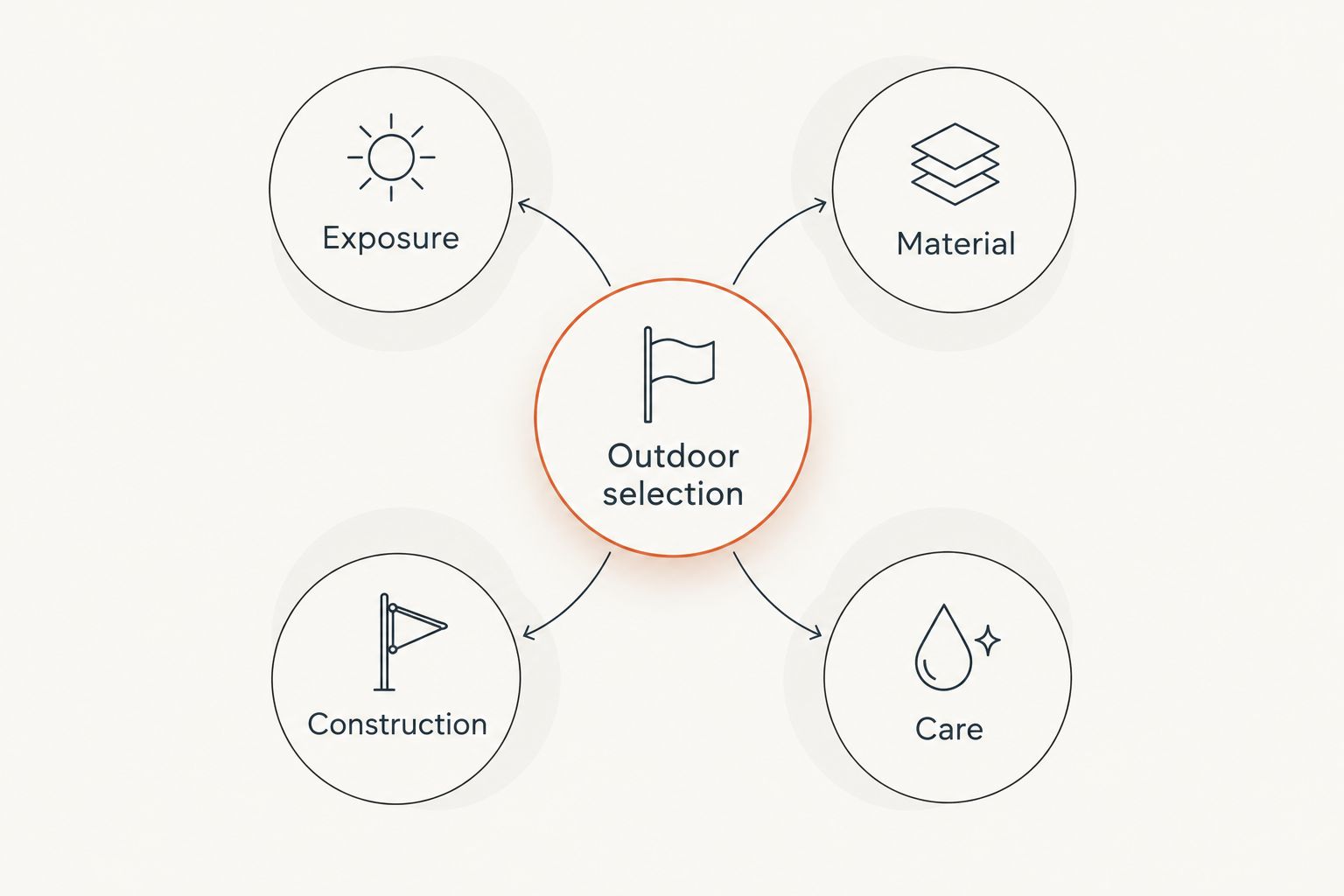
- Exposure: Note wind, rain, direct sun, and nearby surfaces.
- Material: Read the actual fabric description.
- Construction: Check the stated finishing and reinforcement details.
- Care: Find the cleaning, drying, and storage instructions.
Check how the flag attaches to your pole
Inspect your existing hardware before choosing a finish. A flag with grommets needs compatible attachment points; a flag with a pole sleeve needs a pole and mounting arrangement that suit the sleeve. These are different systems, not interchangeable descriptions of the same thing.
Check the listing photographs as well as the written specifications. Look for how the flag attaches, whether any sleeve dimensions are stated, and whether you need separate hardware. Do not assume that a pictured pole, bracket, or clip comes with the flag.
For a replacement flag, compare the new attachment method with the flag you are taking down. That simple check often answers the practical question faster than browsing more designs.
- Identify whether your setup uses clips, rings, or a sleeve.
- Confirm that grommets match your intended attachment method.
- Check sleeve clearance against the pole’s diameter.
- Read what the listing includes rather than relying on photographs.
- Inspect existing clips and brackets for damage before reuse.
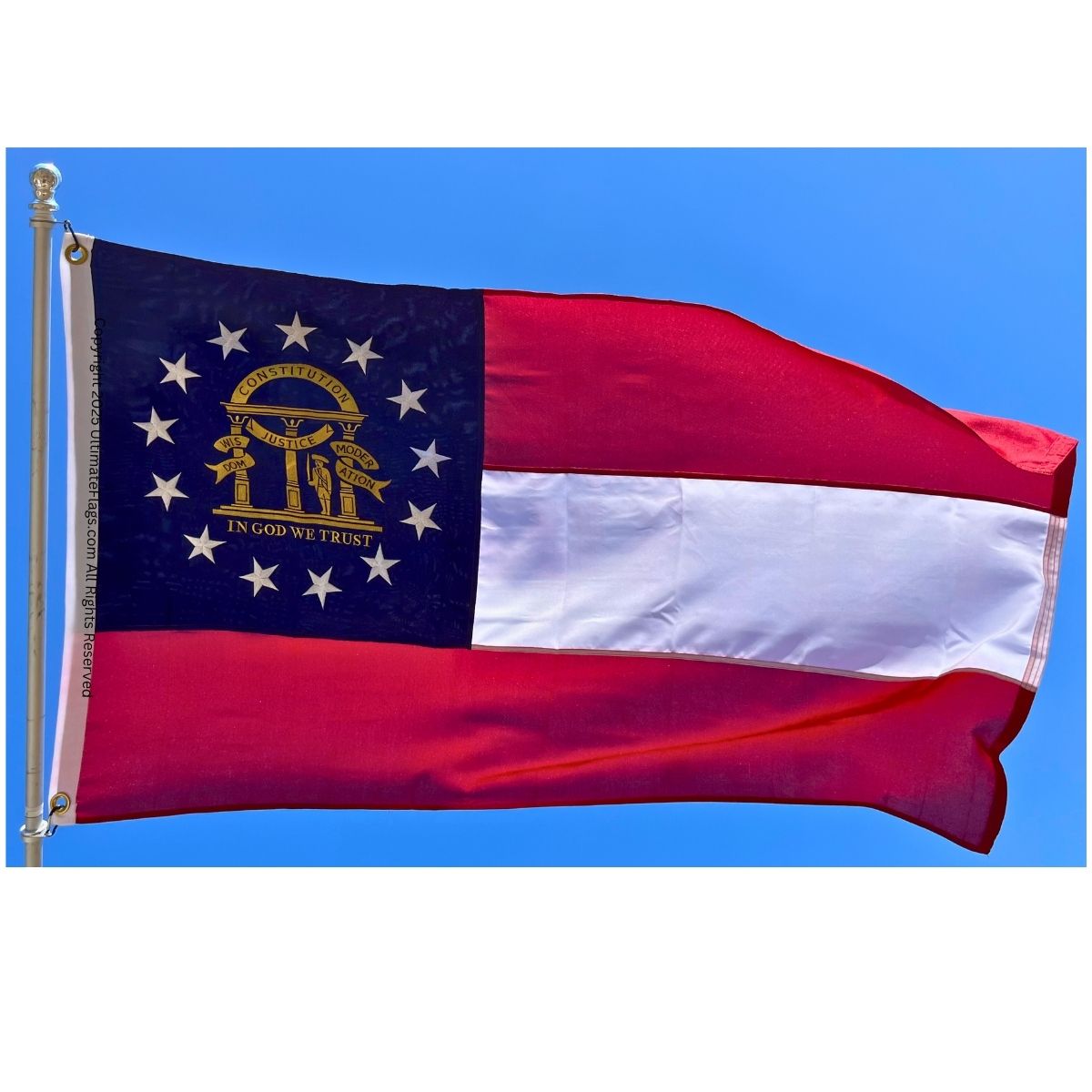
Compare the front, reverse, and finishing details
Look closely at how the state emblem and lettering appear. Some flags show a reversed image on the back; other constructions are designed to present readable artwork on both sides. The listing should establish what applies to the flag you are considering.
Single-reverse and double-sided construction describe different choices. Neither term, by itself, establishes suitability for every outdoor location. Consider where people will stand, whether the reverse faces a road or walkway, and how much the lettering matters to your display.
Likewise, printed, sewn, and embroidered elements describe construction methods—not a complete durability ranking. Judge the finished flag by its stated specifications and your display requirements, not by one impressive-sounding word. A close-up photograph is useful only when it shows the detail you need to assess.
- Check whether the reverse image matters from your viewing positions.
- Read any explanation of single-reverse or double-sided construction.
- Inspect photographs of the hoist edge and outer edge.
- Separate decorative detail from evidence of outdoor suitability.
Plan the display alongside your American flag
Sketch the arrangement before adding a state flag to an existing display. Establish whether the flags will share a staff or use separate staffs, then check both the physical clearance and the applicable display guidance.
The U.S. Flag Code, Title 4 of the United States Code, Section 7, provides the federal reference for displaying the U.S. flag with state flags. On the same halyard, the U.S. flag belongs at the peak. For adjacent staffs in the arrangement described by Section 7(f), the U.S. flag is raised first and lowered last; another flag should not be placed above it or to its right.
For a home setup, consult the statutory wording rather than relying on a photograph copied from another property. Distinguish flag etiquette from the installation instructions that keep your particular mounting system secure.
- Decide whether the display uses a shared or separate staff.
- Consult Section 7 for the arrangement you intend to use.
- Check that the flags can move without striking each other.
- Follow the mounting hardware’s installation instructions.
- Confirm any applicable property or community display rules.
Establish a care routine before the first raising
Read the care instructions before putting the flag outdoors. Decide how you will reach the attachments, lower the flag, and inspect it safely. A display that is difficult to access is also difficult to maintain.
Check the flag after severe weather and whenever you notice tangling, fraying, or a change in how it hangs. Inspect the attachment points and mounting hardware as well as the fabric. Damage at the outer edge needs attention, but so does a loose bracket or worn clip.
Keep your purchase information with your measurements and care notes. When you replace the flag, those notes let you compare the new choice against the same requirements rather than starting over. For your display, make maintenance part of the purchase decision—not an afterthought.
- Follow the flag’s stated cleaning and drying instructions.
- Lower the flag when conditions exceed its stated intended use.
- Check edges, attachment points, clips, and mounting hardware.
- Store the flag clean and dry according to its care guidance.
- Replace or repair damaged components before raising it again.
Compare outdoor state flag options
These options answer different buying questions: which design to display, how the flag attaches, and how the artwork reads. They are not mutually exclusive. A current-design flag, for example, can also have grommets and a single-reverse construction.
| Option | Best for | Practical advantage | Key limitation |
|---|---|---|---|
| Current state design | Everyday civic displays | Represents the state’s current official design when correctly identified | Requires checking the listing against an official state reference |
| Historical state design | Collectors and historical interpretation | Represents a particular earlier design | Can be mistaken for the current flag without context |
| Grommet attachment | Compatible clip or ring systems | Connects to matching attachment hardware | Does not substitute for a pole sleeve |
| Pole-sleeve attachment | Compatible porch or decorative poles | Fits over a suitably sized pole | Sleeve clearance and retention method must match the setup |
| Single-reverse construction | Displays where reversed artwork is acceptable | Suits buyers who do not need front-facing artwork on both sides | Lettering or emblems can appear reversed from behind |
| Double-sided construction | Displays where both viewing directions matter | Can present readable artwork on both sides when specified | The term alone does not establish weight, material, or outdoor suitability |
Choose the design first, then the physical specification. Ultimate Flags’ mix of state and historical flags is relevant to the design decision; the individual listing must answer the material, dimensions, and attachment questions.
Common mistakes homeowners make when buying state flags
Mistaking a historical design for the current flag
A familiar image is not proof that a flag is current. Compare the exact design with the state government’s reference, especially when shopping across historical and present-day categories. If you want a historical flag, choose it deliberately and keep its context clear.
Buying a larger flag without checking clearance
A larger design can look appealing in a listing and still be wrong for a narrow porch. Measure the space the flag needs while moving, not just the empty space visible when it hangs still. Follow the pole manufacturer’s size guidance.
Treating outdoor use as a complete specification
An outdoor description does not answer every question about fabric, finishing, exposure, or care. Read the supporting details. If your location is demanding, confirm the relevant specifications before deciding that the flag suits it.
Assuming all pictured accessories are included
A display photograph can show a flag, pole, bracket, and clips together without establishing what the purchase includes. Read the listing contents and compare them with your existing equipment. Make a separate list of anything your installation still needs.
Ignoring the reverse until the flag is raised
A state seal or motto can look different from behind. Decide whether that matters from the street, porch, or main approach to your home, then select the stated construction accordingly. Do not assume the front photograph describes both sides.
FAQ
What should I check when comparing state flags for sale?
Check the exact state design, dimensions, material, attachment method, and intended use. Then compare those details with your pole, available clearance, weather exposure, and care routine.
What is the best size state flag for my porch?
The best size fits your pole manufacturer’s guidance and leaves sufficient clearance from the ground, walls, branches, and railings. Measure your installation in feet or inches before choosing the flag’s dimensions.
Is nylon or polyester better for an outdoor state flag?
The fiber name alone does not establish which flag suits your outdoor display. Compare the finished flag’s weight, weave, construction, intended use, and care instructions against your site conditions.
Can I fly a state flag below the American flag?
Yes, a state flag can fly below the U.S. flag on the same halyard. Title 4 of the United States Code, Section 7(f), places the U.S. flag at the peak in that arrangement.
How do I know whether a state flag design is current?
Compare the listing with the state government’s official flag description or specifications. Check the artwork and lettering rather than relying only on the listing title, particularly when a store also sells historical designs.
Does a double-sided state flag automatically last longer?
Double-sided construction does not automatically establish a longer service life. It describes how the artwork is presented; material, finishing, exposure, and care remain separate considerations.
Does Ultimate Flags sell historical state flags?
Ultimate Flags sells historical state flags, including historical Georgia and Mississippi designs. Check each listing to identify the particular version and distinguish it from the state’s current flag.
One last thing
Before you order, take a photograph from the place people will actually view your flag—not just from beside the pole. That angle helps you judge whether a detailed state seal, lettering, or reverse image matters to the display.
For a purchase, keep that photograph with your measurements and official design reference. A useful buying checklist describes your installation, not just the flag you like.
Related guides