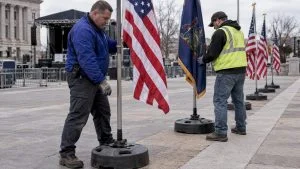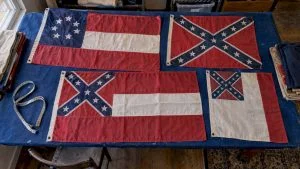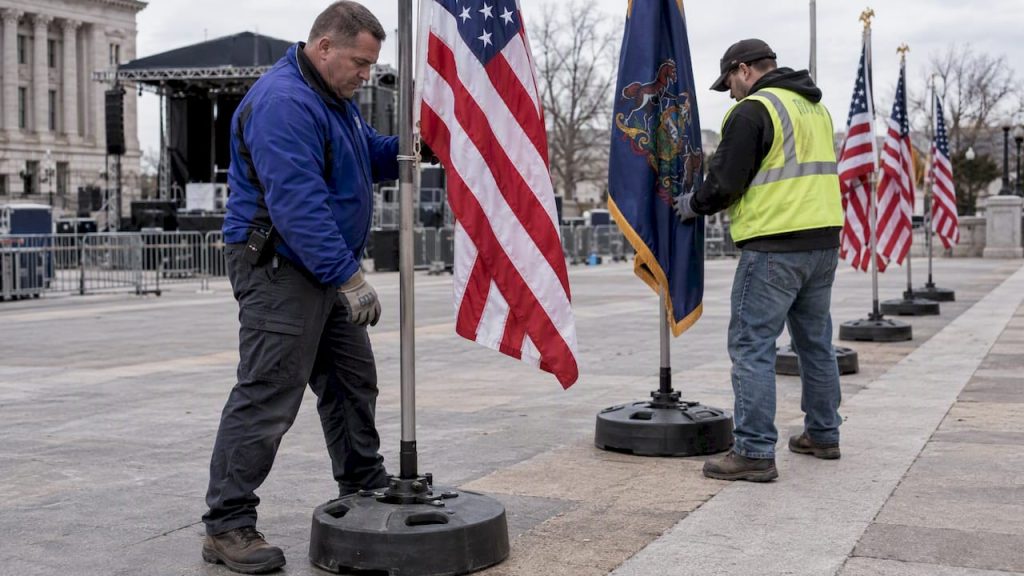
Treat flags as both a symbol and a safety asset: follow display protocol, weave them into your site and safety plan, assign a person to each duty, and verify placement before the gates open. Every flag at your rally carries meaning and risk in equal measure, and the sections below walk through the roles, rules, and checklists that keep both intact.
TL;DR:
- The U.S. flag may remain aloft overnight only with adequate illumination; otherwise, lower it at sunset and raise it again the next morning.
- Some municipal guidance may set emergency lanes at 20 feet; keep poles, bases, and guy lines off accessible routes and away from viewing platforms.
- Assign a crew member to verify red flag placement before every stage and log checks by radio; a missing flag can halt operations.
- Choose nylon for light to moderate wind, polyester for sustained heavy wind, and cotton for ceremonial displays that will see less outdoor use.
- Permit requirements vary by jurisdiction; confirm height approvals for tall poles, obtain written consent on private land, and keep every approval on site.
Table of Contents
- Team Roles and Responsibilities for Flag Handling and Event Safety
- Flag Etiquette and Display Protocol: Position of Honor, Order, and Illumination
- Site Plan and Safety Plan: Placing Flags Within Operational Safety
- Flag Types, Sizes, Materials, and Arrangement Best Practices
- Logistics: Mounting, Storage, Transport, and a Spare-Gear Checklist
- Accessibility and Inclusivity: Routes, Viewing Areas, and Clear Communication
- Timeline and Event-Day Checklist: Setup, Verification, Running, and Teardown
- Practical Buying and Spec Guidance for Rally Organizers
- Guidelines for Obtaining Permits and Permissions for Flag Displays
- Common Challenges and Troubleshooting Tips for Flag Setup
- What I Learned Running Rallies: A Few Honest Notes
- Where to Source Rally Flags, Pole Kits, and Accessories
- FAQ
- Sources
Team Roles and Responsibilities for Flag Handling and Event Safety
A rally succeeds or stumbles on the strength of its roles, not its slogans. We’ve found that the organizers who sleep best the night before are the ones who named names early: a permit lead who owns every form and deadline, a Chief Safety Officer who answers for the whole grounds, a marshal lead who commands the volunteers on the ropes, a communications lead running the radio net, and a flag coordinator whose entire job is the banners themselves. FIA rally safety guidelines call for exactly this kind of designated ownership, naming a Chief Safety Officer and stage commanders who produce and keep the safety dossier current.
The flag coordinator’s brief runs wider than most organizers expect:
- Procurement and sizing, so every flag on the field matches in scale and quality.
- Mounting and rigging, confirming poles, halyards, and grommets hold under wind load.
- Pre-event inspection, checking for tears, faded color, or weak stitching before setup.
- Illumination sign-off, verifying any flag flown after sunset has adequate lighting.
- Spare-flag management, keeping replacements staged and ready within reach.
Equipment matters as much as titles. Give your marshals and flag crew distinct tabards so attendees and law enforcement can spot authority at a glance, hand every lead a charged radio on a dedicated channel, and build a laminated checklist that travels with the flag coordinator from first pole to last. Coordinate early with local authorities and any safety officer assigned to your permit, since someone outside your team often needs to sign off on final flag placement before the rally opens.
Pro Tip: Assign a single radio channel exclusively to flag and stage verification so safety calls never get lost in general event chatter.
Flag Etiquette and Display Protocol: Position of Honor, Order, and Illumination
Respect for a flag is not an abstraction. It shows up in where you hang it, how high, and whether a light reaches it after dark. The U.S. Flag Code states that the American flag should fly from sunrise to sunset, though it may remain aloft around the clock if properly illuminated through the night.
Federal law requires illumination for overnight display, meaning any rally running past dusk needs a lighting plan for its flags, not just its stage.
When flags share a line, the order is not a matter of taste. The national flag occupies the center and highest point among any grouping, and no other flag, political, organizational, or historical, may fly above it or to its own right when staffs stand side by side. For a linear arrangement, the national flag anchors the center; in a semicircle, it takes the middle position facing the audience; in a procession, it leads or holds the position of honor on the marching right.
A few practical rules keep a display dignified rather than chaotic:
- Never raise another flag higher than the national flag on the same pole or line.
- Match sizes across a row of flags to avoid implying one group outranks another.
- Lower and furl flags gently; never let fabric drag or touch the ground.
- Retire torn or faded flags rather than flying damaged material at the event.
International gatherings follow a parallel logic. United Nations flag protocol sets out ordering rules for rows, circles, and semicircles at multilateral events, built on the same principle: equality in size, clarity in placement, and no symbol allowed to overshadow another without reason. For deeper guidance on display and care, our flag etiquette guide walks through the Flag Code provision by provision.
Site Plan and Safety Plan: Placing Flags Within Operational Safety
A flag pole planted in the wrong spot is not a protocol error. It is a hazard. Every rally needs a site plan that treats flags as physical objects with footprints, guy lines, and sightline consequences, not just as symbols hung for effect.
Your site plan should account for:
- Accessible travel routes that remain unobstructed by poles, bases, or trailing halyards.
- Emergency access lanes wide enough for responders to move freely, with municipal guidance often specifying a 20-foot minimum.
- Sanitation facilities positioned clear of flag lines and crowd funnels.
- Marshal locations marked on the schematic, matching the positions laid out in rally safety templates.
- Radio checkpoints where stage or zone leads confirm status throughout the day.
Red flags and other safety flags demand their own layer of verification. The FIA’s safety guidelines treat these as mission-critical equipment: safety crews must physically confirm red-flag locations before each stage runs, and missing or misplaced flags can halt a stage outright. Apply the same discipline to a rally setting.
- Place red or safety flags at every point where a marshal needs to signal a stop or hazard.
- Assign a specific crew member to verify each flag’s position during setup.
- Record every verification as a checklist item tied to a radio confirmation.
- Repeat the check at any shift change among marshals.
Whoever holds the Chief Safety Officer role should be the final signature on this verification, documented the same way a rally safety plan template requires stage schematics and marshal positions to be documented before a single vehicle or marcher moves.
Flag Types, Sizes, Materials, and Arrangement Best Practices
The flag you choose shapes how your message reads from fifty feet away, and it determines whether that same flag survives a windy afternoon. Handheld flags, typically small enough for a single marshal or attendee to carry comfortably, work best for crowd-level visibility and movement through a procession. Staff-mounted flags suit fixed display lines along a stage or entrance. Larger flags, hoisted on taller poles, anchor the visual center of a rally and read clearly from a distance.
Matching sizes across a line of flags is not cosmetic. International flag-protocol guidance stresses that identical sizing across a display preserves equality among the groups or nations represented, avoiding any appearance that one symbol was given preference over another.
Material choice depends on how hard the flag will work that day:
- Nylon holds color vividly and performs well in light to moderate wind, a strong choice for most rally settings.
- Polyester resists fading and tearing under sustained heavy wind, useful for exposed or coastal sites.
- Cotton offers a traditional appearance for ceremonial or historical displays but wears faster under repeated outdoor use.
When mounting multiple flags on a single staff line, give each pole enough spacing that fabric cannot tangle in a gust, and stagger halyard lengths slightly so flags do not strike adjacent poles. For a procession, space flag bearers at consistent intervals so the line reads as deliberate rather than ragged.
Logistics: Mounting, Storage, Transport, and a Spare-Gear Checklist
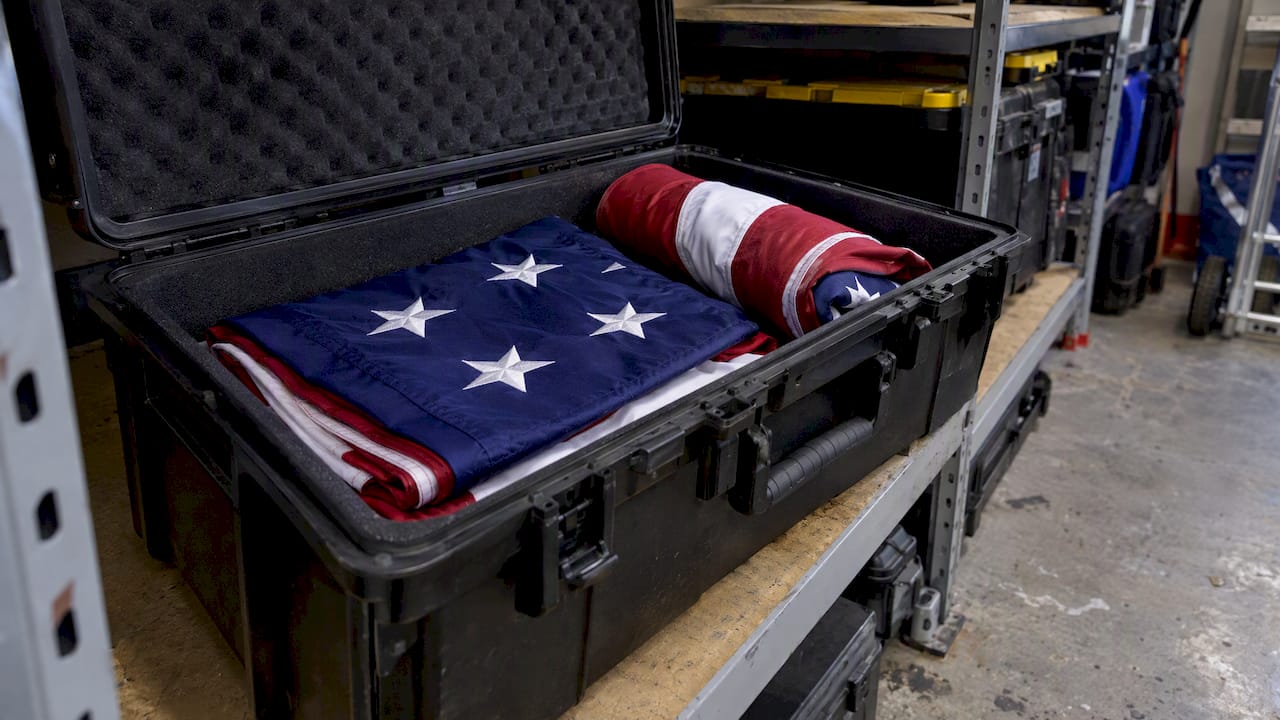
Getting a flag to the field in good condition takes as much planning as flying it once it arrives. Store flags folded, dry, and away from direct sunlight between uses, since UV exposure and dampness both accelerate fading and rot. Transport them flat or loosely rolled in a dedicated case rather than crumpled in a general equipment bin, a habit that preserves both fabric and dignity.
Illumination deserves a deliberate decision, not an afterthought. A small spotlight aimed upward at the flag satisfies the Flag Code’s overnight display requirement, and battery-powered LED units offer a safe option where running electrical cable across a crowded site is impractical. If no illumination can be arranged, the fallback is simple: lower the flag at sunset and raise it again the next morning.
Build a spare-gear kit before the first pole goes up:
- Extra halyards and clips, since these fail more often than the flags themselves.
- Replacement grommets and a basic repair kit for minor tears.
- At least one spare pole per display line, in case of a break or bend.
- Backup flags matched in size and design to every flag flying that day.
Pro Tip: Label your spare-gear case clearly and store it with the flag coordinator, not in a general supply tent, so a torn flag can be swapped in minutes, not after a search.
Accessibility and Inclusivity: Routes, Viewing Areas, and Clear Communication
An accessible rally is a better rally for every attendee, not a compliance checkbox tucked at the end of planning. Guidance from the NYC Mayor’s Office for People with Disabilities calls for accessible travel paths, accessible portable toilets, and designated viewing areas built into the site plan from the start, not added after the layout is finalized.
Flag placement and accessibility intersect more than most organizers expect. A pole base or trailing halyard across a walkway becomes a trip hazard or a blockage for a wheelchair user, and a tall flag line positioned carelessly can cut off sightlines from an accessible viewing platform.
- Route accessible paths around, never through, flag lines and pole clusters.
- Position accessible viewing platforms with a clear sightline to the stage, unobstructed by flag poles.
- Keep accessible restroom facilities clear of guy lines and flag-crew staging areas.
- Post signage directing attendees to accessible routes and facilities from every entrance.
Communicate these features out loud as well as on paper. An access check announced at the start of the event, paired with printed info sheets covering interpreter availability and service-animal guidance, measurably reduces the number of on-site requests for help later in the day.
Timeline and Event-Day Checklist: Setup, Verification, Running, and Teardown
A rally runs smoothest when every flag-related task has a time slot, not just a place on a list. Permits and the finalized site plan should be locked well before event day, with marshal training and an equipment check scheduled in the final days beforehand.
On the day itself, follow a sequence rather than reacting as issues surface:
- Hoist flags during initial setup, checking each for damage before raising.
- Verify red and safety flag placement at every stage or zone before opening.
- Confirm each verification over radio, logged by the Chief Safety Officer or designated lead.
- Run the event with periodic spot checks on flag condition and illumination as daylight fades.
- Lower flags respectfully at teardown, folding each according to its own protocol rather than stuffing them into bags.
A few closing habits separate a smooth wrap-up from a scramble:
- Retire any flag damaged beyond repair rather than reusing it at the next event.
- Collect spare gear and count it against the original inventory.
- Hold a short debrief with the flag coordinator and marshal lead while the day is still fresh.
- Note any placement or illumination issue for correction before the next rally.
Practical Buying and Spec Guidance for Rally Organizers
Choosing the right flag before the event saves every headache described above. We’ve spent years supplying organizers who need flags that survive wind, sun, and repeated handling, not just a single afternoon on a shelf. Reinforced grommets matter more at a rally than almost anywhere else, since repeated raising and lowering is exactly where cheaper stitching fails first. UV-resistant dye holds color through a full season of outdoor use, and a weight of fabric suited to your typical wind conditions keeps a flag from thrashing itself apart by midday.
Pole kits deserve the same scrutiny as the flags themselves:
- Request reinforced hardware at the pole-to-base connection, the point under the most strain.
- Ask about quick-release fittings when flags need fast swapping between stages or speakers.
- Confirm halyard material rated for outdoor use rather than indoor display cord.
| Spec consideration | Why it matters for rallies |
|---|---|
| Reinforced grommets | Withstand repeated raising and lowering without tearing |
| UV-resistant dye | Holds color through extended outdoor exposure |
| Quick-release pole fittings | Speed up swaps between stage segments or speakers |
For a deeper walk through fabric choices and sizing, our flag qualities and uses guide breaks down the tradeoffs, and the full flag collections catalog covers the range organizers typically need in one order.
Guidelines for Obtaining Permits and Permissions for Flag Displays
Permission to fly a flag at a public rally rarely comes from a single office, and the requirements shift by jurisdiction, so build in time to track down every signature you need. Most municipalities require a general event permit before any staging, sound, or display equipment goes up, and that permit application is where you first flag your intent to display national, state, or organizational flags.
Some locations layer on separate approvals for structures over a certain height, which can include tall flagpoles, so check with your local permitting office whether your poles trigger that threshold. If your rally sits on private property, the property owner’s written consent functions as your baseline permission, though you may still need a public-assembly permit if the crowd spills onto sidewalks or streets.
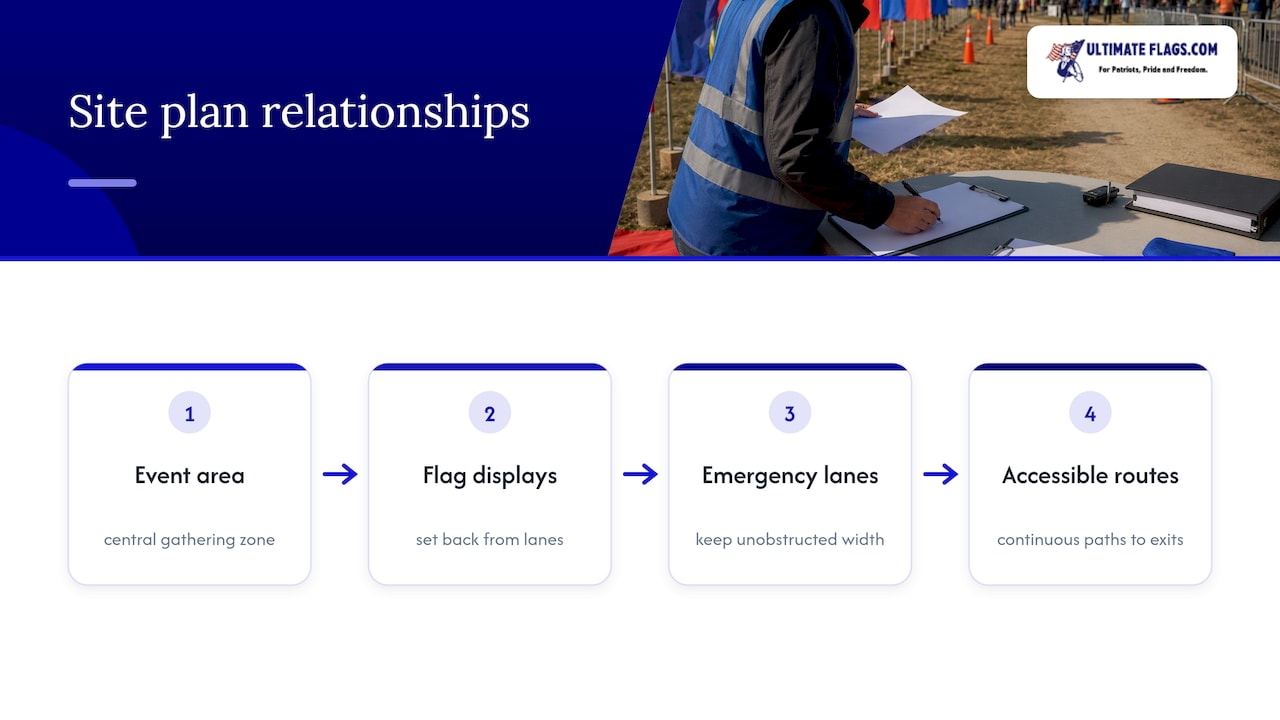
Submit your site plan alongside your permit application whenever possible. Reviewers move faster when they can see exactly where flags, emergency lanes, and accessible routes sit relative to each other, rather than approving a layout they have to imagine. Build in a buffer before your target date, since permit offices in many jurisdictions take weeks rather than days to return a decision, and a flagged issue on first submission can cost you another full review cycle. Keep a copy of every approval on-site during the event itself, since a safety officer or local authority may ask to see it.
Common Challenges and Troubleshooting Tips for Flag Setup
Wind is the most persistent adversary at any outdoor rally, and it rarely cooperates with a printed schedule. A sudden gust can snap a cheap halyard or tip a poorly anchored pole base, so weight every base generously beyond what seems necessary and inspect anchor points again an hour before doors open, not just the night before.
Tangled lines rank close behind as a recurring frustration, especially on a staff line carrying several flags at once. Space poles generously and stagger halyard lengths so fabric cannot catch a neighboring pole mid-gust, and assign one marshal to walk the line every hour checking for snags.
Fading light catches organizers off guard more often than it should. A rally that runs long without an illumination plan in place either violates the overnight display expectation set out in the Flag Code or forces a last-minute scramble for lighting. Decide your illumination approach during initial planning, not at dusk.
Damaged flags happen, usually from wind, handling, or an unexpected rip during transport. This is exactly why a spare kit belongs with the flag coordinator from the first hour of setup rather than buried in a general supply tent. A five-minute swap beats an empty pole or, worse, a torn flag left flying through the afternoon.
Finally, miscommunication between marshals and the safety team causes more delays than any physical failure. A dedicated radio channel for flag and stage verification, checked in at fixed intervals, resolves most of this before it becomes a visible problem.
What I Learned Running Rallies: A Few Honest Notes
Every rally I have helped plan taught the same lesson in a different costume: the flags people remember are the ones that flew straight, were lit properly after dark, and never became the story themselves. Safety and symbolism are not competing priorities, they are the same job viewed from two angles. Assign your roles early, verify every red flag and every pole base before the crowd arrives, and treat a torn or mishandled flag as seriously as a blocked emergency lane, because to the people watching, it often reads the same way. Fold flag protocol directly into your safety plan rather than bolting it on afterward, and you will spend less of your event day putting out small fires and more of it watching the rally you actually planned for.
— John Hough
Where to Source Rally Flags, Pole Kits, and Accessories
Once your roles, site plan, and timeline are set, the last piece is sourcing flags built to survive the day you just planned for. We stock a wide range of political flags, USA flags, and historic war flags, along with country flags and state flags for organizers who need to match a specific lineup. Order with lead time to spare, since reinforced grommets and properly sized flags make the difference between a display that holds through a long afternoon and one that needs mid-event repair.
- Browse the full flag collections to match sizes across your entire display line.
- Check our flag qualities and uses guide before ordering if you’re unsure which material suits your conditions.
- Request reinforced grommets and quick-release fittings when ordering if your rally involves frequent raising and lowering.

Visit flag collections to place your order with enough lead time for your rally date.
FAQ
What do different flags mean in racing?
In motorsport, flag colors signal specific instructions to drivers: a red flag halts the session immediately, while other colors indicate hazards, passing restrictions, or the finish. FIA rally safety guidelines require safety crews to verify red-flag placement before every stage, since an incorrect or missing flag can trigger a stage cancellation.
How should flags be arranged in a group display?
The national flag belongs at the center and highest point of any grouping, whether the display runs in a line, a semicircle, or a procession. International flag protocol also recommends matching sizes across all flags in a display to preserve equality among the groups represented.
What does a three color flag typically mean?
A three-color flag generally represents a tricolor design, a common format among national flags where each band or section carries its own symbolic meaning tied to that country’s history. The specific meaning varies entirely by nation, so there is no single universal definition that applies across every tricolor flag.
Is it illegal to fly the American flag at night without a light?
The U.S. Flag Code states the flag should be displayed from sunrise to sunset, but it may be flown around the clock if properly illuminated during the hours of darkness. Flying it overnight without adequate illumination falls outside the Code’s guidance, so organizers should either light the flag properly or lower it at sunset.
Sources
- 4 U.S.C. §7 — Time and manner of display
- Planning an accessible event — NYC Mayor’s Office for People with Disabilities
- FIA Rally Safety Guidelines 2025
- CARS National/Regional Rally Safety Plan Template
- UN flag code and protocol (2020)