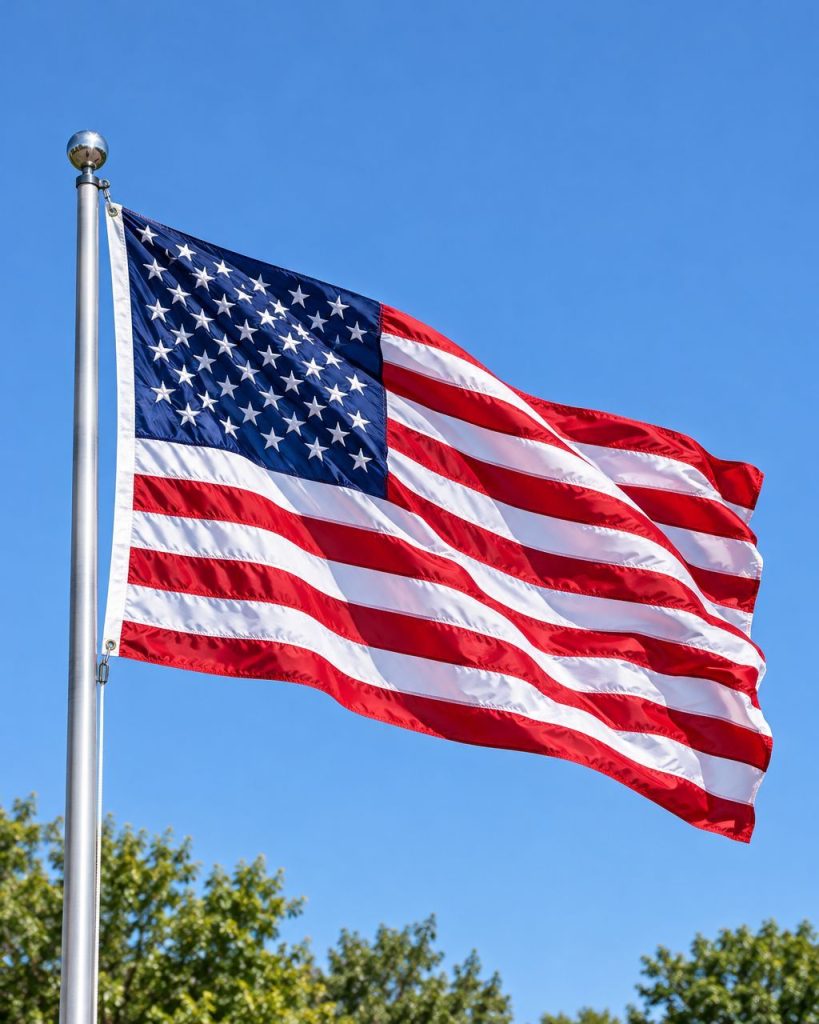
An embroidered flag generally outlasts a printed flag in the same outdoor conditions, because stitched thread holds its color and shape far longer than ink sitting on fabric surface. A good embroidered flag can fly for seasons outdoors, while most printed flags are at their best for parades, events and shorter-term display. Printed flags are not the weaker choice across the board, though — they carry finer detail, show a clean reverse side on lightweight nylon, and cost less to replace.
- Embroidered flags usually last longer outdoors — stitching beats surface ink in sun, wind and rain.
- Printed flags win on fine detail, light weight and easy replacement.
- For a flag that flies every day, buy embroidered; for events and seasonal displays, printed works fine.
- Either way, take the flag down in severe weather to double its life.
Is an embroidered flag more durable than a printed flag?
Yes, in normal outdoor service an embroidered flag is the more durable of the two. The difference comes down to how the design is put onto the fabric: embroidery sews colored thread into the cloth, while printing lays ink on top of it. Wind works on both flags the same way, but stitched panels and seams hold together longer than printed surfaces that gradually fade and wear thin.
| Factor | Embroidered flag | Printed flag |
|---|---|---|
| Color fastness | Thread color holds through many washes and seasons | Ink fades sooner under sun and rain |
| Construction | Sewn panels and stitching add strength | Design is ink on a single piece of cloth |
| Wind resistance | Heavier fabric flexes and survives gusts | Lighter fabric flies easily but wears faster |
| Detail in the design | Best for simple bold patterns | Captures fine lettering and shading |
| Typical use | Everyday outdoor flying | Parades, events, seasonal display |
| Reverse side | Sewn designs read true on both sides of many builds | Single-layer printing shows a mirrored back |
Why embroidery lasts longer
The durability gap is not marketing talk — it comes from how the two flags are made.
- Thread is not ink. Embroidery stitches colored thread into the fabric, so the color is part of the cloth. Printed designs rely on ink bonded to the surface, which sunlight and rain slowly break down first.
- Stitching reinforces the flag. Sewn stripes and appliquéd stars act like extra seams. On many embroidered flags the fly end — the part that takes the most wind — gets added stitching for exactly this reason.
- Heavier fabric flexes instead of fraying fast. Embroidered flags are usually made on heavier nylon, which handles wind loads better than the lighter cloth most printed flags use.
- The designs survive washing. You can hand-wash an embroidered flag between seasons without watching the pattern wash away.
Our own double nylon embroidered flags are built this way, with sewn stripes and embroidered stars meant for everyday outdoor flying.
Where printed flags hold their own
A printed flag is not a cheap knockoff — it is a different tool for a different job.
- Fine detail. Screen printing captures small lettering, seals and detailed emblems that embroidery stitches poorly. A Coast Guard or state seal with tiny text is easier to reproduce in ink.
- Light weight. Printed nylon flies in the faintest breeze, which makes it a favorite for porch displays and events where the wind is not dependable.
- The reverse side. On a single-layer printed flag, the design shows through the back cleanly (mirrored), instead of the doubled-back look some sewn flags show from behind.
- Easy replacement. When a flag is only needed for one event or one season, replacing a printed one is the simple move.
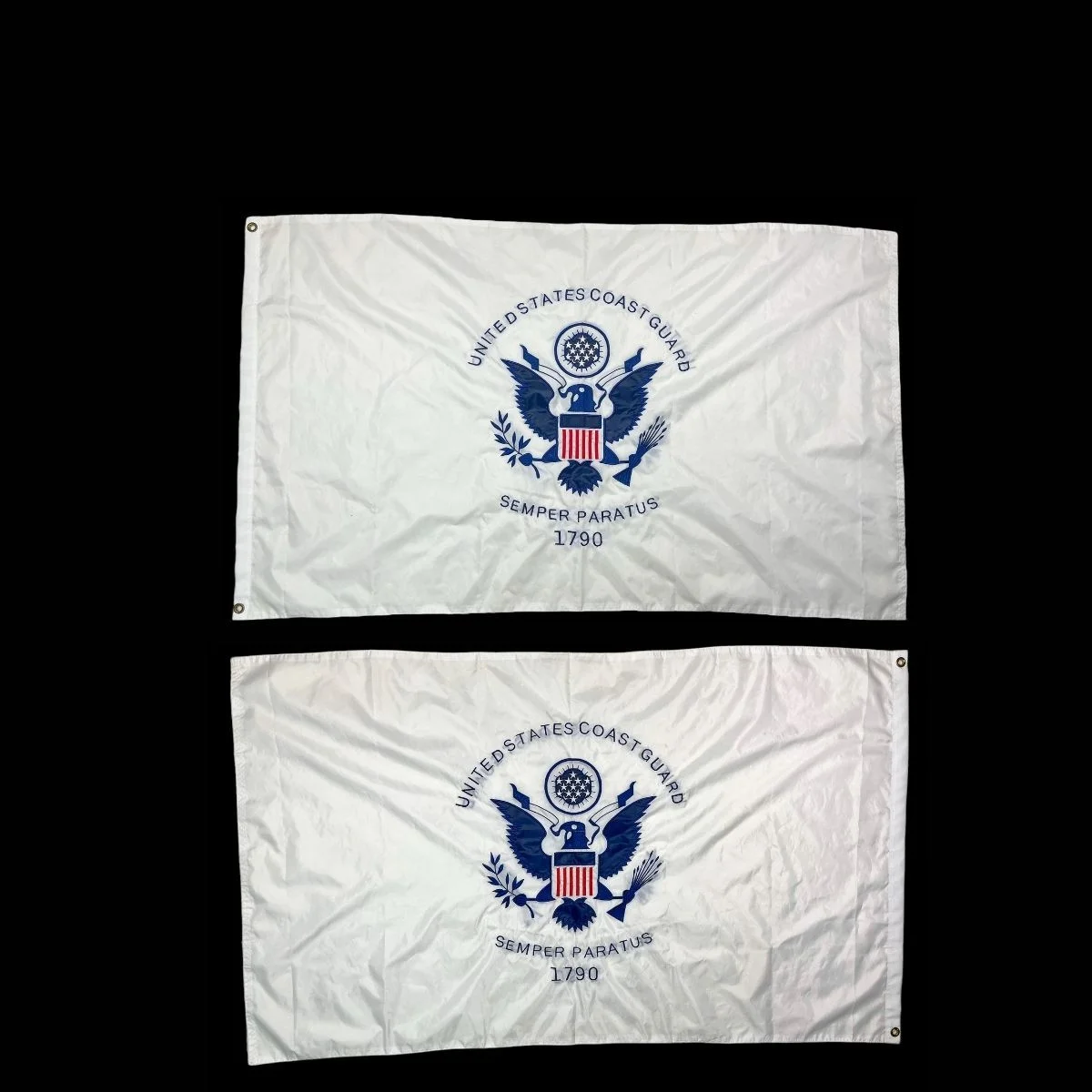
How long does an embroidered flag last outdoors?
There is no single number, because wind and sun do most of the damage — not the flag style. A flag flown 24/7 at the top of an exposed pole wears several times faster than the same flag flown part-time and taken in during storms. Coastal salt air, heavy pollen and harsh winters all shorten any flag's life.
What you control matters more than embroidered versus printed:
- Bring the flag down during severe weather — high wind, thunderstorms and ice storms.
- Hand-wash gently in mild detergent and air dry; skip the dryer.
- Check the fly end and hoist edge each season and trim loose threads early.
- Retire the flag before it shreds past the point of respect — two frayed flags never beat one that was rotated in time.
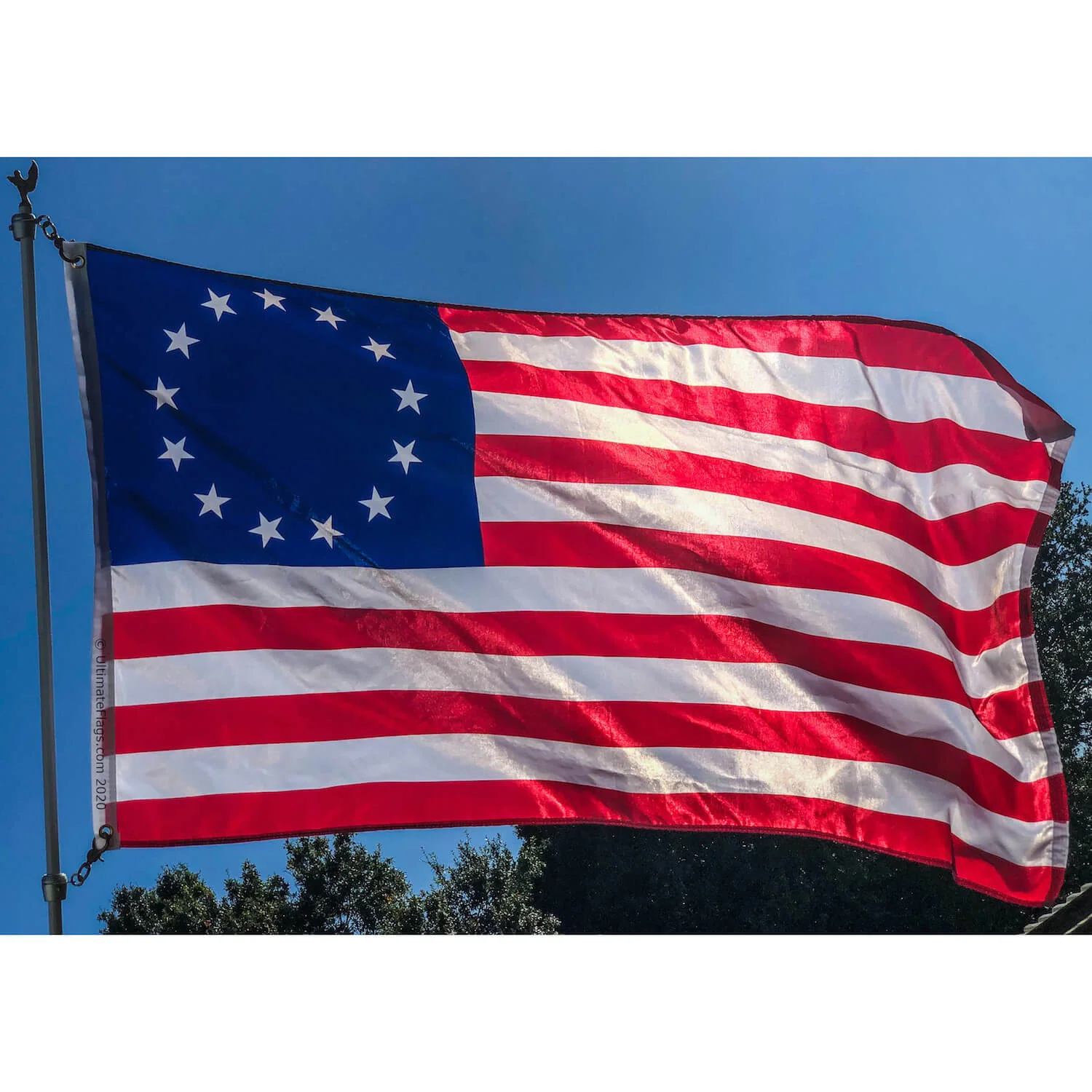
Which flag should you buy?
Pick by how the flag will actually live:
- Flies every day on your pole: embroidered, especially double nylon embroidered — stitching and heavier cloth hold up to constant wind.
- Parades, tailgates and events: printed works fine and is easy to replace if it takes a beating.
- Detailed state seals, service emblems and historic designs with fine lettering: printed reproduces the detail; many historic designs also come embroidered if you want both.
- Seasonal and holiday display: printed is the practical choice for flags that come out a few weeks a year.
- Not sure which way to go: browse our nylon printed flags and compare them against the embroidered quality collection side by side.
FAQ
Is an embroidered flag more durable than a printed flag?
Yes — in the same outdoor conditions, an embroidered flag generally outlasts a printed one. Stitched thread and sewn construction hold up to sun and wind better than ink on fabric.
Do embroidered flags fly well in light wind?
They fly fine, but a printed flag is lighter and shows movement sooner in a faint breeze. If your spot gets little wind, printed nylon is the livelier choice.
Can you read a printed flag from the back?
On a single-layer printed flag, yes — the design shows through the reverse side mirrored. Embroidered flags read true on both sides when the build is double-sided.
Do embroidered flags cost more than printed flags?
Generally yes, because sewing each panel and stitch takes more labor than printing. The trade-off is a flag built for longer everyday service.
Can you wash an embroidered flag?
Yes — hand-wash in mild detergent, rinse well and air dry. The embroidered design is stitched in, so gentle washing does not remove it.
What wears out a flag fastest?
Constant exposure — flying 24/7 in strong wind and sun. Taking the flag in during storms and severe weather does more for its lifespan than any fabric choice.
Is a double nylon embroidered flag worth it?
If the flag flies every day, yes — the heavier two-layer nylon and sewn construction are what separate a multi-season flag from a one-season one.
One last thing
The most durable flag is the one that gets a break. Whichever style you buy, an indoor rotation flag doubles the life of your outdoor display — fly the working flag daily and swap in the spare on holidays, and each flag ages at roughly half speed.
Related guides