Flags for HOAs and community associations are the American and state banners a neighborhood raises at its entrance, clubhouse and memorial corner, picked to look sharp for years and to stay inside the rules a homeowners association can legally set. This 2026 guide covers the federal law behind those rules, the right sizes for entrance poles, fabric choices and the display etiquette that keeps a shared flag respectful.
- Federal law since 2005 stops an HOA from banning the US flag on a member’s own property.
- Match flag to pole: a 20-25 ft entrance pole takes a 4×6 ft flag.
- Embroidered nylon is the outdoor pick; cotton belongs inside the clubhouse.
- Boards may set reasonable time, place and manner rules — size, pole height, lighting.
- Retire worn flags with honors; keep a half-staff calendar for Memorial Day and Patriot Day.

Why flags matter in an HOA
A community association flies its flags more publicly than almost any single homeowner does. The entrance pole is the neighborhood's handshake, the clubhouse colors frame every meeting, and a veterans memorial corner sets the tone for the whole street. Shared displays also raise the stakes: a faded or crooked flag at the gate is noticed by every resident and every visitor.
The segment differs from a single-home display in three ways:
- The entrance pole flies daily. A flag that lives outdoors year-round needs stitched construction, not a printed banner.
- The board sets the rules, but not all of them. Federal law limits what an association can prohibit, and the rules it can set are narrower than most boards assume.
- Several flags share the display. The US flag, the state flag and sometimes a military or POW/MIA flag fly together, and the order of those flags is fixed by custom and the U.S. Flag Code.
What the law says an HOA can and cannot do
The key statute is the Freedom to Display the American Flag Act of 2005. Congress passed it after years of disputes between homeowners and their boards, and it says a homeowners association, condominium association or residential real estate management organization cannot prohibit a member from displaying the American flag on property the member owns or has exclusive rights to use.
The right to fly the flag is not unlimited. The Act lets a board adopt reasonable restrictions on the time, place and manner of display — and the U.S. Flag Code itself sets standards any rule can reference:
- Hours: the flag flies from sunrise to sunset on an outdoor pole unless it is properly illuminated after dark.
- Weather: a flag comes down in inclement weather unless it is an all-weather flag.
- Condition: a flag that is torn, faded or dirty should be cleaned, repaired or retired with honors.
So a board can lawfully write rules about pole location, maximum pole height, structural safety and lighting — but it cannot simply ban the American flag from the community. State law can add protections or extra limits, so associations should check their own state's statute alongside the federal Act before finalizing covenants.
Match the flag to the entrance pole
The single biggest sizing mistake in community displays is putting a big flag on a short pole or the reverse. A flag that is too small disappears at a distance; one that is too large thrashes itself to pieces and frays within a season or two. The quarter rule the store uses on every American flag listing keeps the match simple: flag fly length about one quarter of the pole height.
- 15-20 ft pole: 3×5 ft flag
- 20-25 ft pole: 4×6 ft flag
- 25-30 ft pole: 5×8 ft flag
- 30 ft and taller: 6×10 ft and up
Most subdivision entrance poles sit between 20 and 30 feet, which puts a 4×6 ft or 5×8 ft American flag in the sweet spot. Check the pole height with the grounds crew before ordering, and size the state flag one step smaller so the US flag keeps its position of honor.
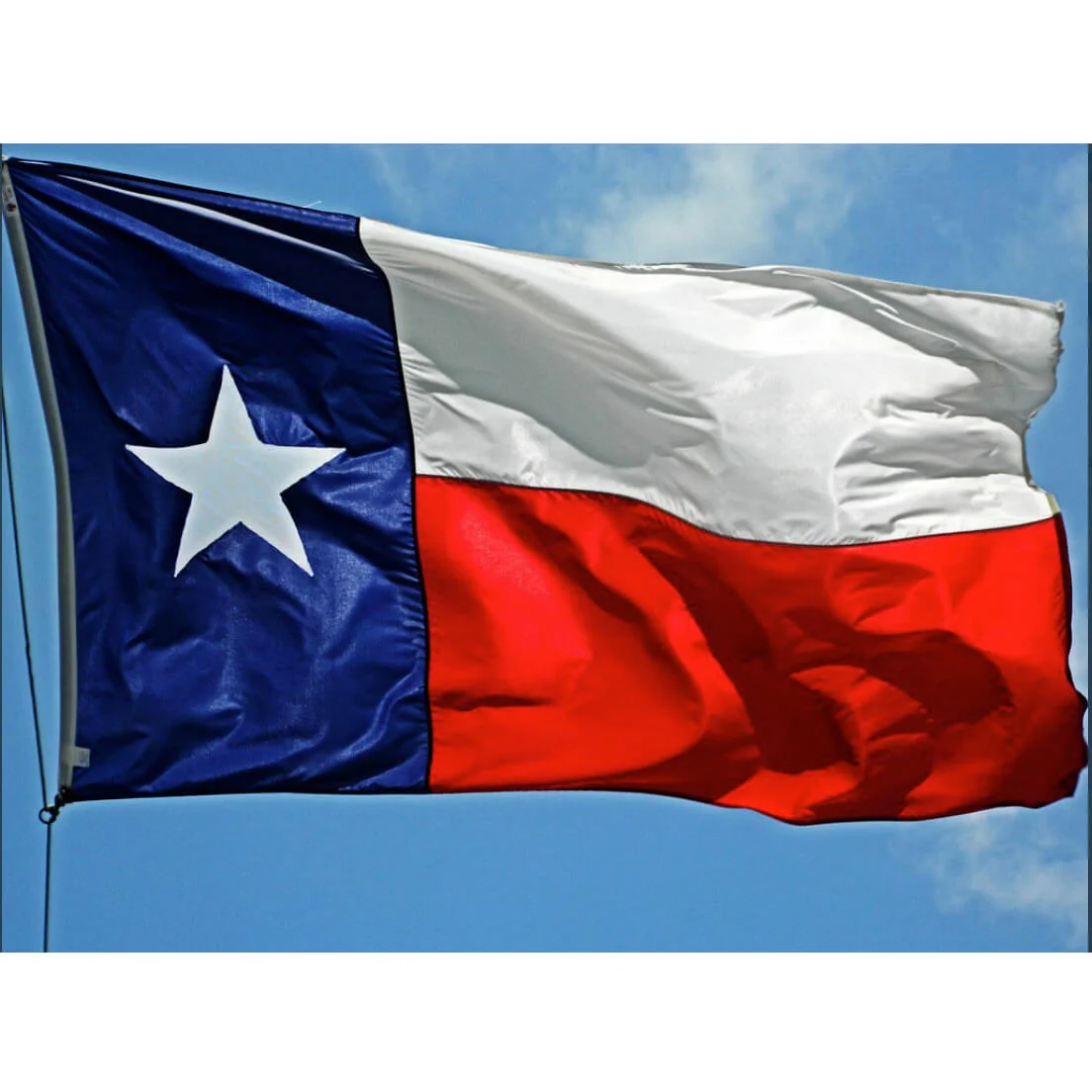
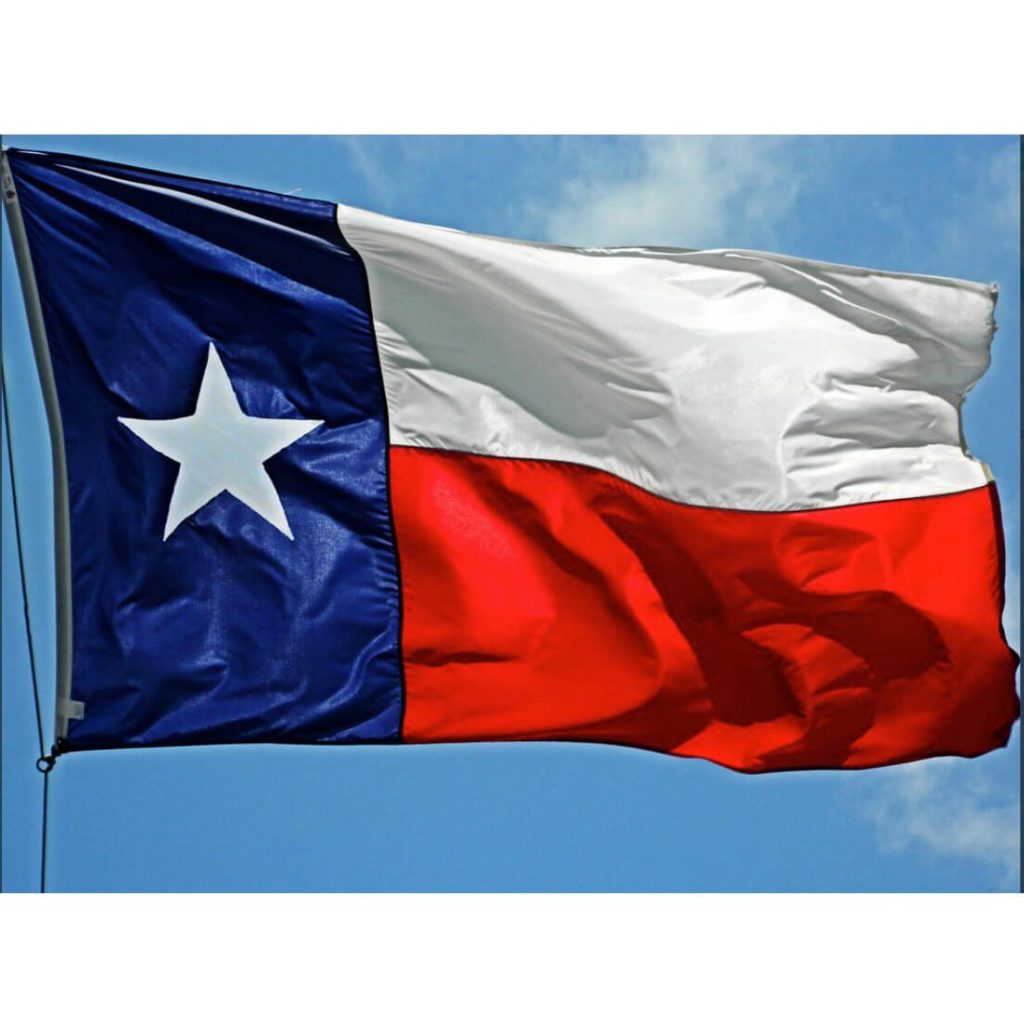
An embroidered state flag on an outdoor pole — many communities raise the state flag beside Old Glory at the entrance, one size smaller than the American flag.
Choose the fabric that survives an entrance display
Fabric is where associations save or waste money. A community entrance pole flies more hours than any home pole, and the wrong weave fades or shreds within a season. The choices break down cleanly:
- Embroidered nylon is the standard outdoor pick. It is light enough to fly in a faint breeze, it dries fast after rain, and embroidered stars with sewn stripes hold their stitching through daily hoisting.
- Heavy 2-ply polyester suits exposed entrances with constant wind. The two-ply weave is heavier and more abrasion-resistant, at the cost of needing more breeze to fly fully.
- Cotton sewn flags belong indoors — the clubhouse lobby, the meeting hall, the memorial display case. Cotton soaks up rain and mildews, so it never lives on an outside pole.
- Printed polyester is the budget line for holiday weekends and temporary displays, not for a pole that flies every day.
Whatever the fabric, inspect the fly end monthly. The fly end is where a flag wears out first, and a fraying hem caught early is repairable.
Plan the display order around the US flag
When several flags share a community entrance or clubhouse, the arrangement follows rules most residents half-remember and boards should get exactly right:
- The US flag holds the position of honor — on its own right, or above any other flag on the same pole.
- The state flag flies at the same height or lower on a separate pole, never higher than the US flag and never to its right.
- Hoist the US flag first and lower it last when the poles are raised in sequence.
- Light the flag if it flies at night. A spotlit entrance pole is the cleanest way to satisfy the Flag Code's after-dark requirement.
- Take it down in severe storms unless the flag is an all-weather build, and let it dry fully before refolding or restowing.
A POW/MIA or military service flag at a veterans memorial corner flies below the US flag on the same or adjacent pole, and it deserves the same lighting and fabric care.

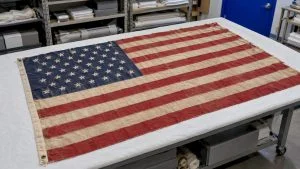
A sewn 48-star American flag — the design that flew from 1912 to 1959 — a fitting choice for a community veterans memorial or heritage corner.
Write the flag rules into the covenants
Vague rules breed disputes. A board that writes its display standards into the architectural guidelines settles most questions before they start, and every item on the list below is a lawful time, place or manner rule:
- Size limits: the maximum flag size per lot, tied to the pole height by the quarter rule.
- Pole rules: one pole per lot, a maximum height, and setbacks from property lines for structural safety.
- Lighting: flags flying after dark must be illuminated.
- Condition: flags must be clean and serviceable; tattered displays get a repair-or-retire notice, not a fine.
- Holiday exceptions: seasonal and celebration flags allowed on named dates, so enforcement stays consistent.
Keep the rules to how, where and when. A covenant that tries to prohibit the American flag outright contradicts the 2005 Act and will not hold up.
Set the community half-staff calendar
A shared flag brings shared obligations. The U.S. Flag Code directs the flag to half-staff on the days a community flies it in mourning, and an association that posts the calendar avoids every argument about when and why:
- Memorial Day: half-staff from sunrise until noon, then briskly to the top for the rest of the day.
- Patriot Day, September 11: half-staff for the day.
- Peace Officers Memorial Day, May 15: half-staff, where the community observes it.
- National mourning proclamations: follow the presidential proclamation's stated duration.
Raising a flag to half-staff means first hoisting it to the peak, then lowering it to half the pole's height; retiring it means raising it to the peak again before lowering.
Common mistakes HOAs make with flags
- Printed flags on a permanent pole. A printed flag flying daily fades and frays within a season or two; stitched construction is the fix.
- Oversizing for the pole. A 5×8 ft flag on a 20 ft pole beats itself apart at the fly end; match size to height instead.
- No night lighting. An unlit flag that stays up after sunset violates the Flag Code's display rule even when the board meant well.
- Staging the state flag wrong. Above the US flag or on its right are both errors on US soil, however symmetric the entrance looks.
- Writing a ban instead of a rule. Boards cannot prohibit the American flag; they can only govern the time, place and manner, per the 2005 Act.
- Skipping retirement. A worn flag goes to a dignified retirement ceremony, often run with a local American Legion post — never into a dumpster.
Flags for community associations at a glance
| Flag | Best for | Standout feature | Key limitation |
|---|---|---|---|
| Outdoor embroidered nylon US flag | Daily entrance-pole flying | Embroidered stars, sewn stripes, flies in light wind | Lighter weave wears faster in sustained high wind |
| Heavy 2-ply polyester US flag | Windy, exposed entrances | Abrasion-resistant two-ply weave | Needs more breeze to fly fully |
| Embroidered state flag | Entrance and clubhouse display | Official state-adopted design, stitched detail | Size it one step below the US flag |
| Cotton sewn US flag | Indoor clubhouse and memorial displays | Traditional weave and drape | Never for outdoor or wet use |
| Historic reproduction flag | Veterans memorial and heritage corners | Dated designs such as the 48-star flag | A display piece, not a daily flyer |
FAQ
Can an HOA prohibit homeowners from flying the American flag?
No. The Freedom to Display the American Flag Act of 2005 stops homeowners associations from prohibiting members from displaying the US flag on property they own or have exclusive rights to use. Boards may still set reasonable time, place and manner rules.
What flag rules can an HOA legally enforce?
Reasonable rules on pole location, maximum pole height, size limits tied to pole height, lighting for night display and flag condition. The board governs how, where and when — not whether — the American flag flies.
What size flag does a community entrance pole need?
Follow the quarter rule: flag fly length about one quarter of the pole height. A 20-25 ft entrance pole takes a 4×6 ft flag, and a 25-30 ft pole takes a 5×8 ft.
Should an HOA buy a nylon or polyester American flag?
Embroidered nylon for most entrances — it flies in light wind and dries fast. Choose heavy 2-ply polyester for exposed, high-wind entrances where abrasion resistance matters more than a light breeze lift.
Can the state flag fly at the same height as the US flag?
Yes, on a separate pole of equal height — but never higher and never to the US flag’s right on US soil. Hoist the US flag first and lower it last.
Does the community flag need to come down at night?
Only if it is not illuminated. The Flag Code allows a flag displayed 24 hours a day when a proper light shines on it, which is standard practice on lit entrance poles.
When does the flag fly at half-staff in a community?
Memorial Day until noon, Patriot Day on September 11, and any presidential proclamation of national mourning. Raise the flag to the peak first, lower it to half the pole height, and return it to the peak before lowering.
Where do worn community flags go?
To a dignified retirement, preferably by burning, often run jointly with a local American Legion or scout troop. Collecting residents’ worn flags is an easy association service project.
One last thing
Order replacement flags before the summer holidays instead of after them. Memorial Day, Flag Day on June 14 and the Fourth of July run back-to-back, and an entrance pole caught mid-season with a faded flag looks worse than no flag at all. Browse the Shop Ultimate Flags American flag collection a few weeks ahead and schedule the swap for the week before Memorial Day.
For a deeper look at outdoor fabric choices, see our guide to the best nylon American flags for commercial storefronts — the same daily-flying demands apply to a community entrance.
Historical sources consulted for this 2026 guide: the Freedom to Display the American Flag Act of 2005, the U.S. Flag Code on display hours, weather and half-staff protocol, and the flag-size guidance used on Ultimate Flags product listings.