Nylon American flags are the default storefront choice: the fabric is light enough to fly in a faint breeze off a sidewalk, it dries fast after a morning rain, and its colors read bright from across a parking lot. For a commercial front, start with the Ultimate Flags USA flag collection, which carries outdoor embroidered nylon flags in sizes from 12"x18" up to 15×25 ft and bigger.
- Best overall: the Outdoor Nylon Embroidered American flag — flies in light wind and dries quickly.
- Best budget: the 50 Star Nylon Printed flag for short-run promotions and seasonal displays.
- Best heritage look: the sewn cotton-and-nylon traditional American flag for classic storefronts.
- Match flag size to pole height before fabric; a flag too big for the pole wears out fast.
Why this matters
A storefront flag works about eight hours a day, every day, in sun, wind and rain. Nylon earns its keep there because it is the lightest of the common flag fabrics, so it stays animated when heavier polyester hangs limp. It also holds dyed color well, which is what keeps red looking red instead of pink after a summer on an east-facing wall.
The flip side: nylon is lighter weight, not tougher weight. On a pole hammered by steady high wind, a heavy 2-ply polyester flag generally outlasts nylon. Pick nylon when your location gets breezes rather than gales, and inspect the fly end monthly.
What makes the best storefront flag
Before comparing specific flags, here is what separates a good commercial display flag from a disappointing one:
- Fabric weight suited to the wind — nylon for light-to-moderate breeze; heavier 2-ply polyester only for exposed, high-wind sites.
- Embroidered or sewn details — stitched stars and sewn stripes hold up and look sharp up close, where printed ink can look flat.
- Size matched to pole height — a common starting point is roughly 1/4 to 1/3 of the pole's above-ground height; a 20 ft pole takes a 4×6 or 5×8 ft flag well.
- Heading and grommets built for daily use — brass grommets and a reinforced heading endure constant hoisting better than light plastic hardware.
- Bright, dye-based color — nylon takes dye deeply, which keeps the field and stripes vivid at street distance.
The picks at a glance
| Flag | Best for | Standout feature | Key limitation |
|---|---|---|---|
| Ultimate Flags Outdoor Nylon Embroidered American flag | Everyday storefront display in most wind | Embroidered stars, sewn stripes, many sizes | Lighter fabric wears faster in sustained high wind |
| 50 Star Nylon Printed flag, 3×5 ft | Budget promotions and seasonal displays | Sharp printed color at a low cost | Print fades sooner than stitched detail |
| Traditional sewn American flag | Heritage or historic-themed storefronts | Classic sewn construction and finish | Heavier on the pole; wants a bit more breeze |
1. Outdoor Nylon Embroidered American flag — best overall for storefronts
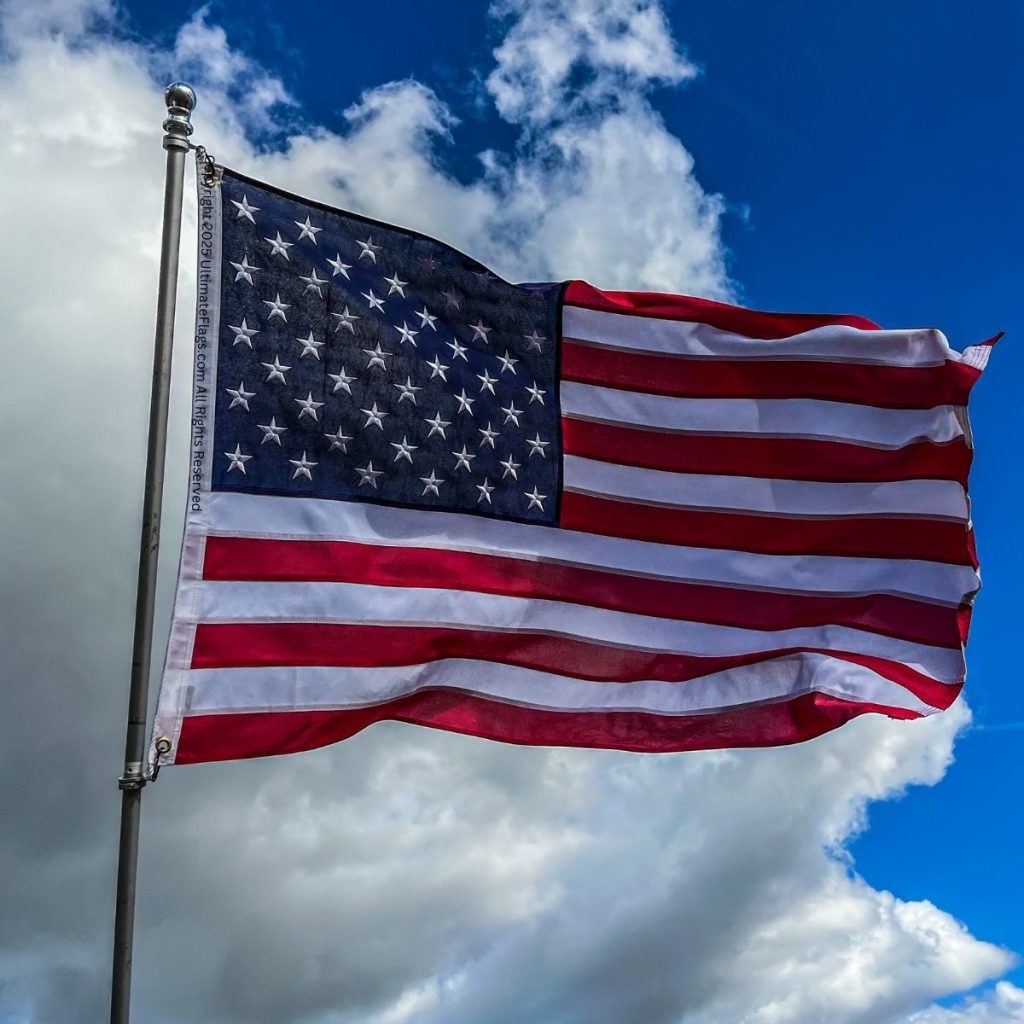
This is the workhorse. It is made in America in outdoor nylon with embroidered stars and sewn stripes, and the size list runs from 12"x18" and 2×3 ft up through 3×5, 4×6, 5×8, 6×10, 8×12, 10×15 and beyond. A storefront running a 20 ft pole usually lands on the 4×6 or 5×8 ft size; a taller municipal-style pole can step up to 6×10 or 8×12.
Pros:
- Flies readily in light wind thanks to nylon's light weight
- Embroidered stars read sharply from sidewalk distance
- Broad size range, so one flag line covers porch poles and tall commercial poles alike
- Quick-drying fabric shrugs off morning dew and rain
Cons:
- Lighter fabric means more motion, which wears fly ends sooner than a heavier flag
- In sustained strong wind, a 2-ply polyester flag is the tougher long-run choice
Best for: shops, restaurants and offices that want a bright, always-moving flag on a standard commercial pole. This is the flag most storefronts should start with. Shop the full range of American flags to match your pole height.
2. 50 Star Nylon Printed flag, 3×5 ft — best budget pick
Not every storefront flag flies year-round. For a Fourth of July promotion, a grand opening, or a seasonal window display, a printed nylon flag does the job at a fraction of the sewn-flag cost. The 3×5 ft printed nylon design is the standard size for these runs, and the dye work on nylon keeps the colors honest in person.
Pros:
- Lowest-cost way to fly an accurate 50-star flag
- Light nylon printed fabric flies easily even on short pole kits
- Fine for rotating holiday displays where the flag comes down after the season
Cons:
- Printed stars and stripes lack the dimensional look of embroidery up close
- Not the flag to fly 365 days a year in full sun; expect faster fade than stitched work
Best for: temporary campaigns and budget displays. Buy it for the event, not for the decade. Browse the quality level collection to compare printed and sewn flags side by side.
3. Traditional sewn American flag — best heritage look
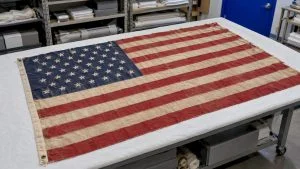
Some storefronts want a flag that reads old-fashioned: a bank, a law office, a hardware store with a wooden sign out front. A traditionally sewn flag with embroidered stars delivers that heavier, richer drape. The trade-off is weight — sewn construction is thicker than printed nylon, so it wants a touch more breeze to spread out fully.
Pros:
- Classic sewn finish suits historic buildings and traditional storefronts
- Stitched construction holds detail up close
- Dries reasonably fast for a sewn flag when built on nylon
Cons:
- Needs slightly more wind than a lighter printed flag to look its best
- Costs more than printed alternatives
Best for: heritage businesses that want the flag to look as established as the building. See the sewn and embroidered options in the Ultimate Flags USA flag collection.
How we ranked
The ranking follows what a storefront flag actually endures: daily hoisting, sun exposure, and whatever wind the street delivers. We weighted flyability in light wind first, then construction quality (embroidered and sewn over printed for permanent installs), then the range of sizes to match different pole heights. Budget flexibility came last, handled by the printed pick.
Match the flag to your pole before you buy
The most common storefront mistake is not fabric — it is size. A flag bigger than the pole's rating thrashes itself to pieces; a flag too small looks lost above the sign. Use pole height to choose:
- 15-20 ft pole: 3×5 ft flag
- 20-25 ft pole: 4×6 ft flag
- 25-30 ft pole: 5×8 ft flag
- 30-40 ft pole: 6×10 to 8×12 ft flags
Also check the attachment. Most commercial poles take a flag with heading and brass grommets; a house-mounted pole with a fixed sleeve needs a pole-hem flag instead. Getting this right matters as much as the fabric choice.

Care tips that double a storefront flag's life
Nylon is low-maintenance, but a few habits stretch its service life noticeably:
- Take it down in severe weather. Sustained high wind and storms are what fray fly ends, not everyday breeze.
- Wash it when it looks dirty. Mild soap and lukewarm water, then hang to dry; never put a nylon flag in a hot dryer.
- Rotate two flags. Swapping between two flags every couple of months lets each rest and makes both last longer than one flown continuously.
- Inspect the fly end monthly. Early fraying is repairable; a shredded corner is not.

Which flag should your storefront fly?
For most businesses, the answer is simple: the Outdoor Nylon Embroidered American flag in the size matched to your pole. It flies when nothing else will, its stitched detail reads well from the street, and the size range fits everything from a 15 ft porch kit to a 30 ft commercial pole. Keep a printed 3×5 ft flag on hand for promotions, and step up to a traditional sewn flag only when the storefront's character calls for it.
FAQ
What size American flag is best for a storefront pole?
A common starting point is a flag one-quarter to one-third of the pole’s above-ground height: a 3×5 ft flag for a 15-20 ft pole, 4×6 ft for 20-25 ft, and 5×8 ft for 25-30 ft.
Is nylon or polyester better for an outdoor American flag?
Nylon is the better choice for most storefronts because it flies in light wind and dries quickly. Heavy 2-ply polyester outlasts nylon only in sustained high-wind locations.
Are embroidered flags better than printed flags?
For a permanent display, yes: embroidered stars and sewn stripes hold up longer and look sharper up close. Printed nylon flags are the budget pick for seasonal or promotional displays.
Can a nylon American flag stay out in the rain?
Nylon dries quickly, so brief rain is not a problem, but the U.S. Flag Code recommends taking the flag down in severe weather unless it is an all-weather flag.
How long does a nylon American flag last on a storefront pole?
There is no fixed lifespan; exposure, wind and care decide it. Inspecting the fly end monthly and rotating two flags between poles noticeably extends service life.
What attachment does a storefront flag need?
Most commercial poles take a heading-and-grommet flag with brass grommets. House-mounted poles with a fixed sleeve need a pole-hem flag instead.
One last thing
Before ordering, walk your block and look at the flags already flying. The ones flying bright on a still afternoon are almost always nylon; the ones hanging limp are the heavy weaves. That single observation tells you more about what your storefront needs than any fabric chart.
Related guides