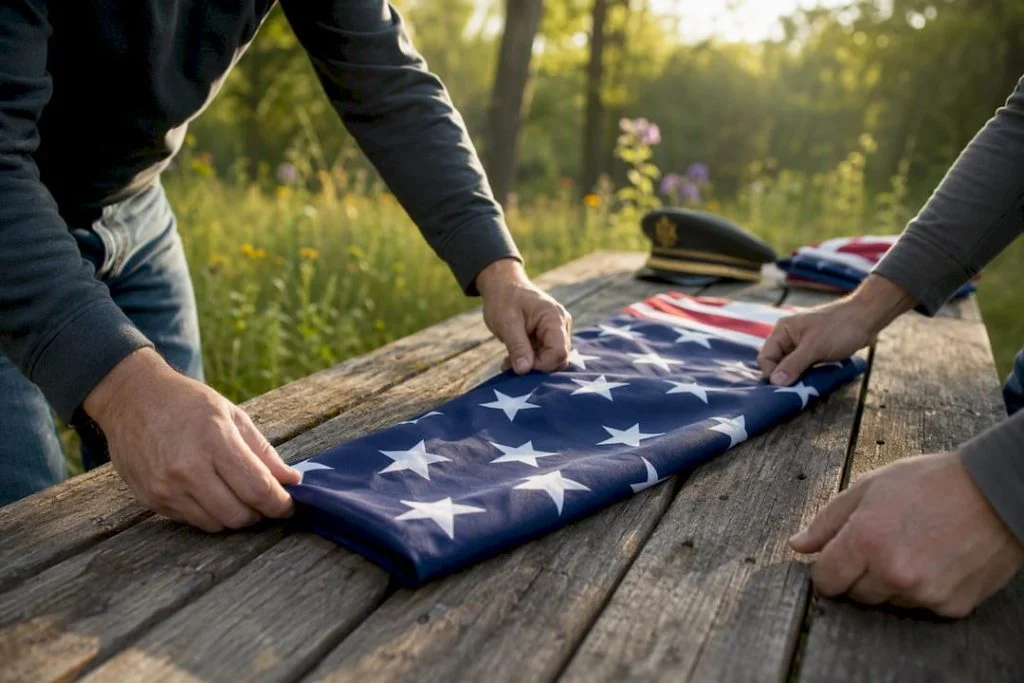
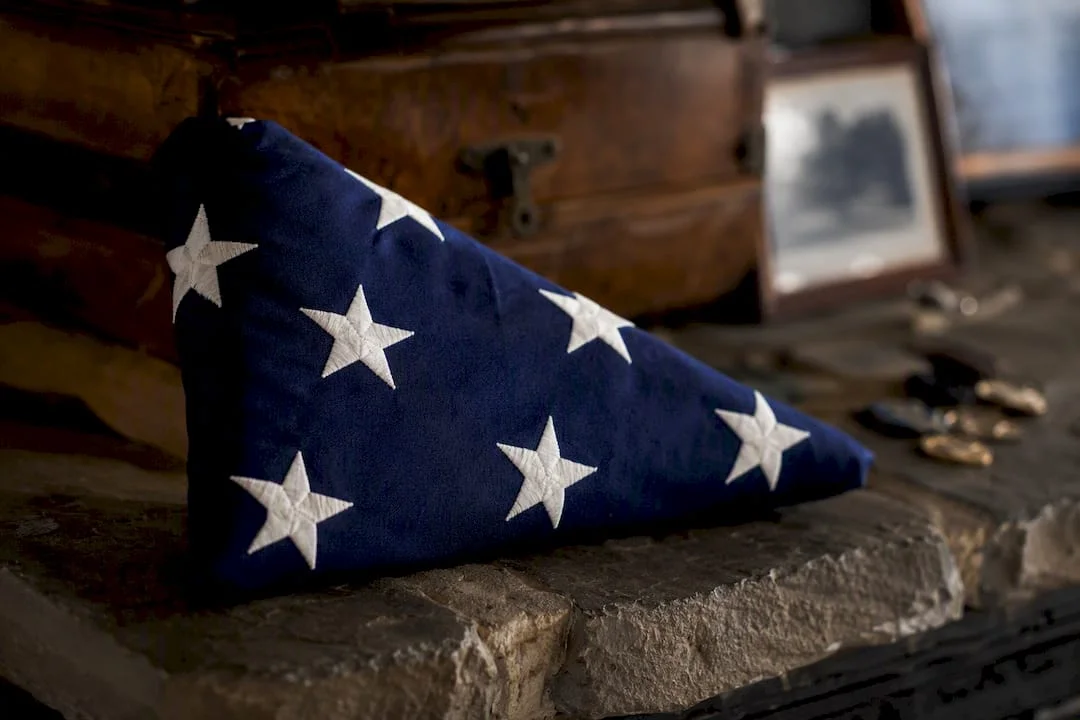
The standard ceremonial fold ends the same way every time: a tight triangle, often called the “cocked hat,” with only the blue field and its white stars showing. No stripes, no loose ends visible. The widely followed ceremonial sequence, used at military honors and by veterans’ organizations across the country, produces multiple folds by the time the flag reaches its final shape.
A few rules matter more than the rest:
- The flag must never touch the ground during folding or lowering.
- Two people, standing waist-high apart, produces the cleanest, most even result.
- The final tuck should leave only the blue union visible, with the stars facing up.
Key Takeaways
Correct flag folding produces a 13-fold triangle showing only the blue union, and the fold matters more than any script recited alongside it.
| Point | Details |
|---|---|
| Final shape | The flag should end as a tight triangle with only the blue field and stars visible. |
| Ground contact | Never let the flag touch the ground during folding or lowering, per federal handling guidance. |
| Two-person method | Waist-high holding produces the most even triangles and reduces wrinkles. |
| Solo folding | Use a flat, clean table surface and add a third lengthwise fold for large flags. |
| Scripts are optional | No single 13-fold recitation is official; silence is an accepted alternative. |
Table of Contents
- What Are the Steps for Proper Flag Folding?
- Can You Fold a Flag by Yourself?
- Why Does the Flag Get Folded 13 Times?
- How Do You Store or Display a Folded Flag?
- What Flag and Case Should You Choose for Display?
- Why Getting the Fold Right Matters More Than People Think
- Sources
- FAQ
What Are the Steps for Proper Flag Folding?
The ceremonial method taught in military manuals and reproduced by the U.S. Department of Veterans Affairs follows a fixed order. Two people hold the flag waist-high, parallel to the ground, so the stripes face up and neither corner drags. Before you begin, look the flag over for tears, loose stitching, or dirt. A flag headed for a folded display deserves to start the process clean.
- Fold lengthwise. Bring the lower striped section up and over the blue field so the flag is now half its original width, stripes folded against the union.
- Fold lengthwise again. Fold the same edge over a second time, so the blue field is now on the outside and the flag is roughly a quarter of its starting width. Very large outdoor flags sometimes need a third lengthwise fold to keep the blue field from becoming too bulky for a clean final triangle.
- Start the triangles. One person holds the folded strip taut while the other brings the striped corner up to meet the open edge, forming the first triangular fold.
- Continue folding triangle over triangle, moving down the length of the flag, alternating direction each time, the same way you’d fold a letter meant for someone you respect.
- Finish on the union. The last fold should land so that only the blue field with its stars is visible, no red or white showing anywhere on the folded shape.
- Tuck the remaining tail into the folds at the open edge, securing the triangle so it holds its shape without pins or tape.
Watch for a few common missteps. Uneven triangles happen when one partner pulls tighter than the other. Wrinkles creep in when the flag isn’t held taut before the first fold. And a loose final tuck is the most common reason a folded flag comes apart in transit or in a display case. The Marine Corps’ flag display and folding guidance reinforces the same endpoint: blue field and stars outward, no portion of the flag touching the ground at any point in the process.
Pro Tip: If you’re folding with a partner for the first time, practice the lengthwise folds slowly and check that both edges line up before you move into the triangles. A crooked start compounds by the thirteenth fold.
Can You Fold a Flag by Yourself?
Yes, and it’s more common than most people realize, especially for a 3×5 flag being retired from a porch pole or pulled out of storage for a holiday display. Working solo just means trading waist-high tension for a flat, clean surface.
- Lay the flag face-up on a table, stripes facing you, and smooth out any wrinkles before folding.
- Make the same lengthwise folds by hand, pressing each crease flat against the table instead of holding it in the air.
- Form the triangular folds from the striped end exactly as you would with a partner, working your way toward the blue field.
- For pocket flags or small ceremonial flags meant for a keepsake case, keep the triangles tight and even. A small flag forgives less sloppiness than a large one.
- If you’re working with a large outdoor flag alone, add the third lengthwise fold mentioned above. It keeps the bulk manageable and reduces the risk of the flag slipping off the table mid-fold.
A table surface also solves the biggest solo risk: ground contact. Folding flat, rather than trying to hold a flag waist-high alone, keeps the fabric off the floor the entire time.
Why Does the Flag Get Folded 13 Times?
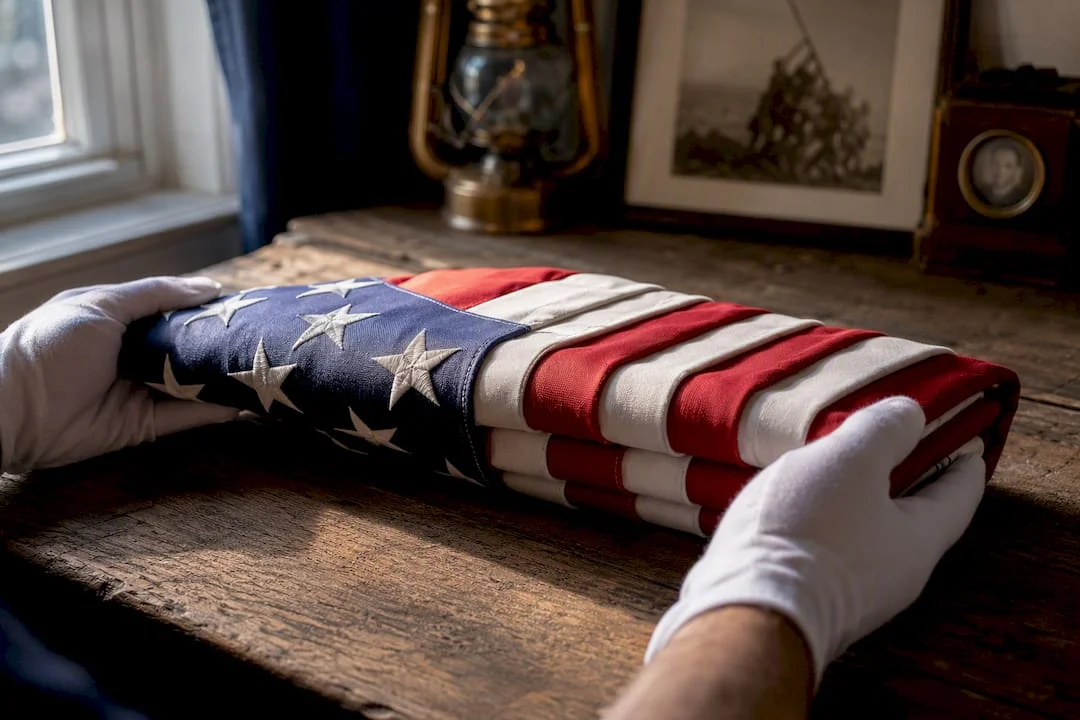
Ceremonial folding traditions assign meaning to each of the 13 folds, often tied to values like liberty, remembrance of veterans, or trust in God, depending on which script is used. The American Legion has its own recitation. Air Force units sometimes use a different version. None of these carry the weight of federal law or a single “official” designation.
The final triangular shape carries its own symbolism, separate from the fold-by-fold recitations. It’s meant to evoke the tri-corner hats worn by soldiers of the Continental Army, a visual link between the folded flag in your hands and the earliest days of the country it represents.
Scripts and their fold-by-fold meanings vary by organization, and no single recitation is universally mandated. The VA permits an approved recitation or respectful silence at burial honors.
If you’re organizing a ceremony, choose a script that fits the tone of the occasion, whether that’s a funeral, a retirement flag folding, or a scouting event, or opt to fold in silence. Both are accepted practice, and neither diminishes the respect the moment carries.
How Do You Store or Display a Folded Flag?
Once the triangle is formed, the loose end tucks into the outer fold so nothing hangs free and the stars stay facing up and visible. That’s the shape you want to preserve, whether the flag goes into a keepsake box or onto a mantel.
- Choose a display case sized to match your folded flag. Most are built around a folded 3×5, so measure before you buy.
- Look for UV-filtering acrylic on the case front. Sunlight fades red and blue dye faster than most people expect.
- Felt backing inside the case keeps the blue field from rubbing against a hard surface over time.
- Store an unused flag in a dry, clean place, away from other linens where the fabric can snag or absorb moisture.
- Retire a flag once it’s torn, badly faded, or no longer fit for display, following proper etiquette for handling worn flags.
What Flag and Case Should You Choose for Display?
Ultimate Flags has operated as America’s oldest online flag store, and that history shapes a simple piece of advice: match the flag to the space before you match the case to the flag. A 3×5 nylon or polyester flag folds into a triangle that fits standard cases and holds its shape well for ceremonial presentation. Heavier cotton or embroidered flags look sharper displayed flat, not folded long-term.
A good case checks three boxes: UV-protective front, felt or fabric backing, and a mount secure enough that the triangle doesn’t shift over years on a wall. For guidance on what to do once your flag arrives, see this resource on protecting and displaying it.
| Consideration | Why It Matters |
|---|---|
| Fabric weight | Nylon folds crisper for ceremony; cotton displays better unfolded. |
| Case sizing | Match the case to a folded 3×5 triangle unless your flag is a different size. |
| UV protection | Filters sunlight that fades the blue field and red stripes over time. |
Why Getting the Fold Right Matters More Than People Think
Most guides treat flag folding as a mechanical checklist: fold here, tuck there, done. That undersells what’s actually happening. The fold is one of the few pieces of American ceremony that hasn’t been simplified or modernized over the decades. It still takes two people, still takes patience, and still ends the same way it has for generations.
Where conventional advice falls short is in treating the 13-fold recitation as sacred text. It isn’t. The scripts are traditions, not statutes, and families organizing a burial or a retirement ceremony shouldn’t feel locked into a specific set of words. What actually matters is the physical result: a tight, even triangle with the blue field showing and the flag never touching the ground.
If you take one thing from this, prioritize the mechanics over the recitation. Get the folds square and the tuck secure first. The words, if you use any, come second.
— Jonica
Sources
FAQ
Why Is a Flag Folded 13 Times?
The 13-fold sequence is a ceremonial tradition, not a legal requirement, and various organizations, including the American Legion, assign different symbolic meanings to individual folds.
How Do I Fold My Flag?
Fold it lengthwise twice with a partner holding it waist-high, then make triangular folds from the striped corner toward the blue field until only the union shows, following the VA’s step-by-step method.
How Many Folds Does It Take to Fold a Flag?
The complete ceremonial sequence, counting the lengthwise folds and every triangular fold that follows, totals 13 folds by convention.
How Do I Fold a 3×5 American Flag for Display?
Lay it flat on a table if you’re working alone, fold it lengthwise until it’s a narrow strip, then form even triangles from the striped end until the blue field is the only section showing, tucking the tail securely at the end.