A reenactor's Civil War flag checklist comes down to six checks: match the design to the right army and year, pick the shape and size the unit actually carried, choose fabric that survives the field, inspect the hoist and finishing, verify the stars and wording against the historical record, then buy from a seller that documents what it lists. Civil War flags for sale in 2026 range from accurate sewn cotton reproductions to lightweight printed banners, and the right pick depends on whether the flag is marching with you or hanging in camp.
- Match the flag pattern to the army and the years you portray — never just to the movie version.
- Square with a white border means the Army of Northern Virginia; rectangles served farther west.
- Cotton sewn reproductions read period-correct in camp; nylon suits wet-weather marching.
- Original battle flags ran near four feet square — a modern 3×5 display flag is smaller by design.

Why the flag you carry matters on the field
A Civil War regiment's colors were not decoration. Regiments on both sides carried their flags into every engagement because gun smoke hid whole brigades, and the colors were the one thing a scattered company could rally on. Carrying them was an honored, dangerous post — color bearers fell in such numbers that capturing an enemy's flag earned a soldier the Medal of Honor, and dozens of Civil War medals were awarded for exactly that act.
That history is why the hobby judges flags closely. A veteran reenactor reading your camp is reading the flag first, and the details that matter — pattern, shape, star count, fabric — are the same details a historian uses to date the originals.
The originals themselves have a story worth knowing before you buy. Many battle flags were captured in the field and held by the federal government for decades. Congress authorized the return of captured Confederate flags in 1905, and the transfers carried on over the following years; Georgia's battle flags came home in 1916, and heritage groups such as the United Daughters of the Confederacy, formed in 1894, and the Sons of Confederate Veterans, organized in 1896, drove much of the preservation work that keeps those flags in state museums today.
The six checks before you buy a reproduction
Work the checks in order. Each one narrows what to look for before money changes hands.
Step 1: Match the design to the army and the year
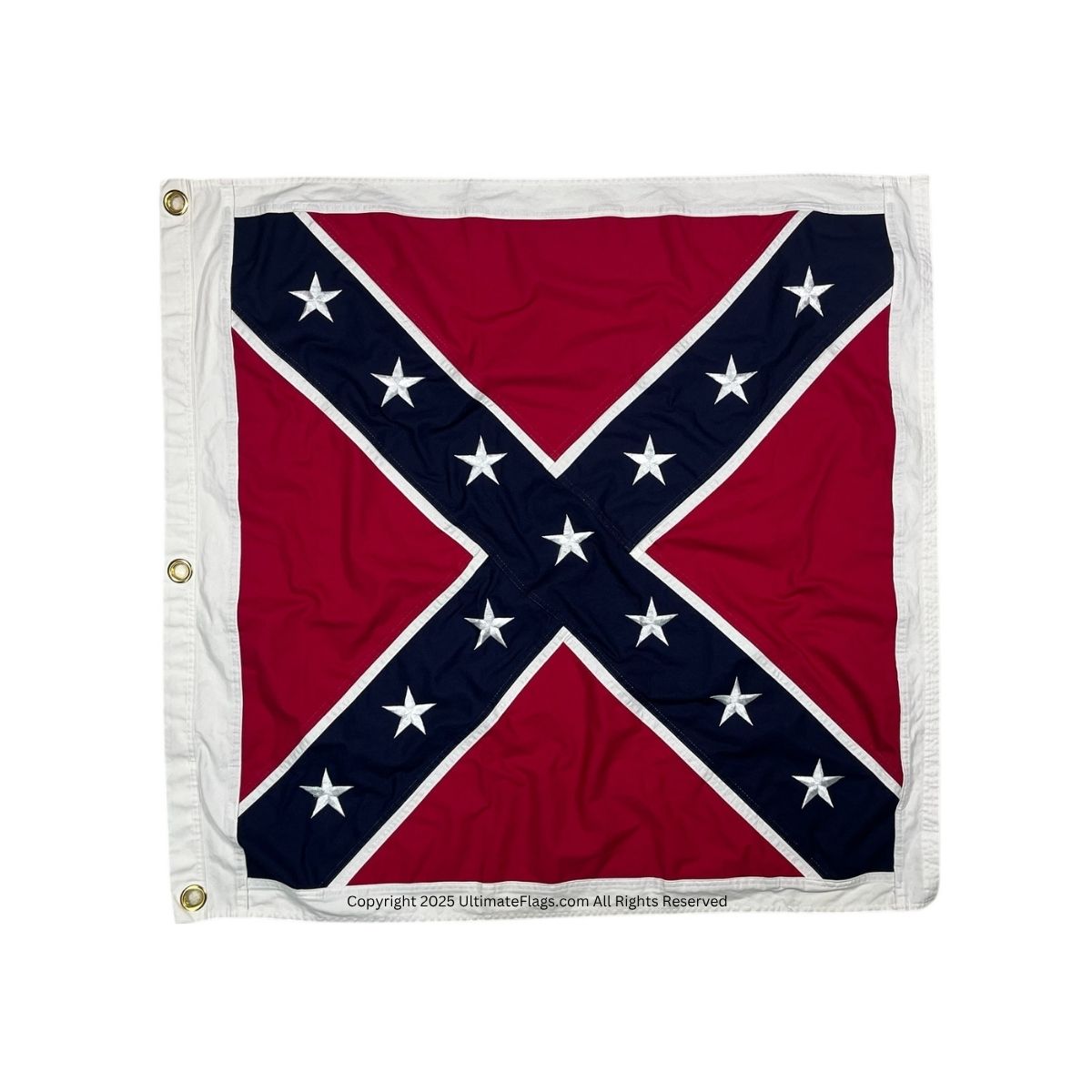
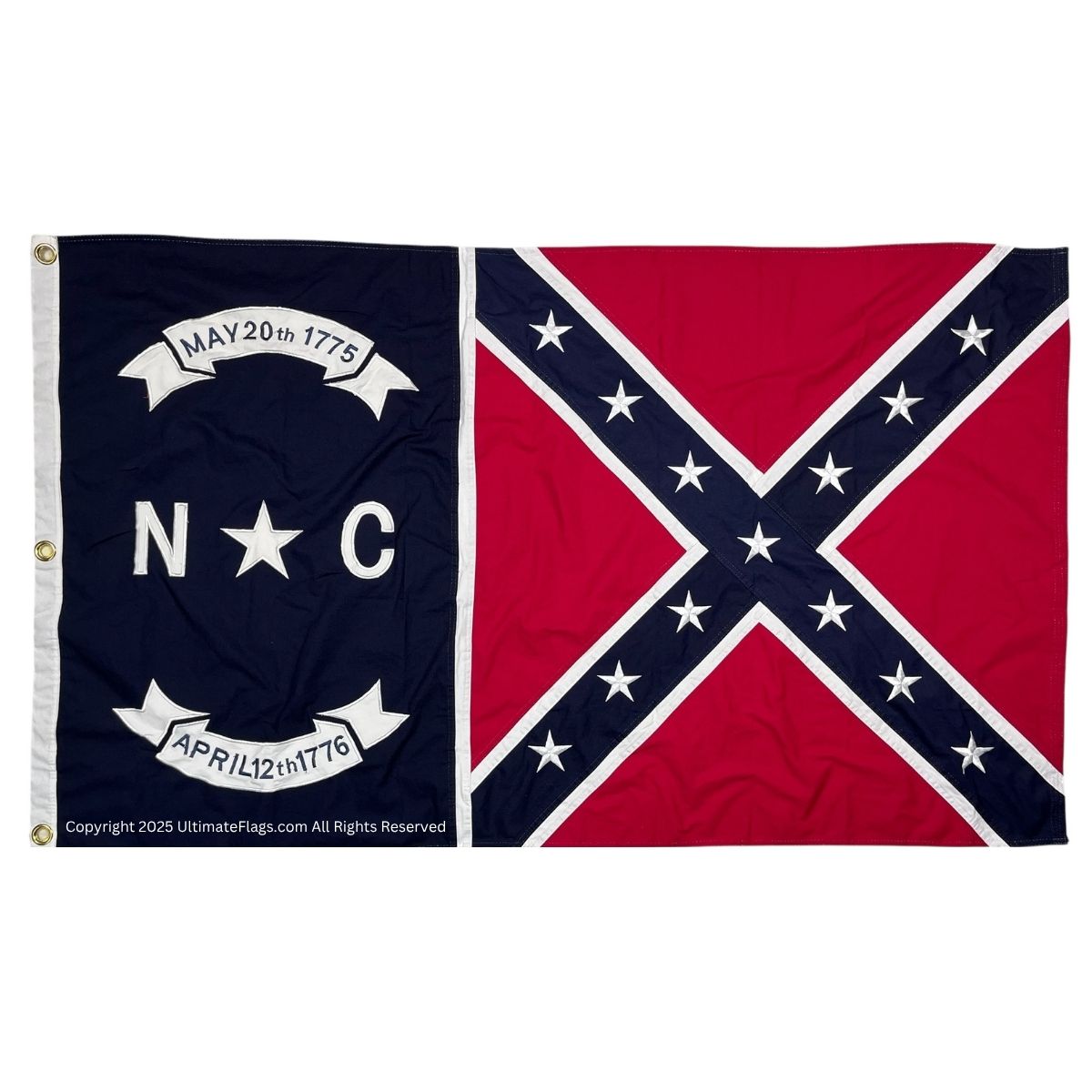
The Confederacy carried three national flags plus the battle flag, and each belongs to a specific window. The Stars and Bars, adopted in March 1861 with seven stars and later thirteen, served until May 1863, when the Stainless Banner replaced it; the Blood-Stained Banner followed in March 1865. The square Southern Cross battle flag with a white border was issued by the Army of Northern Virginia from late 1861, while rectangular battle flags served in the Army of Tennessee and the Trans-Mississippi.
- Portraying 1861 or 1862? The Stars and Bars or a first-issue battle flag fits.
- Portraying the Army of Northern Virginia in 1862-1865? Square battle flag, white border.
- Portraying the western armies? Rectangular battle flag patterns.
- Union impressions need a 34, 35 or 36 star Stars and Stripes plus a blue regimental color.
Step 2: Check the shape and size against period issue
Original Army of Northern Virginia battle flags were issued close to four feet on the side — not the familiar 3×5 ratio. Union regimental colors ran larger still, around six feet, because they had to be seen across a battlefield. Modern reproductions are sold in standard display sizes, and that is fine: a 3×5 flag is what most events allow and what most flag belts and lances are cut for. Just know the difference, because a 52-inch square cotton battle flag reads noticeably more period-correct in camp photos than a 3×5 rectangle of the same design.
Step 3: Pick fabric for the field, not the shelf
Fabric decides how the flag behaves on the field more than anything else.
- Cotton sewn: the period-correct look, with the drape and matte finish of the originals. Heavier, and it dries slowly after rain.
- Nylon: light, quick to dry and bright in the wind. The look is more modern, which is why many reenactors pair a nylon marching flag with a cotton camp flag.
- Printed polyester: the lightest thing to pack, fine as a backup or for travel.
In 2026 most reputable sellers state the fabric plainly on the product page. If a listing does not say, ask before you buy.
Step 4: Inspect the hoist and finishing
The hoist is the edge that attaches to your lance or pole. Carried flags usually take a pole sleeve with ties; displayed flags take grommets. Check that hems are double-stitched, that stars are sewn or embroidered rather than printed when the listing promises it, and that the flag's finishing matches how you will actually carry it. A sleeve-and-tie cotton battle flag is built for a lance; a grommeted printed banner is built for a pole kit.
Step 5: Verify the stars, wording and honors against the record
A reproduction earns its keep by matching the documented design. Count the canton — thirteen stars is the settled Confederate battle flag count — and check any unit wording or battle honors against the historical record, the same way you would identify an original. The five-step method for matching Civil War flags to a unit and battle covers that verification in detail, from pattern and wording through to the regimental records in the Official Records of the War of the Rebellion.
Step 6: Buy from a seller that documents the design
A good listing names the pattern, the army it belonged to, the size, the fabric and the finishing. Vague listings are where impression mistakes start. When you are ready to Shop Ultimate Flags, compare the cotton and nylon versions of the same design side by side and pick by use, not by habit.
Which reproduction to pick, at a glance
| Option | Best for | Key limitation |
|---|---|---|
| Cotton sewn battle flag, about 52 inches square | Main camp display and Army of Northern Virginia impressions | Heaviest fabric; needs drying after damp weather |
| Nylon printed battle flag, 3×5 ft | Marching, lances and wet-weather events | Lighter, more modern look than period cotton |
| Cotton Stars and Bars national flag | Early-war Confederate impressions, 1861-1863 | Wrong flag for 1863-1865 events |
| Printed polyester national or regional flag, 3×5 ft | Backup flag and travel kit | Least period-correct hand feel |
Common mistakes reenactors make with Civil War flags
- Flying the battle flag as a national flag. The battle flag never was the Confederacy's national flag, and the mix-up starts with the first national flag being pulled from field use after First Manassas in July 1861, when its resemblance to the Union's caused deadly confusion.
- Wrong star count for the year. A seven-star Stars and Bars belongs to early 1861; thirteen stars cover the eleven seceded states plus Kentucky and Missouri.
- A rectangle where a square belongs, or the reverse. Shape is the fastest tell of which army a battle flag served in.
- Packing a damp cotton flag away. Cotton that goes into a kit wet comes out with mildew and permanent stains.
- Treating a 3×5 as the regulation size. It is the modern display standard, not the period issue size.
Related questions about Civil War flags for reenacting
What flag did most Confederate soldiers actually fight under?
The battle flag, not a national flag. After July 1861 the first national flag was withdrawn from field use because it was too easy to mistake for the Union's, and the battle flags of the three main armies became the flags soldiers rallied on.
Is a printed flag acceptable for reenacting?
Yes, for field use. A printed nylon or polyester flag is what many reenactors march with because it is light and dries fast, while sewn cotton reproductions are saved for camp display, photographs and headquarters scenes where period look matters most.
What happened to the original flags after the war?
Many were captured and held by the War Department for decades. Congress authorized their return in 1905, the transfers carried on over the following years, and Georgia's battle flags came home in 1916 — which is why surviving originals cluster in state museums rather than private hands.
FAQ
What size Civil War flag is best for reenacting?
A 3×5 feet reproduction is the practical standard for marching, and a larger square cotton flag near 52 inches is the period-correct choice for an Army of Northern Virginia camp display. Original regimental colors were larger still, near six feet.
Cotton or nylon Civil War flag for reenacting?
Cotton for camp and photos, nylon for the march. Cotton sewn reproductions carry the period look, while nylon handles rain, dries fast and weighs less on a lance all day.
What is the difference between the Stars and Bars and the battle flag?
The Stars and Bars was the Confederacy's first national flag, adopted in March 1861 with a circle of stars on three broad stripes. The battle flag is the Southern Cross field flag with a star-studded diagonal cross, and it was never a national flag.
How big were original Civil War battle flags?
Army of Northern Virginia battle flags were issued close to four feet square with a white border, and Union regimental colors ran near six feet so they could be seen across a battlefield. Modern 3×5 reproductions are a display convention, not a period size.
What star count should a Confederate reproduction have?
Thirteen stars on a battle flag canton is the settled, correct count. On the Stars and Bars national flag, seven stars belong to early 1861 and thirteen to the design's later period through 1863.
Can I fly a Civil War flag today?
Yes. Civil War flags are legal to display in the United States and are flown at museums, battlefields, reenactments and historic commemorations. The flag is historical material, and the reenacting community treats it that way.
Where is the best place to buy Civil War flag reproductions?
From a seller that documents pattern, size, fabric and finishing on every listing, and that offers both sewn cotton and printed nylon so you can match the flag to the use. Ultimate Flags Store carries all four Civil War flag generations plus the battle flag patterns in both constructions.
What size Civil War flag is best for reenacting?
A 3×5 feet reproduction is the practical standard for marching, and a square cotton flag near 52 inches is the period-correct choice for an Army of Northern Virginia camp display. Original regimental colors ran near six feet.
Cotton or nylon Civil War flag for reenacting?
Cotton for camp and photos, nylon for the march. Sewn cotton carries the period look, while nylon handles rain, dries fast and weighs less on a lance all day.
What is the difference between the Stars and Bars and the battle flag?
The Stars and Bars was the Confederacy’s first national flag, adopted in March 1861. The battle flag is the Southern Cross field flag, and it was never a national flag.
How big were original Civil War battle flags?
Army of Northern Virginia battle flags were issued close to four feet square with a white border, and Union regimental colors ran near six feet. A modern 3×5 flag is a display convention, not a period size.
What star count should a Confederate reproduction have?
Thirteen stars is the settled battle flag count. On the Stars and Bars, seven stars belong to early 1861 and thirteen to the design’s later period through 1863.
Can I fly a Civil War flag today?
Yes. Civil War flags are legal to display in the United States and are flown at museums, battlefields, reenactments and commemorations as historical material.
One last thing
The square battle flag with a white border was a quartermaster's decision, not a national one — it was issued by a single army to solve a battlefield recognition problem, and it worked so well that the rectangular versions out west are the exception people argue about. Buy the flag the unit would have recognized, and the impression argues for itself.
Related guides