For grave marking, the standard sizes are 12"x18" and 8"x12" stick flags. The ceremonial casket flag, by contrast, measures a much larger 5’ x 9½" and serves an entirely different purpose. Knowing this distinction before you shop will save you from an expensive mistake and a flag that simply does not fit your loved one’s plot.
Here is how the common sizes break down:
- 4"x6" — small hand flags, best for parades or handheld ceremonies, not typically used as standalone grave markers
- 8"x12" — a marker-friendly size for small headstones or tight plot spacing
- 12"x18" — the most commonly recommended size for individual grave decoration
- 5’ x 9½" — the official VA burial flag used to drape a casket, meant for interment, not grave marking
If you are decorating a veteran’s grave and your cemetery has no specific policy against it, a 12"x18" flag mounted on an 18 to 24 inch staff is a respectful, appropriately scaled choice.
Key Takeaways
The correct cemetery flag size depends on purpose: 8"x12" or 12"x18" for grave marking, and 5’ x 9½" exclusively for casket burial use.
| Point | Details |
|---|---|
| Standard grave sizes | Use 8"x12" for tight plot spacing or 12"x18" for the most common individual grave display. |
| Burial flag is different | The 5’ x 9½" interment flag drapes a casket and is furnished by the VA, not sold for grave decoration. |
| Exact placement matters | Position the flag one foot in front of and centered with the headstone, staff angled slightly back. |
| Timing follows tradition | Place flags before Memorial Day, keep through Flag Day, and remove anything faded or tattered promptly. |
| Ultimate Flags stocks both sizes | Nylon 8"x12" and 12"x18" grave flags with compatible staffs are available for cemetery-ready display. |
Table of Contents
- What Cemetery Flag Size Fits Your Situation?
- Burial Flag vs. Grave Flag: Know the Difference
- Where and When to Place a Grave Flag
- Choosing Materials and Mounting Hardware
- Check Cemetery Policy Before You Place a Flag
- What Decades in the Flag Business Taught Us About Sizing
- Find the Right Grave Flag and Staff for Your Plot
- Sources
- FAQ
What Cemetery Flag Size Fits Your Situation?
Choosing the right dimensions comes down to matching the flag to its purpose, much like choosing a frame size for a photograph. A flag too large for a small headstone looks cluttered and disrespectful. One too small on an open lawn plot can seem like an afterthought. Here is how each standard size is typically used.
-
4"x6" hand flags. These small flags are built for handheld moments, waved during a graveside ceremony, distributed to attendees at a Memorial Day service, or carried in a procession. They are not designed to be staked into ground and left as a lasting marker, since their tiny scale gets lost against a headstone.
-
8"x12" marker flags. This size suits smaller upright headstones or flat grave markers where plots sit close together. Cemeteries with tight row spacing often prefer this modest size because it stays visible without crowding a neighboring grave or catching a mower blade.
-
12"x18" stick flags. This is the size most veteran service organizations and cemetery staff recommend for individual grave decoration. It is large enough to be seen clearly from a distance, yet proportioned to sit gracefully beside a single headstone without overwhelming it.
-
Larger flags (2’x3’, 3’x5’). These belong on freestanding poles, at cemetery entrances, or in large memorial displays, not staked into individual plots. A 3’x5’ flag on a grave would look as out of place as hanging a mural where a small portrait belongs.
Burial Flag vs. Grave Flag: Know the Difference
These two items serve entirely different moments in a veteran’s honor, and confusing them leads to a costly and inappropriate purchase.
- Who provides it: Families typically do not buy this flag from a retailer. The Department of Veterans Affairs furnishes it for eligible veterans, and it is obtained through a VA station or U.S. Post Office using VA Form 21-2008, usually arranged by the funeral home.
- Why it does not belong on a grave: A flag sized for a casket dwarfs a headstone and was never intended for outdoor staking or weather exposure season after season.
If you are shopping to decorate a grave for Memorial Day or Veterans Day, look specifically for a “grave flag” or “stick flag” in the 8"x12" or 12"x18" range, not a burial flag, no matter how tempting the larger size may look online.
Where and When to Place a Grave Flag
Precision matters here, and the protocol is more exact than most families realize. National cemetery guidance calls for placing the flag one foot in front of and centered with the headstone, with the staff angled slightly back so the flag reads clearly from the front. Larger cemeteries sometimes use “one boot-length” as a practical measuring stick for staff who are placing hundreds of flags in a single morning.
Timing follows tradition as much as rule. Arlington National Cemetery’s Flags In ceremony places small flags at every grave the Thursday before Memorial Day and removes them shortly after the holiday weekend, a tradition carried out by soldiers and volunteers with the same care given to folding a letter meant for someone deeply respected. Most cemeteries follow a similar rhythm: flags go up before Memorial Day, stay through Flag Day on June 14, and come down again. Veterans Day windows vary more by cemetery, so it pays to check locally.
Federal guidance is also clear that flags should not be left in place year round. A faded, torn, or rain soaked flag left for months does the opposite of honoring the person it marks.
- Remove and replace any flag that has become wet, tattered, or discolored
- Never toss a worn flag in household trash
- Retire it respectfully through a local American Legion post or an organized flag retirement program
Pro Tip: Set a phone reminder for the Monday after Flag Day. That is the natural checkpoint to swap out any grave flag showing wear before it becomes a faded eyesore instead of a tribute.
Choosing Materials and Mounting Hardware

Grave flags face sun, rain, and wind with none of the shelter a house-mounted flag enjoys, so material choice matters more than most buyers expect. Nylon is generally the better outdoor performer for short-term holiday display: it dries quickly, resists fading, and holds its color better than cotton, which absorbs moisture and can mildew after a single rainstorm. Polyester falls in between, durable but a bit heavier and slower to dry.
The staff matters just as much as the fabric.
- Wooden dowels are the traditional choice and work well for short-term display, though they can splinter or crack after repeated wet and dry cycles.
- Wire staffs flex in wind rather than snapping and tend to hold up better through a season of weather.
- Metal stakes or bases offer the most stability but can pose a problem: many cemetery guidelines prohibit shaft-type holders because they interfere with mowing equipment and damage turf over time.
The safest approach mirrors what national cemeteries already use for mass displays: a lightweight staff and a low-profile base that clears mower blades without staking deep into the ground. If you’re deciding between a wooden staff and a metal one, our notes on caring for a new flag cover longevity in more detail.
Check Cemetery Policy Before You Place a Flag
Every cemetery sets its own rules, and skipping this step is the fastest way to have a flag removed within days of placing it.
- Ask about allowed dates. Many cemeteries restrict decorations to specific windows around Memorial Day, Flag Day, and Veterans Day and remove anything placed outside those dates.
- Ask about hardware restrictions. Confirm whether shaft-type holders, metal stakes, or wire frames are permitted, since rules on this vary significantly by property.
- Ask about height and quantity limits. Some cemeteries cap flag height or the number of items allowed per grave.
- Contact the cemetery office or superintendent directly rather than assuming a policy based on what a neighboring plot displays.
National cemeteries run a coordinated Flags In protocol with volunteers placing and removing flags on a set schedule, while private and city cemeteries leave the responsibility to individual families, which means the rules can differ from one property to the next, even within the same town.
What Decades in the Flag Business Taught Us About Sizing
Getting cemetery flag sizing right is less about following a single universal rule and more about matching scale to context, something that becomes obvious once you have handled thousands of flag orders for thousands of different purposes. As America’s oldest online flag store, Ultimate Flags has spent years fielding questions from families who assumed bigger meant more respectful, when in fact a flag correctly scaled to its setting communicates far more honor than an oversized one crowding a small headstone.
That experience shapes which materials and finishes we recommend, favoring nylon and hemmed edges built for grave-level durability. Our reflections on flag folding and reverence reflect the same respect for tradition. If you are unsure which size or staff length fits your situation, our support team can walk you through it.
— Jonica
Find the Right Grave Flag and Staff for Your Plot
Ultimate Flags carries both 8"x12" and 12"x18" grave flags in nylon, along with compatible wooden and wire staffs sized for headstone display, so you are choosing from options already built for cemetery conditions rather than guessing at what might survive outdoors.

When you are ready to buy, look for hemmed, no-fray edges since raw-cut flags fray fast in wind, and match your staff length to your headstone size rather than defaulting to the tallest option available. Nylon remains the better pick if the flag will sit outdoors through the full Memorial Day to Flag Day window. Browse the current selection of grave flags and memorial hardware and pick the size that matches your headstone before the next holiday weekend arrives.
Sources
- Arlington National Cemetery — Flags In ceremonies
- NPS Reference Manual 61: National Cemetery Operations
FAQ
What Is the Size of a Burial Flag?
A burial flag, also called an interment flag, measures 5’ x 9½" and is designed to drape a casket during a military funeral, not to be staked into a grave afterward.
What Size Flag Do You Put on a Grave?
The most commonly recommended sizes for individual grave decoration are 12"x18" and 8"x12", with the smaller size fitting tighter plot spacing and narrow headstones.
Is It Proper to Fly a Burial Flag?
A burial flag is meant for casket draping and formal presentation to family, not outdoor display; a properly sized grave flag like a 12"x18" is the appropriate choice for ongoing memorial decoration.
What Size Flag Do They Use for Military Funerals?
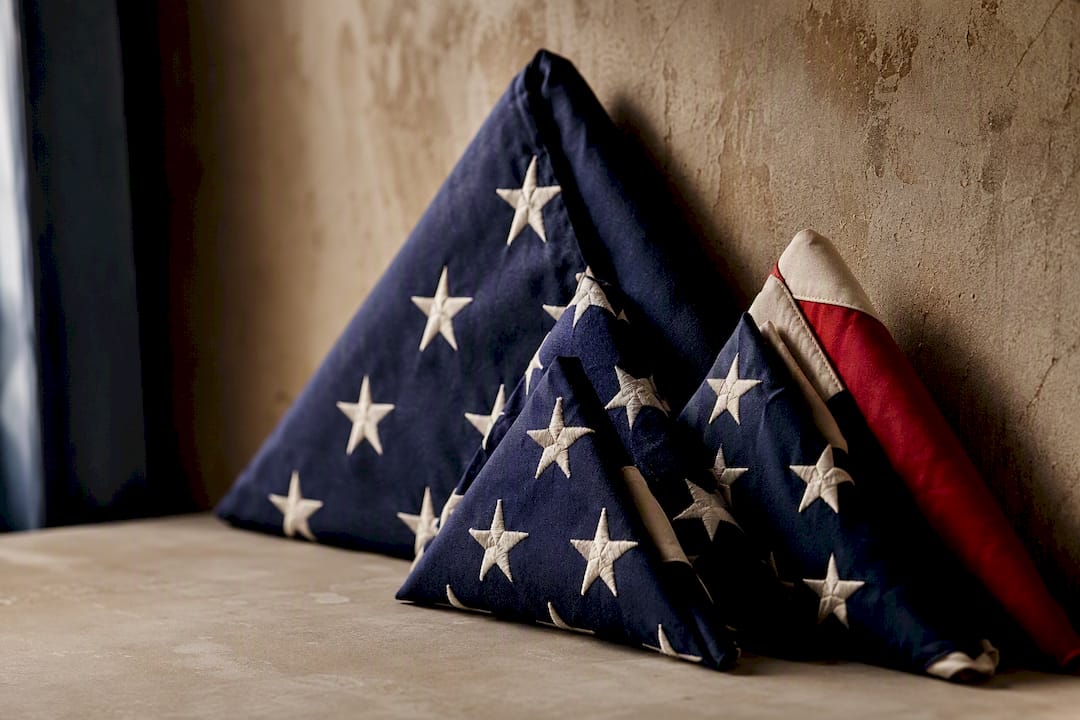
Military funerals use the official 5’ x 9½" burial flag to drape the casket, which is folded into the familiar triangle and presented to next of kin as part of the funeral honors.