A nylon American flag flown from sunrise to sunset in fair weather lasts about 90 days on average — the working estimate the U.S. Government has published for years — and the same flag left up 24 hours a day can wear out in half that time or less. But the honest answer in 2026 is a range, not a single number: a sheltered porch flag in a mild climate can outlast that average by months, while a big flag on a coastal pole in steady wind can shred long before 90 days. Wind, sun, flag size and your care habits decide where your flag lands in that range.
If your current flag is fraying ahead of schedule, the fix is usually more fabric, not less flying time — heavier sewn and embroidered builds hold up far better than light printed nylon on a busy pole. Start with the Ultimate Flags outdoor American flags collection to compare sewn, embroidered and printed builds side by side, then match the material to your wind.
- A nylon American flag flown daily in fair weather lasts about 90 days on average.
- Flown 24 hours a day, expect roughly half that — about 30 to 45 days.
- Wind, sun exposure and flag size decide the real number, not the nylon itself.
- Rotating two flags and checking the fly end monthly add the most extra life.

How long does a nylon American flag last outdoors?
The government figure of about 90 days assumes a standard 3×5 ft nylon flag flown only in daylight under favorable weather, then repaired or retired when the fly end starts to fray. Leave it up around the clock and the typical lifespan drops to one half to one third as long — call it 30 to 45 days of daily flying for most residential poles in 2026. Those are averages for ordinary conditions, and they shift with every factor in the table below.
| How you fly it | What to expect |
|---|---|
| Sunrise to sunset, fair weather, standard 3×5 ft size | About 90 days on average |
| Flown 24 hours a day | Roughly one half to one third as long — about 30 to 45 days |
| Large flag (6×10 ft and up) on an exposed pole | Shorter than average; big flags wear out faster |
| Taken down in storms, washed and rotated with a second flag | Noticeably longer than the average |
The 90-day estimate comes from long-standing U.S. Government guidance that flag retailers still quote in 2026. It is not a warranty — it is a planning number, useful mainly for deciding when to inspect, repair or replace.
What wears a nylon flag out fastest
- Wind, especially at the fly end. The free outer edge whips thousands of times a day; on a windy site that whipping frays stitching and shreds corners long before the rest of the flag fades.
- Sunlight. Nylon takes dye beautifully, but ultraviolet light still fades red and navy over a season of full sun.
- Flag size. A 6×10 ft flag flies higher into faster wind and carries more fabric edge to whip, so larger flags generally have a shorter lifespan than smaller ones.
- Storm exposure. A flag left out through gales and thunderstorms loses weeks of life in a single bad afternoon.
- Neglect. Skipping the wash, the inspection and the small repairs turns tiny frays into runs that cannot be fixed.
Nylon or polyester: which flag lasts longer outdoors?
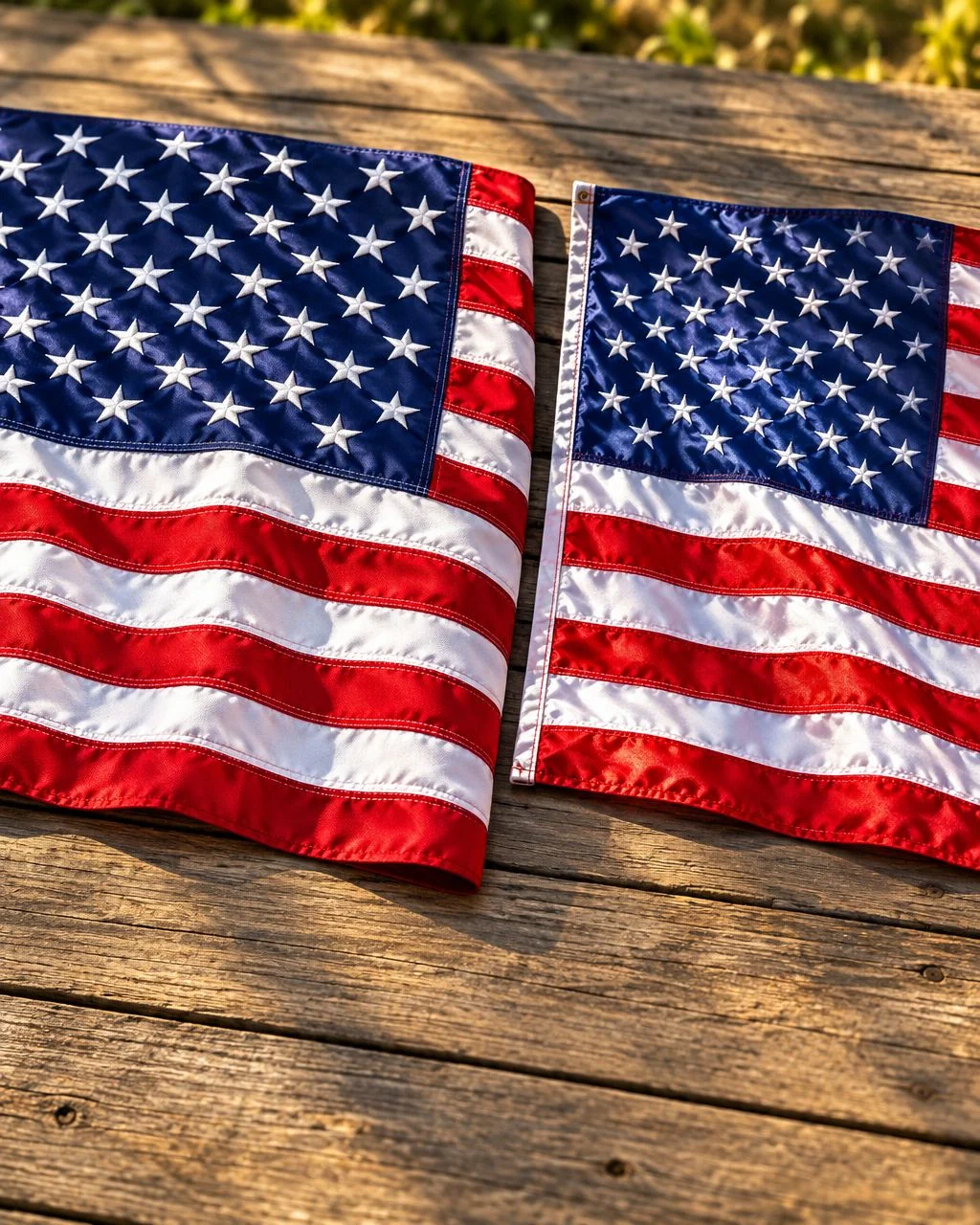
If lifespan is the only thing that matters, heavy 2-ply polyester wins — sewn polyester flags handle sustained high wind better than any nylon build, which is why they are the standard on exposed hillsides, coastlines and tall commercial poles. Nylon answers with flyability and convenience: it is the lightest common flag fabric, so it flies in a faint breeze that leaves polyester hanging limp, it dries fast after rain, and its colors read bright from a distance. For most home and storefront poles in ordinary wind, nylon's shorter lifespan is a fair trade for a flag that actually looks alive every day. You can compare both builds in the Ultimate Flags American flag collection before you commit.
Why bigger flags and taller poles wear out sooner
Wind speed increases with height, and a bigger flag catches more of it. A 3×5 ft flag on a 20 ft pole swings in relatively gentle air; a 6×10 ft flag on a 30 to 40 ft commercial pole hangs in wind that moves measurably faster, and its much longer fly end whips harder with every gust. That is why the 90-day planning number assumes a standard flag — and why owners of large flags should step up the inspections. Retailers of oversized flags recommend checking sizes of 10×15 ft and up at least twice a month.
How to make a nylon flag last longer in 2026
Care, not fabric, is where most people leave lifespan on the table. Five habits stretch a nylon flag well past the 90-day average:
- Take it down in severe weather. Storms and sustained high wind are what kill flags. The U.S. Flag Code likewise expects flags to come in during inclement weather unless they are all-weather builds — most 2026 nylon flags are, but even all-weather fabric wears faster in a gale.
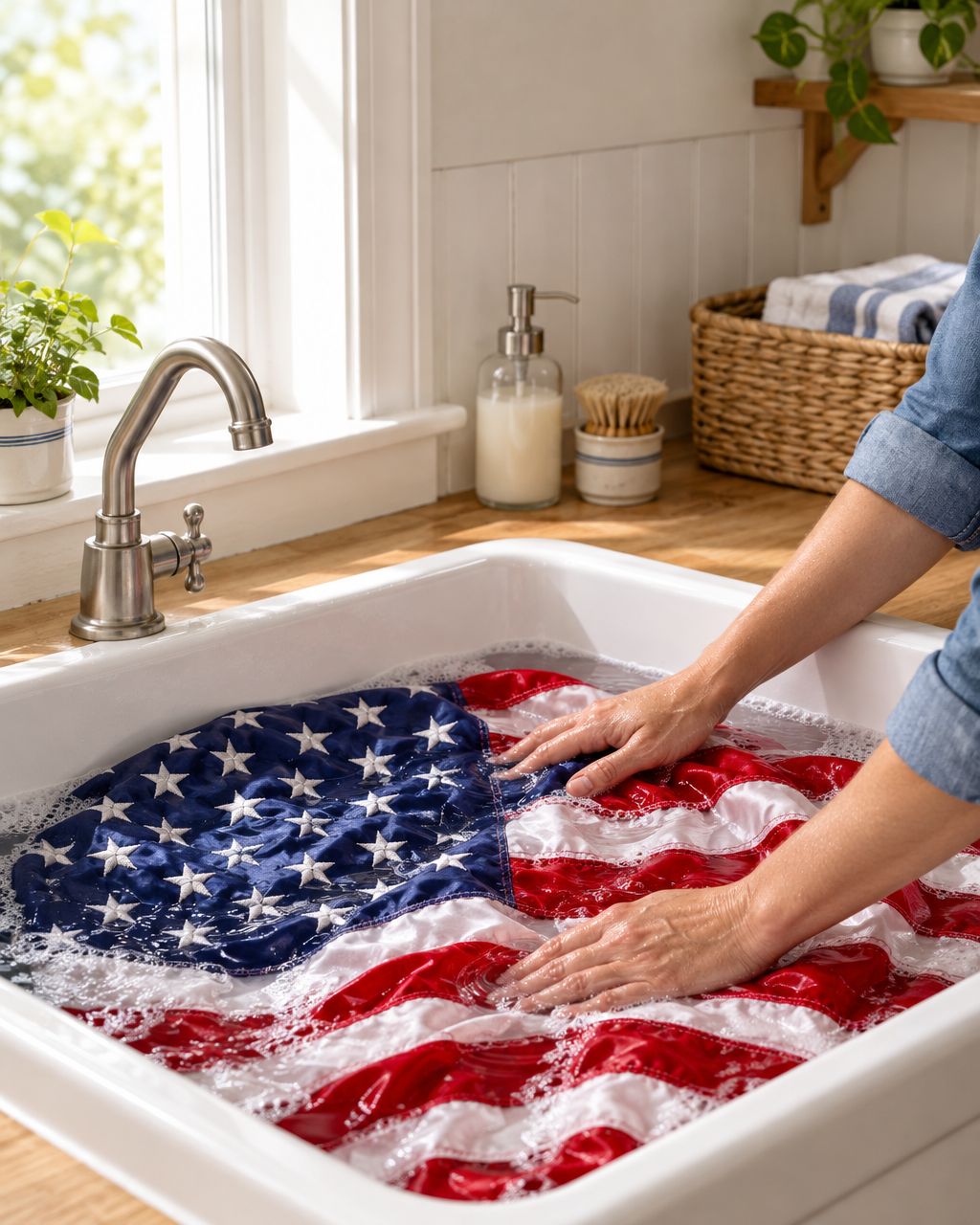
- Wash it when it looks dirty. Mild soap and lukewarm water by hand, then air dry. Dirt and pollution grind at the fabric, and a clean flag simply lives longer. Never machine-dry nylon — heat distorts it.
- Rotate two flags. Swap between two flags every couple of months so each one rests. Owners who rotate consistently report the biggest lifespan gains.
- Inspect the fly end monthly. Early fraying can be trimmed and re-hemmed; a shredded corner cannot. Catch it small and you add weeks.
- Repair small tears promptly. A few minutes with a needle and thread stops a run from spreading across a whole stripe.
When should you replace a nylon American flag?
Replace the flag when repair stops being honest: a fly end frayed past re-hemming, stripes faded to pink, holes opening in the middle of the field, or a ragged silhouette that makes the whole display look neglected. Tradition calls for retiring a worn U.S. flag with dignity — many American Legion posts and scout troops run flag retirement ceremonies and will accept old flags. Because a nylon flag's typical service is measured in months, budgeting a replacement every flying season is normal, not a sign you bought poorly.
Related questions
Does rain damage a nylon flag?
Rain alone does little damage — nylon is a non-absorbent, quick-drying fabric, which is exactly why it is the standard all-weather material. The Flag Code allows an all-weather flag to stay up in rain; wind and storm stress, not wetness, are what shorten a flag's life.
How long does a printed nylon flag last compared to a sewn one?
The fabric lifespan is similar, but printed ink fades sooner than embroidered stars and sewn stripes under full sun. A sewn or embroidered nylon flag is the better choice for a display that flies every day of the year; printed nylon suits seasonal and promotional duty.
What is the most durable American flag material?
Heavy sewn 2-ply polyester is the most durable outdoor flag material, especially in sustained high wind. Nylon is the most flyable and quickest to dry, and cotton — the traditional heritage fabric — is best reserved for indoor and ceremonial display.
FAQ
How long does a nylon American flag last outdoors?
About 90 days on average when flown from sunrise to sunset in fair weather, based on long-standing U.S. Government guidance. Wind, sun, flag size and care push the real number up or down from there.
How long does a flag last if flown 24 hours a day?
Roughly one half to one third as long as a daylight-only flag — about 30 to 45 days. Continuous flying more than doubles the whipping and sun exposure the fabric takes.
Is nylon or polyester better for an outdoor American flag?
Nylon flies in light wind and dries fast, which makes it the best everyday choice for most poles. Heavy 2-ply polyester lasts longer in sustained high wind, so it suits exposed coastal and hilltop sites.
Why does an American flag fray at the fly end first?
The free outer edge whips in the wind thousands of times a day, stressing the stitching there more than anywhere else. Inspecting and trimming the fly end early is the single best way to extend a flag’s life.
How can I make my nylon flag last longer?
Take it down in severe weather, wash it with mild soap and lukewarm water, rotate between two flags, and repair small frays promptly. Owners who follow these habits reliably beat the 90-day average.
Do larger flags wear out faster than smaller ones?
Yes. Larger flags generally have a shorter lifespan because they sit higher in faster wind and carry more fabric edge to whip, which hammers the fly ends harder.
Can a nylon flag stay out in the rain?
Yes — nylon is non-absorbent and quick-drying, so most nylon flags qualify as all-weather flags under the U.S. Flag Code. Rain is harmless; wind storms are what damage the flag.
One last thing
Walk your neighborhood on a breezy afternoon in 2026 and look at the flags that still show sharp red: they are almost always the ones that came down during the last storm. Fabric choice matters, but the owners who beat the 90-day average all do the same two things — they bring the flag in when the weather turns ugly, and they trim the fly end the week it starts to fray. At Ultimate Flags we see it every season: the same flag can last three months or nearly a year, and the difference is almost never the flag.
Related guides