Yes — there is no federal law and no state law in the United States that makes it illegal to display a Confederate battle flag on property you own or rent as your home. The First Amendment keeps the government from banning a flag because of its message, and no statute has ever criminalized the design itself. The catch is that homeowners associations, landlords and private employers are not the government, and their rules can still cost you — the federal law that shields the American flag from an HOA ban does not cover the battle flag. If you’re still choosing a flag, see our full range of rebel flags for sale.
- No federal or state law bans the design on your own property.
- Government may only apply neutral rules like pole height or setbacks.
- HOAs can restrict it: the 2005 federal act protects only the U.S. flag.
- Leases and employer policies can force removal — they are private rules.
- Texas v. Johnson (1989) and Virginia v. Black (2003) anchor the legal backdrop.

Is it legal to display a Confederate flag on private property?
Yes, on the law as it currently stands. Neither Congress nor any state legislature has passed a statute that forbids the design, and the courts have held for decades that the government cannot punish a flag for the message it carries. Your obligations come from elsewhere: private agreements you signed and neutral local rules that treat every flagpole in town the same.
Here is who can and cannot stop you:
| Who | Can they make you take it down? |
|---|---|
| Federal government | No — no federal law bans the design on private property |
| City or county | Only neutral rules that apply to every flag: pole height, setbacks, permits |
| HOA or condo association | Yes, for the battle flag — the 2005 act protects only the U.S. flag |
| Landlord | Yes, if the lease bans flags or specific designs |
| Employer | Usually yes on company property, because the company is a private party |
What the First Amendment actually protects
The Supreme Court has treated flags as speech since long before today's debates. In Texas v. Johnson (1989), the Court held that even burning the American flag is protected symbolic speech — the government may not punish a person for the message an act or object communicates. In Virginia v. Black (2003), the Court struck down a Virginia law against cross burning to the extent it was written to single out one viewpoint, holding that a law aimed at a particular message fails where a neutral, generally applicable rule would serve. And in Walker v. Texas Division, Sons of Confederate Veterans (2015), the Court held that state-issued specialty license plates are government speech, so Texas could refuse the battle flag design on its own plates.
Read together, the three cases draw one clean line that still holds Today: the government cannot make an example of your flag because of what it stands for, but it can enforce rules that apply to every flag and every pole equally — and it keeps full control over what appears on government property and state-issued materials.
The Freedom to Display the American Flag Act of 2005 — and where it stops
Congress did pass one flag law aimed at homeowners associations: the Freedom to Display the American Flag Act of 2005 (Public Law 109-243). It stops an HOA or condo association from adopting or enforcing rules that prevent a resident from displaying the American flag outdoors on residential property.
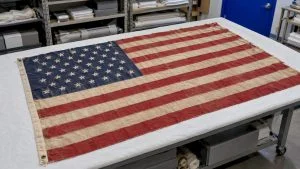
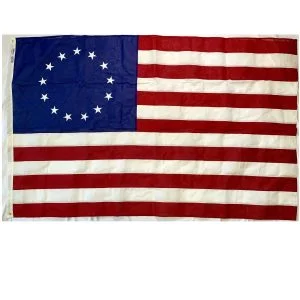
Notice what the law does not say. It protects the flag of the United States and no other design. A battle flag, a state historical flag, a Gadsden or a Bonnie Blue — all of them sit outside the act, which means your association is free to allow the U.S. flag and prohibit every other banner, and many do.

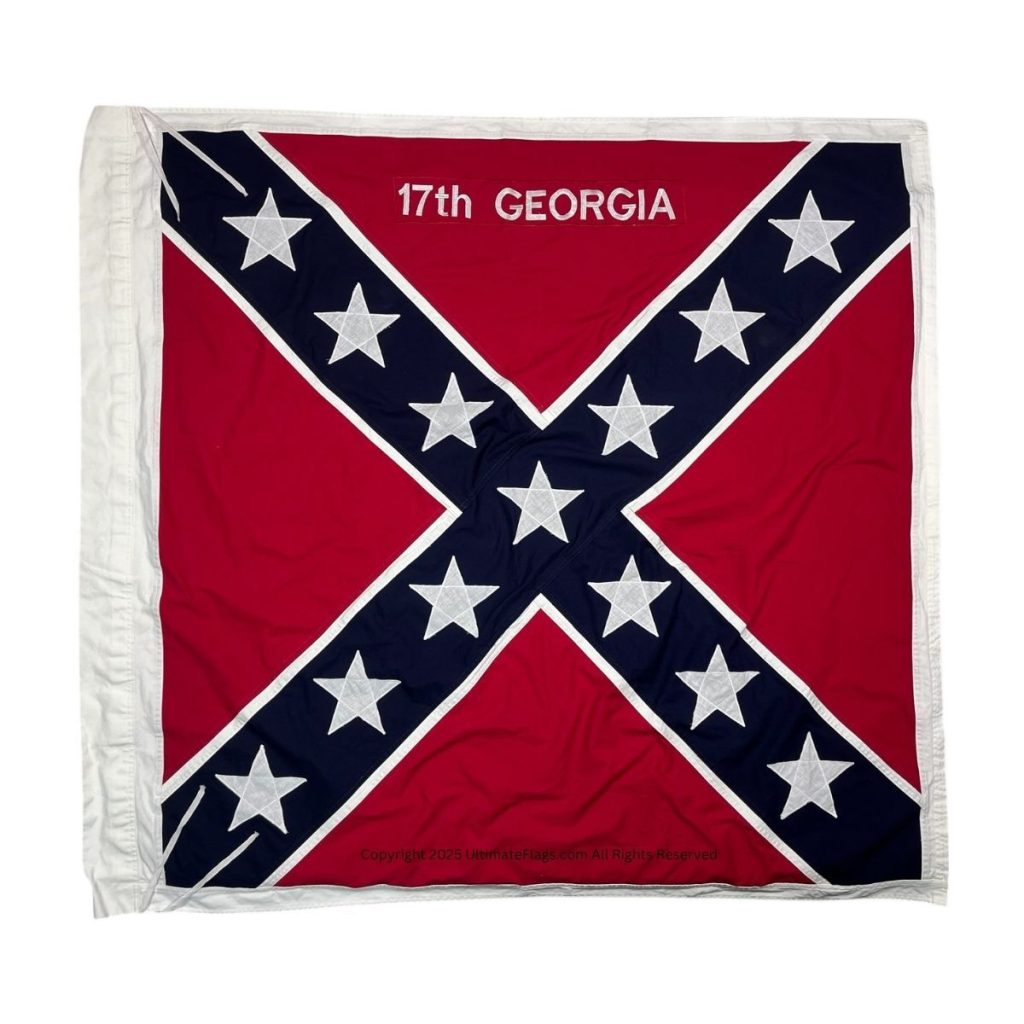
That 52 by 52 inch cotton replica, like the regimental flags carried in the 1860s, is the pattern most collectors display indoors — which is also where association rules bite hardest, in hallways, balconies and shared walls.
Where the rules bite: HOAs, leases and employers
Private restrictions do the work that the law cannot. In practice, removal demands almost always trace back to one of these:
- HOA covenants. Most associations can ban exterior flagpoles outright, cap pole height, or limit flags to the American flag and seasonal banners. Those rules are contracts you agreed to when you bought.
- Lease clauses. A landlord can write flags out of the lease entirely. If you signed it, the ban is enforceable between private parties no matter what the First Amendment says about the government.
- Condo documents. Balconies, entry doors and windows facing shared elements are usually governed by association rules even inside your own unit.
- Employer policies. On company property — office, worksite, company vehicle — the employer is a private party and can set its own display rules.
- Rental communities and campgrounds. The same logic applies: private management, private rules.
The practical move is the same one a flag store owner would give you at the counter: read the covenants or lease before you dig the post hole, not after the certified letter arrives.
Zoning and flagpole rules that apply to any flag
Local governments regulate poles, not messages. Typical content-neutral rules cover pole height caps, side-yard setbacks, and building permits above a certain height. A rule like "no pole over 25 feet in a residential district" is lawful because it applies to the American flag, the state flag, and every other banner equally.
Size the flag to the pole while you are at it. The quarter rule is the store standard: the flag's fly length should be roughly one quarter of the pole height, so a 20-foot pole calls for a flag with about a 5-foot hoist — a 3 by 5 foot flag flies well on a 20-foot pole, and a 5 by 8 goes up as the pole grows. Get that ratio right and a neutral pole rule will rarely bother you.

The same display logic holds across the historical families: a Bonnie Blue in double-nylon suits an outdoor pole in all weather, while cotton and fringed replicas belong indoors or under cover.
Displaying it well: plain advice for collectors
Whatever you fly, fly it accurately. The rectangular battle flag most people picture was never one single design — the Army of Northern Virginia carried square patterns while the western armies carried rectangles, and our guide to why Confederate battle flags have different shapes walks through the differences. Knowing which pattern you have matters to collectors and keeps a reproduction honest about what it is.
A reproduction sold today is a modern sewn copy, not a wartime relic, and labeling it that way — indoors on a stand, in a case, or on a pole in the yard — is both good history and good neighbor practice. At Ultimate Flags, cotton 52 by 52 inch replicas with pole sleeves and ties are built for indoor ceremonial display, while double-nylon embroidered flags are the all-weather choice for a yard pole. If you are still choosing the piece itself, see our 51 x 51 inch cotton infantry battle flag and match the fabric to where it will hang.
Why the answer varies
Same flag, same street, different outcomes — the variables that decide it:
- Who is the enforcer. Government is bound by the First Amendment; an HOA, landlord or employer is not.
- Which flag. The U.S. flag carries statutory protection in HOAs; every other design relies on your private agreements.
- Where on the property. A pole in your yard is governed differently from a balcony door, a window, or a shared clubhouse.
- State add-ons. Several states layer extra protections on top of the 2005 act for the U.S. flag in condominium settings — again, that protection does not extend to historical battle flags.
- The paperwork you signed. Covenants, lease clauses and employee handbooks do the enforcing.
Related questions about flag display rules
Can my HOA make me take down a Confederate flag?
Yes. The Freedom to Display the American Flag Act of 2005 protects only the U.S. flag from HOA bans, so an association can prohibit every other design. The ban runs through the covenants you agreed to, not through criminal law.
Is it legal to display a Confederate flag on private property?
Yes. No federal or state law bans the design on private property. Your only limits are private rules like HOA covenants and leases, plus neutral zoning rules that apply to every flagpole.
What did the Supreme Court decide about Confederate flag license plates?
In Walker v. Texas Division, Sons of Confederate Veterans (2015), the Court held that specialty plates are government speech. A state can refuse the design on its own plates while you remain free to fly it at home.
Does the U.S. Flag Code make any flag display illegal?
No. The Flag Code is advisory etiquette with no penalties, and it addresses the American flag only. It has never been enforceable law against a private citizen.
Can my landlord ban flags at a rental house?
Yes. A lease is a private contract, and a landlord can restrict flag display within it. The First Amendment limits the government, not private parties.
Can I fly a Confederate flag at a courthouse or public school?
Generally no. Display on government property is government speech, and public agencies control it. The legal freedom discussed here applies to your own private property.
One last thing
The flag on the pole and the law on the books changed at different speeds. The battle flag most people picture was a military banner adopted in 1861-1862, not a national flag, and the legal landscape around it has stayed essentially unchanged since the 2015 license-plate decision — private property display remains lawful, and private rules remain the real gatekeeper. State and city codes do get amended, so before you set the pole, give your local code a fresh read for anything new, and label every reproduction for what it honestly is.