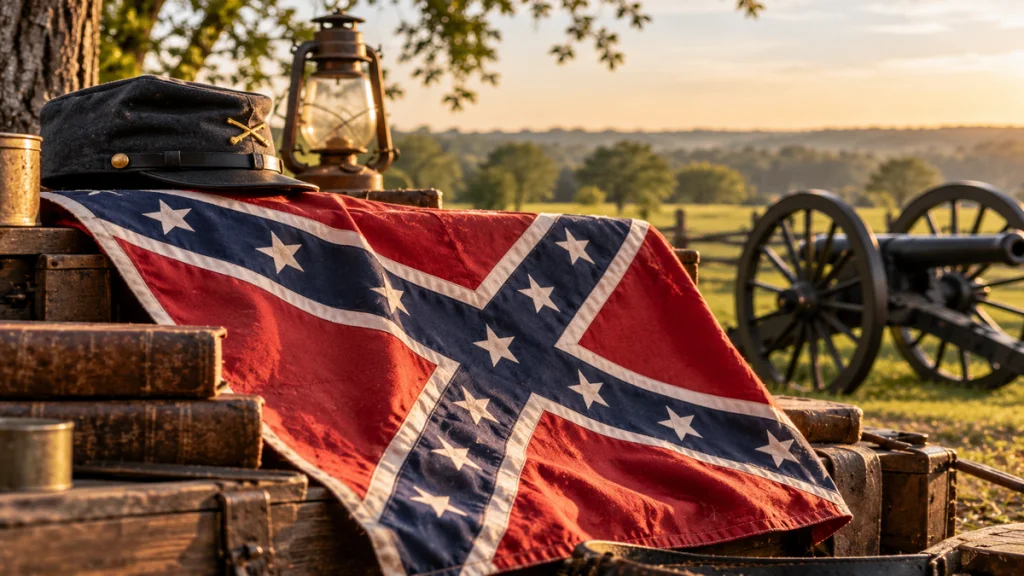
The familiar red banner with a blue diagonal cross and white stars is one of the most recognizable symbols associated with the American Civil War. Although many people know its appearance, its historical origins and the meanings attached to it are often misunderstood.
The term “what is a rebel flag” commonly appears in searches about the Confederate battle banner used by Southern military forces during the Civil War. The term also applies to several related designs associated with the Confederate States of America.
Its meaning has changed over time. Some Americans associate the banner with Southern heritage, family ancestry, or military remembrance. Others recognize its connections to slavery, racial segregation, and white supremacy.
Learning about the flag’s origins, different designs, and historical uses helps explain its lasting place in American history. For collectors, veterans, military families, reenactors, and heritage enthusiasts, identifying the correct design supports the preservation of historical traditions and helps when selecting historically inspired rebel banners for meaningful displays connected to personal and family history.
The Rebel Flag’s Origins in the American Civil War
The rebel flag originated during the American Civil War (1861–1865), when eleven Southern states seceded to form the Confederate States of America. Their government sought to preserve slavery, a central cause of secession.
Confederate forces needed banners to identify units and distinguish them from Union troops. The Confederacy adopted the Stars and Bars in March 1861, featuring red, white, and red stripes with a blue canton. Its resemblance to the United States flag caused confusion on battlefields, particularly amid smoke and poor visibility.
Confederate commanders supported a separate battle design featuring a red field crossed by a blue diagonal saltire outlined in white, with white stars representing the states claimed by the Confederacy.
The Army of Northern Virginia, commanded for much of the war by General Robert E. Lee, used a square version. Its contrasting colors helped soldiers identify formations and rally around regimental color guards. Although never adopted as the Confederacy’s standalone national banner, it became the most recognizable Confederate symbol.
Battle flag designs varied between units. While the Army of Northern Virginia commonly used square banners, other formations carried rectangular versions.
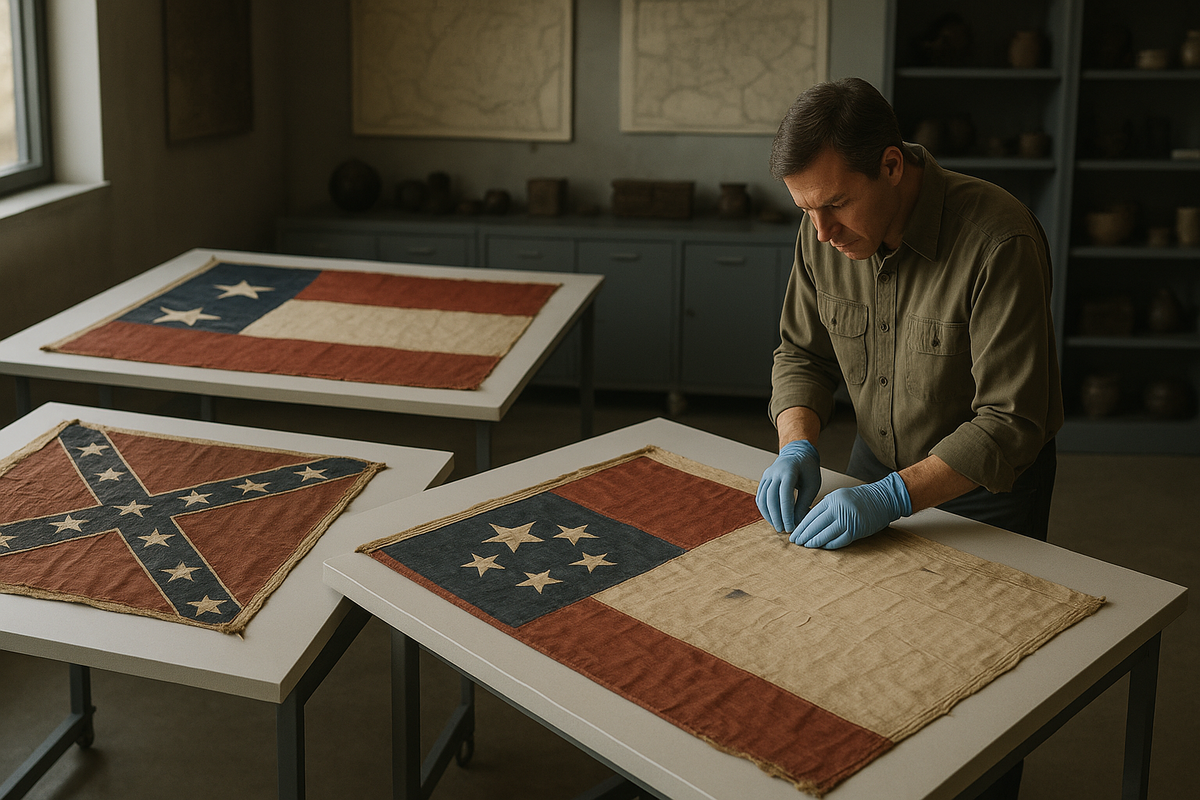
Some flags featured regimental names, numbers, or markings, with differences in materials and dimensions. The familiar rectangular design is associated with Confederate naval flags and later reproductions.
After the war, veterans’ organizations displayed Confederate battle imagery at reunions and memorials. Publications and commemorative materials increased its visibility, connecting the design with ancestry, regional traditions, and military history for some families.
Popular representations of Southern history often featured the battle-cross design instead of Confederate national banners. Historical photographs, museum collections, and reproductions show these variations, helping collectors select accurate designs for reenactments, heritage events, and private displays.
Understanding Different Confederate Flag Designs
The Confederacy used several national and military banners, each with a distinct purpose and appearance. Alongside the familiar battle emblem, it adopted three successive national flags.
The First National Flag, called the Stars and Bars, appeared in 1861 with three horizontal stripes and a blue canton containing white stars. The Second National Flag, or Stainless Banner, followed in 1863, featuring the battle emblem on a predominantly white field.
The Third National Flag, adopted in 1865, added a vertical red stripe to the Stainless Banner design to address earlier identification problems.
| Historical Design | Period of Use | Appearance | Historical Purpose |
|---|---|---|---|
| First National Flag (Stars and Bars) | 1861–1863 | Red, white, and red stripes with a blue canton and white stars | Official Confederate national flag |
| Army of Northern Virginia Battle Flag | 1861–1865 | Square red field with a white-edged blue diagonal cross and white stars | Battlefield identification |
| Second National Flag (Stainless Banner) | 1863–1865 | Predominantly white field with the battle emblem in the canton | Official Confederate national flag |
| Third National Flag | 1865 | Stainless Banner design with a vertical red stripe | Final Confederate national flag |
| Confederate Naval Jack | Civil War era | Rectangular red banner with a diagonal cross and stars | Naval identification |
The terms Confederate flag and rebel flag aren’t always interchangeable. National banners differed from military battle flags, and individual regiments sometimes carried distinctive designs.
Collectors should consider historical accuracy, materials, size, and intended use. Printed polyester suits casual outdoor displays, embroidered nylon offers detailed construction, and cotton reproductions may suit historically styled reenactments.
Original wartime banners also differed in fabric, stitching, dimensions, and markings because of military requirements and available materials.
Several details help identify historical designs:
- Examine the shape, dimensions, and star arrangement.
- Determine whether the banner served a national, military, or naval purpose.
- Look for regimental markings, inscriptions, or distinctive borders.
- Compare the design with documented historical examples.
- Verify an artifact’s provenance before assigning it to a military unit.
- Distinguish wartime originals from later reproductions.
Modern reproductions can accurately represent historical patterns without being original Civil War artifacts. This distinction helps collectors assess historical authenticity and value.
What the Rebel Flag Means in American Culture
The rebel flag carries different meanings depending on its historical setting, the person displaying it, and the audience interpreting it. For many Southern families, the banner preserves a connection to ancestors who lived through the Civil War or served in Confederate military units. It can also represent regional traditions, family stories, and historical customs passed between generations.
Heritage enthusiasts may display Confederate-era flags as reminders of family ancestry or their interest in Southern history. Others recognize the designs as part of the broader story of American military traditions. In popular culture, the image has also appeared as a general symbol of rebellion, independence, or opposition to authority.
These interpretations developed through regional traditions, personal expression, entertainment, and merchandise. Over time, the familiar design became associated with identities and cultural meanings extending beyond its original military use.
The historical record, though, establishes a direct connection between Confederate symbols and the defense of slavery. Confederate leaders openly identified the preservation of slavery as a central reason for secession. Enslaved Black Americans were treated as property under the system the Confederacy sought to protect, and that history remains inseparable from the banner’s origins.
The flag’s associations with white supremacy and segregation continued to develop after the Civil War. During the twentieth century, Confederate imagery appeared prominently in political movements opposing racial integration and civil rights. Some segregationist organizations and political figures displayed the battle emblem while resisting federal desegregation efforts.
White supremacist groups also adopted Confederate imagery, reinforcing its association with racial exclusion and intimidation. These later uses help explain why many Americans regard the symbol as offensive or threatening, regardless of an individual owner’s intentions.
An image displayed to honor a family ancestor may be interpreted very differently by someone whose family experienced slavery, segregation, or racial violence. People bring different family histories and personal experiences to Confederate symbols. Both historical records and personal intentions shape how people interpret the banner’s different historical and cultural meanings, helping explain why it remains controversial.
The Confederate flag continues to appear in discussions about monuments, historical memory, public property, and freedom of expression. News coverage and social media often focus on disagreements over whether the banner should appear in government buildings, schools, community events, or private spaces.
Some people argue that historical displays should remain visible because they document the country’s past. Others believe prominent public displays can appear to celebrate the Confederate cause or disregard the experiences of Black Americans.
A distinction exists between preserving historical evidence and presenting a symbol as an object of public honor. Museums and educational collections can provide the background needed to explain the flag’s military origins and later political associations. A public display without explanation may communicate a different message.
Clear historical information helps people recognize the difference between preserving an artifact, honoring family ancestry, expressing personal beliefs, and endorsing the political causes associated with a particular symbol.
How Historical Flags Are Collected and Displayed
Historical flags are collected for military research, family genealogy, reenactments, military remembrance, heritage celebrations, and educational exhibitions. Veterans, military families, and collectors use them to recognize service, preserve family history, and commemorate American events.
Collectors may focus on specific military campaigns or displays showing how banners changed over time. A Confederate-era collection might include reproductions of the Stars and Bars, the Stainless Banner, and regimental colors, illustrating differences between national and battlefield flags.
Reenactment groups use reproductions to portray military formations accurately. Historical collections benefit from labels identifying when a banner was used, who carried it, and what it represented. Confederate displays should also address secession, slavery, and the flag’s later political uses.
For heritage gatherings, collections, or reenactments, historical accuracy and construction matter. Durable materials, appropriate dimensions, and quality stitching help ensure a reproduction suits its intended display.
Display location also affects interpretation. A private military history collection provides different context from a banner outside a public institution. Historical flags may express family identity, regional heritage, or personal beliefs in homes and historical events.
Schools, workplaces, and community facilities serve diverse audiences, making clear historical explanations and consideration for viewers especially important.
Collectors and organizations should consider these factors when displaying historical flags:
- Identify the design and its historical period accurately.
- Explain the Confederate government’s connection to slavery.
- Consider how others may interpret the display.
- Avoid displays intended to intimidate or promote racial hatred.
- Use proper storage, mounting, and lighting to protect historical materials.
- Check property rules, event policies, and local regulations.
In the United States, displaying a Confederate banner on private property is generally protected by the First Amendment against government restrictions based on its message. Threats, harassment, property rules, and certain government-controlled settings may affect what is permitted. Private organizations and property owners may also establish display policies, subject to applicable law.
Collectors can preserve historical flags by documenting their backgrounds, using suitable mounting materials, and protecting them from prolonged sunlight.
The Rebel Flag’s Place in American Historical Memory
The familiar battle-cross design remained visible long after the Confederacy ended. Following 1865, Confederate veterans’ associations held reunions and memorial ceremonies featuring wartime banners. These events preserved military records and personal accounts while shaping public views of the conflict.
Some commemorations promoted the Lost Cause interpretation, portraying the Confederacy favorably while minimizing slavery’s role in secession. This influenced monuments, textbooks, and Southern historical traditions for generations.
The flag later appeared in advertising, entertainment, and clothing, often symbolizing rebellion rather than a military unit. Popular media spread this association beyond the South.
For some families, the design represented ancestry, regional traditions, or independence. Its use in segregationist politics and racist movements also shaped its conflicting meanings.
Collectors, veterans’ organizations, museums, and historical societies preserve flags and historical records through documentation and exhibitions. Unlike preservation, public celebration can communicate support for a particular cause.
Museums may display Confederate banners alongside Union artifacts, slavery records, and personal accounts to provide historical context. Displaying the same design as an official civic symbol can convey a different message, especially to communities affected by segregation.
Original regimental banners may reveal manufacturing methods, battlefield damage, or military ownership. Modern reproductions serve educational purposes, reenactments, and private collections without claiming to be wartime artifacts.
Accurate identification helps collectors distinguish documented history from later mythology and preserve connections to historical events.
Find Historically Inspired Flags at Ultimate Flags
Ultimate Flags is an American-owned, family-operated retailer offering Confederate, Civil War, military, and historical flags for collectors, reenactors, veterans, and Southern heritage enthusiasts. Its selection includes historical reproductions, specialty designs, and flags that represent personal or family heritage.
Customers can choose from printed battle flags, embroidered nylon designs, and cotton reproductions. Printed flags suit everyday displays, embroidered nylon offers detailed stitching, and cotton designs appeal to collectors and reenactors seeking a traditional appearance.
Since 1997, Ultimate Flags has supplied historical and patriotic flags with a focus on quality construction and reliable service. Customers can browse its Confederate and Rebel Flags collection to compare designs, materials, sizes, and construction styles for private collections, reenactments, or heritage displays.