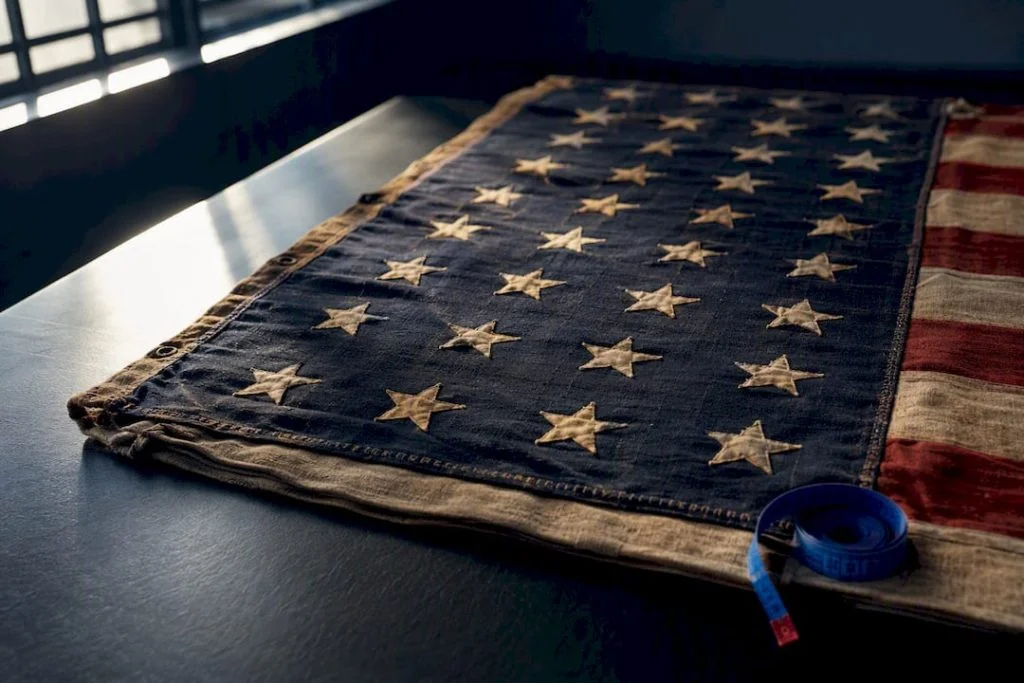
A 48-star American flag typically sells for $40 to $300, with exceptional examples reaching $600 or more at auction. The two forces that decide where your flag lands on that spectrum are condition and provenance. A flag with intact stitching, minimal staining, and a documented military or manufacturer origin can command multiples of what an unmarked, moth-eaten example brings in.
TL;DR:
- Flags with proven military or civic organization markings and documented history can significantly increase in value, sometimes reaching over $600.
- The flag’s condition, including fabric integrity, stitching, and minimal staining, usually outweighs age in determining market price, especially for flags from later years.
- Sale prices vary widely by channel, with auction houses and specialized collectors offering higher prices for flags with clear provenance, while general marketplaces often undervalue them.
- Oversized flags and those made from wool bunting are rarer and tend to fetch higher prices, especially if well-preserved and tied to historic events.
- Proper preservation, thorough documentation, and strategic selling or donation can maximize a flag’s value and historic significance.
Table of Contents
- Understanding 48 Star Flag Value: Price Bands and Real Sale Examples
- Assessing Condition: A Step-by-Step Inspection Checklist
- Provenance and Markings: What Turns an Old Flag Into a Collectible
- Where to Sell or Donate Your 48-Star Flag
- Preserving Your Flag Without Losing Value
- How Flag Size and Material Affect Resale Price
- Why the Flag Changed and What It Means for Collectors Today
- Selling, Donating, or Keeping: A Publisher’s Take
- Protecting or Replacing Your Flag With Ultimate Flags
- Sources
- FAQ
Understanding 48 Star Flag Value: Price Bands and Real Sale Examples
Every 48-star flag carries the same basic story: forty-eight stars, thirteen stripes, stitched sometime between 1912 and 1959. What separates a $50 flag from a $500 flag is everything that happened to it after it left the factory or the sewing circle.
Pro Tip: Before you assume your flag is rare, remember that 45, 46, and 48-star flags are among the most common variants in the antique flag market. Abundance keeps baseline prices modest unless provenance changes the equation.
Here is how the market breaks down:
- Low band ($40–$100): Cotton or synthetic-blend flags with visible wear, faded color, missing grommets, or no identifying marks. Most estate-sale and thrift-store finds fall here.
- Typical band ($100–$300): Well-preserved wool or cotton flags, often with visible manufacturer tags, correct star pattern, and solid seams. Several price guides place the bulk of clean, mid-size examples squarely in this range.
- High band ($300–$600+): Flags with confirmed military service, YMCA or civic organization stamps, or a documented link to a historic event. Auction house records show lots in this territory when provenance is airtight and condition backs it up.
Sale channel matters as much as the flag itself. A flag listed on a general marketplace with a vague description routinely undersells the same flag consigned to a specialty militaria auction with full photographs and a written provenance statement. Format counts too: a timed online auction with competing bidders often outperforms a fixed “buy it now” listing, simply because bidding wars push prices past what a single buyer would offer upfront. Conservative appraisal estimates still cluster near that $40 to $300 midpoint for flags lacking documentation, which is the reality most owners should expect before hunting for the exception.
Assessing Condition: A Step-by-Step Inspection Checklist
Condition drives value more than most owners realize. A flag from 1917 in rough shape can sell for less than a cleaner flag from 1945, because collectors buy what they can display and preserve, not just what is oldest.
Work through your flag methodically:
- Measure it. Record exact dimensions in inches and note the fabric (cotton, wool bunting, or synthetic blend).
- Count and inspect the stars. Confirm all 48 are present and check whether they’re arranged in the standard 6×8 grid or an irregular pattern.
- Examine the stitching. Machine-stitched seams, hand-finished edges, and reinforced corners all tell you something about age and manufacturer.
- Check for damage. Look for moth holes, water staining, sun fading, tears near the fly end, and any prior repairs.
- Photograph everything. Capture the full flag, close-ups of damage, and especially the canvas hoist, where markings often hide.
- Document your findings in writing before you list the flag or approach an appraiser.
Moth holes and heavy fraying can cut value by half or more, especially when they touch the star field. Staining is less punishing if it’s confined to the edges, but a repair done with modern thread or a mismatched patch tells buyers the flag has been altered, which almost always drags the price down rather than up. For a broader sense of what collectors weigh when judging authenticity and rarity, Ultimate Flags’ collector notes go deeper into how wear patterns get read by serious buyers.
Provenance and Markings: What Turns an Old Flag Into a Collectible
An unmarked 48-star flag is a commodity. A marked one is a story, and stories are what collectors pay for.
Start your search for markings at the canvas hoist, the reinforced strip sewn along the edge closest to the pole. Manufacturers frequently stamped their name, a patent date, or a size number here. Sewn-in labels and tape along the same edge sometimes carry military unit designations, government contract numbers, or civic organization names.
Documentary provenance matters just as much as physical stamps:
- Photographs showing the flag in use, whether at a parade, a funeral, a courthouse, or a military post
- Receipts or bills of sale tying the flag to a specific purchaser or organization
- Unit logs or muster records referencing flag issue or retirement
- Institutional records from a church, school, VFW post, or YMCA chapter that once owned the flag
Original manufacturer stamps or military markings on the hoist are among the strongest value drivers a 48-star flag can carry, often lifting a flag from the low band straight into high-band territory. A flag tied to a named regiment, a specific YMCA chapter, or a documented civic event routinely outsells an identical, unmarked flag by a wide margin. If you inherited a flag with any paper trail attached, that paperwork is worth more to a buyer than an extra decade of age.
Where to Sell or Donate Your 48-Star Flag
Choosing a sales channel is really a choice between reach, cost, and control.
- National militaria or Americana auction houses offer the widest pool of serious collectors and the best shot at a high-band price, but they typically take a commission and may reject flags without documented interest.
- Niche flag or antique auctions draw a smaller but more knowledgeable audience, often producing fair prices with lower fees than the big houses.
- Online marketplaces like eBay or Etsy give you full control and no gatekeeping, but buyer trust is lower without third-party verification, which can suppress final prices.
- Local consignment shops work for quick, low-effort sales, usually at the lower end of the value range.
- Museums and historical societies rarely pay top dollar, but they’re the right call when your flag’s provenance ties directly to that institution or its community. A flag flown at a local courthouse belongs, in spirit and often in value, with the local historical society rather than a stranger’s living room.
Whichever route you choose, prepare a packet first: clear photographs, exact measurements, a written condition report, and copies of any provenance documents. Sellers who show up with that packet consistently field better offers than those who show up with just a flag and a guess.
Preserving Your Flag Without Losing Value
Careless care ruins more flags than time ever does. Cotton fibers in particular are vulnerable to pests, humidity swings, and prolonged light exposure, all of which accelerate deterioration in ways that are hard to reverse.
For display, keep these guardrails in mind:
- Use UV-filtered glass or acrylic in any frame or case
- Keep the display area away from direct sunlight and away from vents that cause temperature swings
- Maintain stable humidity rather than a dry or damp extreme
For storage, acid-free tissue and flat storage boxes beat folding a flag into a drawer, which creases fibers permanently along the fold lines. Pest control matters too, since moths and carpet beetles target the same natural fibers that make a flag valuable in the first place.
Pro Tip: Never attempt home dry-cleaning or a do-it-yourself patch repair on an antique flag. Conservators consistently find that spot treatments and modern-fabric patches strip away historical integrity, and buyers can spot the difference immediately.
How Flag Size and Material Affect Resale Price
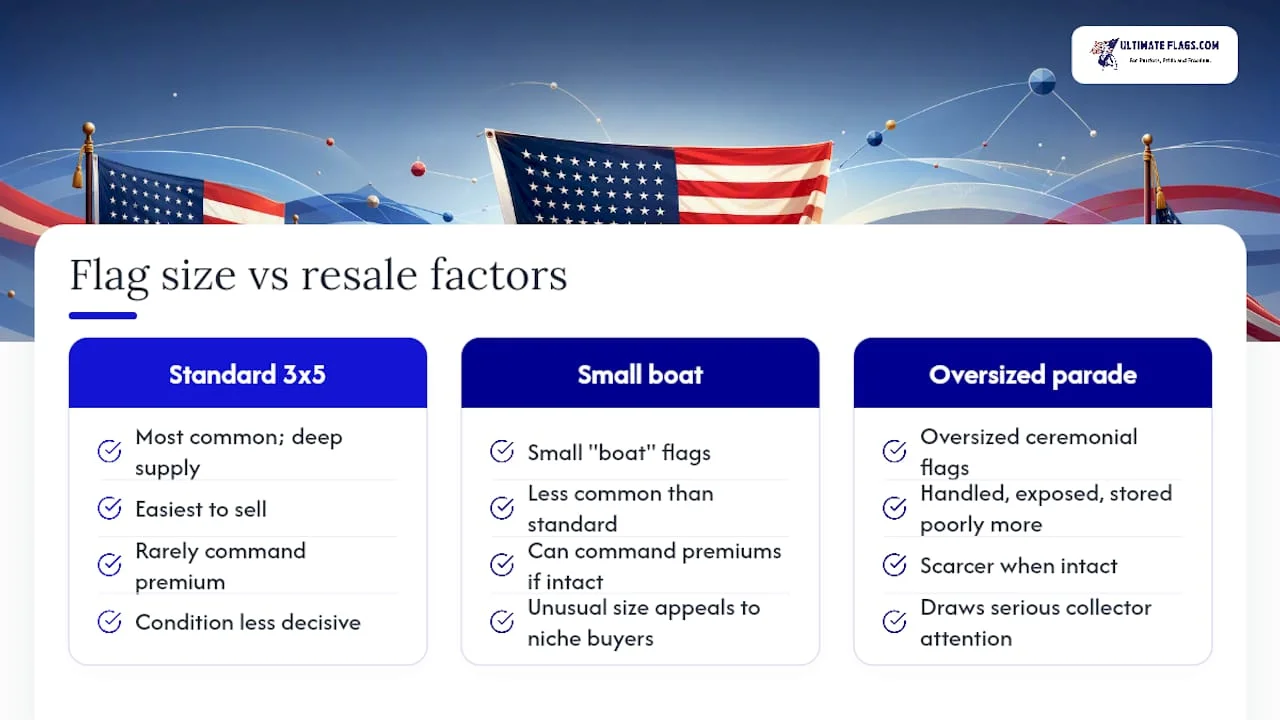
Size and fabric shift value in ways that surprise a lot of first-time sellers. A massive ceremonial flag, the kind once flown over a government building or a ship’s stern, draws serious collector attention simply because so few survive in good condition. Oversized flags were handled more, exposed to weather more, and stored poorly more often, so a large 48-star flag that survived intact is genuinely scarcer than a small one.
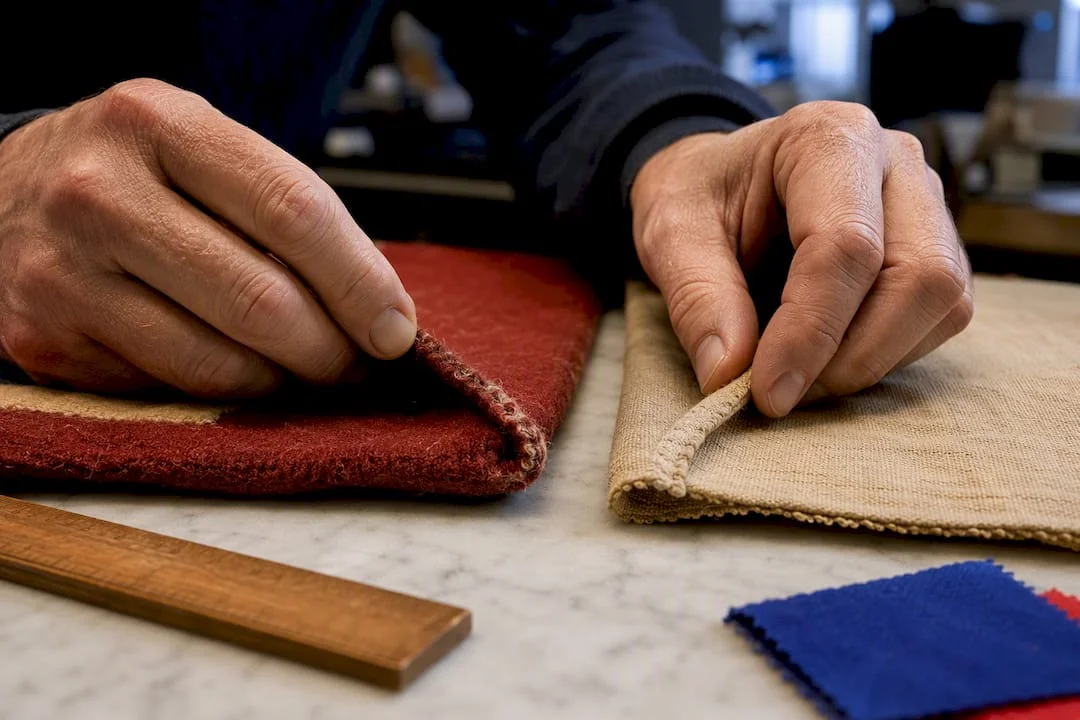
Material tells its own story. Wool bunting flags, common through the early and mid-20th century, tend to hold up better structurally than cotton, which is more prone to yellowing, mildew, and insect damage. Synthetic blends that crept into flag manufacturing later in the 48-star era are generally viewed as less desirable by serious collectors, since they lack the hand-finished character of earlier wool and cotton construction.
Standard household sizes, roughly 3×5 feet, are the most common and the easiest to sell but rarely command premium prices simply because supply is so deep. Unusual sizes, whether very small “boat flags” or oversized parade and ceremonial flags, tend to move the needle more, provided condition holds up. A flag’s weight in the hand is often a quick clue: wool bunting has a distinct heft and texture that synthetic reproductions can’t quite replicate, which matters when you’re trying to confirm authenticity before you even get to the stamps and stitching.
Why the Flag Changed and What It Means for Collectors Today
The 48-star flag flew as the official flag of the United States from 1912 to 1959, the longest run of any American flag design up to that point. It carried the nation through both World Wars, the Great Depression, and the early Cold War, which is part of why it resonates so strongly with collectors of military and civic history.
The flag’s retirement wasn’t dramatic. Alaska’s admission to the Union in January 1959, followed by Hawaii’s admission that August, simply made a 48-star design outdated by law. The Flag Code requires the star count to match the number of states, so a 49-star flag briefly replaced it before the 50-star version we know today took over in 1960.
That short, mandated lifespan is exactly why the 48-star flag holds steady collector interest decades later. It’s the last flag design tied to a pre-Alaska, pre-Hawaii America, a visual marker of the country before its final two states joined. Flags surviving from World War II specifically carry extra weight with collectors, since so many were flown, folded for coffins, or raised over military installations during the war years covered in Ultimate Flags’ historical archives.
Selling, Donating, or Keeping: A Publisher’s Take
Sell when your flag has no personal or institutional tie and solid documentation exists to support a fair price. Donate when the flag’s story belongs to a specific place, a church, a VFW post, a local courthouse, since institutions tied to the flag’s origin often value it more than any buyer will. Conserve first, always, before you do either.
Photograph the flag, gather whatever paperwork exists, and get a real appraisal before you commit to a path. A rushed decision costs more than a week of patience.
— Jonica
Protecting or Replacing Your Flag With Ultimate Flags
If your 48-star flag is too fragile to display safely, you don’t have to choose between honoring its history and risking further damage. Some retailers carry reproduction historical flags built for everyday display, so your original can stay safely stored while a faithful reproduction does the flying.

Ultimate Flags also stocks preservation-minded accessories, from display-ready hardware to flagpole options, for owners who want to show their flag’s story without exposing the original fabric to sun and humidity. If your interest runs toward decorative display pieces beyond flags, the Gulf of America 12-inch world globe makes a fitting companion piece for a history-focused display shelf. And if your flag’s real home is a local historical society rather than a display case, Historical storytelling, including pieces like Flag: Silent Sentinels of History?, can help you frame that donation with the context it deserves. Browse online collections today to find reproductions or accessories that fit your next step.
Sources
- 48 Star United States Flag | Relic
- 48 Star Flag Value: History and Resale Price Guide
- 48 Star American Flags For Sale. Prices, Appraisals & Auctions
FAQ
Are Flags With 48 Stars Valuable?
Most sell for $40 to $300, with strong provenance or verified military history pushing exceptional examples to $600 or more.
Is It Illegal to Fly a 48-Star Flag?
No federal law bans owning or flying a retired 48-star flag; the Flag Code sets etiquette guidelines, not criminal penalties, for displaying historical versions.
How Old Is a Flag With Only 48 Stars?
A 48-star flag dates to between 1912 and 1959, the period when the design was the official flag of the United States.
Is a Flag With 49 Stars Worth Anything?
Yes, 49-star flags are collectible too, since they represent an even shorter official run (1959 to 1960) than the 48-star flag, though pricing follows the same condition and provenance rules.