A Union Jack is often displayed at national celebrations, school events, civic venues, business premises, and ceremonies, while some people keep one as part of a private collection. Whatever its purpose, proper storage helps preserve the flag’s fabric, stitching, colors, and overall appearance between displays.
Storing Union Jack flags safely starts with ensuring the fabric is clean and completely dry before putting it away. A dark, dry, stable storage area helps reduce the risk of mildew, fading, and fabric deterioration caused by moisture, sunlight, pressure, or unsuitable packing materials.
The right storage method also depends on the flag’s material, age, and condition. Modern nylon and polyester flags may be suitable for routine folding, while older cotton, wool, silk, embroidered, or hand-sewn flags often require gentler handling. Whether you own a flag for regular display or have purchased one from Ultimate Flags, following appropriate care and storage practices can help keep it in good condition for future use.

Inspect the Flag Before Storage
Good flag care starts as soon as the Union Jack is removed from display. Avoid folding it immediately if it is wet, dirty, or still connected to clips, ties, or other hardware.
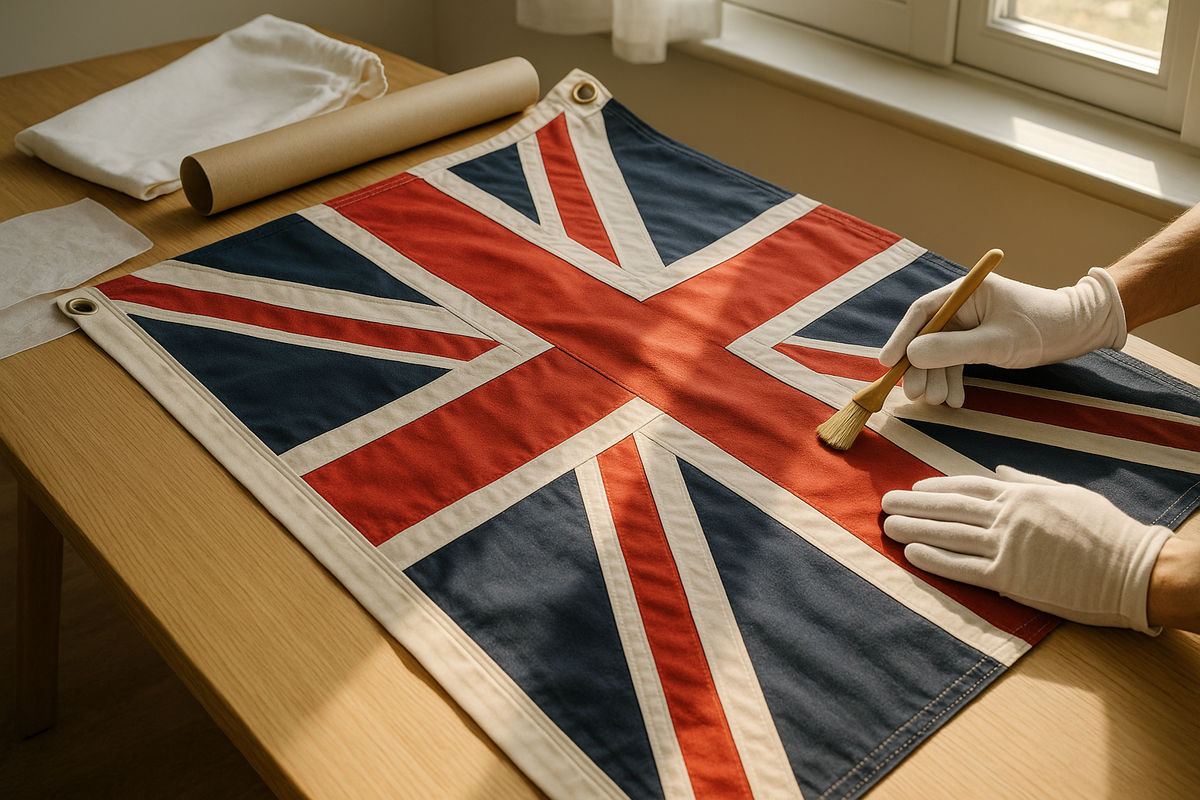
Place the flag on a clean surface and inspect the fabric carefully. If space allows, keep it fully extended so that moisture, dirt, loose stitching, frayed edges, damaged eyelets, and other problems are easier to identify.
Outdoor flags deserve particular attention because rain and dew can remain inside hems and folded areas even when the main surface feels dry. Packing away a damp flag can encourage mildew, unpleasant odors, color transfer, and weakened fibers.
Before storage, check the following:
- Make sure both sides of the fabric are completely dry.
- Remove loose dirt gently without aggressively rubbing the material.
- Check seams, hems, eyelets, stitching, and reinforced areas.
- Remove clips, ties, and fittings that could catch or press against the fabric.
- Look for stains that may need attention before long-term storage.
- Separate damaged or fragile flags from other stored textiles.
If cleaning is required, follow the care instructions for the particular fabric and construction. Do not automatically use the same washing method for every Union Jack.
Historic, fragile, hand-sewn, or unusually valuable flags require greater care. If the fabric is brittle, stained, frayed, or deteriorating, professional textile conservation advice should be considered before cleaning or repairing it.
Flag Conservation and the Right Storage Method
The most suitable storage method depends on the flag’s size, material, condition, and available space. Careful folding can work well for many modern flags, while flat or rolled storage may be preferable for large or delicate textiles.
Flag conservation focuses on protecting the existing material and construction. Repeated sharp creases, pressure from other objects, unsuitable storage conditions, and rough handling can gradually weaken fabric. Older cotton, wool, silk, embroidered, or hand-sewn flags therefore deserve additional care.
| Storage method | Best suited for | Handling guidance |
|---|---|---|
| Careful folding | Clean, modern flags used regularly | Fold gently along natural lines and avoid sharp creases |
| Flat storage | Large, fragile, or valuable flags | Support the entire flag on a clean archival surface |
| Rolled storage | Large flags where flat storage is impractical | Use a wide archival tube and roll without excessive tension |
| Framed display | Flags intended for indoor display | Use conservation-safe mounting and UV-filtering glazing |
| Professional conservation | Historic, brittle, stained, or damaged flags | Seek professional advice before cleaning or repairing |
When sufficient space is available, storing a delicate flag flat can reduce repeated creasing. The entire textile should have suitable support rather than being compressed beneath other objects.
If flat storage is not practical, rolling can be a useful alternative for large flags. Use a wide, clean archival tube instead of a narrow tube that forces the fabric into a tight curve. Padding with acid-free tissue can provide additional protection.
Avoid forcing a large flag into a container that is too small. Compression can create permanent creases and place unnecessary stress on seams, hems, and decorative areas.
The material should also influence the storage approach. Ultimate Flags offers Union Jack options made from different materials and construction methods, including nylon and cotton, so the care routine should reflect the specific flag being stored.
Use Suitable Storage Materials and Conditions
The materials surrounding a stored flag can affect its condition over time. Ordinary cardboard, newspaper, plastic grocery bags, and rubber bands may be convenient, but they are not suitable choices for long-term textile storage.
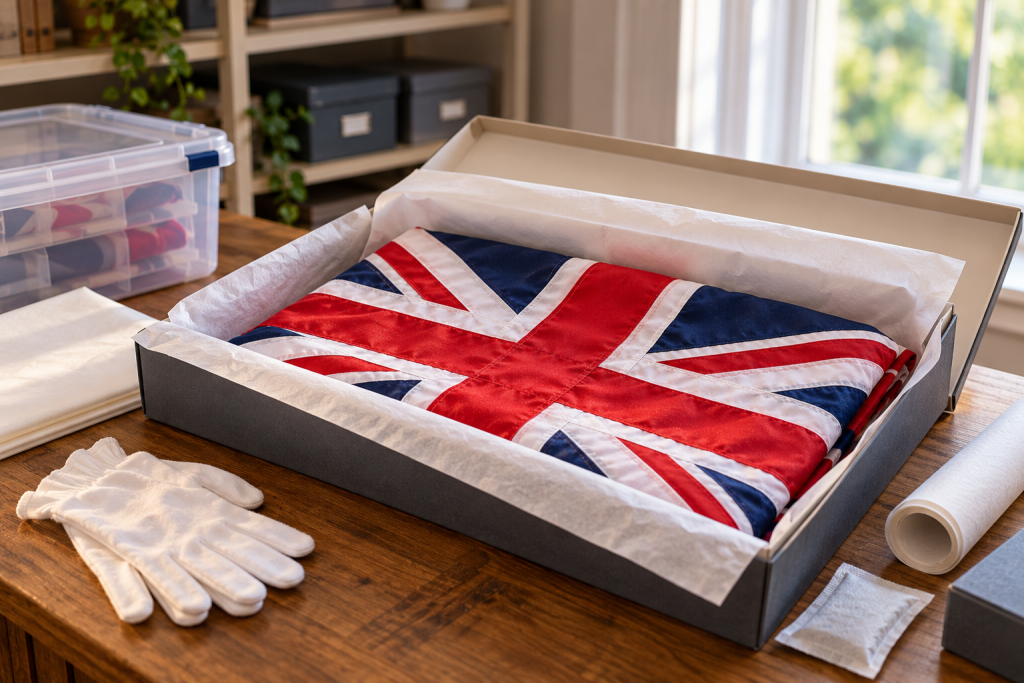
For longer periods, use archival materials whenever possible. Acid-free tissue, archival boxes, and unbleached cotton bags can provide protection without exposing the fabric to unnecessary pressure or unsuitable materials. Tissue can also be placed between folded layers to reduce friction and contact between different colored areas.
A practical storage setup can include:
- Acid-free tissue paper between folded layers.
- Archival boxes when a box is appropriate for the size and condition of the flag.
- Unbleached cotton bags for breathable protection.
- A clean archival tube for large flags that need to be rolled.
- A clean, supportive surface for flags being stored flat.
The location is equally important. A finished indoor closet is generally preferable to an attic, basement, garage, outdoor shed, or other area subject to major temperature and humidity changes. Keep containers away from plumbing, windows, damp exterior walls, and direct sunlight.
Sunlight can fade colored fibers over time, while heat and moisture can contribute to material deterioration. A dark indoor location with relatively stable conditions provides a better environment for stored flags.
Avoid placing heavy objects on top of stored textiles. Pressure can flatten seams, create unwanted folds, and make future handling more difficult. Containers should also be kept off concrete floors where possible to reduce exposure to moisture and dirt.
Fold, Roll, and Handle the Flag Carefully
Folding is practical for many modern Union Jack flags, but the process should be gentle. Do not pull the fabric tight or press hard creases into areas that already show signs of weakness.
Place the clean, dry flag on a suitable surface and align its edges before folding. Fold gradually rather than forcing the material into a small bundle. Acid-free tissue between layers can reduce friction and soften the contact created by folds.
Large flags may be easier to handle with two people. Supporting the fabric across a larger area helps prevent corners and edges from dragging across the floor or becoming overstretched.
For rolled storage, select a tube with a suitable diameter. Pad it with appropriate archival material and roll the flag evenly without pulling or stretching the fabric. Once rolled, cover it to reduce exposure to dust and light.
Avoid these common mistakes:
- Folding a damp flag: Moisture trapped in folds can encourage mildew and fiber damage.
- Creating very tight folds: Sharp pressure points can weaken fabric over time.
- Using rubber bands: They can leave pressure marks and deteriorate against textiles.
- Placing heavy objects on the flag: Weight can flatten seams and create permanent creases.
- Storing it directly on the floor: Dirt, moisture, pests, and accidental damage become greater concerns.
- Leaving metal fittings attached: Clips and hardware can catch or press against the fabric.
Support the flag as much as possible whenever it is being moved. Avoid lifting a large textile from one corner or edge because the weight of the fabric can put unnecessary stress on stitching.
For fragile or historic flags, minimize handling. Repeated folding, unfolding, lifting, and repositioning can gradually contribute to deterioration.
Clean, Repair, and Assess Before Long-Term Storage
Cleaning should be based on the flag’s material, age, construction, and condition. A modern nylon or polyester flag designed for routine outdoor use may be suitable for gentle washing according to its care instructions. An older or fragile textile may require professional attention instead.
For everyday flags that are appropriate for laundering, remove loose dirt before washing. When the fabric allows it, use cool water and mild detergent with gentle handling. Avoid bleach, fabric softener, high heat, and aggressive stain treatments. Direct sunlight and hot dryers can also contribute to fading and weakened fibers.
Allow the flag to dry completely before storage. Pay particular attention to hems, seams, reinforced areas, and folds where moisture can remain hidden.
Small repairs can help maintain a contemporary flag before damage spreads. Loose hems, frayed fly ends, and worn grommets should be assessed promptly. Repairs should use thread appropriate for the fabric and similar in color and weight to the existing stitching.
For historic textiles, the approach is different. Washing, ironing, stain removal, adhesive products, or home repairs can permanently alter original material. A fragile conservation flag may have value because of its age, construction, and surviving features.
Professional advice is appropriate when a flag has:
- Brittle, splitting, or very thin fabric
- Significant staining or mildew
- Painted or unusual decorative details
- Fragile silk, wool, or historic cotton
- Extensive insect damage
- Deteriorating hand-sewn construction
- Significant historical or sentimental value
For a modern outdoor flag, replacement may be more practical when the fabric has become brittle, badly faded, thin, or extensively split. A flag intended for outdoor use needs enough structural strength to remain suitable for display.
The purpose of flag conservation for an older textile is to preserve original material and construction. Routine maintenance for a modern flag is primarily concerned with keeping it clean, usable, and presentable.
Shop Union Jack flags
Looking for a new flag or replacing a worn one? Shop Ultimate Flags — nylon, cotton and embroidered Union Jacks in multiple sizes, ready for display.
Keep a Consistent Storage Routine
Protecting a Union Jack between displays becomes easier when the same routine is followed each time it is removed. Consistent handling reduces rushed storage and makes it easier to identify changes in condition.
A simple routine is:
- Inspect: Check for dirt, moisture, loose stitching, fraying, and damaged fittings.
- Clean when appropriate: Follow the care instructions for the material.
- Dry completely: Check hems, seams, folds, and reinforced sections.
- Prepare: Remove clips, ties, and hardware that could damage the fabric.
- Fold or roll: Select the method appropriate for the size and condition.
- Protect: Add acid-free tissue or another suitable archival covering.
- Store: Keep the flag in a dark, dry, stable indoor location.
- Inspect periodically: Look for moisture, pests, dust, fading, or new creases.
This routine works for seasonal displays, school events, ceremonies, businesses, private collections, and regular outdoor use. Similar principles can apply to an American flag and other national or historical textiles, although individual materials may have different care requirements.
For organizations that maintain several flags, consistent storage also makes it easier to identify which pieces are ready for display and which require cleaning, repair, or replacement.
Ultimate Flags offers Union Jack and United Kingdom flags in a range of materials, sizes, and constructions. If an existing outdoor flag has become worn or damaged beyond practical repair, selecting a replacement suited to its intended display can be a sensible option.
Protect your Union Jack between every display. Keep it clean and completely dry, handle it gently, choose suitable storage materials, and use a stable indoor location away from moisture, heat, pests, and direct sunlight. For historic or fragile textiles, seek professional conservation advice before attempting cleaning or repair.
With a consistent care routine, your flag can remain in good condition and ready for its next display.