For most American homes, a standard nylon or woven polyester flag of a common residential size with sewn stars and a reinforced header strikes the best balance of durability and display quality. It is recommended to match flag material and size to where the flag will fly, then follow the care rules set out in the U.S. Flag Code and the standard established by Executive Order 10834. The checklist and care steps below will carry you the rest of the way.
TL;DR:
- High-quality outdoor flags should be made of nylon or woven polyester with reinforced headers, dense stitching, and UV treatment to withstand harsh weather.
- The ideal flag size depends on its mounting location, with 3×5 feet suitable for porches and larger flags like 4×6 or 5×8 feet reserved for tall poles and public displays.
- When buying, verify stitch quality, grommet material, and fabric weight through close-up images or specifications because product photos can be misleading.
- Regular gentle cleaning extends a flag’s lifespan, but damaged flags should be retired respectfully once frayed or torn beyond repair.
- The modern US flag has fifty stars and thirteen stripes, adopted in 1960, but historical variants like the Betsy Ross flag remain meaningful for reenactments and collector displays.
Table of Contents
- Flag materials and finishes explained
- Sizes and display: which flag size and mounting options work where
- How to choose a high-quality patriotic USA flag: a shopping checklist
- Care, cleaning, repair, and proper retirement of flags
- Official 50-star flag vs historical variants and decorative flags
- Author and Ultimate Flags: credentials, brand signals, and how we help buyers
- Publisher perspective on quality, respect, and why details matter
- Where to buy: Ultimate Flags product categories that match common needs
- FAQ
- Sources
Flag materials and finishes explained
Every flag tells its story through fabric, and choosing the right one means understanding what each material was built to withstand. Nylon is lightweight, dries fast, and holds vivid color even in brisk wind, making it a dependable choice for homes that see regular gusts. Woven polyester carries more weight in a light breeze and resists fraying with a determined toughness, which suits regions where the wind rarely lets up. Cotton, meanwhile, offers a softer, more traditional look and feel, prized for indoor display or ceremonial settings where a parade-ground drape matters more than weatherproofing.
Construction separates a flag built to last from one destined for the scrap pile within a season. Sewn or embroidered stars, stitched directly into the fabric, stand up to sun and wind far longer than printed stars, which can crack or fade under repeated exposure. Printed flags still have their place: they cost less and work well for short-term events, indoor décor, or temporary displays where longevity isn’t the point. Sewn stripes, by contrast, reinforce the flag’s structure at the seams, the very spots where cheaper flags tend to fail first.
Before buying, inspect these details:
- Header type: a canvas header with brass grommets resists tearing far better than a thin sleeve.
- Stitch density: tightly spaced, double-stitched hems hold up against wind far longer than loose or single stitching.
- UV treatment: a UV-resistant coating slows fading and keeps colors honest through summer sun.
- Fly-end reinforcement: the outer edge takes the most punishment from wind, so look for extra stitching there.
A flag rated for outdoor use should show all four of these signs at once. A flag missing most of them is better suited to a porch display away from harsh weather or a one-day event where looks matter more than endurance.
Sizes and display: which flag size and mounting options work where
Size should match both the setting and the distance from which the flag will be seen. A small flag suits a porch bracket or a small indoor stand, close enough that detail still reads clearly. A medium-sized flag remains the standard for most homes, visible and proportionate from the street without overwhelming a yard. Larger displays, 4’x6’ or 5’x8’, belong on taller residential poles or as a backdrop for community events, where distance and scale demand a bigger presence.
Pole length and flag size work together, not separately. A flagpole roughly one and a half to two times the flag’s length keeps the proportions balanced, so a 5’x8’ flag generally looks right on a pole between 20 and 25 feet tall. Mounting options vary by setting:
- House bracket: ideal for a small or medium-sized flag on a porch or garage.
- Residential pole: suited to 3’x5’ through 5’x8’ flags where ground clearance and wind exposure allow a taller setup.
- Wall mount: a space-saving option for smaller flags near an entryway.
- Indoor stand: best for cotton or decorative flags displayed in a den, office, or ceremonial space.
If you fly a flag after dark, the U.S. Flag Code calls for proper illumination rather than leaving it in darkness, a small detail that keeps the display respectful around the clock.
How to choose a high-quality patriotic USA flag: a shopping checklist
Comparing flags side by side gets easier once you know what actually predicts longevity. Work through these steps in order:
- Confirm the material matches your use: nylon or woven polyester for outdoor flags, cotton for indoor or ceremonial display.
- Check stitch quality on the hems and fly end, looking for tight, even rows rather than loose threads.
- Look for a reinforced header, ideally canvas, with brass grommets rather than plastic or a flimsy sleeve.
- Prioritize sewn or embroidered stars over printed ones if the flag will fly outdoors for extended periods.
- Ask about UV treatment, since untreated fabric fades faster than most buyers expect.
- Review the warranty and return policy, which often signal how confident a seller is in its own construction.
An economy printed flag is a reasonable choice for a one-time event, a classroom display, or a short holiday run. A premium sewn flag earns its higher price when it flies daily, faces real weather, or represents a permanent fixture of your home.
Product photos can hide more than they reveal. A flag shot from a distance rarely shows stitch density or grommet material, and a glowing description with no measurable specs, no stitch count, no fabric weight, is often compensating for a product that won’t hold up.
Pro Tip: Before buying, ask the seller for close-up stitch photos or request the fabric weight and grommet material in writing. A seller with nothing to hide will usually have the answer ready.
Care, cleaning, repair, and proper retirement of flags
A flag earns its keep through regular upkeep, and knowing when to clean versus when to let go preserves both the fabric and the respect it represents. Light soiling, dust, or faint discoloration can usually be washed away. A flag that has grown visibly tattered, frayed past its edges, or torn along the stripes has reached the point where retiring it respectfully serves the symbol better than patching it indefinitely.
For nylon and woven polyester flags, gentle cleaning with a short soak and mild soap, followed by air drying, protects the stitching far better than a washing machine’s mechanical agitation. Harsh detergents and tumbling can loosen embroidered stars and strain seams that hand washing would leave untouched.
When damage does appear, there’s a line between a quick fix and a lost cause:
- Small tears or loose hems: a simple re-hem, done at home or by a tailor, often restores the flag fully.
- Repeated repairs: after two or three re-hems, the fabric’s structural integrity is usually compromised, and continued patching does more harm than good.
- Professional repair: worthwhile for a flag with sentimental or historical value, rarely cost-effective for an inexpensive printed flag.
When a flag has reached the end of its service, the U.S. Flag Code calls for a dignified retirement rather than disposal in the regular trash, a final gesture of respect for what the flag represents. You can read more on how to care for a flag through its full life cycle, from first wash to final retirement.
Official 50-star flag vs historical variants and decorative flags
The flag flying over nearly every American home today traces its design to a specific moment in history. Executive Order 10834 prescribed the modern configuration of thirteen stripes and a union of fifty stars, and that design was officially adopted on July 4, 1960, following the admission of Alaska and Hawaii. That fifty-star flag remains the standard for formal civic display, government buildings, and everyday patriotic use.
Historical variants tell a different, equally compelling part of the story. The Betsy Ross flag, with its circle of thirteen stars, and the old 48-star flag are not the official modern flag, but they carry genuine weight in reenactment, education, and collector display. Ultimate Flags’ own history of the Betsy Ross design traces how that early emblem came to symbolize the revolutionary spirit of the founding generation.
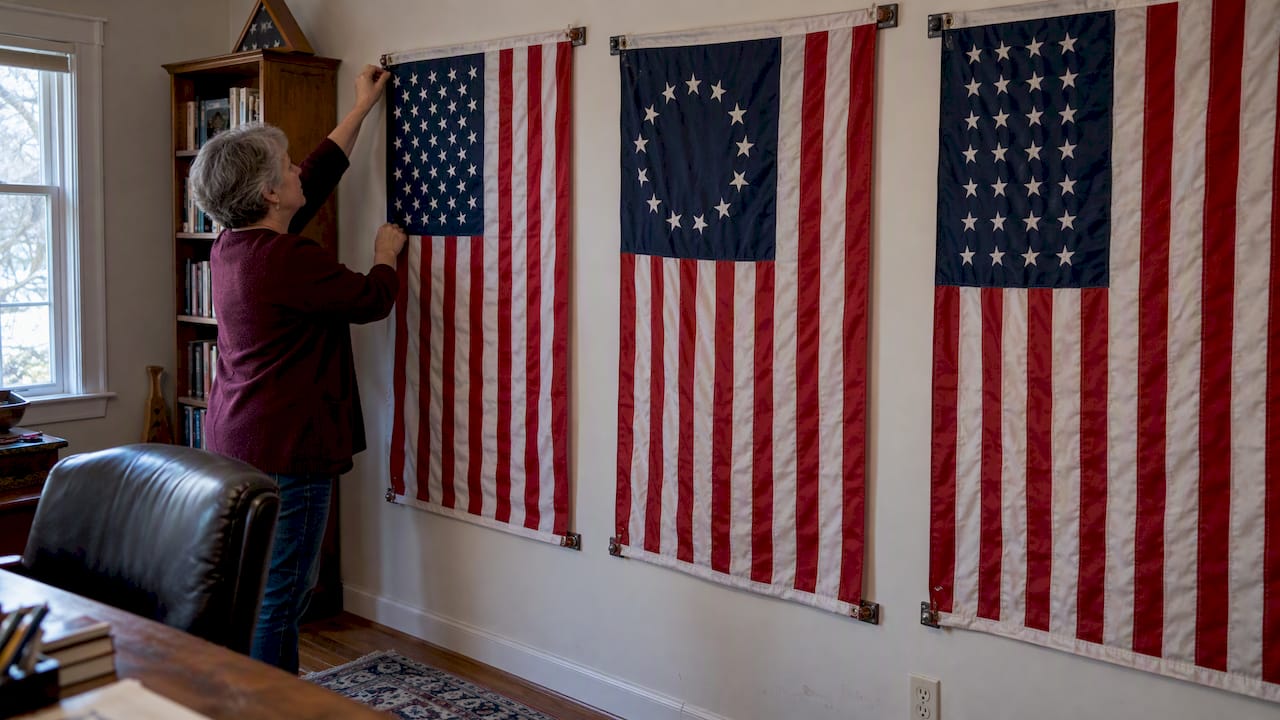
Displaying a historical flag alongside or instead of the modern flag works well for themed decorations, classroom lessons, or a collector’s wall, as long as formal ceremonies and official government display stick to the current fifty-star design.
Author and Ultimate Flags: credentials, brand signals, and how we help buyers
This guide was written by John Hough for a retailer specializing in flags. Their catalog includes specialized collections spanning military honors, historic wars, and regional heritage, each backed by educational pages that trace a flag’s origin and proper use.
This retailer pairs that catalog with resources on the history of the American flag and practical care guidance, so a buyer isn’t just choosing fabric and stitching but understanding the symbol behind it. That combination, a wide catalog paired with grounded educational content, gives shoppers a clearer path to the right flag and the knowledge to keep it flying with dignity.
Publisher perspective on quality, respect, and why details matter
A flag is never just fabric and thread. It carries the weight of what it represents, and that weight deserves a product built to honor it: sewn stars instead of printed ones, a reinforced header instead of a flimsy sleeve, stitching that holds against wind rather than giving out after one hard season.
Choosing quality is the first act of respect. Caring for that flag, washing it gently, repairing it when it’s reasonable, retiring it when it isn’t, is the second. Both matter, and neither takes much more effort than getting it wrong.
— John Hough
Where to buy: Ultimate Flags product categories that match common needs

Ultimate Flags organizes its catalog around exactly the needs this guide covers. Start with the flag collections page for USA flags, historic war flags, and state flags in the sizes and materials discussed above. For hardware, the site’s flagpole and footing guidance and grommet installation notes help you mount a flag correctly the first time. Readers outfitting a patriotic event or team display may also find custom patriotic apparel useful alongside a flag purchase.
- Need a new flag: browse flag collections by material, size, and design.
- Need hardware: check flagpole and mounting hardware options for your display type.
- Just bought a flag: see what comes next for care and display tips.
FAQ
What is the flag of the United States?
The flag of the United States consists of thirteen horizontal stripes representing the original colonies and a union of fifty white stars on a blue field, one star for each state. This design was formalized by Executive Order 10834 and officially adopted on July 4, 1960.
Where is the best place to buy an American flag?
Look for a retailer with a specialized catalog, clear construction details, and educational resources on care and etiquette. There are retailers offering a wide range of USA flags in various materials and sizes, often backed by guidance on choosing and maintaining the right one.
Can you wash an American flag?
Yes, flags made of nylon or woven polyester can typically be hand washed with a short soak in mild soap and air dried, which protects stitching better than a washing machine. Harsh detergents and machine agitation can damage embroidered stars and seams, so gentler methods are recommended.
Which American flag has a circle of stars on it?
The Betsy Ross flag features a circle of thirteen stars representing the original colonies, a historical design tied to the American Revolution rather than the modern flag. It remains popular for reenactment and decorative display, but the official flag today uses the fifty-star configuration.
Sources
- Design of the 49- and 50-Star Flags | Dwight D. Eisenhower Presidential Library
- Executive Order 10834–The flag of the United States | National Archives
- 4 U.S. Code § 8 – Respect for flag
- Betsy Ross flag (historical notes) | PRD