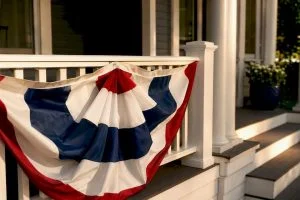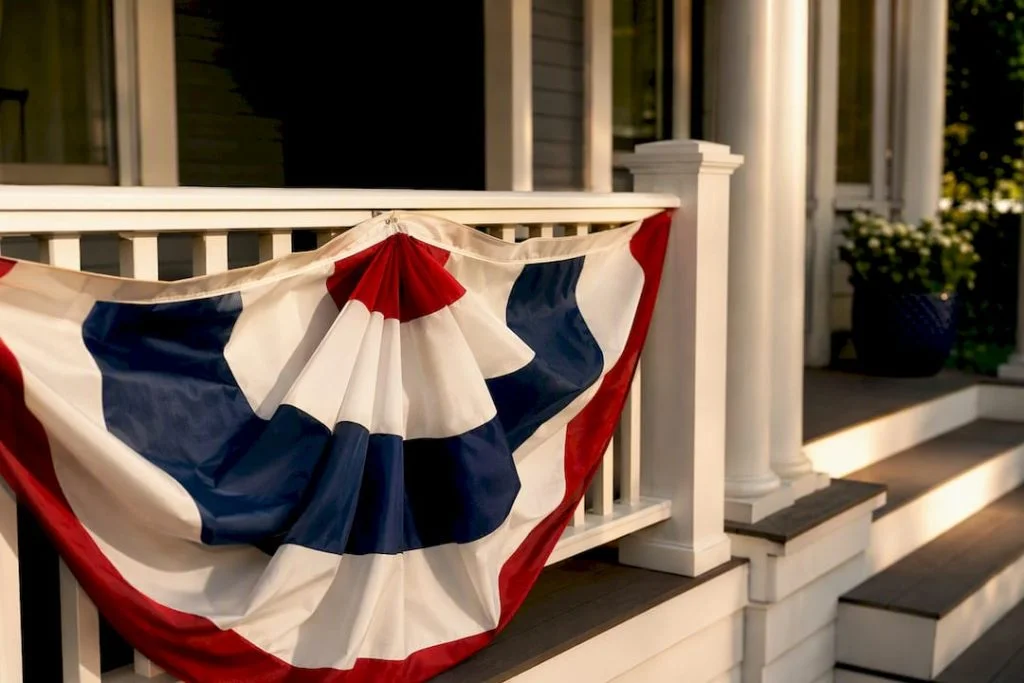
For most porch and event displays, a polyester or nylon pleated bunting with sewn hems and grommets stands up best to wind, sun, and repeated use, while polycotton or cotton bunting gives an indoor gathering that soft, traditional look. Whichever you choose, measure your span and add extra length for a proper drooping drape. Bunting suited to both settings is available, so the harder decision is really just fabric and finish, not availability.
TL;DR:
- Polyester or nylon bunting offers the best durability for outdoor use, resisting rain, sun, and repeated handling, while cotton options suit indoor or covered settings.
- Measure your span accurately and add one-third to determine the correct length, ensuring an even, drooping appearance without excessive sag or tightness.
- Hang bunting by pinning the center first, then working outward, using appropriate fixings for indoor, porch, fence, or event environments to prevent tearing and ensure even drape.
- Store fabric bunting indoors and dry thoroughly to prevent mildew, and reinforce minor tears with patches or stitching rather than replacing entire lengths.
- For most displays, choose pleated polyester or nylon with sewn hems and grommets, but opt for polycotton or cotton for a softer, traditional look indoors or for short-term occasions.
Table of Contents
- Choosing the Right Patriotic Bunting Material
- How Much Bunting Do You Actually Need?
- How Do You Hang Bunting on a Porch or Fence?
- Caring for Bunting Between Uses
- Why Trust This Bunting Guide
- Where Does Patriotic Bunting Come From?
- What Do the Colors and Patterns in Bunting Symbolize?
- Creative Ways to Style a Patriotic Bunting Display
- Does the Right Bunting Change by Season or Event?
- Buy Off the Shelf, Order Custom, or Sew It Yourself?
- Find the Right Bunting and Hardware at Ultimate Flags
- Sources
- FAQ
Choosing the Right Patriotic Bunting Material
The material you choose determines whether your bunting survives a Fourth of July cookout or wilts by noon. Each option trades durability against cost and appearance, and the right pick depends entirely on where the bunting will hang and for how long.
- Polyester or nylon: weather resistant, colorfast, and the standard choice for outdoor patriotic decor that has to survive rain, sun, and repeated setups across a season.
- Polycotton or cotton: a classic, slightly heavier drape that reads as traditional and homey, best reserved for covered porches or indoor use where it won’t get soaked.
- Paper or card bunting: inexpensive and festive, but strictly a single-event material. It sags and tears fast outdoors.
Standard bunting comes in lengths like 5, 10, or 25 meters, and in either pleated or pennant (triangular flag) styles, so match the format to the visual effect you want. Pleated bunting gives that classic scalloped red, white, and blue wave; pennant strings give a sharper, flag-like rhythm.
For finishes, look for sewn hems rather than glued edges, brass or plastic grommets at regular intervals, and reinforced tape or webbing along the top edge for hanging strength. Quality bunting also uses UV-stable inks and double-sided printing so the pattern doesn’t fade or wash out from one side. When wind exposure or long-term outdoor duty is a factor, choosing weather-resistant polyester with reinforced fixings beats a lighter fabric every time, even if it costs a little more up front.
How Much Bunting Do You Actually Need?
Guessing at length is the single most common mistake in patriotic bunting display planning, and it usually ends with either an awkward straight stretch or bunting so tight it looks stapled to the wall. The fix is simple math.
- Measure the span you want to cover, wall to wall or post to post.
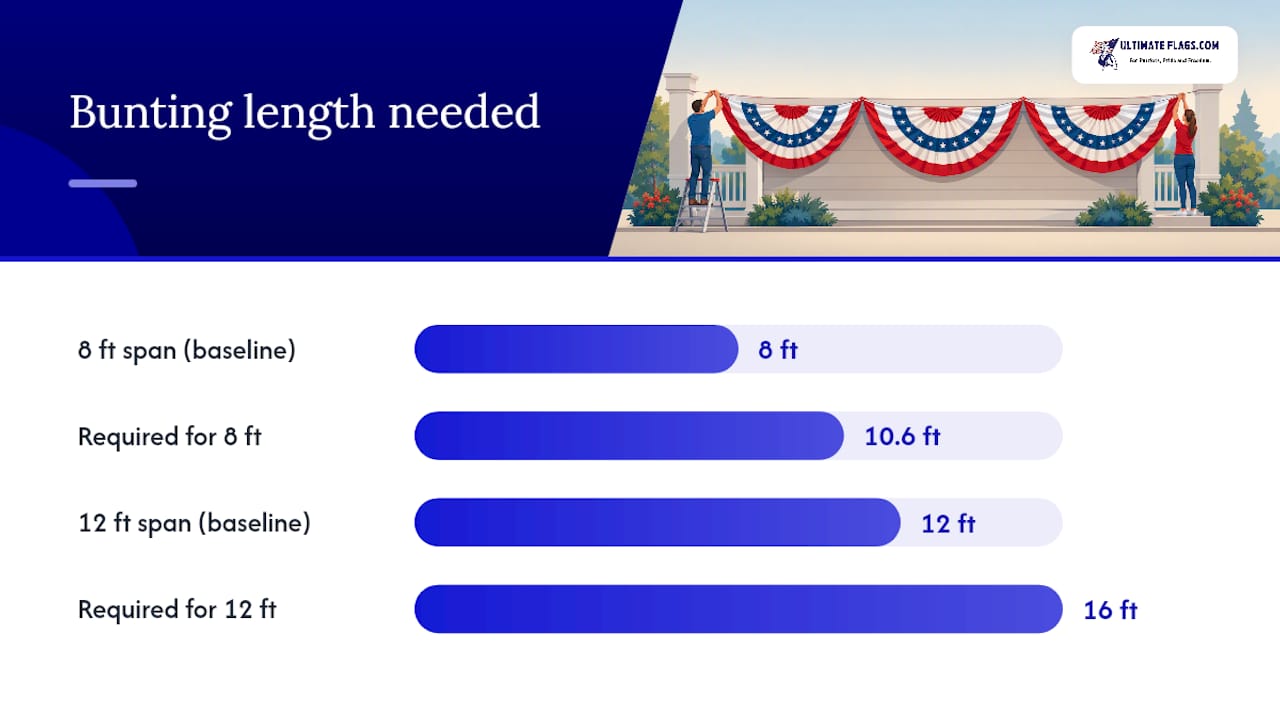
- Multiply that number by 1.33 to account for a natural drooping drape between fixing points.
- Round up to the nearest standard length your supplier sells.
An 8-foot porch railing needs roughly 10.6 feet of bunting; a 12-foot fence run needs about 16 feet. This “add a third” rule is the same one professional decorators rely on for a pleasing sag rather than a flat, tight line, and it lines up with the industry standard of adding at least 10% for droop and fixing points.
Next, decide between one long continuous run or several shorter sections. Longer runs mean fewer joins and faster setup, but they also catch more wind. In exposed, breezy spots, shorter runs with more fix points cut down on wind load and damage, which matters if your display has to survive a whole holiday weekend outdoors.
Before you hang anything, walk the space and mark anchor points. Keep bunting at a safe height off the ground for head clearance, higher still above tables or walkways, and well clear of power lines or anything electrical. Match your fixings to the location: Command hooks and adhesive strips for indoor plaster or trim, cable ties and grommets for railings and fences, and suction cups for glass or smooth siding.
How Do You Hang Bunting on a Porch or Fence?
Different locations call for different rigging, but one principle holds everywhere: pin the center point first, then work outward toward each end. Designers use this method because it guarantees an even, symmetrical drape instead of a lopsided sag that only shows up after you’ve already tied off both ends.
Indoors, over a mantel or doorway: Command hooks or picture rail clips hold most fabric bunting without damaging paint or wallpaper. Find the midpoint of your run, hook it at the center, then move outward in matching increments.
Porch railings and banisters: Tie a knot or loop every two to three spindles, or thread grommets and run a zip tie through each one for a cleaner look. Leave some slack at the tail ends so you can adjust the drape once the whole run is up.
Fences and long outdoor stretches: Use rope rated for the load rather than string, and keep individual runs to roughly 16 to 33 feet (5 to 10 meters) per section in windy areas, reinforcing tie points with patches to prevent tearing at the anchor. Avoid attaching bunting to gutters or down spouts. They flex, and fabric will tear loose in the first strong gust.
Event setups, marquees, and parade floats: Hang bunting from the eaves rather than the tent poles for a cleaner line. For photo backdrops, position the bottom edge about 12 inches above the tallest head in frame. On floats, rig with zip ties at multiple points along the frame rather than relying on tape, which fails once you’re moving.
- Lopsided drape: recheck your center point, not the ends.
- Sagging over time: swap string ties for zip ties or grommets, which hold tension longer.
- Windy forecast: shorten runs and double up anchor points rather than pulling the line taut.
Pro Tip: Test any adhesive hook or strip on a hidden section about an hour before your event so it has time to fully bond, especially in humid or hot weather.
Caring for Bunting Between Uses
Fabric bunting lasts for years if you treat it like the outdoor textile it is, not a disposable decoration. The biggest threat isn’t sun. It’s moisture left unattended overnight.
- Bring fabric bunting indoors overnight or ahead of rain; wet bunting left outside develops mildew and fabric rot surprisingly fast.
- Let it dry completely before folding, and fold loosely along natural pleats to avoid permanent creases.
- Store flat or loosely rolled in a breathable bag, not sealed plastic, which traps humidity.
- For indoor public venues, confirm the bunting meets local flame-retardant requirements before installation.
- Keep every run well clear of overhead power lines, both for hanging and for storage near outlets.
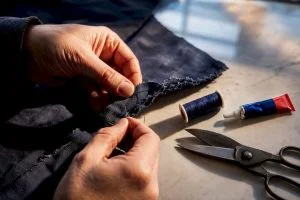
Small tears are usually fixable: reinforce a stressed grommet with a patch of iron-on fabric tape, or stitch a short seam rather than tossing the whole length. Once the color has faded badly or the hems are unraveling beyond a quick repair, it’s more economical to replace than to keep patching a display that no longer looks sharp.
Why Trust This Bunting Guide
This guide comes from John Hough, drawing on years of hands-on experience with flag retail, display logistics, and the practical questions customers ask before every Fourth of July and Veterans Day. This guide reflects material and measurement advice based on experience with long-running online flag retailers stocking pleated bunting, pennant strings, and the hardware to hang them.
Where Does Patriotic Bunting Come From?
Red, white, and blue bunting has draped American porches and public buildings since the earliest days of the republic, but it became a genuine national custom during the Civil War era, when communities used swaths of fabric to signal loyalty and mourning alike. By the centennial celebrations of 1876, bunting had become inseparable from Independence Day itself, wrapped around bandstands, storefronts, and speaker platforms coast to coast.
The tradition carried real symbolic weight precisely because it was accessible. Unlike a flag, which carries strict etiquette around handling, folding, and disposal under official U.S. government guidance, bunting was always the everyday, decorative cousin. It let ordinary households and small towns express the same red, white, and blue pride without needing a flagpole or formal protocol.
That distinction still holds today. Bunting drapes freely around porch railings, gazebos, and float frames in ways a flag never should, which is part of why it remains the go-to choice for outdoor patriotic decor at parades, fairs, and neighborhood block parties. It softens a structure the way a flag can’t, wrapping around curves and corners while still broadcasting the same unmistakable message.
Veterans Day, Memorial Day, and Presidents’ Day all borrowed the same visual language over the following century, and bunting became shorthand for civic pride broadly, not just Independence Day specifically. That flexibility is exactly why it has outlasted plenty of other decorating trends.
What Do the Colors and Patterns in Bunting Symbolize?
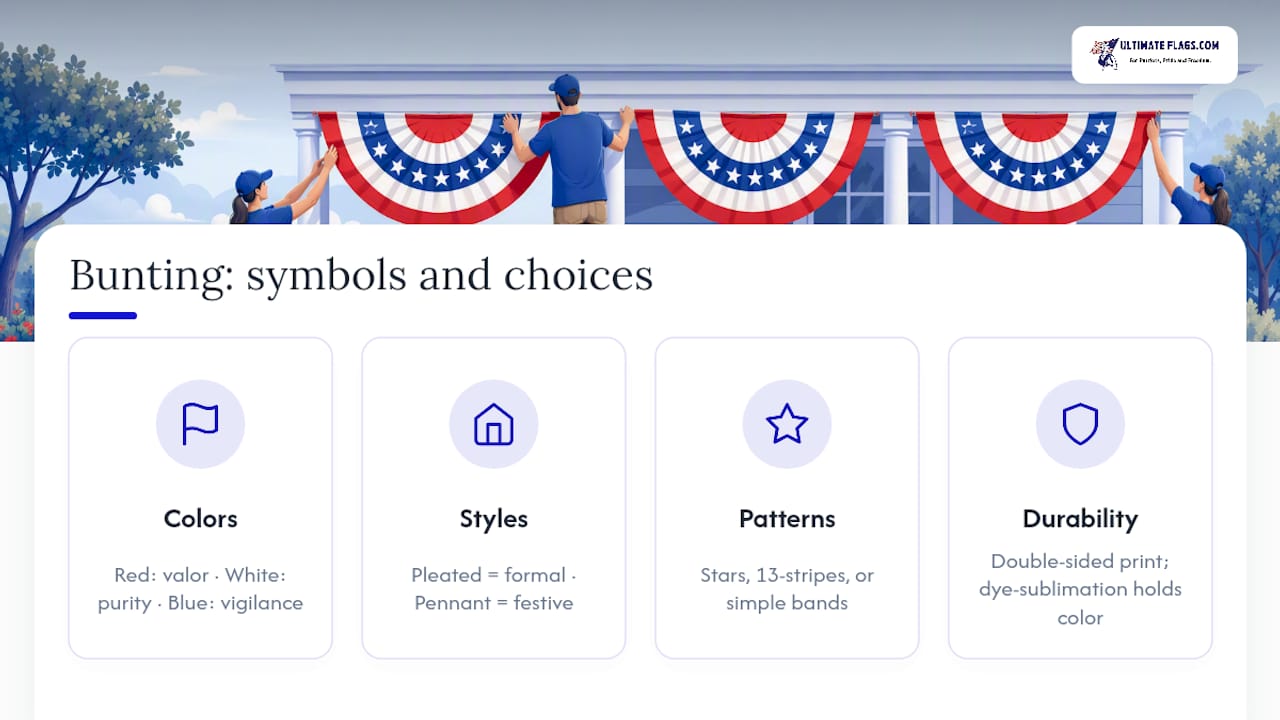
Red, white, and blue bunting inherits its meaning directly from the American flag itself: red for valor and hardiness, white for purity, and blue for vigilance and justice. Most manufacturers keep the same proportions and color order the flag uses, which is precisely why bunting reads as instantly patriotic even at a distance.
Pleated bunting, with its rounded, scalloped edges, was traditionally the more formal choice for government buildings, bandstands, and speaker podiums. Pennant-style bunting, with its triangular flags strung on a line, carries a livelier, more festive feel suited to parades and backyard parties. Neither is more “correct” than the other. They simply signal different registers of the same patriotism.
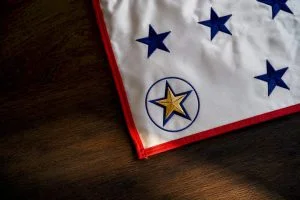
Star patterns show up frequently on higher-end bunting, echoing the canton of stars on the flag, while some designs incorporate the full 13-stripe motif to nod toward the original colonies. Others go simpler, just clean horizontal bands of red, white, and blue, letting the color alone carry the message.
Design choices also affect how bunting reads from a distance. Double-sided printing ensures the pattern looks correct from both directions, which matters for bunting hung freely off a porch where people will see it from the street and the yard alike. Dye-sublimated fabric holds color more vividly than screen printing over repeated outdoor exposure, a detail worth knowing if you’re comparing options that look identical in a product photo but perform very differently after one humid summer.
Creative Ways to Style a Patriotic Bunting Display
The classic straight run along a porch railing is only the starting point. Layering bunting with flags, planters, and lighting turns a flat decoration into something people actually stop to photograph.
Try draping pleated bunting along a porch rail and pairing it with a freestanding American flag on a pole beside the front steps for added visual height. Wrapping bunting around a mailbox post or lamppost adds a smaller accent that ties the whole yard together without overwhelming it. For larger gatherings, string pennant bunting overhead between two posts to create a canopy effect over a seating area or buffet table.
Community events benefit from repetition rather than a single showpiece. Lining an entire block with matching bunting on every porch creates a unified look that a single elaborate display can’t match, and it’s a project neighborhood associations often coordinate ahead of the Fourth of July. Parade floats can layer bunting along the frame edges while reserving a full-size flag for the most visible spot, letting the two elements do different jobs instead of competing for attention.
For a more understated take, mix bunting with greenery, mason jar lanterns, or white string lights for an evening event. The red and blue pop even more once the sun goes down and the lighting takes over. Indoors, draping a shorter length of cotton bunting along a mantel or bookshelf, paired with smaller stick flags in a vase, brings the same theme inside without needing anything rigged to the exterior of the house.
Does the Right Bunting Change by Season or Event?
Independence Day drives the biggest bunting sales window by far, but it’s far from the only occasion that calls for red, white, and blue. Memorial Day and Veterans Day both lean on the same color palette, though the tone shifts toward solemn remembrance rather than celebration, which is why simpler, less festive pleated styles often suit those dates better than bright pennant strings.
Election seasons bring their own spike in demand, with bunting draped across podiums, campaign offices, and rally stages nationwide. Presidents Day and Constitution Day see smaller but steady interest, particularly from schools and civic organizations marking the occasion. Outside the patriotic calendar entirely, some households look for the best Christmas flags and holiday-specific bunting alongside their red, white, and blue pieces, since a lot of porch hardware and hanging hooks do double duty across the whole year of bunting for holidays.
Weather should factor into your seasonal planning as much as the calendar does. A Fourth of July display in a humid Gulf Coast climate needs the same weather-resistant polyester recommended for any long-term outdoor run, while a Veterans Day display in a drier northern climate has more flexibility to use lighter fabric since it typically comes down within a week or two. Match the material to the season’s actual weather risk, not just the occasion, and you’ll avoid replacing bunting twice in one year.
Buy Off the Shelf, Order Custom, or Sew It Yourself?
Ready-made pleated or pennant bunting is the fastest and cheapest route for a porch, block party, or one-off event, and it holds up fine for repeat seasonal use if you store it properly. Custom-sized or custom-printed bunting earns its higher price when you need an exact fit for a stage, storefront, or float, or want branding beyond the standard tricolor. DIY sewing appeals to crafters but rarely beats retail pricing once you factor in fabric, thread, and hours spent. If durability and time matter more than a personal touch, buy. If the display is permanent or oversized, go custom.
— John Hough
Find the Right Bunting and Hardware at Ultimate Flags
There are options for pleated bunting, pennant strings, and custom sizing built for porches, parades, and more, offered by some of the country’s long-established flag retailers. Rather than guessing at generic craft store stock, customers can choose material, length, and finish from product pages that align with standard recommendations.

Start by measuring your span and adding that third for drape, then match the number to a standard length in polyester for outdoor durability or cotton blend for an indoor look. Browse pieces like The Patriot Marksman for display inspiration, or reach out to customer service if your event needs a custom cut or finish that isn’t listed. Once you know your length and material, ordering takes minutes, and you’ll have bunting on hand well before your next porch project or community event.
Sources
FAQ
When Should You Hang Patriotic Bunting?
Most households hang bunting a week or two before Independence Day and leave it up through mid-July, though many also display it for Memorial Day, Flag Day, Veterans Day, and Presidents Day using the same red, white, and blue palette.
Does Hobby Lobby Sell Patriotic Bunting?
Craft retailers like Hobby Lobby typically stock seasonal paper or lightweight fabric bunting suited to short-term indoor decorating, but for weather-resistant polyester or nylon bunting built for repeated outdoor use, a flag specialty retailer like Ultimate Flags carries sturdier options.
What Does Bunting With an American Flag Symbolize?
Pairing bunting with a full flag amplifies the same message the flag’s colors already carry: red for valor, white for purity, and blue for vigilance and justice, while the bunting itself softens and extends that display across railings, stages, and storefronts.
What Is the Best American Flag Bunting for Most Displays?
For most porches and outdoor events, pleated polyester or nylon bunting with sewn hems and grommets holds up best against wind and weather; for indoor or short-term use, a polycotton or cotton blend gives a softer, more traditional appearance.