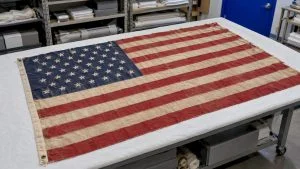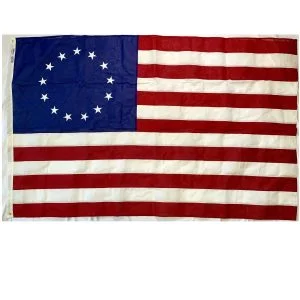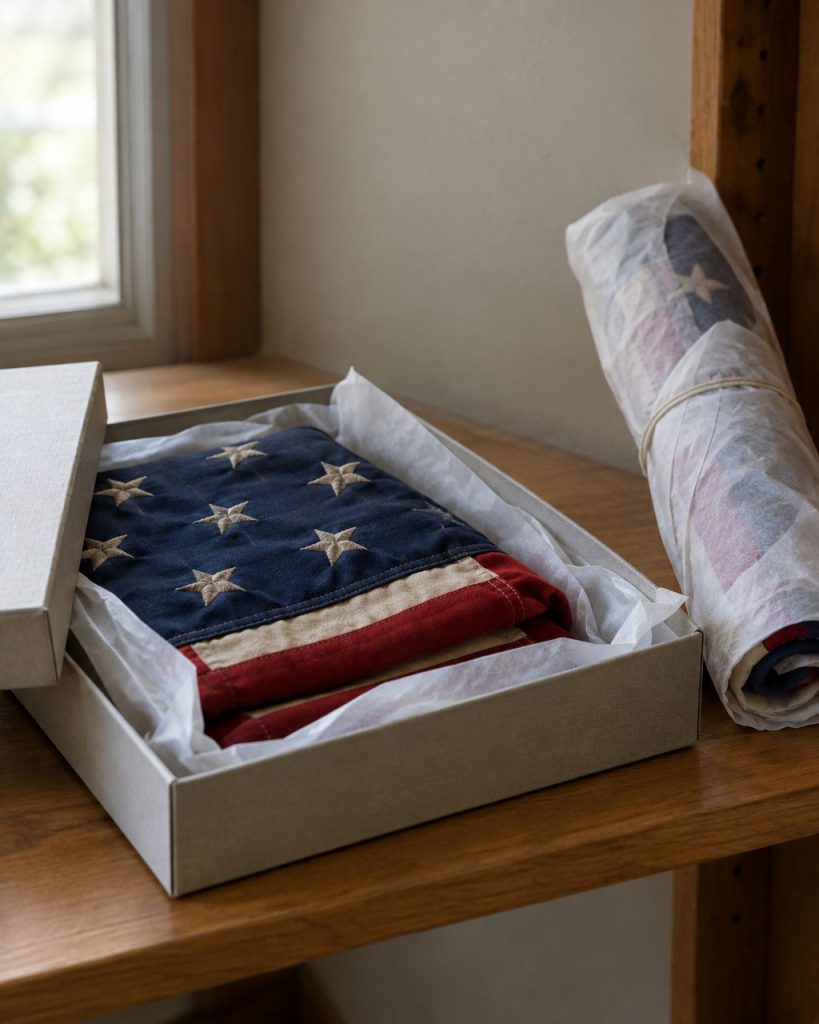
Storing a historical flag reproduction between displays comes down to one rule: never fold it the same way twice, and never let fabric rest against fabric without a clean layer between. Museums either lay flags flat in shallow boxes padded with acid-free tissue or roll them around a wide tube, because folds are where old cloth breaks. Whether your reproduction is a sewn cotton battle flag or an embroidered unit banner, the same five steps keep the fabric, the stitching and the colors ready for the next display.
- Flat storage is safest; roll large flags around a padded tube instead of folding.
- Pad every fold with unbuffered, acid-free tissue — never plain cardboard or wood.
- Keep storage near 70°F and 40-50% relative humidity, away from light.
- Unfold and inspect stored flags every 6 months; refold along new lines.

Why storage matters for historical flags
A reproduction spends most of its life off the pole. The sun gets the blame for flag wear, but a flag in a drawer faces the slower damage: creases that become permanent, fibers stressed along the same lines year after year, and dye that transfers where fabric presses against fabric. Textile conservators treat folds as the enemy for exactly that reason — the National Park Service's curatorial care guidance tells collections staff to fold textiles as little as possible because textiles tend to break along fold-lines in time.
The good news is that museum practice scales down to a spare closet shelf. Nothing below requires special equipment beyond acid-free tissue paper, a cardboard tube and a box or two. The habits matter more than the gear.
How do you store historical flag reproductions between displays?
Work the five steps in order. Each one removes a specific way a stored flag gets damaged.
| Step | What to do | Damage it prevents |
|---|---|---|
| 1 | Clean and fully dry the flag first | Mildew and set-in stains |
| 2 | Lay it flat, or roll it around a padded tube | Fold-line breaks |
| 3 | Separate layers with unbuffered, acid-free tissue | Dye transfer and creasing |
| 4 | Box it in an inert container, off wood and cardboard | Acid migration and pests |
| 5 | Store cool, dark and dry — then check every 6 months | Fading, mold, unnoticed tears |
Step 1: Clean and dry the flag before it goes away
Never store a flag with dirt, salt spray or dampness in the fibers. Soil attracts pests, and moisture trapped in a closed box grows mildew within weeks. Air-dry a wet flag completely flat before it is put away — never on a radiator or in direct sun, which cooks the fibers and fades the dye. If the flag needs washing, follow the fabric-safe washing method for nylon flags rather than machine-drying a delicate reproduction on heat.
A flag that will not come fully clean by gentle hand washing is a flag for the shelf, not the box — display it or store it loosely rolled until it can be looked at properly.
Step 2: Choose flat storage, or roll instead of folding
Flat is the safest rest for a flag: no folds at all, no stress points. Lay the flag out in a shallow box, drawer or shelf lined with clean tissue or washed muslin, and give it room so nothing sits on top of it.

Square cotton reproduction flags like this 52-inch battle flag are made for flat storage — the size the Army of Northern Virginia issued to infantry regiments from 1861.
When a flag is too large to lay flat — and some collector pieces run 4 by 6 feet or more — roll it around a tube instead. The tube should extend past the flag on both ends so the roll never rests on the fabric itself, and the wider the tube's diameter, the gentler the curve. Pad the tube with unbuffered tissue, roll the flag around it, then wrap the whole roll in a clean sheet of tissue or washed muslin. Set the finished roll on cradle supports so its weight never presses on the cloth.
Step 3: Pad folds and separate every layer with acid-free tissue
If a flag must be folded for the season — a shallow closet, a small box — pad every fold with crumpled unbuffered, acid-free tissue so the crease never closes on itself, exactly the way the Smithsonian's flag-preservation guidelines describe for museum collections. Then place tissue or washed muslin between fabric layers so the front of one flag never touches the back of another.

Embroidered and sewn-lettering reproductions like this unit flag hold up best rolled or laid flat, where stitched lettering never carries a crease.
Why unbuffered tissue in particular? Buffered tissue is treated to neutralize acid in paper, and that treatment can harm some protein fibers like silk — the conservator's default for mixed flag collections is unbuffered, acid-free tissue throughout.
When you are ready to Shop Ultimate Flags for the next display piece, pick flags whose construction you can see clearly in the listing — sewn stripes, embroidered stars and honest finishing photos — because flags built with visible stitching are the same flags that tolerate careful handling and storage best.
Step 4: Box the flag in inert materials, away from wood
The container matters as much as the fold. Ordinary cardboard and bare wood both carry acids that migrate into fabric over months, and both can host pests. Use an archival textile box, or line a clean plastic tub with washed muslin. Keep every wooden shelf, pine chest and cedar-lined drawer out of direct contact with the flag — a layer of muslin or a polyethylene barrier between the wood and the box is the minimum.
One caution from museum practice: skip the mothballs. Their fumes settle into fibers, and the smell is nearly impossible to remove from a display flag later. Clean storage, sealed boxes and occasional inspection do the pest-control work instead.
Step 5: Store cool, dark and dry — and refold on new lines every 6 months
Light fades dyes even in a box, so store flags in a dark interior closet or cabinet, not an attic or garage. Attics swing from freezing to baking; basements grow mold in humid weather. The practical targets are steady room temperature — around 70°F — and relative humidity near 40-50%, the range textile conservators aim for in general collections storage.
Then put inspection on the calendar. The Smithsonian's guidance for folded textiles is to open them every six months, check for damage or changes, and refold along new lines so the same fibers never carry the crease twice. Six months is also the right rhythm to catch a pest problem while it is still a problem and not a loss.
Flat or rolled: matching the method to the flag
| Flag | Best storage method | Why |
|---|---|---|
| Sewn cotton battle flag, about 52 inches square | Flat in a shallow archival box | Heavy fabric; folds stress the seams |
| Large 4×6 or 5×8 ft sewn flag | Rolled around a padded tube | Too big to lie flat in most homes |
| Embroidered nylon reproduction | Flat or loosely rolled | Nylon springs back, but creases can set |
| Printed lightweight polyester | Flat with tissue between layers | Lightest fabric; creases show first |
| Silk or fragile antique textiles | Flat, unsupported handling kept to a minimum | Most fragile material in any collection |
One more rule from the museum shelf: if flags must be stacked, the heavy wool goes on the bottom and the light, fragile silk on top, with tissue between every layer. Weight is damage in slow motion.
Setting up a seasonal rotation
Collectors who display flags through the year — battlefield anniversaries in spring, heritage events in summer, holidays in fall — do best with a simple rotation cycle rather than a permanent shelf:
- One flag out at a time. A flag on display picks up dust and light exposure; the rest of the collection rests. Rotate rather than hang the whole collection.
- Rest periods equal to display periods. If a flag hangs for a month in the spring, it rests at least a month before the next event.
- The 6-month inspection doubles as the swap point. Open, inspect, air out, refold on new lines — then decide which flag comes out next.
- Keep the travel roll ready. A tube padded with tissue doubles as safe transport to an event, so the flag never travels folded.
A rotation also spreads wear across the collection instead of concentrating it on the favorite piece, which is how a two-flag collection quietly becomes a twelve-flag collection.
How often should you check a stored flag?
Every six months, on the calendar — not "whenever you think of it." Open folded flags fully, look along the old fold lines first, check hems and hoists for stress, and refold in a new area before the flag goes back. Rolls get unrolled partway and inspected at both ends. Six months matches the interval museum conservators use for folded textiles, and it is frequent enough to catch mold, pests or a small tear while the fix is still easy.
Common storage mistakes to avoid
“Fold lines, not sunlight, are where a stored flag dies — pad every crease and refold on new lines every six months.”
- Storing a flag damp. Mildew sets within weeks in a closed box; dry completely first.
- Folding the same way every time. The same fibers carry the crease until they break — refold on new lines each season.
- Contact with wood or plain cardboard. Both leach acid into fabric; use archival boxes or a muslin barrier.
- Attic or garage storage. Heat swings and humidity are the two fastest ways to age cloth; choose an interior closet.
- Plastic wrap touching the flag. Sealed plastic traps moisture; if plastic tubs are used, the flag rides in muslin, and the lid stays loose enough to breathe.
What a small collection actually needs
The supply list for a home collection is short: unbuffered acid-free tissue paper, a few shallow archival boxes or a lined plastic tub, one or two cardboard tubes wider than a mailing tube, washed muslin for layering, and a closet shelf out of the light. Check current pricing on archival supplies from a preservation supplier — none of it is specialty equipment, and the whole setup costs less than the reproductions it protects.
The alternative — flags folded into a cedar chest in the attic — is how embroidered stars and sewn battle honors quietly pick up permanent creases between the good years. Ten minutes of setup buys decades of clean displays.
Related questions about storing flag reproductions
Is it bad to fold a flag for storage?
Folding is the least safe option — folds concentrate stress and textiles tend to break along fold-lines over time. If space forces a fold, pad every crease with crumpled unbuffered acid-free tissue, refold on new lines every six months, and lay the flag flat rather than hanging it folded.
Can I store a flag in a plastic bin?
Yes, with a barrier. Line the bin with washed muslin or acid-free tissue so the fabric never touches the plastic directly, and leave the lid loose enough for air movement. A sealed, airless container traps moisture — the mildew risk museum guidance warns about most.
How do museums store their historic flags?
Flat in shallow boxes padded with acid-free tissue, or rolled around wide padded tubes with the roll supported on cradles — never hanging, which stretches the fabric over the years. Collections open and inspect folded textiles every six months and refold them along new lines.
FAQ
How do you store a historical flag reproduction between displays?
Lay it flat in a box lined with unbuffered acid-free tissue, or roll it around a padded tube if it is too large to lie flat. Keep it cool, dark and dry, and open and inspect it every six months, refolding along new lines.
Should I fold, roll or hang a reproduction flag?
Flat is best, rolled is second, hanging is worst for long-term storage — gravity stretches the hoist over months. Fold only when space demands it, and pad every fold with tissue.
What kind of tissue paper is safe for flag storage?
Unbuffered, acid-free tissue. It pads folds and separates layers without the acid migration of newspaper or the buffering treatment that can harm silk and other protein fibers.
What temperature and humidity are best for stored flags?
Steady room temperature around 70°F and relative humidity near 40-50%, in the dark. Attics, garages and damp basements all swing outside that range, which is why interior closets win.
How often should a stored flag be inspected?
Every six months. Open it fully, check old fold lines and hems, look for pests or mildew, and refold along new areas so the same fibers never carry the crease twice.
Can a cotton battle flag be stored in a cedar chest?
Not in direct contact — bare wood, cedar included, carries acids that migrate into fabric. Line the chest with washed muslin or use an archival box inside it, and pad any folds with tissue.
One last thing
The 48-inch-square infantry flags the Army of Northern Virginia issued from 1861 were built to survive a campaign and come home folded over a color bearer's arm — but the originals that survived into museums did it on the strength of flat shelves and padded rolls, not more folding. Your reproductions ask for the same treatment: a clean layer between the fabric and the world, and a new fold line every season.