Researching the symbols on Revolutionary War flags comes down to three habits: find the dated source that names or shows the flag, match each symbol to the unit or cause that carried it, and only then hold a modern reproduction up against what the record supports. Work in that order and the pine tree, the rattlesnake and the stars and stripes stop being a pile of patriotic guesses and become dateable, checkable designs — which is exactly what you want before you buy one in 2026.
- Start with dated sources: the 1775 cruisers flag and the 1777 Flag Resolution.
- Match every symbol to the unit or cause that carried it.
- The pine tree with An Appeal to Heaven served Washington’s cruisers from 1775.
- The rattlesnake grew from Franklin’s 1754 Join, or Die cartoon.
- No original Gadsden flag survives — every one sold today is a reproduction.

Why Revolutionary War flag symbols are worth the homework
The Revolution produced its flags fast, locally and under pressure, and the symbols they carried were arguments made in cloth. A pine tree was not decoration — it stood for New England's timber and, in one famous reading, for an ancient liberty that English kings were said to have respected. A rattlesnake made the colonists' point about being left alone: it warns before it strikes. When you know what each image meant and when it was used, a flag becomes a dated document you can check.
That checking habit pays off twice. For a collector, it is the difference between a display that reads true and one that quietly mixes centuries. For a teacher, a parent or a history buff putting together a room, it is what lets you write a caption you can defend. And for a 2026 buyer, it protects you from listings that attach a famous story to a design that never carried one.
Ultimate Flags carries reproductions of these documented designs, from Washington's Cruisers flags to embroidered Gadsden banners, and this guide walks through the research method the store's own products are built on.
How do you research symbols on Revolutionary War flags?
Start with the date and the source, not the story you have heard. Five steps cover nearly every flag you will run across.
1. Start with the dated source, not the legend
The strongest sources are the ones written while the war was happening: letters describing a flag, resolutions adopting one, and museum records of flags that survived. The June 14, 1777 Flag Resolution of Congress is the classic example — it describes thirteen stripes alternating red and white with thirteen white stars on a blue field, and it says nothing about how the stars are arranged. A primary source like that settles more questions in one paragraph than a week of internet arguments.
Aim for at least one source per flag: a resolution, a letter, a period drawing or a museum catalog entry. Note the source and the date it supports, because that note is what your caption — or your collector's card — will stand on.
2. Match the symbol to who flew it
The same animal or tree can belong to different units, navies and militias, and the meaning shifts with each. The table below pulls together the most documented Revolutionary War flag symbols and where the record shows them.
| Symbol | Documented for | Where the record shows it |
|---|---|---|
| Pine tree with "An Appeal to Heaven" | Washington's cruisers, 1775-76 | Colonel Joseph Reed's October 1775 flag description and the fleet's commissions |
| Coiled rattlesnake, "Don't Tread on Me" | Continental Navy colors, 1775 | Christopher Gadsden's recorded presentation of the design to Congress and Commodore Hopkins |
| Rattlesnake with "Liberty or Death" | Culpeper Minute Men, 1775 | Banners credited to the Culpeper County, Virginia battalion |
| Thirteen stripes and thirteen stars | The Continental Congress, June 14, 1777 | The Flag Resolution, which left the star arrangement open |
| Crescent over "LIBERTY" | Colonel Moultrie's South Carolina troops, 1776 | Moultrie's own account of designing the flag for Fort Sullivan |
Read down that middle column and the research method answers itself: a symbol means what its carriers used it to mean, and the record names the carriers.
3. Compare surviving and documented examples
Some originals survive, and they are worth more than a thousand reproductions of reproductions. A flag tied by tradition to the Battle of Bennington on August 16, 1777 is preserved at the Bennington Museum in Vermont, stars and the year "76" across its canton. The Washington's Headquarters standard is documented in period drawings. Comparing a documented example with the reproduction you are considering tells you in seconds whether the maker followed the record or improvised.
When no original survives, the documentation stands in. No founding-era Gadsden flag is known to exist today, so the design rests on 1775-76 written accounts — which is plenty to research, as long as the seller and the buyer both treat the written record as the standard.
4. Separate what is documented from what is traditional
The most respected flag stories and the shakiest ones wear the same clothes. The Betsy Ross origin tale is the famous case: historians trace it to a story her grandson told in 1870, and the historical record neither proves nor disproves it. Tradition can still matter — the Bennington flag's battle story is exactly that — but a careful researcher writes "tradition holds" where the record goes quiet, and so should the caption on your wall.
5. Check a reproduction against the record before you buy
Once you know the documented design, the last step takes five minutes: read the listing, count the stars, check the motto's spelling, and compare the layout with your source. A reproduction that follows the record is a piece of history you can defend; one that does not is a decoration — and might still be nice, but you should know which one you are buying in 2026.
When you are ready to Shop Ultimate Flags, the rattlesnake designs covered below are the easiest place to put the method to work, because their documentation is unusually strong.
The pine tree and "An Appeal to Heaven"
In October 1775, as George Washington readied a small fleet of armed cruisers to hunt British supply ships, Colonel Joseph Reed described a flag for the vessels: a pine tree on a white field with the words "An Appeal to Heaven" alongside. The design served the cruisers through the fleet's 1776 service, and the pine tree itself reached back decades — Massachusetts had used a pine tree on its naval colors since at least the 1680s, and New England's great timber trade had made the tree a regional badge long before that.
The motto did heavy lifting. "An Appeal to Heaven," from a phrase John Locke used about the right of a people to resist tyranny when courts and kings offered no remedy, made the flag a statement of conscience as much as a naval ensign. That combination — a New England symbol carrying a philosophical argument — is why the design reads so strongly on a modern reproduction.

The rattlesnake and "Don't Tread on Me"
The snake's paperwork goes back further than the war itself. Benjamin Franklin's "Join, or Die" cartoon ran in the Pennsylvania Gazette on May 9, 1754, showing the colonies as the segments of a cut rattlesnake, and the image made the snake an American symbol twenty years before the first shot at Lexington. By late 1775 an essay published in the Pennsylvania Journal and attributed to Franklin was praising the rattlesnake's virtues at length: it never begins an attack, it gives fair warning, and it never surrenders.
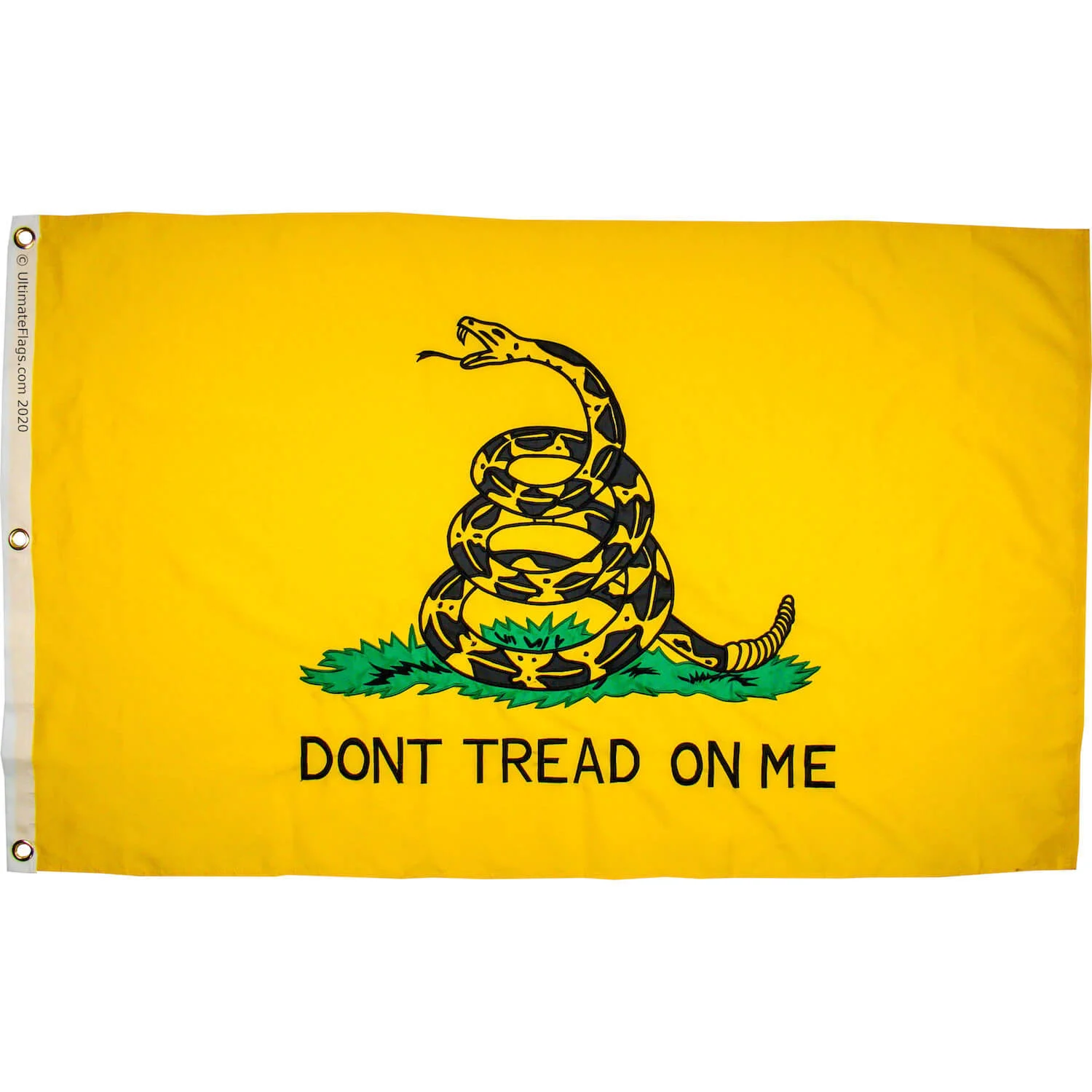
The famous yellow banner followed. Christopher Gadsden, a South Carolina patriot, is recorded presenting the design — a coiled rattlesnake on a yellow field with "Don't Tread on Me" — to the Continental Congress and to Commodore Esek Hopkins, the Navy's first commander, in 1775-76. The rattlesnake also flew in other outfits: the First Navy Jack paired it with thirteen red and white stripes, and a banner credited to the Culpeper Minute Men of 1775 combined the snake with Patrick Henry's "Liberty or Death."
One research note saves collectors real money: no original Gadsden flag is known to survive, so the design's authority rests entirely on those 1775-76 accounts. That is enough — but it means the wording and layout on any "authentic" claim should be checked against the accounts, not against the seller's confidence.
What the 1777 Flag Resolution actually says
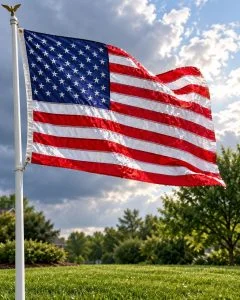
After a year of fighting under a patchwork of local banners, Congress settled the national colors. The resolution of June 14, 1777 reads that the flag be thirteen stripes, alternate red and white, with thirteen stars, white, on a blue field, representing a new constellation. Two details reward careful readers: it does not name a star arrangement, and it does not tie the design to any single battle.
That open arrangement explains why period and early flags show the thirteen stars in circles, in staggered rows and in other patterns. The 1777 document licenses them all equally — which means a reproduction with a circle of thirteen stars is not more correct than one with rows; both satisfy the record. What the resolution does pin down is the count: thirteen stripes, thirteen stars, as of June 1777.
Why the same symbol shows up on different flags
- There was no central flag office. Congress adopted national colors in 1777, but armies, navies and militias sourced flags locally before and after, so designs multiplied.
- Symbols were regional before they were national. The pine tree was New England's; the crescent was South Carolina's; the rattlesnake traveled with the Navy and the militias.
- Mottos did the arguing. "An Appeal to Heaven" and "Don't Tread on Me" are positions, not decoration, and units chose the argument they wanted to make.
- Postwar retellings reorganized the story. Nineteenth-century accounts attached stories to designs, which is why every modern buyer should weigh the dated record over the repeated legend.
Common mistakes when researching flag symbols
- Mistaking a story for a source. "Everyone knows" is not documentation. The Betsy Ross tale and several battle stories rest on tradition, not on 1770s paper.
- Dating a symbol to its most famous flag. The rattlesnake was twenty years old when the Gadsden design appeared; the pine tree was older still. Check the symbol's first documented use, not the flag that made it famous.
- Reading one flag as the whole war. No single design represented the Revolutionary cause through the war. The Grand Union carried the British union in its canton well into 1776, and the national stars and stripes postdate the fighting's first year.
- Trusting a listing over the record. A product title is not a historical source. Five minutes with a resolution or a museum catalog settles what a listing may not.
FAQ
What does the pine tree mean on Revolutionary War flags?
The pine tree stood for New England, whose timber and naval colors had used the tree for decades, and it carried the motto ‘An Appeal to Heaven’ on the flags of Washington’s cruisers in 1775-76. Colonel Joseph Reed’s October 1775 description is the key dated source.
Why is there a rattlesnake on Revolutionary War flags?
The rattlesnake warned before it struck and never surrendered, which made it a favorite American symbol from Franklin’s 1754 Join, or Die cartoon onward. By 1775 it flew on naval colors and militia banners, including the Gadsden design and the Culpeper Minute Men’s flag.
Did the 1777 Flag Resolution say how to arrange the stars?
No. The June 14, 1777 resolution specified thirteen stripes and thirteen white stars on a blue field but left the star arrangement open, which is why period flags show circles, rows and other patterns.
Is there an original Gadsden flag from 1775?
No founding-era original is known to survive. The design rests on written accounts of Christopher Gadsden’s 1775-76 presentations to Congress and Commodore Hopkins, so every Gadsden flag sold today is a reproduction of a documented design.
Is the Betsy Ross story documented?
The story comes from testimony her grandson presented in 1870, and historians find no conclusive evidence supporting or denying it. The circle-of-stars pattern itself is consistent with the open arrangement the 1777 resolution allows.
What is the best source to check a Revolutionary War flag against?
Use a dated primary source: a flag resolution, a period letter or description, or a museum catalog of a surviving flag. One dated source per flag is the standard a careful collector or teacher applies in 2026.
How do I know if a reproduction is historically accurate?
Compare its design element by element with the documented source — star count, motto wording, layout and colors. A reproduction that matches the record is accurate to the design, whatever its fabric or age.
One last thing
The rattlesnake's longest paper trail belongs to a cartoon, not a flag: Franklin drew "Join, or Die" in 1754 for a newspaper, twenty-one years before the war it is now remembered for. That is the quiet lesson of researching Revolutionary War flags — the symbols were already old arguments when the war borrowed them, and the dated sources are what let you tell the difference between a design the era used and a story the era never heard of.
Historical basis for this 2026 guide: the June 14, 1777 Flag Resolution (Continental Congress, via the National Archives); Colonel Joseph Reed's October 1775 flag description for Washington's cruisers; the Pennsylvania Gazette's May 9, 1754 "Join, or Die" cartoon and the 1775 Pennsylvania Journal rattlesnake essay attributed to Franklin; the Bennington Museum's record of the Bennington battle flag tradition.
Related guides