Retire an unserviceable U.S. flag through a dignified ceremony, preferably by burning, as the Flag Code directs. When the flag is synthetic or an open fire is not safe or legal where you live, burial, cutting, or a veteran organization’s retirement program are all respectful and accepted alternatives. When in doubt, hand the flag to your local American Legion or VFW post and let them carry out the ceremony.
TL;DR:
- Most synthetic flags should be retired through burial or recycling, as burning synthetic fabric can release hazardous fumes.
- Many veteran posts, scout groups, and civic offices accept worn flags, often conducting organized retirement ceremonies during national holidays.
- Confirm the flag’s material before deciding on disposal; natural fibers like cotton are suitable for burning, whereas nylon or polyester are better suited for burial or recycling.
- A proper retirement ceremony involves inspecting, folding, presenting, burning or burying the flag, and handling ashes with dignity.
- You can delegate the ceremony to local organizations like the American Legion or VFW, ensuring the process follows proper etiquette and legal fire safety rules.
Table of Contents
- Flag Retirement Rules and the Traditional Ceremony
- When to Repair a Flag vs. When to Retire It
- Comparing Proper Flag Retirement Methods
- Where to Take a Flag for Retirement
- Flag Retirement Rules, the Law, and Fire Safety
- Why This Guidance Comes From Ultimate Flags
- What Actually Matters When You Retire a Flag
- Ready for a New Flag?
- Sources
- FAQ
Flag Retirement Rules and the Traditional Ceremony
The American Legion’s retirement ceremony, formalized under Resolution No. 440 in 1937, still supplies the template most veteran posts and civic groups follow today. It is not complicated, but it asks for care and unhurried attention at every step.
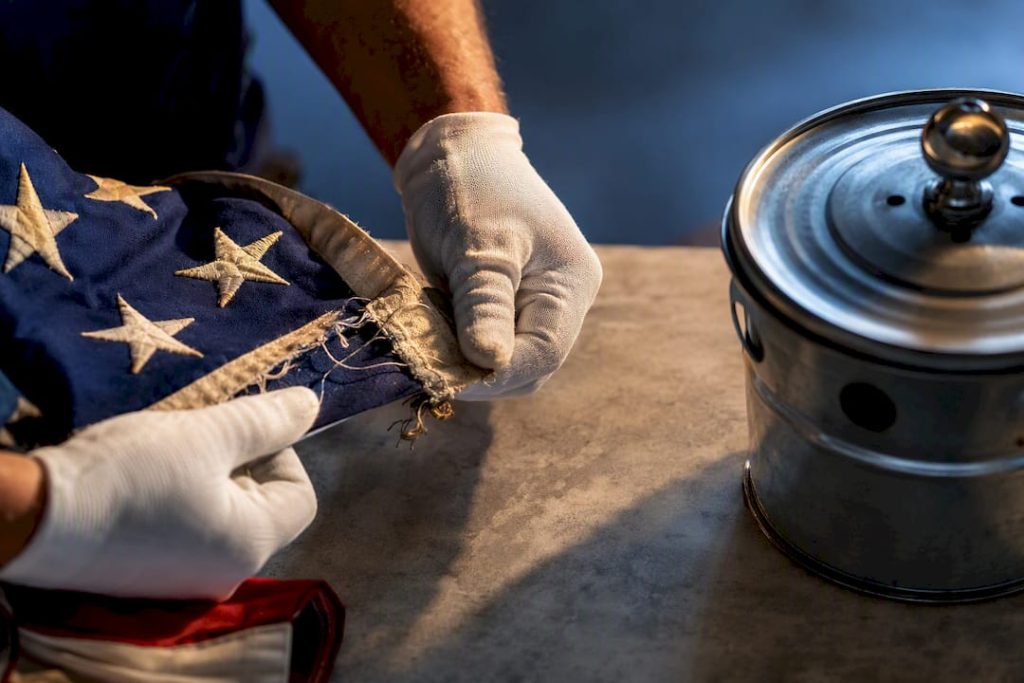
- Inspect and fold. Confirm the flag is genuinely unserviceable, then fold it into the familiar triangle, star field showing outward.
- Present it to those gathered. Whether it is a crowd at a post hall or your own family in the backyard, a short statement of why this flag has earned retirement sets the tone.
- Build a contained, adequate fire. The flame needs to be large enough to fully consume the fabric quickly, not smolder it for an hour. A burn barrel or fire pit works better than a small campfire ring.
- Commit the flag to the fire. Many ceremonies open with the Pledge of Allegiance, add a moment of silence, and close with a short reading or a veteran’s remarks before the flag is laid into the flame.
- Watch until it is fully consumed. Never walk away from a burning flag. Dignity means seeing the act through, not treating it as a task to start and finish elsewhere.
- Extinguish and bury the ashes. Once the fire is fully out, the remaining ashes are typically buried, closing the ceremony the way the Flag Code intended: with the flag returned to the earth, not left in a trash bin.
Pro Tip: If you’re organizing a ceremony for a group, ask a local Scout troop or American Legion post to co-host. They already have the ritual language memorized and can lend it real weight.
When to Repair a Flag vs. When to Retire It
Not every worn flag has earned retirement. A flag with a torn hem, a little road grime, or minor fading from sun exposure can often be brought back with basic care rather than sent to the fire.
- Heavy, uneven fading across the whole field is a sign the fabric itself has broken down, not just the surface color.
- Fraying that has moved past the hem and into the stripes or canton usually cannot be trimmed away without changing the flag’s proportions.
- Large tears, holes, or missing sections of fabric are beyond a simple patch job.
- Permanent stains from oil, rust, or mildew that washing or dry cleaning cannot lift are a strong signal to retire.
Trimming a frayed edge, re-hemming, or a careful wash can extend a flag’s life by years. But if fixing it would visibly reshape the stripes or the star field, retirement is the right call. Ultimate Flags’s guide on flag rules every American should know walks through the etiquette side of that judgment call in more detail.
Comparing Proper Flag Retirement Methods
The Flag Code’s language, “should be destroyed in a dignified way, preferably by burning,” has always left room for judgment. “Preferably” signals a tradition, not a mandate, and the alternatives below are just as respectful when circumstances call for them.
- Burning remains the traditional first choice for cotton or wool flags, provided you have a legal, contained fire and can see the flag fully consumed.
- Burial is a dignified stand-in when burning is not possible. Wrap the flag, place it in a simple wooden or biodegradable container, and bury it deep enough that it stays undisturbed.
- Cutting the canton away from the rest of the flag is an accepted step when a full ceremonial burn isn’t practical. The star field is treated as the flag’s most sacred element, so it’s separated with care rather than tossed with the stripes.
- Recycling programs built specifically for flag material are growing, and they’re often the smartest option for synthetic flags.
Most flags flying today are nylon or polyester, not cotton, and burning synthetic fabric can release fumes that are unpleasant or genuinely hazardous to breathe. That single material shift is why so many modern retirement programs quietly steer synthetic flags toward burial or recycling instead of the fire pit.
Pro Tip: Check the fabric tag or the seller’s listing before you decide on a method. If it says nylon or polyester, plan on burial or recycling rather than burning.

Where to Take a Flag for Retirement
You don’t have to run the ceremony yourself. VFW posts and American Legion posts accept worn flags as a matter of course, often at no charge, and many hold organized retirement ceremonies on a regular schedule, especially around Flag Day and Memorial Day.
- Boy Scout and Girl Scout troops frequently run flag retirement services as community projects.
- Municipal offices and county governments, as Parker County, Texas shows, sometimes operate their own collection boxes or seasonal drop-off events.
- Some fire departments and civic centers host special collection days tied to national holidays.
Call ahead before you drop off a flag. Some programs handle only cotton flags in their ceremonies and route synthetic ones to a separate recycling partner.
Flag Retirement Rules, the Law, and Fire Safety
The Flag Code is a statement of national custom, not a criminal statute; no one is prosecuted for skipping the “preferred” burning method. Separately, First Amendment case law has protected certain acts of flag desecration as expression, a legal reality distinct from the etiquette this guide covers. What does carry real teeth is your local fire code. Municipal fire authorities often restrict or ban open burning entirely, so confirm the rules before you strike a match, use a contained and monitored fire area, and never leave a flag burning unattended.

Why This Guidance Comes From Ultimate Flags
Ultimate Flags has spent decades as one of America’s longstanding online flag retailers, and part of that role is publishing clear, accurate guidance on flag etiquette, not just selling fabric. This piece was shaped with contributing editor John Hough. For care questions before retirement becomes necessary, see the guide to flag rules most people overlook and tips on flagpole footing and setup that help a flag last longer in the first place.
What Actually Matters When You Retire a Flag
Most guides online treat flag retirement as a single ritual with one right answer: build a fire, burn the flag, done. That advice made sense in an era when flags were cotton or wool. It makes far less sense now, when the overwhelming majority of flags sold and flown are nylon or polyester, and burning them can do more harm than good. The conventional wisdom hasn’t caught up to the material reality.
What I’d prioritize first isn’t the method, it’s the material. Know what your flag is made of before you decide how to retire it. A cotton flag earns the traditional fire. A synthetic flag deserves burial, cutting, or a recycling program just as much respect, delivered through a different mechanism. The ceremony’s dignity comes from attention and intention, not from insisting on one specific flame.
The second thing people get wrong is assuming they have to do this alone. Handing a worn flag to a VFW post costs you nothing and guarantees it’s handled by people who do this regularly and do it right.
— John Hough
Ready for a New Flag?
Once you’ve retired a flag properly, the flagpole shouldn’t sit empty for long. A wide range of American flags, historical designs, and military and service flags are available in various sizes and materials to fit your pole, climate, and reasons for flying one. Specialty and heritage designs are offered alongside standard national flags, providing more variety than typical generic options often found in big-box retailers.

If you’re ready to replace what you retired, browse Ultimate Flags’s collection of American flags and heritage designs, including pieces tied to real American military history, and pick the size and fabric that matches how and where you fly it.
Sources
For the original language and ceremonies referenced here, consult the U.S. Flag Code, The American Legion’s disposal ceremony, VFW’s etiquette guidance, and Defense.
- 4 U.S.C. § 8: Respect for flag (Flag Code)
- The American Legion — Ceremony for Disposal of Unserviceable Flags
- National Flag Foundation — How to dispose of an American flag the right way
- VFW — Flag etiquette and disposal guidance
FAQ
Who Can Legally Retire a Flag?
Anyone can retire their own flag; there’s no license or permission required. Most people simply choose to involve a veteran organization like the American Legion or VFW for the ceremony itself, or to make sure local fire rules are followed.
What Are the 7 Rules of Flag Etiquette?
Common etiquette points include never letting the flag touch the ground, flying it only from sunrise to sunset unless properly illuminated, displaying it right side up, retiring it when it’s no longer fit for display, and never using it as clothing, bedding, or drapery. Ultimate Flags covers the full set in its flag rules guide.
How Much Does It Cost to Have a Flag Flown Over the Capitol?
This service, offered through congressional offices, typically involves a modest fee plus shipping and a wait time of several weeks to months; Costs and processing times vary by office, so contact your representative’s or senator’s office directly for current figures.
What Is the Proper Ceremony for Flag Retirement?
The standard ceremony, based on the American Legion’s model, folds the flag into a triangle, presents it to those gathered, and commits it to a controlled fire large enough to fully consume it, followed by burying the ashes. For synthetic flags, burial or cutting the canton away replaces the burning step while keeping the same respectful order.