A torn flag deserves a decision, not a shrug. Small frays and pulled seams call for DIY flag repair; significant tears, historic pieces, or heirloom fabric belong with a professional restorer; and a flag that is shredded or faded beyond recognition has earned a dignified retirement. Start by inspecting the fly end, the union, and every grommet, photographing what you find, then choose your path from there.
TL;DR:
- Minor tears and frays on the fly end or grommets can typically be repaired at home using proper stitching and UV-resistant thread, extending the flag’s lifespan.
- Heavily damaged, faded, or shredded flags should be retired with dignity, either through burning natural fabrics or cutting synthetic fabrics into pieces, avoiding improper disposal.
- Professional repair services are recommended for large tears, antique flags, or ones with sentimental or historic importance, with costs scaling based on complexity and size.
- Proper maintenance, such as gentle washing, shade drying, and regular inspection, can prevent damage and significantly prolong a flag’s service life.
- Replacing a worn or damaged flag with a new, proportionate, and durable one is often the most respectful choice when repairs become unfeasible or the flag no longer looks appropriate.
Table of Contents
- How Do You Decide Whether to Repair or Retire a Flag?
- How Do You Repair a Torn Flag Yourself?
- When Should You Hire a Professional Flag Repair Service?
- Which Flag Repair Service Type Fits Your Situation?
- How Do You Clean and Maintain a Flag to Prevent Damage?
- How Do You Retire a Flag Respectfully?
- What Flag Owners Get Wrong About Repair
- Get a Correctly Proportioned Replacement Flag From Ultimate Flags
- Sources
- FAQ
How Do You Decide Whether to Repair or Retire a Flag?
Every flag tells you what it needs if you know where to look. The fly end (the edge farthest from the pole) takes the brunt of wind and sun, so start your inspection there before working inward toward the union, the blue field where the stars live.
Small, isolated damage is almost always worth saving. A single pulled seam, a fray under an inch or two, a loose grommet, or a corner starting to fray are the kind of wear that a determined owner can fix in an afternoon. Heavier damage tells a different story. According to LegalClarity, a flag with heavy shredding, colors faded to the point the design is hard to make out, or several large tears scattered across the field is generally past the point of sensible repair.
Before you touch a needle, document the damage:
- Photograph the flag flat, in good light, with the damage clearly visible from a few angles.
- Measure the flag’s full dimensions and the size of each tear or worn patch.
- Note the fabric, whether it is cotton, nylon, or polyester, since that affects both repair method and cost.
- Check every grommet for rust, cracking, or looseness in the header canvas.
The U.S. Flag Code adds a moral dimension to this practical checklist. It states that a flag “no longer a fitting emblem for display” should be retired with dignity, traditionally through burning. For synthetic fabrics, burning creates real hazards, so a widely used alternative is to cut the flag into pieces so it no longer resembles a flag at all before disposal.
How Do You Repair a Torn Flag Yourself?
Fix the fabric right and it will fly for years. Rush it, and you will be back at the sewing machine within a season.
Start by identifying your fabric. Check the header tag if one survives, or do a simple stretch test: nylon has noticeable give and a slight sheen, cotton feels dry and stiff, and polyester sits somewhere in between with almost no stretch. This matters because thread and needle choice depend on it entirely.
Here is the repair sequence that actually holds up outdoors:
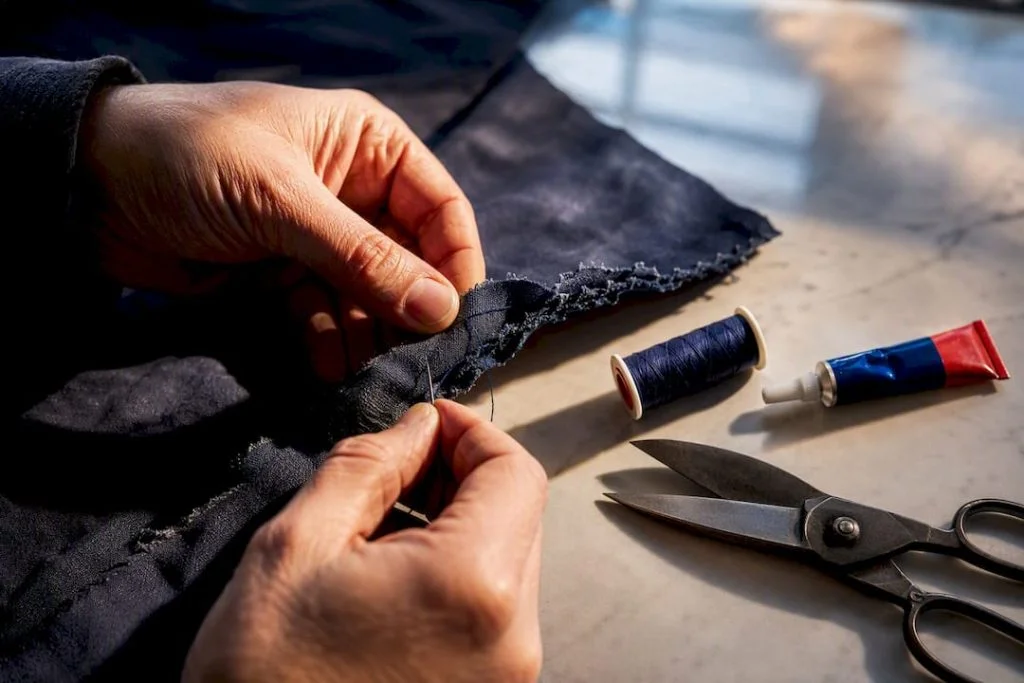
- Re-hem the fly end. Trim any frayed threads square, fold the raw edge under about a half inch, and pin it flat before sewing. Reinforced zig-zag stitching distributes wind stress far better than a straight stitch, so set your machine to a medium-width zig-zag and use a heavy-duty needle, sized for denim or leather, to avoid skipped stitches on thick synthetic weaves.
- Choose UV-resistant polyester thread, not cotton. Cotton thread breaks down under sun exposure within a season or two outdoors, while UV-rated polyester holds its strength for years. This single choice is the most common reason DIY flag repairs fail early.
- Patch larger tears with a backing patch. Cut a piece of matching fabric slightly larger than the tear, slide it behind the damaged area, and stitch around the perimeter plus a reinforcing X across the center. Keep the patch inside the existing proportions of the flag; never trim so much fabric that the overall size shrinks noticeably.
- Replace failing grommets with a grommet kit. Support the header on a hard, stable surface, punch the new hole cleanly, and set the grommet with the correct tool so the metal seats flush rather than crumpling under load.
- Use hem tape or fabric glue only as a stopgap. These no-sew fixes work for a weekend display or an emergency fix before an event, but adhesive bonds fail faster than stitching in wind, rain, and UV exposure. Follow up with a proper sewn repair as soon as you can.
Pro Tip: Keep a running count of how many times you have re-hemmed the same flag. Trimming the fly end more than two or three times shortens the flag enough to throw off its proportions, and at that point replacement usually makes more sense than another repair.
A basic home repair kit should include sharp fabric shears, heavy-duty needles, UV-resistant polyester thread, a grommet kit with setting tool, and a tube of seam sealer for edge reinforcement. Stand Flag Poles notes that keeping these on hand lets you catch a small fray before it becomes a torn panel, which is far cheaper than any restoration bill.
When Should You Hire a Professional Flag Repair Service?
Some damage is beyond a home sewing machine, and some flags are worth more care than a weekend project allows. If you are looking at multiple large tears, a badly frayed header, or a flag with sentimental or historic weight, a professional repair service earns its cost.
Flag repair shops typically offer:
- Standard re-hemming and edge reinforcement
- Reinforced corners built to withstand heavier wind loads
- Header and canvas replacement, including grommet resets
- Conservation-grade restoration for antique, ceremonial, or presentation flags
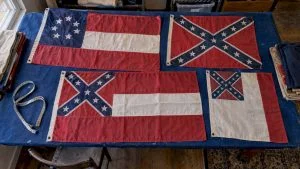
For flags with real historical or family provenance, conservation specialists use archival methods that preserve the fabric’s history rather than simply patching it. That distinction matters if the flag once flew over a unit, a courthouse, or a family homestead.
Pricing generally scales with size, damage complexity, and materials. A simple re-hem on a standard 3×5 costs far less than reinforced corners on a large commercial banner, and conservation work on an antique piece runs highest of all because of the specialized labor involved.
| Service | Turnaround | Shipping | Typical Cost Range | Specialty |
|---|---|---|---|---|
| Basic re-hem | Days to about a week | Mail-in accepted | Lower cost | Everyday wear and tear |
| Reinforced corners/grommets | About a week | Mail-in or drop-off | Mid-range | High-wind display flags |
| Full textile restoration | Several weeks | Insured shipping recommended | Higher cost | Antique or ceremonial flags |
| Banner re-sewing | Varies by size | Freight for oversized pieces | Varies by scale | Large event or commercial banners |
Before shipping a flag off, photograph it, measure it precisely, and pack it flat with acid-free tissue if it has any age to it. Ask the shop directly what thread specification they use, whether they offer a free estimate before committing to the job, what guarantee backs their stitching, and how long they expect the repair to last under normal outdoor conditions.
Which Flag Repair Service Type Fits Your Situation?
Matching the right service category to your flag saves both money and disappointment. A quick fray does not need conservation-grade handling, and a century-old regimental flag should never land on a rush re-hem table.
Use this as a starting filter, not a final word. A shop that specializes in reinforced corners may not be the right call for a flag with genuine historical value, even if their turnaround is faster.
How Do You Clean and Maintain a Flag to Prevent Damage?
Most repairs start with damage that better maintenance would have prevented. Wash outdoor flags by hand or on a gentle cycle with mild detergent, and always air dry in the shade since dryer heat and direct sun both weaken synthetic fibers over time. If ironing is needed, use a low setting and a pressing cloth to protect the dye.
Inspect any continuously displayed flag every few weeks, checking the fly end, grommets, and halyard rope for fraying before small problems grow. A few habits go a long way:
- Rotate two flags on the same pole so one always rests while the other flies.
- Check the halyard and clips regularly; a frayed rope can tear a healthy flag in a single storm.
- Bring flags in during high winds or severe weather rather than letting them thrash against the pole.
- Choose heavyweight outdoor-rated material for locations with constant wind or sun exposure.
Simple rotation alone can double the useful life of a flag flown daily.
How Do You Retire a Flag Respectfully?
Retirement is not disposal; it is a final act of respect, and the U.S. Flag Code treats it that way. When a flag becomes too damaged, faded, or worn to serve as a fitting emblem, here is how to close that chapter properly.
- Fold the flag correctly before transport, using the traditional triangular fold as a sign of respect for the piece.
- Contact a local American Legion or VFW post, since these organizations regularly accept worn flags and often hold organized retirement ceremonies, sometimes alongside Scout troops.
- Choose burning for natural fabrics where it is safe and legal to do so, following the Flag Code’s traditional method.
- Cut synthetic flags into pieces instead of burning them, since nylon and polyester can release toxic fumes and sticky residue when burned, making cutting the safer and more practical choice.
- Consider textile recycling for flags with no sentimental weight, or private burial for those you would rather lay to rest personally.
If you are unsure how to fold, present, or hand off a worn flag, Ultimate Flags’ guidance on flag care and handling walks through the etiquette step by step.
What Flag Owners Get Wrong About Repair
Most people treat a torn flag like a torn shirt: patch it, move on, forget about proportions or provenance. That instinct is not wrong exactly, but it misses something the Flag Code understood from the start. A flag is not just fabric; it is a stand-in for the thing it represents, and how you handle its decline says something about how much that thing still means to you.
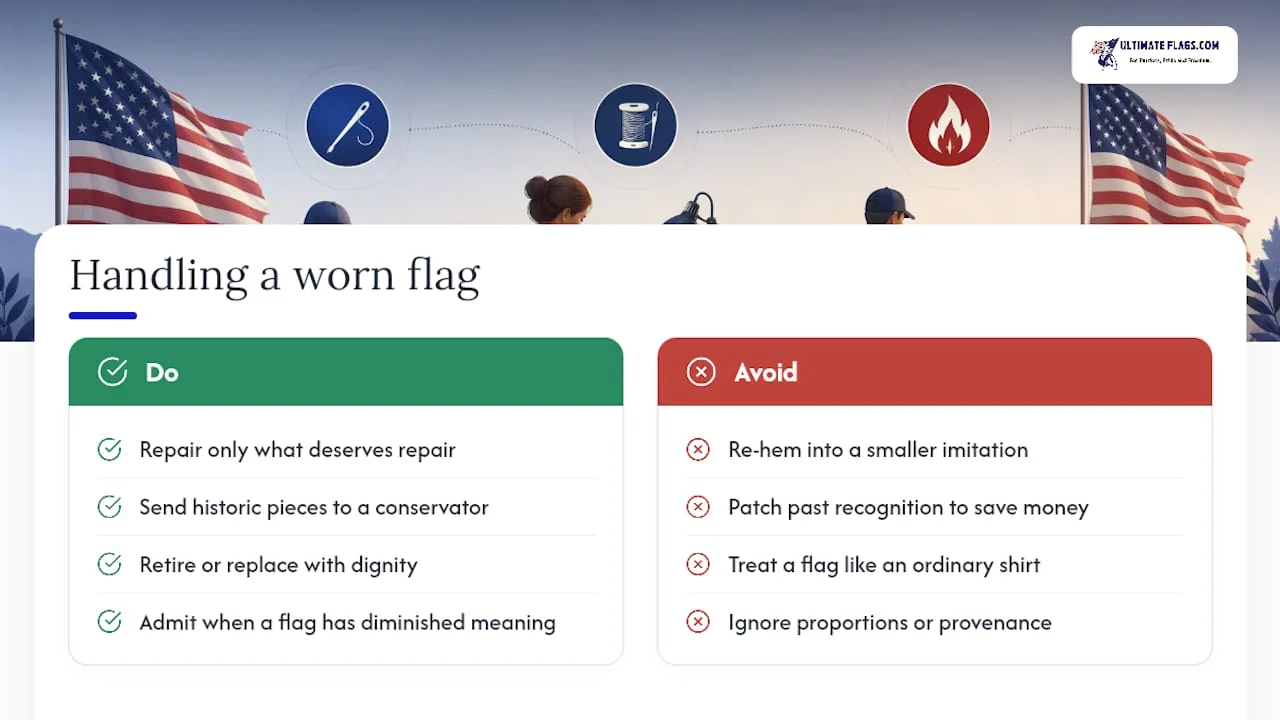
The bigger mistake I see is people re-hemming a flag into a smaller, sadder version of itself rather than admitting it is time to retire it or replace it outright. Three or four trims into the fly end, and you no longer have the flag you started with. You have a shrunken imitation that technically still flies but no longer looks right doing it. There is no shame in retiring a flag that has served its purpose. There is real disrespect in flying one that has been patched past recognition just to avoid buying a new one.
Flags suppliers with experience servicing collectors and veterans’ families shape this guide: repair what deserves repair, send historic pieces to a conservator, and retire the rest with the dignity the Flag Code asks for.
— John Hough
Get a Correctly Proportioned Replacement Flag From Ultimate Flags
Sometimes the most respectful repair is no repair at all. All-weather flags built with proper proportions from the first stitch, reinforced headers designed to outlast a patched-together fix, and grommet kits are available for owners who prefer to maintain their current flag rather than replace it outright.

If your flag has been re-hemmed past its original size, has faded beyond a decent restoration, or you simply want a durable flag that will not need mending for years, start with a heavyweight outdoor flag built for your climate, add a reinforced header for high-wind locations, and keep a grommet kit on hand for routine upkeep. Browse Ultimate Flags’ collection of replacement and heritage flags to find the right size and material for your pole, and place your order today so you are never caught flying a flag past its prime.
Sources
- How to Dispose of an American Flag — National Flag Foundation
- How to Repair, Retire, or Dispose of a Torn Flag — LegalClarity
- Rapidrepair
- Essential Flag Repair Kit Items — Stand Flag Poles
FAQ
Can You Repair a Flag Yourself?
Yes. Minor frays, loose grommets, and small tears can be fixed at home with a zig-zag stitch, UV-resistant polyester thread, and a basic grommet kit, though heavily damaged or historic flags are better sent to a professional.
What Do You Do With Flags That Are Ripped?
Small rips can be patched or re-hemmed at home; flags that are shredded, badly faded, or torn in multiple large sections should be retired according to the Flag Code, typically by burning natural fabrics or cutting synthetic ones into unrecognizable pieces.
How Much Does Flag Repair Cost?
Costs vary by size and damage: a basic re-hem on a standard flag costs the least, reinforced corner or grommet work runs mid-range, and full textile restoration on antique or ceremonial flags costs the most due to specialized labor.
Is It Legal to Repair an American Flag?
Yes, there is no law against repairing an American flag. The Flag Code offers guidance on respectful display and retirement, but altering, mending, or restoring your own flag is entirely permitted.
Where Can I Drop Off a Flag for Retirement?
Local American Legion posts, VFW chapters, and many Scout troops accept worn flags year-round and often hold formal retirement ceremonies.