The term “Civil War flags” encompasses the full set of national, battle, regimental, naval, and state banners carried by Union and Confederate forces between 1861 and 1865. Knowing which flag is which begins with five essential types:
- Union Stars and Stripes (1861–1865): the familiar red, white, and blue national flag, with star counts increasing as states were added during the war
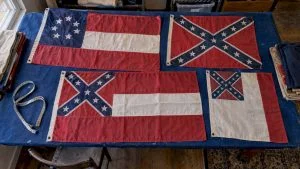
- Stars and Bars (Confederate 1st National, March 1861): three horizontal bars of red, white, and red with a blue canton bearing a circle of 7–13 stars
- Stainless Banner (Confederate 2nd National, May 1863): a white field with the battle flag canton in the upper left corner
- Blood-Stained Banner (Confederate 3rd National, March 1865): the Stainless Banner with a broad red vertical stripe at the fly end
- Confederate Battle Flag (Southern Cross, 1861 onward): a red field with a blue saltire bearing 13 white stars, the most widely recognized Confederate emblem in the field
- Regimental and unit flags: unique banners carried by individual regiments, often hand-sewn and later inscribed with battle honors
The Library of Congress, the National Park Service, the Smithsonian’s National Museum of American History, and Ultimate Flags all serve as authoritative references for identifying, viewing, and acquiring accurate reproductions of these historic banners.
Pro Tip: The Confederate battle flag and the Stars and Bars are two entirely different designs. Confusing them is the single most common error among new collectors. The battle flag was a square or near-square field banner; the Stars and Bars was a rectangular national flag with horizontal stripes.
Key Takeaways
Civil War flags encompass national, battle, regimental, naval, and state banners from both sides, and accurate identification requires knowing the specific design, date, and dimensions of each type.
| Point | Details |
|---|---|
| Three Confederate national flags | Stars and Bars (1861), Stainless Banner (1863), and Blood-Stained Banner (1865) are distinct designs, not interchangeable names. |
| Battle flag dimensions by branch | Infantry 48", artillery 36", cavalry 30" square; branch-correct sizing is required for accurate reproductions. |
| Over 460 Medals of Honor tied to flags | More than 460 of the 1,522 Civil War Medals of Honor involved flag actions, reflecting the tactical and symbolic weight these objects carried. |
| Provenance verification | Always request accession numbers and donor records; NPS and Smithsonian catalog entries are the standard for authenticating originals. |
| Ultimate Flags reproductions | Ultimate Flags offers branch-correct battle flags, Stars and Bars, and Union variants in materials suited to reenactment, display, and collecting. |
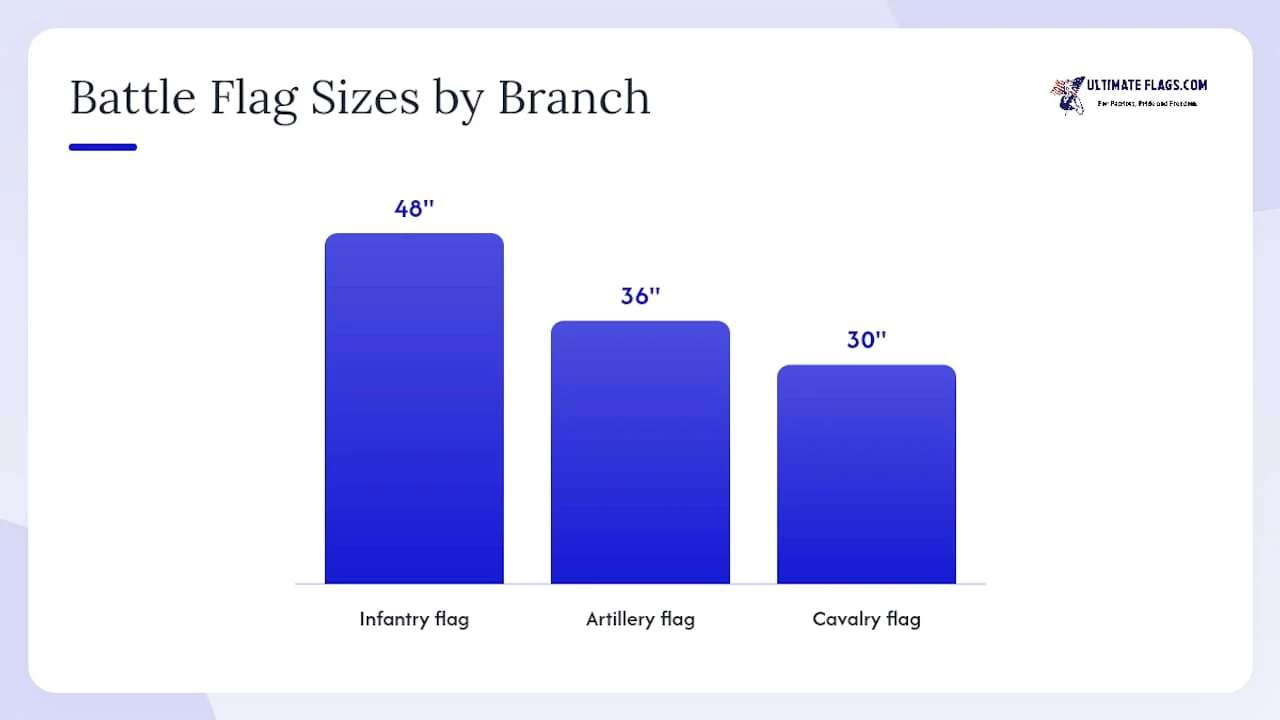
Table of Contents
- Why Civil War flags mattered on the battlefield and beyond
- Union flags used during the war: Stars and Stripes variants and regimental colors
- Confederate flags: Stars and Bars, Stainless Banner, Blood-Stained Banner, and the battle flag
- Regimental and unit flags: inscriptions, honors, and where originals survive
- Regional, state, and naval variants you should know
- How the meanings of Civil War flags have shifted over 160 years
- How to evaluate replicas and originals: a collector’s checklist
- Where to see originals and find authoritative images
- Authentic Civil War flag reproductions from Ultimate Flags
- Sources
- FAQ
Why Civil War flags mattered on the battlefield and beyond
Flags during the Civil War were not merely decorative. They served as the primary means of unit identification in the smoke and chaos of battle, functioning as rally points, command signals, and records of regimental honor. Losing a flag to the enemy was a profound disgrace; capturing one was among the highest battlefield achievements a soldier could accomplish. A significant portion of the 1,522 Medals of Honor awarded during the Civil War were connected to actions directly involving flags, a figure that speaks to how deeply these objects were woven into the war’s culture of courage and sacrifice.
The timeline of major flag changes reflects the shifting fortunes and politics of both sides.
- April 12, 1861: Fort Sumter falls; the Union Stars and Stripes becomes a rallying emblem for Northern resolve. The Civil War flags of Fort Sumter carry particular symbolic weight as the war’s opening act.
- March 4, 1861: The Confederate Provisional Congress adopts the Stars and Bars as the first Confederate national flag.
- 1861: The Confederate battle flag (Southern Cross) is created for field use after the Stars and Bars proved too easily confused with the Union flag at First Manassas.
- May 1, 1863: The Stainless Banner replaces the Stars and Bars as the second Confederate national flag.
- March 4, 1865: The Blood-Stained Banner is adopted as the third Confederate national flag, just weeks before the war’s end.
Many of the flags carried into battle were hand-sewn by women’s groups and local communities, presented to regiments with great ceremony before they departed. As HistoryNet documents, these presentations were acts of civic devotion, and the flags that returned bore the physical evidence of every campaign. The Civil War also transformed the Stars and Stripes into something close to a sacred object. As the Smithsonian’s National Museum of American History records, the flag became a consecrated emblem of Union identity, a transformation that explains why Union veterans’ groups spent decades preserving their regimental colors with such fierce dedication.
Union flags used during the war: Stars and Stripes variants and regimental colors
The Union fielded two primary flag types: the national Stars and Stripes and dark-blue regimental colors bearing the Great Seal of the United States alongside unit inscriptions. Star counts on the national flag changed as states entered the Union, making the star arrangement a reliable dating tool for collectors and reenactors.
| Flag Variant | Approx. Dates | Star Count | Notes |
|---|---|---|---|
| 34-Star Flag | 1861 to 1863 | fewer stars | Oregon’s admission; used at Fort Sumter |
| 34-Star Flag | Early 1861 to mid-1863 | increased stars | Kansas admitted; primary war-opening flag |
| 35-Star Flag | Mid-1863 to mid-1865 | additional stars | West Virginia admitted July 1863 |
| 36-Star Flag | Began in 1865 | more stars | Nevada admitted; end-of-war flag |
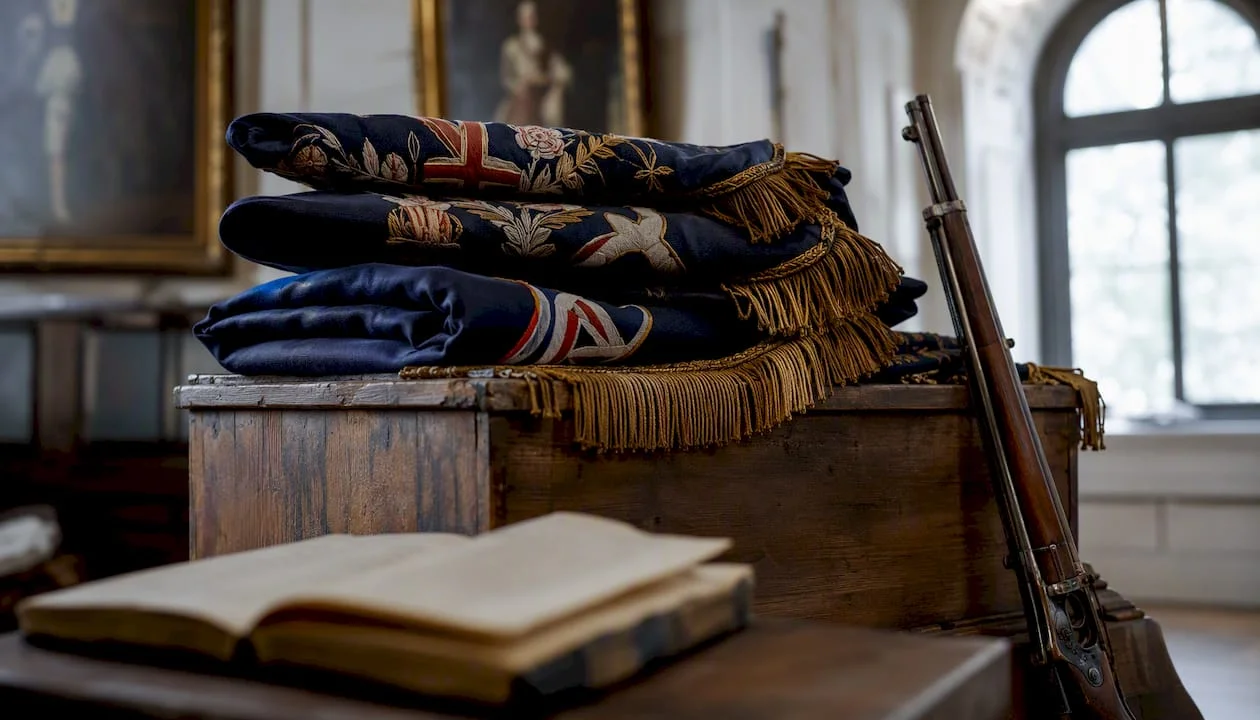
Regimental colors followed a distinct pattern. Infantry regiments typically carried a dark-blue silk flag bearing the national eagle and Great Seal at center, with the regiment’s designation and state name embroidered or painted below. Cavalry units carried smaller swallow-tailed guidons in red and white stripes, while artillery batteries used similar guidons with crossed-cannon insignia. Battle names were frequently added to regimental colors after each engagement, so a flag that survived the full war might carry a dozen or more inscribed campaign names across its face.
For high-resolution images of Union regimental colors, the Library of Congress Prints and Photographs Division holds an extensive photographic record, and the NPS Eastern Trophy Room collection documents many originals with full provenance notes. State historical societies, particularly those of Pennsylvania, New York, and Ohio, maintain large holdings of their own regiments’ surviving colors.
Pro Tip: When buying a Union Stars and Stripes replica for reenactment, specify the correct star count for your event’s date range. A 34-star flag is appropriate for 1861–1863 scenarios; a 35-star flag fits 1863–1865. Many commercially available replicas default to the modern 50-star arrangement, which is historically inaccurate for any Civil War portrayal.
Confederate flags: Stars and Bars, Stainless Banner, Blood-Stained Banner, and the battle flag
There were three official Confederate national flags and a separate battle flag used widely in the field. Britannica’s reference entry on Confederate flags confirms all three national designs and notes that the battle flag remained the Confederacy’s most recognizable field emblem despite never holding national-flag status.
| Flag Name | Adoption Date | Design Summary | Proportions / Stars |
|---|---|---|---|
| Stars and Bars (1st National) | March 4, 1861 | Three horizontal bars (red, white, red); blue canton with circle of stars | 1:2 ratio; 7–13 stars |
| Stainless Banner (2nd National) | May 1, 1863 | White field; battle-flag canton upper left | 1:2 ratio; 13 stars in canton |
| Blood-Stained Banner (3rd National) | March 4, 1865 | Stainless Banner + broad red vertical stripe at fly | 1:2 ratio; 13 stars in canton |
| Confederate Battle Flag (Southern Cross) | 1861 (field use) | Red field; blue saltire with 13 white stars | Infantry 48", artillery 36", cavalry 30" square |
The battle flag’s branch-specific dimensions are among the most important details for accurate reproduction. Encyclopedia Virginia documents that the infantry battle flag measured 48 inches square, the artillery version 36 inches square, and the cavalry version 30 inches square. These are not interchangeable; displaying an artillery-sized flag as an infantry standard is a visible error to any informed observer.
Pro Tip: The Stars and Bars is frequently misidentified as the battle flag, and vice versa. The Stars and Bars has horizontal stripes and resembles the Union flag at a distance, which is precisely why the battle flag was created after the confusion at First Manassas in July 1861. The birth of the battle flag at Manassas is one of the most consequential design decisions of the war.
For primary-source images of all three national flags, the Smithsonian’s textile conservation records and the Library of Congress both hold photographic documentation. The NPS collections include examples of the Stainless Banner and Blood-Stained Banner with accession numbers that allow provenance verification.
Regimental and unit flags: inscriptions, honors, and where originals survive
Regimental flags were the most personal objects a Civil War unit possessed. They were rarely issued from a central depot; instead, local communities, women’s sewing circles, and civic organizations presented them to departing regiments with formal ceremony. As HistoryNet’s survey of Civil War banners describes, these hand-sewn presentations were later updated with battle inscriptions, meaning a single flag could accumulate the names of a dozen engagements across its face, each addition a layer of living history.
Common features of surviving regimental flags include:
- The regiment’s numerical designation and state name, usually embroidered or painted in gold lettering
- The state seal or coat of arms, often rendered in silk appliqué
- Gold fringe along three sides (top, bottom, and fly)
- Battle names added in sequence, sometimes crowding the original design
- Physical evidence of repair: patches, re-stitching, and replaced sections where shot or shell tore the fabric
The NPS Eastern Trophy Room at various battlefield parks holds hundreds of regimental flags donated by veterans’ organizations after the war, each cataloged with donor records and accession numbers. The National Guard Militia Museum of New Jersey maintains a significant collection that includes captured Confederate flags alongside Union regimental colors, offering a rare side-by-side comparison for researchers. State historical societies in Pennsylvania, Virginia, and Georgia hold additional captured flags that changed hands during major campaigns.
Provenance is the single most important factor when evaluating any original flag. A flag without a documented chain of custody, from the presenting organization through veterans’ group donation to museum accession, carries significantly less historical and monetary value than one with a complete record. Accession numbers assigned by the NPS or Smithsonian are the gold standard; they connect a physical object to a paper trail that can be independently verified.
| Point | Details |
|---|---|
| Regimental flag origins | Hand-sewn by local communities; unit-specific designs with state seals and gold fringe |
| Battle honor inscriptions | Names added after each campaign; a fully inscribed flag may show a dozen engagements |
| Where originals survive | NPS trophy rooms, New Jersey Militia Museum, state historical societies |
| Provenance verification | Accession numbers and donor records are the standard; request them before any purchase |
Regional, state, and naval variants you should know
Beyond the national and regimental flags, dozens of regional and naval variants circulated during the war, and many appear in museum collections or as replica products without clear identification. Knowing the most common ones prevents misattribution.
- Bonnie Blue Flag: a single white star on a blue field, used informally as a Confederate symbol before the Stars and Bars was adopted; multiple slightly different versions exist, so the name alone does not describe a single design
- Van Dorn Battle Flag: used by Confederate forces in the Trans-Mississippi theater, featuring a blue field with a white border and a central white star; visually distinct from the Army of Northern Virginia battle flag
- CSS Shenandoah naval ensign: Confederate naval vessels used a variant of the national flag adapted for maritime use; the CSS Shenandoah famously continued flying the Confederate naval ensign after the war had ended, unaware of the surrender
- State-specific designs: several Confederate states fielded units under their own state flags before standardized battle flags were issued; Alabama, Georgia, and Louisiana each had distinctive early-war designs
A caution on naming: the term “Bonnie Blue” is applied loosely to several related but distinct designs. Before purchasing or displaying a flag under that name, verify the specific design against a primary source such as the Library of Congress or a state historical society catalog. The same caution applies to early-war Confederate state flags, where local variations were common and documentation is sometimes incomplete.
How the meanings of Civil War flags have shifted over 160 years
The meanings carried by Civil War flags have never been static. Union flags, particularly the Stars and Stripes, took on a quality of near-sacred national identity during the war itself. As the Smithsonian documents, the flag became a consecrated emblem of Union identity, and for African American soldiers who served under it, the Stars and Stripes represented a claim to citizenship that carried profound personal weight.
Confederate flag meanings have followed a more contested trajectory. Historian John M. Coski and the American Civil War Museum both emphasize that the Confederate flag’s meaning has never been fixed. It began as a military field symbol, was largely set aside after the war, and then experienced a significant revival in the 20th century, particularly during the civil rights era, when it was adopted by groups opposing desegregation. That layered history means the same object carries different meanings to different communities, a reality that collectors and reenactors must navigate with care.
For those who display Civil War flags in educational, collecting, or reenactment contexts, a few principles apply:
- Provide historical context whenever a Confederate flag is displayed, whether through signage, documentation, or direct explanation
- Distinguish clearly between the three national flags and the battle flag, since each carries its own specific history
- Recognize that venue restrictions and institutional policies vary; some public spaces and private organizations prohibit Confederate flag display regardless of intent
- The men who carried the Confederate battle flag did so in a specific military context that differs from modern display settings
Pro Tip: Owning a Confederate flag is legal under U.S. law as a matter of private property and First Amendment expression. Display restrictions apply primarily to government buildings and some institutional settings. For specific venue or public-display questions, consult the relevant local ordinances or institutional policies directly rather than relying on general guidance.
Regarding the question of whether Confederate flag display is disrespectful: the answer depends heavily on context, intent, and audience. In a museum, reenactment, or documented historical collection, the same flag that might cause offense in another setting is understood as a historical artifact. Context-aware display, with clear historical framing, is the standard recommended by major museums and heritage organizations.
How to evaluate replicas and originals: a collector’s checklist
To choose an accurate replica or evaluate an original Civil War flag, work through a checklist of provenance, material, construction, dimensions, and documented repairs. Skipping any one of these steps is how collectors end up with artificially aged reproductions sold as originals, or with replicas that look wrong to anyone familiar with period construction.
- Verify provenance first. For originals, request the accession number, donor record, and any conservation reports. Cross-reference with NPS or Smithsonian catalog entries. A seller who cannot provide documentation is a warning sign.
- Identify the fiber. Period flags were made from wool bunting, silk, or cotton. Polyester did not exist in the 1860s. A fiber test (burn test or laboratory analysis) can distinguish period-appropriate materials from modern synthetics.
- Examine the stitching. Hand-sewn flags show irregular stitch lengths and thread tension variations. Machine stitching, which became available during the war but was not universal, shows uniform spacing. Post-war machine stitching on a claimed original is a red flag.
- Check the dyes. Period flags used natural or early synthetic dyes; colors tend toward muted tones after aging. Bright, saturated colors on a claimed original suggest modern dyes or artificial aging treatments.
- Confirm the dimensions. For Confederate battle flags, branch-specific sizes (48" infantry, 36" artillery, 30" cavalry) are documented. A flag that does not match any standard size requires explanation.
- Count the stars and check their arrangement. Star counts and arrangements changed over time for both Union and Confederate flags. An incorrect count for the claimed date is a disqualifying error.
- Look for battle damage and repairs. Authentic originals often show shot holes, fraying, and period-appropriate patching. Artificially aged flags may show uniform “distressing” that lacks the irregular pattern of genuine battlefield wear.
- Research auction and exhibition history. Major auction houses (Christie’s, Heritage Auctions) maintain records of significant Civil War flag sales. A flag with no auction or exhibition history and a dramatic provenance story deserves extra scrutiny.
For replica buyers, the material choice shapes both appearance and durability. The cotton vs. polyester comparison is the central decision for most reenactors and collectors:
| Material | Appearance | Durability | Best Use |
|---|---|---|---|
| Wool bunting | Most period-accurate; matte finish, correct drape | Moderate; requires careful storage | Museum-quality display, serious reenactment |
| Cotton | Good period approximation; softer hand | Moderate; fades with UV exposure | Indoor display, educational use |
| Polyester | Modern look; brighter colors | High; weather-resistant | Outdoor display, high-use reenactment |
Pro Tip: For outdoor reenactment use, a heavy-duty polyester replica holds up far better than cotton or wool in rain and wind. For a museum-quality reproduction intended for framed display or formal presentation, wool bunting is the period-correct choice. Never use a wool bunting flag outdoors for extended periods; moisture accelerates deterioration.
For pricing context, the cost of a Confederate battle flag replica varies considerably by material, size, and construction quality. USA-made reproductions, which you can find through domestic flag retailers, generally command a premium over imported alternatives and tend to use better materials and stitching.
Where to see originals and find authoritative images
The best places for authoritative originals and high-resolution images are the Library of Congress, the National Park Service collections, the Smithsonian’s National Museum of American History, state historical societies, and the National Guard Militia Museum of New Jersey.
- Library of Congress Prints and Photographs Division: holds an extensive photographic record of Civil War flags, including high-resolution scans accessible online through the LOC digital catalog; search by regiment or flag type
- NPS Eastern Trophy Room collections: documented with accession numbers and provenance notes, these holdings include regimental colors from both sides donated by veterans’ organizations; contact individual battlefield parks for viewing appointments
- Smithsonian National Museum of American History: textile conservation records and catalog entries for major Union and Confederate flags; the NMAH’s online collections portal allows keyword searches by flag type and regiment
- National Guard Militia Museum of New Jersey: maintains Civil War regimental flags including captured Confederate examples, with rotating displays and research access
- State historical societies: Pennsylvania, Virginia, Georgia, and New York hold particularly strong collections; many have digitized portions of their holdings and offer online catalog access
- American Battlefield Trust: the Flags of the Civil War video provides a concise visual introduction to the major flag types and their battlefield use, useful as a starting point before deeper archival research
When using any of these collections for provenance verification, request the accession number and the donor record. Conservation-grade images and condition reports are available from the NPS and Smithsonian for researchers with documented scholarly or legal need. For general research, the online digital catalogs at the Library of Congress and Smithsonian provide sufficient resolution for identification purposes.
Accuracy and reverence: why getting the details right matters
Accurate reproductions are not merely a matter of aesthetics. When a reenactor carries a 34-star Union flag at a Gettysburg event, or a collector displays a correctly proportioned infantry battle flag, they are participating in a form of historical testimony. The flag becomes a document, not a decoration. Conversely, a flag with the wrong star count, the wrong proportions, or the wrong material tells a false story, however unintentionally.
At Ultimate Flags, the commitment to historically grounded reproductions reflects a belief that these objects deserve the same respect as the history they represent. Displaying a Civil War flag, whether Union or Confederate, carries an obligation to understand what it meant to the people who made it, carried it, and sometimes died for it. That understanding begins with getting the details right, and it extends to the context in which the flag is displayed.
Authentic Civil War flag reproductions from Ultimate Flags
Ultimate Flags carries a range of historically grounded Civil War flag reproductions suited to collectors, reenactors, and educators who need accurate materials without the fragility of museum originals.

The selection includes Confederate battle flags in branch-correct sizes (infantry, artillery, and cavalry dimensions), Stars and Bars reproductions in period-accurate proportions, and Union Stars and Stripes variants with correct star counts for specific war-era date ranges. Heavy-duty polyester options serve outdoor reenactment use; cotton and wool-bunting reproductions are available for display and formal presentation. Flag poles, mounts, and conservation storage supplies round out the accessories catalog. The Legends of the Stars and Bars page offers additional context on Confederate national flag reproductions for collectors seeking the full set of national designs.
A respectful note: every Civil War flag, Union or Confederate, represents lives lived and lost in one of history’s most consequential conflicts. Display them with the historical context they deserve.
Sources
These collections and reference works offer authoritative documentation for identification, provenance research, and deeper historical study:
- Confederate Battle Flag – Encyclopedia Virginia
- Civil War Flags of the Eastern Trophy Room – National Park Service
- The Flag in the Civil War
- Battle flags: New Market Heights history and conservation – American Battlefield Trust
FAQ
What is the difference between the Confederate battle flag and the Stars and Bars?
The Stars and Bars was the first Confederate national flag, featuring three horizontal bars (red, white, red) and a blue canton with a circle of stars. The Confederate battle flag (Southern Cross) was a separate square field banner with a blue saltire on a red field, created specifically for battlefield use after the Stars and Bars was confused with the Union flag at First Manassas in 1861.
Is it illegal to own a Confederate flag in the United States?
Private ownership of a Confederate flag is legal under U.S. law as a matter of property rights and First Amendment expression. Display restrictions apply to some government buildings and institutional settings; for specific venue or public-display questions, consult the relevant local ordinances or institutional policies.
Is displaying a Confederate flag considered disrespectful?
Context determines perception. In a museum, reenactment, or documented historical collection, the flag is generally understood as a historical artifact. Outside those contexts, many people regard Confederate flag display as disrespectful given its association with opposition to civil rights in the 20th century. Historians including John M. Coski note that the flag’s meaning has shifted considerably since the Civil War, making context-aware display with clear historical framing the standard recommended by major heritage organizations.
How do I identify which Confederate national flag I am looking at?
The Stars and Bars has three horizontal stripes and a blue canton with stars. The Stainless Banner is predominantly white with the battle-flag canton in the upper left corner. The Blood-Stained Banner adds a broad red vertical stripe at the fly end of the Stainless Banner. Britannica’s reference entry on Confederate flags provides a concise visual summary of all three.
Where can I find high-resolution images of original Civil War flags?
The Library of Congress Prints and Photographs Division, the Smithsonian National Museum of American History’s online collections portal, and the NPS Eastern Trophy Room pages all offer catalog-level documentation and, in many cases, downloadable high-resolution images. The American Battlefield Trust’s Flags of the Civil War video provides a useful visual orientation before deeper archival research.