Scout troop flags are the American and state banners a pack or troop flies at meetings, carries in color guards and retires with honors, and the right picks do two jobs at once: they teach flag respect and survive years of scout handling. This 2026 guide walks a leader through sizes, fabrics, state flag choices and retirement etiquette, built on flags Ultimate Flags actually carries.
- Start with a 3×5 ft American flag — the standard size for scout color guards.
- Outdoor poles take sewn-and-embroidered nylon; indoor ceremonies suit cotton.
- Add state flags for your scouts’ home states and the charter organization.
- Never fly the US flag lower than a state flag, and never let it touch the ground.
- Retire worn flags with honors — scout troops and American Legion posts do this together.

Why flags matter in a scout troop
A scout troop touches its flags more often than almost any family does. Most packs and troops open meetings with a flag ceremony, carry the colors in parades and camp openings, and take part in retirement ceremonies when flags wear out. That frequency is the whole buying problem: a flag that sits on a porch pole can coast, but a flag handled by twelve sets of hands every week needs construction that forgives it.
The segment differs from a home display in three ways:
- Indoor handling dominates. Most scout flags live on indoor stands and poles, which changes the right fabric and attachment.
- State flags carry real meaning. Troops represent their home state and their charter organization, so the state flag is not decoration — it is part of the ceremony.
- Retirement is a duty, not an option. The U.S. Flag Code says a flag too worn to serve as a fitting emblem should be destroyed in a dignified way, preferably by burning, and scout troops are among the groups that lead those ceremonies.
Start with the American flag your troop will carry
The workhorse for a scout color guard is a 3×5 ft American flag. It is the size that fits standard indoor parade poles, it folds into the traditional triangle at a manageable size, and it matches the quarter rule the store uses on every American flag listing: flag fly length about one quarter of the pole height, so a 20 ft outdoor pole takes a 3×5 ft or 4×6 ft flag.
For construction, pick by where the flag lives. An outdoor pole wants a sewn-and-embroidered nylon flag: embroidered stars, sewn stripes, brass grommets and reinforced fly ends that shrug off weather and weekly hoisting. An indoor ceremony flag wants cotton: the traditional weave has the weight and drape that reads well behind a podium, and it is available with a pole sleeve for indoor stands instead of grommets.

Sewn and embroidered American flag flying outdoors — the construction that survives a troop's weekly handling.
Add the state flags that match your scouts
Every scout troop is a local thing, and the state flag makes that visible. The practical setup is two state flags: the home state for the chartered community, and the state where the troop's charter organization sits if the two differ. A troop near a state line can add the neighbor's flag and turn it into a teaching moment about state adoption dates and designs.
Ultimate Flags carries all 50 states and the US territories in its Shop Ultimate Flags state flag collection, in standard printed polyester, sewn and embroidered builds and heavier Poly-Max constructions. The designs follow the official state-adopted layouts — the current Texas flag adopted January 25, 1839, the magnolia flag Mississippi adopted in 2020, and every other design as each state's legislature set it.
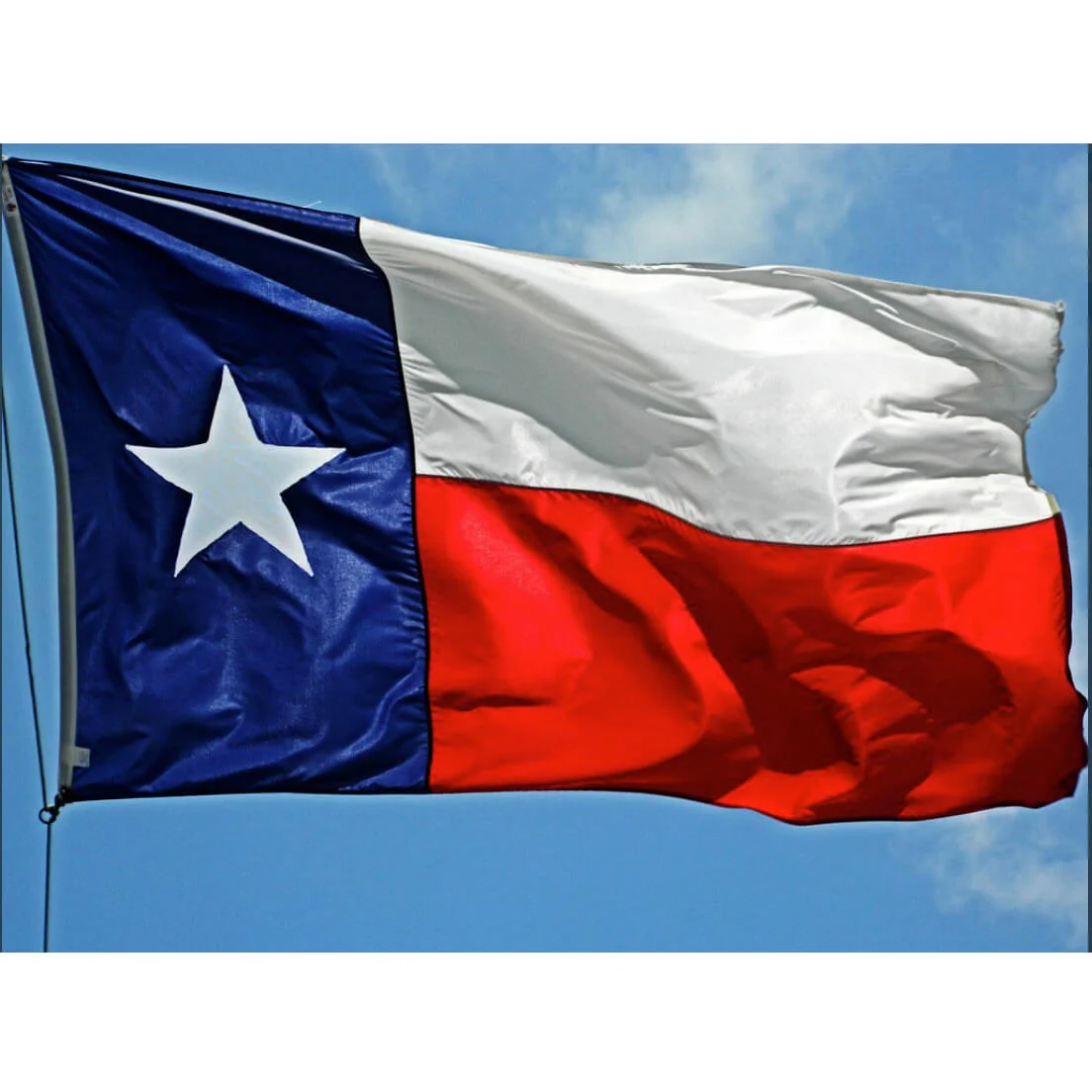
An embroidered nylon Texas state flag on an outdoor pole — the Lone Star design Texas adopted in 1839.
Choose the fabric for the way your troop meets
Fabric is the decision leaders get wrong most often, and it is a two-line answer:
- Nylon is the outdoor and high-handling choice. It is light, so it flies in a faint breeze, it dries fast after a rain-soaked campout, and embroidered nylon builds keep their stitching through weekly ceremonies.
- Cotton is the indoor and ceremonial choice. The weave looks and moves the way a traditional flag should in a lodge or a courtroom, and it takes a deeper color under indoor light. Cotton soaks up rain, so it never lives on an outdoor pole.
- Printed polyester is the budget line for parades, theatrical use and giveaways. It is through-printed so the design shows on both sides, and it is the right pick when a flag is more prop than heirloom.
Set up the indoor ceremony display
A scout meeting opens with the colors in a specific order, and the hardware should support it. Use these steps:
- Put the US flag on the speaker's right — the position of honor whether it is carried or staged.
- Fit cotton flags with a pole sleeve for indoor stands; grommets and clips belong on outdoor halyards.
- Stage state flags at the same height or lower, never higher than the US flag, and never to its right.
- Add the 5×9 1/2 ft ceremonial size for memorial and eagle court-of-honor displays where a larger casket-size flag is traditional.
- Assign the color guard by name before the meeting, so nobody improvises with the colors.
Plan the outdoor pole and flag sizes
If the troop's charter organization raises a flag outside — many meet at schools, churches and civic halls — match the flag to the pole before buying:
- 15-20 ft pole: 3×5 ft flag
- 20-25 ft pole: 4×6 ft flag
- 25-30 ft pole: 5×8 ft flag
- 30 ft and taller: 6×10 ft and up
An embroidered nylon flag is the standard choice on these poles because it flies in the light breezes that leave heavier weaves hanging limp. Take the flag down in severe storms; the fly end is where a flag wears out first, and a monthly look at the hem catches fraying while it is still repairable.
Teach the handling rules that come with the flag
Flag care is the curriculum that rides along with the purchase, and a few rules cover what scouts need in 2026:
- The flag never touches the ground or anything beneath it.
- It flies from sunrise to sunset on an outdoor pole unless illuminated after dark.
- No flag flies above the US flag or to its right in a display on US soil.
- A worn flag is retired with honors — the Flag Code's dignified destruction, preferably by burning — never thrown away.
Scout troops have run flag retirement ceremonies alongside American Legion posts for generations, and collecting worn flags from the community is one of the easiest service projects a troop can run.

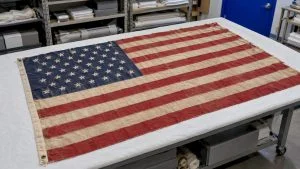
A sewn 48-star American flag — the design that flew from 1912 to 1959 — a natural show-and-tell piece for a troop's history segment.
Scout troop flags at a glance
| Flag | Best for | Standout feature | Key limitation |
|---|---|---|---|
| Outdoor nylon embroidered US flag | Weekly ceremonies and outdoor poles | Embroidered stars, sewn stripes, flies in light wind | Lighter fabric wears faster in sustained high wind |
| Cotton sewn US flag | Indoor ceremonies and court of honor | Traditional weave and drape with a pole sleeve option | Not for outdoor or wet use |
| Standard printed state flag | Meeting displays and teaching | Official state design at the everyday price point | Print looks flat next to stitched detail |
| Sewn or embroidered state flag | Outdoor poles and permanent displays | Stitched detail that holds up through seasons | Heavier build costs more than printed |
Common mistakes scout troops make with flags
- Buying printed for a permanent pole. A printed flag on a pole that flies daily fades and frays within a season or two; stitched construction is the fix.
- Oversizing the flag for the pole. A 5×8 ft flag on a 20 ft pole thrashes itself to pieces; follow the quarter rule instead.
- Sending cotton outdoors. Cotton absorbs rain and mildews; keep it inside and let nylon handle weather.
- Staging the state flag higher than the US flag. The US flag holds the position of honor on US soil, every time.
- Throwing a worn flag in the trash. Retirement with honors is the respectful end, and it doubles as a public service project.
FAQ
What size American flag is best for a scout troop?
A 3×5 ft American flag is the standard size for scout color guards, indoor ceremony poles and parades. For an outdoor pole, match the flag to the pole height — about one quarter of the pole’s above-ground length.
Should a scout troop buy a nylon or cotton American flag?
Nylon for outdoor poles and weekly handling — it flies in light wind and dries fast. Cotton for indoor ceremonies, where its traditional weave and drape look right behind a podium.
What state flags should a scout troop fly?
Most troops fly their home state’s flag beside the US flag, and add the charter organization’s state flag when it differs. All 50 states and the US territories are available in official designs.
How do you display state flags with the US flag?
State flags fly at the same height or lower than the US flag, never higher, and never to the US flag’s right. On separate poles of equal height, hoist the US flag first and lower it last.
Do scout troops retire American flags?
Yes. Scout troops have partnered with American Legion posts on flag retirement ceremonies for generations. The Flag Code calls for a worn flag to be destroyed in a dignified way, preferably by burning.
What is the ceremonial size American flag?
The 5×9 1/2 ft flag is the traditional ceremonial and casket size, used for memorial displays and formal ceremonies. Cotton sewn builds carry this size.
Can a scout troop fly a historic 48-star flag?
Yes, as a modern reproduction. The 48-star design flew from 1912 to 1959, and sewn reproductions are popular for troop history segments and vintage displays.
When was the American flag adopted?
The Continental Congress passed the Flag Resolution on June 14, 1777, which is why June 14 is Flag Day. The 50-star design has flown since July 4, 1960.
One last thing
Turn Flag Day into your troop's buying day. June 14 marks the 1777 Flag Resolution, and it is the natural date to retire last year's worn flags with honors and raise a fresh set of colors. Order the American and state flags a few weeks ahead, and the ceremony writes itself.
Historical sources consulted for this 2026 guide: the U.S. Flag Code on display and retirement, the Continental Congress Flag Resolution of June 14, 1777, and the official state flag adoption records for the 50 states.