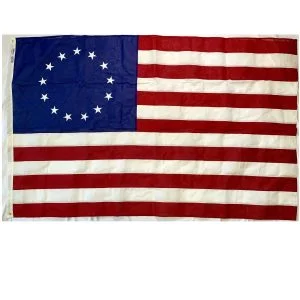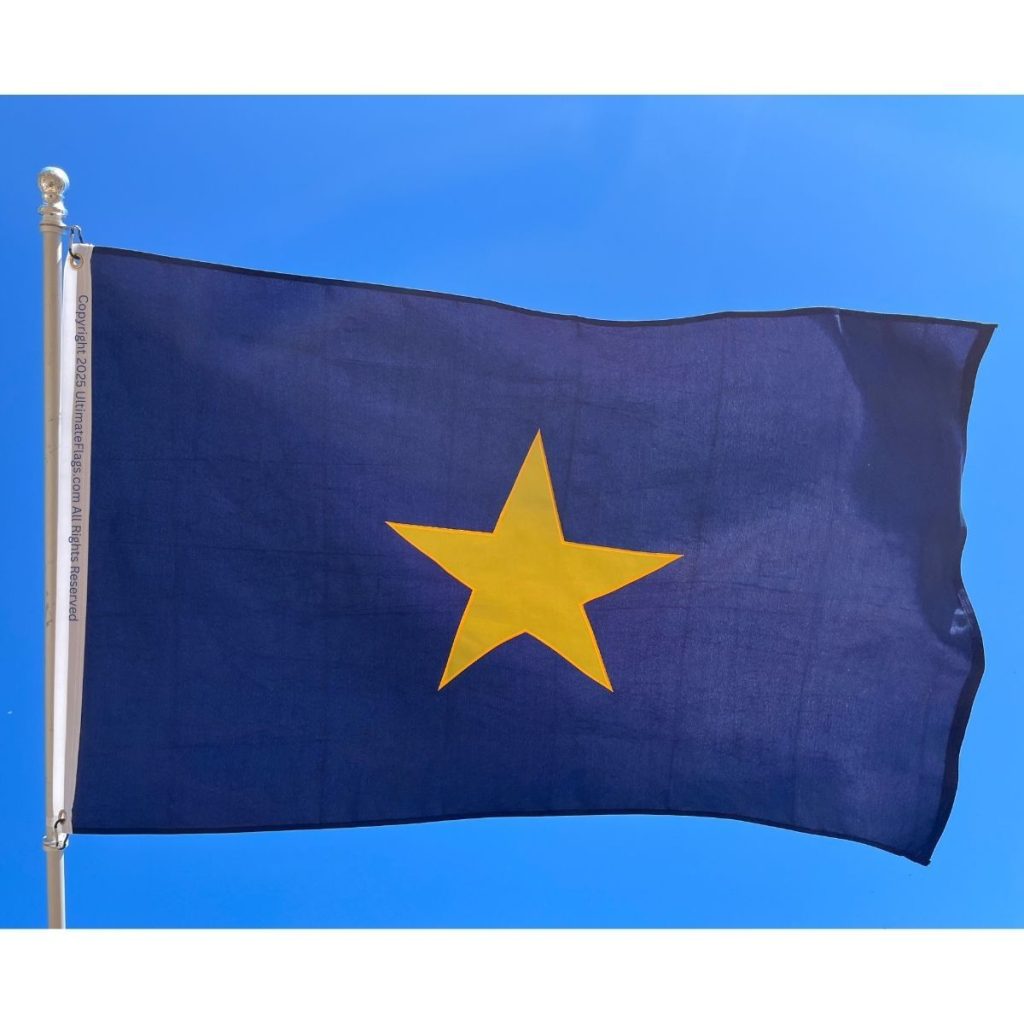
Texas has flown six national flags across roughly four centuries: Spain for about 302 years, France for about five, Mexico for 15, the Republic of Texas for nine, the Confederacy for four, and the United States for the rest. That is the whole Six Flags of Texas story in one line. The table and dates below show exactly when each flag flew, from the first Spanish map of the coast in 1519 to the Lone Star flag flying over Texas in 2026.
- The six flags of Texas: Spain 1519-1821, France 1685-1690, Mexico 1821-1836, Republic of Texas 1836-1845, Confederacy 1861-1865, United States 1845-1861 and 1865-today.
- Spain flew longest at about 302 years; France lasted about five years — the shortest era of the six.
- Texas adopted the Lone Star design on January 25, 1839, and the state still flies it in 2026.
- March 2, April 21 and June 19 are the natural fly days for a Texas history display in 2026.

Why this matters
The six flags of Texas is more than a slogan on a theme park gate — it is the timeline of who governed the land, when, and under which banner. Knowing the dates turns a wall of flags into a display that teaches: each banner answers to a period, a fly day and a story you can tell from the porch. Collectors use the dates to label reproductions correctly, teachers use them to build classroom timelines, and shoppers use them to buy the right flag for the right era instead of guessing.
The six flags of Texas at a glance
| Flag | Flew over Texas | The era in one line |
|---|---|---|
| Spain (Castile and León royal banner) | 1519-1821 | First European claim on the coast, about 302 years under the Spanish crown |
| France (Bourbon fleur-de-lis) | 1685-1690 | La Salle's Fort Saint Louis colony, about five years — the shortest of the six |
| Mexico (1824 tricolor) | 1821-1836 | Mexican independence through the Texas Revolution, 15 years |
| Republic of Texas (Burnet, then Lone Star) | 1836-1845 | Independence at San Jacinto to annexation, nine years |
| Confederacy (three national designs) | 1861-1865 | Secession to Juneteenth, four years and four CSA flags in all |
| United States (Stars and Stripes) | 1845-1861, 1865-2026 | The 28th star in 1846, back on June 19, 1865, 50 stars today |
Spain leads the count at about 302 years and France trails at about five — nobody else is close on either end. The United States flag has covered about 177 of the last 181 years, and the Republic of Texas squeezed its nine years in between Mexico and the Stars and Stripes. The Lone Star flag itself is the survivor of the set: adopted January 25, 1839, it is the same design Texas flies in 2026.
The story behind each flag
Spain: 1519 to 1821, about 302 years
The Spanish era starts in 1519, when the mapmaker Alonso Álvarez de Pineda charted the Gulf coast that included Texas. Settlement came slowly: missions and presidios spread north from Mexico through the 1600s and 1700s, including the mission complex founded at San Antonio in 1718 that later became famous as the Alamo. The flag of the period was the royal banner of Castile and León — the quartered castles and lions of the Spanish crown. Spanish rule ended in 1821, when Mexico won its independence and took over the province.

France: 1685 to 1690, about five years
France's claim is the shortest and strangest of the six. In 1685 the explorer René-Robert Cavelier, Sieur de La Salle, missed the mouth of the Mississippi and landed at Matagorda Bay instead, where his colonists built Fort Saint Louis. Disease, short supplies and conflict with the Karankawa wiped the colony out within about four years, and the fort was destroyed around 1689. Spanish expeditions reoccupied the region by 1690, which is why the fleur-de-lis flag earns its place on the timeline for roughly five years and no more.

Mexico: 1821 to 1836, 15 years
Mexico's flag arrived in 1821 with independence from Spain, and the 1824 federal constitution made Texas part of the state of Coahuila y Tejas. The green-white-red tricolor flew over Texas for 15 years, and the era ended in revolution. On October 2, 1835, settlers at Gonzales raised the Come and Take It banner against Mexican troops demanding the return of a loaned cannon — the first fight of the Texas Revolution. On April 21, 1836, Sam Houston's army caught Santa Anna at San Jacinto, and the Mexican era over Texas was finished.


The Republic of Texas: 1836 to 1845, nine years
Independence was declared on March 2, 1836, and settled on the field at San Jacinto two months later. The Republic's first national flag was the Burnet flag — a gold five-pointed star on deep blue. In 1839 the young republic adopted the design it still flies today: a white stripe over red, a vertical blue bar on the hoist, and a single white star. That Lone Star flag was adopted on January 25, 1839, and Texas kept the design when annexation made the state the 28th star on the US flag in 1846. Nine years as a nation, one enduring flag.

The Confederacy: 1861 to 1865, four years
Texas left the Union by convention vote on February 1, 1861, confirmed by public referendum on February 23, and joined the Confederate States in March 1861. In four years the Confederacy ran through three official national flags — the Stars and Bars from 1861 to 1863, the Stainless Banner from 1863 on, and the Blood-Stained Banner adopted March 4, 1865 — alongside the battle flags Texas regiments carried in the field. The era closed on June 19, 1865, when Union troops reached Galveston and General Granger's order announced the end of slavery in Texas, the day the state now marks as Juneteenth.
The United States: 1845-1861 and 1865 to today
The Stars and Stripes first flew over Texas with annexation in 1845, when the flag carried 27 stars; Texas added the 28th on July 4, 1846. The flag came down during the Confederate years and went back up on June 19, 1865, at Galveston. Congress readmitted Texas to full representation in 1870, and the 50-star flag has flown since July 4, 1960. The state flag in use across Texas today is still the 1839 Lone Star design, which makes it the only one of the six flags never retired.

How the dates are counted
The table follows the standard Six Flags chronology used by Texas museums and state historic sites: it counts each sovereignty's period of control, not every day of occupation. That is why France earns a five-year window for a colony that lasted only months, and why the Spanish era spans three centuries of missions, ranches and paper claims. The dates also treat 1865 as the end of the Confederate era, because that is when the US flag returned to Texas. One limitation worth naming: Spain's earliest years were a claim on a map more than rule on the ground, so the 302-year figure is a period count, not 302 years of settled government.
How to use these dates in 2026
- Build one flag per era. A six-flag row reads as a timeline: the Castile and León banner, the fleur-de-lis, the Mexican tricolor, the Burnet or Lone Star, a Civil War-era design, and today's Lone Star.
- Fly on the dates. March 2 for Texas Independence Day, April 21 for San Jacinto Day, June 19 for Juneteenth, and October 2 for the Battle of Gonzales.
- Label the reproductions. A card with the years — Spain 1519-1821, Republic 1836-1845 — makes a school or library display teach on its own.
- Match the fabric to the pole. Outdoor nylon or 2-ply polyester for year-round poles; sewn cotton for indoor and ceremonial displays.
FAQ
What are the six flags of Texas in order?
Spain (1519-1821), France (1685-1690), Mexico (1821-1836), the Republic of Texas (1836-1845), the Confederacy (1861-1865) and the United States (1845-1861, 1865-today).
How long did each of the six flags fly over Texas?
About 302 years for Spain, five for France, 15 for Mexico, nine for the Republic, four for the Confederacy, and about 177 years for the United States through 2026.
Why is France one of the six flags of Texas?
La Salle’s colonists built Fort Saint Louis on Matagorda Bay in 1685, giving France a claim to the region until the colony collapsed and Spain reoccupied the area by 1690.
Did Texas have a flag before the Lone Star?
Yes — the Burnet flag, a gold star on a blue field, was the Republic’s first national flag from 1836 until the Lone Star design was adopted on January 25, 1839.
What flag replaced Mexico’s over Texas?
The Republic of Texas flag in 1836, after the Texas Revolution ended at the Battle of San Jacinto on April 21, 1836.
How many Confederate flags flew over Texas?
Three official Confederate national flags — the Stars and Bars, the Stainless Banner and the Blood-Stained Banner — during 1861-1865, plus the battle flags carried by Texas regiments.
When did the United States flag return to Texas?
June 19, 1865, when Union troops arrived at Galveston and the era of Confederate control in Texas ended — the day now celebrated as Juneteenth.
One last thing
The easiest way to remember the whole timeline is by its two ends: France held Texas for about five years and Spain for about 302, and every other era fits between them. Hang the six in order with the years written on cards beneath, and the display explains itself to anyone who walks past.
Related guides
- Best Texas flags for a ranch or home display
- Best Come and Take It cannon flags for a Texas patriot
- Is it legal to display a Confederate flag on private property?