The Stainless Banner was the second national flag of the Confederacy, adopted by the Confederate Congress on May 1, 1863, and it pairs a plain white field with the square battle flag in the canton. Reproductions on the market run from full-size flying flags to printed nylon companions of the canton design, so the right pick depends on whether the flag flies on a pole or anchors a display case. Best overall for a Civil War collection: the full-size Stainless Banner flying flag, the design shown exactly as soldiers saw it in 1863. Best companion pick: the printed nylon battle flag in sizes from 12×18 inches to 6×10 ft, the design the canton carries. Best format pick for the end of the line: the printed nylon third national, the March 1865 redesign that fixed the white field. You can compare every one of them in our Confederate and rebel flags collection.
- The Stainless Banner was the Confederacy’s second national flag, adopted May 1, 1863.
- Its plain white field carries the square battle flag in the canton — a design that lasted just under two years.
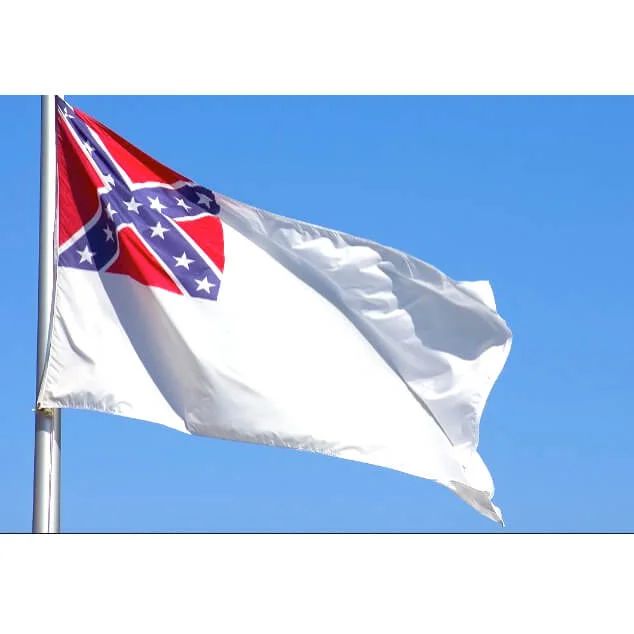
- Best overall: the full-size Stainless Banner flying flag, photographed on a pole exactly as the 1863 design read.
- Best companion: the printed nylon battle flag, 12×18 inches up to 6×10 ft, the canton design at full size.
- Pair it with the third national, adopted March 4, 1865, which added a red bar to end the flag-of-truce problem.

Why this matters
The Stainless Banner is the least-remembered of the Confederacy's three national flags, and that is exactly why it interests collectors. The Stars and Bars is widely reproduced, the third national lasted barely a month of the war, and the second national sits between them: one year and ten days of official service, a distinctive all-white field, and a canton that explains why the battle flag spread across the South.
The nickname comes from the white field itself — period criticism and later histories alike refer to the "stainless" white banner. That white field is also the flag's documented weakness: from a distance, on a calm day, a hanging white flag could read as a flag of truce. Units in the field dealt with it in a blunt, well-documented way — many simply cut the white fly shorter, which is why shortened second nationals turn up in surviving accounts. The 1865 third national answered the problem officially by adding a red bar on the fly.
What makes a good Stainless Banner for a collection
Four things separate a useful reproduction from a disappointing one:
- The canton matches the Army of Northern Virginia battle flag — a blue saltire with white stars on a red field, squared rather than rectangular.
- The proportions follow the 1863 flag act — the law set the flag at twice the width of the canton, so the white fly runs roughly twice as long as the canton square.
- The white field is genuinely white — clean edges and even color are the fastest quality check on a white-field design.
- The right construction for the job — a flying version for a pole, smaller formats for cases, shelves and gifts.
The picks at a glance
Three pieces cover today’s market for this design:
| Flag | Best for | Standout detail | Key limitation |
|---|---|---|---|
| Full-size Stainless Banner flying flag | Outdoor poles and large displays | The design as it flew from May 1863 | All-white fly shows soil sooner than striped flags |
| Printed nylon battle flag, 12×18 to 6×10 ft | Companion display of the canton design | Documented printed-nylon size range | Companion piece, not the national flag itself |
| Printed nylon third national, 3×5 ft | Completing the three-flag set | The March 1865 red-bar redesign | Marks the war's final weeks, not the 1863-65 period |
1. Full-size Stainless Banner flying flag — best overall pick
The full-size second national is the pick that tells the whole story at a glance. Shown flying on a pole, the flag reads exactly as the 1863 law described: the square battle flag canton at the hoist and a long white field stretching to the fly. That proportion — flag twice the canton's width — is what separates a faithful second national from decorative approximations, and it is the first thing a serious collector checks.

Pros:
- The documented 1863 proportions, with the squared canton and long white fly
- Reads clearly at distance, the way the design was meant to be seen
- Anchors a display the same way the original anchored the second national period, May 1863 to March 1865
Cons:
- The white field needs more washing care than any striped flag
- A large white flag wants a pole and space to display honestly
Best for: collectors building an indoor Civil War display or flying the full three-national sequence outdoors. Ready to shop? shop Confederate flags for sale and compare the national-flag reproductions side by side — the Ultimate Flags flag store groups the first, second and third nationals with the battle flag designs.
2. Printed nylon battle flag, 12×18 inches to 6×10 ft — best companion pick
The Stainless Banner's canton is the battle flag, and the printed nylon battle flag lets a display show both at full size: the national design above, the field design below. The store's printed nylon version runs from a 12×18 inch stick flag through 2×3, 3×5, 4×6, 5×8 and 6×10 ft, so the same design covers a desk and a tall pole.

Pros:
- Explains the canton at full size, next to the national flag
- The widest documented size range of the companion picks, 12×18 inches up to 6×10 ft
- Printed nylon holds sharp detail on the saltire and stars
Cons:
- The rectangle reads differently from the square canton — caption the pair so visitors know which is which
- Not a substitute for the national flag in a three-flag display
Best for: displays that teach the relationship between the battle flag and the second national, and for anyone who wants the canton design at full size rather than canton size.
3. Printed nylon third national, 3×5 ft — best pick for completing the set
The third national is the natural third piece, and the printed nylon 3×5 ft version is its standard format. Adopted on March 4, 1865, it kept the battle-flag canton and added a vertical red bar on the fly — the official fix for the white-field truce problem. A shelf or wall that holds the first, second and third nationals in order tells the whole national-flag story of the war in one glance.
Pros:
- Completes the three-national sequence with the documented 1865 redesign
- The red bar makes the 1865 fix visually obvious to visitors
- Standard 3×5 ft format fits the same poles and walls as the other nationals
Cons:
- Served only the war's final weeks, so it dates a narrow window
- Often overlooked — many collectors stop at the second national and miss the set
Best for: collectors finishing the three-flag sequence or dating a display to the war's final months.
How we ranked
The ranking follows the job each flag does in a collection. Design accuracy came first: every pick reproduces a documented design — the 1863 second national with its squared canton, the battle flag the canton carries, and the 1865 third national with its red bar. Purpose came second, split between flying, teaching the canton relationship and completing the set. Size range broke the ties.
Dating and identifying the Stainless Banner
The second national is the easiest of the three national flags to date on sight:
- May 1, 1863: the flag act replaced the Stars and Bars with a white field twice the width of the battle flag canton.
- 1863 to 1865: the design served as the national flag; unlike the first national, its star count never changed.
- In the field: units commonly shortened the white fly — period accounts record the truce-flag worry and the practical fix.
- March 4, 1865: the third national added a red bar on the fly and replaced the Stainless Banner weeks before the war ended.
Buy the format that matches the story next to the flag: the full-size flying version for the 1863-65 period, the battle flag companion for the canton design, and the third national beside it to show how the white-field problem ended.
FAQ
What is the Stainless Banner flag?
The Stainless Banner was the second national flag of the Confederacy, adopted May 1, 1863. It carries the square battle flag in the canton on a plain white field and served until March 4, 1865.
Why is it called the Stainless Banner?
The nickname refers to its plain white field, read at the time as a symbol of purity. Critics quickly noted the practical flaw: a hanging white flag could be mistaken for a flag of truce.
Why did Confederate soldiers cut the Stainless Banner shorter?
Because the long white fly risked reading as a truce flag at a distance. Shortening the fly was a common field modification, and shortened second nationals appear in period accounts.
What flag replaced the Stainless Banner?
The third national flag, adopted March 4, 1865. It kept the battle flag canton and added a vertical red bar on the fly to end the flag-of-truce confusion.
How is the Stainless Banner different from the battle flag?
The battle flag was a field flag, never a national flag. The Stainless Banner was a national flag whose canton carried a squared version of the battle flag design on a white field.
What size Stainless Banner should a collector buy?
A full-size flying version for a pole or a large wall, and smaller formats for cases and shelves. Match the proportion, not just the design: the white fly runs about twice the canton’s width.
How do you care for a white-field flag outdoors?
Take it down in foul weather, let it dry fully before storage and wash it gently when soil appears — a white flag shows dirt sooner than any striped design, so prompt care keeps it display-ready.
One last thing
The Stainless Banner lasted one year and ten days as an official flag, yet its canton outlived it: the third national kept the battle-flag canton, and the design remains the most recognized Southern symbol of the war. Collect the second national and you are really collecting the moment the battle flag went national.
Related guides