
On July 1, 1898, American soldiers charged up the heights outside Santiago de Cuba into Spanish rifle and artillery fire. The charge made Theodore Roosevelt famous, but some of the hardest fighting that day was done by the Buffalo Soldiers, the Black regulars of the U.S. Army. One of them, Sergeant Major Edward L. Baker Jr. of the 10th Cavalry, ran back into the fire to save a drowning comrade and earned the Medal of Honor.
This is his story, and the story of the battle that one soldier described as a charge by a “pack of demons.”

Who Was Edward L. Baker Jr.?
Edward Lee Baker Jr. was born on December 28, 1865, in Laramie County, in what was then Dakota Territory and is now Wyoming. Some accounts say he was born in a wagon while his family was traveling west. He grew up on the frontier and enlisted in the Army young, joining the 9th Cavalry as a private on July 27, 1882, when he was just 16.
In 1887 he re-enlisted in the 10th Cavalry. Over the next decade he served on the western frontier, rose through the ranks and became the regiment’s sergeant major, the senior enlisted soldier in the unit.
The Buffalo Soldiers
After the Civil War, Congress created permanent Army regiments for Black enlisted men in 1866. They eventually became the 9th and 10th Cavalry and the 24th and 25th Infantry. Most of their officers were white, but the men in the ranks, including the sergeants, were Black. Plains Indians are said to have given them the name “Buffalo Soldiers,” and the soldiers wore it with pride.
For thirty years these regiments served at lonely posts across the West. They fought in the Indian Wars, escorted wagon trains, built roads and telegraph lines, and chased outlaws. By 1898 they were some of the most experienced troops in the small regular Army.
War with Spain
The United States declared war on Spain in April 1898, after the battleship USS Maine exploded in Havana harbor and amid growing anger over Spain’s harsh rule in Cuba. The Army’s Fifth Corps, under General William Shafter, landed near Santiago de Cuba in late June. Its cavalry division included the 9th and 10th Cavalry and the 1st U.S. Volunteer Cavalry, the “Rough Riders,” led in the field by Lieutenant Colonel Theodore Roosevelt. Because there was not room on the ships for most of the horses, the cavalrymen fought on foot.
July 1, 1898: The Charge Up the San Juan Heights
The Spanish held a line of hills east of Santiago, including Kettle Hill and San Juan Hill, protected by trenches, blockhouses and barbed wire. American troops had to cross open ground and the San Juan River under fire just to reach the base of the heights. Men fell crossing the stream and in the tall grass, and the attack stalled for a time in what soldiers called “Bloody Ford.”
According to accounts of the battle, that river crossing is where Sergeant Major Baker earned his medal. When a wounded soldier fell into the water and was in danger of drowning, Baker left cover and went back into the river under fire to pull him out. His official citation reads that he “left cover and, under fire, rescued a wounded comrade from drowning.” He was also wounded by shrapnel that day.
When the order to advance came, the 9th and 10th Cavalry charged up Kettle Hill alongside the Rough Riders, while the 24th Infantry and other regiments stormed San Juan Hill. According to an account often attributed to Corporal John Conn of the 24th Infantry, “When that pack of demons swept forward, the Spaniards stood as long as mortals could stand, then quit their trenches and retreated.” By afternoon the heights were in American hands. About two weeks later, Santiago surrendered.
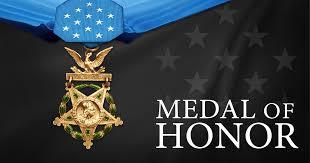
Medals of Honor for the 10th Cavalry
The 10th Cavalry produced five Medal of Honor recipients in the Cuban campaign. Baker received his for the river rescue at Santiago on July 1. The day before, on June 30, 1898, four privates of the 10th Cavalry, Dennis Bell, Fitz Lee, William H. Thompkins and George Wanton, went ashore under enemy fire at Tayabacoa, Cuba, to rescue wounded comrades from a failed landing party. All four received the Medal of Honor.
Many observers praised the Buffalo Soldiers’ courage in Cuba. Roosevelt himself spoke well of the Black regulars in the days after the battle, and a young white officer of the 10th Cavalry, John J. Pershing, later wrote of their bravery. Pershing’s long association with the regiment is one reason he was nicknamed “Black Jack.”
From Sergeant Major to Captain
The war opened a door for Baker. On August 2, 1898, he was commissioned a first lieutenant in the 10th U.S. Volunteer Infantry. In 1899 he became a captain in the 49th U.S. Volunteer Infantry, which served in the Philippines, making him one of a small number of Black officers of that era. He later served as an officer in the Philippine Scouts, rising to captain, before resigning in 1909.
Edward L. Baker Jr. died in Los Angeles on August 26, 1913. He was 47 years old. Today he is remembered as one of the bravest of the Buffalo Soldiers and as a pioneer for Black officers in the U.S. Army. For more stories of Medal of Honor heroes, read about Tibor Rubin in Korea and Marcario Garcia in the Hurtgen Forest.
Frequently Asked Questions
Who was Edward L. Baker Jr.?
Edward L. Baker Jr. (1865–1913) was sergeant major of the 10th Cavalry, one of the Buffalo Soldier regiments. He earned the Medal of Honor at Santiago, Cuba, on July 1, 1898.
What did Edward Baker do to earn the Medal of Honor?
Under enemy fire, he left cover and rescued a wounded comrade who was drowning in the river below the San Juan Heights.
Did Buffalo Soldiers fight at San Juan Hill?
Yes. The 9th and 10th Cavalry charged Kettle Hill beside the Rough Riders, and the 24th Infantry fought on San Juan Hill on July 1, 1898.
Why were they called Buffalo Soldiers?
The name is traditionally said to have come from Plains Indians who fought them in the West. The soldiers accepted it as a badge of honor.
How many Buffalo Soldiers received the Medal of Honor in the Spanish-American War?
Five men of the 10th Cavalry received it: Edward L. Baker Jr., plus Dennis Bell, Fitz Lee, William H. Thompkins and George Wanton for the rescue at Tayabacoa.
When was the Battle of San Juan Hill?
The battle for the San Juan Heights, including Kettle Hill and San Juan Hill, was fought on July 1, 1898, near Santiago de Cuba.
Fly a Flag for America’s Soldiers
Honor Sergeant Major Baker and the Buffalo Soldiers with our U.S. Army Flag, browse our full collection of U.S. Army Flags, or fly a classic 50 Star American Flag for all who served.
Thanks for reading! We hope you enjoyed our post. Please share with all your fellow patriots. Brought to you by: Ultimate Flags