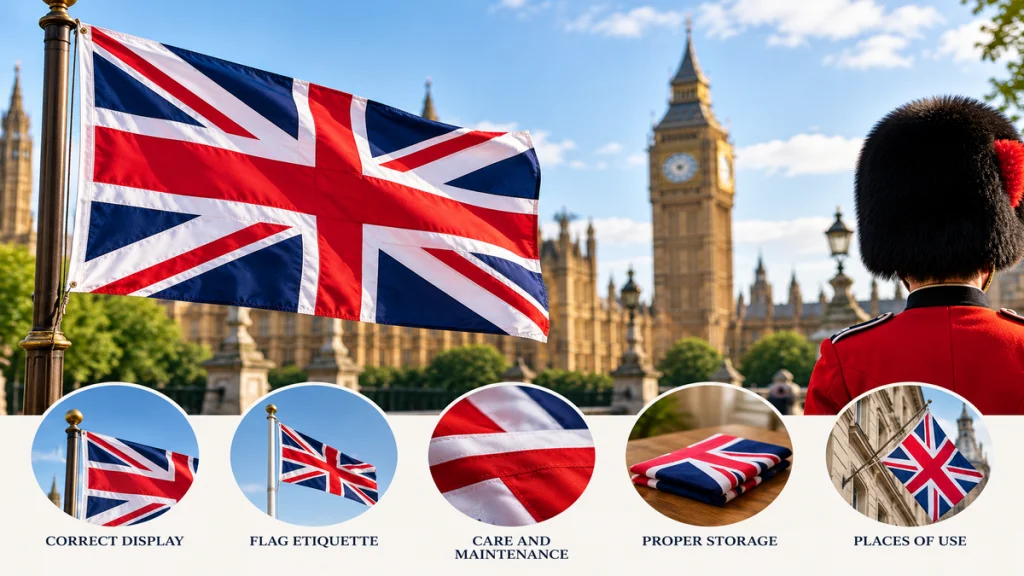
The Union Jack, also known as the Union Flag, is the national flag of the United Kingdom. Displaying it properly involves attention to its orientation, position, condition, and surroundings. Whether it is flown outside a home, displayed at a school or business, used at an event, or positioned indoors with other flags, careful handling helps maintain a respectful presentation.
This Union Jack flag etiquette guide explains practical ways to display, handle, clean, store, and replace the Union Flag. It also covers how to identify an upside-down flag, display it vertically, position it alongside other flags, and care for outdoor fabric.
For homes, organizations, schools, businesses, and events, proper flag etiquette begins with straightforward practices. Use a clean flag, check its orientation, choose suitable fabric, secure it correctly, and replace it when significant wear becomes visible. Ultimate Flags provides flag and display options suited to different settings and uses.
Union Jack Names, Meaning, and Respectful Use
The Union Flag is the national flag of the United Kingdom. Its design combines the red cross associated with St George, the white saltire associated with St Andrew, and the red saltire associated with St Patrick. Wales does not have a separate symbol within the design because of its historical union with England. The flag is commonly known as both the Union Flag and the Union Jack.
The term “Union Jack” has a historical connection with naval use, where the flag was flown from the jackstaff of a ship. In everyday use, both names are widely accepted.
Respectful display does not require elaborate ceremony for ordinary private use. A homeowner, business owner, school, or event organizer can follow a few straightforward practices to keep the flag properly presented.
A Union Flag should:
- Be clean and in good condition.
- Be displayed in the correct orientation.
- Remain clear of the ground and standing water.
- Be protected from unnecessary contact with trees, walls, roofs, and sharp fittings.
- Be replaced when significant fading or fraying becomes visible.
- Be stored in a dry location when it is not being used.
When custom flags are displayed at the same venue, position them so their purpose is clear, and they do not interfere with the national flag. Custom banners can be useful for identifying an event, organization, school, business, or gathering while keeping the Union Flag as a distinct national display.
The same principle applies to ceremonial flags. A flag used for a formal occasion, parade, memorial event, or organized ceremony should be clean, correctly mounted, and handled carefully.
At Ultimate Flags, customers can find flags and display products suited to different indoor and outdoor applications.
Correct Union Jack Orientation and Vertical Display
One of the most common Union Flag etiquette questions concerns its orientation. The Union Jack is not symmetrical, so it can appear correct at first glance even when it has been turned upside down.
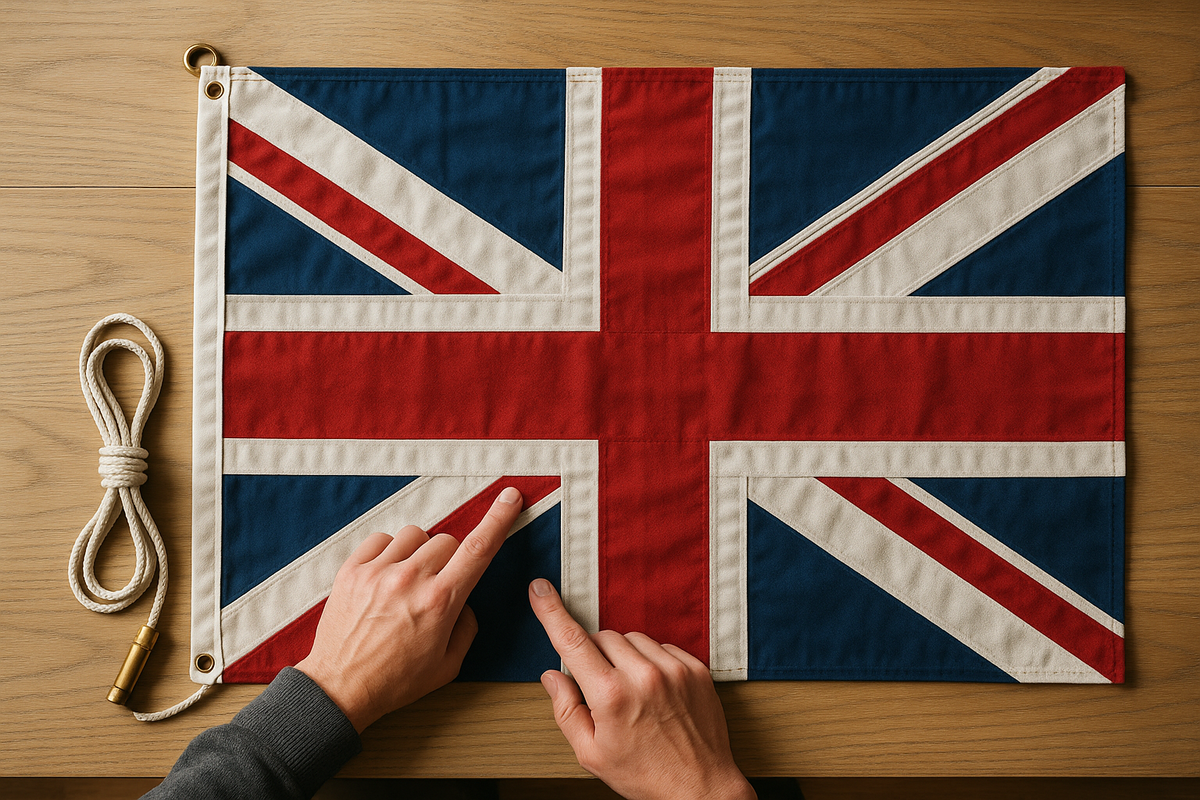
The correct way to fly the Union Jack is determined by the diagonal white and red bands near the hoist edge, which is the side attached to the pole. At the upper hoist corner, the broader white diagonal should appear above the narrow red diagonal. At the lower hoist corner, the broader white portion should appear below the red diagonal.
A simple check can be made before attaching the flag. Lay it flat with the hoist edge on the left and inspect the upper-left corner. The white stripe immediately above the red diagonal should be wider than the white stripe below it. If the wider white stripe is underneath the red diagonal, rotate the flag before raising it.
This check is useful for residential flagpoles, business displays, school grounds, event venues, and indoor stands.
The same care applies when hanging the Union Jack vertically. The flag should be rotated so its diagonal pattern retains the correct orientation from the public’s viewpoint. Simply turning the flag sideways without checking the pattern can result in an incorrect display.
| Check | Correct position | Incorrect position |
|---|---|---|
| Upper hoist corner | Broad white diagonal above the red diagonal | Broad white portion below the red diagonal |
| Lower hoist corner | Broad white portion below the red diagonal | Broad white portion above the red diagonal |
| Flat flag | Hoist edge on the left and wider white stripe above the red | Wider white stripe below the red |
| Before raising | Check the design before securing the flag | Correcting it after it is flying |
The orientation should be checked before the halyard, staff, or mounting hardware is fully secured. Once the flag is moving in the wind, making adjustments becomes less convenient. The source material recommends checking the orientation before the flag is raised.
An upside-down Union Flag is generally understood as an error rather than a separate display style. Taking a few seconds to inspect the hoist corner can prevent the mistake.
Displaying the Union Flag at Home, Events, and With Other Flags
The right display method depends on where the flag is being used. A residential flagpole, school entrance, business property, indoor ceremony, or community event may require different fabric, mounting equipment, and supporting displays.
When the Union Flag is displayed alongside other flags, it should have an appropriate position of prominence where local protocol requires one. On a line of flagpoles, it is commonly positioned to the observer’s left or in the center when there is an odd number of poles. Another flag should not be raised above it on the same staff.
Indoor displays also require careful positioning. Keep the flag away from floors, tables, moisture, and areas where it could become stained or damaged. Ceremonial flags should receive particular care during formal events, memorials, parades, and other organized occasions.
Printed banners, flag bunting, and banner flags can add decoration to entrances, fences, pathways, and event spaces without replacing the main national flag. When combining banners with the Union Flag, consider:
- Whether the banner blocks or obscures the main flag.
- Whether the fabric suits the intended weather conditions.
- Whether the banner is securely attached.
- Whether its size fits the available display area.
- Whether its design clearly represents the organization or event.
A custom flag or printed banner can identify a school function, sporting event, community gathering, business opening, or special occasion. Smaller banners can also be placed around entrances and pathways to create a coordinated display.
For outdoor displays, give each flag enough space to fly freely. Keep the fabric away from branches, walls, sharp fittings, standing water, and other objects that could cause tearing or staining.
Custom flags are also useful when an organization wants to display its own branding alongside a national flag. Position each custom product clearly so visitors can distinguish organizational or event branding from the Union Flag.
Flagpole Etiquette, Half-Staff, and Weather
A suitable flagpole helps protect the flag and creates a cleaner display. The pole should be appropriate for the size of the flag and the available space. The fabric should be able to move freely without repeatedly hitting trees, buildings, roofs, or the ground.
Outdoor flags should be selected according to their intended use. Weather-ready fabric is useful for regular outdoor displays, while lighter materials may be appropriate for occasional indoor use.
Good flagpole practices include:
- Raise the flag briskly and lower it with dignity.
- Bring outdoor flags inside during severe weather when practical unless they are designed for all-weather use.
- Inspect halyards, clips, snaps, and other hardware regularly.
- Prevent the flag from becoming tangled around the pole.
- Dry wet fabric completely before folding it.
- Replace damaged mounting hardware before it damages the flag.
Half-staff is normally used for land-based displays, while half-mast is commonly associated with naval vessels. When a half-staff observance applies, the flag is first raised fully and then lowered to the prescribed position. When removing it, the flag is returned briefly to the peak before being lowered completely.
Official arrangements can differ between government buildings, local authorities, military sites, and formal ceremonies. Specific instructions may apply during periods of national mourning, designated days, or state occasions. Private displays generally allow practical judgment, provided the flag is secure and respectfully presented.
Flagpoles also need routine maintenance. Loose hardware, worn halyards, and damaged clips can cause a flag to become tangled or torn. Checking these components regularly helps protect both the pole and the fabric.
Cleaning, Storage, and Retiring a Worn Flag
Regular care helps preserve the appearance and condition of flags used indoors and outdoors. Exposure to sunlight, rain, wind, dirt, and changing weather can gradually wear down outdoor fabric. Frequent inspections help identify damage early and keep flags looking presentable for events, business premises, schools, and public displays.
If a flag becomes wet, allow it to dry completely before folding or storing it. Damp fabric can develop mildew, transfer colors, and weaken stitching. Check flagpoles and supporting hardware regularly for worn clips, halyards, snaps, and attachment points that could tear or damage the material.
Follow the manufacturer’s cleaning instructions for each flag. Choose a cleaning method suited to the fabric, and avoid treatments that could damage stitching, attachment points, or printed designs. Custom flags and printed designs may require specific care to preserve their colors and finish.
Before storing flags, make sure they are:
- Completely dry before folding.
- Kept in a clean, dry storage area.
- Protected from excessive moisture and direct sunlight.
- Stored away from sharp objects and rough surfaces.
- Handled carefully to prevent unnecessary dirt, creasing, and fabric damage.
Inspect frequently used custom flags for fading, fraying, loose stitching, damaged corners, and weakened attachment points. Address minor problems promptly, and replace flags that are too worn to maintain a neat appearance. This is particularly important for businesses, schools, organizations, and event organizers that rely on consistent visual presentation.
A heavily faded or damaged flag should be removed from display rather than left flying in poor condition. Retire damaged national flags discreetly and respectfully, following any applicable local guidance.
Organizations that use several flags, custom designs, or a printed banner can benefit from a regular inspection schedule. Checking fabric, printing, seams, and mounting hardware before an important event helps identify problems early and keeps every display looking professional.
Choosing the Right Flags, Banners, and Accessories
Good Union Jack etiquette starts with choosing the right product and displaying it correctly. Check the orientation before raising the flag, select fabric suited to its environment, and make sure the mounting equipment is appropriate for the size and location.
For an outdoor display, consider weather conditions, pole height, flag size, stitching, and attachment hardware. For indoor use, a suitable stand and lightweight fabric may provide a cleaner presentation.
When adding custom flags, banners, printed displays, or banner flags, arrange them so the Union Flag remains easy to recognize. Event banners can identify a business, organization, school, or gathering while complementing the national flag.
Before displaying your flag, check that:
- The Union Jack is facing the correct direction.
- The fabric is clean and undamaged.
- The flag is securely attached.
- The flagpole and fittings are in good condition.
- The fabric cannot touch the ground or nearby obstacles.
- Wet flags are completely dry before storage.
- Faded or damaged flags are replaced.
- Other flags and banners are arranged appropriately.
For everyday displays, formal events, schools, businesses, organizations, and special occasions, choosing suitable flags, custom products, and accessories makes it easier to maintain a neat and respectful presentation.
Ultimate Flags can help customers select flags, custom flags, banners, and related display products suited to their intended use.